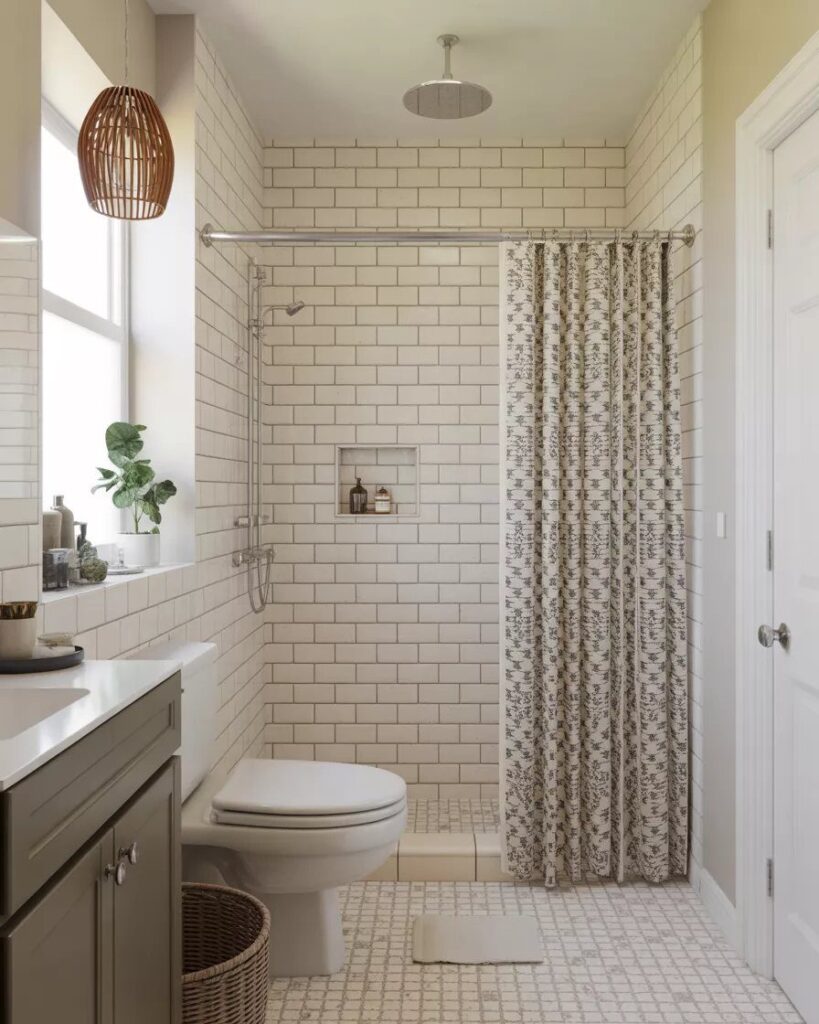
A walk-in shower can be closed off with a fabric curtain on a curved rod or a frameless glass enclosure, and the choice comes down to whether you rent and want to change the look, or own and want the least water on the floor.
A curtain costs far less and swaps out in minutes; glass contains splashes better and needs only a regular squeegeeing.
Most of the ideas below stay on the curtain side, with thicker fabric, curved rods and a few leak-prevention habits doing the work a door would.
1. Shower Curtains for Walk-in Showers
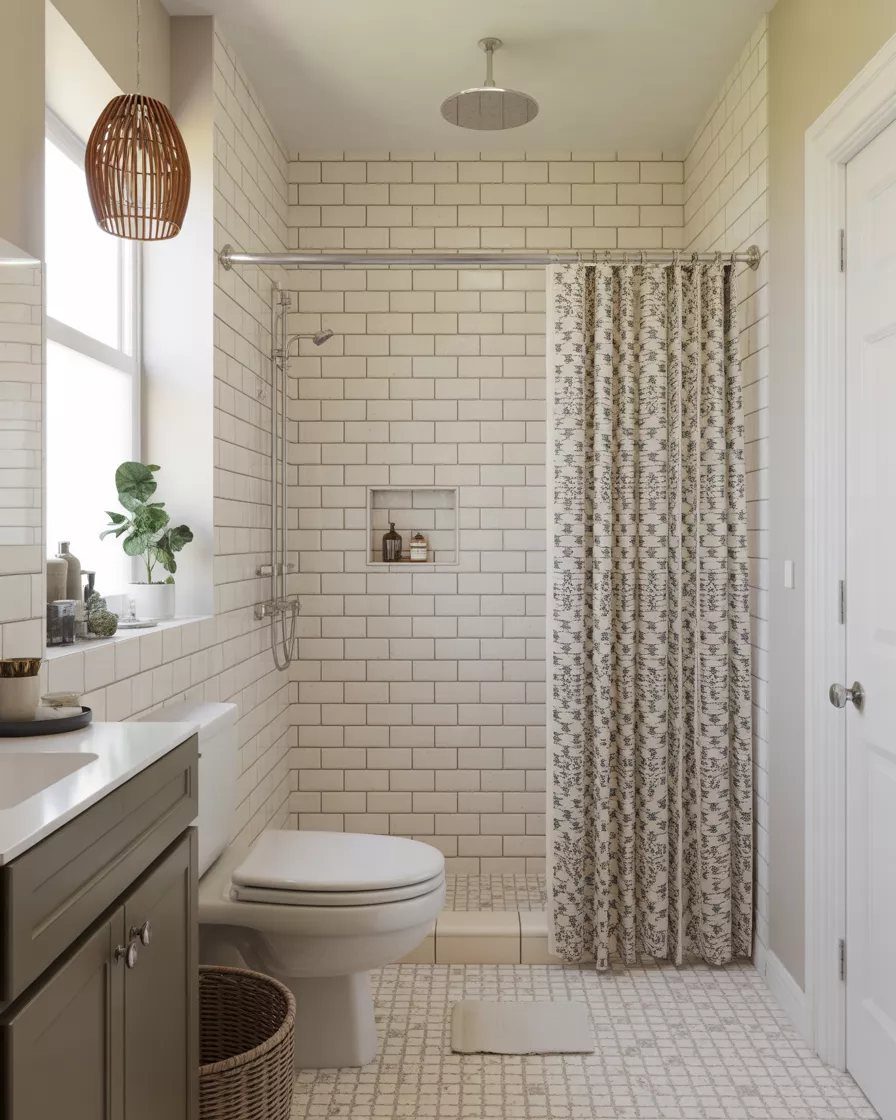
A fabric curtain across a walk-in opening costs far less than glass or a custom door, and a busy pattern like this one hides water spots and soap film between washes.
I’d treat it as a budget fix rather than a permanent answer, though.
With no door or glass panel behind it, a curtain on an open walk-in can let water escape, and it leaves the opening less contained than a true enclosure.
If you try it, hang the rod high and pick a curtain that reaches nearly to the floor.
2. Thicker Fabric Curtains

Weight is what makes a curtain feel like a wall instead of a flimsy cover. A thick, floor-length fabric panel gives an open walk-in real privacy, and heavier cloth hangs straight instead of drifting toward your legs.
A black rod, as in this beige-tiled shower, gives the fabric a crisp line to hang from. I’d choose a neutral tone close to the tile so the curtain reads as part of the room.
Fabric this heavy needs a liner or a quick-drying habit, so spread it open after each shower.
3. A Bench
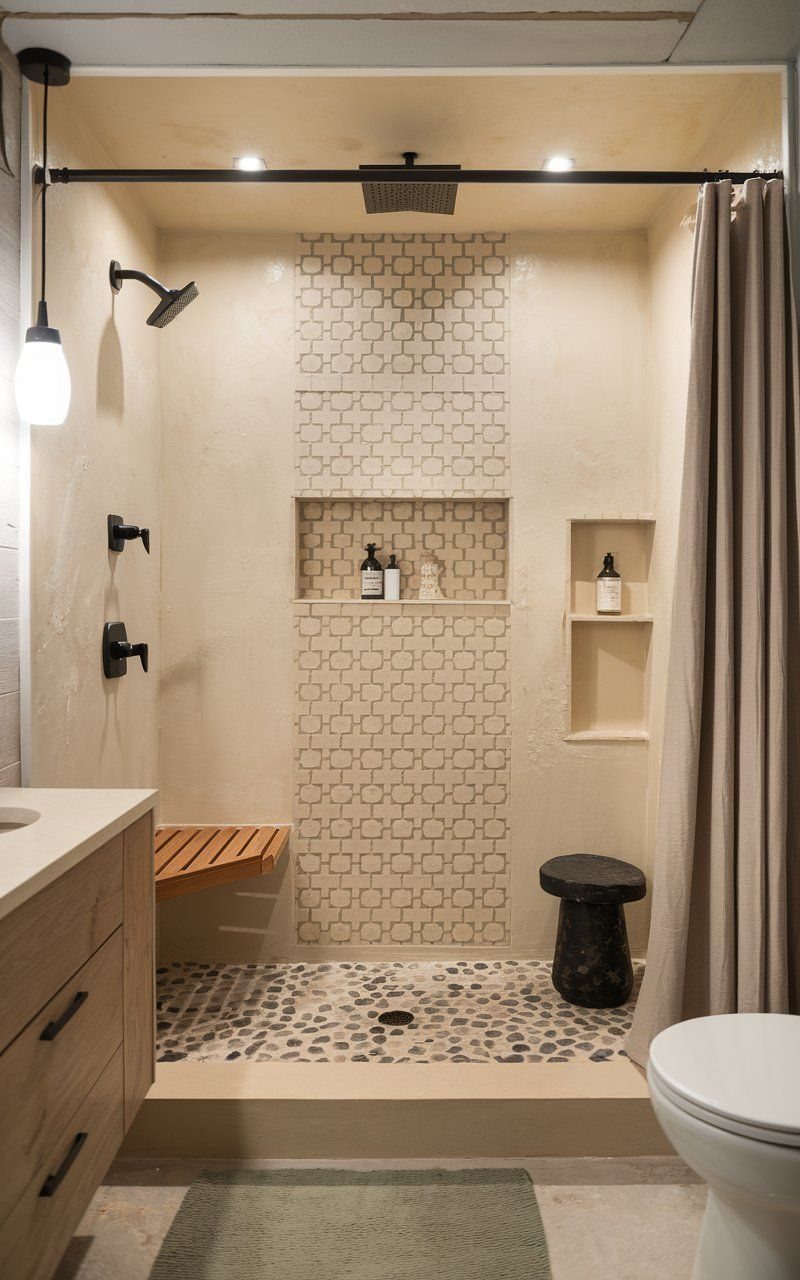
Sitting down to shave or wash your hair is a small luxury, and a built-in bench makes a walk-in shower safer and more comfortable at once. A slatted wood bench like this one drains easily and feels warmer than stone.
I’d keep the curtain on the open side so water stays off the bench. Pair it with a textured floor for grip, since a wet shower floor is where slips happen.
4. Frameless Glass Enclosure
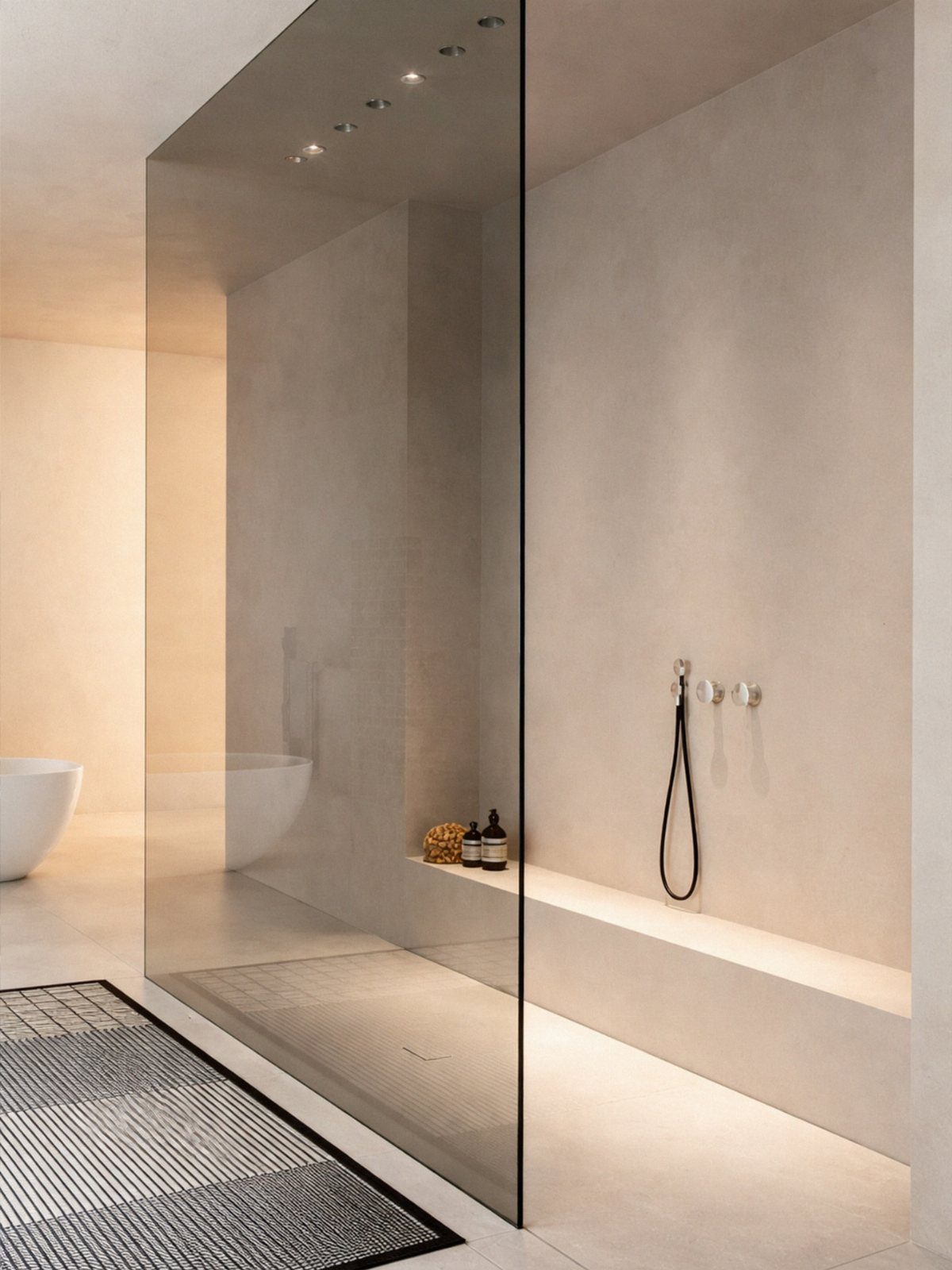
Glass is the clearest alternative to a curtain. A frameless panel keeps the whole bathroom visible, which makes a compact space feel larger, and nothing hangs there to get damp.
Here, the beige walls and built-in shelf stay in view instead of being hidden behind fabric.
I’d choose it if the budget allows, since glass costs more than a curtain and rod. It also needs regular squeegeeing to stay clear.
5. Curved Shower Rods
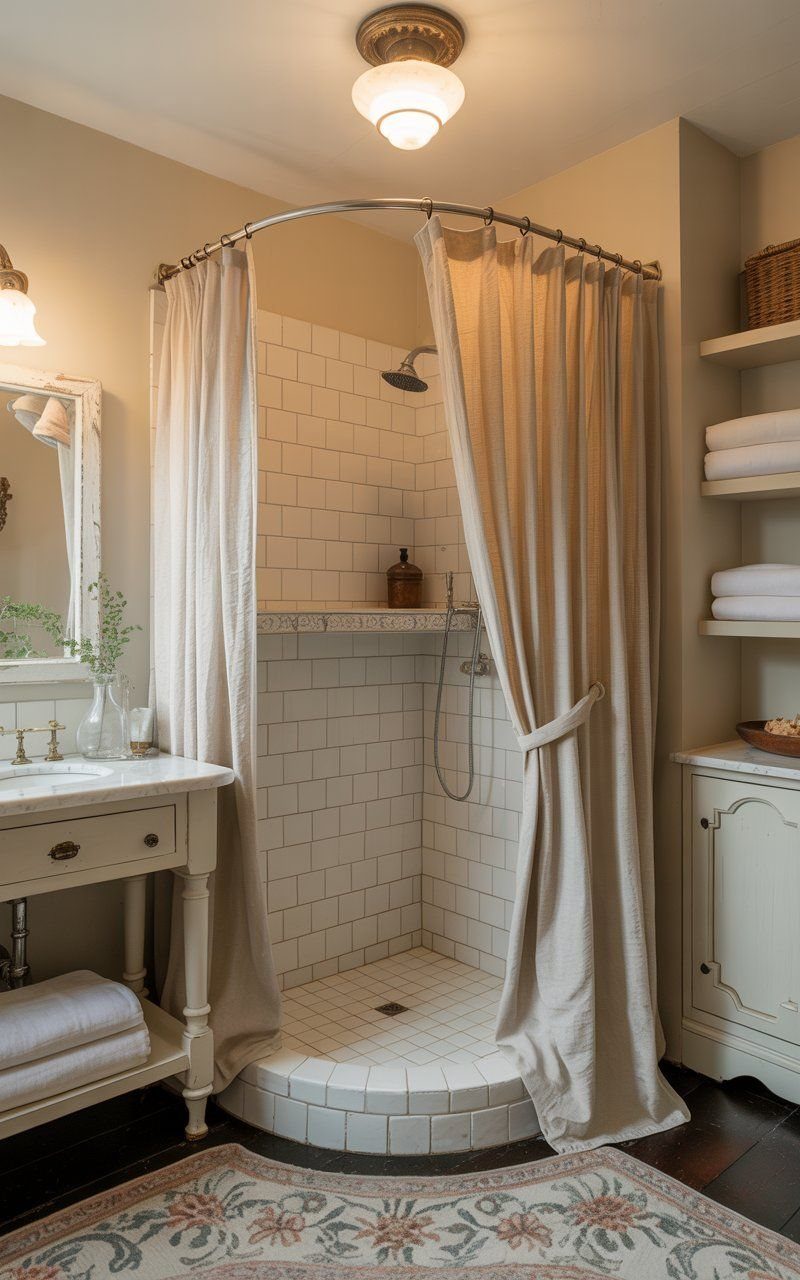
A curved rod bows outward, so the curtain sits away from your shoulders and gives you more elbow room inside the shower.
That extra room also helps water stay in, since the fabric hangs farther from the body and is less likely to cling.
In a white tiled shower like this, a metal curved rod looks tidy and takes the same hardware effort as a straight one. I’d pick it over a straight rod for any walk-in that feels tight.
6. Rustic Walk-in with Translucent Curtain
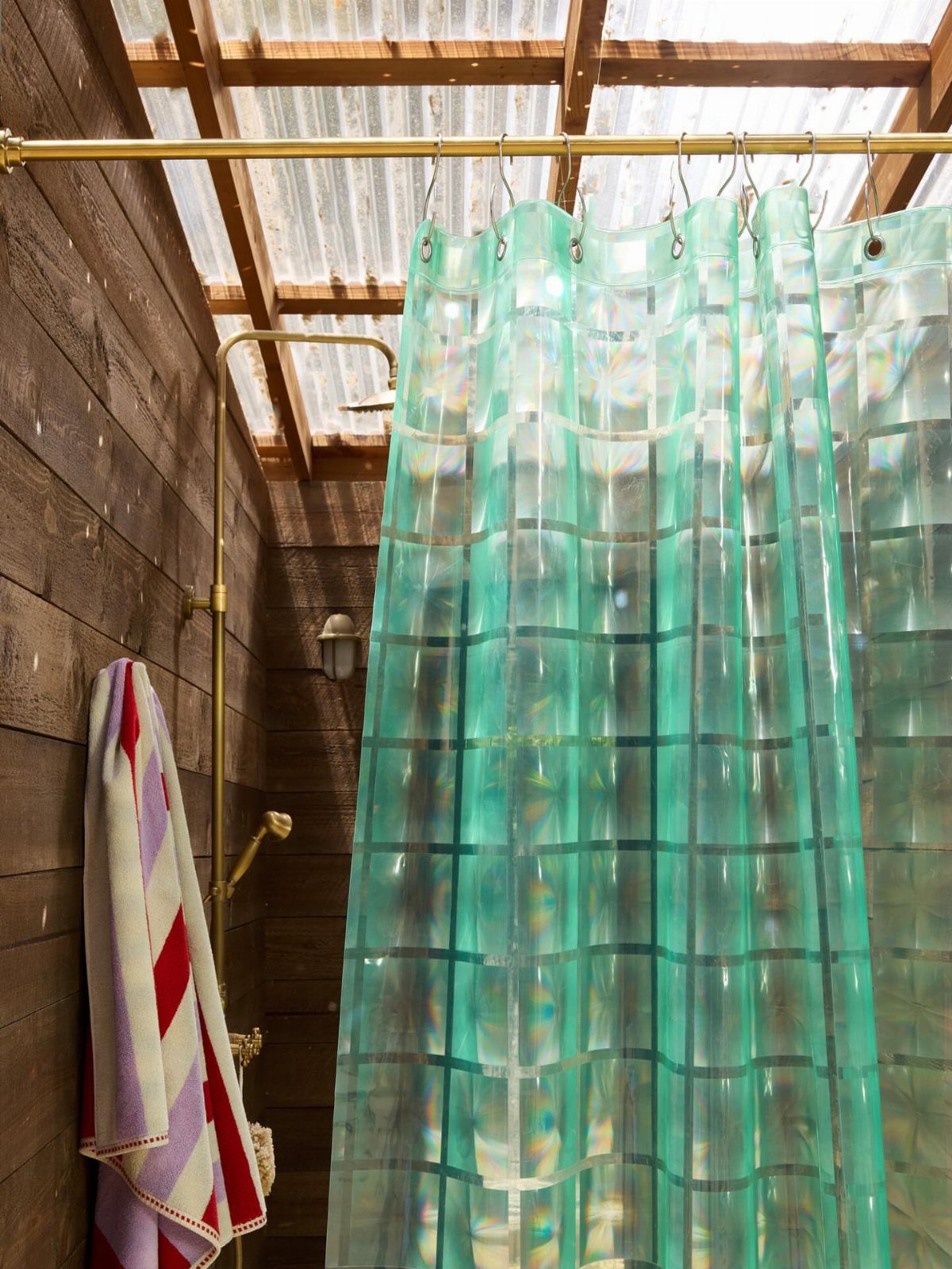
Dark wood walls and gold fixtures call for a curtain that lets light through, and a translucent green one keeps the shower bright instead of closed in. Plastic also shrugs off splashes better than cloth.
With a translucent roof overhead supplying the daylight, the curtain can be fully opaque or heavily patterned without darkening the shower, so pick it for looks and easy cleaning.
If your shower has no skylight, I’d pick a lighter tint so the space doesn’t turn dim.
Wipe wood surfaces dry nearby, since constant water exposure is hard on them.
7. Cream Curtains with Gold Fixtures
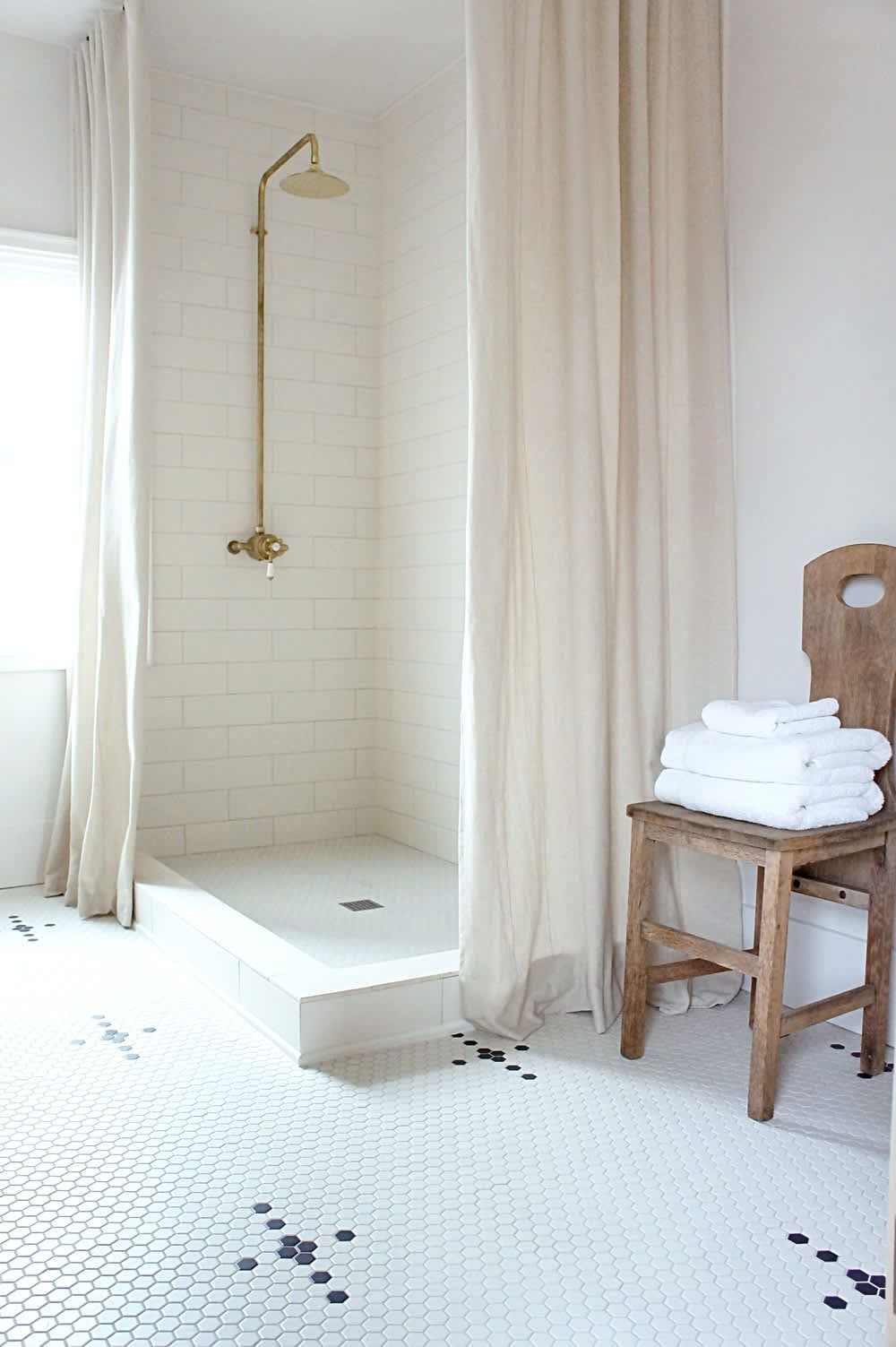
Gold hardware against white tile is a warm pairing, and cream fabric softens it further than a stark white curtain would.
The hexagonal floor with black accents gives the pale room some grounding, so the curtain doesn’t have to carry any pattern.
I’d match the rod, rings and hooks in one gold finish so they read as a set. Choose a cream a shade warmer than the walls, and the fabric will look intentional instead of left over.
Gold shows water spots, so wipe the rod now and then.
8. Arched Entryway Shower Curtain
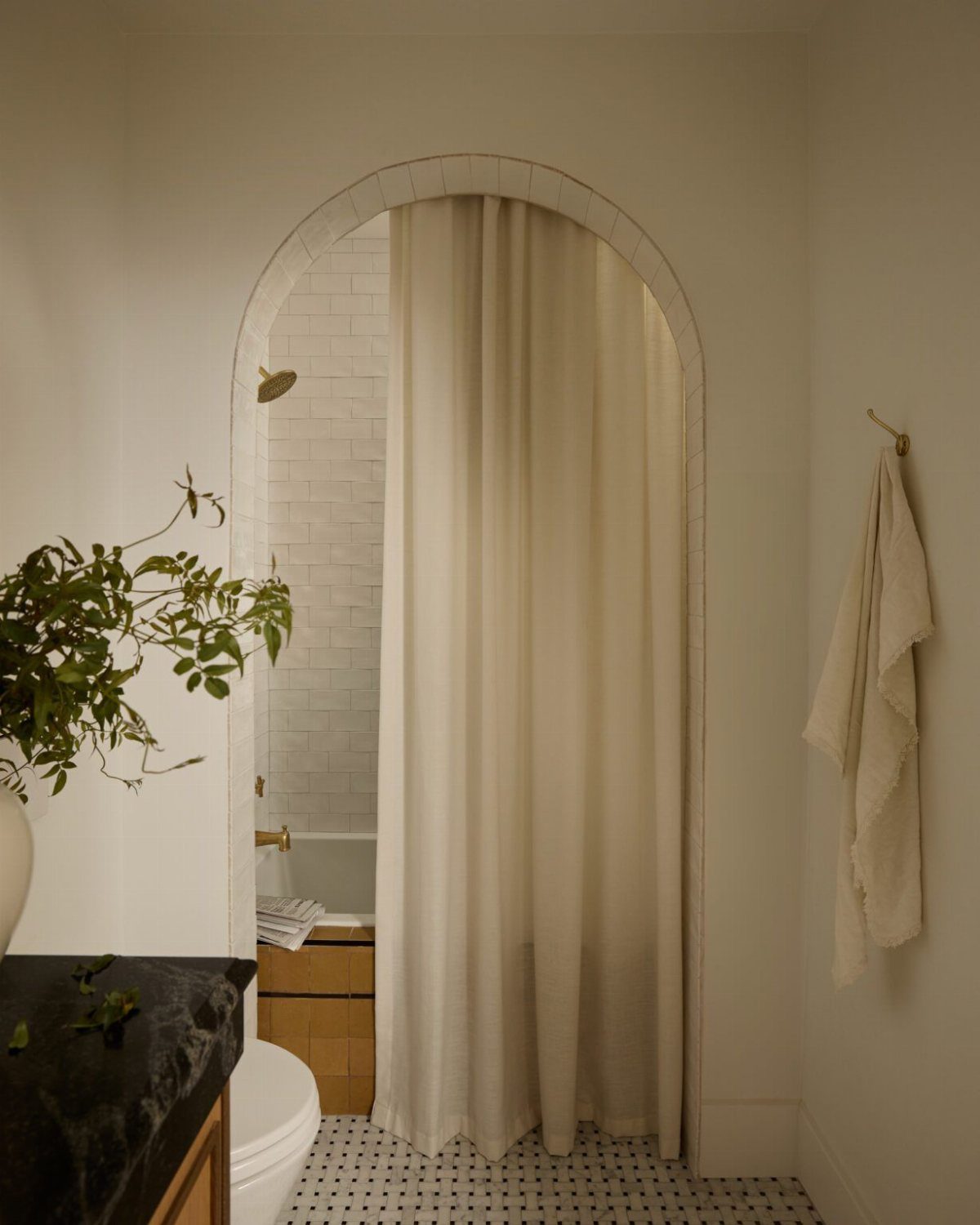
An arched opening gives a curtain a frame, and that changes how it reads. Hung inside the arch, cream fabric follows the curve of the tile instead of cutting across the room like a flat panel.
A straight rod across the base of the arch is the simplest route, and mounting it just inside the opening keeps the tile edge visible.
Length matters here: let the curtain hang to within about an inch of the floor, because a short one cuts the arch off at the knees.
Arches make a rod fit trickier than a standard opening, so measure the width at the spot where the rod will sit before you buy.
9. Tied Back Fabric Curtain
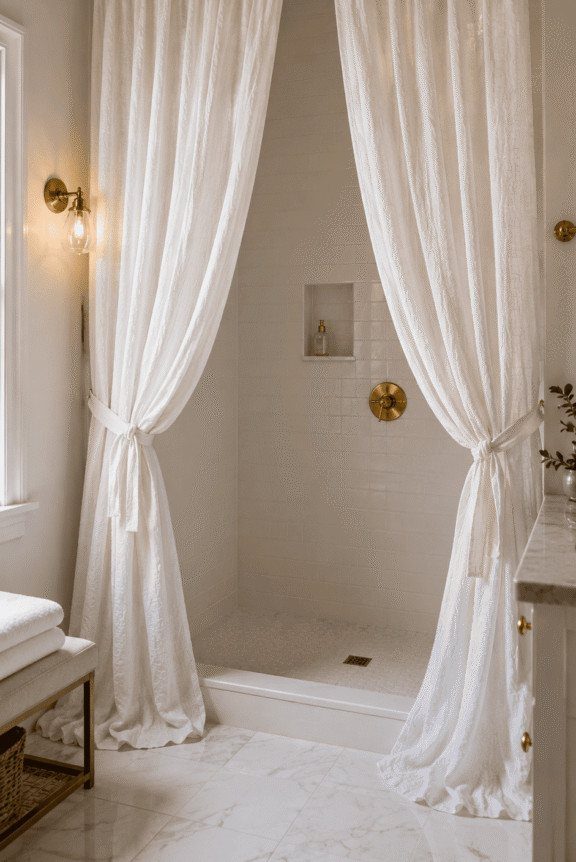
Tied back, a white curtain turns from a barrier into a piece of decoration, and the shower stays open when nobody is using it. A tieback on each side lets the fabric gather in even folds beside the gold rod.
I like this for a walk-in with a bench, since it keeps the seat clear and easy to reach. Use a fabric tie or a hook set at about hand height so you can loosen it quickly.
Pull the panels closed before you turn on the water, because white fabric left tied back near the spray will pick up splashes and mildew spots.
Choosing Between Curtains and Doors
Glass wins on containment and low upkeep; a curtain wins on price and on how easily you can change it. Which one suits you depends on how you shower and how often you get bored of your bathroom.
If you want a polished, modern look and the least water on the floor, choose a glass door. If you rent, like swapping your look, or need a wider entrance, a curtain is the better fit.
Settle the budget first, then decide how much cleaning you’ll tolerate. That usually answers it.
Water Leakage Prevention
A liner is the first fix. It adds a second barrier so water doesn’t soak through the fabric and drip onto the floor.
Weight matters too. Sewn-in weights or a few magnets along the hem hold the curtain in place so the spray can’t push it out over the floor.
Look at where the hem ends: it should hang just above the shower pan or floor, and it should stay inside the pan’s edge.
If the curtain hangs too high, water slips out underneath, so it should line up with the pan.
A curved rod pulls the fabric away from your body and keeps it closer to the walls, which helps with splashes.
If you have a curbless shower, installation counts. Done wrong, the floor won’t slope properly and water ends up in the bathroom, so get that part right before you worry about the curtain.
Maintenance Tips for Shower Curtains
Choose a mildew-resistant liner and treat it as the part you replace. It’s cheap and easy to swap, and it takes the moisture so the decorative curtain doesn’t.
Turn on the exhaust fan when you step in and leave it running for 20–30 minutes afterward, or crack a window, so the damp air has somewhere to go. Damp air that lingers is what lets mold start.
A curved rod gives you more elbow room, and either style keeps the fabric hanging straight so it wears more slowly.
Curtains cost little and swap out in minutes, so once one turns stained or stiff, replace it rather than nursing it along. Swap it out and enjoy a fresh look.





