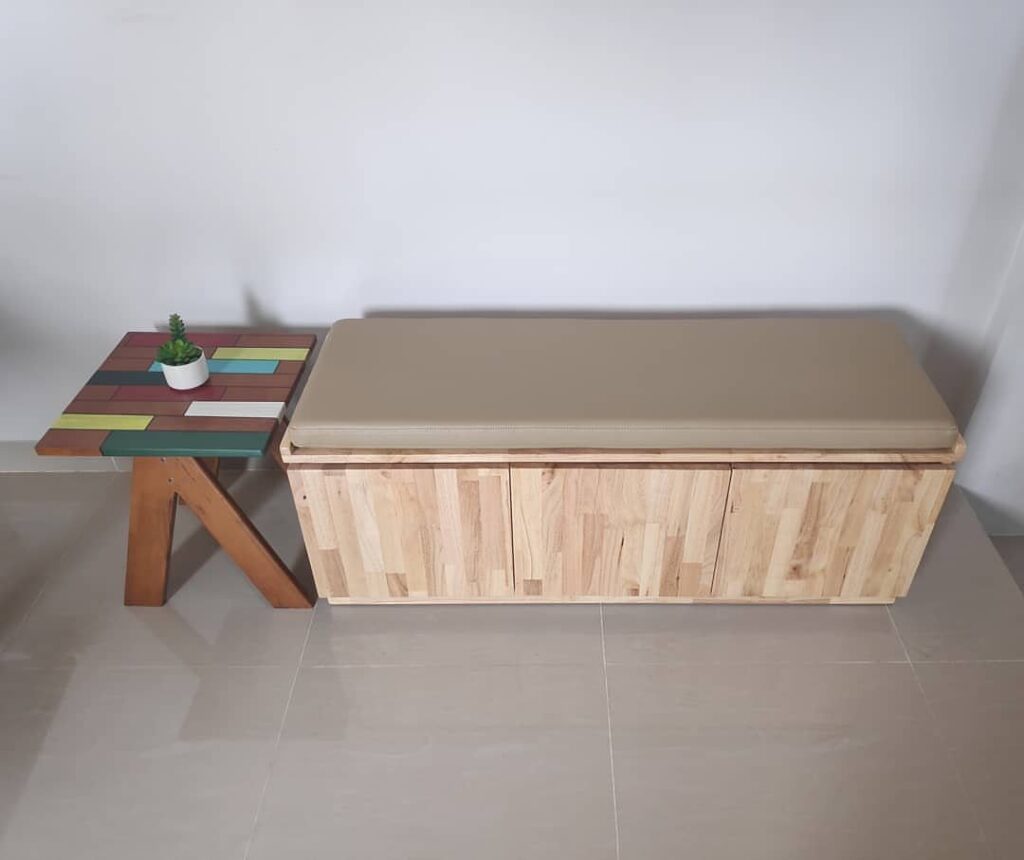
Which of these ideas fits depends on one fact: whether you can drill into the wall, since hooks and rails, a floating console table and a hung mirror all need screws, while a rug, a storage bench and a slim shoe cabinet just sit on the floor.
Renters can lean on a storage bench, a patterned runner or a rug and a slim shoe cabinet, which all go down without a single hole, while owners can mount a floating console table or a rail into studs, which takes more than a weekend of styling.
The list runs from a runner or a branch of hanging jars that costs little to a hardwired fixture that needs an electrician.
1. Storage Bench
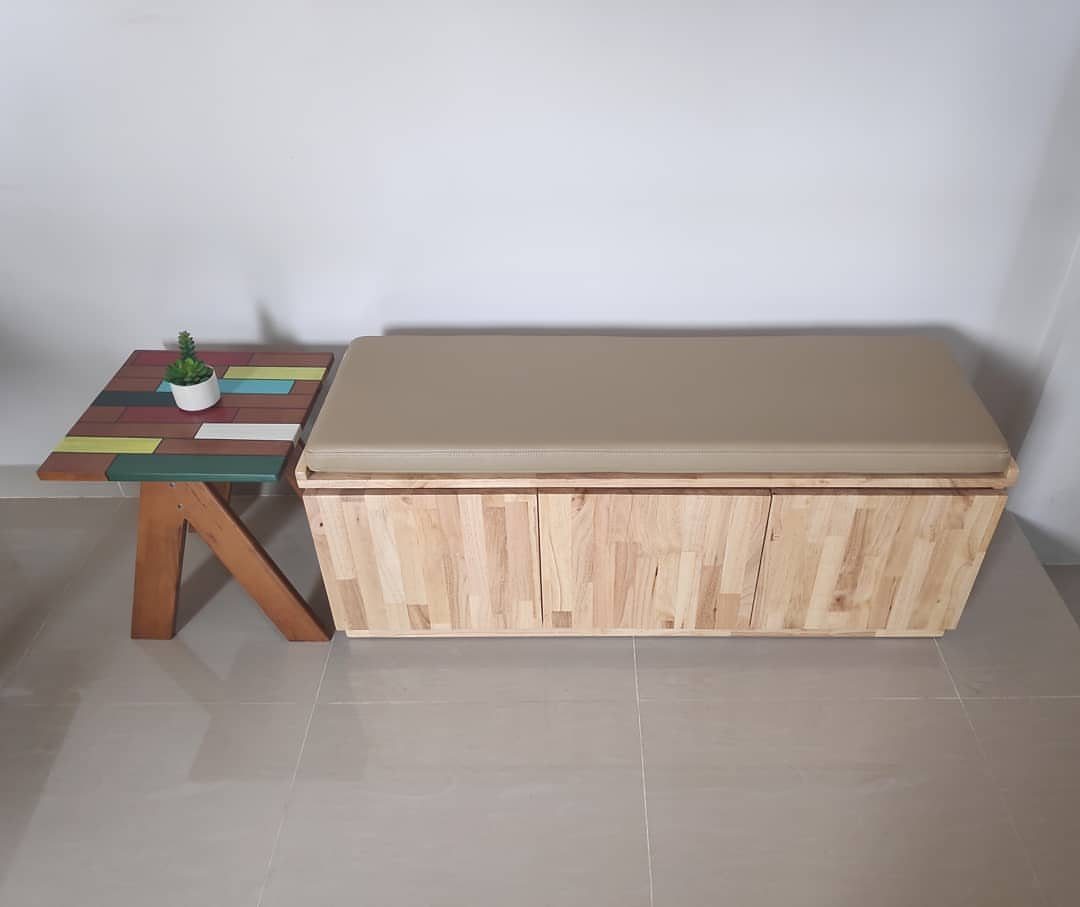
A bench with a lift-top or cubby base does two jobs in the footprint of one, and in a tight entry that matters. Shoes, scarves and a spare tote disappear underneath, so the floor stays clear.
I like a light wood frame with a beige cushion, since the pale tones keep a small entry from feeling crowded.
Pick a bench whose depth matches the wall space you have, and leave room for the front door to swing freely.
A small side table with a plant can sit at one end, though skip it if the bench already fills the wall.
2. Hooks and Rails
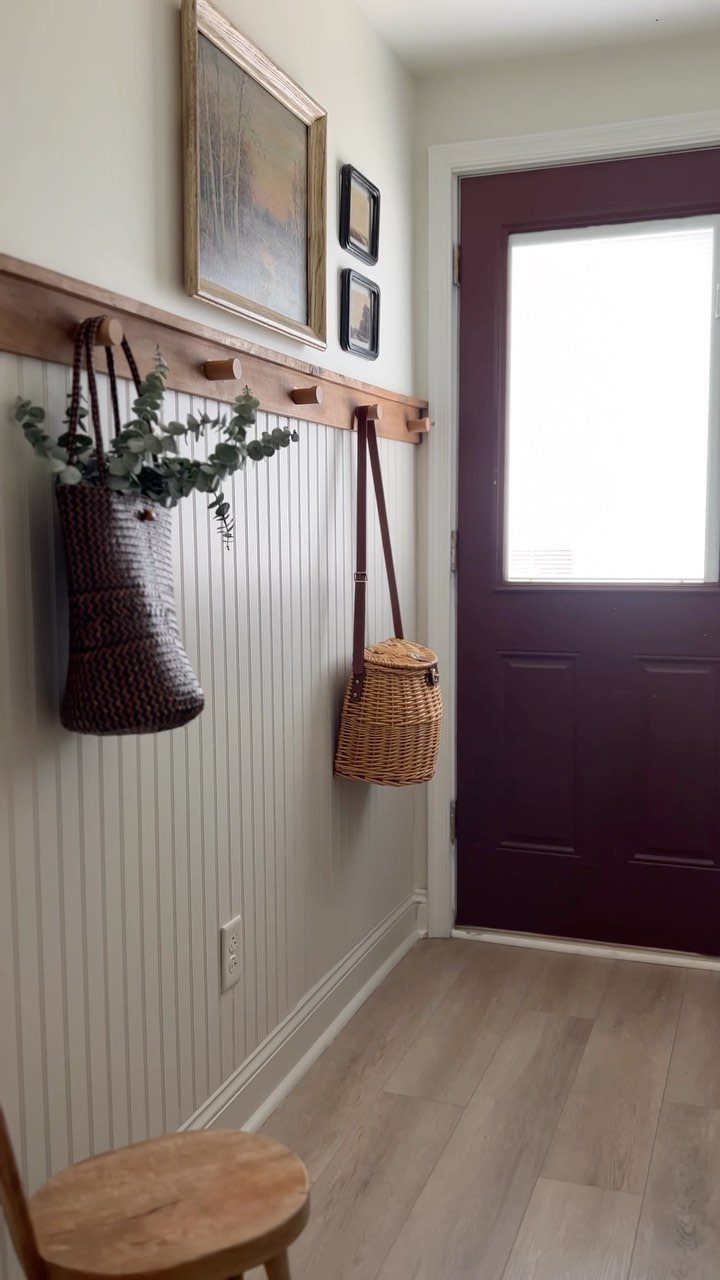
A single wooden rail with hooks gives a narrow wall room for coats and bags without taking up any floor.
Mounting it on beadboard is a smart move: the vertical lines make the wall look taller, and the boards give you something solid to fasten into.
Space the hooks evenly and keep the heaviest items nearest the ends. Woven bags work well hung as decor, since they stay visible and ready to grab.
Hang art above the rail, as in this setup, so the wall reads as styled and not just practical.
3. Hang a Mirror
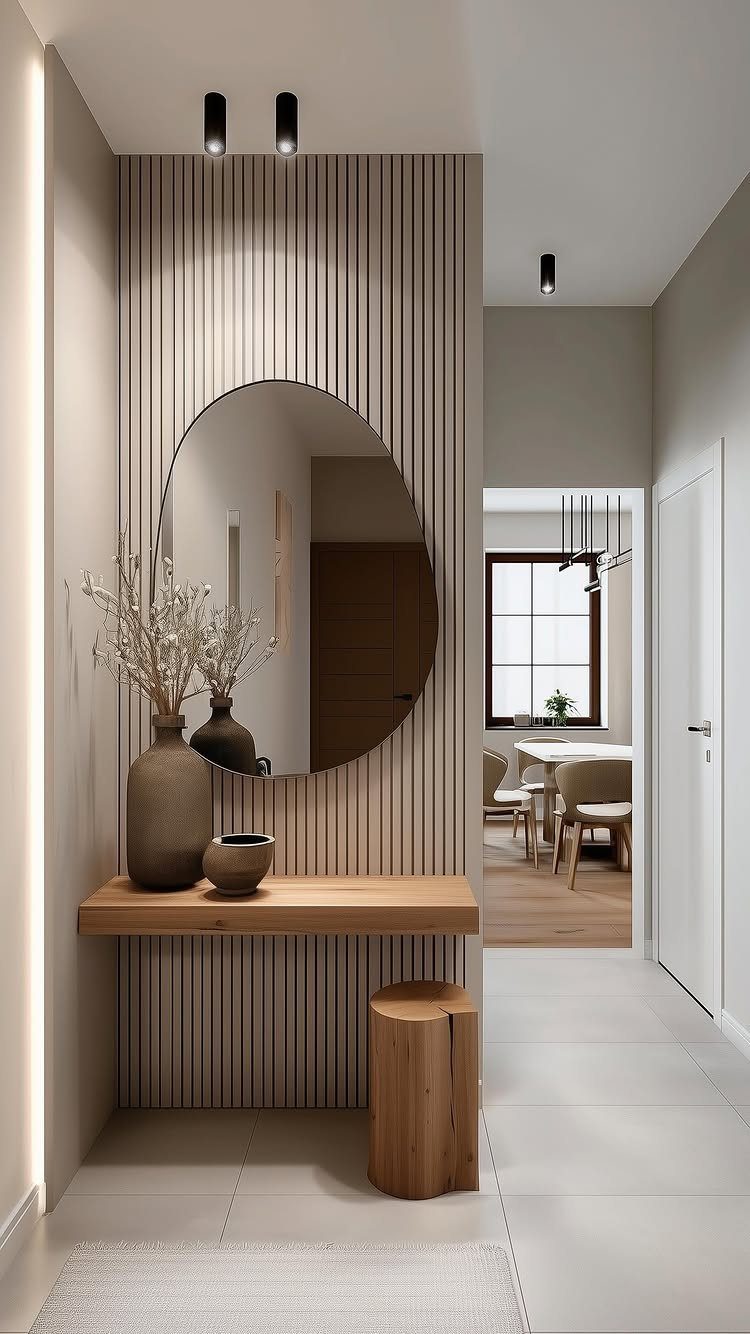
Mirrors earn their keep by bouncing light from the doorway back into the room, which makes a tight entry feel deeper. A large round one, hung over a floating shelf, also softens the straight lines of a slatted wall.
Go big.
A small mirror looks like an afterthought, while an oval or circle near full height does the work. Hang it across from a light source, whether a window or a lamp, to get the most out of it.
Pair it with a shallow shelf for keys and a vase.
4. Floating Console Table
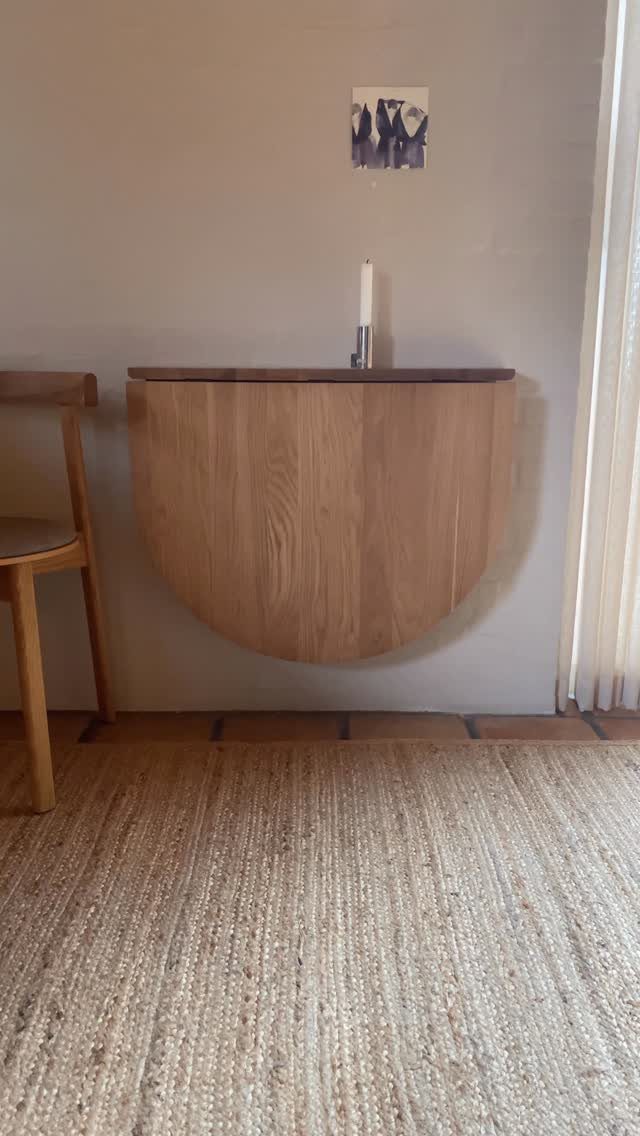
A wall-mounted console leaves the floor open beneath it, which makes a tight entry feel lighter than a table with legs ever could.
A semi-circular top is my pick for narrow halls, since there are no sharp corners to catch a hip or a bag strap.
Anchor it into studs or use proper wall anchors rated for the load, because a floating top carries all its weight on the wall. Keep the surface for a candle and a few small things.
A jute rug underneath adds texture and defines the spot.
5. Lighting Fixtures
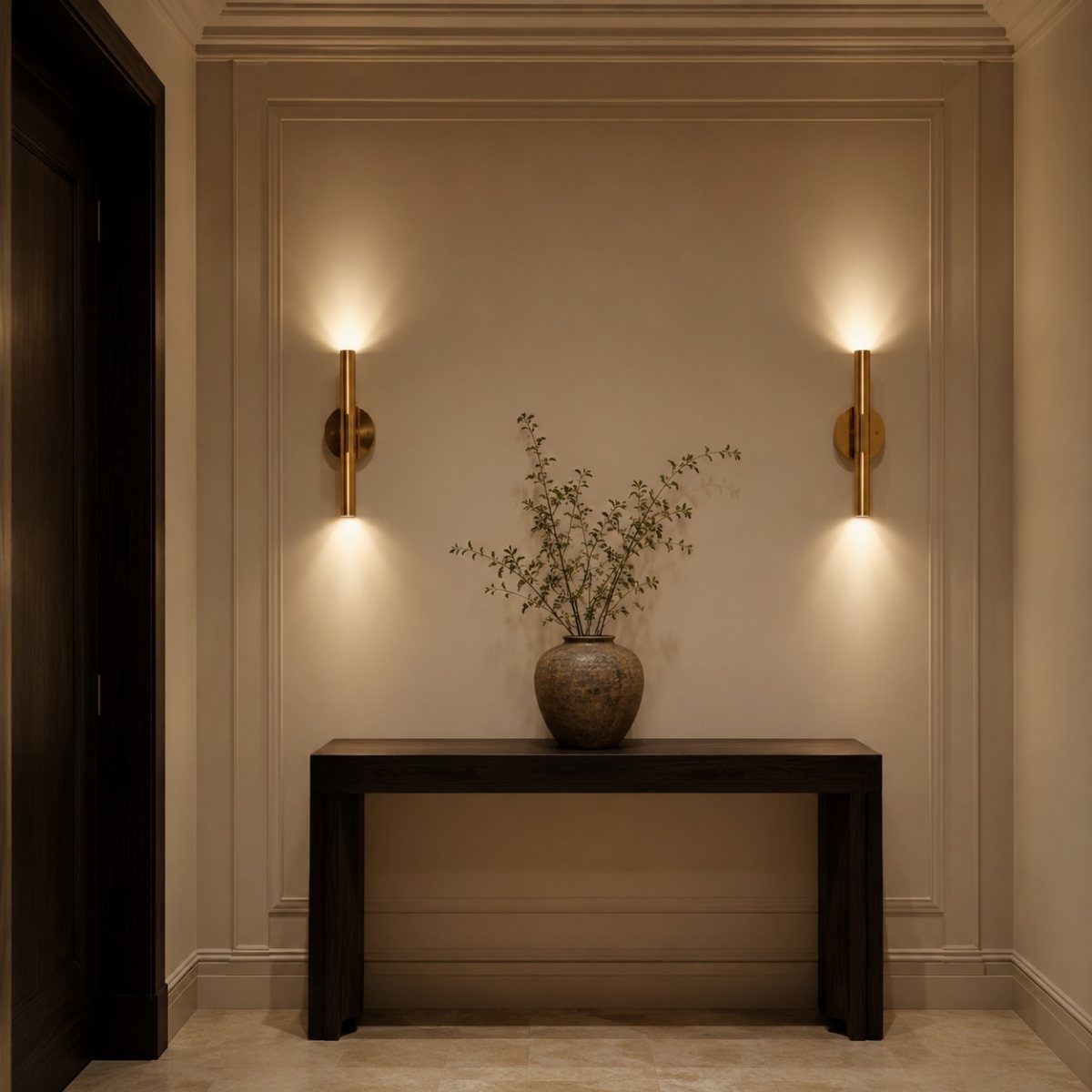
Wall sconces light an entry without using any table or floor space, and a matched pair on either side of a console makes a small area feel planned.
Hardwired sconces need an electrician, so on a renter’s budget look at plug-in versions with a cord cover painted to match the wall. Warm bulbs flatter the room best.
Hang them roughly at eye level, high enough that the bulb isn’t glaring when someone walks in.
6. Patterned Runner
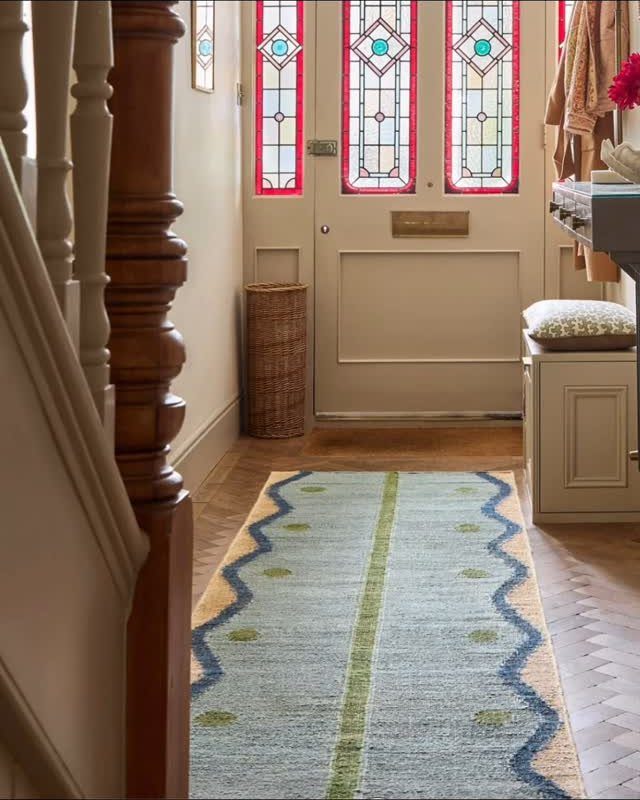
A runner in a blue and green pattern hides scuffs and dirt from daily traffic, and it adds color to a narrow entry. Patterns are forgiving in the spot where wet shoes land.
Size matters for budget. A runner layered over the existing floor gives a narrow entry pattern and color for far less than a custom piece.
Choose a runner that leaves a few inches of floor showing on each side, and add a rug pad so it stays put.
7. Display Plant Friends
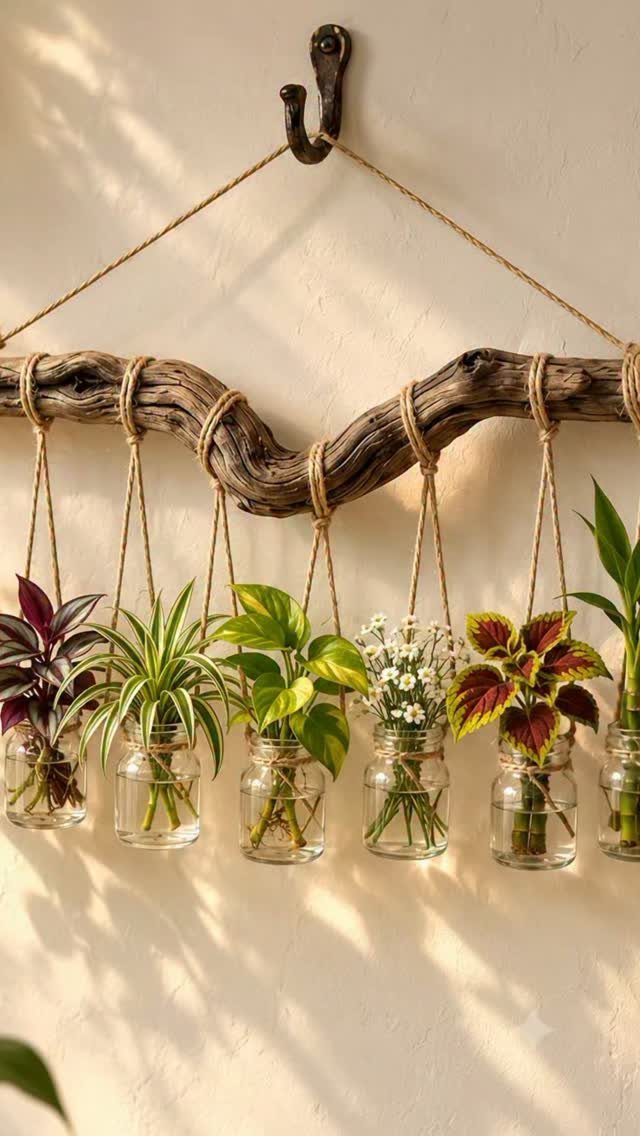
Small glass jars hung by twine from a driftwood branch turn a bare wall into a living piece, and the whole thing hangs from a single wall hook.
Cuttings in water suit it well, since a jar needs no soil and no pot.
Vary the twine lengths so the jars sit at different heights. Keep the arrangement to one wall, away from the door swing, so nothing gets knocked.
A branch like this costs little, which fits a rental budget.
8. Minimal Entryway
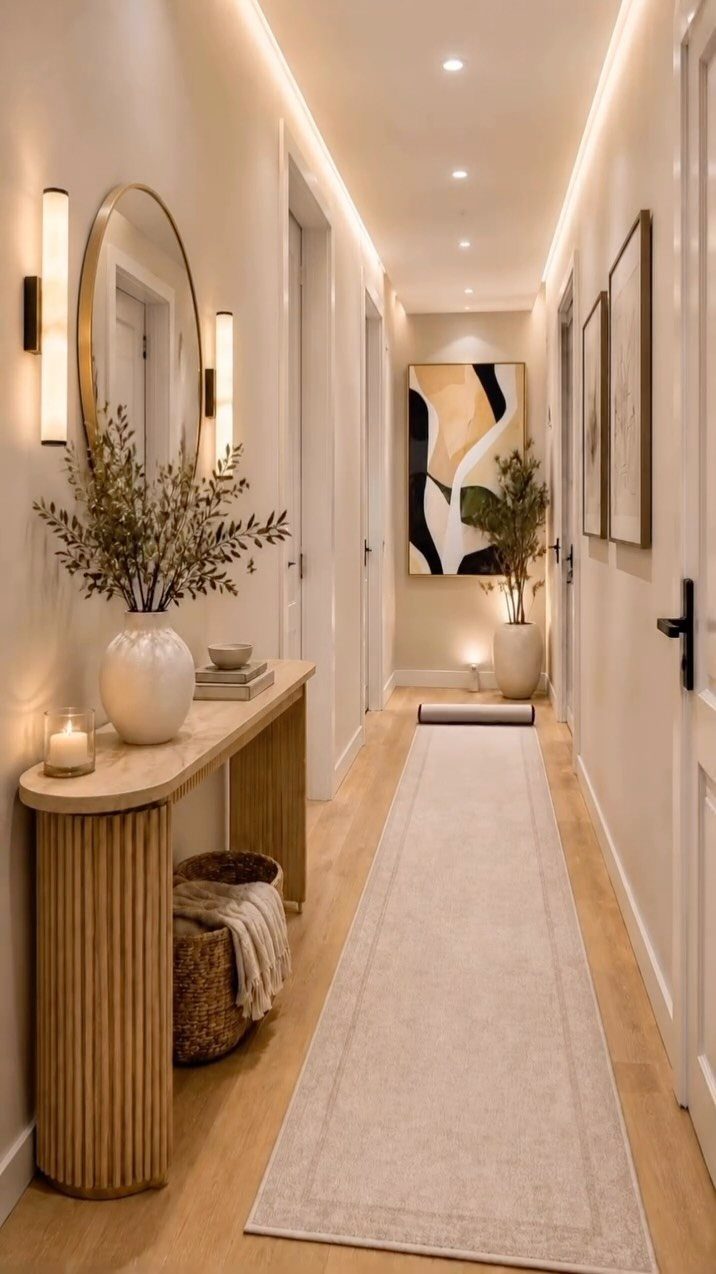
Minimal in a narrow hallway means each piece has a job.
Stick to one color family so the entry reads as calm instead of crowded. Pale wood and a beige runner calm the eye, so a lone piece of abstract art at the far end gives the hall somewhere to lead.
Resist adding a second shelf or a bowl "just in case." Empty surface is what makes a small entry look larger.
There’s no such thing as too many hooks in a small entryway — each inch of space is extra precious.
9. Use a Rug
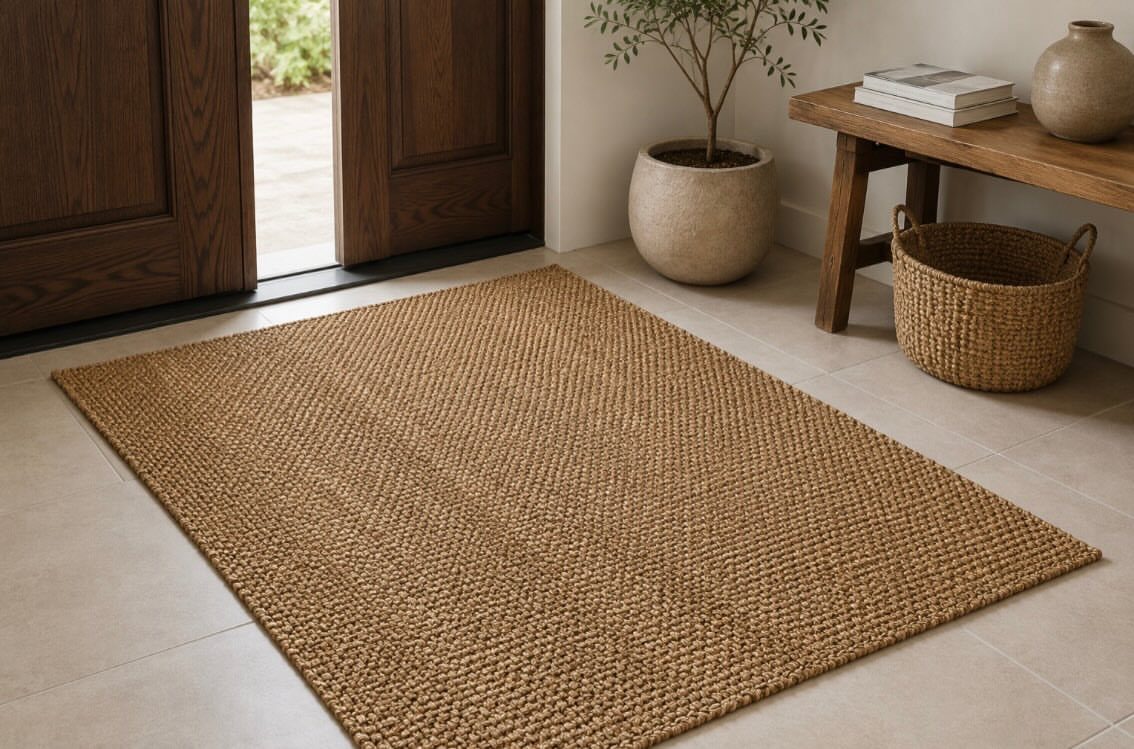
A woven jute rug marks where the entry begins, even when the floor runs straight into the next room. On light tile, the brown fiber adds warmth and a natural texture that tile alone lacks.
Pick a size that fits inside the entry zone, with a strip of tile showing around the edge. A rug that stops short of the doors lets them open freely.
Jute pairs well with a wooden bench and a basket nearby, and I would choose it over a bright pattern if the space already has a lot going on.
10. Slim Shoe Cabinet
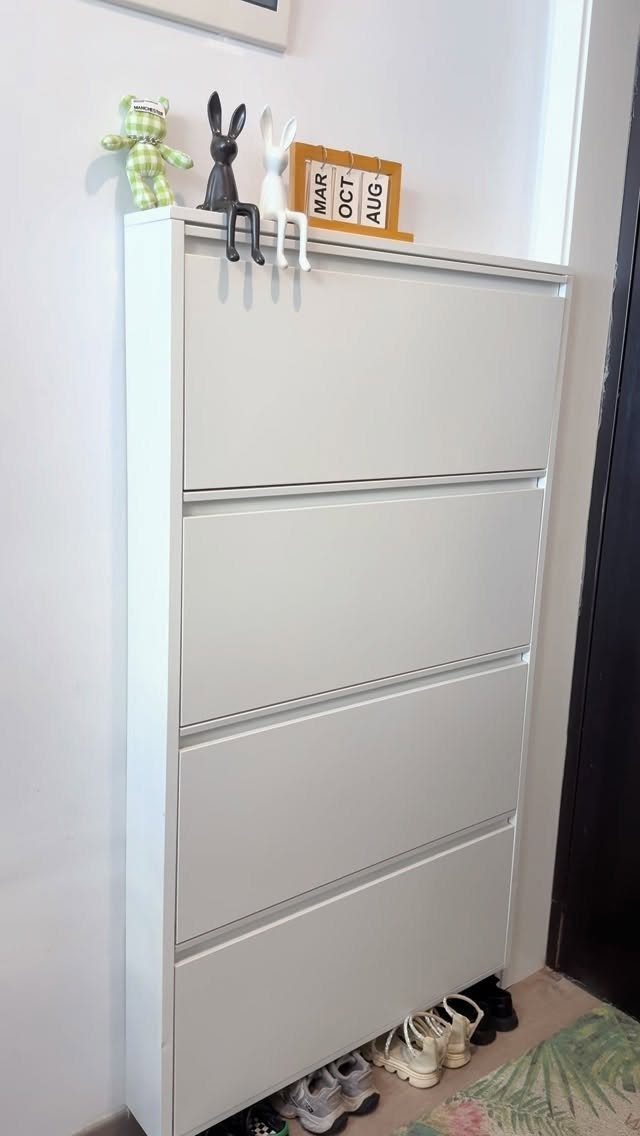
Height is what makes a slim shoe cabinet work: a tall, narrow white unit uses the vertical space that most entries waste. White blends into a white wall, so the piece nearly disappears.
The top is free real estate. A couple of small figurines and a calendar are plenty; any more and the cabinet starts to look cluttered.
I would keep a few everyday pairs on the floor beneath and tuck the rest behind the doors.
Declutter the Entryway
A cabinet with doors hides what open shelves put on display: the pile of shoes, the stray jackets, the backpacks and mail that collect near the door.
If a closed unit won’t fit, hooks and wall-mounted pieces keep the floor free.
Sort by season. Off-season shoes and heavy jackets belong in a closet or under a bed, so the entry holds only what you wore this week.
Mail piles up fastest, so give it a landing spot. Two wall-mounted bins split the job cleanly: incoming mail in one, outgoing errands in the other.
Skip bulky furniture. An entry with limited square footage needs only what you use daily.
Create a Welcoming Atmosphere
A small entry is the place to be bold, since you cross it in seconds and a strong choice costs little.
Patterned wallpaper, a colorful tile floor, a bright front door or a wall color you love all show your taste right at the threshold.
Statement lighting does the same job. An interesting sconce or a piece of art gives the space a personality without needing floor area.
For comfort, add softness: colorful pillows and a rug make the entry feel like part of the home. A basket tucked beneath a bench or console keeps loose items contained and invisible.
Pick one loud element and let the rest stay quiet, so the entry feels welcoming and not busy.
Maximize Natural Light
Entries are usually dark, and a door between the entry and the next room blocks what light there is.
Swapping that door for an open arch lets light travel through and makes the entry feel larger and more connected to the rooms beyond.
Privacy still matters in some homes. A curtain in place of the door lets you close the space off when you want to, then pull it fully aside to keep the flow open.
Removing a door is a bigger project than a weekend of styling. If you rent, ask first, and consider the curtain as the easy version.
Frequently Asked Questions
What are some good ideas for an entryway in a small space?
Go vertical and make each piece earn its spot: a wall rail with 4–5 hooks takes care of coats and bags, and a lift-top bench or one with cubbies underneath hides the shoes and tote bags.
A single color family and a bare stretch of shelf or bench top will make a small entry feel calmer than any extra decor.
What can make an entryway look tacky?
Clutter and oversizing do it fastest: bulky furniture, shoe piles, and too many baskets make a small entry look crowded.
Having no lighting at all also hurts, and a plug-in lamp or sconce fixes that cheaply. Bold choices are fine, but pick one loud element, like wallpaper or a bright door, and keep everything else quiet.





