Which view suits you depends on the room you will spend the most time in, because the list runs from a sunset bedroom to a rooftop, a Midtown high-rise and a Woolworth Building outlook.
The ideas range from Long Island City waterfront windows to a Sutton Place high-rise, then on to a Brooklyn Heights skyline and a high-altitude coastal view.
Your daily routine decides which one fits, whether that’s waking up to a sunset skyline, looking out at the East River bridges or checking the Empire State Building from the Beatrice.
1. Long Island City Waterfront Views
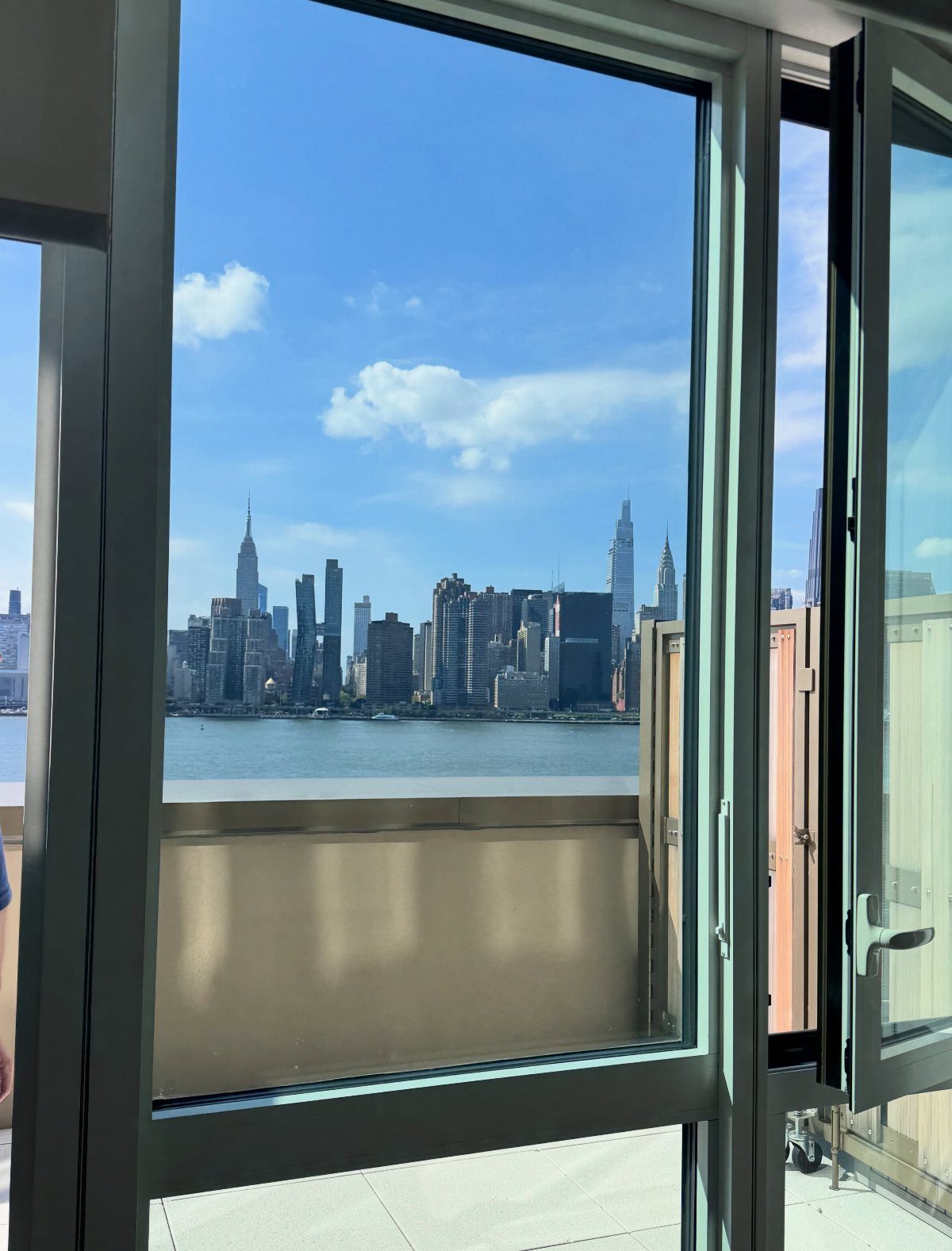
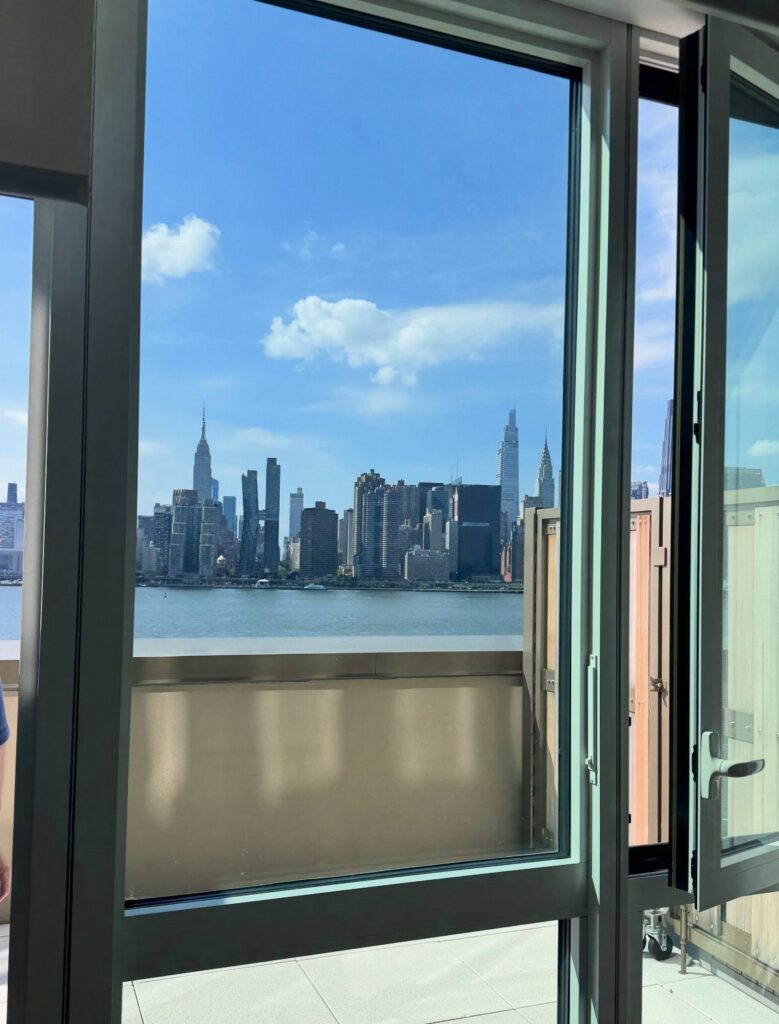
A window or glass door that opens fully changes how a skyline view lives in a room.
With the door open, the Empire State Building and Chrysler Building stop being a picture and become part of the air in the apartment.
Keep the sill area clear and the curtains pulled to the sides so nothing cuts across the river and skyline. A single chair angled toward the opening is all the furniture this view needs.
2. Greenpoint River Views
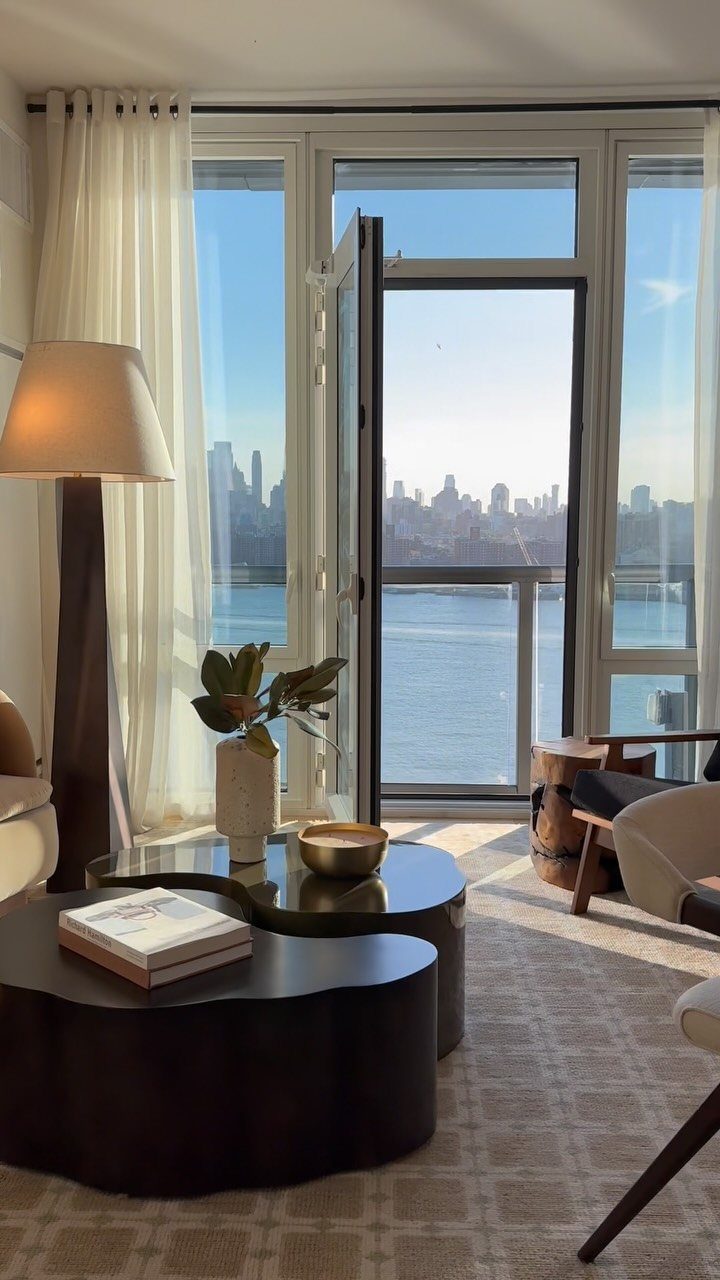
Greenpoint’s pitch for renters is simple: a river and the city skyline beyond it, seen from the sofa. A large open window does most of the work, so the furniture can stay quiet.
I would keep the room low and light, as it is here, with a lamp, small coffee tables and one plant. Anything tall near the glass starts blocking the skyline you are paying extra for.
3. Tribeca Hudson River Views
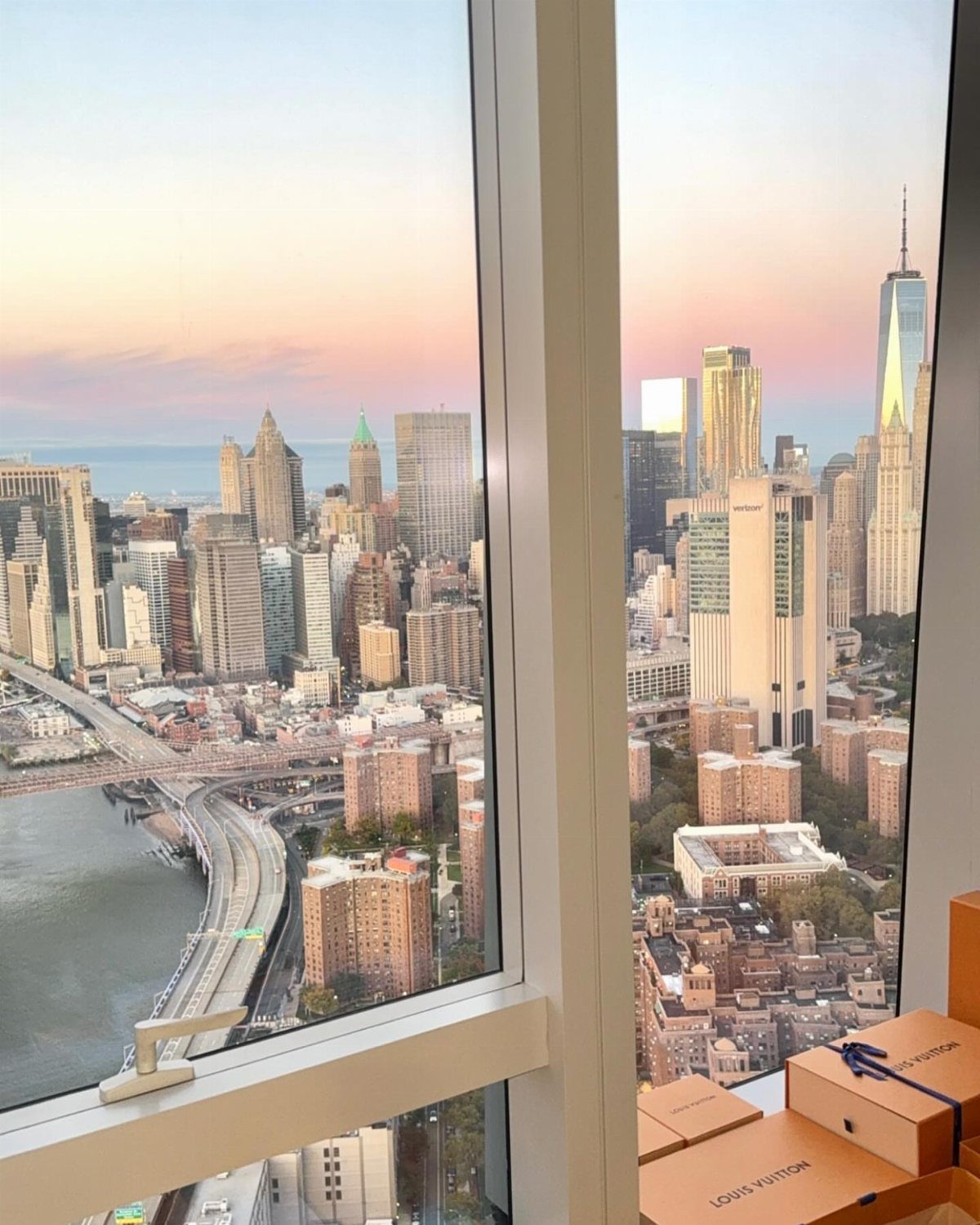
Hudson River views from a high-rise window reward a plain ledge and nothing more. Keep the sill clear or hold just a few objects, because the river and skyline are the main event.
If you tour apartments for the view, stand at the window and check what the glass frames at eye level, not just what shows from across the room.
4. Upper West Side Central Park Views
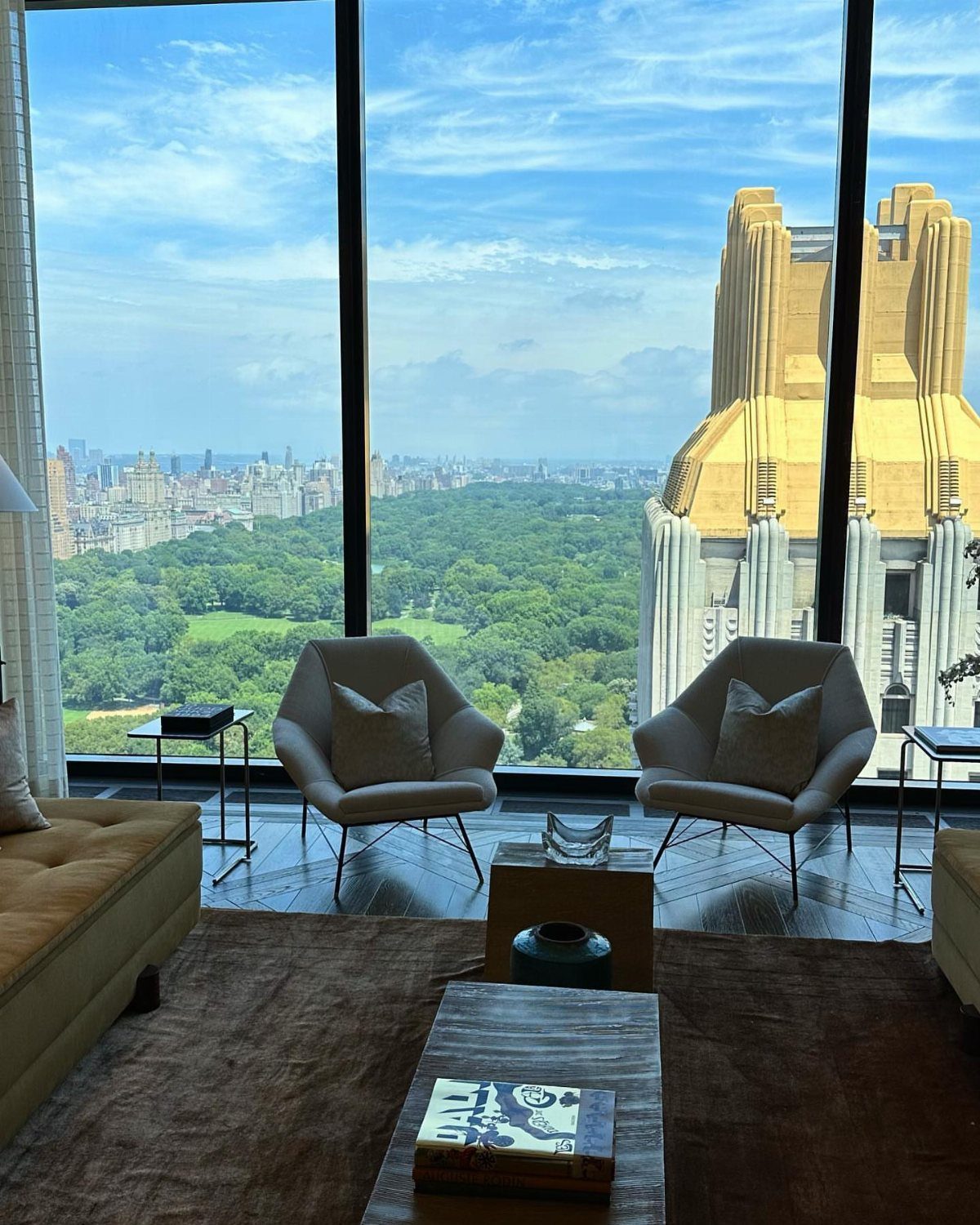
Floor-to-ceiling windows over Central Park ask for furniture that stays out of their way. Two white armchairs and a yellow sofa work because the white recedes and the yellow gives the room one warm color against the park’s greenery.
For a rental, I would copy that formula: neutral seating, one bold piece, and no heavy drapes across the glass.
5. Brooklyn Heights Manhattan Skyline Views
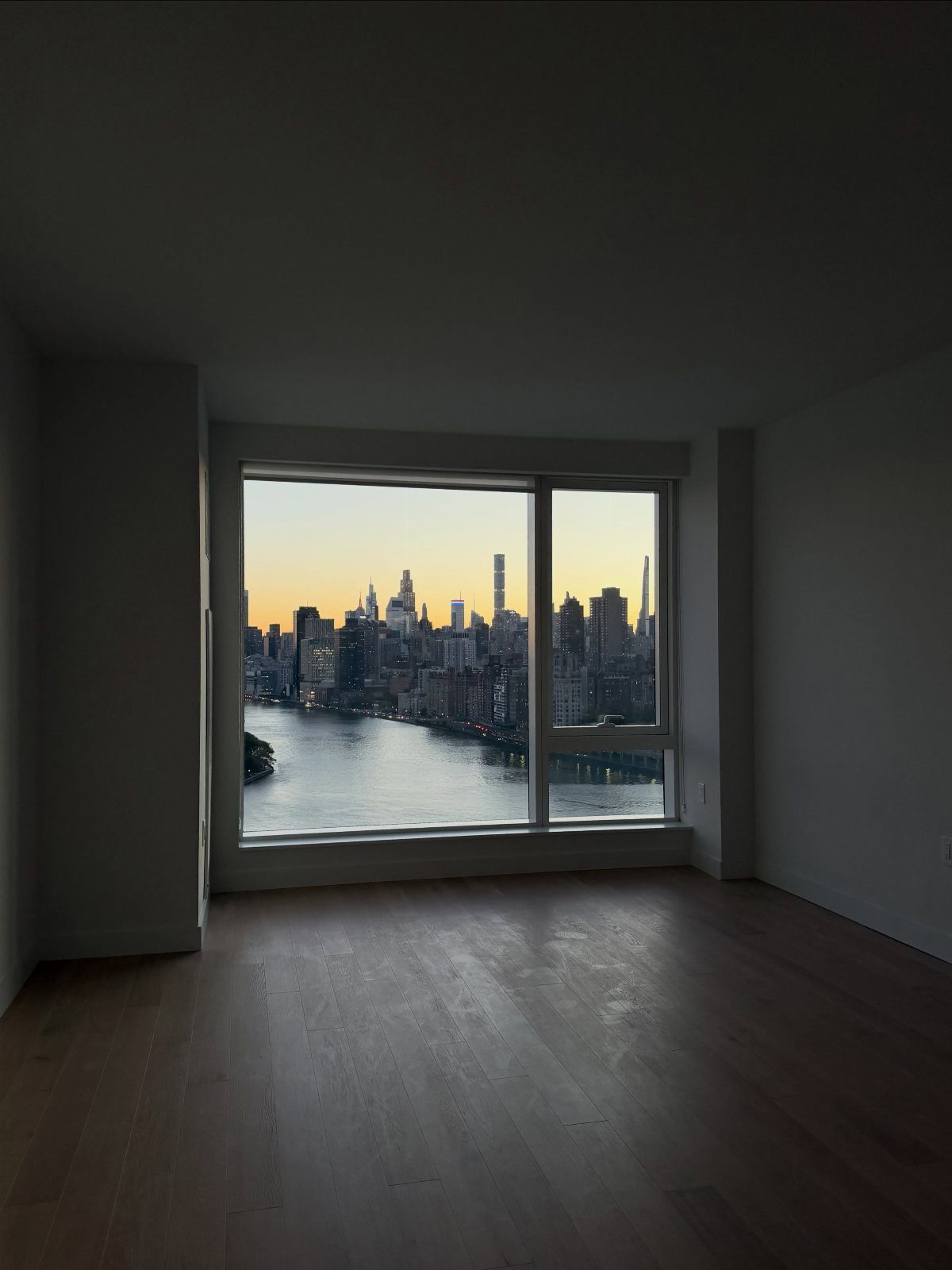
A skyline view like Brooklyn Heights does its best work in a room that asks for very little: pale wood floors, bare or sheer-covered windows, and furniture kept low so nothing blocks the glass.
The East River and Manhattan skyline at sunset supply the color.
If you move into a space like this, resist filling the window wall. Put a low sofa or a desk facing the glass, keep the floors bare or lightly rugged, and let the evening light do the decorating.
6. Sutton Place High-rise Views
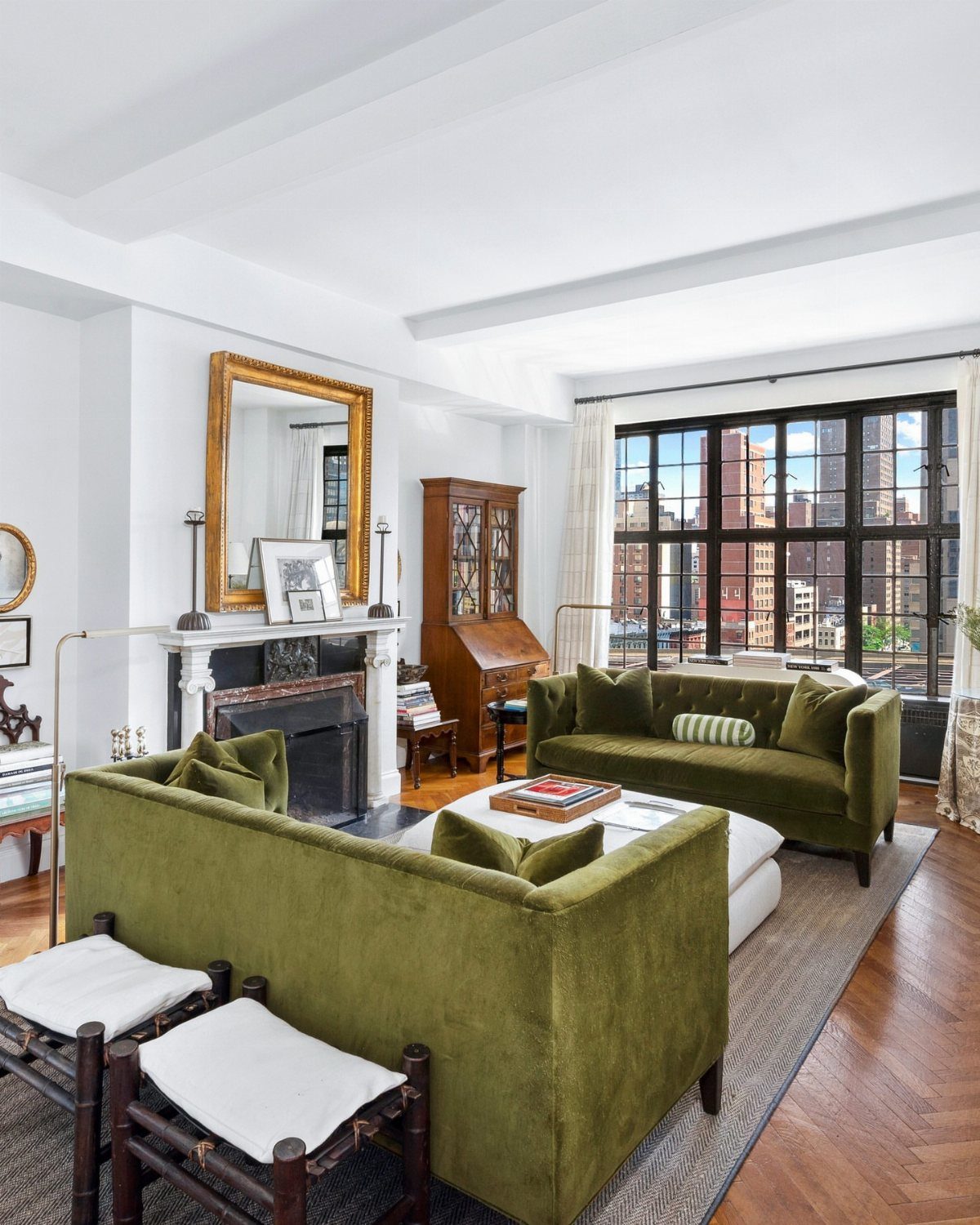
A high-rise window in a Sutton Place-style apartment gives you city buildings stacked into the distance, and dark furniture holds its own against that.
High-rise windows can make a room feel cold and glassy, so I’d ground it with heavy texture: a velvet sofa in a deep tone like olive green and a fireplace or other focal point on the solid wall.
I like this pairing for anyone worried that a skyline view makes a room feel cold. Deep, soft upholstery balances all that hard glass and steel outside.
7. Beatrice Empire State Building Views
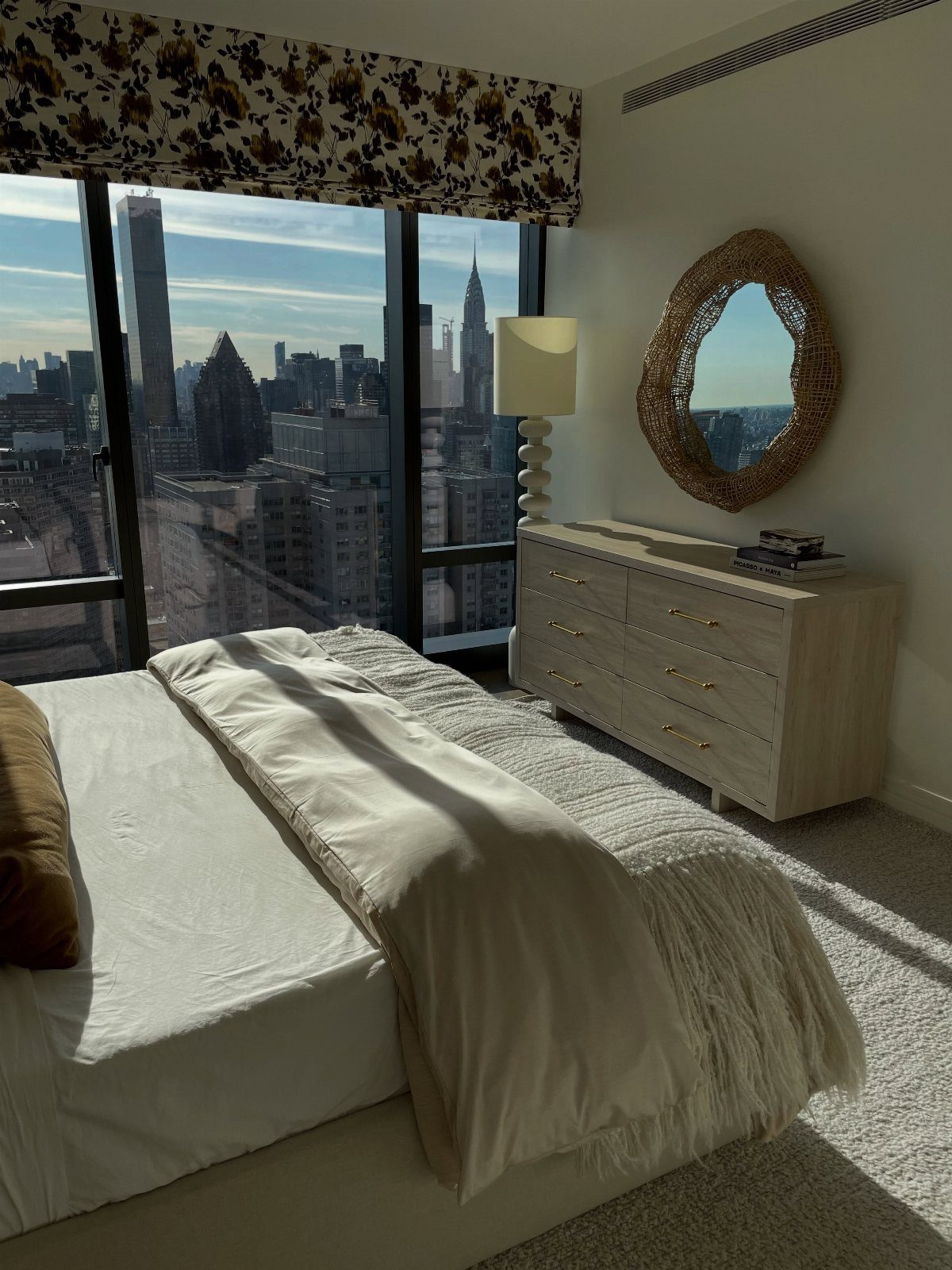
A bed placed so the Empire State Building sits in the window is the cheapest luxury a bedroom can have.
Keep the bedding plain and the dresser and mirror against a side wall, so nothing competes with the skyline at eye level.
I would skip a tall headboard here. Lying down, the view should be the first thing you see, and a low bed lets the window stay the focal point.
8. The Brooklyner Rooftop River Views
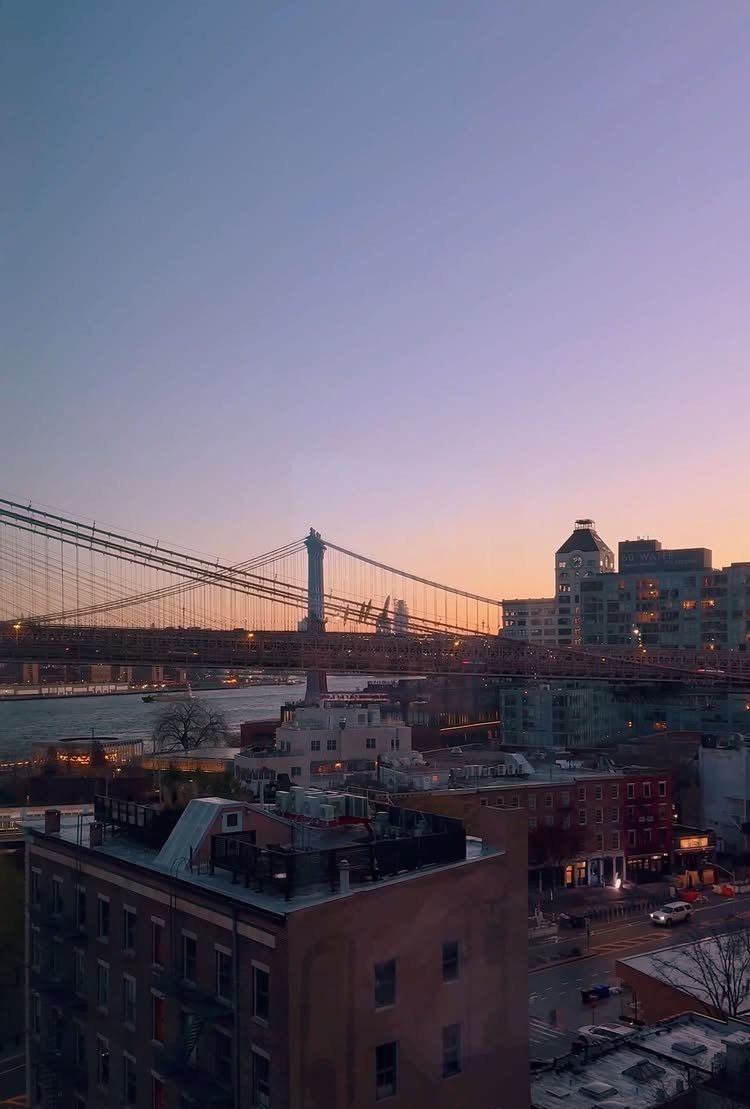
Rooftop views of the Manhattan Bridge, the East River and the Brooklyn Bridge reward showing up at dusk. The purple sky and the lit-up buildings are the draw, so book a late-afternoon viewing instead of a midday one.
Stand at the edge and look for what crowds the frame: rooftops, buildings, anything that cuts across the water. A clear line to both bridges is worth more than extra height.
9. Downtown Woolworth Building View
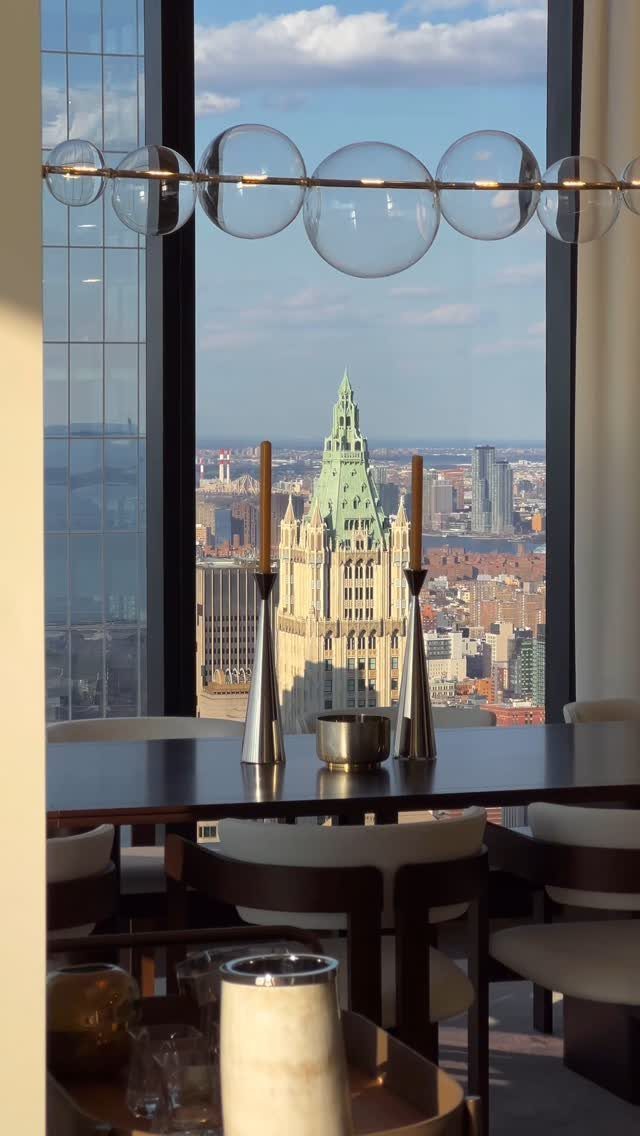
A dining table beside a wide window puts the Woolworth Building and Lower Manhattan in front of you at every meal. The dark table with white chairs is a smart pairing, since the pale seats stay light against the glass.
I would keep the chandelier like this one, a bubble style that adds shape without blocking sightlines. Choose a fixture that sits above the table, not in front of the window.
10. Midtown High-rise Skyline View
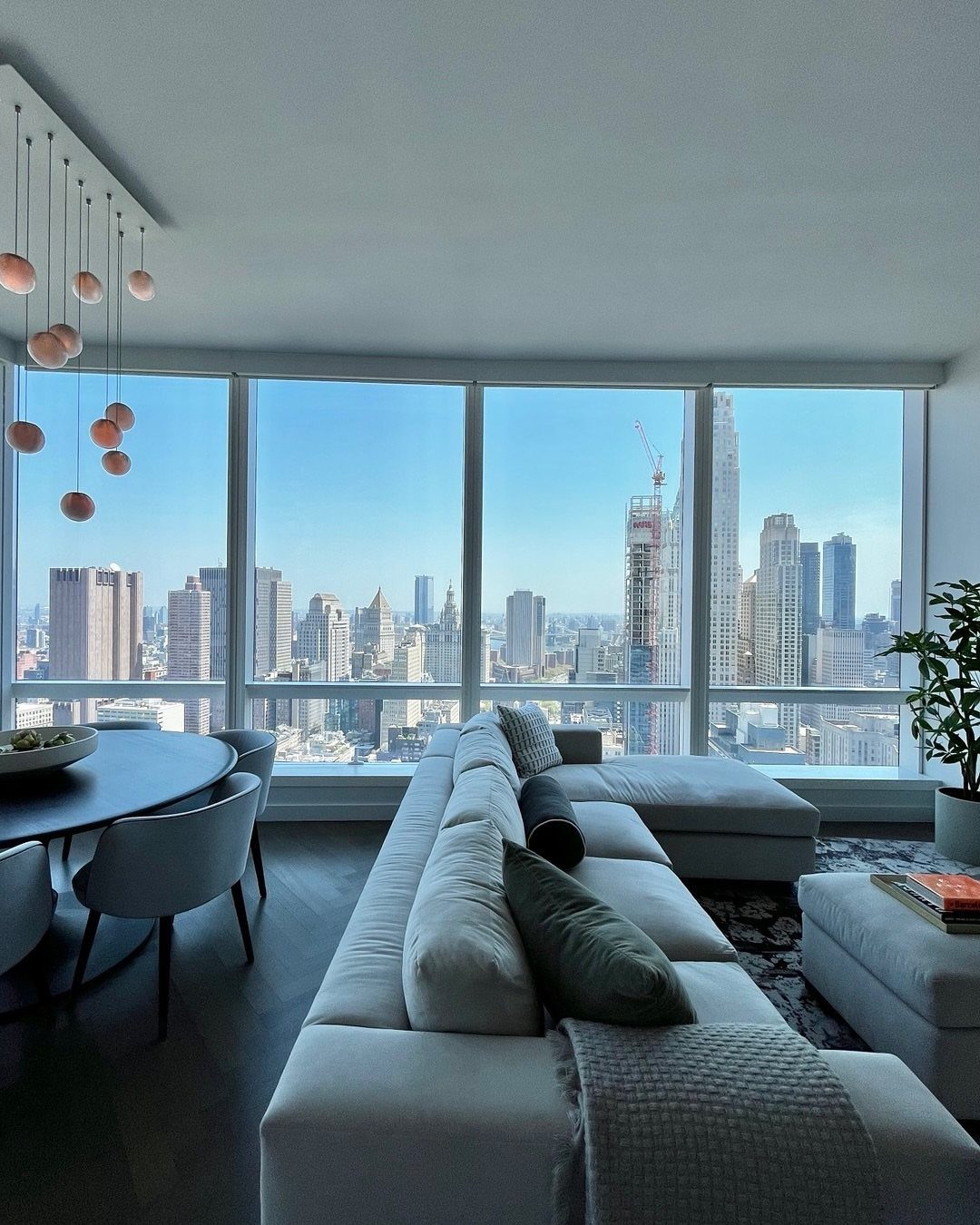
Floor-to-ceiling glass over dense Midtown towers asks for calm furniture, and a white sectional does that job. Pale upholstery lets the skyscrapers supply all the pattern the room needs.
Put the dining table near the glass and the sofa facing it, so both zones share the view. Leave the window wall bare of drapes if you can; towers this close look best unframed.
11. East River Bridge and Skyline View
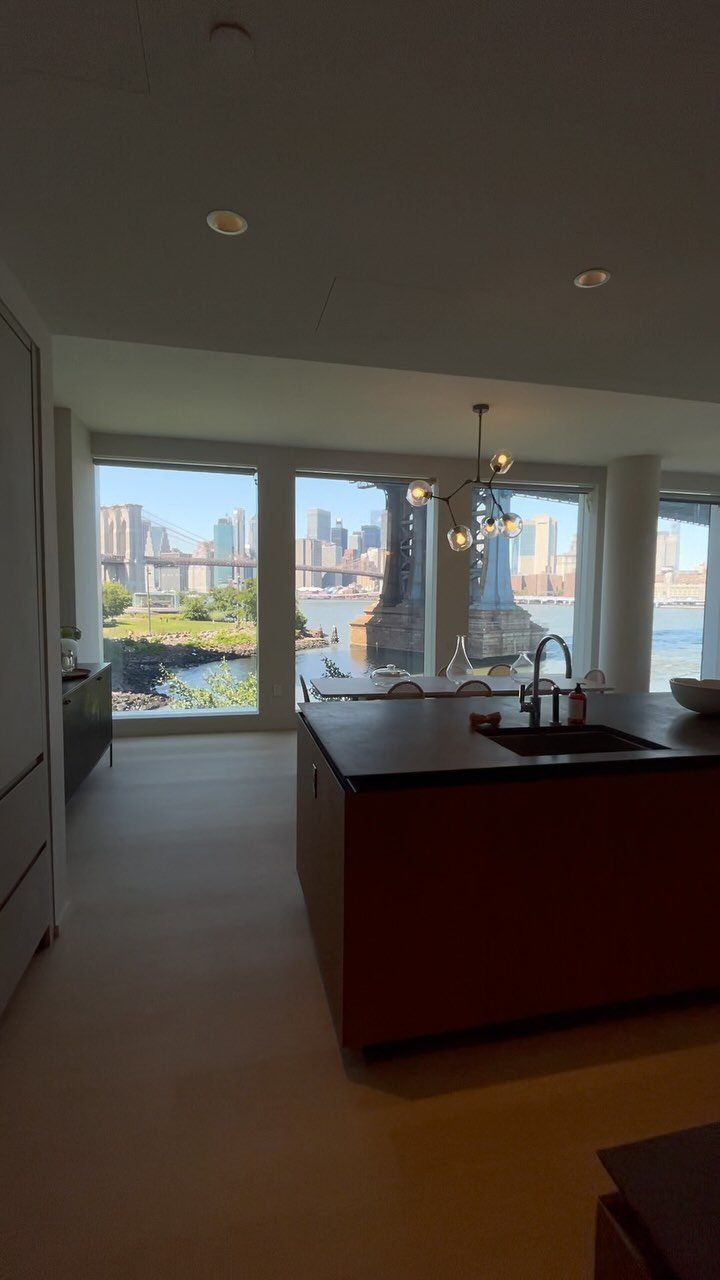
A kitchen with a view of the Brooklyn Bridge turns dishwashing into the best part of the day. A dark island grounds the room and keeps the bright river and skyline from washing everything out.
If you rent one like this, set the island so the cook faces the windows. Keep the counters near the glass nearly empty; a bridge view looks best when nothing sits in front of it.
12. High-altitude Coastal Water View
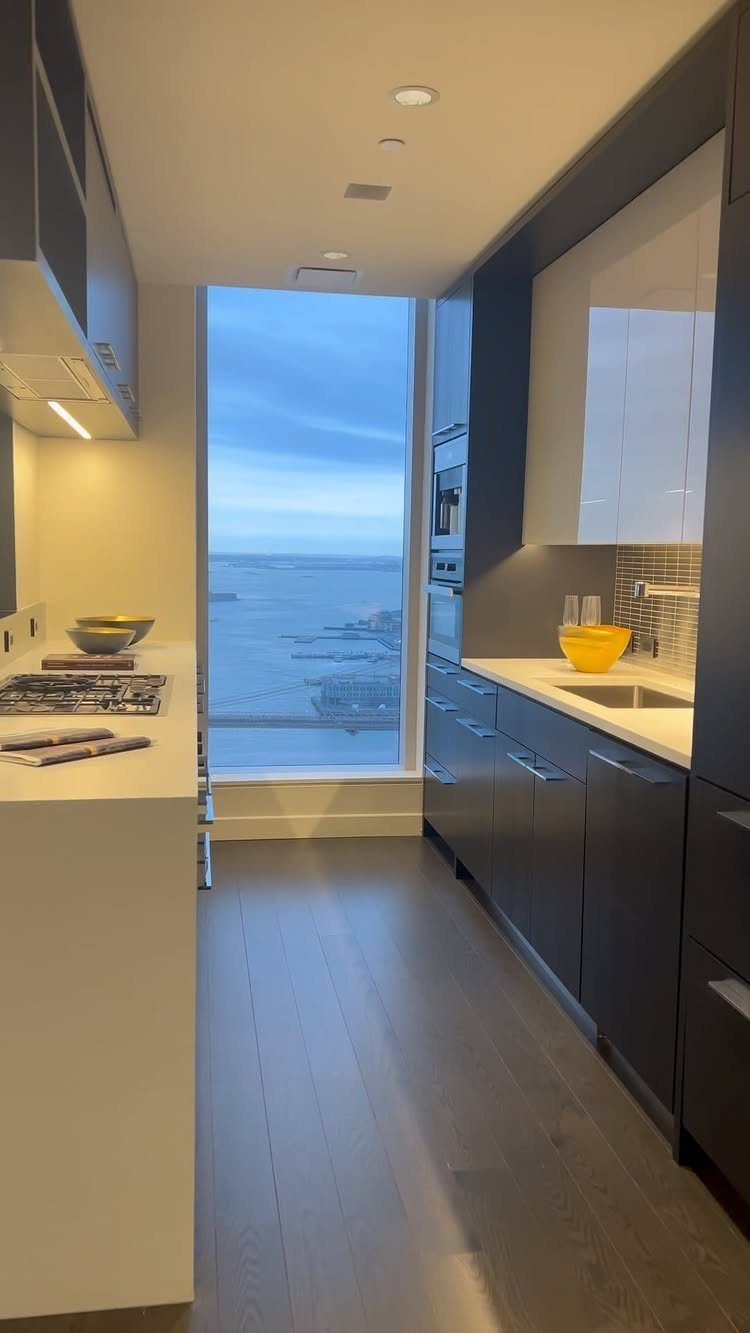
A galley kitchen with a window on the end wall gives you one long sightline straight to open water and distant shores.
Dark and white cabinets keep the narrow room crisp, and the glass at the far end makes it feel longer.
I would leave the end wall bare, no shelf or art, so the eye runs the full length of the room. White countertops bounce the daylight back along the galley.
13. Sunset Bedroom Skyline View
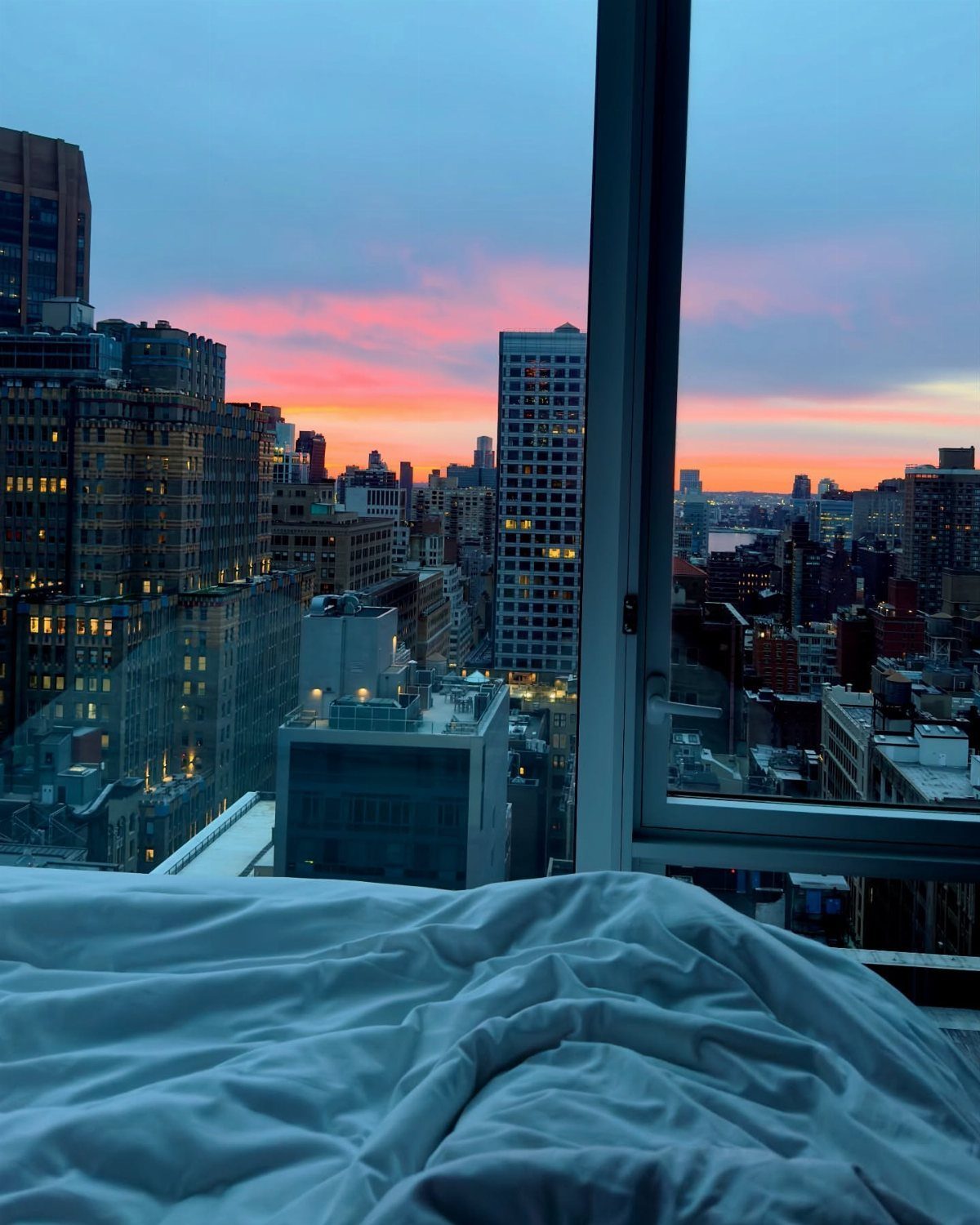
A bed turned to face the window makes the skyline the first thing and the last thing you see each day, and at dusk the glow lands right where you’re lying.
White linens suit it: they pick up the pink and orange of the sky and stay quiet against the glass.
I would keep the bedside pieces small and the curtains open or sheer, so the buildings fill the frame. When you tour a high-floor bedroom, check where the bed can sit with the window straight ahead.
14. Panoramic Waterfront Sunset View
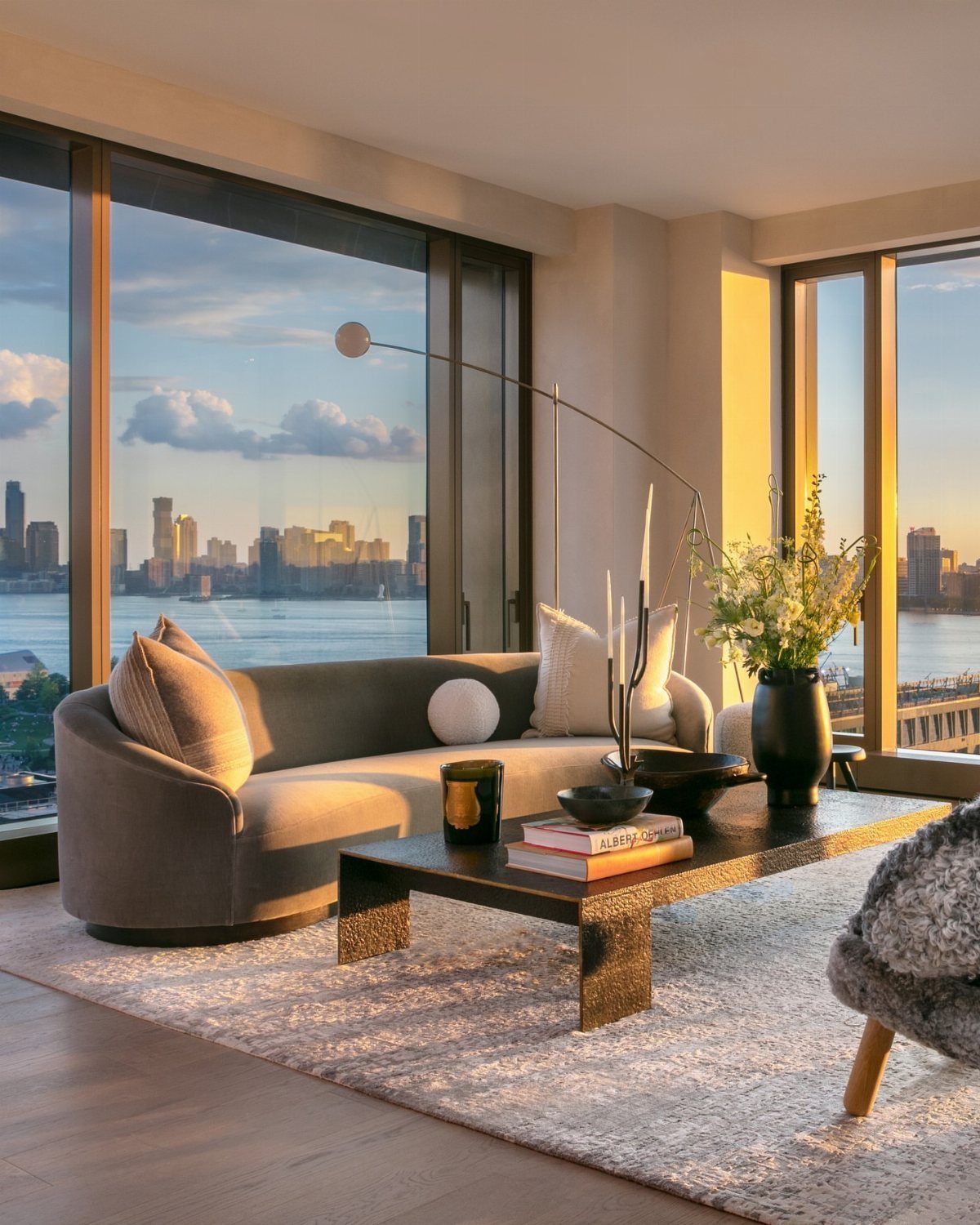
A curved sofa suits a window wall because it follows the sweep of the glass and opens the seating toward the water. A grey one stays calm against a skyline that glows at dusk.
Keep the coffee table low so it doesn’t cut the view from the cushions.
A single book on top is enough styling. Set the curve to face the windows, and leave the glass unframed so the water and the lit city skyline stay the focus.
Apartment Amenities
Amenities are worth ranking before you tour, because they change what a view costs you day to day. A doorman means packages and guests are handled without you being home, which matters most if you work odd hours.
A fitness center in the building can replace a gym membership, so ask whether it’s included in rent or billed separately.
Rooftop access deserves a visit of its own. Ask what hours it’s open and whether residents can book it, since a shared roof that closes at dusk misses the best light.
Compare 2 buildings by what you would actually use each week. An amenity you skip is just money folded into the rent.
Neighborhood Highlights
Each neighborhood sells a different kind of view, and with it a different daily life.
Waterfront areas tend to give open sky and river light, while dense districts give city lights and a lot of buildings. Decide which one you’d rather look at before you decide where to live.
Then check what the area gives you once you walk out the door. A great window over a block with a long commute or no groceries wears thin quickly.
See the apartment in daylight and again after dark, because a view that looks open at noon can turn into a wall of glare or a dim courtyard once the lights come on.
A view and a street can feel completely different at night.
Finding NYC Apartments
Start with 3 filters in this order: location, budget and view. Location comes first because it sets your commute and your rent range, and the view is easiest to judge once those two are fixed.
Set a firm monthly ceiling and decide how much of it you’d pay for the window itself.
If you’d give up square footage for a better outlook, say so early, so you aren’t swayed by every listing with a skyline photo.
Filter listings by building and neighborhood, then book viewings back to back. Seeing three apartments in one afternoon makes the differences in light and sightlines easy to compare.
Ask which direction the windows face before you go, and look at the actual unit, not just a model.
Frequently Asked Questions
What’s the best way to find an apartment in NYC?
Filter in this order: location, budget, then view. Pick a monthly ceiling and stick to it, then decide how much of that number you’re willing to spend on the window alone.
Stack your viewings on the same day so the light and the sightlines are fresh in your head when you compare.
Which is the best view in NYC?
It depends on the neighborhood and what you want to look at.
Waterfront areas like Long Island City, Greenpoint and Tribeca give open sky, river light and the skyline beyond. Dense districts like Midtown give city lights and towers stacked into the distance.





