Renting or owning decides which of these ideas fits: a Murphy bed, a loft bed or a wall-mounted fold-down desk means anchoring into studs, while a floor-length mirror, a light color palette and a gallery wall hung with removable strips leave nothing behind when you move out.
The effort runs from an afternoon for a gallery wall or a bold color accent to a full weekend for a Murphy bed or loft bed, and those two may need landlord approval.
A loft bed only works if the ceiling is tall enough, because the mattress sits close to the ceiling and a low room leaves you almost no space to sit up.
1. Murphy Bed
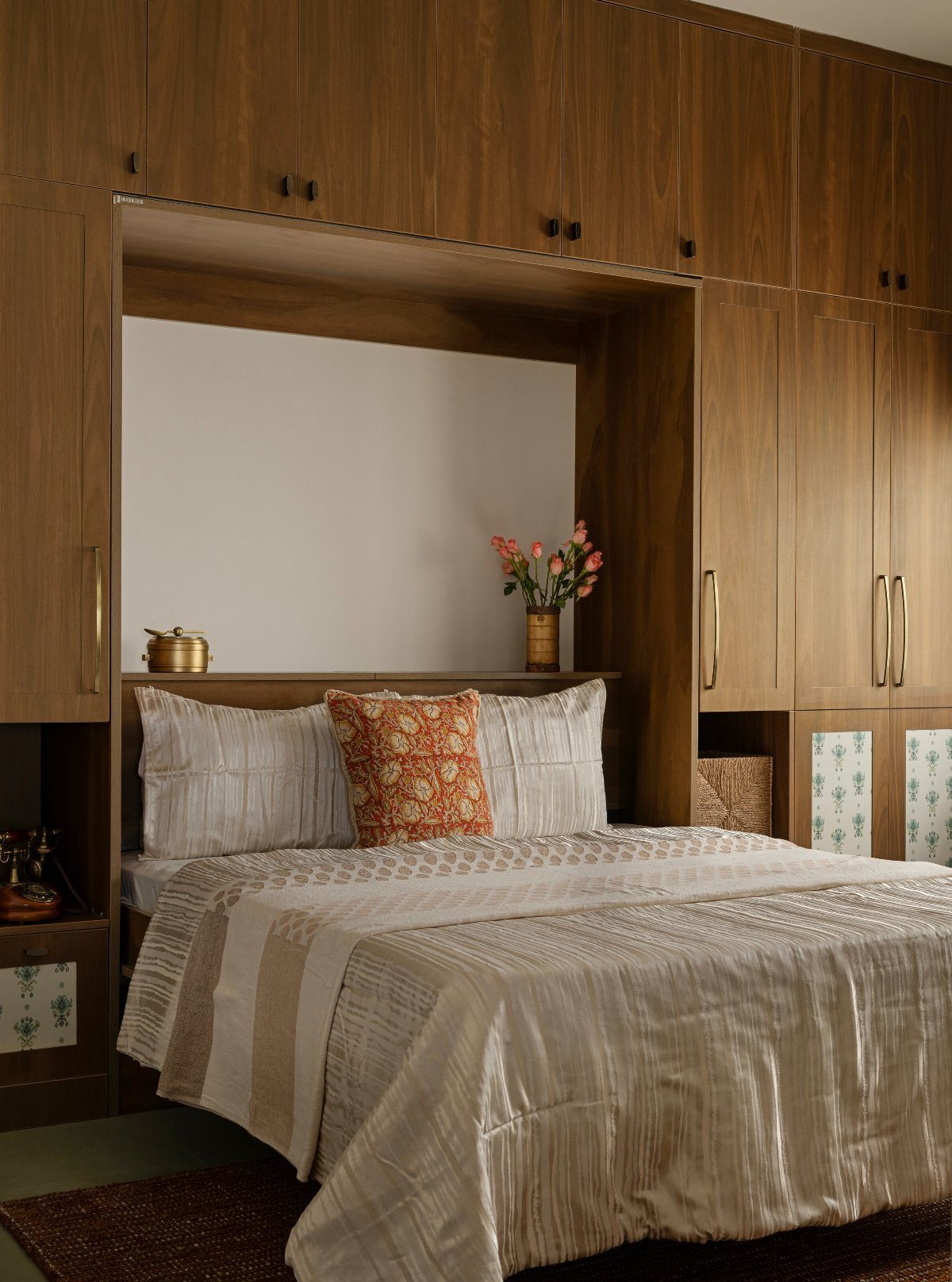
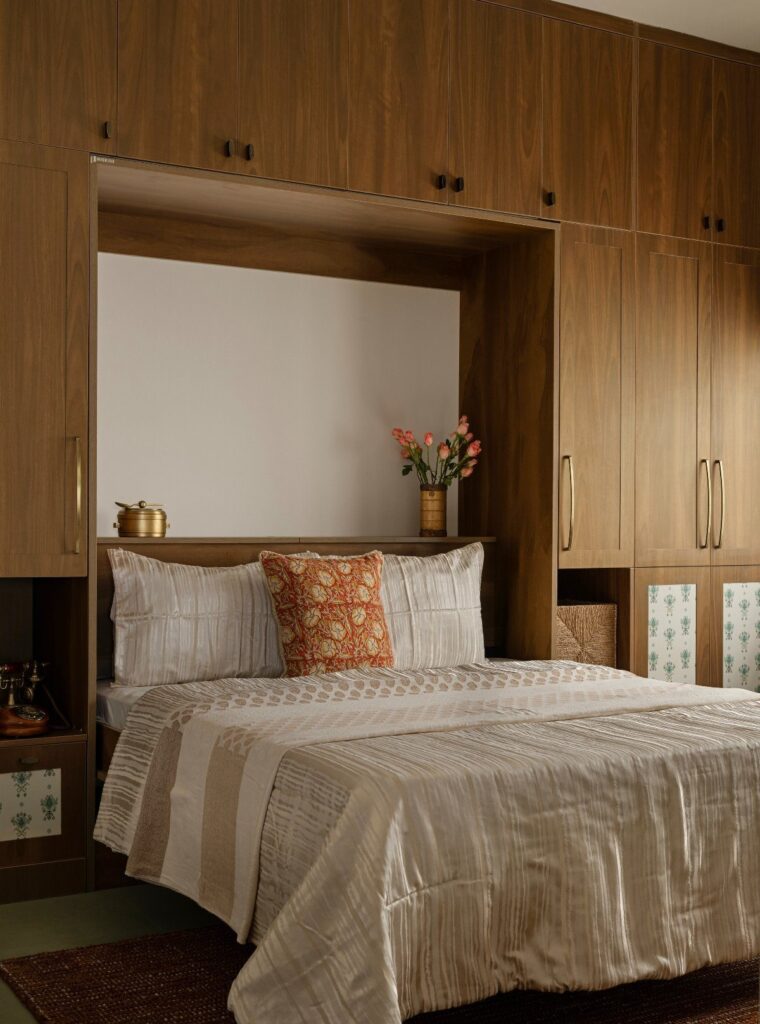
A Murphy bed earns its place in a studio because the bed disappears and the room becomes a living room by day. Folded up, the footprint of a bed turns into open floor.
I like the version built into a wall unit with cabinets beside it, since the storage gives you somewhere to put what the bed would otherwise crowd out.
Keep the bedding simple so the unit reads as furniture, not a mattress on a wall.
Full units cost real money, so a renter should check what the lease allows before anything gets anchored.
Unlike one-bedroom apartments, studios typically have a main space that functions as a combined living room, bedroom, kitchen, and dining room. Larger studios—often featuring an alcove for a bed or a partially separated dine-in kitchen—can be closer to 600 square feet, she says.
2. Room Divider
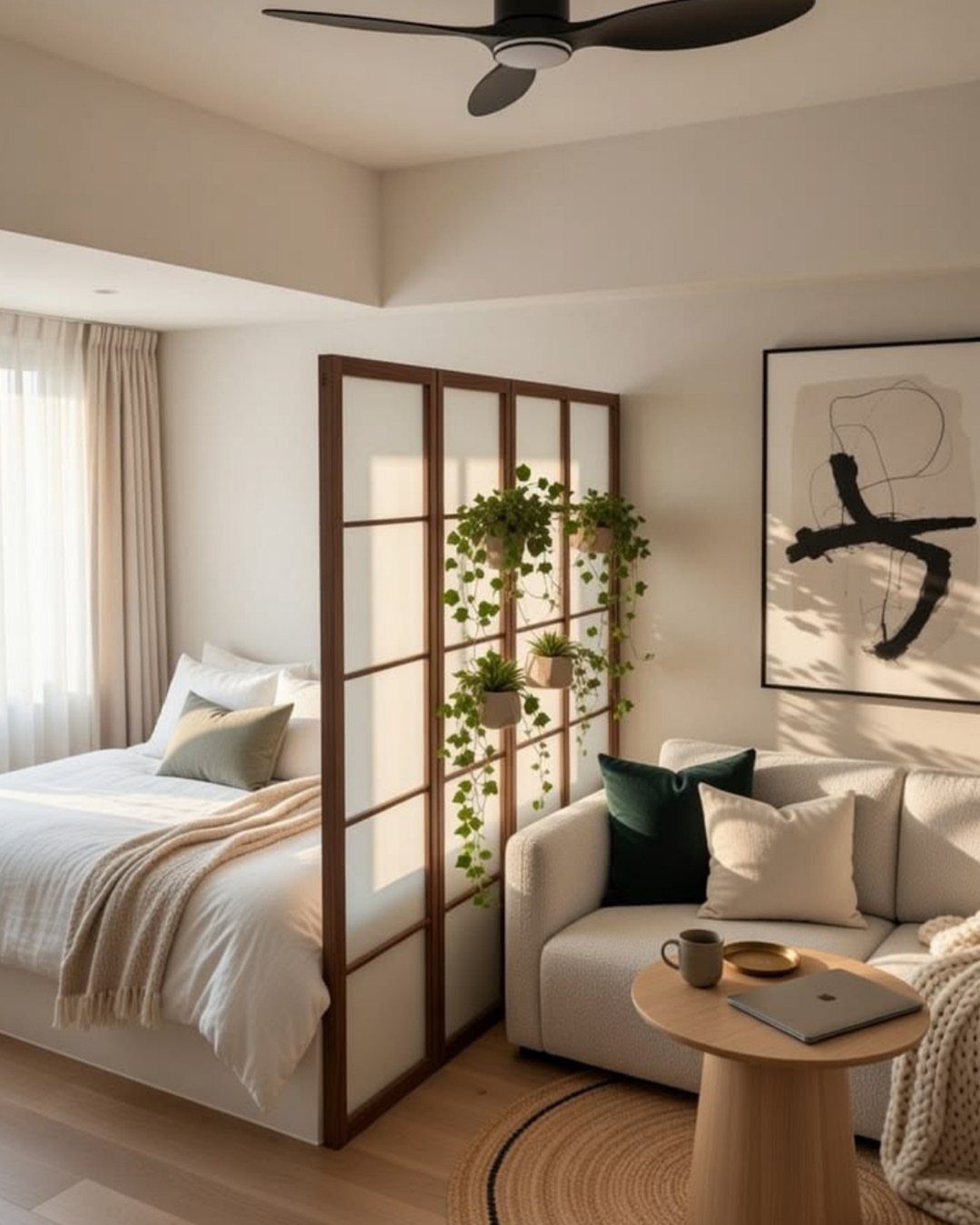
Splitting a studio into a sleeping zone and a sitting zone does more for daily comfort than any single piece of furniture. A divider with frosted glass panels in a wooden frame does it without closing the room off.
Frosted glass is my pick over solid panels because light still passes through, so the bed side doesn’t turn dim. Wood keeps it warm.
Set the divider so the sofa faces away from the bed, and the living area feels like its own room.
3. Loft Bed
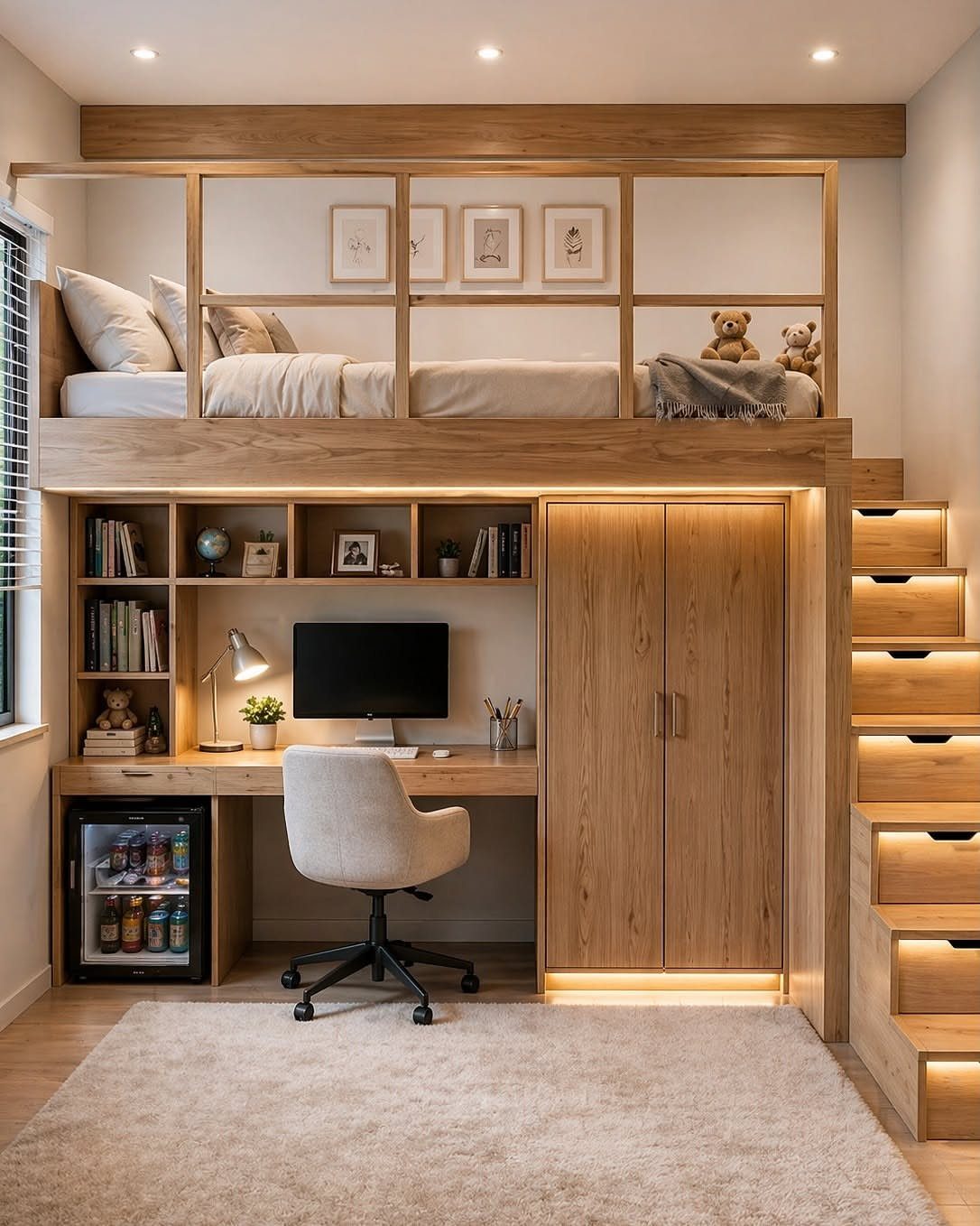
Lifting the bed off the floor hands you the space underneath, and that is where a loft bed wins. A desk, a wardrobe and even a mini-fridge can fit below, with stairs leading up.
I prefer stairs to a ladder for a bed you use every night; they are easier to climb half asleep, and the treads can double as storage.
Check your ceiling height before buying, since a raised mattress leaves little headroom in a low room. Measure twice.
4. Bold Colors in Decor
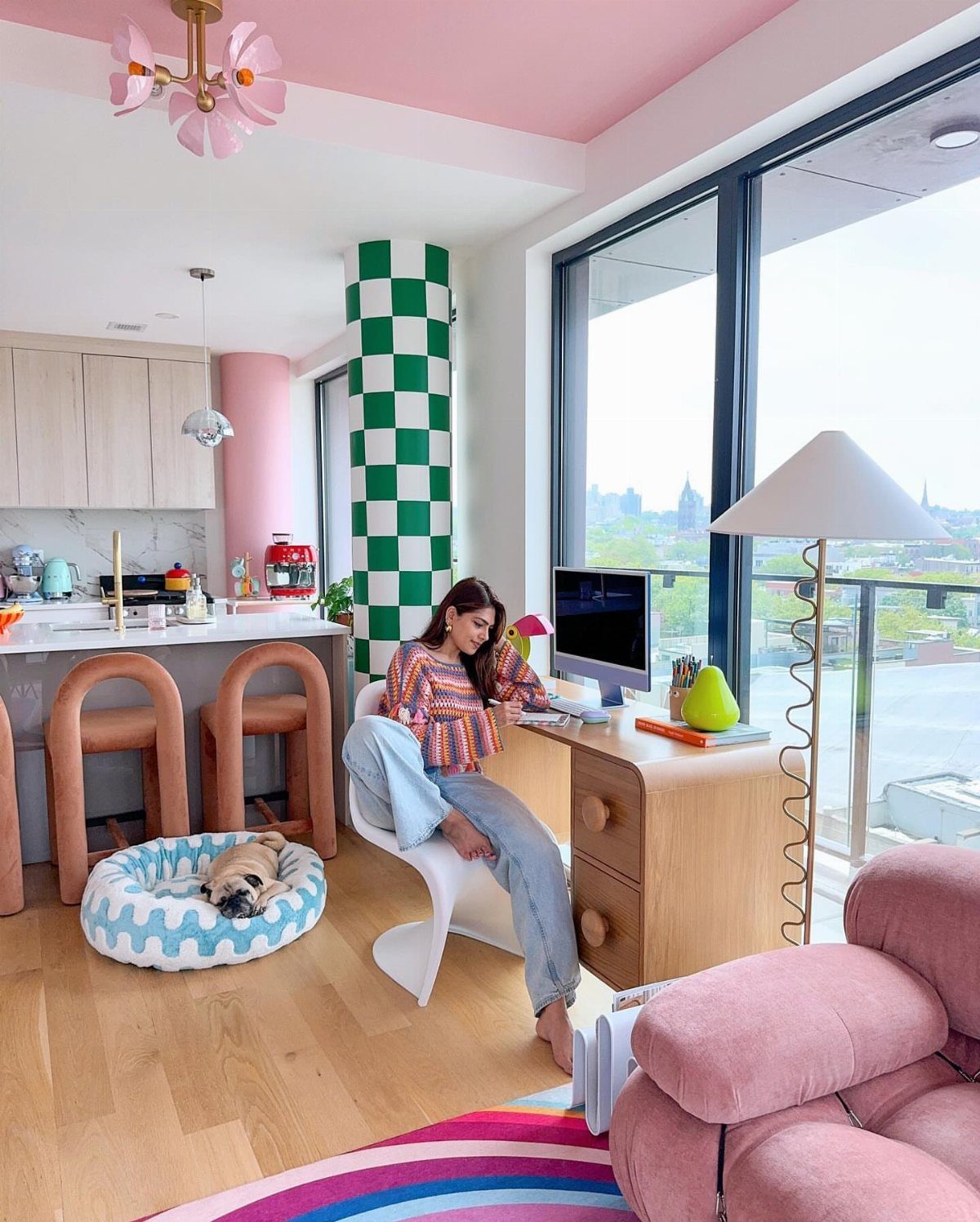
Paint the ceiling pink and a studio stops feeling like a plain box. Bold color gives small rooms a personality that neutral walls rarely manage.
Renters can start smaller: a single pillar, a ceiling, or one wall carries the idea without committing every surface in the studio. A checkered pattern on a column pulls attention up toward the ceiling and makes the space feel designed.
Pick one loud color and one pattern, then let the furniture stay calmer. Too many bright surfaces at once leave a compact studio feeling busy.
5. Floor-length Mirror
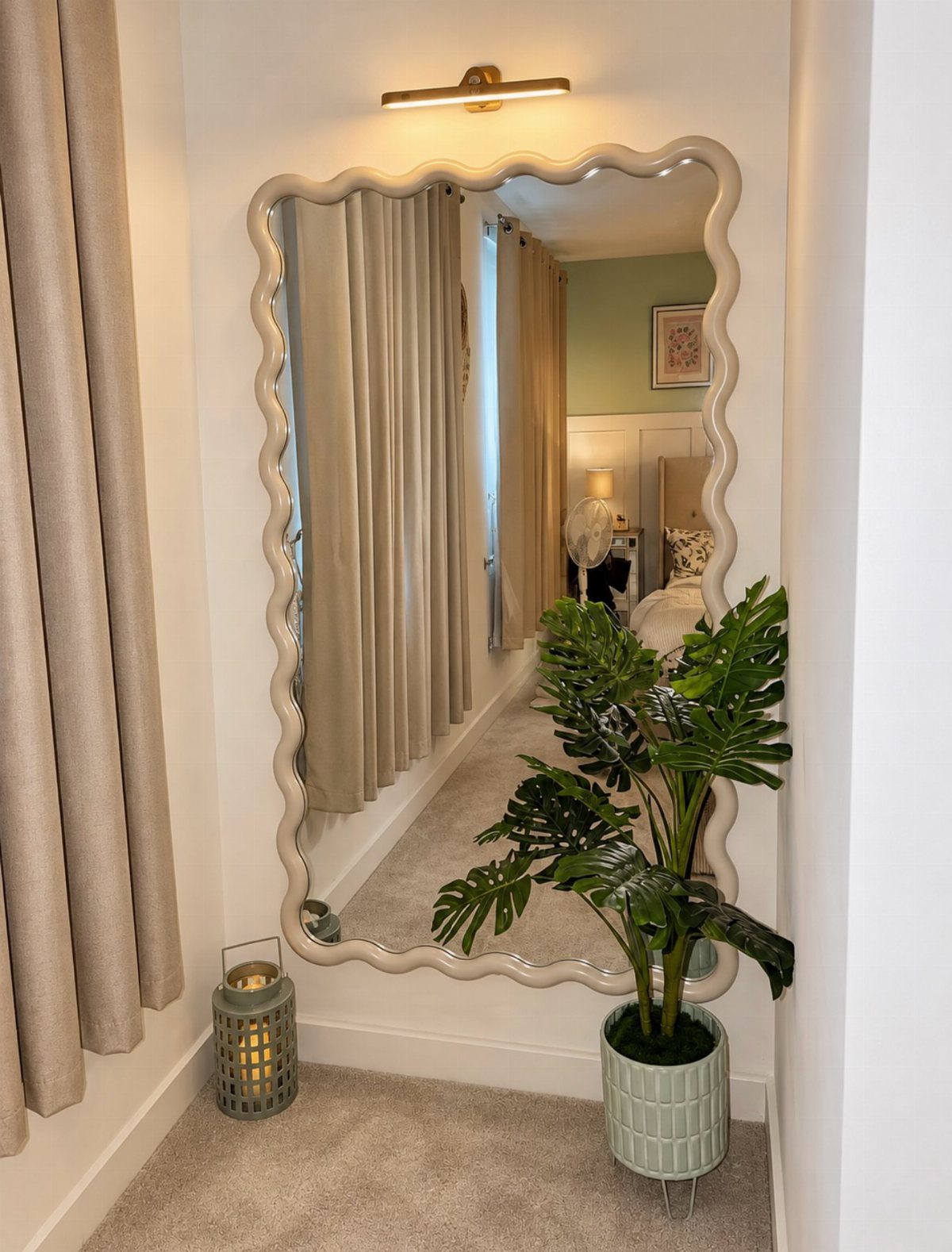
No drilling, no hanging hardware, which suits a rental.
Place it opposite a window or beside the curtains so it bounces daylight around the room. A wavy-edged frame adds some softness, so the mirror feels like decor and not just glass.
Think about what it will reflect. A bed and curtains look good doubled; a pile of laundry does not.
6. Creative Storage Solutions
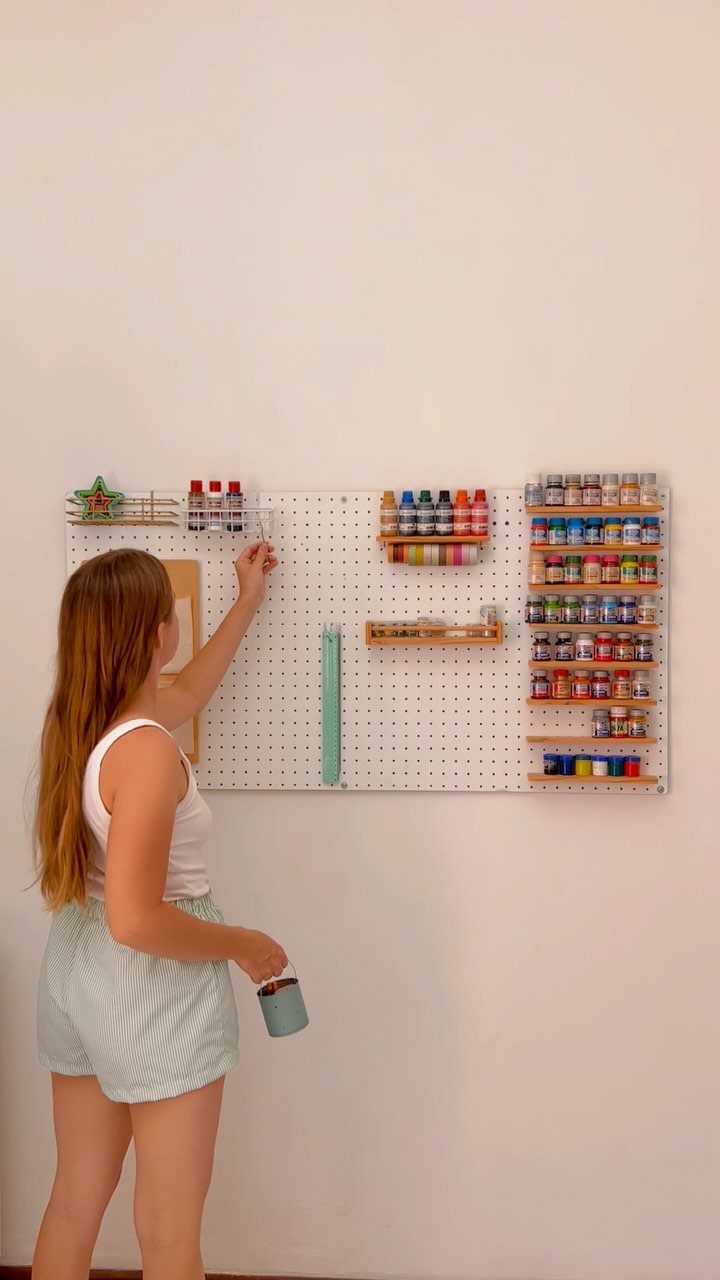
A pegboard turns a blank wall into storage, and in a studio the wall is the space you have most of. Paint bottles, craft supplies and small tools all sit in view and within reach.
White is the smart finish here: it fades into a white wall and keeps the clutter looking tidy. Hooks, small shelves and bins can be moved as your supplies change.
It works best for things you use often. Anything you reach for weekly belongs on the board; the rest can go into closed storage.
7. Light Color Palette
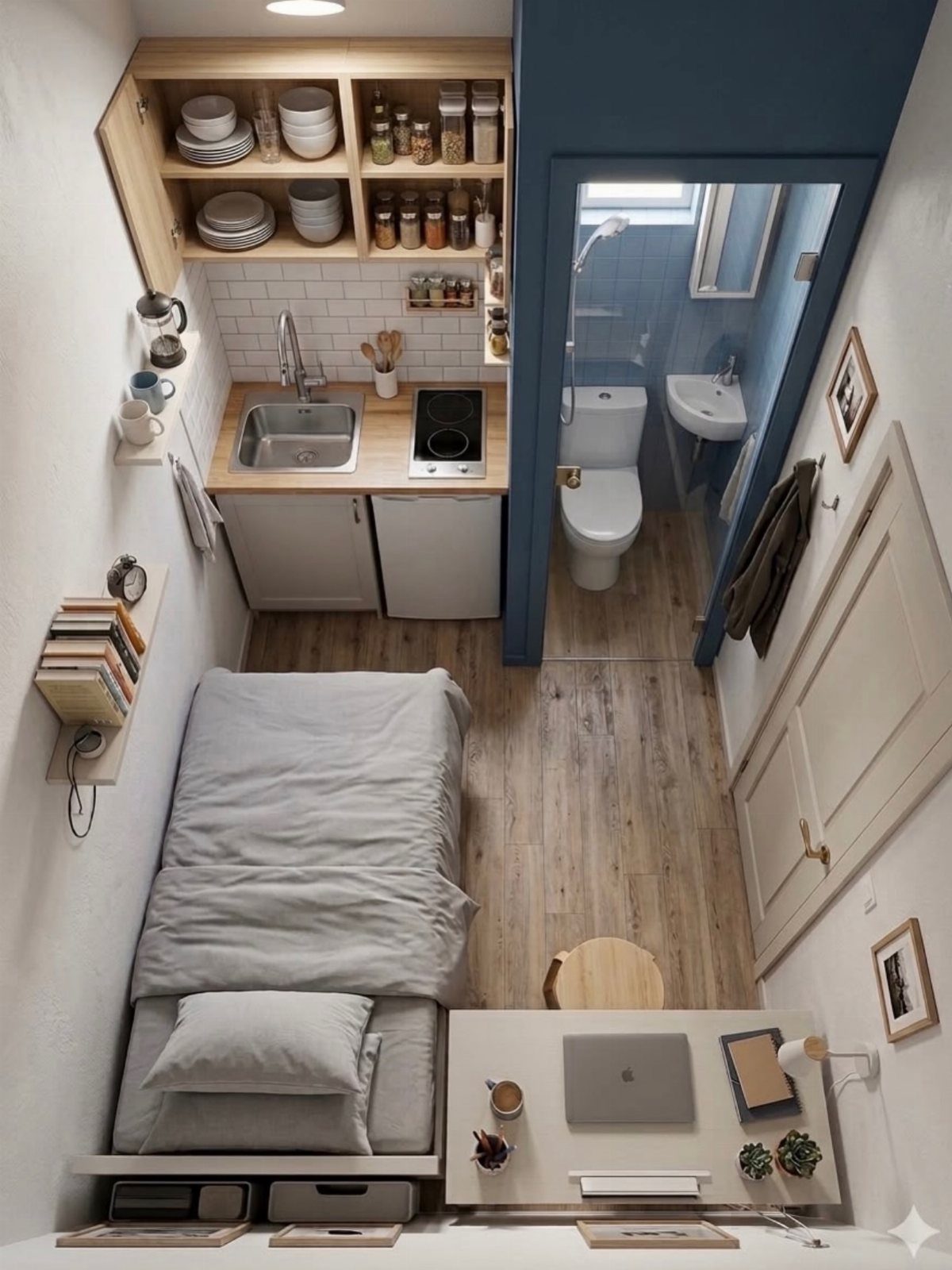
Keeping the big pieces pale is the cheapest way to make a studio read larger than it is.
Bed, desk and kitchenette all sit in one view, so when they share a light tone the eye reads one open room instead of three crowded zones.
Start with what you already own: bedding and a desk are easy to swap, and a renter can repaint nothing. Let one small area, like the blue bathroom walls, carry the color.
Keep the large furniture light and save the dark tones for small accents.
8. Gallery Wall
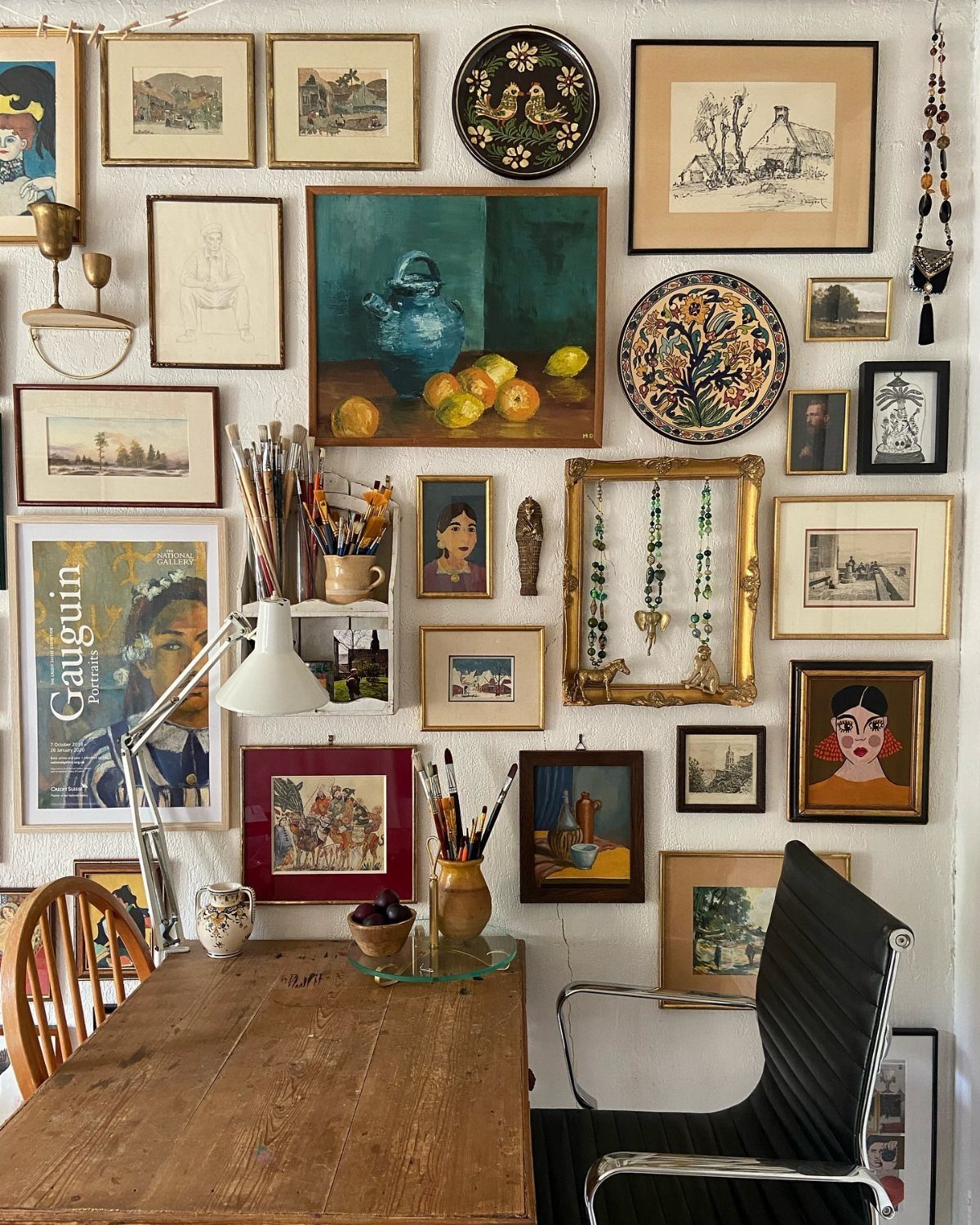
A gallery wall puts your own taste on the one surface a studio always has plenty of.
Hung above a desk, it also gives a work corner a backdrop, so the spot feels like a place and not just a table.
Lay everything out on the floor first and move pieces around until the gaps look even, then hang.
Renters can use removable hanging strips, but check the weight rating of each one against the frame before trusting it.
9. Wall-mounted Fold-down Desk
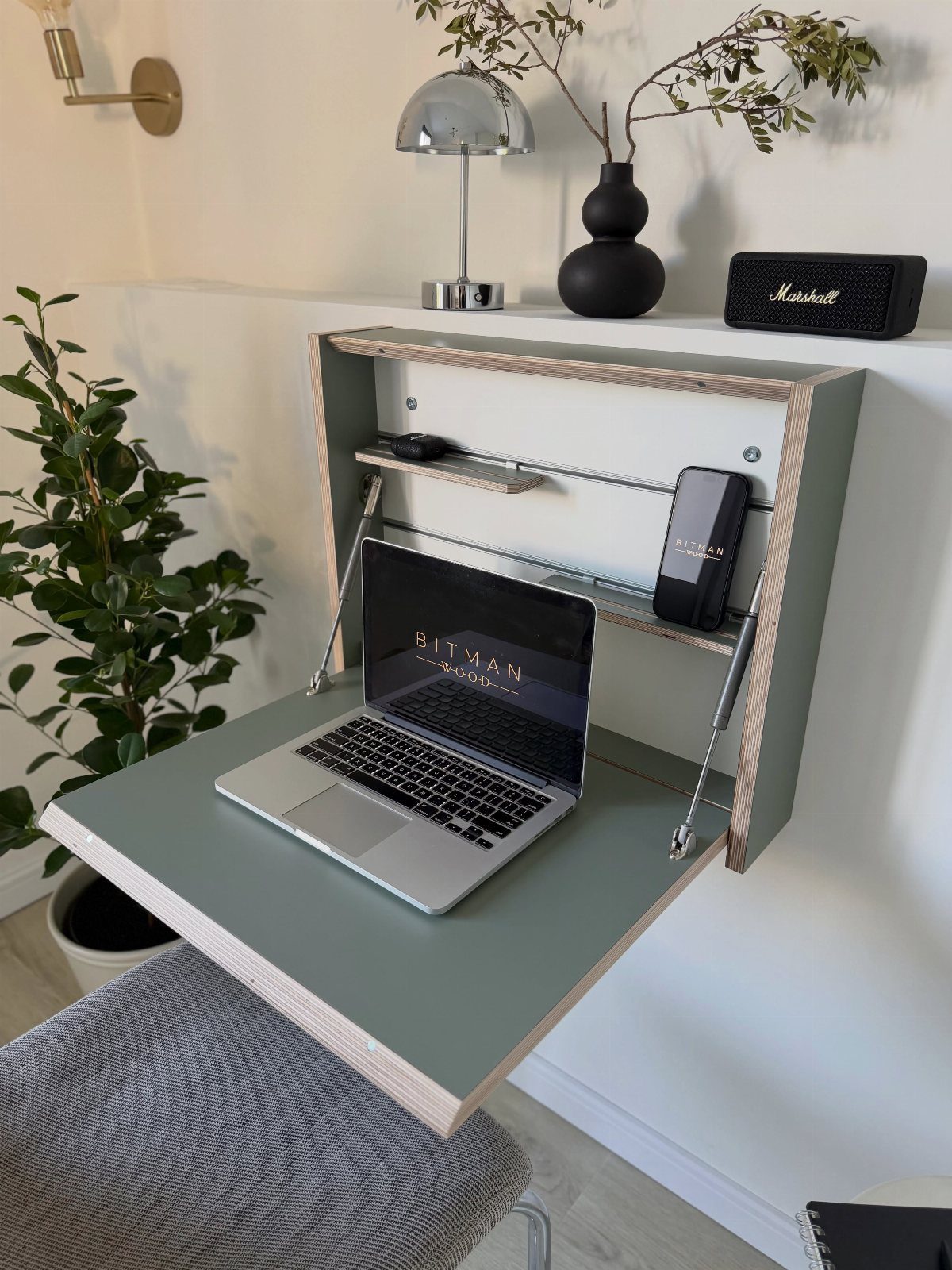
A fold-down desk gives you a real work surface only when you need one. Closed, it is a flat panel on the wall; open, it holds a laptop, a phone and a mouse with room to spare.
I like it painted a soft color like sage, since a calm shade makes the panel look like part of the wall. Add a small shelf and a lamp nearby so the setup feels finished.
Mount it into studs, not drywall alone, because a laptop and leaning elbows put steady load on the hinges. Rentals need landlord approval for the screw holes.
10. Integrated Dining Nook
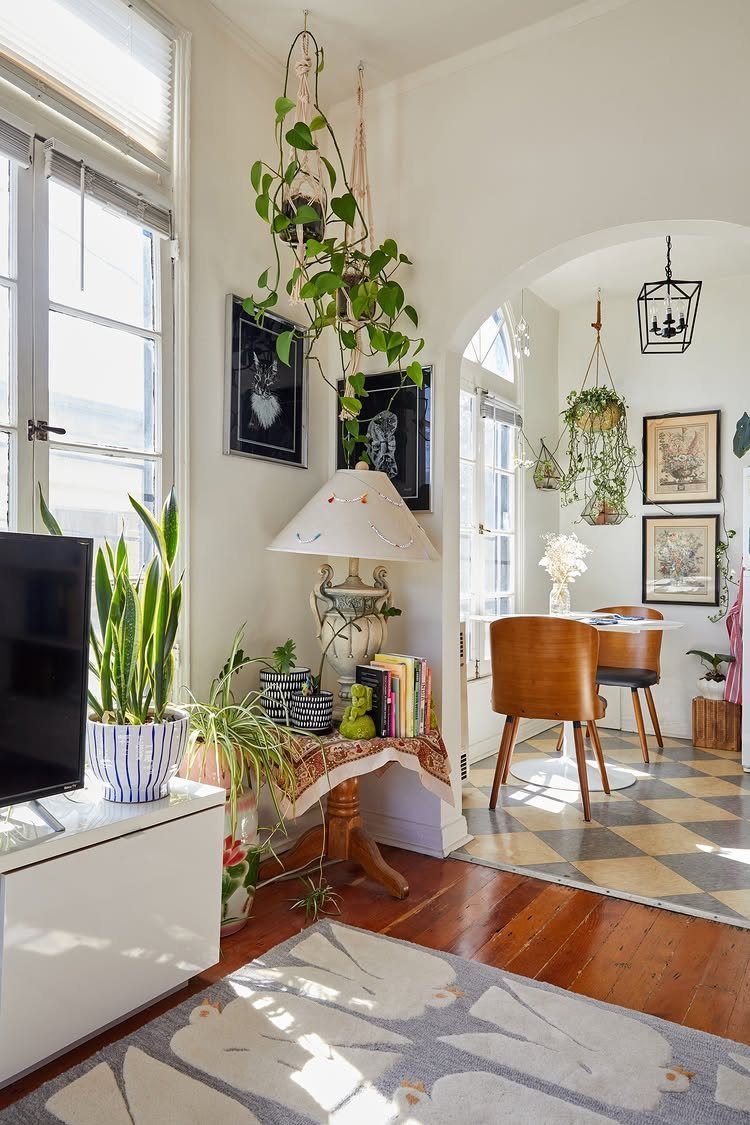
Give the table a floor of its own and a dining corner stops being an afterthought. A checkered pattern marks the eating zone, so it reads as separate from the living area without a wall in between.
A white table keeps the corner light, and wooden chairs add warmth. Choose chairs that tuck fully under the table, since every inch of walkway matters in a studio.
Renters can get the same pattern from peel-and-stick tile or a checkered rug, both of which come up without damage.
11. Cozy Floor Cushion Reading Nook
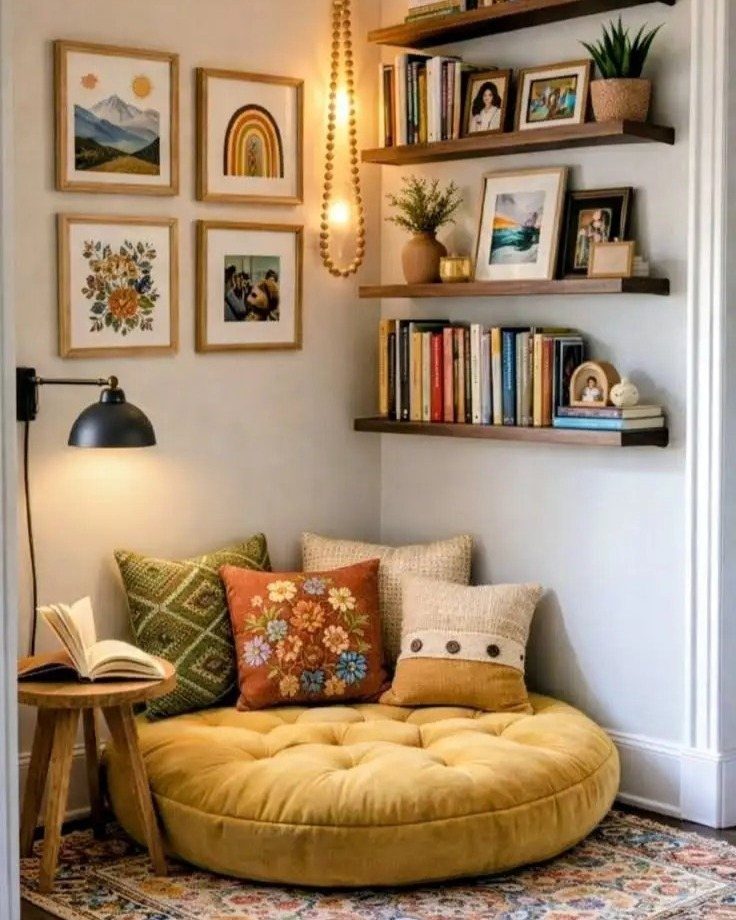
A big round floor cushion makes a reading corner out of almost no square footage. Pile pillows along one wall, set a small wooden table within arm’s reach, and the corner is done.
Wall-mounted shelves are what keep it compact: books sit at eye level and the floor stays free for the cushion. A lamp beside the seat matters as much as the cushion, because a reading spot with poor light goes unused.
Yellow brings warmth to a corner, though any single strong color would do the same job.
12. Compact Desk with Overhead Shelving
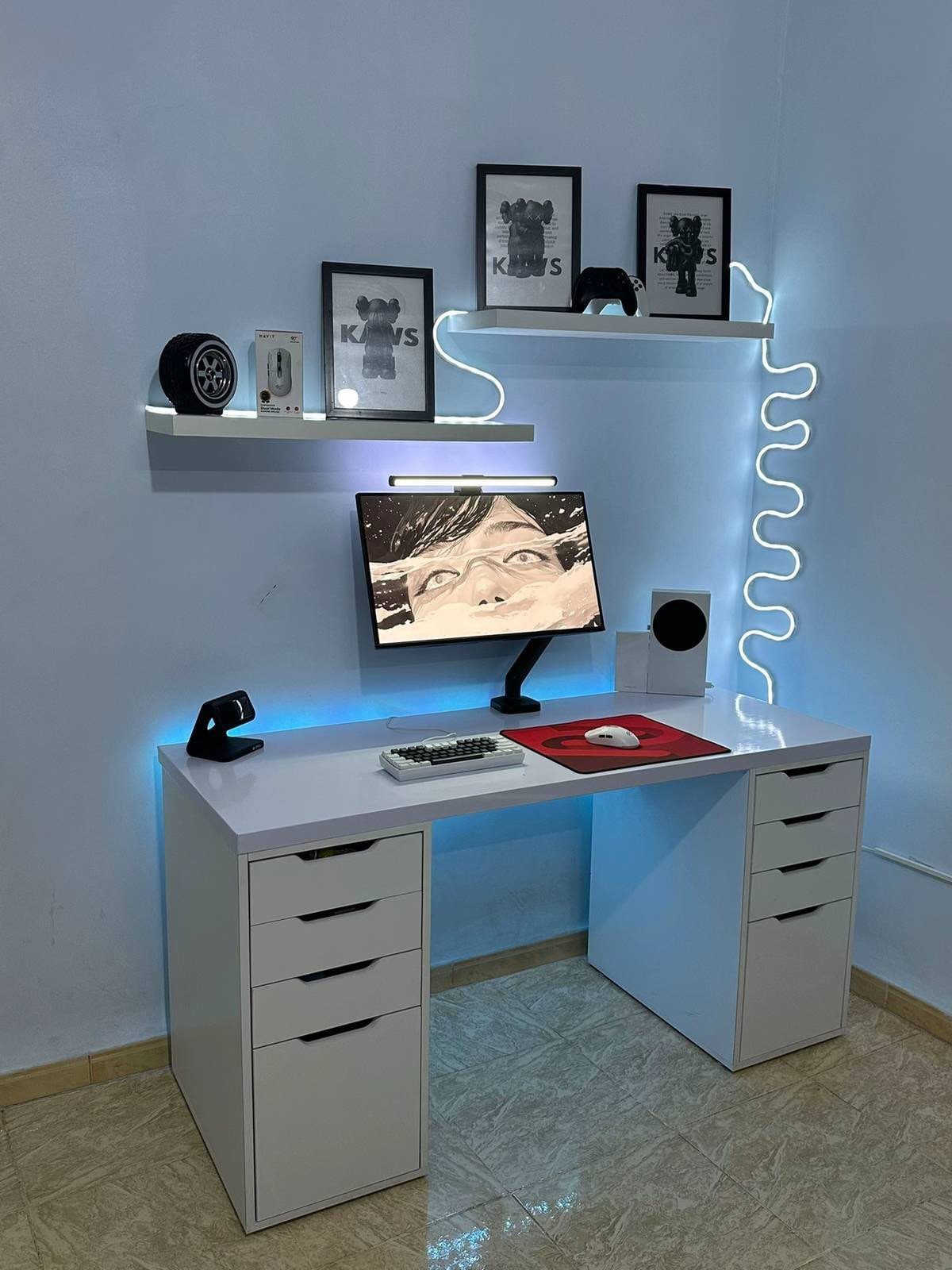
A desk with built-in drawers and shelves overhead packs a full workstation into one narrow strip of wall. Papers and cables go in the drawers, and the shelves hold things you want to see.
White keeps the whole unit light against a pale wall. An LED strip along the shelves adds glow and softens the glare of a monitor in a dim room; pick a warm tone if the desk sits near your bed.
Keep shelf items few and a little spaced out, or the wall starts to look crowded.
Maximizing Natural Light
Daylight should decide the layout before any furniture does.
Daytime furniture earns the spot by the glass: a loveseat, a 24-inch bistro table, a desk. Slide the bed to the darkest back wall, where you only need it at night.
That arrangement sends your waking hours toward the brightest part of the studio and saves the dimmer corners for sleep. The room gets a natural flow from morning to night without adding a single object.
In a dim studio, painting the walls white and choosing pale furniture bounces around whatever daylight comes in, and it makes a bigger difference than most people expect.
White gives a compact studio a more spacious, airy feel, and the effect is strongest in rooms with only one narrow window.
Decluttering Strategies
Clutter comes in 2 kinds, and a studio suffers from both. Start with the everyday mess: junk mail, magazines piled on the coffee table, and whatever has drifted onto the dining table.
The second is visual clutter, which is easier to miss. Even when everything has a home, a counter crowded with appliances or a table ringed with extra chairs will make the room feel cramped.
Clear surfaces are the goal, or at least surfaces edited down to a few things. I’d start with the counter and the table, since both sit in view all day.
Creating a Personal Style
A studio gives you one room to say who lives there, so spend the effort on things that are yours. Colorful textiles are the easiest place to start, and they come off the bed or sofa the day you move.
Vintage-inspired wallpaper is another way to add character. In a rental, peel-and-stick versions are worth checking, though I’d test a small patch first.
Keep the mix edited. A few personal items and one or two strong textiles read as taste, while a shelf of everything you own reads as clutter.
Frequently Asked Questions
What makes a room a studio?
In a studio, one open room does every job: you cook, sleep, and relax without a single interior wall or door between those zones.
Unlike a one-bedroom, nothing is walled off, so a divider, a rug, or a paint pattern is often what marks where one zone ends and the next begins.
How to furnish a very small studio apartment?
Pick furniture that does 2 jobs and use the walls for storage.
A Murphy bed frees up the floor by day, a fold-down desk gives you a work surface only when you need one, and a pegboard turns bare wall into storage.
What is the smallest a studio apartment can be?
Some big-city buildings list studios at just 300 square feet, which leaves little room for anything beyond a bed, a small sofa, and a compact kitchen run.
Across the US, the typical studio measures 400–600 square feet, and RentCafe put the average new build in 2024 at 457 square feet. Larger ones near 600 square feet often have an alcove for the bed.
How do I style my small living room?
Choose one loud color and one pattern, then keep the furniture calmer.
One painted wall, a ceiling in a bold shade, or a checkered rug is enough to deliver the punch, and the space around it stays calm instead of cluttered.
Pale large furniture and a floor-length mirror placed opposite a window help the space feel bigger and brighter.





