Your budget and your skill with a wet saw decide which of these walls you should build.
Ceramic tile is where I’d start on a tight budget, while glass tile, natural stone and the Black and White Striped Arched Alcove cost more money or more cutting, so they work best on one accent wall.
The list runs from an Alcove Tub with 3 Walls that you can tile in a weekend to a Sunken Tub with Dark Grey Tiles that needs a build budget before any tile is bought, and the last section helps you choose between the tile materials.
1. Alcove Tub with Three Walls
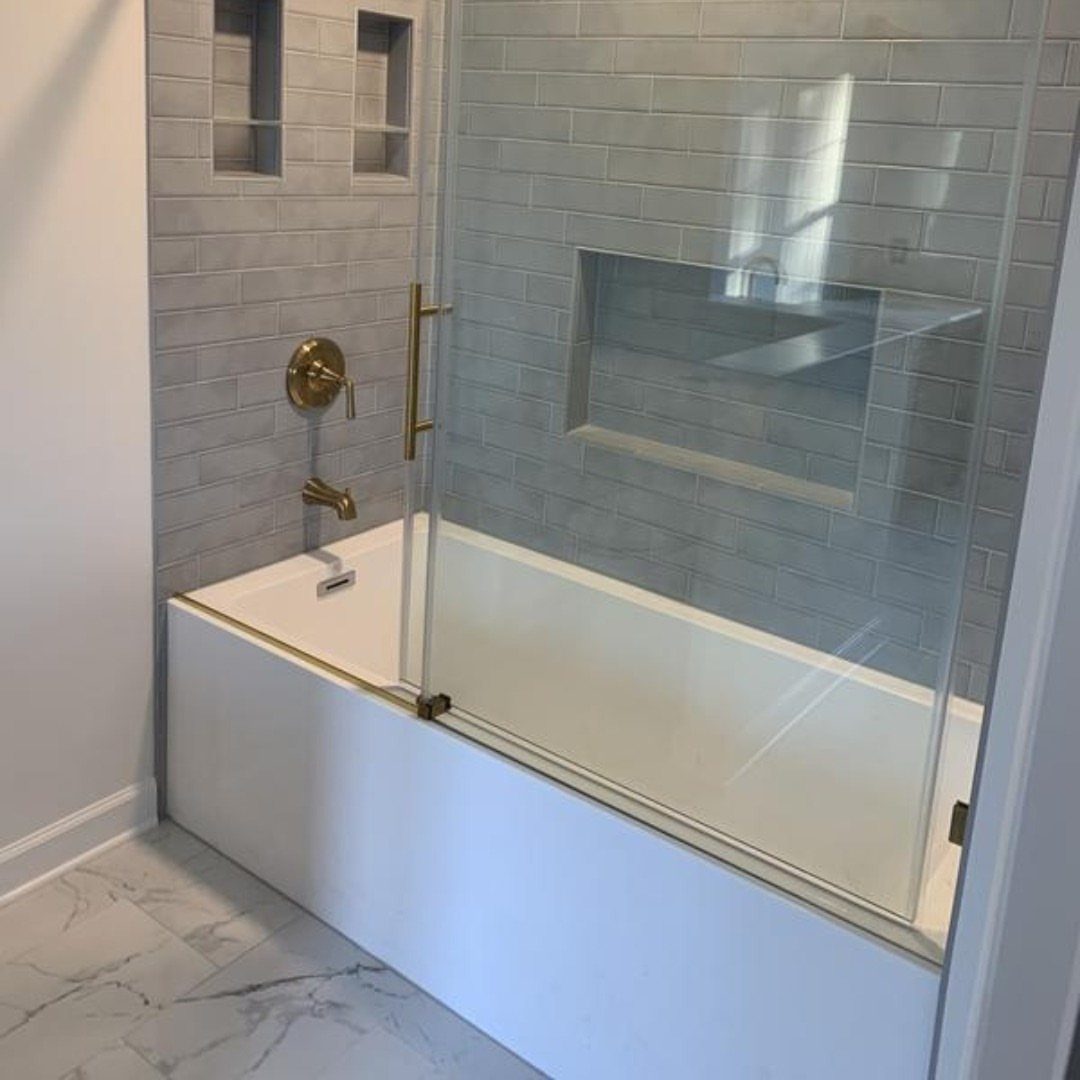
Grey tile on all three walls around a white tub makes the alcove read as one clean block, and it hides soap film better than pure white does.
Run the same tile to the same height on every wall so the lines match at the corners. Tile above the tub rim is a manageable weekend job for someone with moderate skill, and it fits a modest DIY budget.
I’d pick a floor with some pattern, like a marble look, so the grey walls aren’t the only thing carrying the room.
2. Corner Tub with Two Walls
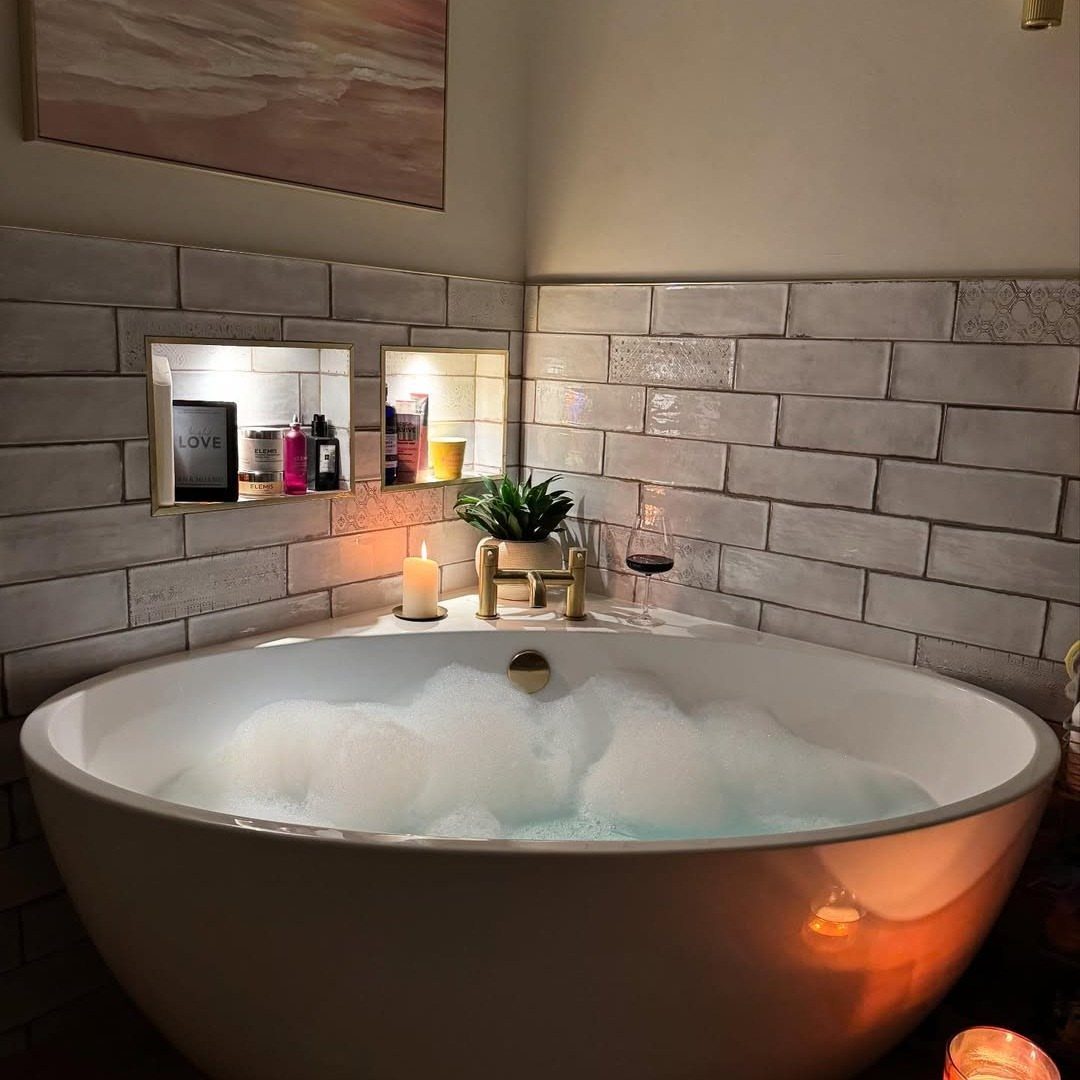
Two tiled walls meeting at a corner give a tub a built-in feel without the cost of surrounding it on three sides. Because you only tile 2 walls, you can spend more per tile or finish the job faster.
Plan niches before the first tile goes up. A recessed shelf for toiletries sits flush in the wall, so a ledge along the rim stays free for a candle or a plant.
Keep gold fixtures and grey tile in the same warm-cool balance, and let one metal do all the work.
On a recent This Old House project, tile installer Erik encountered a 2¾-inch stub piece at the tub.
3. Ceramic Tiles
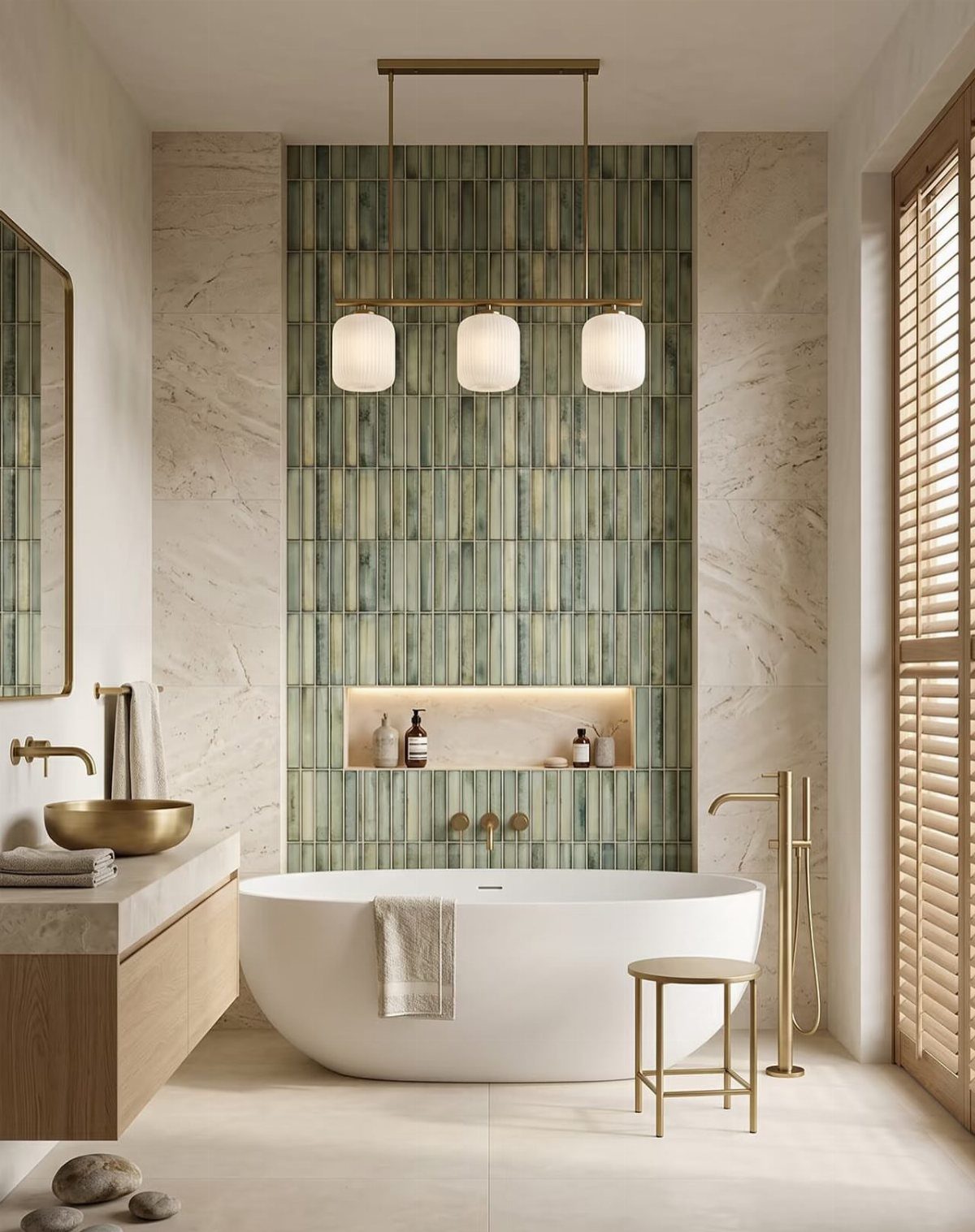
Ceramic is the tile I’d buy first on a tight budget: it costs less than glass or stone and holds up to daily wet use. Green rectangles stacked vertically give a plain material real height.
Setting them upright on a single wall draws the eye up, which helps a low ceiling. Pair the color with gold hardware and a warm white tub.
Pick one accent wall and tile it well rather than stretching the budget across all four.
4. Glass Tiles
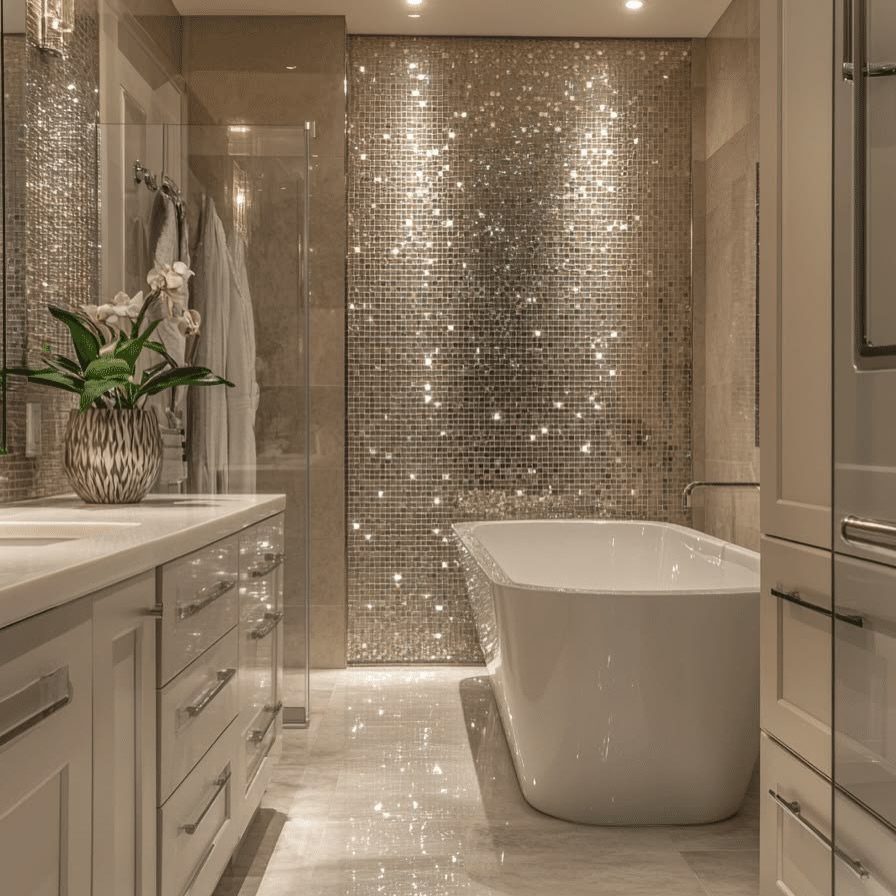
Glass mosaic catches light the way ceramic can’t, so a single wall behind a freestanding tub does the job of a mirror and a piece of art together. The iridescent gold finish here throws warm reflections around the room.
Glass costs more than ceramic, so I’d limit it to one accent wall. Small sheets go up faster than loose tiles, but grout lines are frequent and need careful sealing and cleaning.
Choose a light grout so the shimmer stays the focus.
5. Natural Stone Tiles
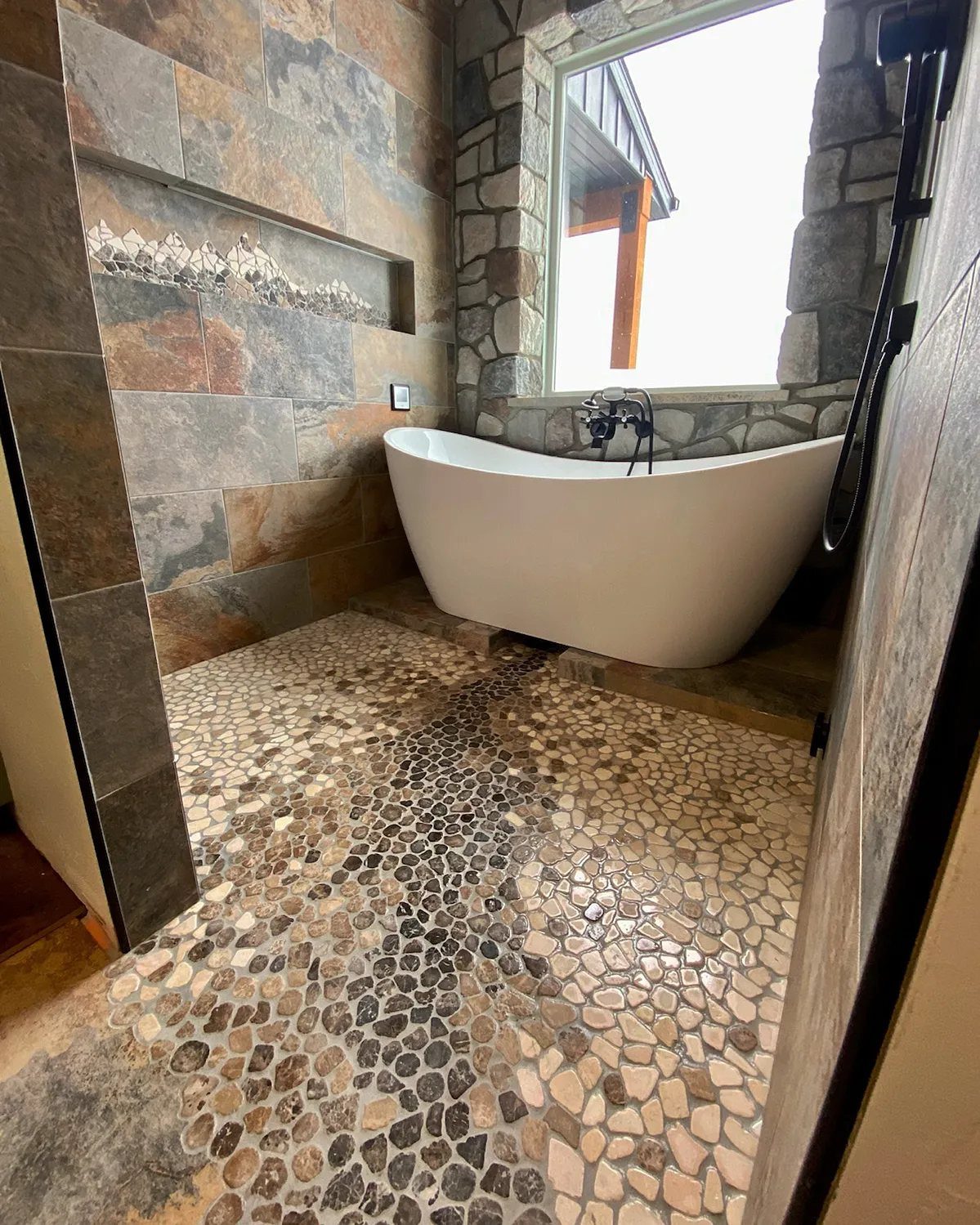
Natural stone brings a spa feel, with earthy wall tile and a pebble floor wrapping around a white tub. Variation from piece to piece is the appeal, so no 2 walls look alike.
Stone is the priciest option here, so on a tight budget I’d tile only the wall behind the tub and keep the rest simple. Pebble flooring suits a bathroom with a window, since daylight shows off the texture.
Seal stone before and after grouting; it’s more porous than ceramic.
6. White Tile with Terrazzo Floor
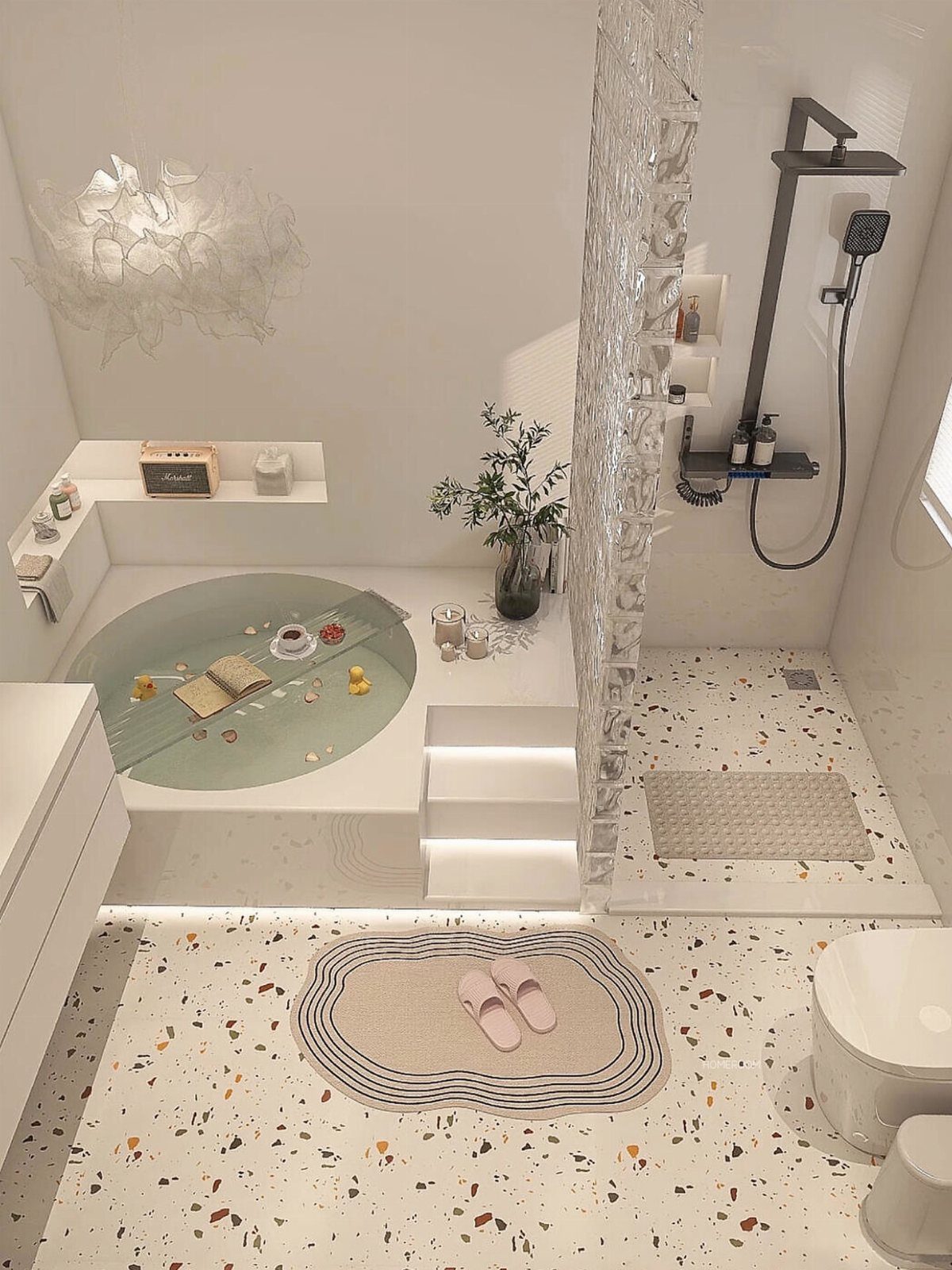
Plain white tile around a built-in round tub lets the terrazzo floor be the only pattern in the room. Speckled terrazzo gives a small bathroom personality while the walls stay calm and bright.
White wall tile is forgiving for a first-timer, and it keeps the cost of the surround low, which leaves more of the budget for the floor. A glass block partition between tub and shower keeps light moving through.
Stick to white grout or something close, so the walls look like one clean surface.
7. Freestanding Tub Against Marble Walls
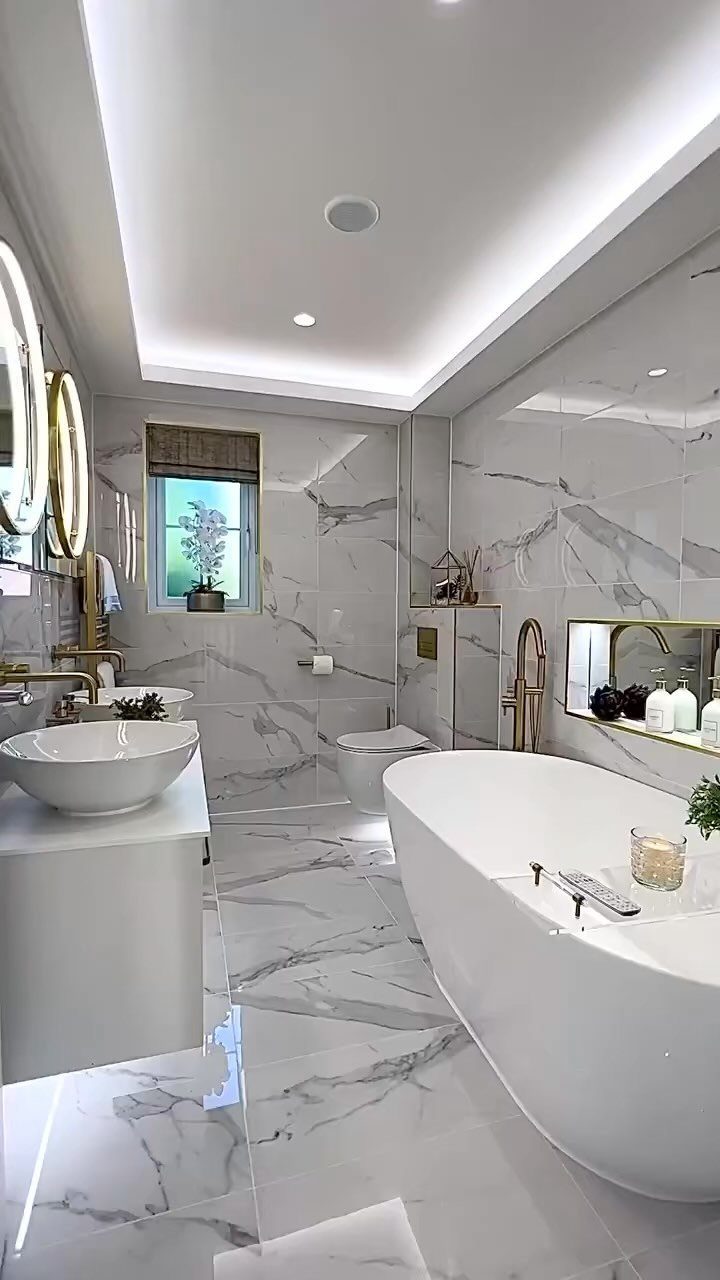
Full-height white marble-look tile on the walls and floor lets a freestanding tub stand out as the one sculptural piece. A vessel sink adds a second simple shape, and nothing else competes.
Running the same tile up every wall and across the floor keeps the room calm, but it needs tight, consistent grout lines. I’d choose a grout close to the tile color so the veining carries the pattern.
A marble-look tile costs less than real marble, which suits a modest budget.
8. White Tile with Black Accents
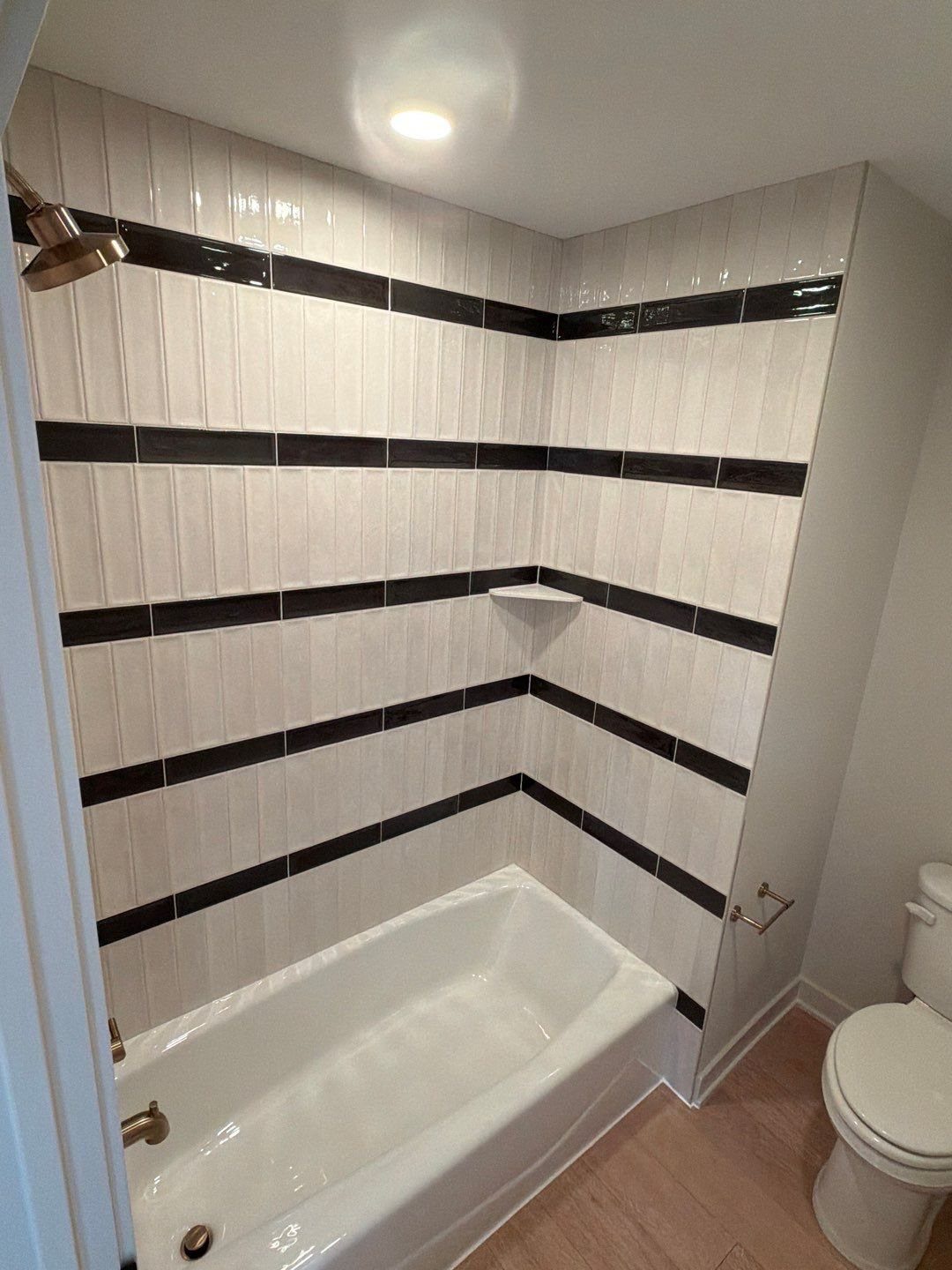
Black stripes across vertical white tile give a plain alcove a graphic rhythm, with the lines crossing the grain of the stack.
Mark the stripe height with a level and a pencil before setting anything, so the band stays straight from corner to corner. Dry-lay a few rows first to see where the black pieces fall.
White carries most of the wall, so only the accent pieces add cost. I’d keep the stripes to one or two bands rather than filling the wall.
9. Sunken Tub with Dark Grey Tiles
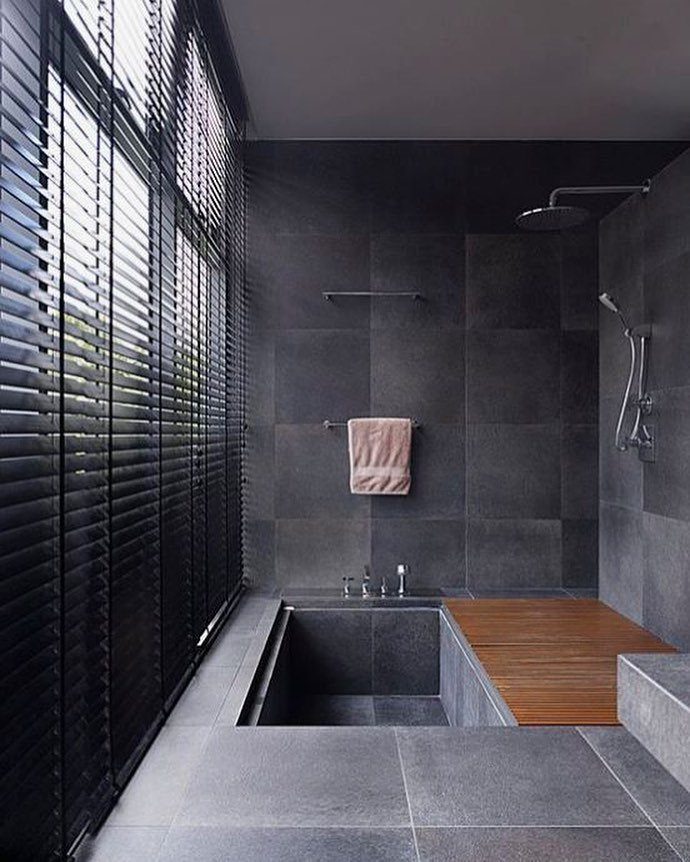
Large dark grey tiles on walls and floor let a sunken tub disappear into the room, and a wooden slat deck warms all that grey.
Big tiles mean fewer grout lines, which keeps the surface quiet and easier to wipe down. They also need a flat, well-prepped surface, since uneven backing shows in large formats.
Sinking a tub is a bigger job than tiling around one, so I’d plan the budget around the build before the tile. Black window blinds match the grey and keep the palette tight.
10. Black and White Striped Arched Alcove
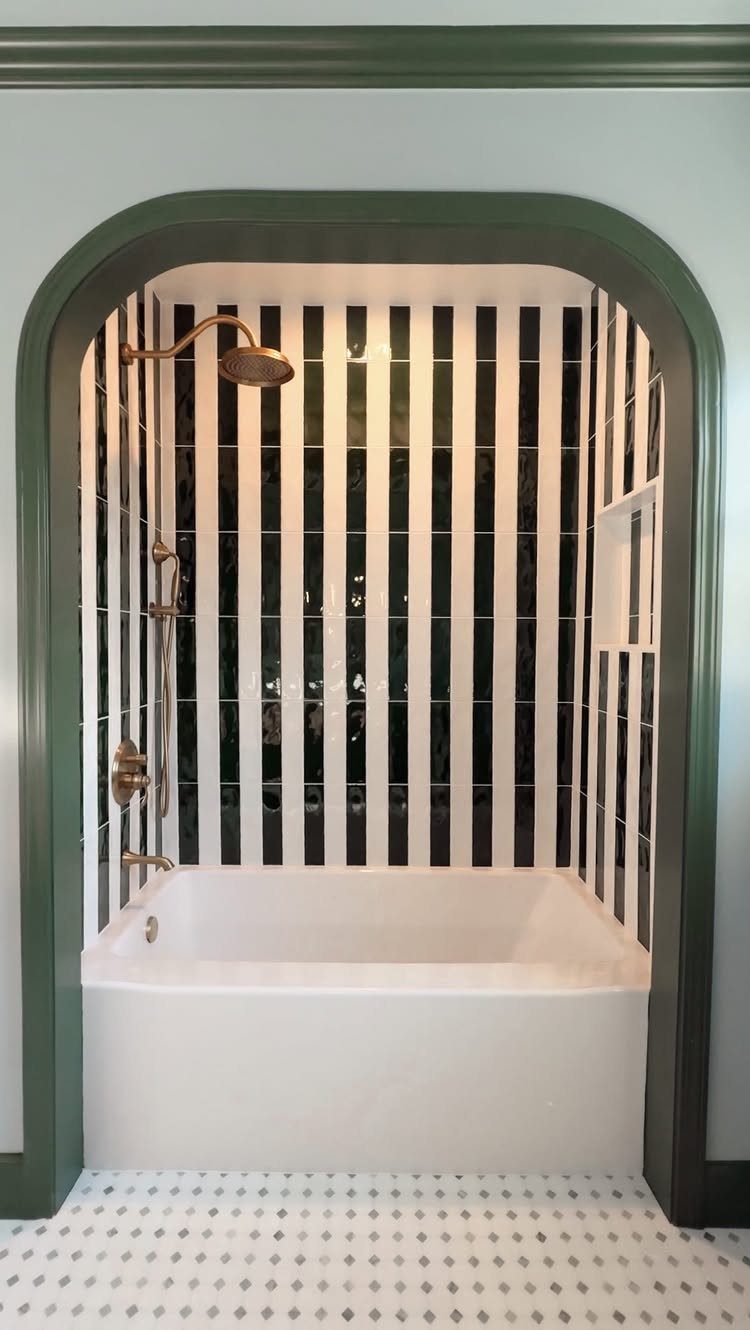
An arched ceiling over a tub is a rare shape, and vertical black and white stripes follow its curve upward. Gold fixtures against that contrast look deliberate.
Cutting stripes to fit a curve is the hard part: expect extra cuts and some waste, so buy more tile than the flat wall area calls for.
Start from the center line of the arch and work outward so the stripes stay symmetrical.
A patterned floor in white and grey keeps the bold walls from feeling stark. I’d make the floor quieter than the walls, not louder.
Choosing Tile Materials
Porcelain is the one material the list never covers, and it deserves a look for any wet wall. It is a denser relative of ceramic, so it absorbs very little water and takes daily steam well.
Expect it to cost a bit more and to be harder to cut by hand, so rent or buy a wet saw before you start.
Match the material to the job rather than to the whole room.
Check the box before you buy. Tile used on a floor needs a rating for floor use, while wall tile can be thinner and lighter, which makes it easier to set overhead.
Order extra tile to cover cuts and breakage, and keep a few spare pieces from the same dye lot for repairs later.
Frequently Asked Questions
Should I tile my bathroom walls?
Yes, tile is a good call around a tub, because it holds up to daily water and steam and wipes clean.
Ceramic and porcelain are the practical choices. For a first tiling job, plain white wall tile hides small spacing errors and keeps the tub surround cheap, so you can spend the savings on a patterned floor or one accent wall.
How to tile a shower?
Hang cement board or another backer on a flat, solid, moisture-resistant wall, and hold it about 1/4 inch above the tub lip so the bottom edge can’t pull water upward.
Bed fiberglass mesh tape in thinset over every seam, roll or brush on a waterproofing membrane, and then wait out the cure time printed on the label before any tile goes up.
A quick wipe of the cement board with a damp sponge slows the board from pulling moisture out of the thinset, which buys you extra minutes to set tile.





