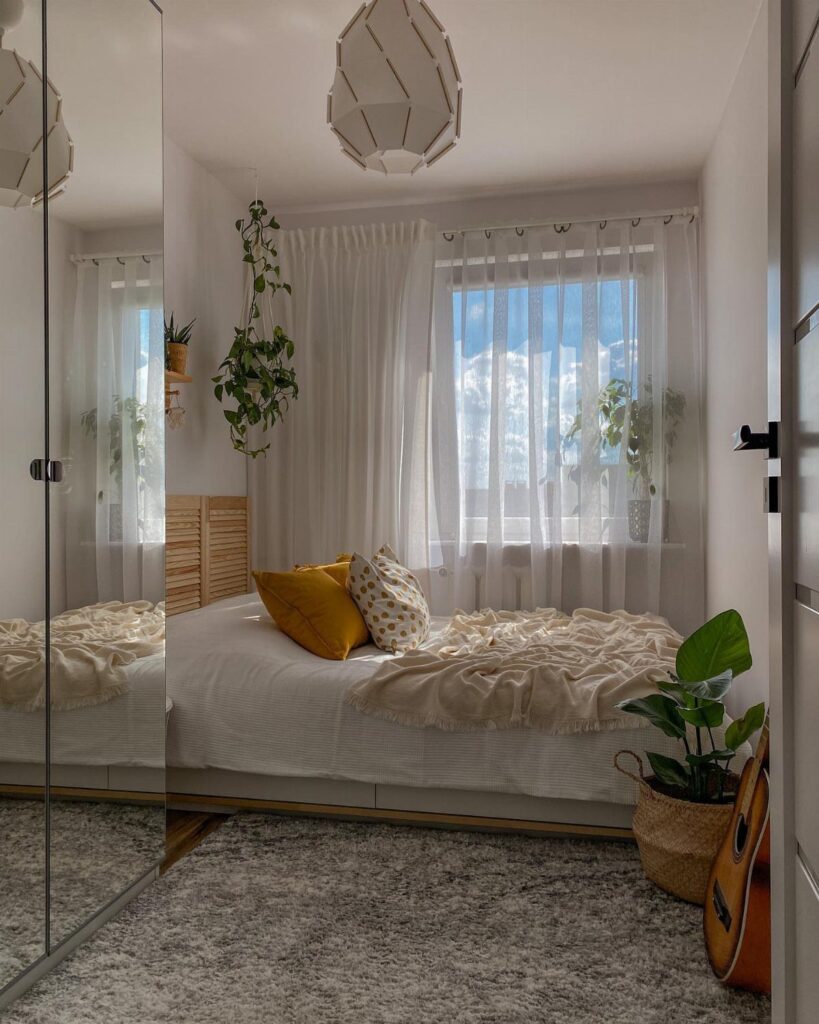
Which idea fits a small flat comes down to one fact: whether you rent or own.
Renters can still get most of this done with a single nail for a framed canvas, which covers the bold artwork idea, and with lift-top storage and modular pieces that need no permission from the landlord.
The list runs from a hanging organizer to built-in furniture, and the cheap end works as well as the costly one when the room is under 400 square feet.
1. Small Spaces
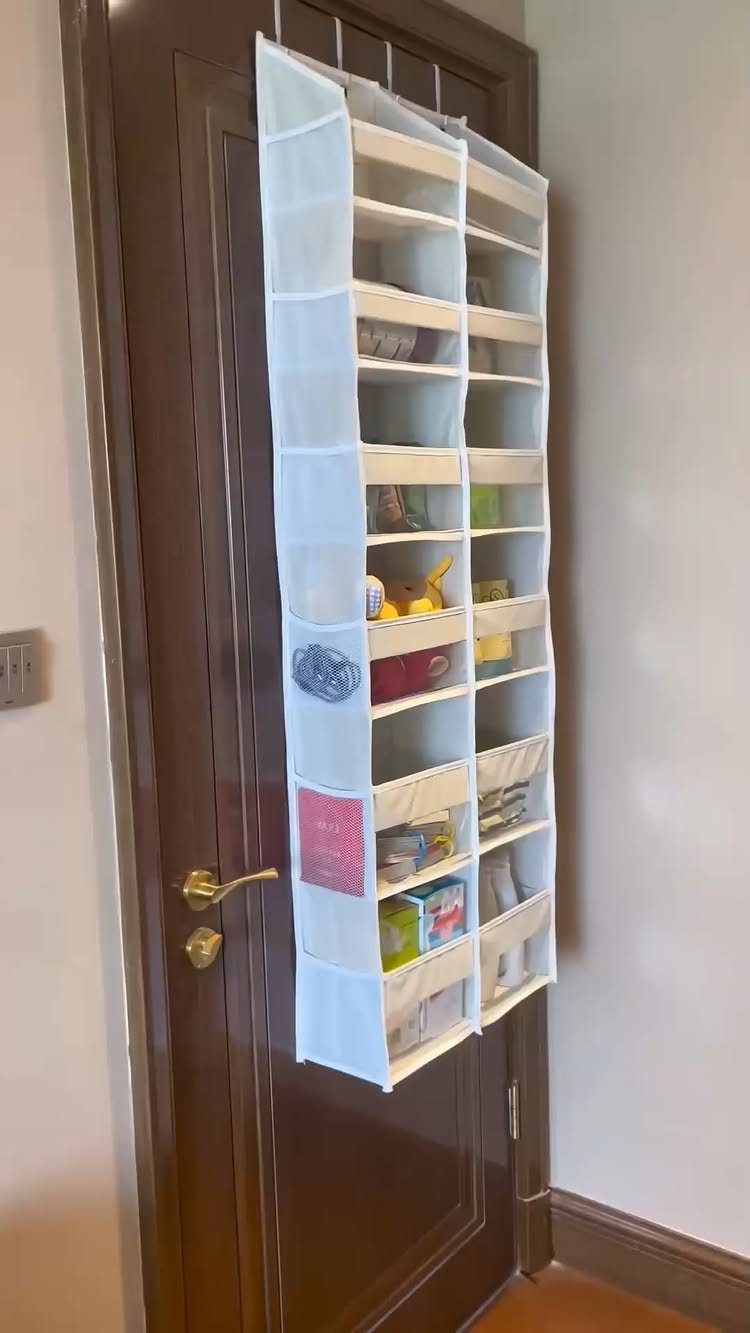
A pocket organizer hung over a door gives a small flat a whole storage wall it never had. Clear or fabric pockets hold scarves, cleaning supplies, shoes or toiletries, and nothing touches the floor.
Choose an over-the-door style with hooks, so there are no screws and a renter loses nothing at move-out.
Keep the load light, because a door that swings under heavy pockets will start to sag and rub.
2. Custom Furniture
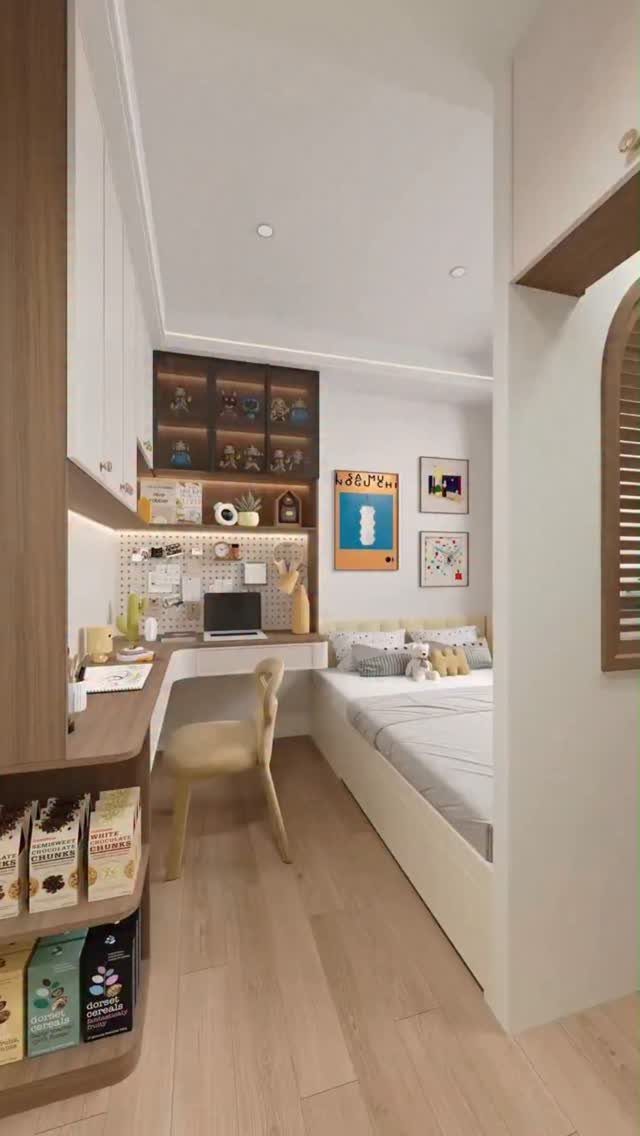
Custom work fills the full width, so the desk, the bed and the shelves share one tidy line.
For a first-home owner, this is the idea worth saving for, since it costs more than a store-bought desk.
Hanging the shelves overhead keeps the floor open, and I’d paint everything the same white as the walls so the unit reads as part of the room.
Renters can copy the look with a plain board desk and wall shelves.
3. Closed Storage Cabinets
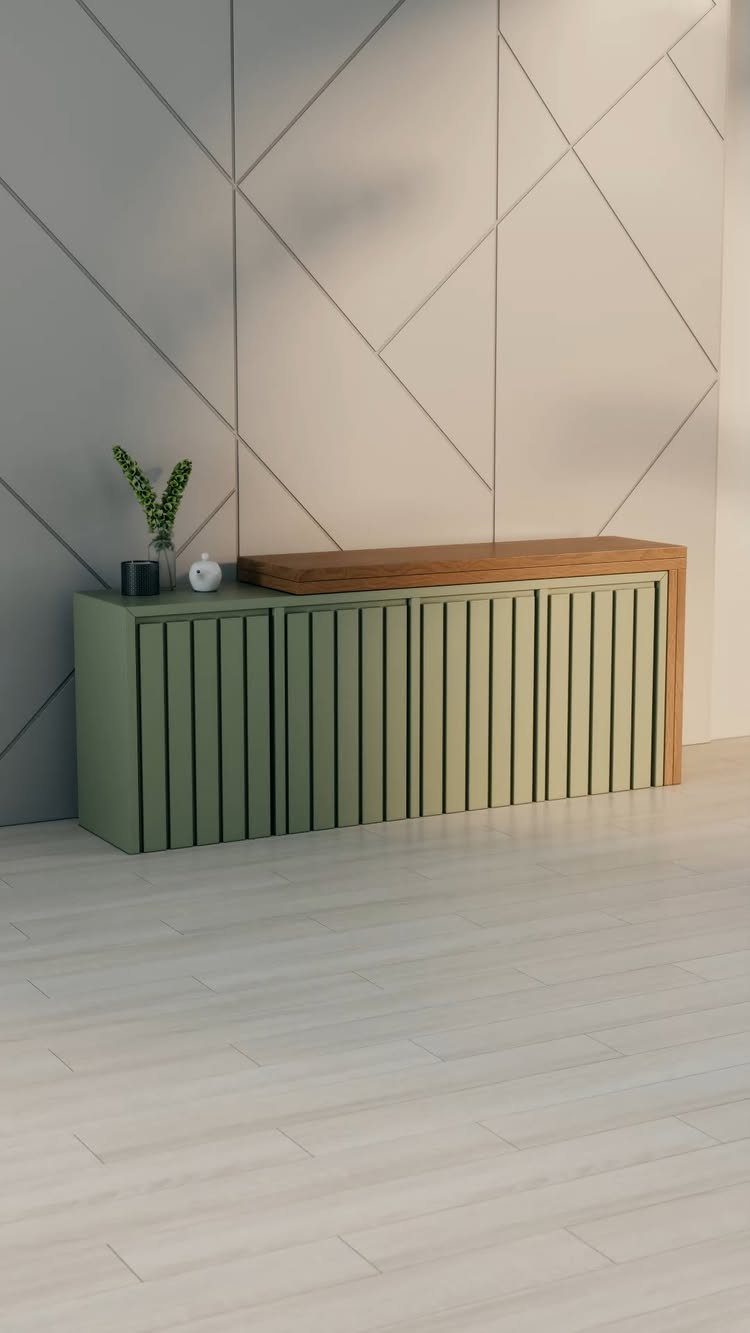
Doors that close turn clutter into a calm, solid shape. A slatted cabinet like this one hides everyday items, and a wooden top gives you a spot for a plant and a vase.
I’d pick a color that stands apart from the wall, as green does against grey, so the cabinet becomes a feature and not just a box.
Keep the top mostly clear, with one or two objects, or the hidden-storage benefit disappears.
Closed storage costs more than open shelves, but a room feels larger when the mess is behind doors.
4. High Curtains
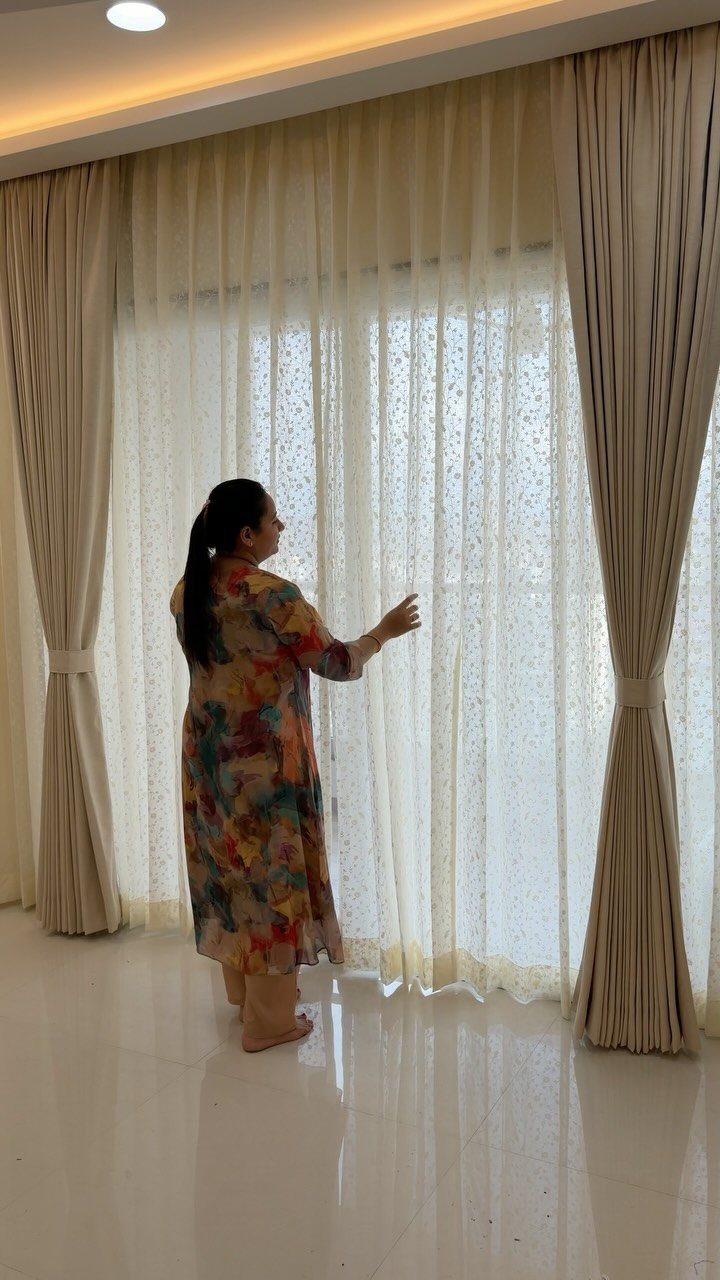
Mounting the rod near the ceiling, not just above the window frame, makes the walls look taller. Drop the fabric to the floor, and the eye follows the long vertical line upward.
Pairing sheer white panels with heavier beige ones, as here, lets daylight through while still giving you privacy and softness when you want it.
Measure from the rod position to the floor, not from the window, before you buy panels, since standard lengths often fall short.
A tension rod won’t hold heavy fabric at that height, so screw the brackets into studs.
5. Bold Artwork
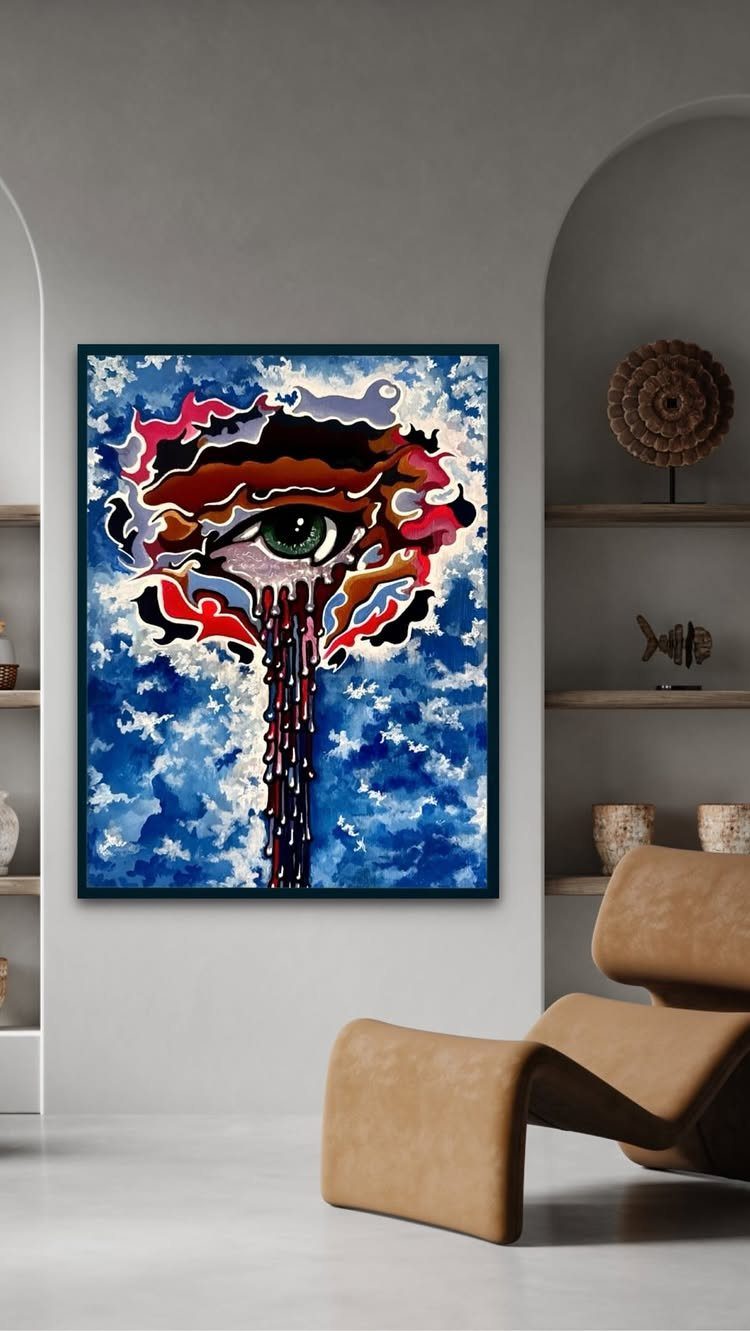
One large painting can give a plain gray wall more personality than a dozen small prints. Hang it above a chair or a sofa, and the furniture below turns into part of the display.
Pick a piece with strong color if your walls and furniture are neutral, because the contrast does the work. A framed canvas hangs from a single nail, which suits renters, and the hole is simple to patch later.
Bold art is a matter of taste, so choose something you will not tire of looking at daily.
6. Modular Sofas
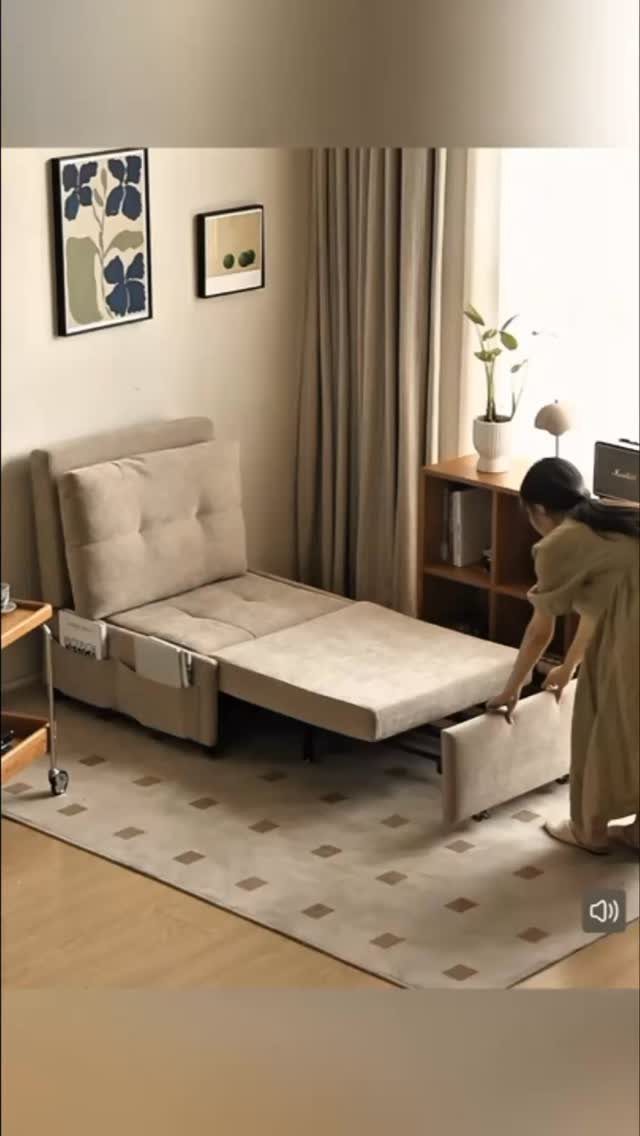
Modular sofas let a small room change with you: pieces can be rearranged, pulled apart or turned into a bed. One well-built sofa can replace the need for two separate pieces, which is the real draw in a compact flat.
Check that each module fits through your door and stairwell before ordering.
Price is where modular sofas lose, since a good system costs more than a basic loveseat.
7. Natural Light
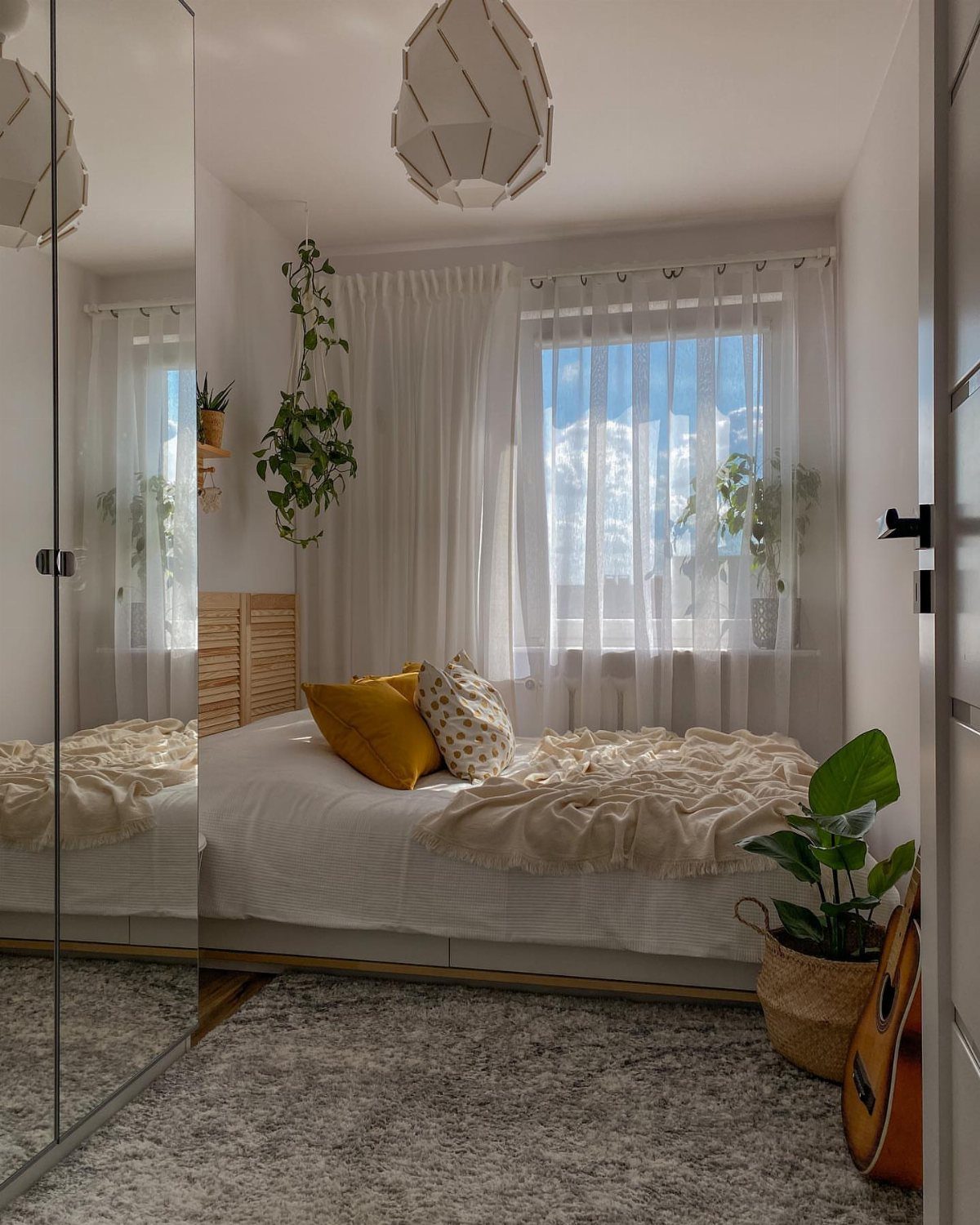
Sheer white curtains let daylight cross the room while the fabric still softens the window. Keep the panels light and keep them off the glass when open, so the whole window stays clear.
A large mirror placed to catch that light bounces it back into the room. I’d put the mirror on the wall beside the window, not across from the bed.
Heavy drapes work against all of this, so save them for rooms that need blackout.
8. Add Plants
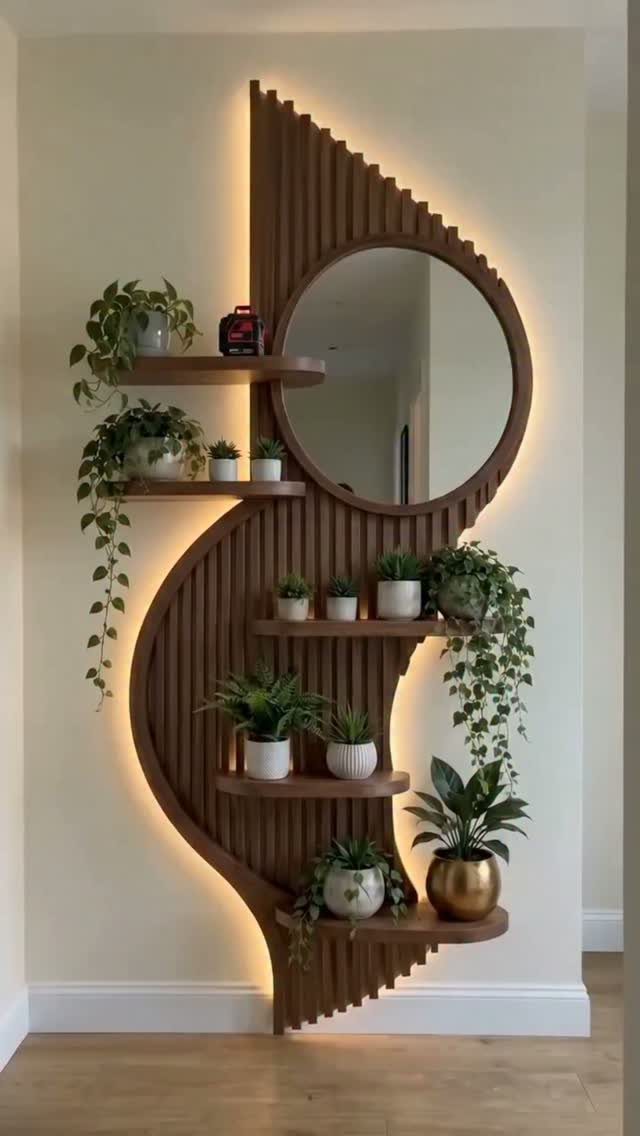
A slatted wall shelf with built-in lighting turns a few pots into one display and leaves the square footage underneath open for other things. That matters in a small flat, where a plant stand takes space you don’t have.
Group plants of different heights on the shelf, and let a round mirror behind them double the greenery. Wood is my pick for a plant shelf, since its warm tone flatters green leaves.
Hanging a shelf means finding studs or using proper anchors, since soil and pots add real weight.
9. Install a Murphy Bed
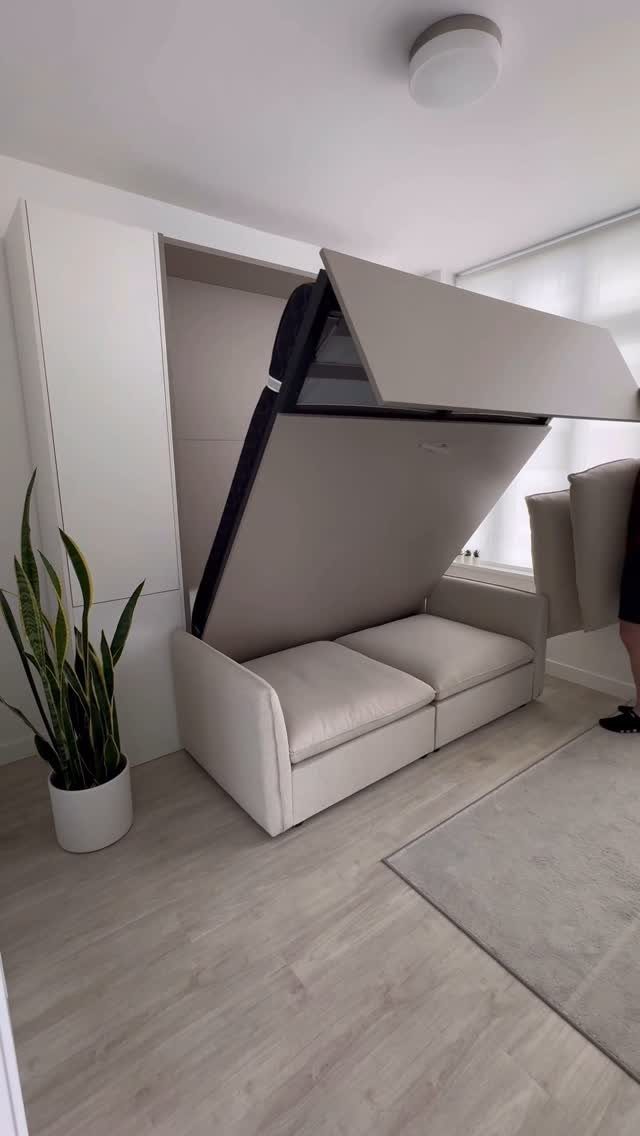
A Murphy bed folds into the wall by day, so the room becomes a living room again.
Pairing it with a sofa built into the same unit, as here, means the seating stays put while the bed comes down above it.
For a first-home owner, this is a serious purchase, and it needs a wall you can fix into. Renters should check the lease first.
Paint or finish a Murphy bed in the same light shade as the wall, and the cabinet reads as part of the room instead of a bulky box.
10. Distinct Areas
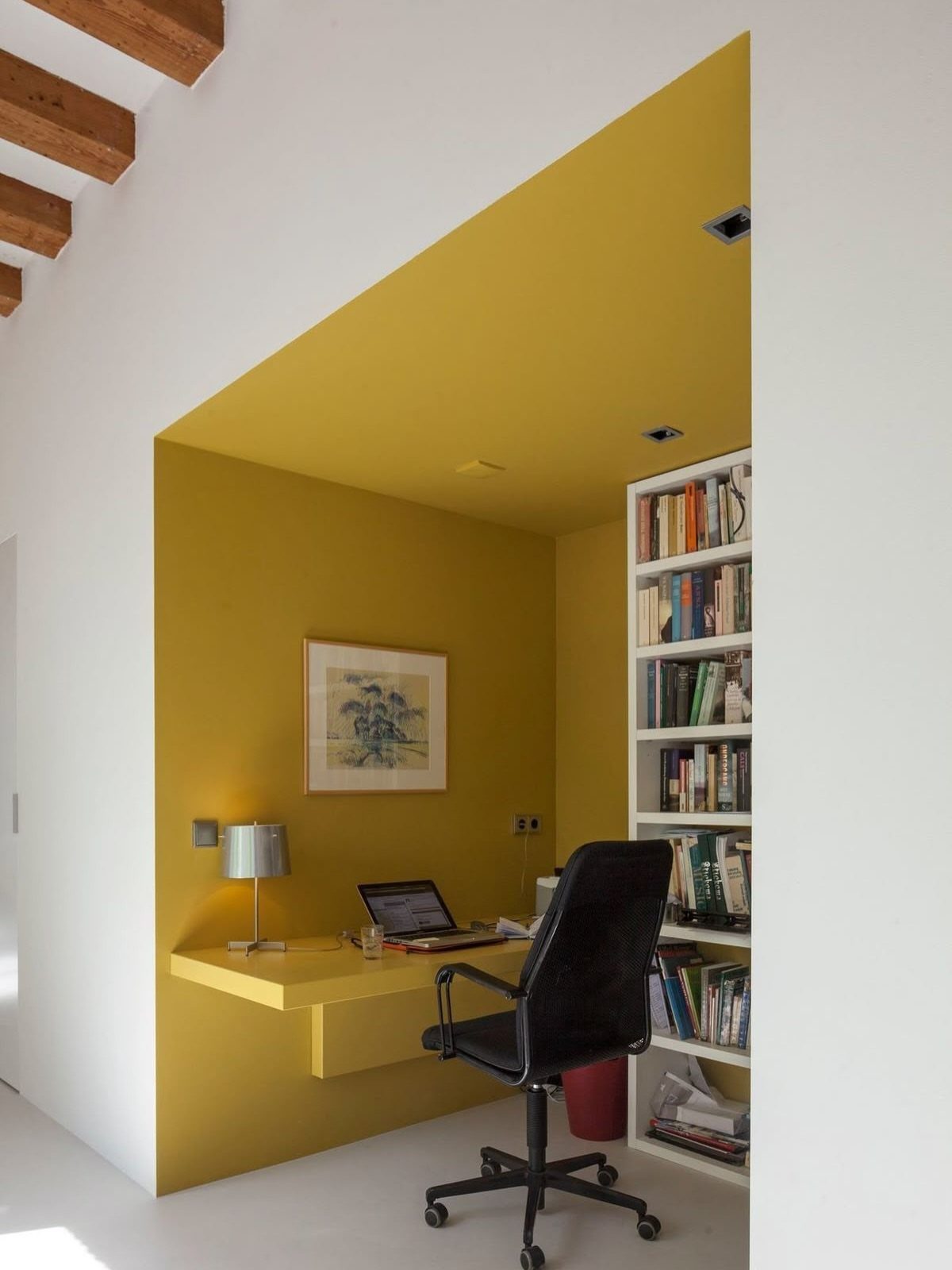
Paint can mark off a zone without a single wall going up. A desk nook in a strong yellow, ceiling included, tells you where work happens and where it stops.
I’d pick one saturated color for the nook and leave the rest of the room white, so the contrast draws the line. A bookshelf beside the desk keeps supplies within reach.
Painting the ceiling takes extra time, but it makes the nook feel like a small room of its own.
11. Neutral Color Palette
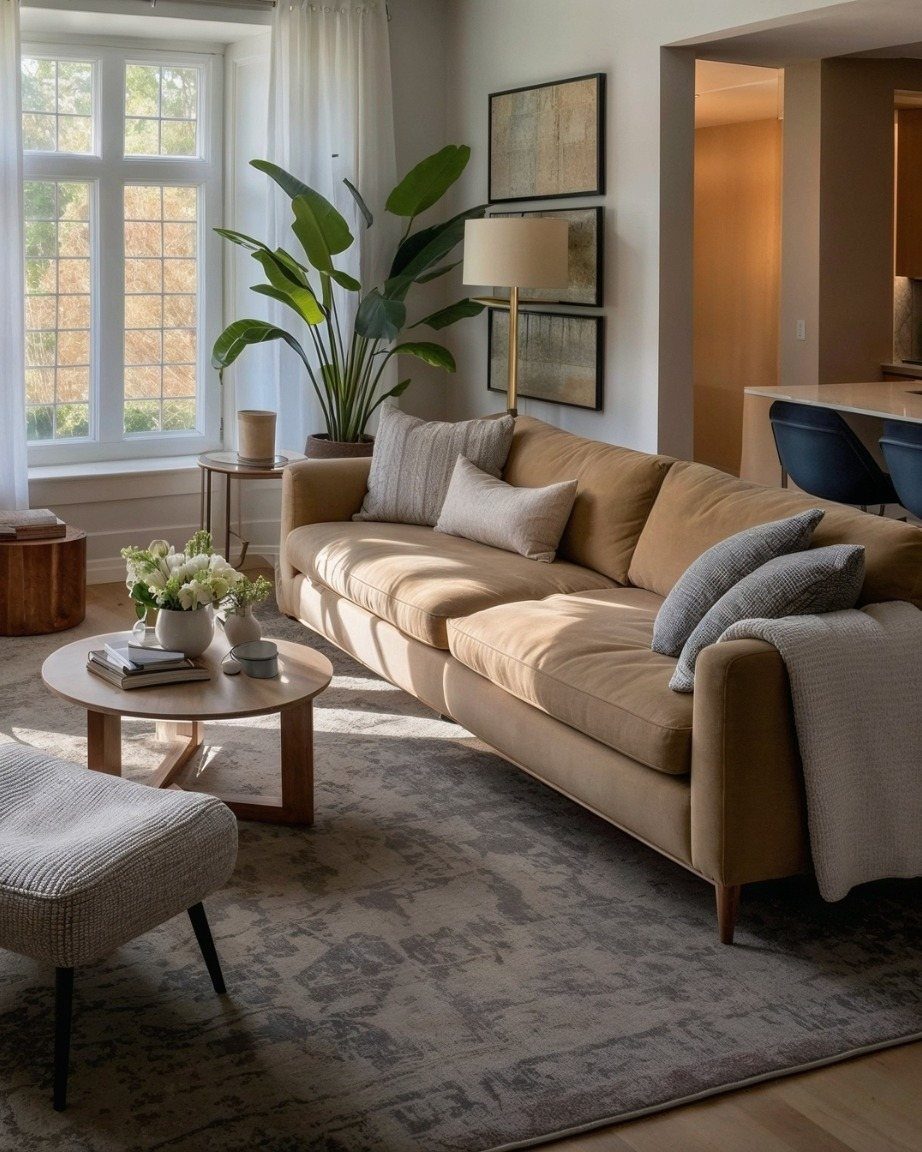
One family of tones, such as tan, grey and wood, keeps the eye moving across a room instead of stopping at every change.
A quiet, low-contrast room gives the eye fewer edges to stop on, so a small living room reads as larger than it is.
I’d add a large plant for the one green note.
Neutral can go flat, so mix textures: a patterned rug does that job well.
12. Lift-Top Storage Coffee Table
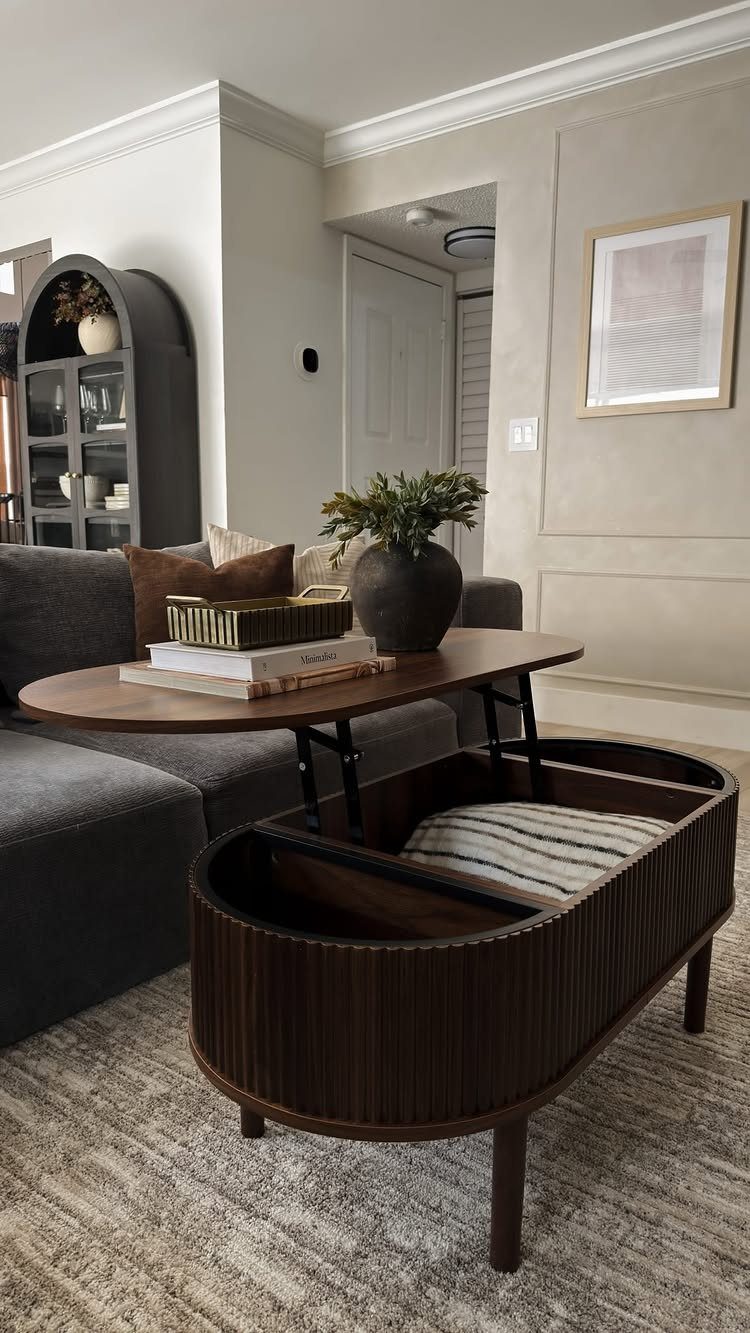
A coffee table with a lift-up top hides blankets, remotes and clutter in a piece you already need. The top rises to a working height, so it can also serve as a spot to eat or use a laptop.
Dark wood hides daily marks well and anchors a neutral room. Check the inside depth before buying, since a thick top can leave less storage than it looks.
Keep the surface mostly clear so the table stays useful.
13. Mirrored Wardrobe Doors
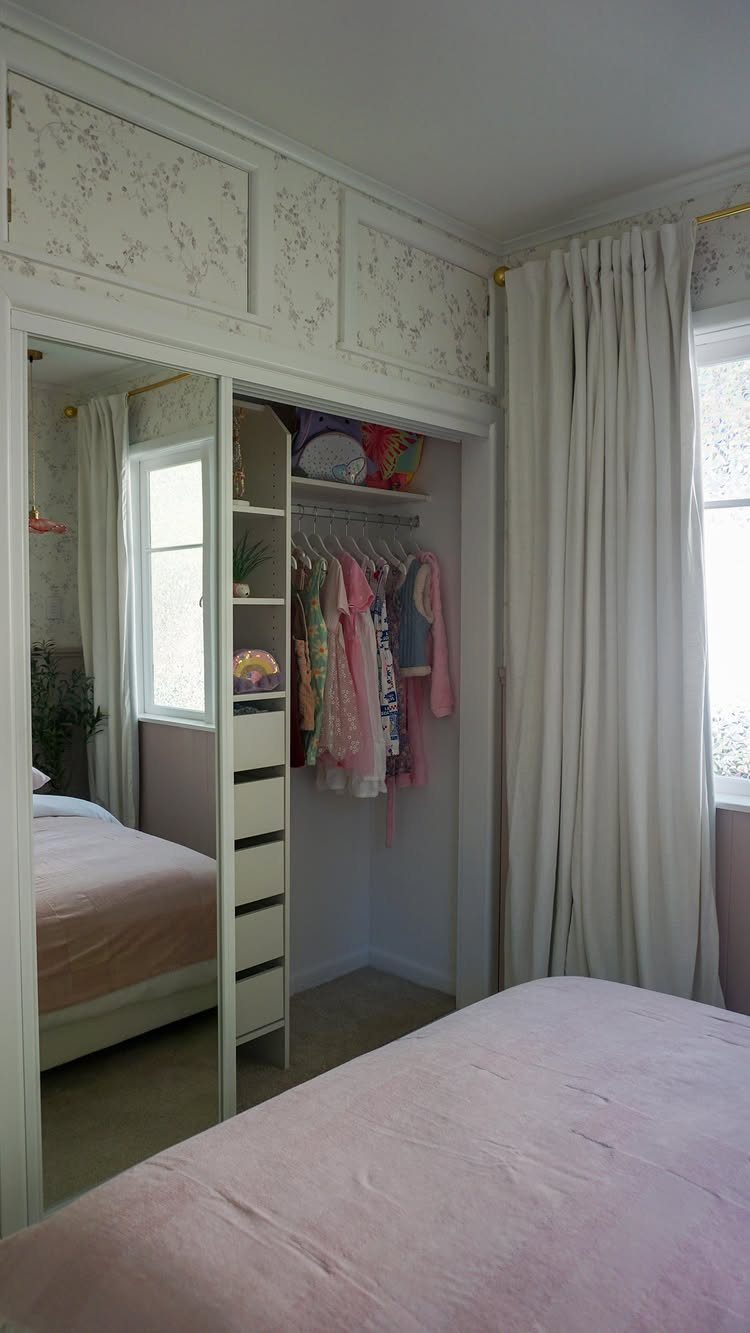
A full-length mirror on a wardrobe door gives you a dressing mirror without taking any wall or floor space. In a small bedroom that matters, since a freestanding mirror needs its own spot.
Mirrored fronts also bounce light back across the room, which stretches the space visually. I’d mirror only one or two doors and keep the rest plain white, so the room doesn’t turn into a wall of reflections.
Hang the mirrored doors on the wall across from the window so they bounce daylight back into the room, and keep them from reflecting the bed, which can make a small room feel busy at night.
Stand where you’ll see it most, and check what it shows back.
14. Slim Vanity and Tall Cabinet Setup
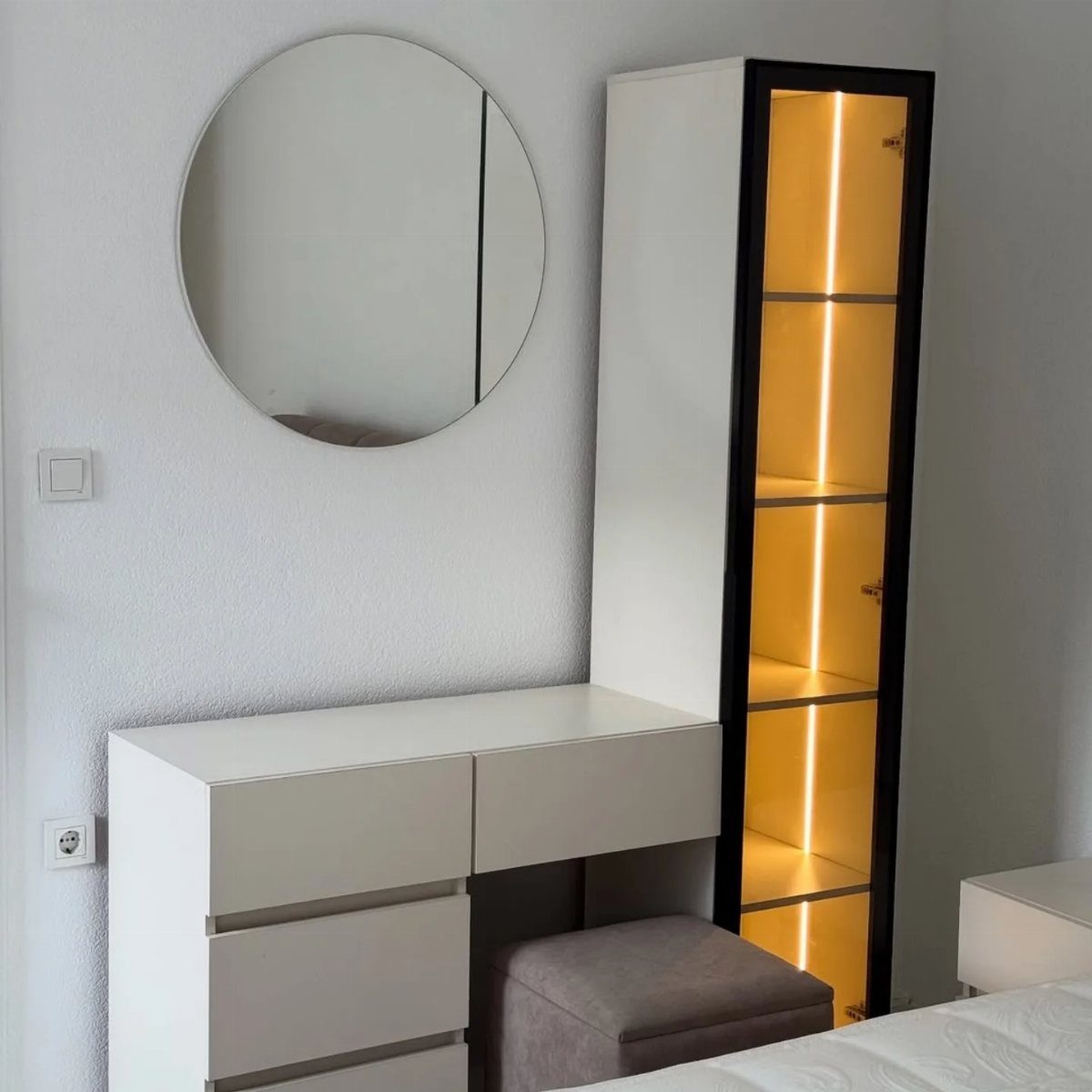
A slim vanity desk with a tall, lit glass cabinet beside it gives a small room a dressing area in about the footprint of a narrow dresser.
The tall cabinet carries display and storage upward, so the desk surface stays free for daily use.
I like keeping everything in one white finish with a round mirror above, since matching pieces read as a single unit.
Glass shelves show everything, so fill them with only a few items you like looking at.
Advice for Small Spaces
Small furniture is not automatically the right furniture for a small flat. A room full of undersized pieces looks busier than one with a single properly scaled sofa or table, so I measure first and buy fewer, better-fitting items.
Pieces that do 2 jobs earn their place: storage ottomans, sleeper chairs and similar. Slim legs and see-through materials like acrylic or glass keep furniture from weighing the room down.
When floor space runs out, go up. Hooks, racks and wall-mounted shelves or desks hold essentials without crowding the room.
Even a studio under 400 square feet can hold separate zones for sleeping, working and lounging if you mark each one with a rug, a shelf or a lamp.
A rug, a lamp or the way you place a chair can divide the space quietly, while a bookcase used as a divider draws a firmer line.
Peel-and-stick wallpaper gives a renter real personality on one wall, and it comes off later without a conversation with the landlord.
Tips for Organizing
Start by editing, not buying.
Before buying cabinets or bins, I sort through what you own and decide what actually earns a spot. Decluttering may solve half the problem, and storage planned around what remains will be smaller and cheaper.
Put storage where the item enters or gets used.
Set up a hook, a tray or a small shelf by the door so keys, bags and mail land in one place. Work gear should disappear near the desk, and dishes should live within reach of the dining spot.
When putting an item away means walking across the whole apartment, it tends to get dropped on the closest table.
Open shelves work too, as long as you keep the number of items low. A few things arranged with some care look styled; a full shelf looks cluttered.
Creating a Personal Touch
Edit, don’t strip the room bare.
Good candidates are artwork, books, a strong color or a travel piece.
Keep accents few. Pothos and snake plants forgive missed waterings and dim corners, so they suit anyone who wants greenery without the upkeep.
Mix soft and hard textures: pillows, blankets, woven bins and ceramic pieces add depth without clutter.
Swap accents through the year. Swapping a single pillow cover freshens a room, and the sofa stays right where it is.
Spend on the sofa, rug and lighting first. With those solid, cheaper accessories hold up fine.
Frequently Asked Questions
How can I make a small apartment feel bigger?
Start with light, low-contrast color, mirrors and furniture that does 2 jobs. Sticking to tan, grey and wood tones means fewer hard color breaks, so the eye keeps moving and the space looks wider than it is.
A big mirror next to the window catches daylight and pushes it back across the room, and curtain rods set close to the ceiling with floor-length panels stretch the walls upward.
Should I use small furniture in a small apartment?
Not automatically. Too many tiny pieces crowd a room faster than one sofa or table sized right for it, so I take measurements before shopping and buy fewer items that actually fit.
Furniture on thin legs, or made from clear acrylic or glass, lets you see the floor and wall behind it, which keeps the room from feeling heavy.
How can I add storage without making an apartment feel crowded?
Go up the wall and put closed storage where you use things. Wall-mounted shelves, hooks and racks hold essentials without eating floor space, and a hook or tray by the door keeps keys and mail in one spot.
Doors that close turn clutter into one calm shape, and a lift-top coffee table or storage ottoman hides things inside furniture you already need.





