Renting or owning decides which of these ideas is yours: layered lighting, a bold cement tile pattern you can lay as a peel-and-stick version, and large prints suit a renter, while wall-hung toilets with concealed cisterns, walk-in showers and stone walls need framing and tile work that only an owner should commit to.
The ideas run from layered lighting with each layer on its own switch to black marble with gold veining on walls and floor. The permanent pieces deserve the money, and paint and accessories can carry whatever’s current.
1. Walk-In Showers and Wet Room Bathrooms
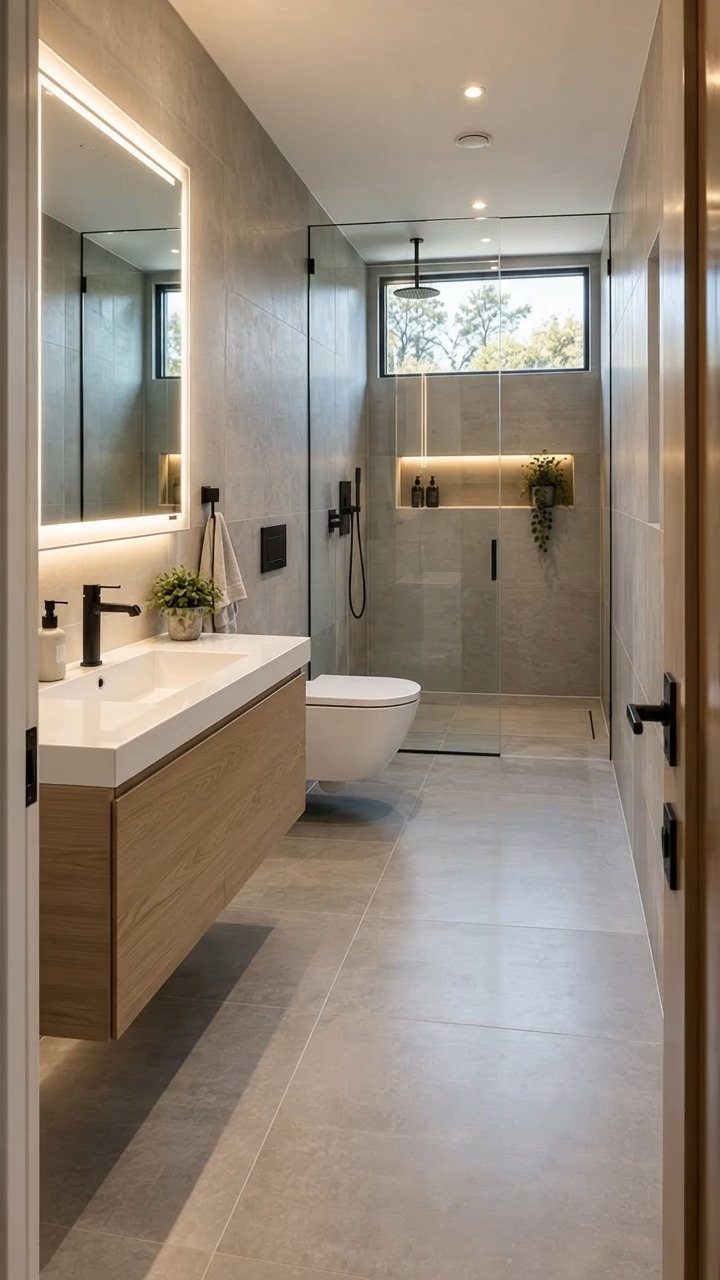
A glass panel with no door is the detail that makes a walk-in shower work in a small bathroom, because nothing cuts the floor line and the room reads bigger.
The recessed shelf in the wall also beats a corner caddy: it holds bottles without sticking out into the shower space.
I would pair it with a floating vanity like this one, since seeing floor beneath the cabinet adds to the open look.
Large-format grey tile keeps a walk-in or wet room calm, and a wall-hung toilet adds to the clear-floor look because you can see more floor and mop under it in one pass.
2. Layered Bathroom Lighting
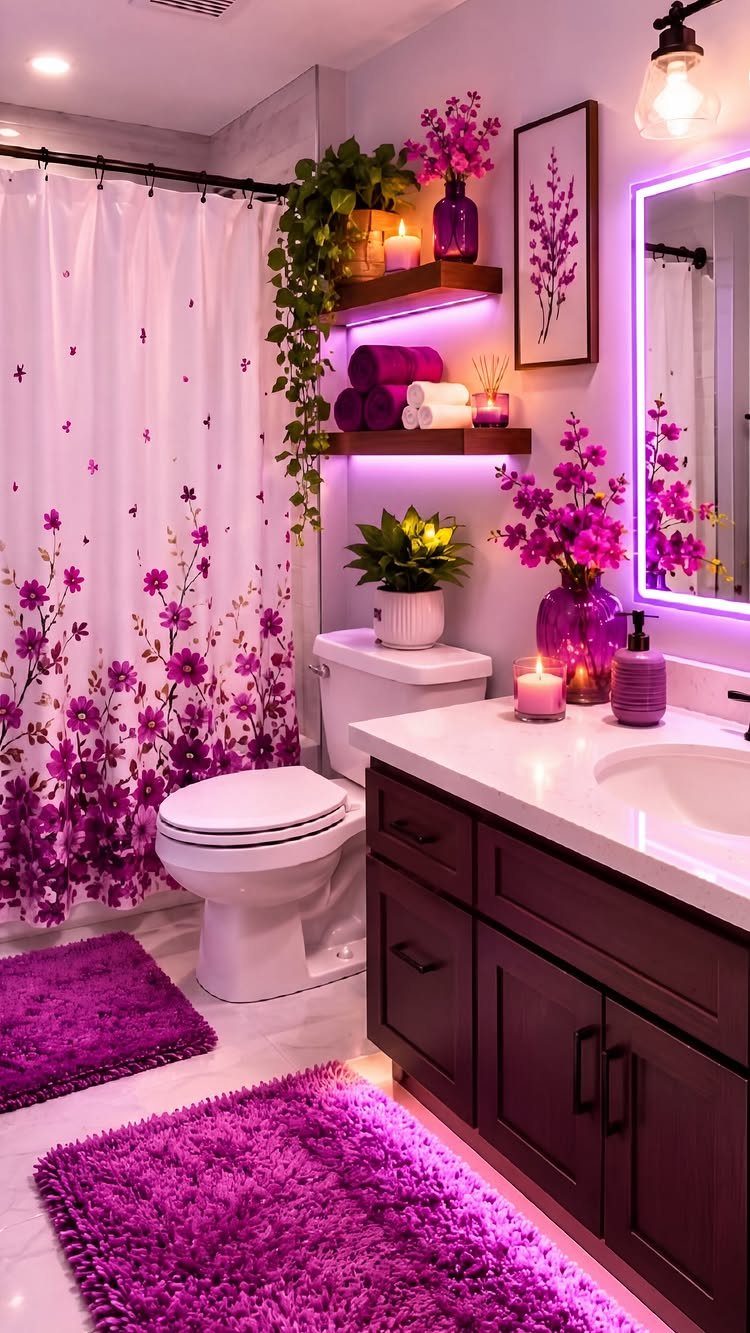
Mirror lighting that glows from behind is the easiest layer to add on a rental or starter-home budget.
A backlit LED mirror gives soft light around your face and works as a night light, so the overhead fixture can stay off.
Put the mirror on its own switch if you can, so you can dim the room without losing the vanity glow.
3. Stone and Timber
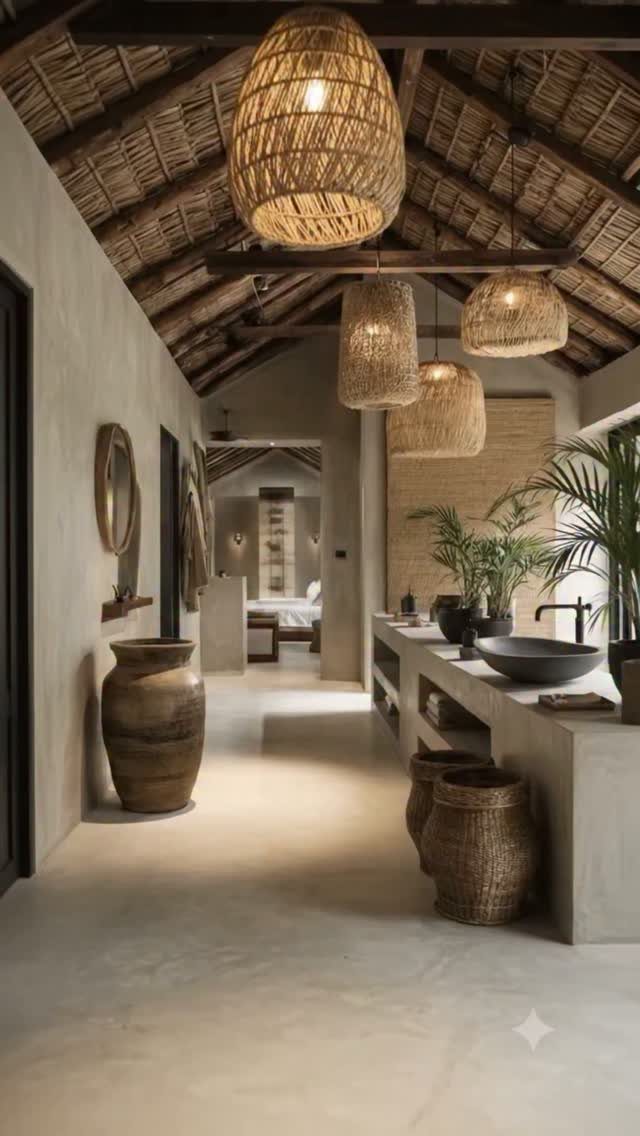
Raw concrete next to natural timber gives a bathroom a spa-like calm, and a vessel sink on a concrete vanity is the focal piece.
Woven pendant lights soften all that hard gray, which I would not skip, since stone alone can feel cold.
Few renters can build a thatched ceiling, but exposed beams or a wood-slat ceiling panel borrow the same warmth. Keep the palette to 2 or 3 earthy materials so it stays restful.
4. Freestanding Bathtubs as a Focal Point
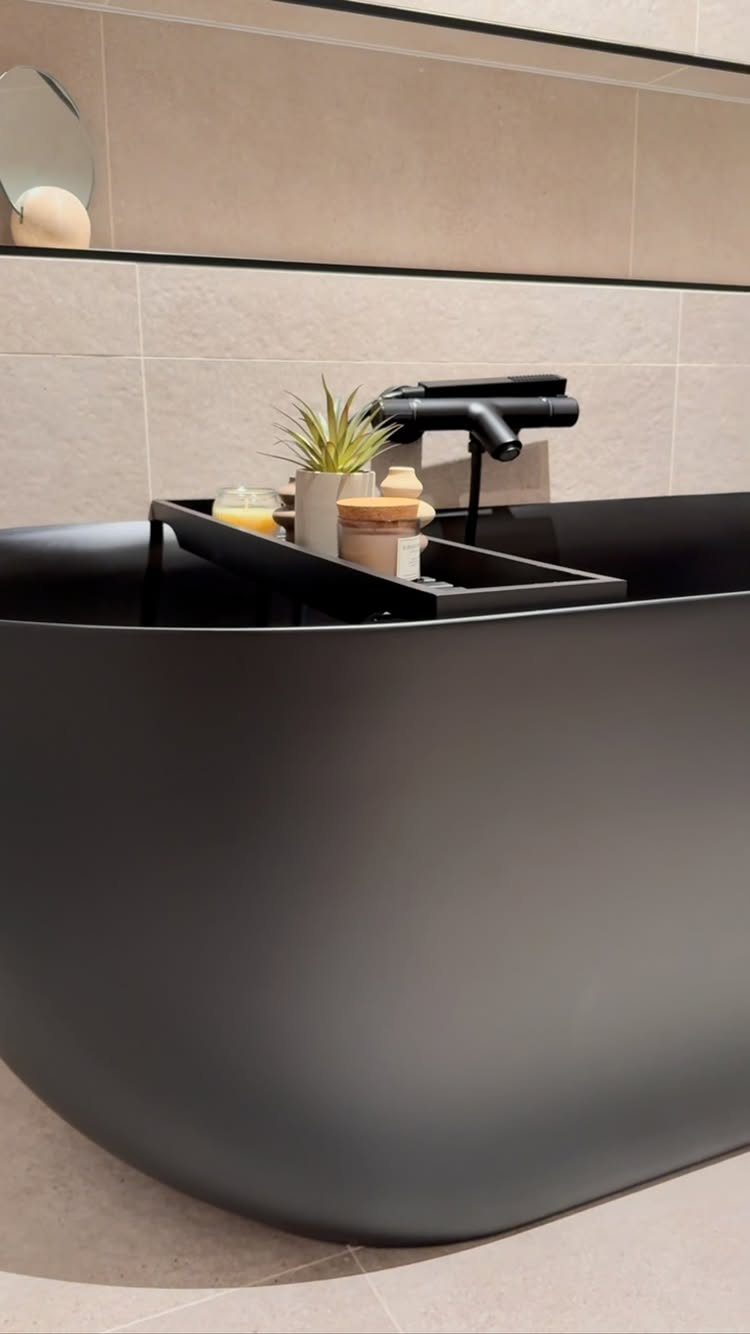
Matte black turns a plain tub into the sculpture that anchors the room. Against beige tile it gives strong contrast without needing any other bold color, and a matching caddy keeps the look tidy.
A freestanding tub needs floor space and room around it for cleaning, so it suits bathrooms with a little breathing room. In a tight space, I would still choose one black fixture over several, and let the tile stay quiet.
5. Wall-Hung Toilets with Concealed Cisterns
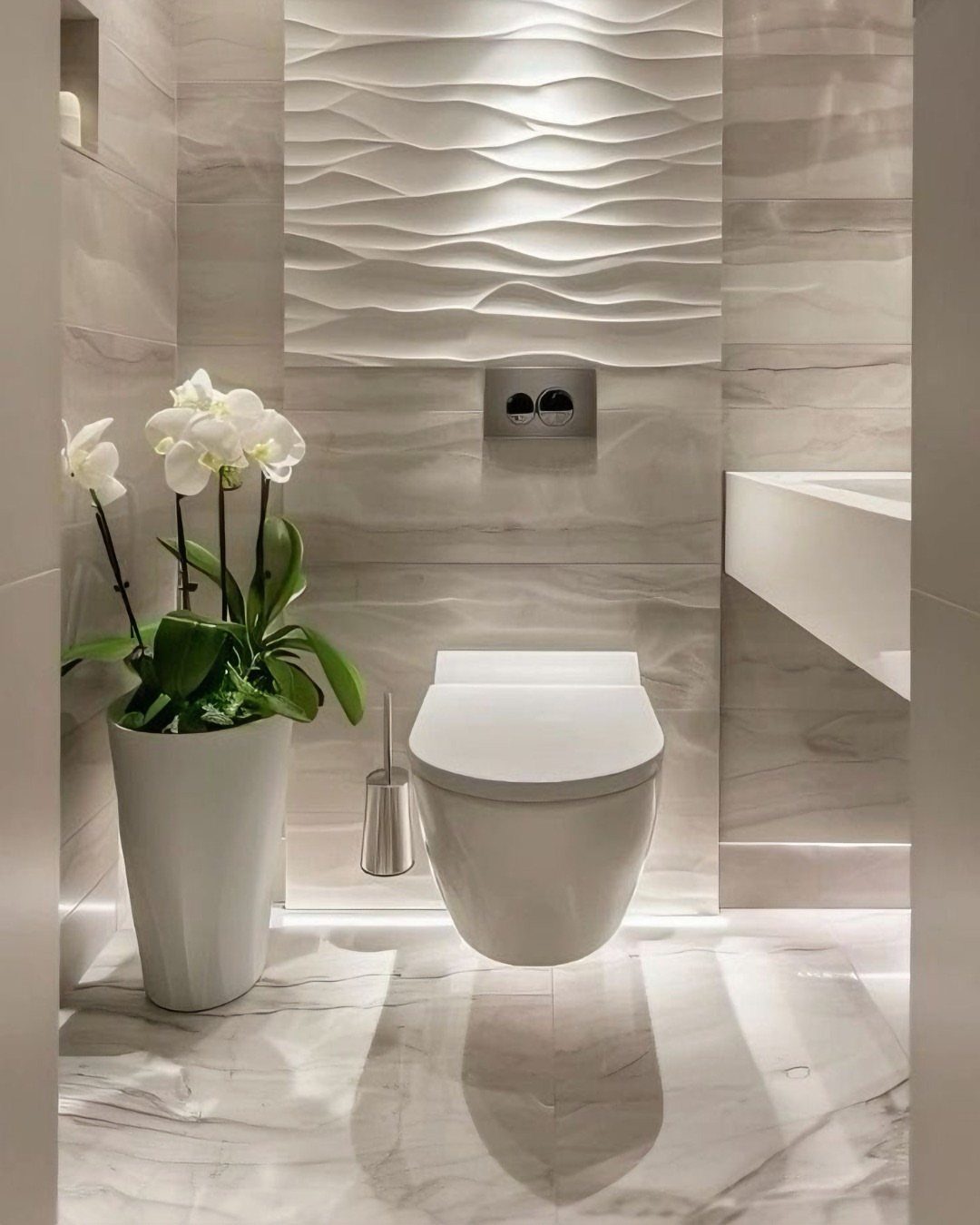
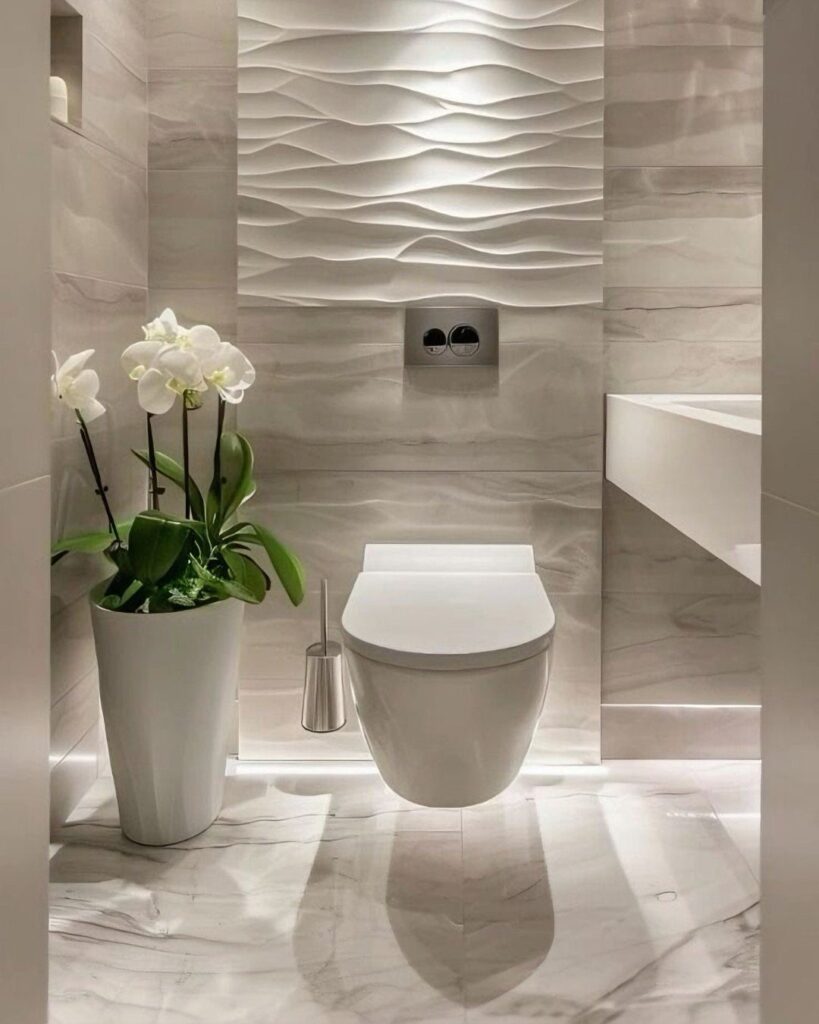
Hiding the tank inside the wall leaves a flat panel with 2 flush buttons, and the whole toilet area looks cleaner. Floor space under the bowl stays open too, which makes mopping easy.
Marble-look walls and floor keep it bright, and one tall vase of orchids on the ledge above the cistern is all the styling it needs.
A textured 3D wall panel behind the toilet adds depth without clutter. Plan the wall framing early, since the concealed tank needs space inside it.
6. Large Prints in Compact Areas
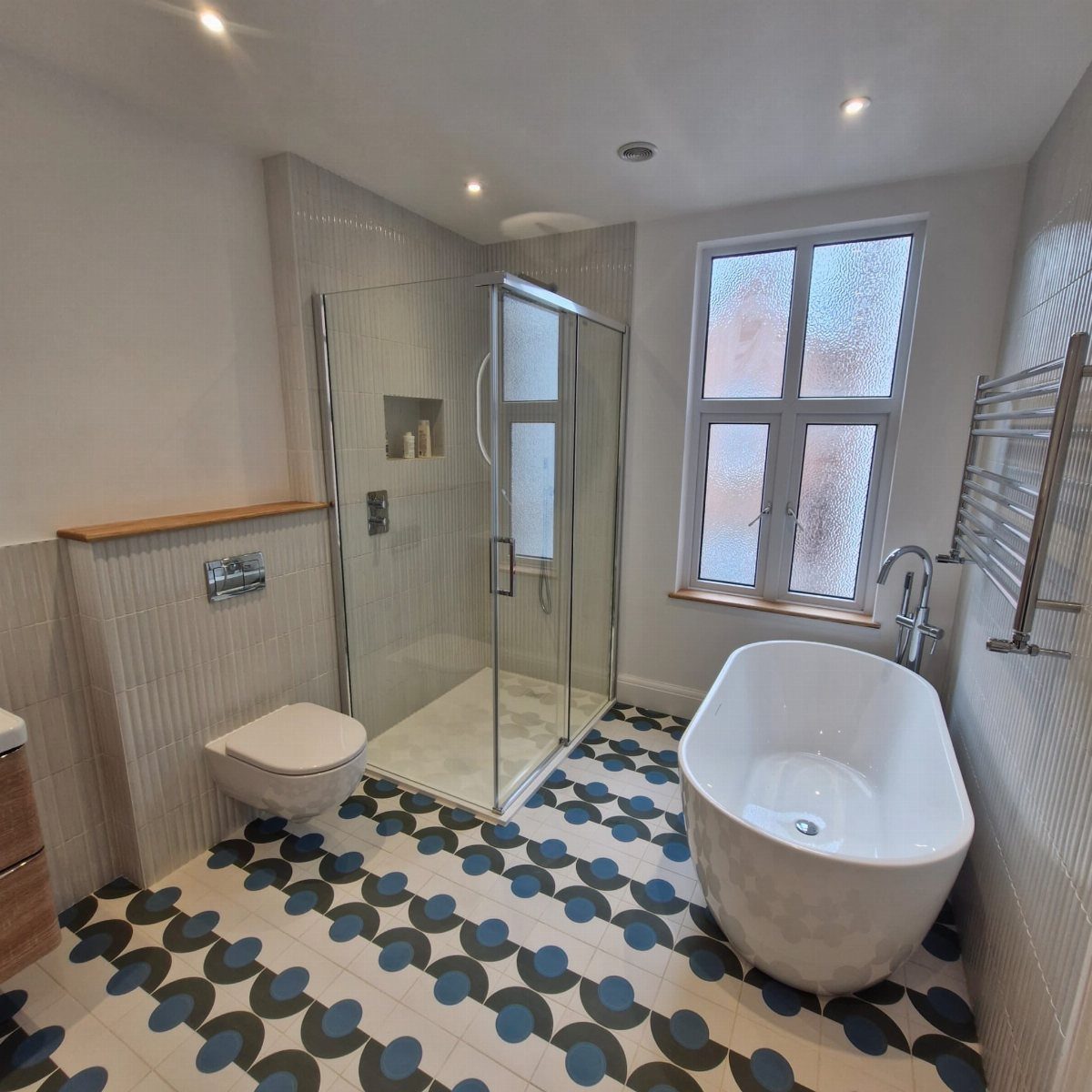
Pattern on the floor only is how a small bathroom can go bold without feeling crowded.
In a compact bathroom, a bold patterned floor tile can carry all the personality if you keep the tub, glass and walls plain white or clear.
I would keep walls and fixtures plain white, as here, so the print is the single loud element.
Cutting tile around a tub and shower takes patience, so lay out the pattern dry first and center it where you see it most.
7. Hand-Poured Cement Tiles
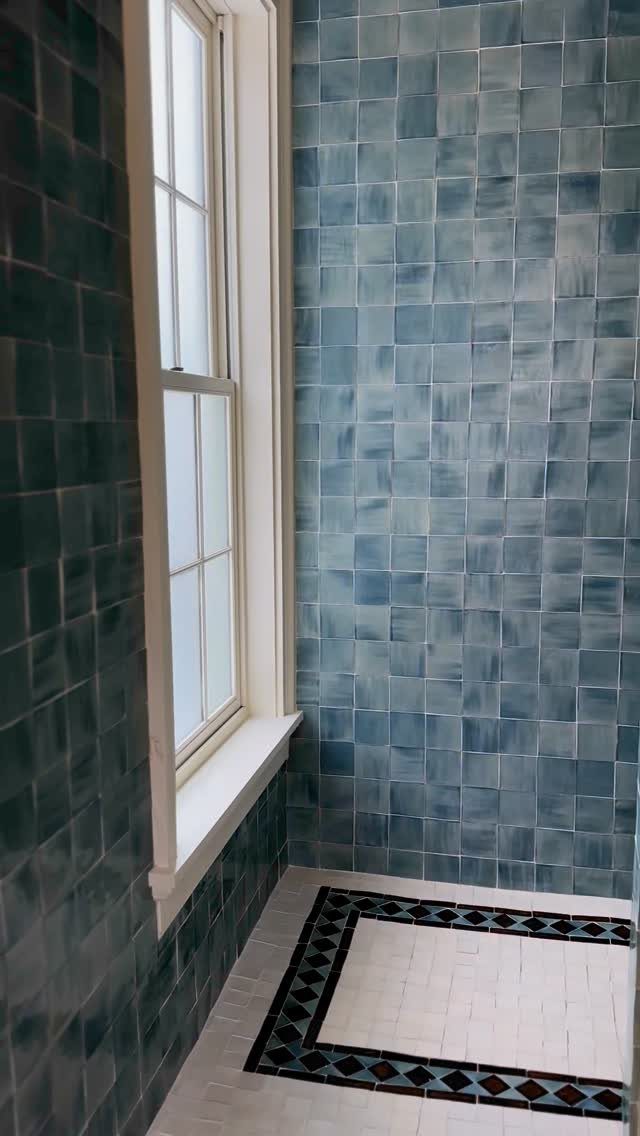
I would limit the border to one band, since a patterned edge reads as a deliberate frame when the rest is quiet.
Cement tile is handmade, so expect slight shade variation from piece to piece, and lay out the border dry before you commit to a single tile.
8. Black Marble with Gold Accents
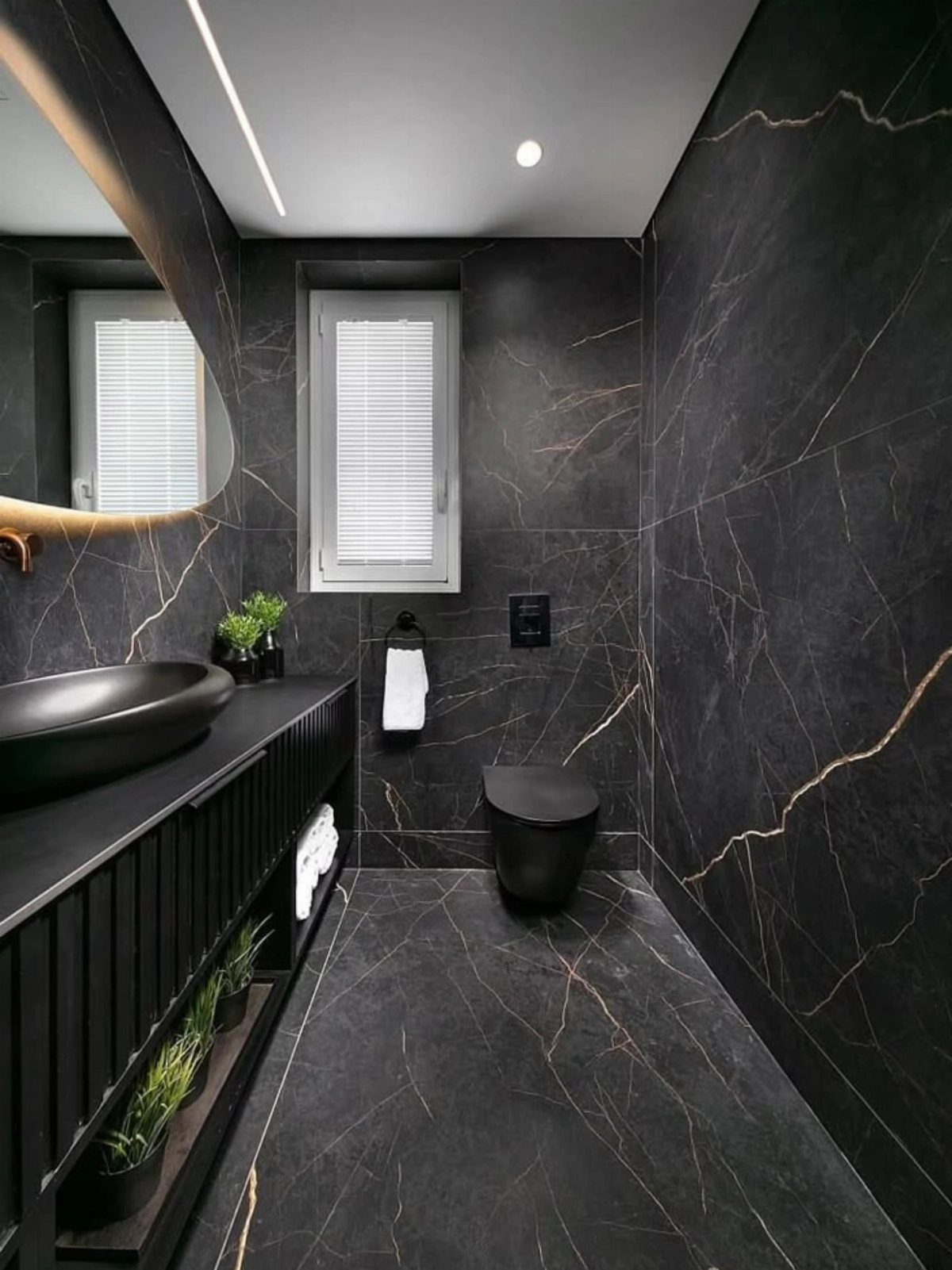
Black marble with gold veining on both walls and floor makes a bathroom feel like a lounge, and the veins do the decorating so you can skip extra ornament.
A black vanity, black toilet and backlit mirror keep the palette tight.
The backlit mirror matters most here, because dark stone swallows light and the glow around the glass gives the room its depth.
For a rental or small budget, I would pick one surface, such as the floor, in black marble-look tile and keep the walls lighter. All-black surfaces on every side get heavy fast.
Trends to Follow and Skip
Before buying into any trend, ask whether it solves a problem.
Wall-hung pans that clean easily, large tiles that cut down on grout lines, and heated towel storage all pay off because they make the room work better years after the style shifts.
Skip anything built around one color or pattern choice. That part of the bathroom ages first, and it’s the hardest to undo once you’ve tiled it.
I put money into the permanent pieces: tile, fixtures, layout. Then I use paint, towels and accessories to carry whatever’s current, since swapping those out is easier to accept than regrouting a wall.
On a renter’s budget, this rule is even more useful. Anything you can take with you or repaint in an afternoon is a safe place to experiment.





