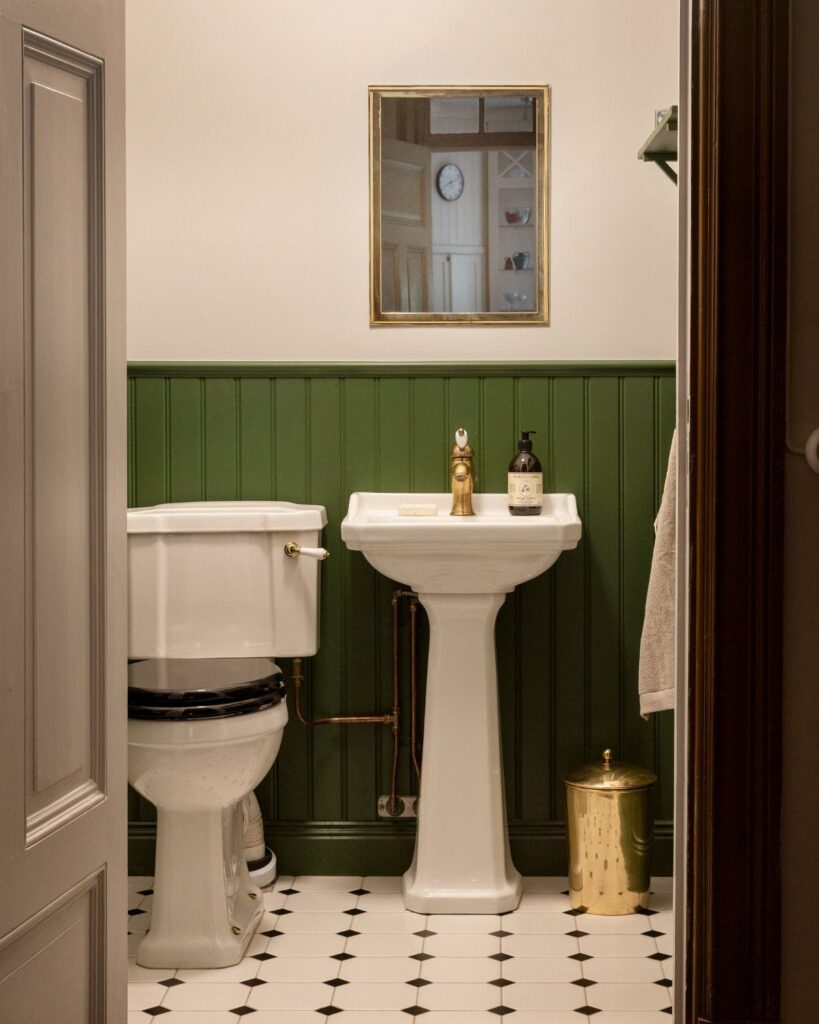
The colors here run from warm white and light greige, which sit quietly behind the fixtures, to burgundy, cobalt blue and black, which wrap the whole room, and the work runs from one quick wall to full coverage that needs 2 coats at least.
Even the black bathroom here came in around $600, new vanity included.
1. Warm White
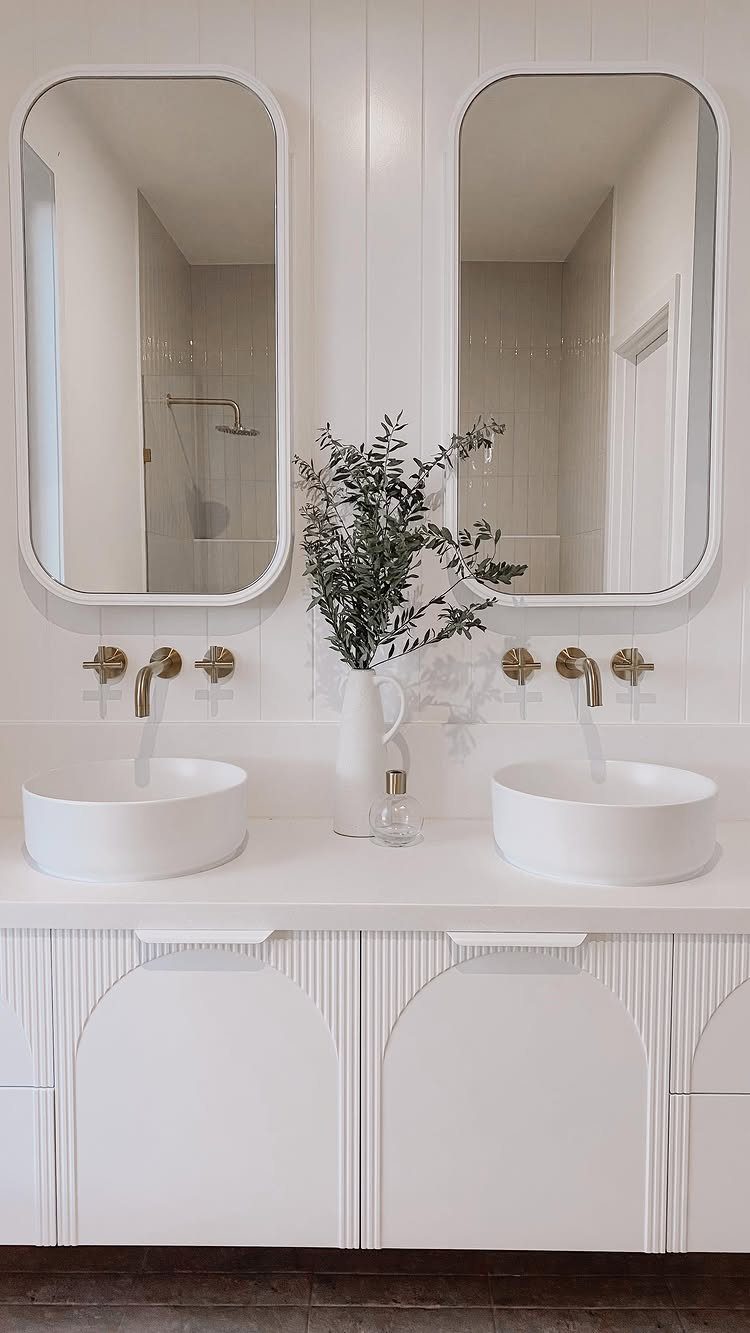
Warm white keeps the walls quiet in a compact bathroom, which lets the vanity, mirrors and faucets carry the look.
Paneled walls like these take the same shade as the trim, so the paint reads as one soft surface instead of a box with edges.
For paneling I’d pick satin or semi-gloss, since either wipes clean, and paint a couple of sample boards to hold near the sinks and check at different times of day before buying gallons.
Gold faucets look best against a white with a creamy lean.
2. Webster Green
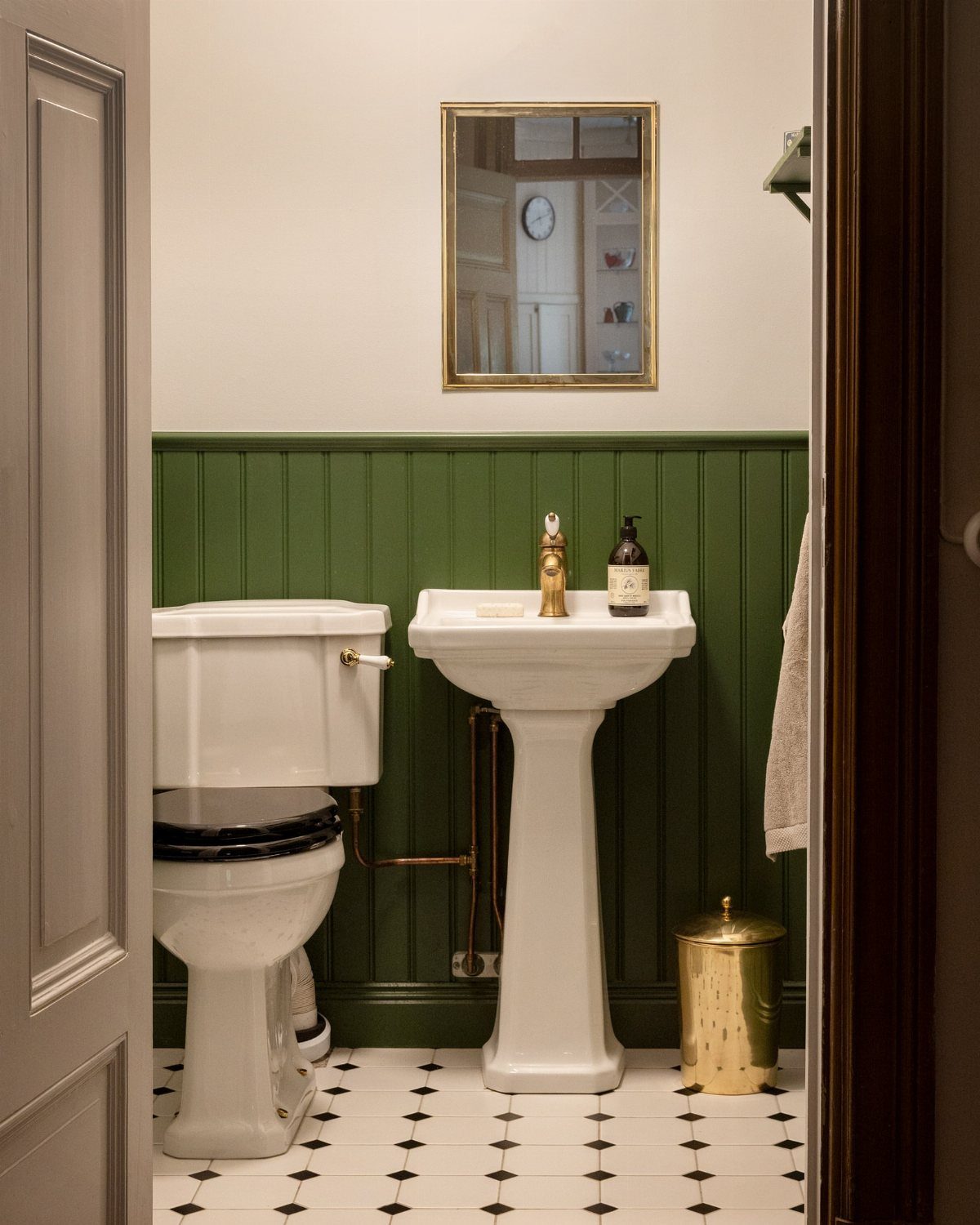
Webster Green is a mid-tone green, deep enough to feel like a color choice and light enough that a small room doesn’t turn into a cave.
Paint only the beadboard and leave the wall above it white; that split keeps the green from crowding a small room.
White fixtures stay crisp against it, and brass or gold accents warm it up.
If you’re on a weekend budget, one quart-sized sample pot may nearly cover a short wainscot run. Paint the grooves first with a small brush, then roll the flat parts.
3. Cobalt Blue
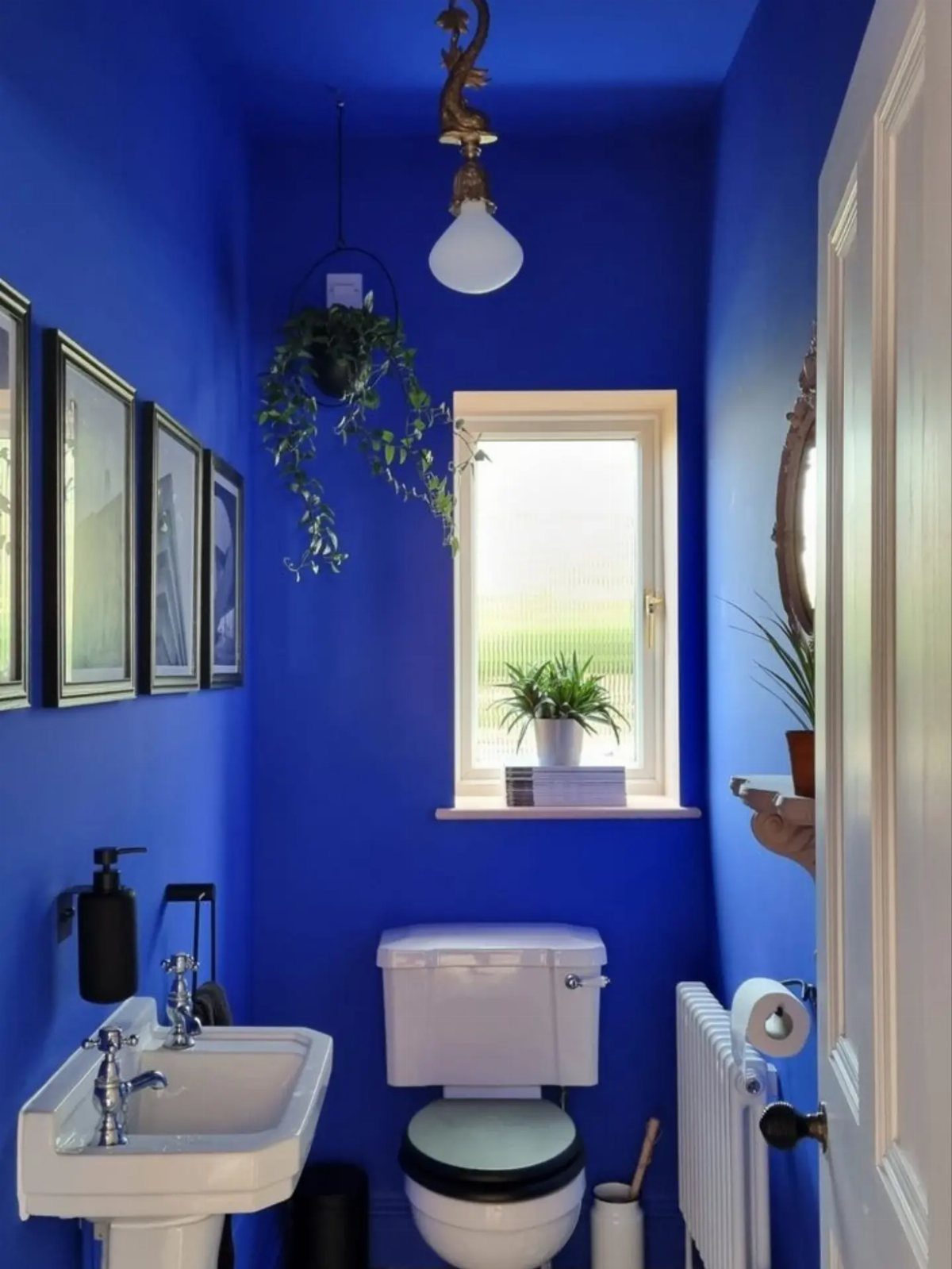
Taking cobalt onto the ceiling as well as the walls is the bold move, and in a tiny bathroom it wraps the space instead of boxing it in.
It’s a strong color, so I’d keep fixtures, radiator and trim white to give the eye somewhere to rest.
A window plant adds a living green that sits well against the blue. Test a sample on one wall first, because a saturated blue looks different at night under the light fixture than it does at noon.
4. Light Greige
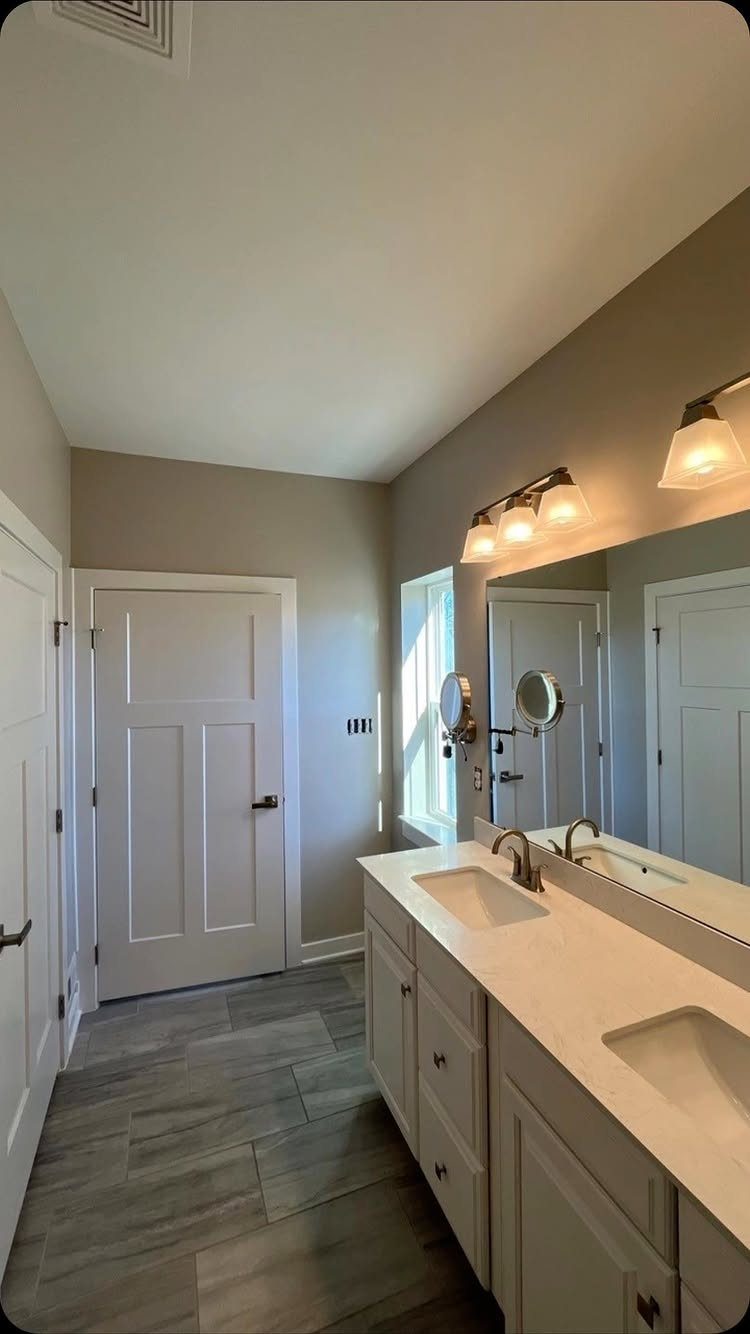
Light greige earns its place as the neutral that doesn’t argue with anything. White cabinetry, a white countertop and grey flooring all sit comfortably against it, so you can change a mirror or towels later without repainting.
For a room with a lot of grey already, I’d choose a greige with a little warmth so the walls don’t go flat beside the floor. Check the swatch next to your tile before buying a gallon.
5. Grounded
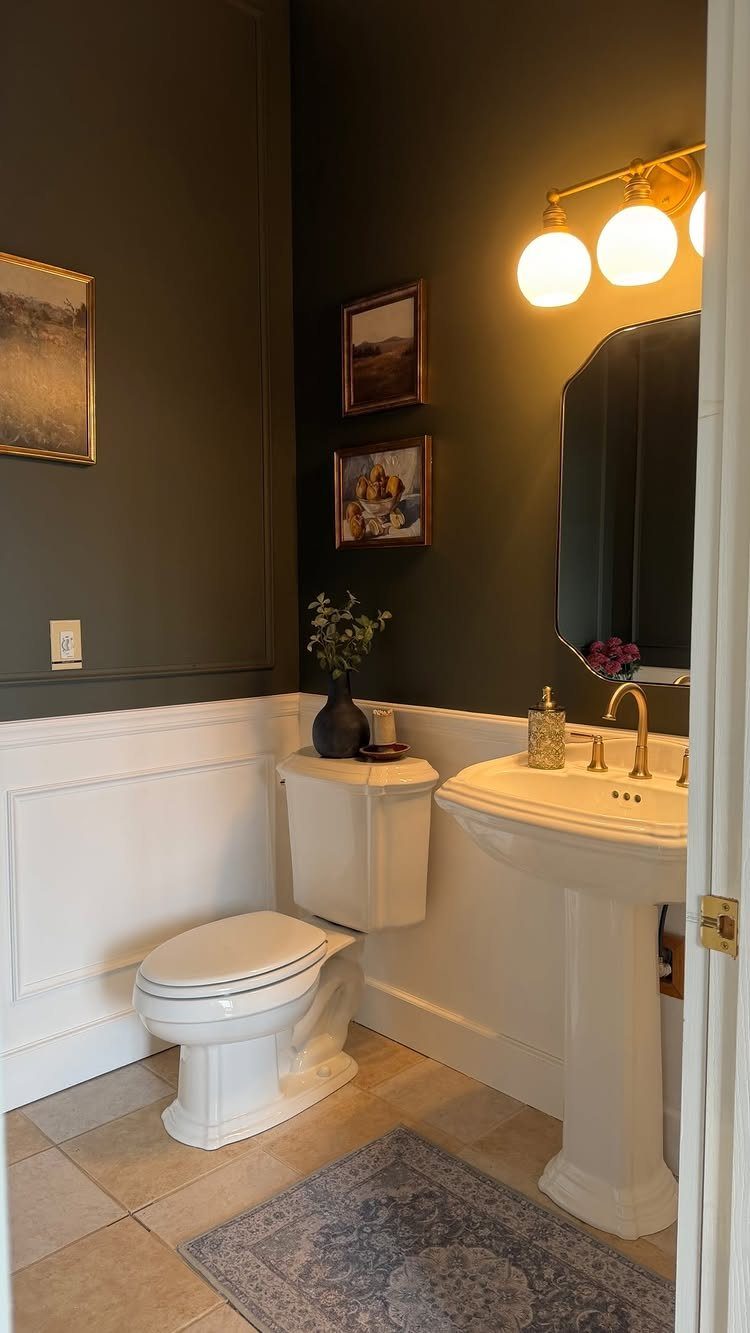
Grounded is a mossy olive that reads earthy and calm, and it’s the one I’d choose if you want green without the freshness of sage.
Keeping it above white wainscoting gives the darker shade a clean base, so the room stays bright.
Gold fixtures and a couple of small framed paintings suit it well. Paint the upper wall in a matte or eggshell finish, and leave the lower paneling in a wipeable sheen.
6. Cottage Door
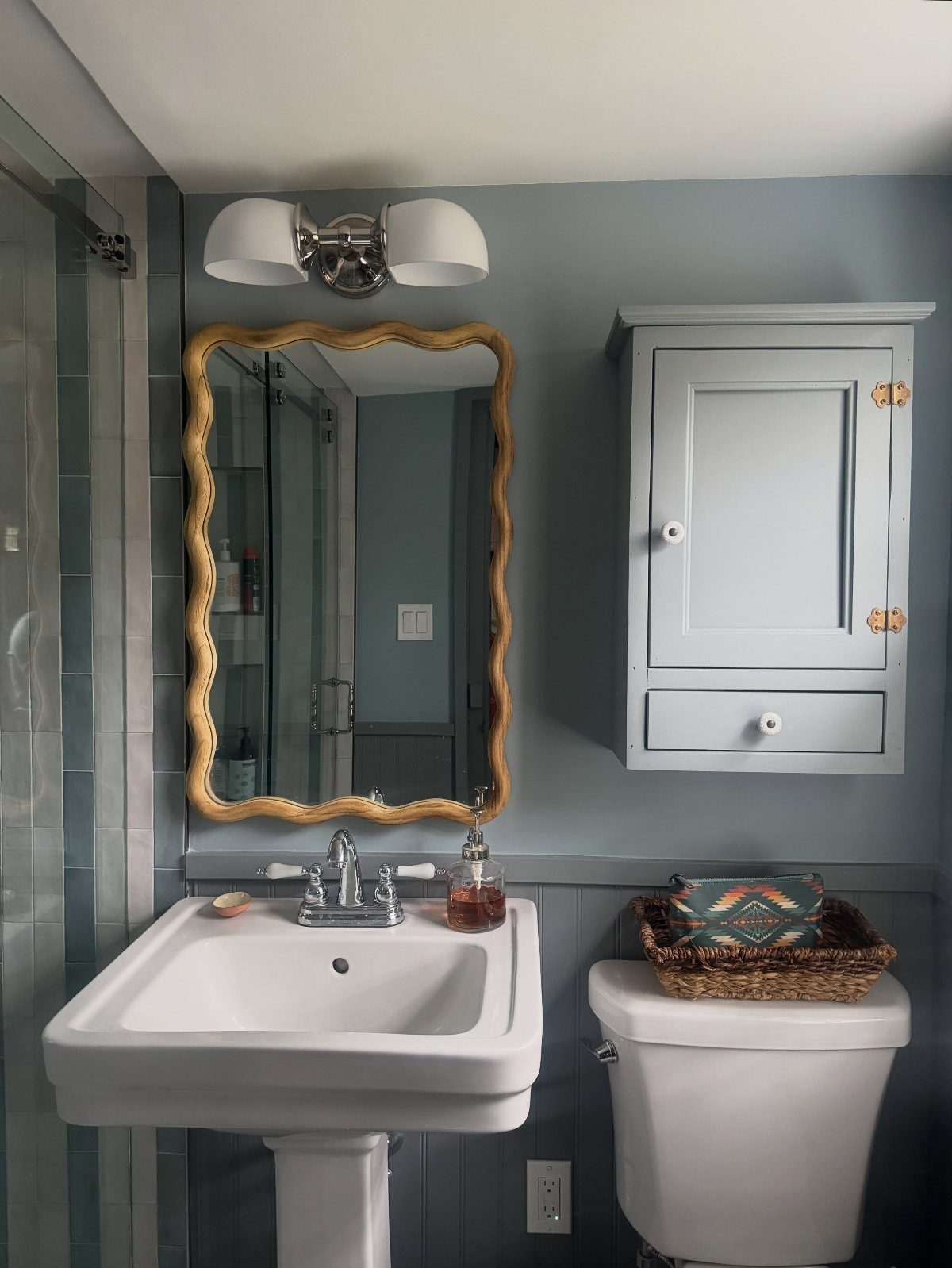
Cottage Door is a softened mid-tone blue, gentler than navy and more settled than a pale sky shade.
Painting a wall cabinet the same color as the walls lets it fade into the background, which helps in a room where storage sits right above the toilet.
Use a semi-gloss on the cabinet so it handles damp hands and steam.
7. Muted Sage
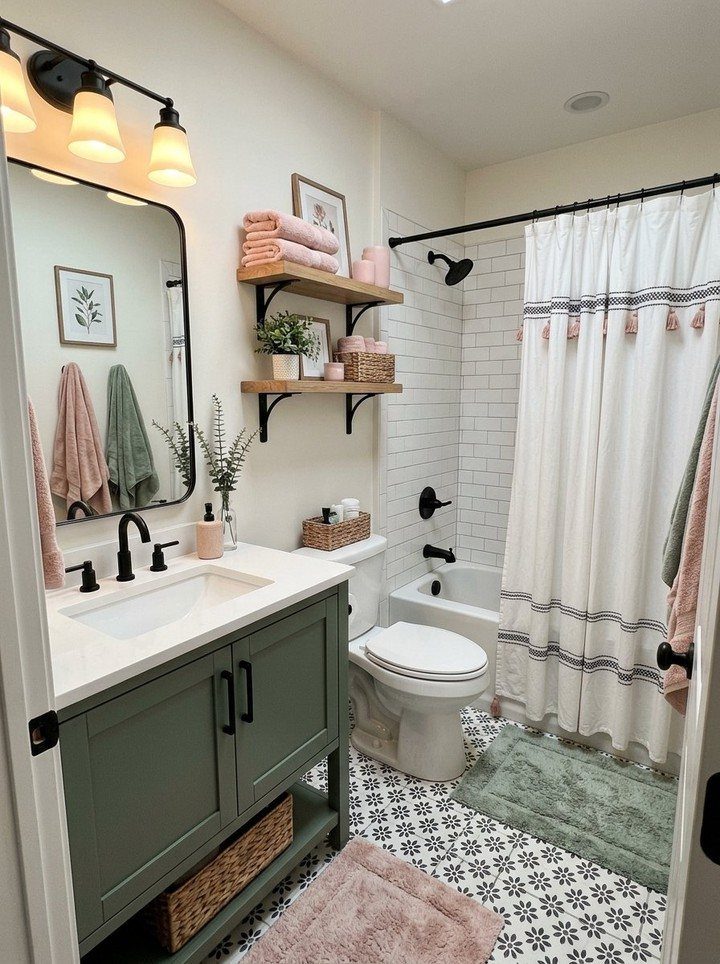
Muted sage on a vanity gives a small bathroom a soft green without painting a single wall. White subway tile and white walls bounce light around the room, and black hardware sharpens the green so it doesn’t drift into pastel.
A busy black and white floor already supplies the pattern, so I’d keep the cabinet in a flat, even color. Use a cabinet enamel or a semi-gloss, and sand lightly first so it grips.
Drench the bathroom walls and ceiling in olive green paint, as designer Roger Higgins did in this small space. "Saturated color adds ambiance and elevates the mood of a room," he says.
8. Slate Blue
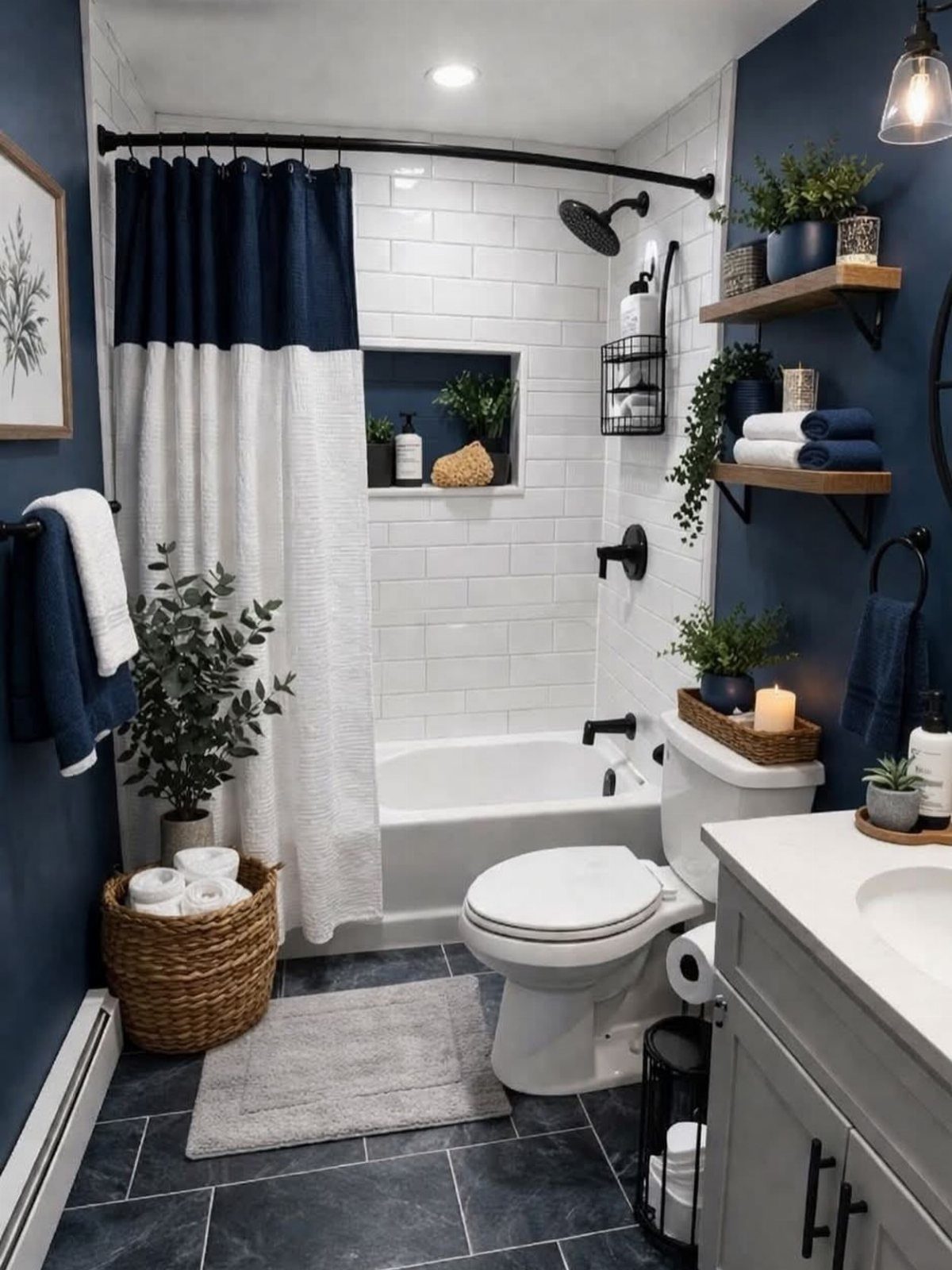
Slate blue on one wall makes a small bathroom feel moody without closing it in. White subway tile and a white tub keep the rest of the room light, so the dark wall reads as an accent, not a cave.
Choose the wall behind the tub or the one you see first from the door. Pick an eggshell finish, which hides roller marks better than flat.
9. Burgundy
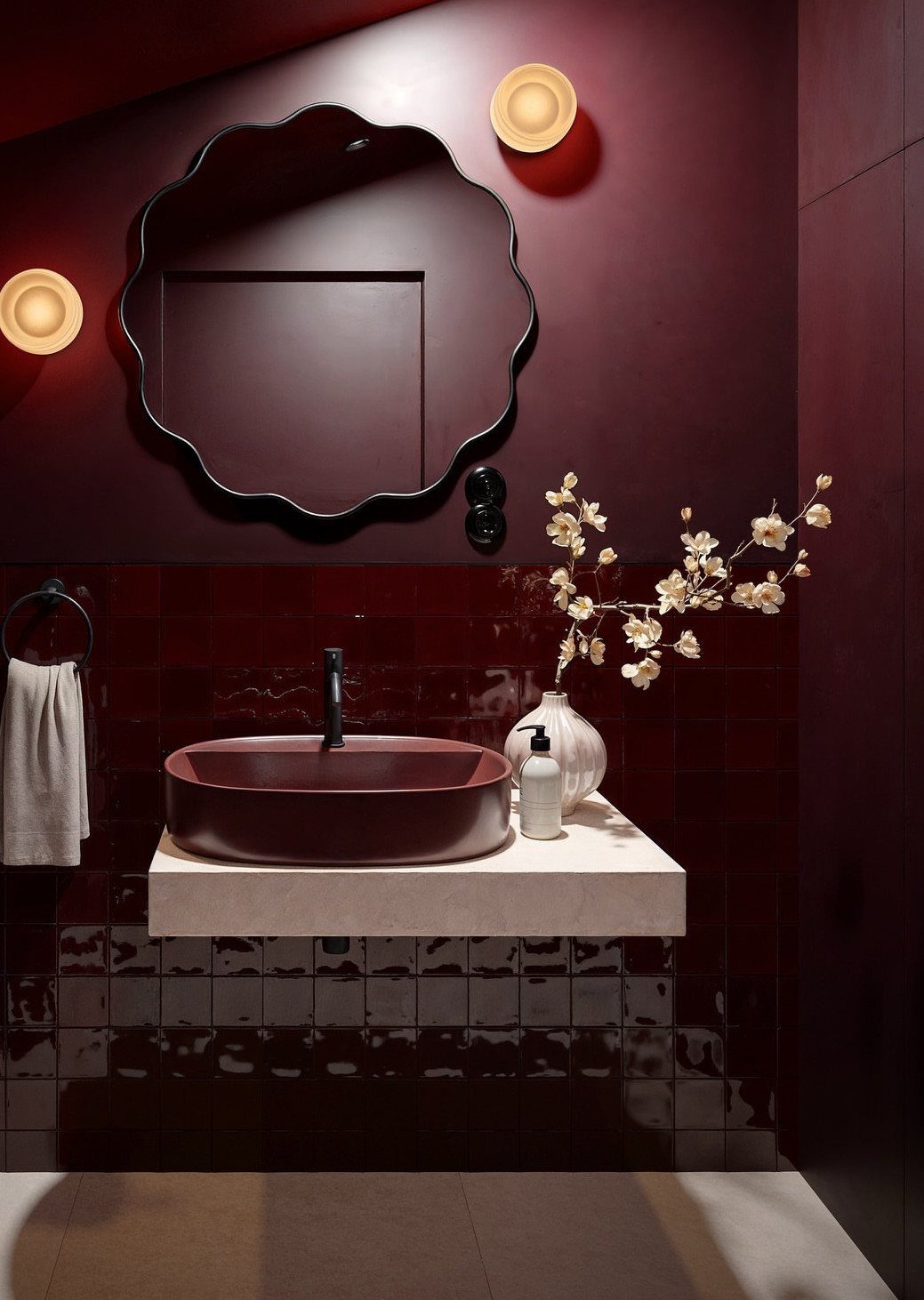
Burgundy on every wall wraps a bathroom in rich, warm red, and it suits a room small enough to feel like a jewel box.
Keep the counter white so the red has a clear edge.
A black mirror with a curved outline and white flowers give the eye relief. Test a sample at night before committing, since deep reds shift under warm bulbs.
10. Black
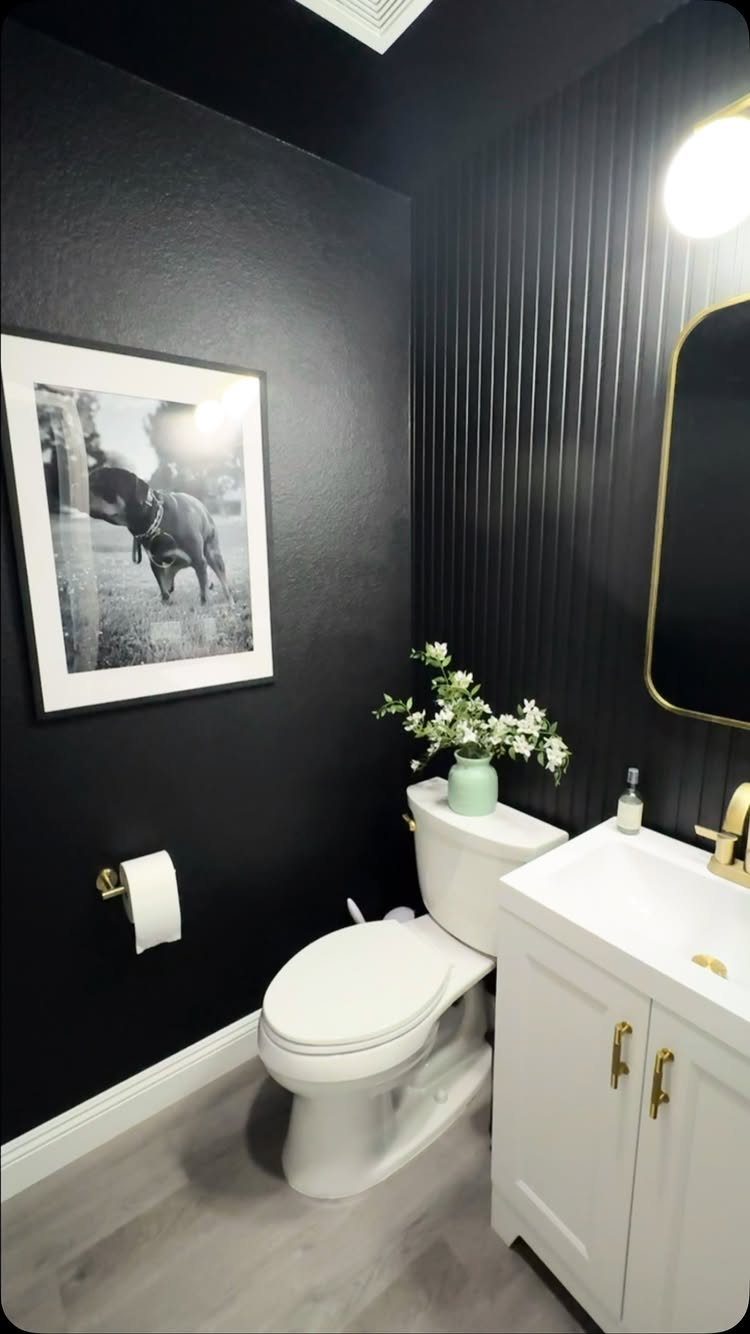
Black walls look expensive, and this room proves they don’t have to be. The owner of this bathroom said the total came to around $600, and that included a new vanity.
A white vanity and a gold-framed mirror give the dark paint something to bounce against.
Vertical slats on one wall add texture, so the black doesn’t read flat. Choose a matte or eggshell finish, and expect 2 coats at least.
11. Pale Taupe
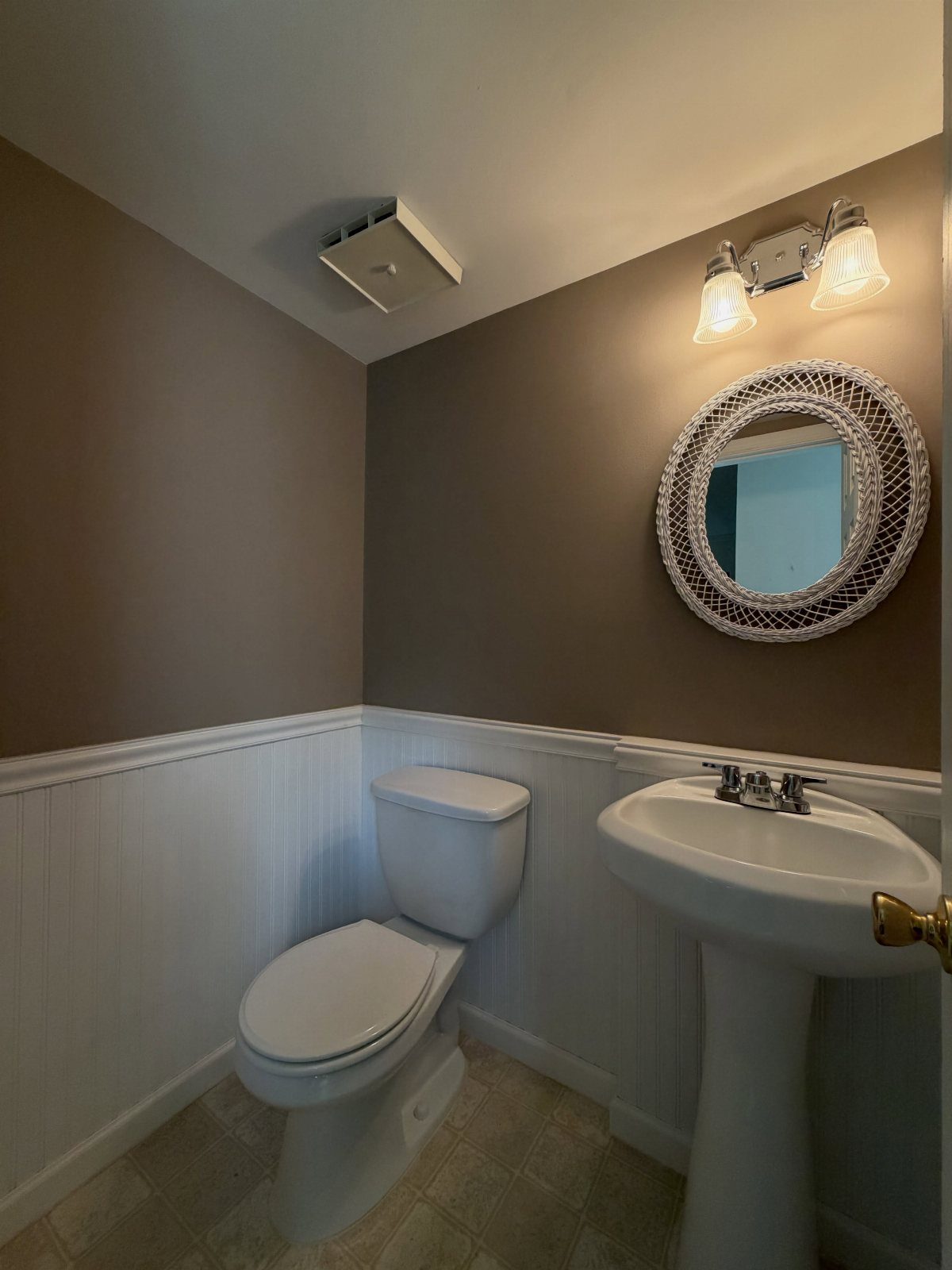
Pale taupe is the warmer cousin of gray, and it pairs naturally with white wainscoting. Painting only the upper wall keeps the lower half crisp and easy to wipe, which matters beside a pedestal sink.
A woven mirror echoes the taupe’s softness. I’d hold a swatch against the white paneling before buying, because taupe with too much pink can look muddy next to a cool white.
12. Celery
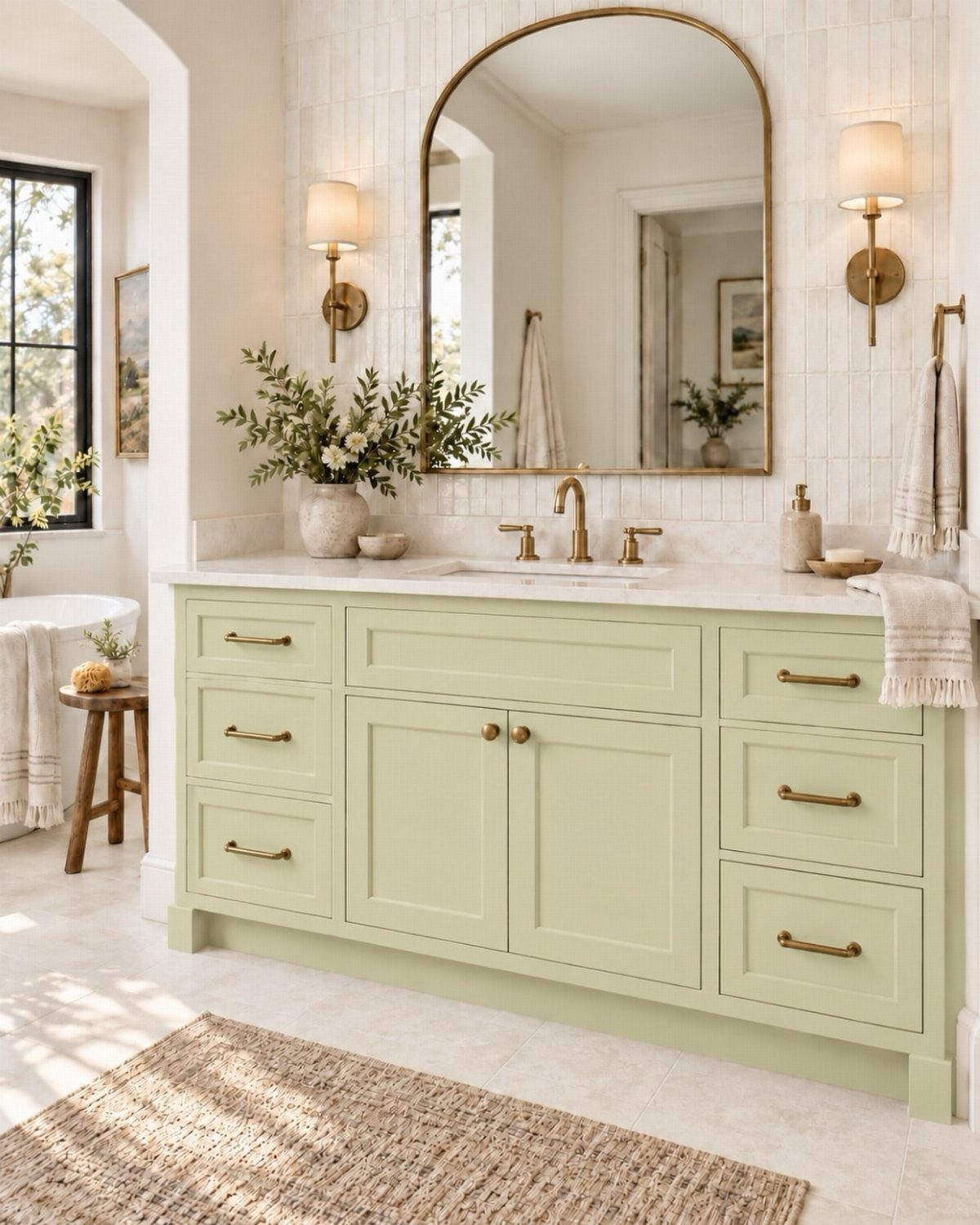
Celery is a soft, herbal green that works best on a vanity, where one painted piece sets the color for the room.
An arched gold mirror repeats the metal and softens the straight lines of the tile. For a weekend job, swap the hardware and paint the cabinet in a satin or semi-gloss enamel, then let it cure before loading the drawers.
Choosing the Right Color
Pick a color family first, like warm white, sage, or soft greige, and leave the exact paint name for later.
Match the family to what’s already fixed in the room.
Light greige suits a mix of warm and cool finishes, and it pairs with gray tile, beige stone, and black or nickel hardware. Blue-green suits white quartz, pale tile, and chrome.
Every family has a failure point. Warm white can turn too yellow beside cool white tile.
Light greige can show green or violet undertones under LEDs. Sand or putty can leave too little contrast between wall and floor.
Check the lighting before you commit, since a color that behaves in one bathroom can go wrong in another.
Using LRV Effectively
LRV stands for Light Reflectance Value, a number that estimates how much visible light a paint bounces back into the room.
The scale runs from 0 to 100: the higher the number, the more light a color reflects, and the lower it is, the more light the wall soaks up.
With no window, or only a frosted one, go high and pick a soft undertone.
LRV is only a starting number. LRV tells you nothing about undertone, and it can’t promise a bigger-feeling room or factor in how much daylight comes in.
Check undertone and light quality first, then compare LRV between the colors that survive.
Blush follows a stricter rule. A pink above LRV 75 can open up a tiny bath nicely, as long as it leans peach or beige.
Testing Paint Samples
Use sample boards instead.
- Cut your list to 3 or 4 colors that work with your tile, floor, vanity, countertop, and fixtures.
- Paint movable boards with at least 2 coats, so the old wall color doesn’t skew the result.
- Check each board in morning, afternoon, and evening light, with the same vanity and ceiling fixtures you plan to keep turned on.
- Look in the mirror.
If new bulbs or fixtures are on your list, buy and install them before you sign off on a color.
A small bathroom usually needs only one gallon, sometimes a quart, so a premium mildew-resistant bathroom paint is affordable.
Frequently Asked Questions
What color makes a small bathroom look bigger?
Light colors with a high LRV, such as warm white or a soft greige, make a small bathroom feel larger because they bounce more light back into the room. LRV runs from 0 to 100, and higher numbers reflect more light.
Should you paint a small bathroom a light or dark color?
Either works, so pick based on how much light the room gets and what mood you want.
Light colors keep things airy, while a dark shade like slate blue on one wall can feel moody without closing the room in if white tile and a white tub stay around it.
A dark color won’t enlarge the room, so use it as a deliberate choice backed by good mirror lighting.
Is sage green still a good small bathroom color?
Sage still works for me in a small bath: its soft gray-green keeps the room quiet, it looks clean against white tile, and brushed nickel or brass both sit comfortably beside it.
Soft green-grays like Sherwin-Williams Sea Salt (SW 6204, LRV 63) are among the most-painted small bathroom colors. A moodier green such as Pewter Green (SW 6208) works as the saturated alternative.





