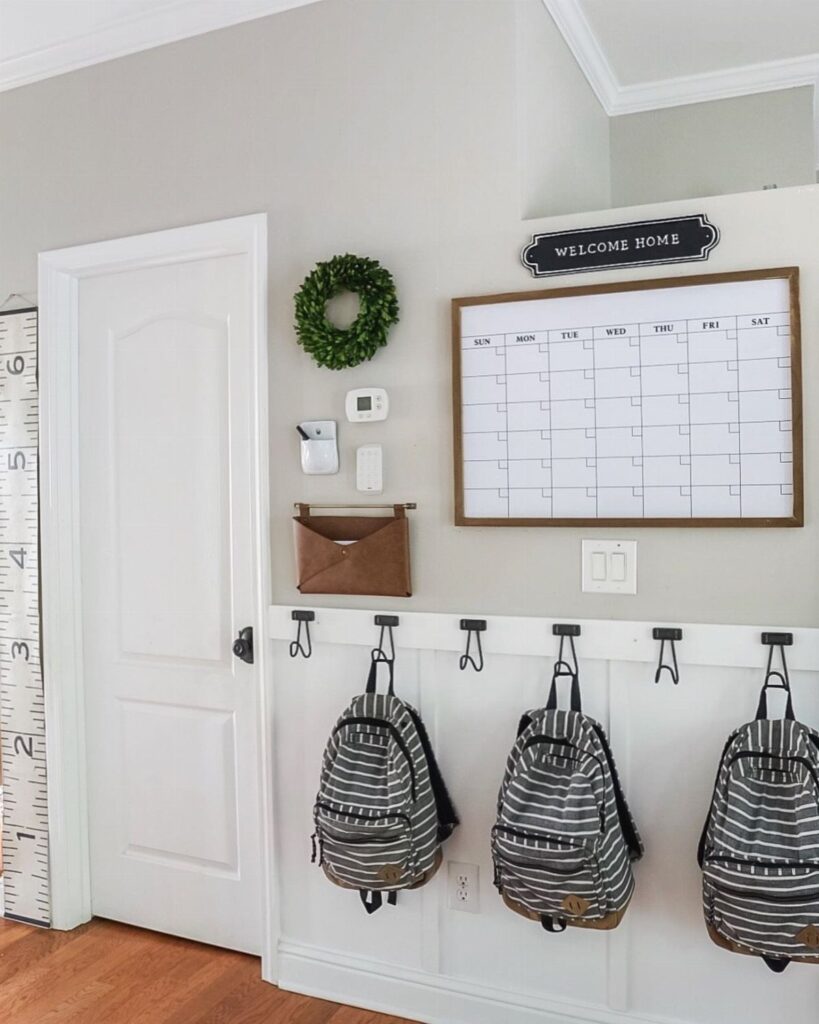
The ideas here run from a basket or catch-all tray that costs next to nothing to a full setup with a bench, wall-mounted cabinets and a pegboard, and the one fact about your home that picks between them is how much floor the entry gives you.
Entry width sets the starting point: a narrow one suits hooks, a slim console table or wall-mounted cabinets, and a wider one can take a bench with storage underneath.
1. Baskets for Organization
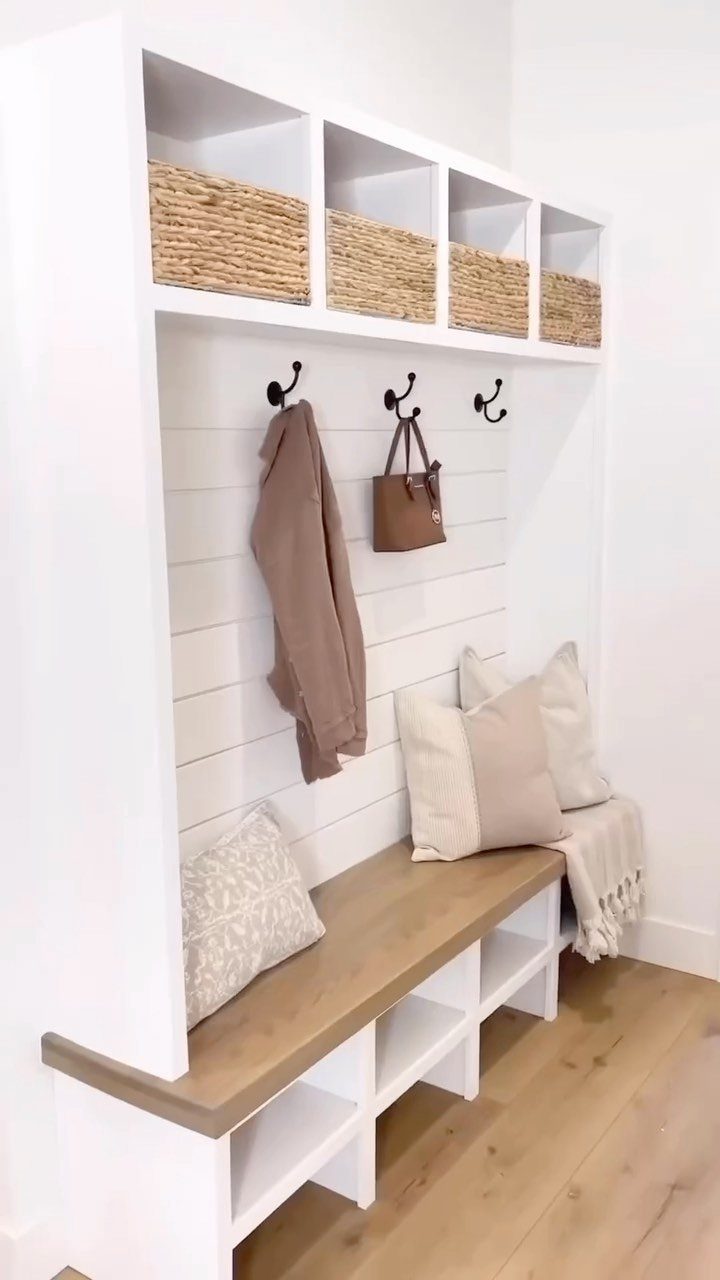
Woven baskets in the top cubbies hide the clutter that never has a home: scarves, gloves, dog leashes, spare chargers.
Closed tops would hide it even better, but open baskets are faster to toss things into, and speed decides whether a drop zone gets used.
Give each basket one job and tape a label inside the rim.
Pick baskets with handles so a whole load can come down and go to the right room. On a budget, mismatched thrifted baskets look fine if the color family stays the same.
2. Hooks or Hanging Space
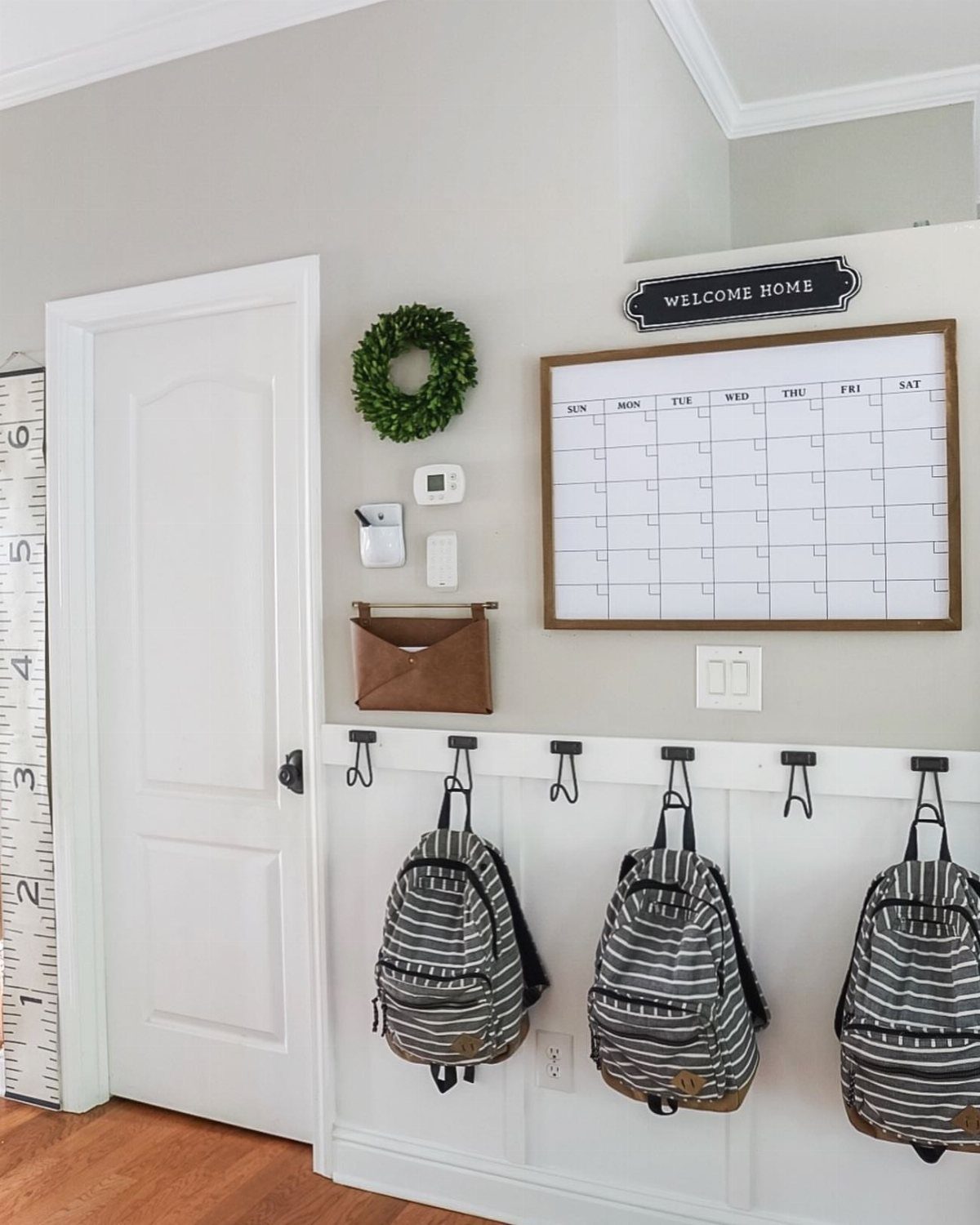
Per square foot, one row of hooks beats almost any other piece you can put by a tight front door.
Black hooks on a white wall give a strong, clean line, and they hold bags without any extra furniture taking up floor.
Space them wide enough that two backpacks don’t pile onto one hook, and hang them low enough for kids to reach.
Screwing into studs is the safer choice for heavy bags; use wall anchors if a stud isn’t where you want a hook.
3. Bench with Storage
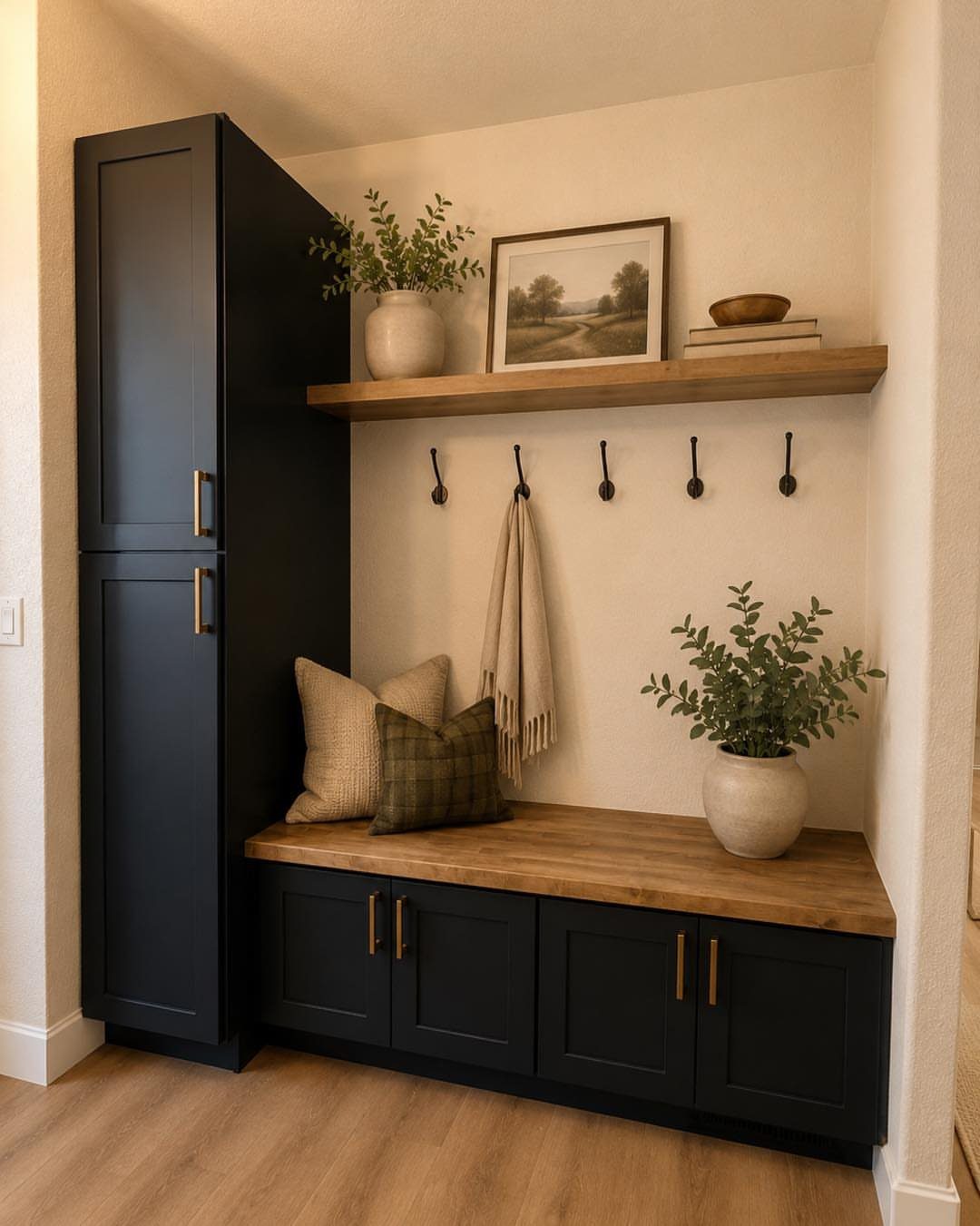
Shoes are the real clutter in a tight entry, and a bench with closed lower cabinets swallows them while giving you a place to sit and lace up.
Black with a wooden top is my pick: the dark body hides scuffs, and the wood warms it up.
Add a floating shelf above for keys and a small bowl, then hooks on the wall for coats. Stacking seat, storage and hanging space in one narrow column keeps the footprint small.
4. Consider the Cubby
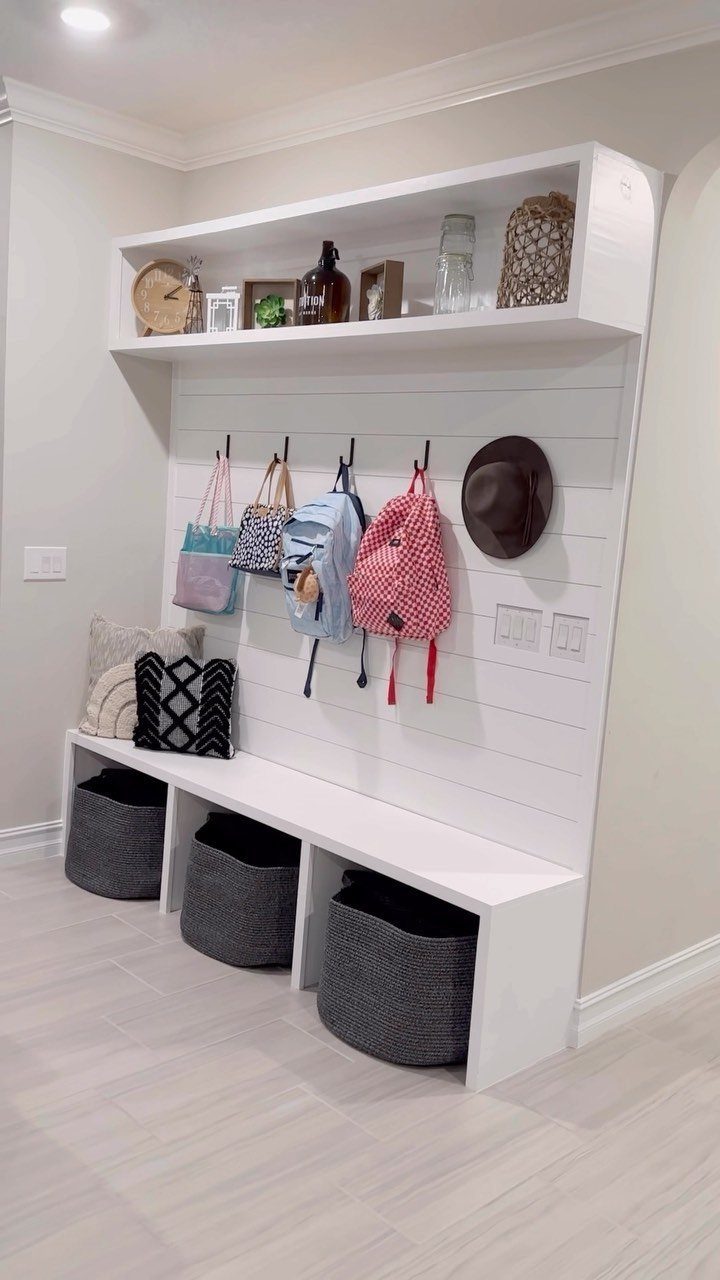
Cubbies make sorting easy: each one holds a single kind of thing, so shoes, hats and bags stay with their own. Shoes go together, hats and gloves go together, and each person gets a labeled slot.
Grey bins under a bench keep things hidden but easy to pull out.
Hooks above handle bags, and a top shelf takes the things used less often. I’d start with one cubby per person and add more only when the first set stays tidy.
5. Catch-all Tray
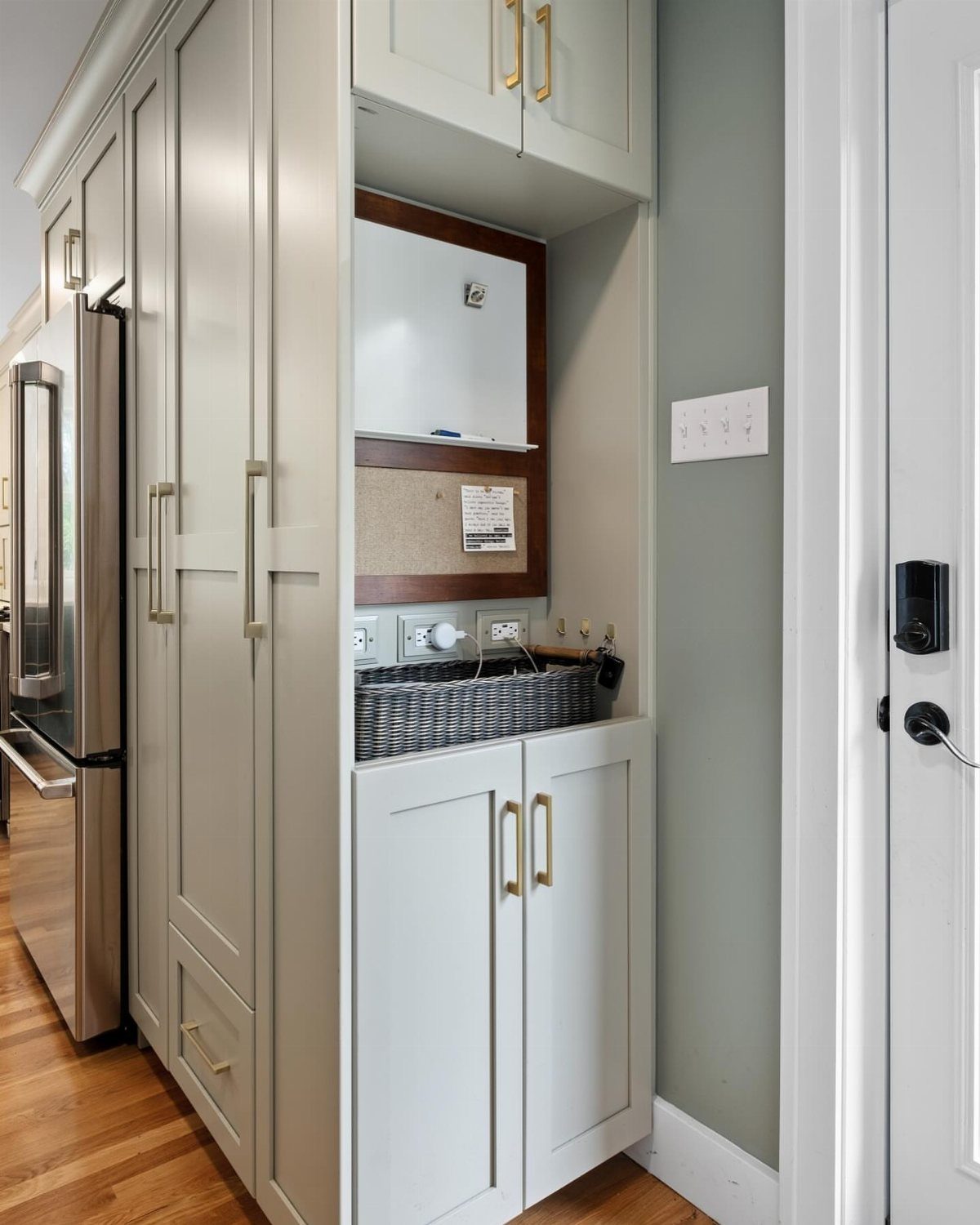
A woven tray near the door gives keys, sunglasses and loose change one spot to land, so they stop wandering across the kitchen counter.
It’s the cheapest drop zone fix here, and it works on a shelf, a ledge or a narrow cabinet top.
Keep it small on purpose.
A tray that’s too big becomes a junk pile, while a tight one forces you to clear it out. Pair it with a corkboard or whiteboard above for notes and reminders.
6. Wall-mounted Cabinets
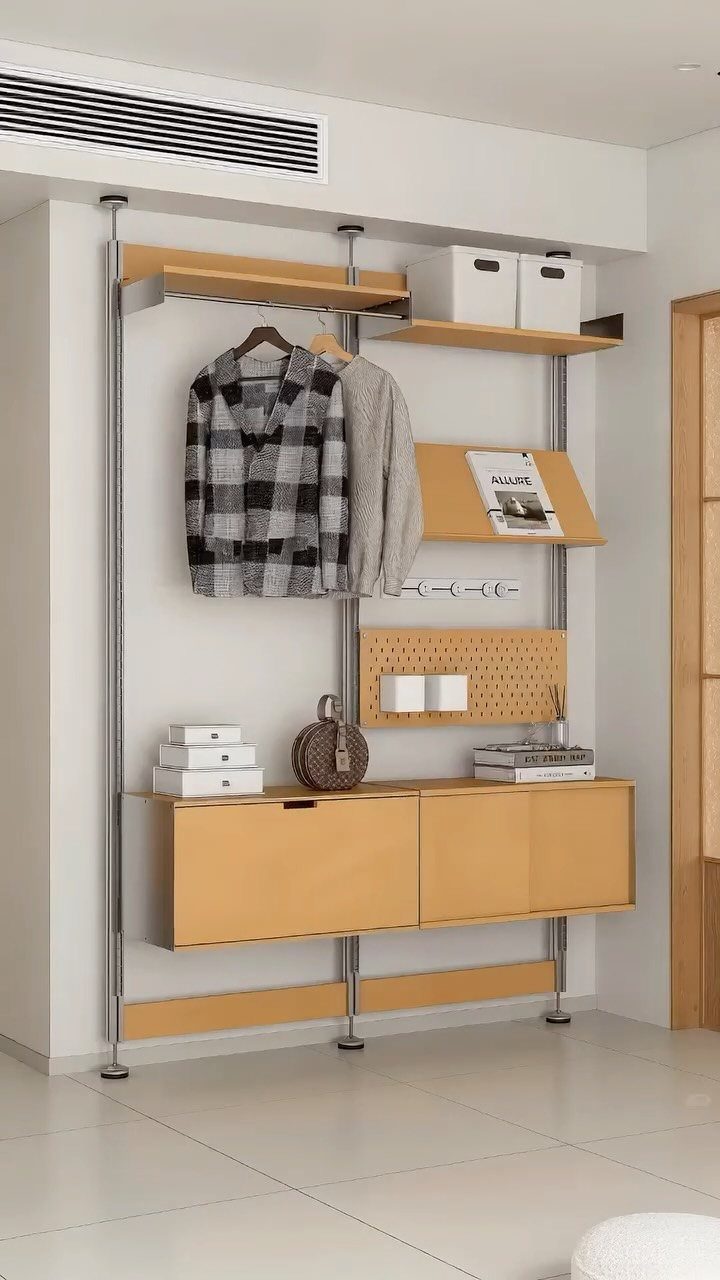
Mounting cabinets on the wall frees the floor, which is exactly what a small entry needs. Light wood cabinets keep a narrow space from feeling heavy, and closed doors hide whatever’s inside.
Mix them with open shelves and a hanging rod so the stuff you grab daily stays visible while the rest hides.
Put the rod at a height where coats clear the floor. Fill the closed cabinets with off-season items and leave the open spots for everyday gear.
7. Create a Stylish Scene
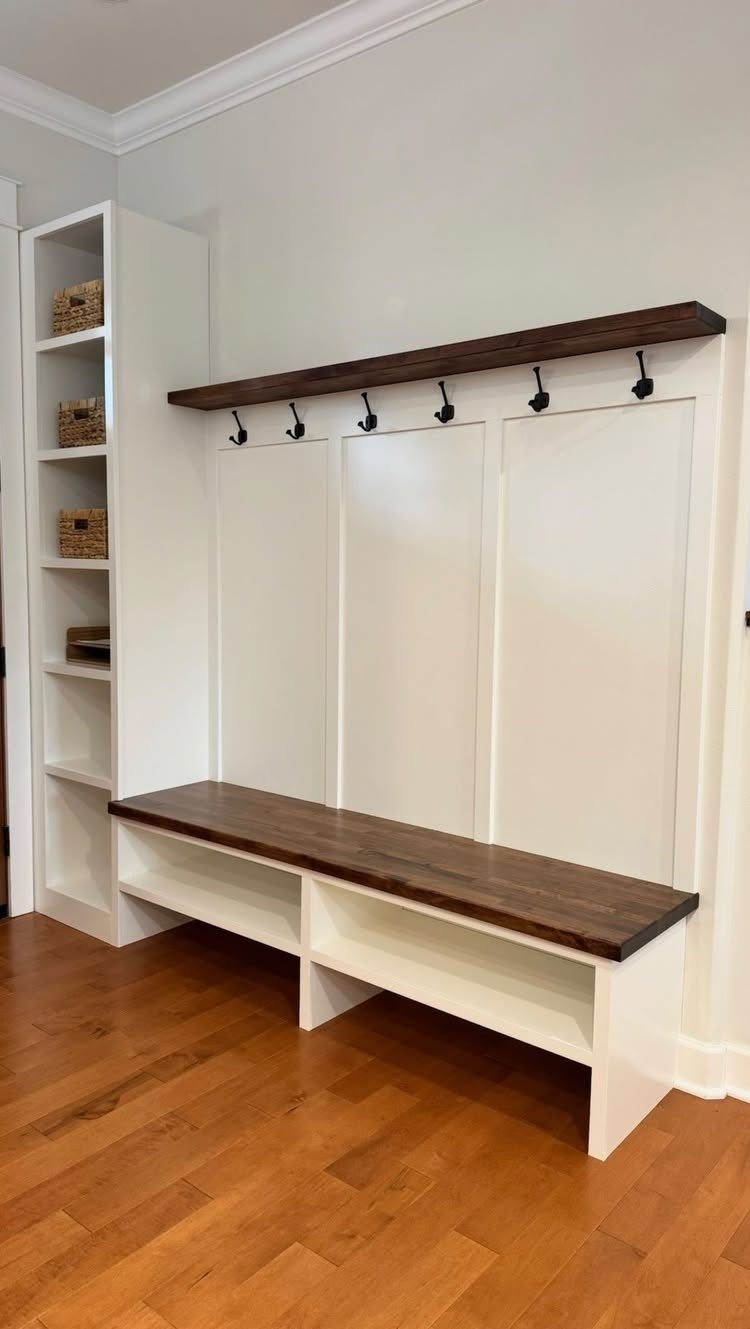
A drop zone styled like a small scene reads as part of the house, not clutter by the door.
Repeat one color family across the baskets and hardware so everything looks chosen. Keep the bench top mostly clear, with one or two items on it at most.
On a budget, paint is the cheapest way to pull mismatched pieces together.
8. Bins for Incoming Mail
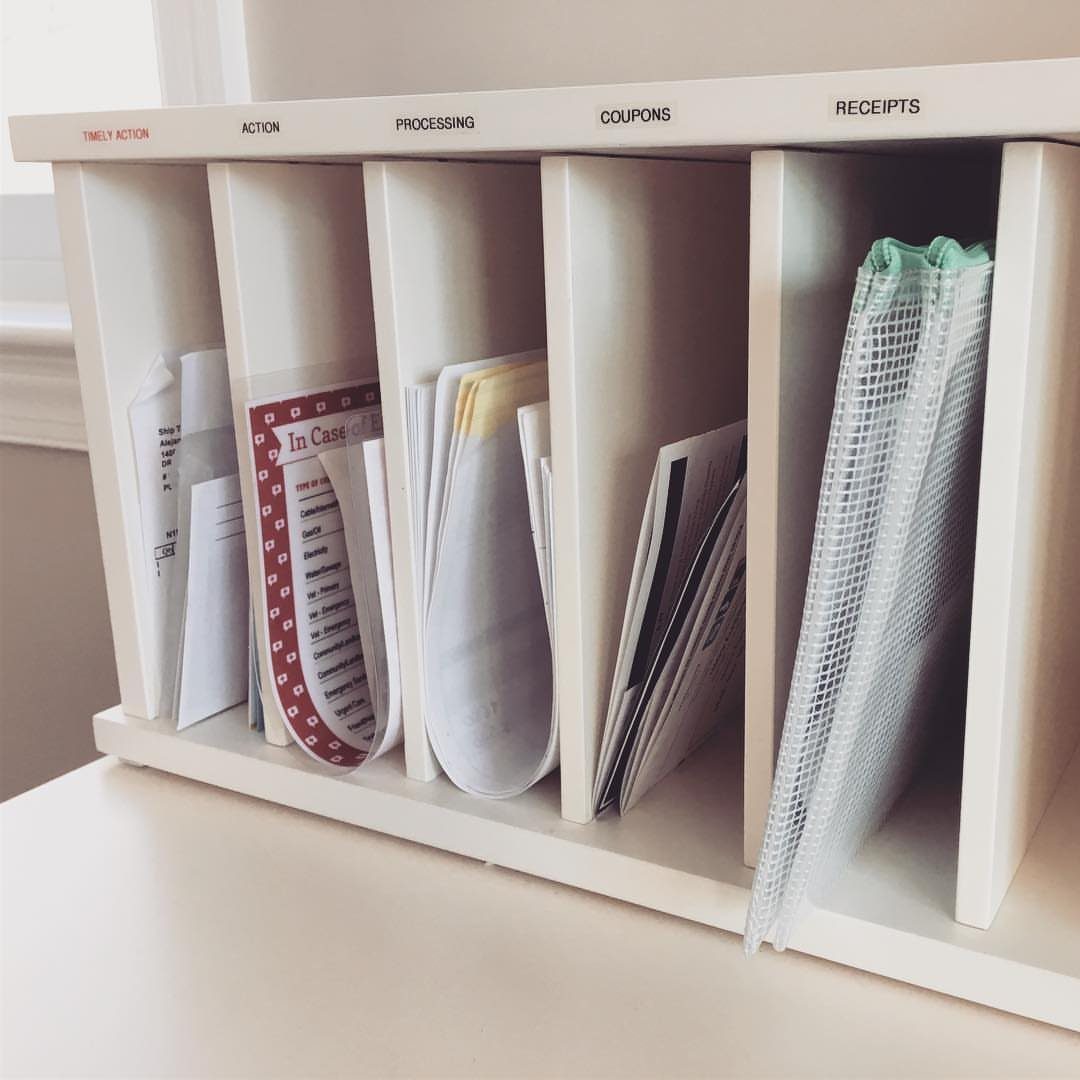
A labeled desk organizer turns the daily mail pile into a sorting system.
A desk organizer costs far less than a wall unit and sits on any shelf or counter near the entry.
Sort standing up, toss junk right away, and empty the coupon and receipt slots weekly. Put the most urgent slot at the front.
9. Slim Console Table
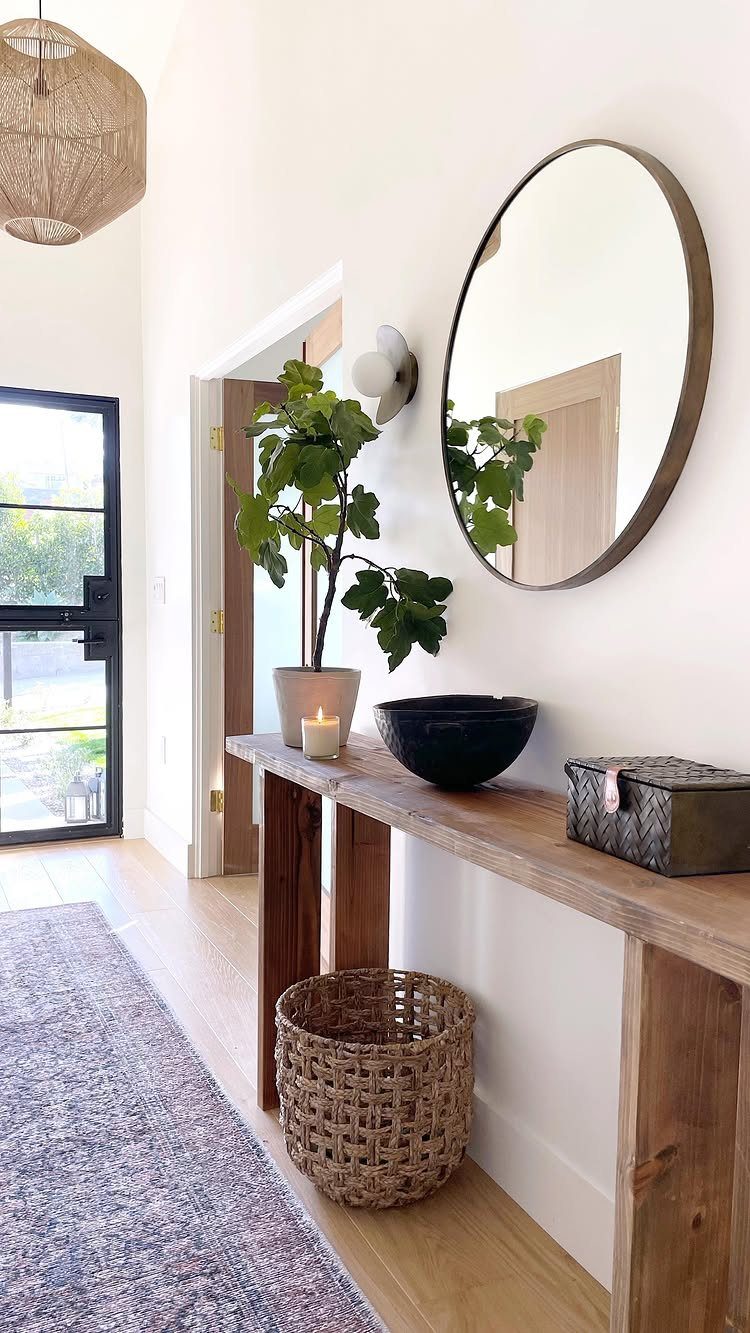
A slim console is the furniture piece I’d choose when the entry is too narrow for a bench.
Pick a shallow wooden top, since depth is what steals walking room, and leave the legs open so the floor still shows underneath.
Put a bowl on top for keys and a woven basket below for shoes or bags. Leave the top half empty so it stays useful.
10. Pin Boards for Reminders
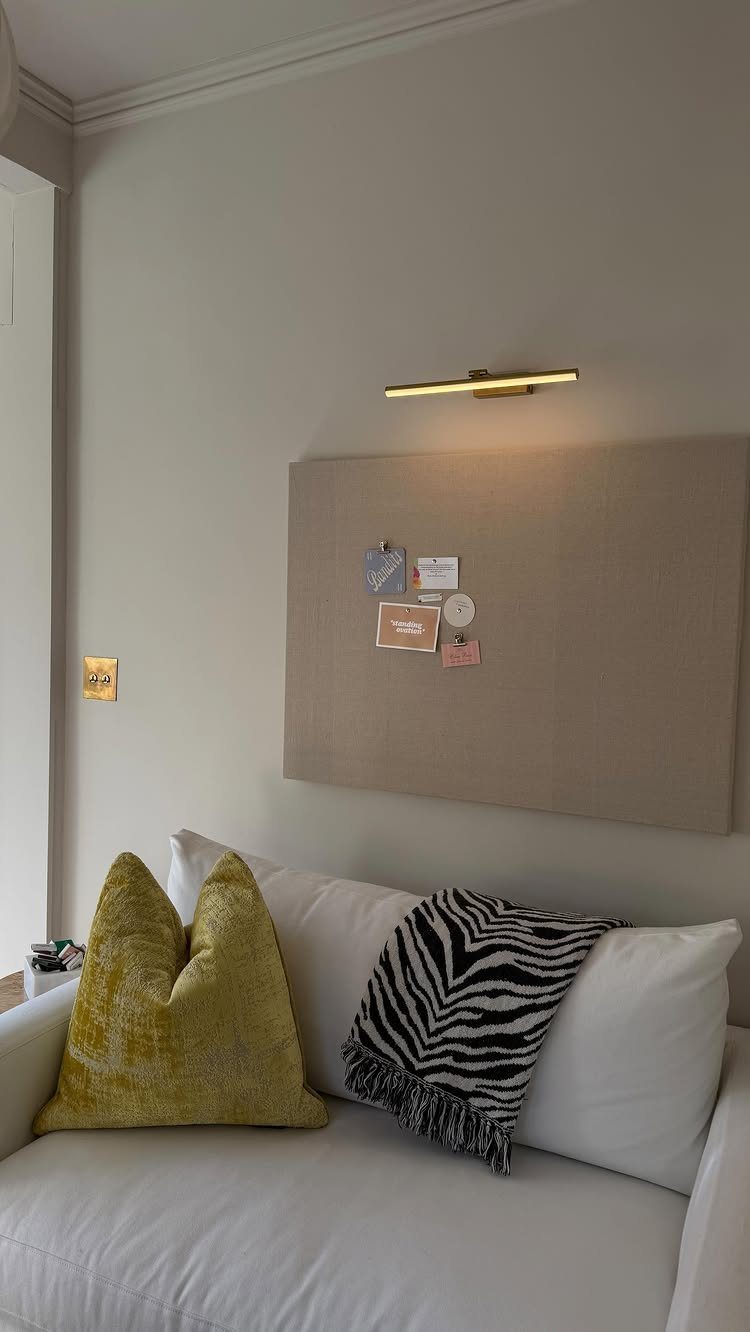
A fabric pin board keeps the papers you can’t forget in sight: invitations, appointment cards, a school flyer. Mount it where you pause on the way out, at eye level, so you read it before you reach for the door.
Pin only what’s current and clear it weekly, or it turns into clutter. Push pins hold paper better than tape.
11. Use a Rug
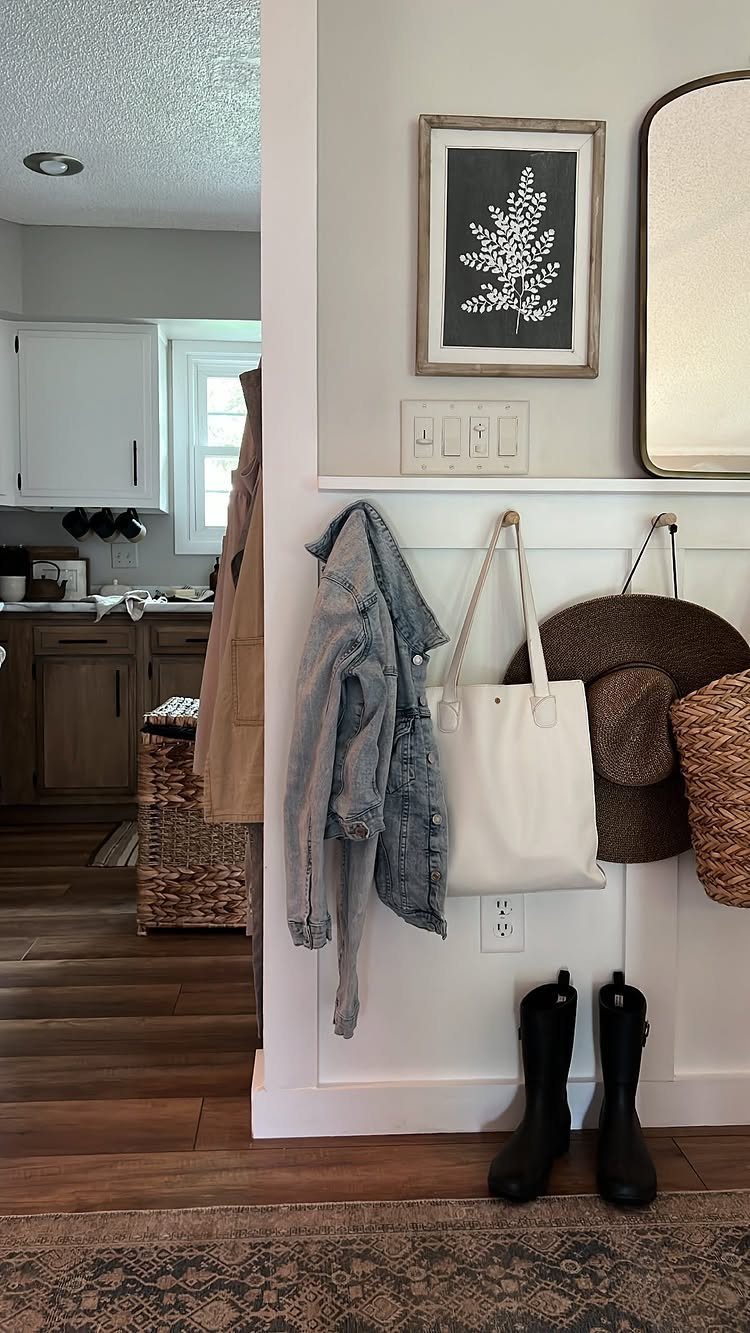
A rug marks where the entry starts, which matters most when the front door opens straight into the living space.
A patterned brown rug hides dirt and wet boot marks better than a solid light one, and it gives the hooks and boots a defined spot.
Choose a flat weave that the door clears easily, and add a non-slip pad underneath on hardwood.
Size it so both feet land on it when you stand to take off your shoes. Washable styles are worth the extra money here.
12. Incorporate Mirrors
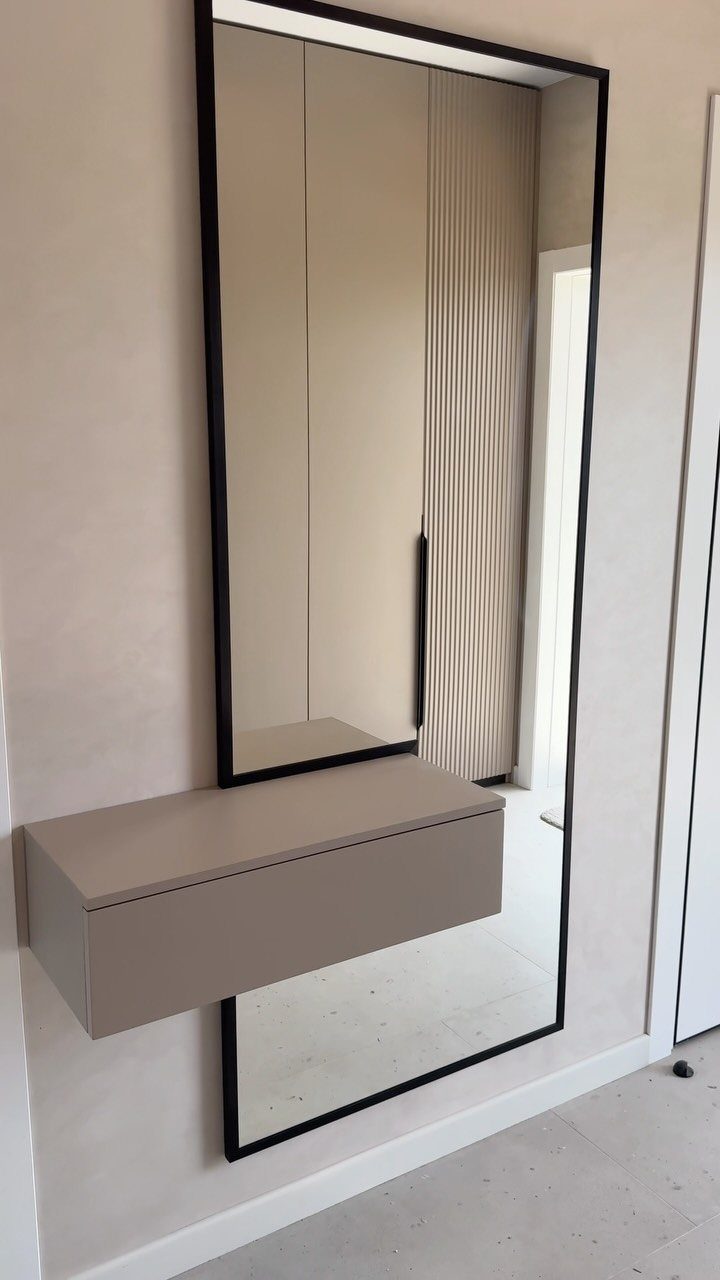
You check your look on the way out, and the shelf holds keys, sunglasses or a small bowl at the exact spot where you reach for them.
Keep the shelf shallow so it doesn’t catch shoulders in a tight hallway, and mount it into studs if you plan to set anything heavy on it.
13. Use a Wall-mounted Mail Holder
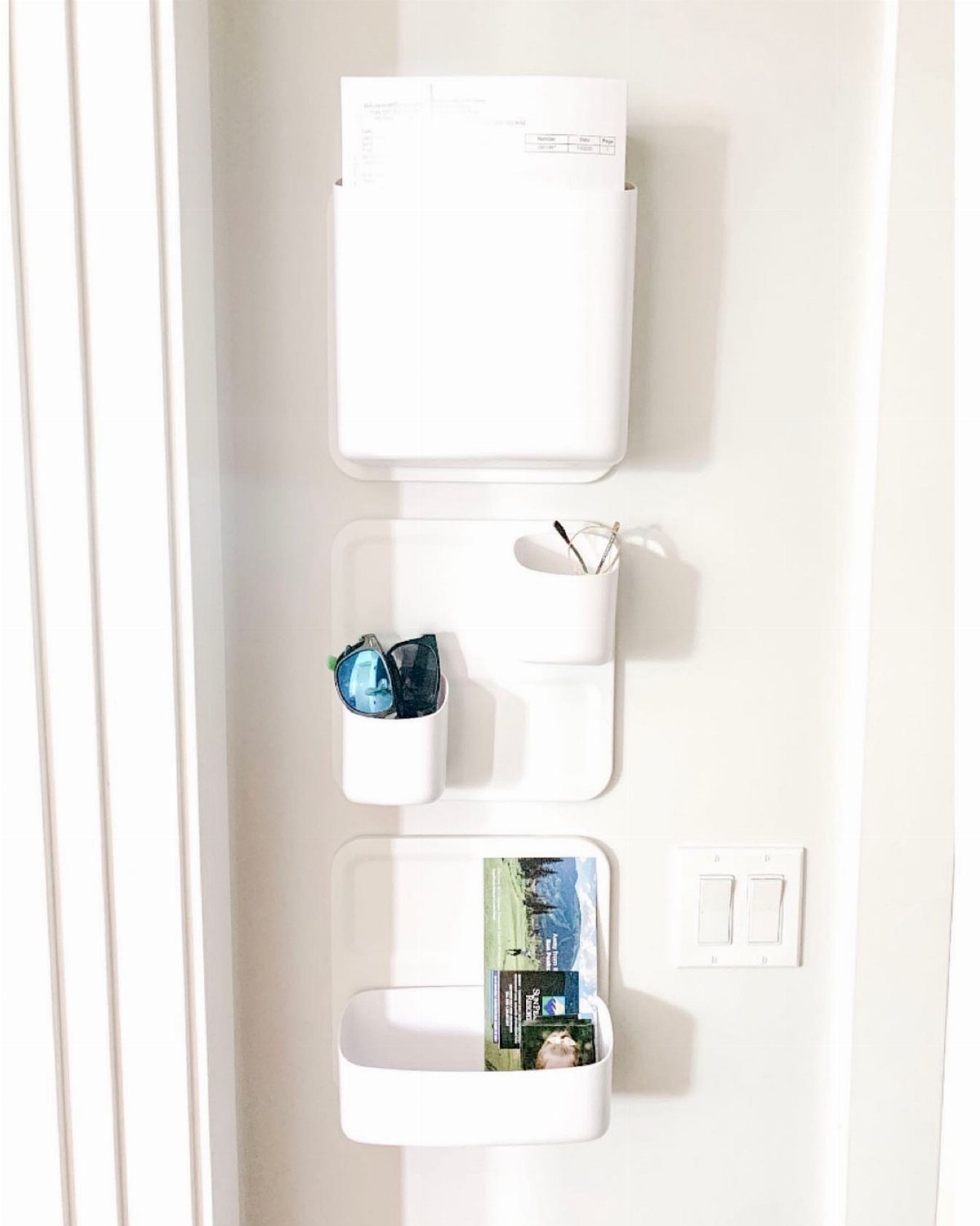
A three-tier wall holder gives mail, sunglasses and a magazine a vertical home, so the counter by the door stays clear. White on a white wall nearly disappears, which suits a tight entry.
Mount it right beside the light switch, where your hand already goes on the way in or out.
Give each tier one job: mail on top, things to carry out in the middle, and small items at the bottom. Empty the top tier weekly so it doesn’t turn into a pile.
14. Use a Pegboard
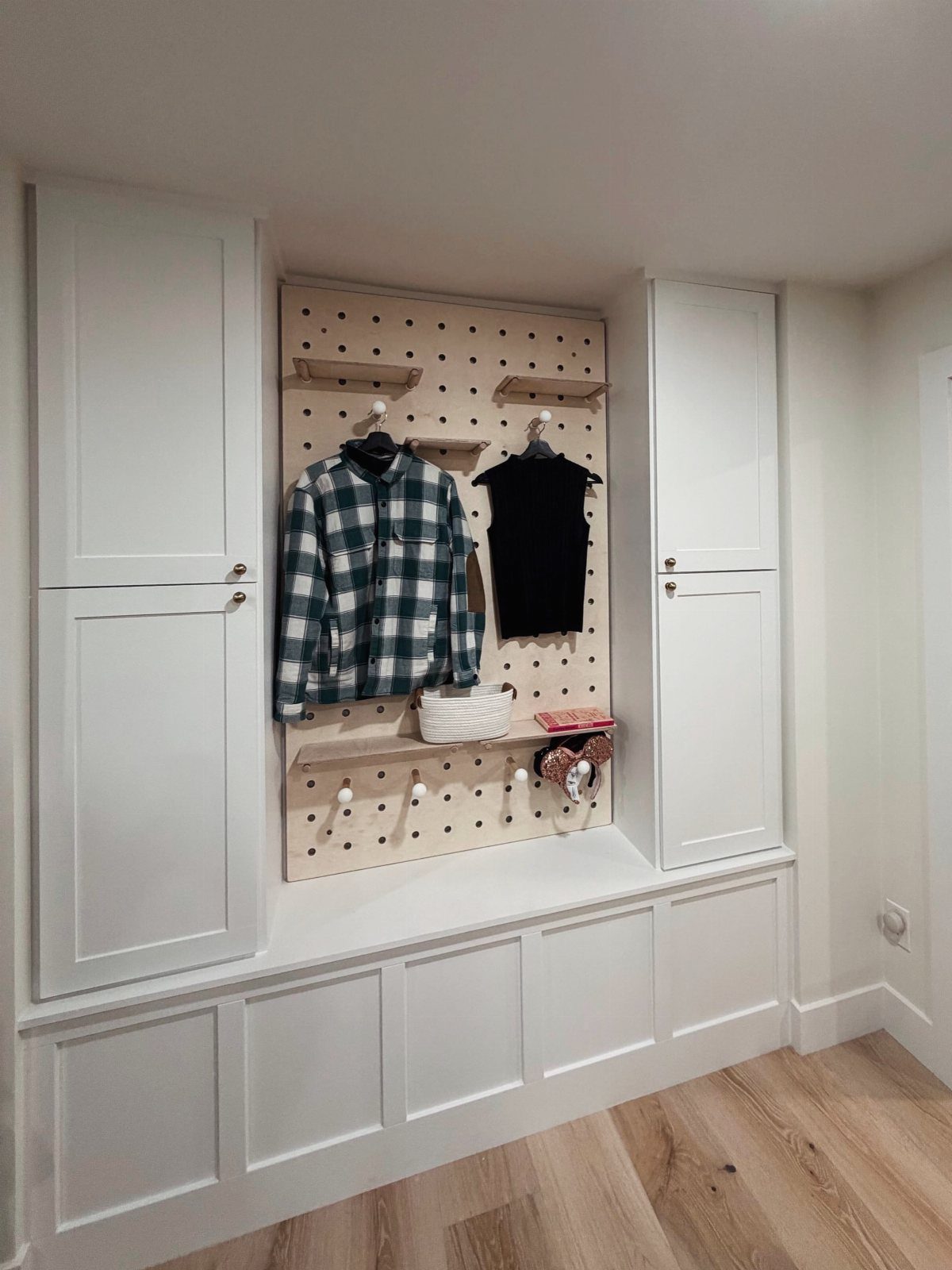
A pegboard lets you rearrange the wall as your gear changes, which fixed hooks and shelves can’t do.
Set in the middle of a built-in with cabinets on both sides and a bench below, it becomes the flexible part of an otherwise fixed unit.
Hang the daily pieces on it, like a jacket, a basket and a small shelf, and keep the cabinets for everything else. I’d leave a few pegs empty so the board never looks full.
Moving a peg costs nothing, so test a layout for a week before settling on it.
15. Small Corner Drop Zone
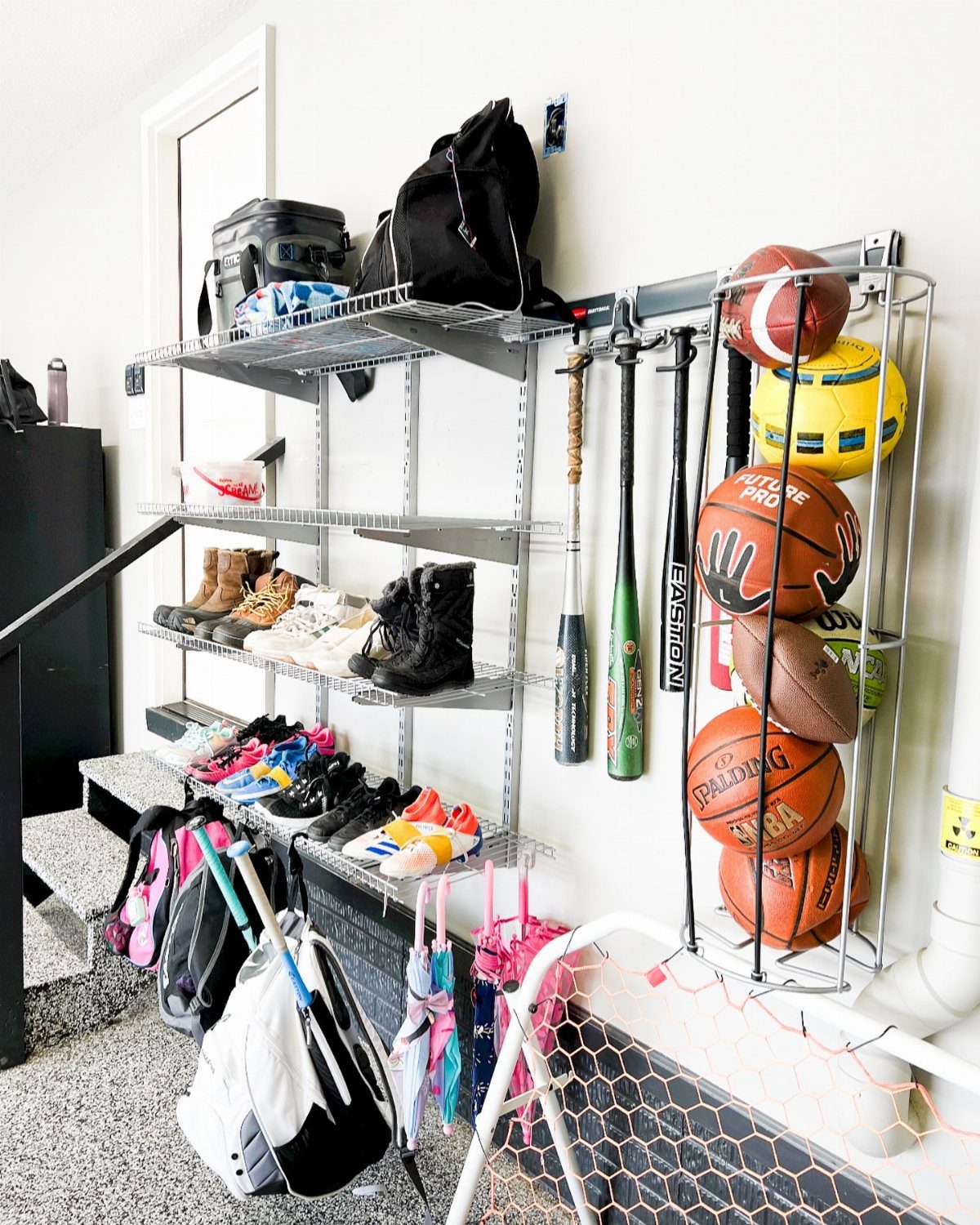
A bare corner can hold a whole family’s gear if you build upward.
Metal shelves are open, so anything on them stays visible, and that works in your favor: shoes go on the lower shelves, bags above. Put the heaviest items low.
This setup suits households with sports gear, since a rack gives balls a spot instead of the hallway floor.
According to professional organizer Stephanie Rough of The Organised Zone, every drop zone needs three things: a designated place for each family member’s shoes, a bowl or tray for keys and wallets, and drawers for outdoor gear like sunglasses and winter accessories.
Evaluate Clutter First
Before buying a single hook or basket, watch what actually lands by the door for a few days. Whatever piles up there tells you what the system has to hold.
Keys scattered across the counter point to a spot that’s too far from the door. Match the fix to the pile you see, not the one you imagine.
Next, work out which door your household really uses. When the front door is where everyone walks in, the foyer or the stretch of hallway right next to it is the spot for your drop zone.
For a household that comes and goes through the garage, the wall space around that door works well, and so does a laundry room or mudroom close by.
A drop zone at the door nobody uses will stay empty while the pile grows somewhere else.
Design Tips for Aesthetics
A drop zone looks intentional when the pieces share a plan. Matching bins or trays do most of that work, and neutral tones keep the area calm even when the contents are messy.
A small lamp or a piece of artwork finishes the look and makes the spot feel styled rather than purely practical. A lamp also gives you a reason to keep the surface near it clear.
Plants are worth adding only if the spot gets enough light. A hallway with no window is hard on a live plant, so a faux one or a framed print is the safer pick there.
Keep to two or three decorative touches. Past that, the decor becomes one more thing to move off the shelf.
Frequently Asked Questions
What are some good ideas for storage in a small entryway?
Start with a row of hooks, a slim console table, and baskets.
Hooks hold bags and coats off the floor, a shallow console with open legs fits a hallway too narrow for a bench, and a basket underneath takes shoes or bags.
How can I create a drop zone in my home?
Watch what piles up by the door for a few days, then build the system around that pile.
Put the drop zone at the door your household actually uses, whether that’s the front door, the garage entry, or a nearby laundry room or mudroom.
Add hooks for bags, a bench or cubby for shoes, and a small tray for keys. Put the setup at the door your household really walks through, or the clutter will keep piling up somewhere else.
What are some good organizing ideas for storage?
Give each kind of item its own spot: cubbies, baskets or bins that each hold one thing, such as shoes, hats and gloves, or bags.
Start with one labeled cubby per person, and only add more once the first round stays neat for a couple of weeks.
What is a drop zone?
Think of a drop zone as the spot just inside your most-used door, whether that’s the front entry, garage or mudroom, where keys, bags, shoes and mail get set down.
It also saves time hunting for things when you head out.





