How loud a room can be depends on how much of it you can calm down, so the ideas here run from one accent wall of mid-century tile or a layered lighting plan in a rental, up to wellness and spa upgrades that only suit a private, owned bathroom.
If you rent, pick the surface you can limit to one wall or one layer of light.
If you own, ask how much upkeep you will really keep up with, since the dark textured wall panels show water spots and the warm natural tones in wood and metal shift with time.
1. Mixing Tile Colors and Textures
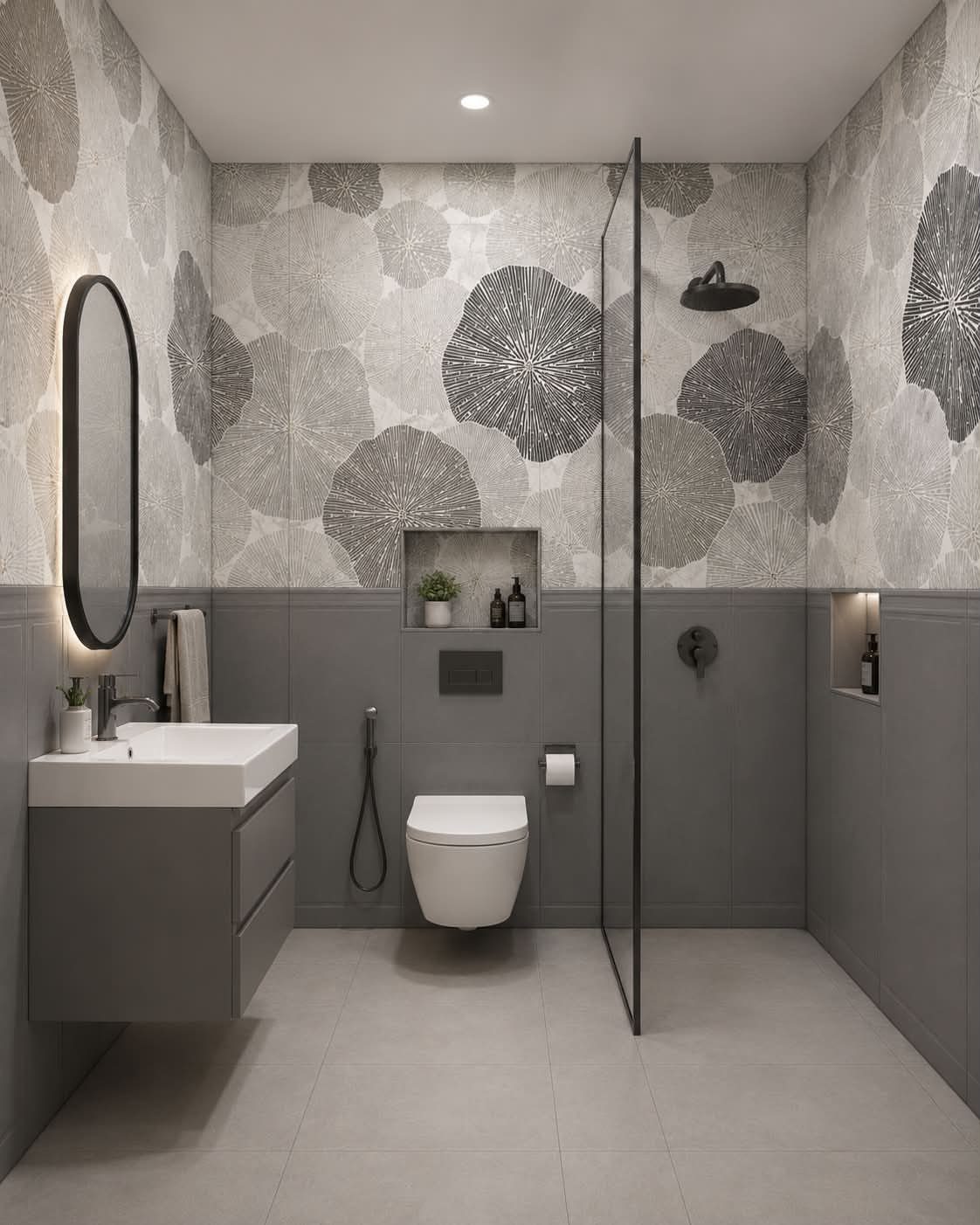
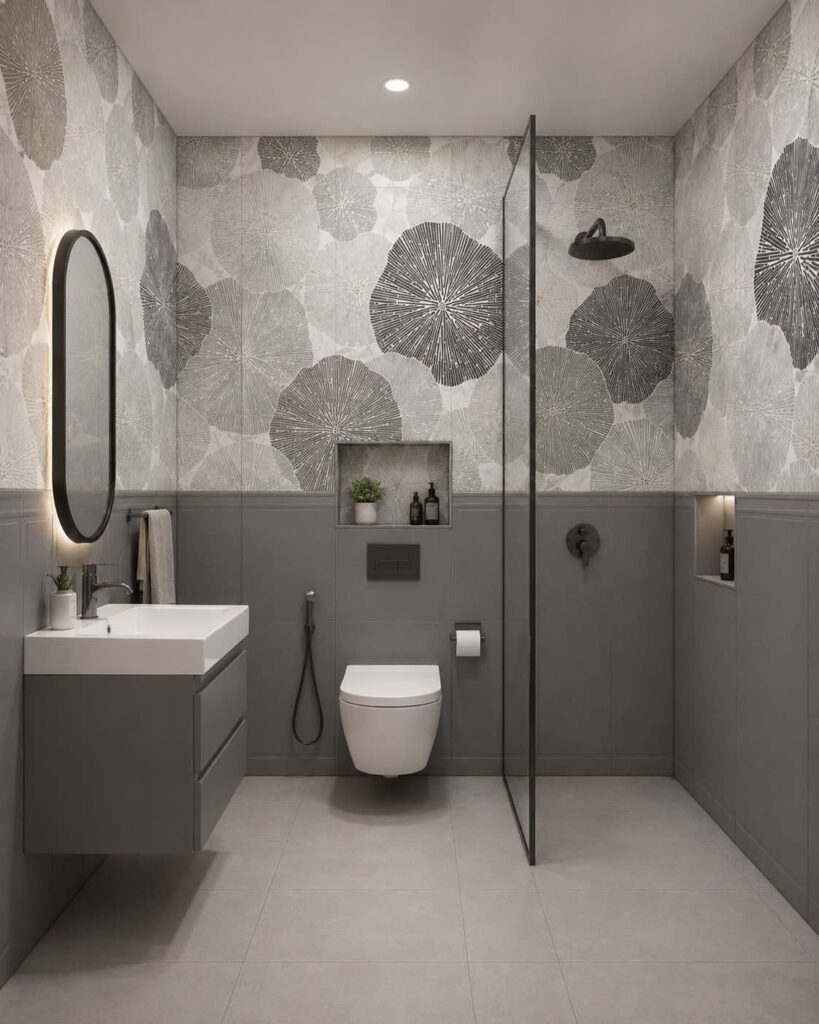
Floral pattern up top and plain grey below is a split that keeps a busy tile from taking over the room. The quiet half gives your eye somewhere to rest, so the pattern can be bold.
I’d keep the plain tile in a close shade of the pattern’s background, as this bathroom does, and put the pattern on the wall where it frames the vanity.
Large plain tiles on the floor mean fewer grout lines to compete with the print.
Buy one sample of each tile and set them side by side in your own bathroom light before ordering.
2. Textured Wall Panels
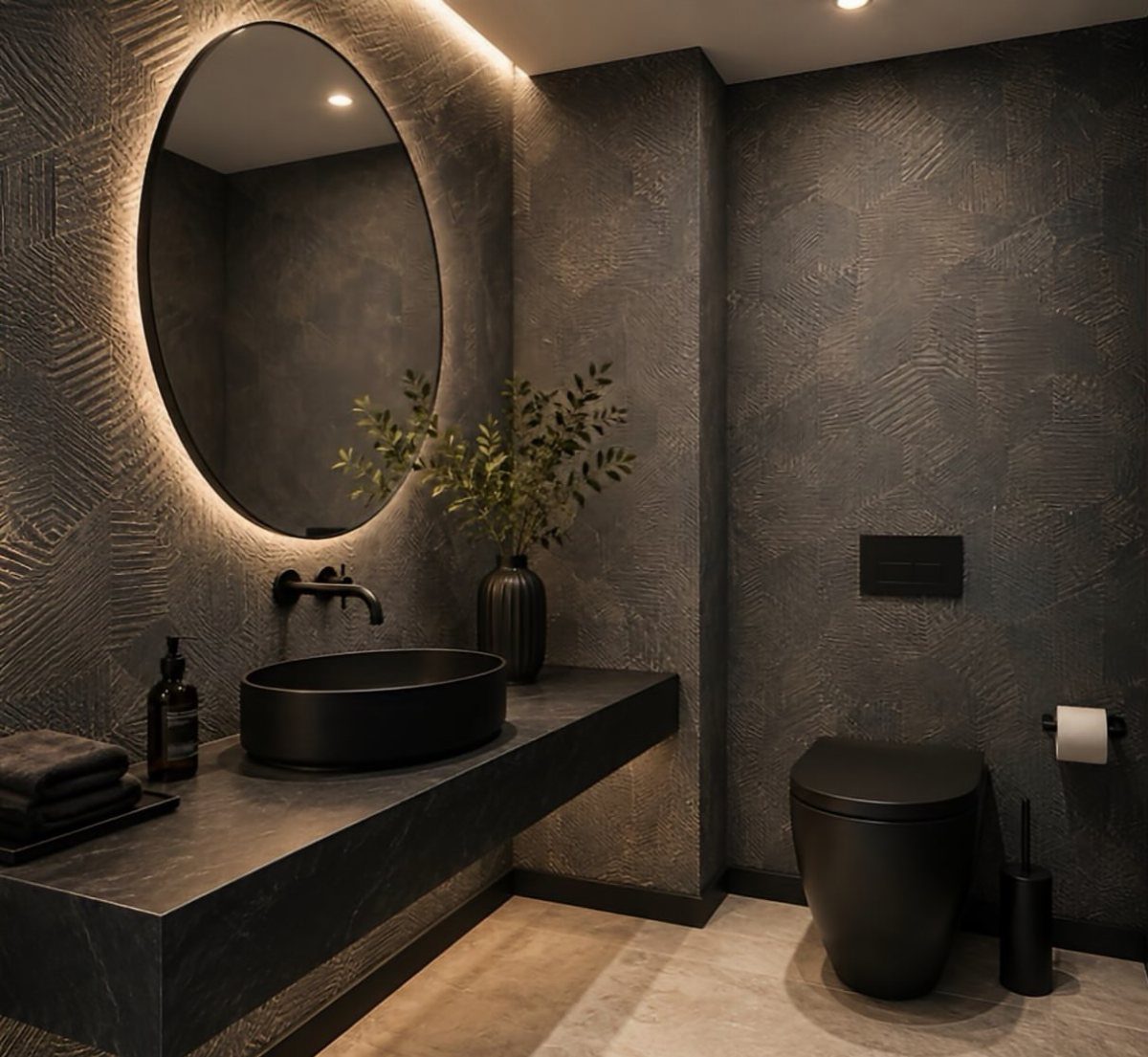
Dark grey panels with a visible texture give a bathroom walls with depth, and that adds warmth a flat painted wall can’t. Paired with black fixtures and a stone counter, the room feels rich without any extra color.
Lighting does the heavy lifting here. A backlit mirror grazes the surface and brings out the texture, so plan the light before you pick the panel.
Dark finishes show water spots, so I’d wipe them down after showers and keep a small bathroom’s other surfaces light enough to balance.
3. Warm Natural Tones
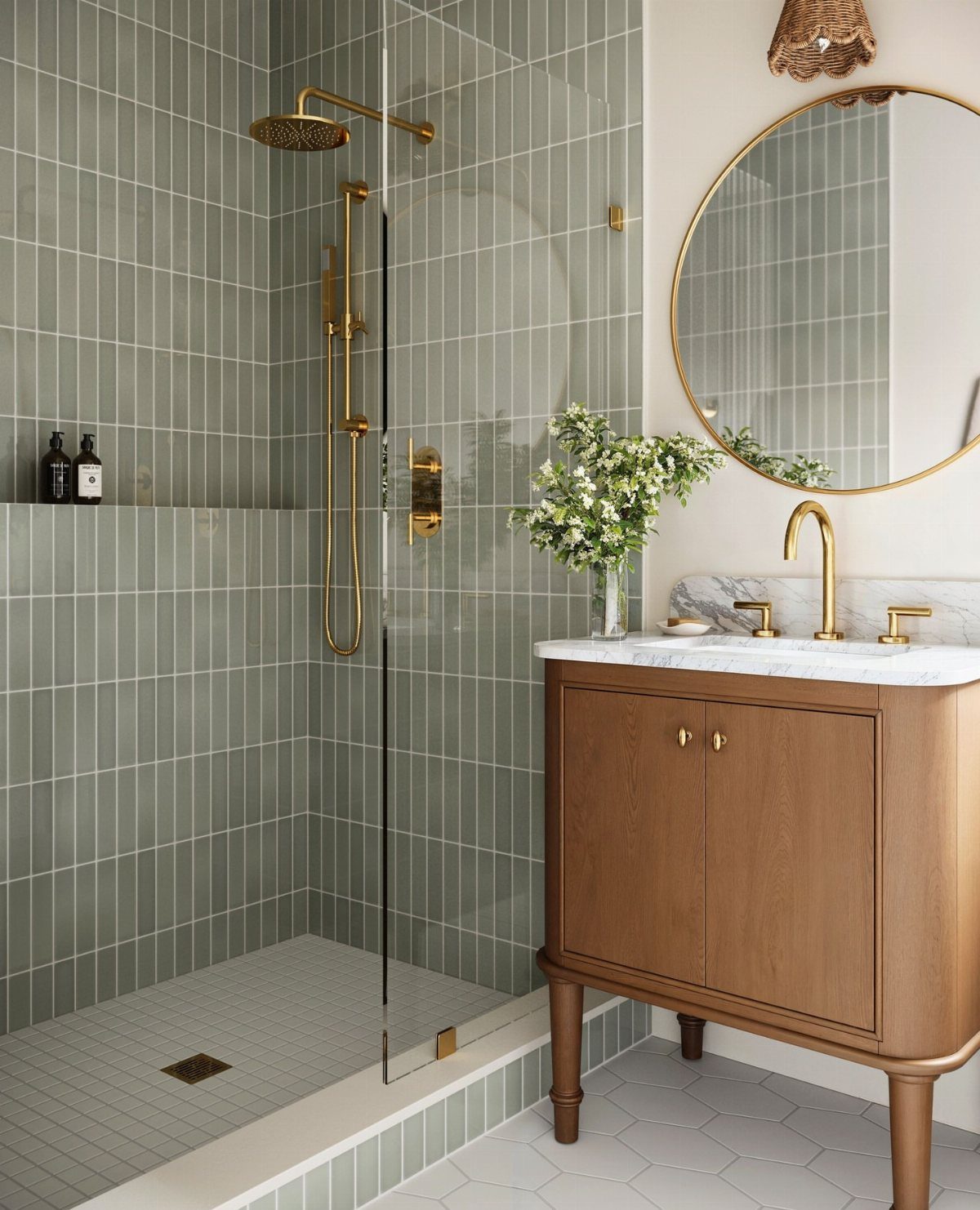
Sage green tile laid vertically in the shower draws the eye up and makes a low ceiling feel taller, and the soft color sits easily next to a wooden vanity.
Gold fixtures and a round gold mirror add warmth, while white hexagonal floor tiles keep the whole room from going heavy.
My preference is to let one color lead, here the green, and keep the rest to wood, white and a single metal. Choosing gold for every fixture helps the look read as planned.
A marble vanity top adds a soft veining pattern without competing with the shower wall, as long as the wall tile stays quiet.
4. Mid-century Tile Patterns
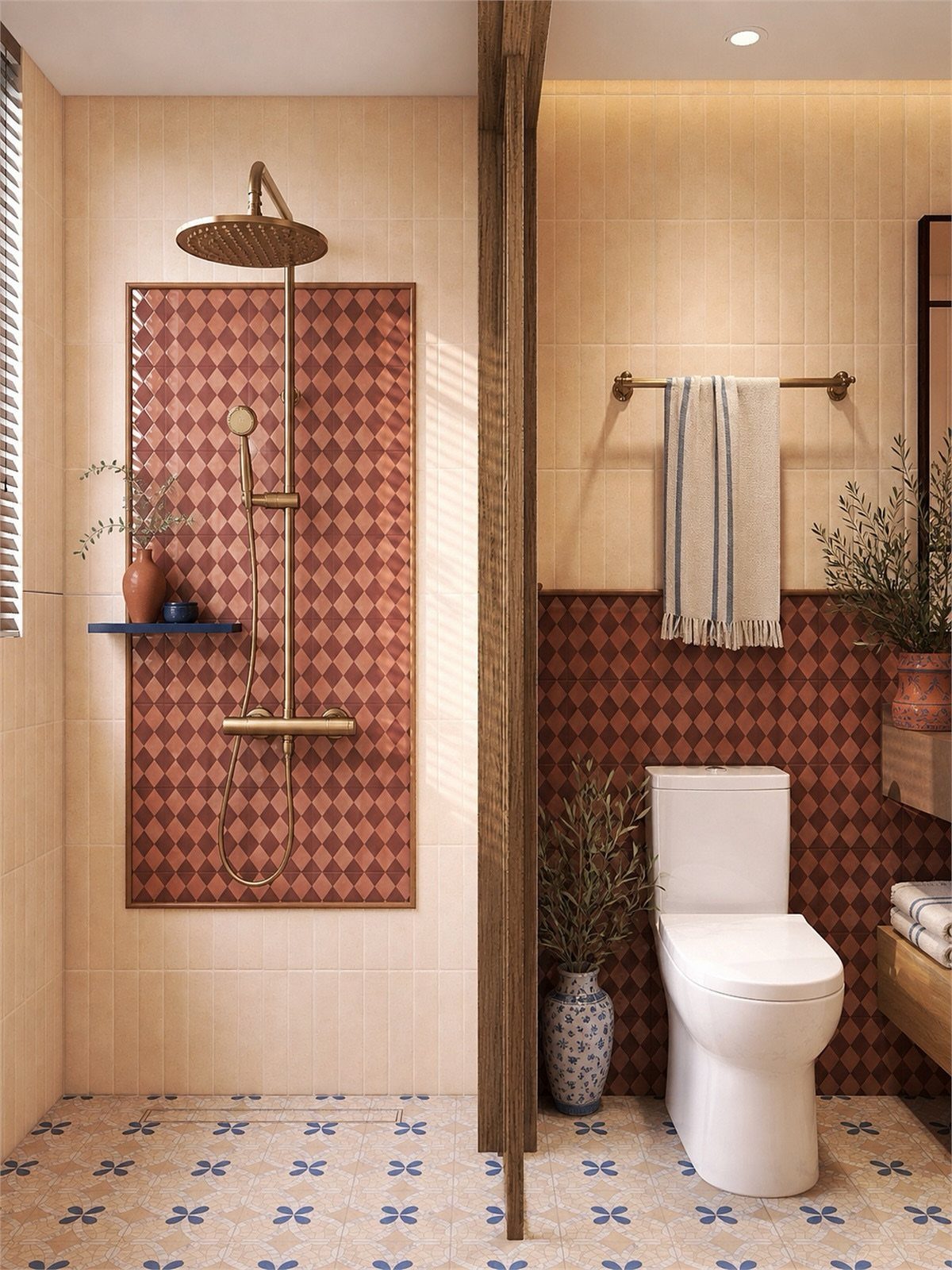
Red diamonds on one wall and blue florals underfoot is a loud pairing, and it works because the beige tile around them stays calm.
Vintage-style patterns are coming back, and a single accent wall is the low-risk way to try one.
I’d limit the bold tile to 2 surfaces, as this bathroom does, and let everything else stay neutral. Pattern on the floor and the wall together needs that quiet backdrop or it turns chaotic.
5. Marble Effect Tiles
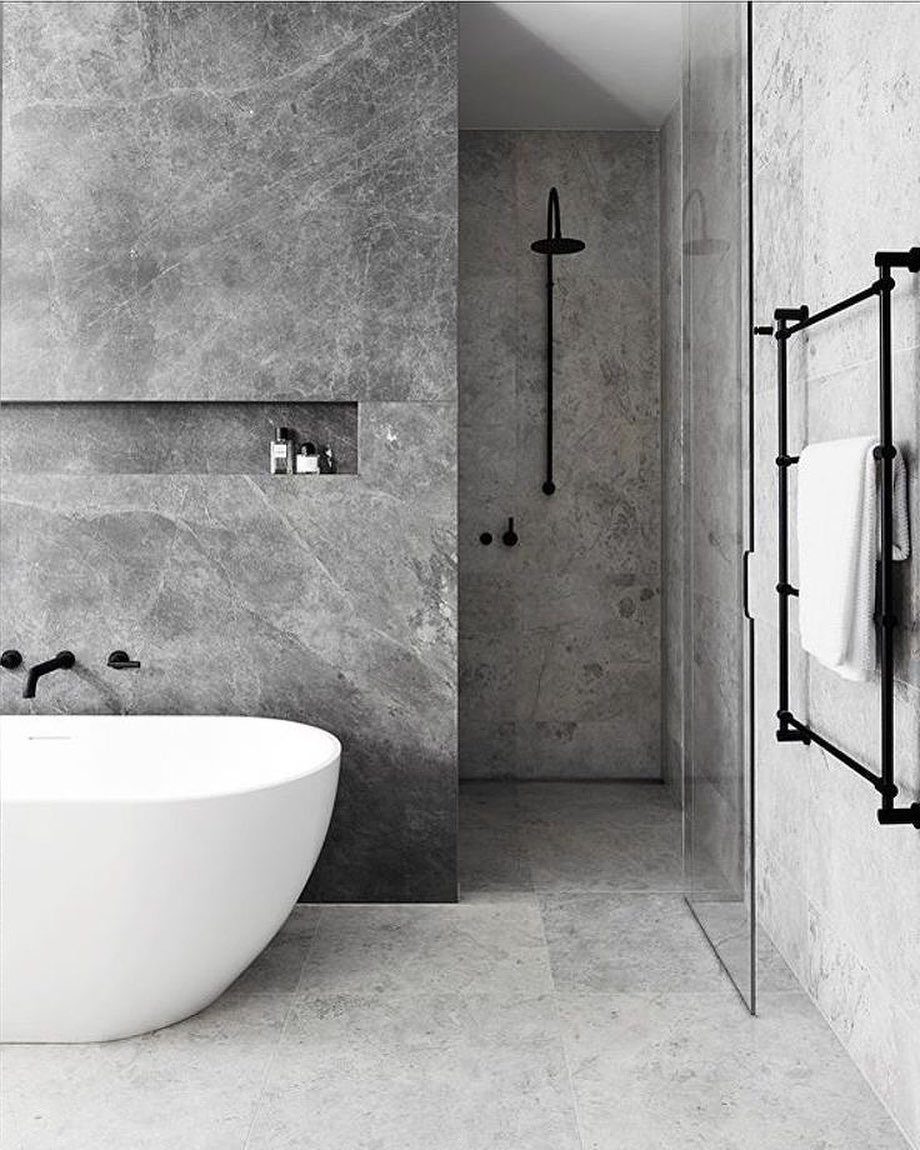
Marble-effect tile gives you the veined, stone look on walls and floor at less upkeep than real marble. Grey tone keeps it modern, and it pairs well with black fixtures and a white freestanding tub.
Run the same tile on both the walls and the floor for a continuous, spa-like feel. In a small bathroom, that one surface makes the room read larger.
I’d choose a tile with varied veining rather than one repeating print, since repeats become obvious across a whole wall. Check several boxes side by side before you buy.
6. Glass Tile
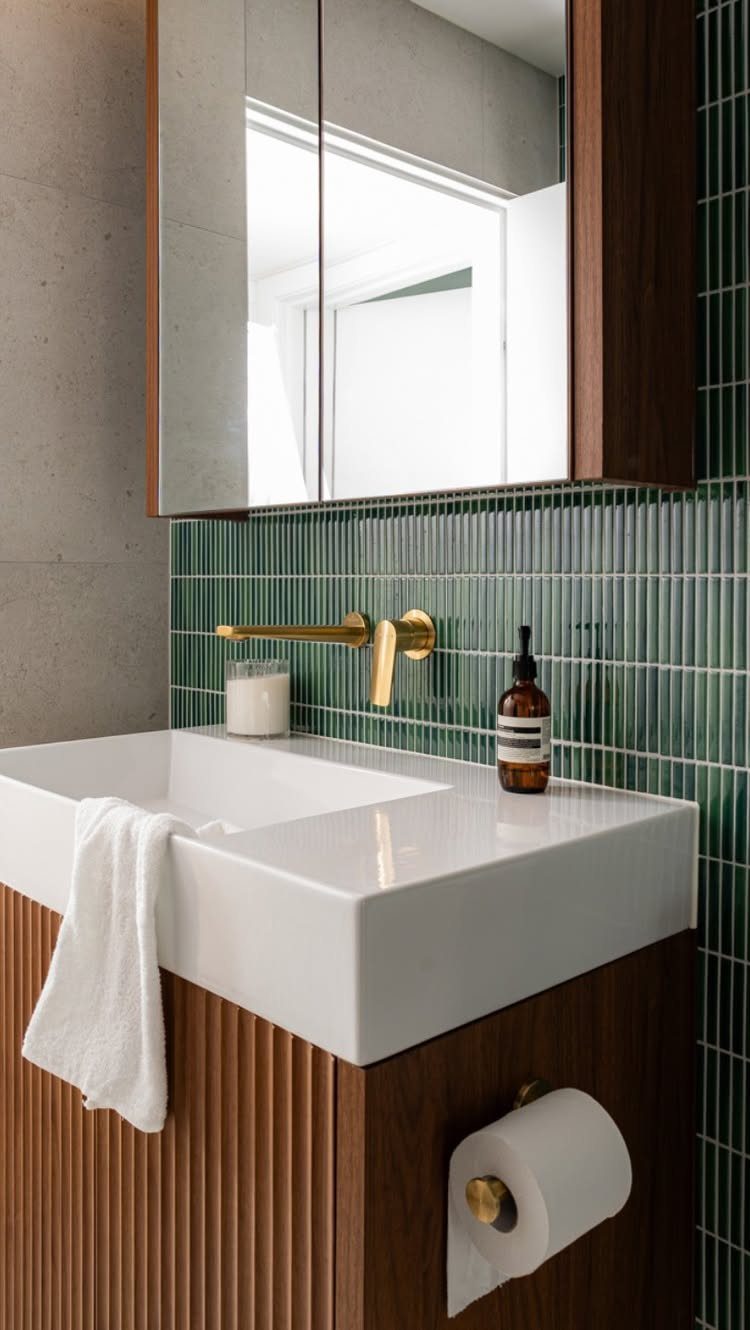
Green glass tile in narrow vertical strips turns a plain vanity wall into the focal point. The glossy surface catches light and bounces it around, which helps a small bathroom feel brighter.
Vertical stacking draws the eye upward, and a ribbed wood vanity echoes those lines nicely.
I’d keep glass tile to one wall behind the sink instead of the whole room. It’s an accent that costs less that way, and it holds attention better.
7. Large Format Tiles
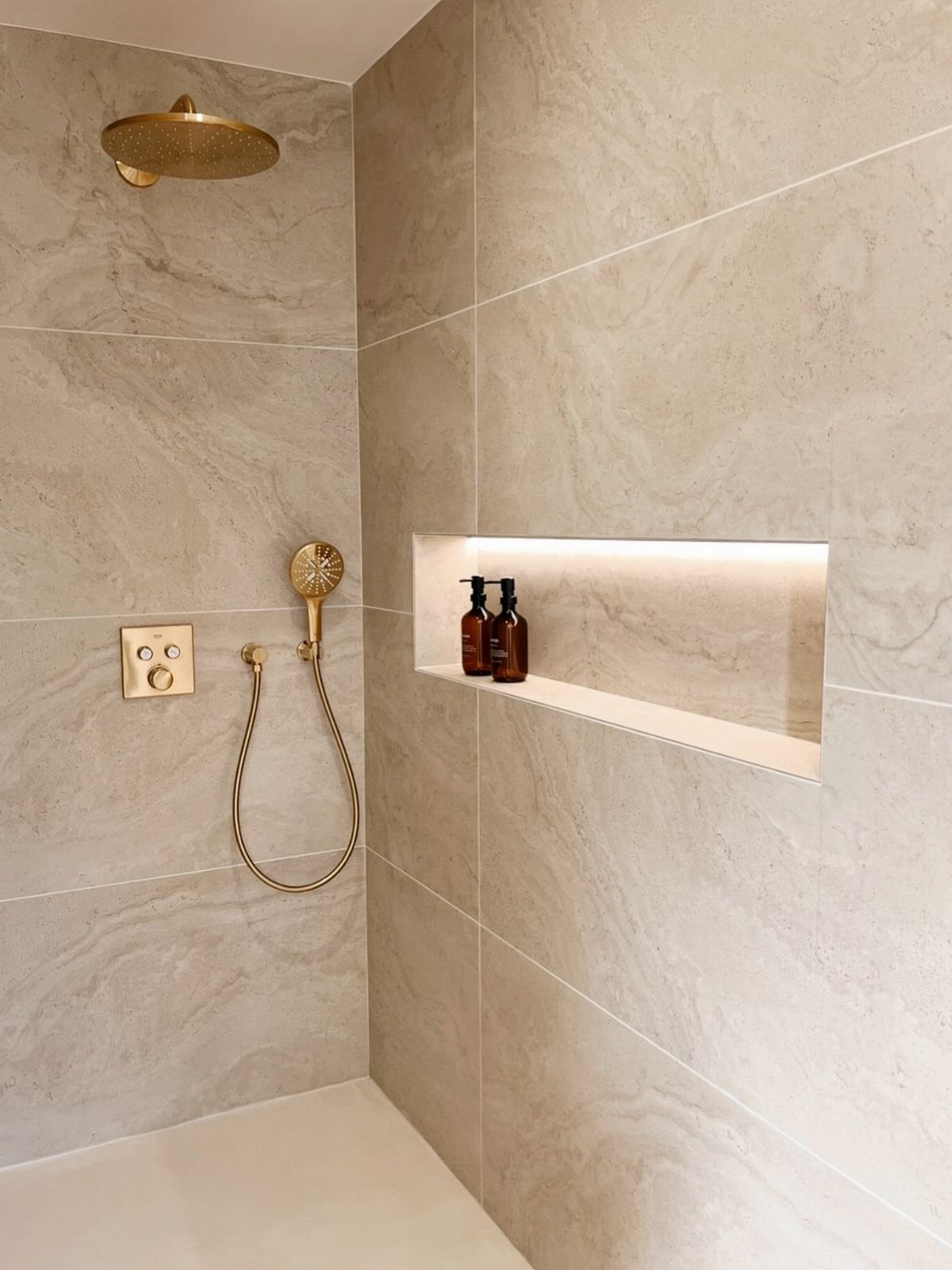
Oversized marble-effect tiles cut the grout lines in a shower to a handful, so the wall reads as one calm surface instead of a grid. Beige keeps that surface soft, and gold fixtures sit well against it.
I’d run the same tile across every shower wall and let a lit niche be the only break. Fewer joints also means fewer lines to scrub.
Big tiles are heavy and unforgiving on uneven walls, so check that the surface is flat before you order.
8. Curved Tiles
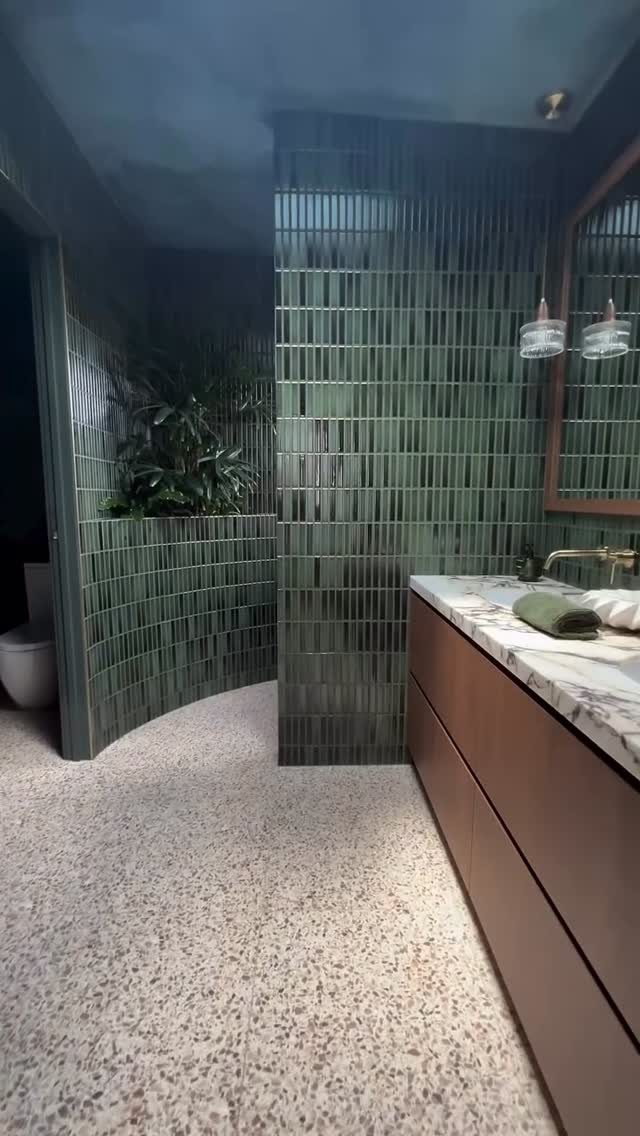
Tiles with rounded edges make a hard room feel softer, and a curved wall in narrow vertical kit-kat tile shows it best. The green tile follows the bend, and the vertical lines pull the eye upward.
One curve is plenty.
Narrow tiles bend more easily around a curve than wide ones, so choose a small format if your wall has any radius.
9. Unexpected Checkerboard
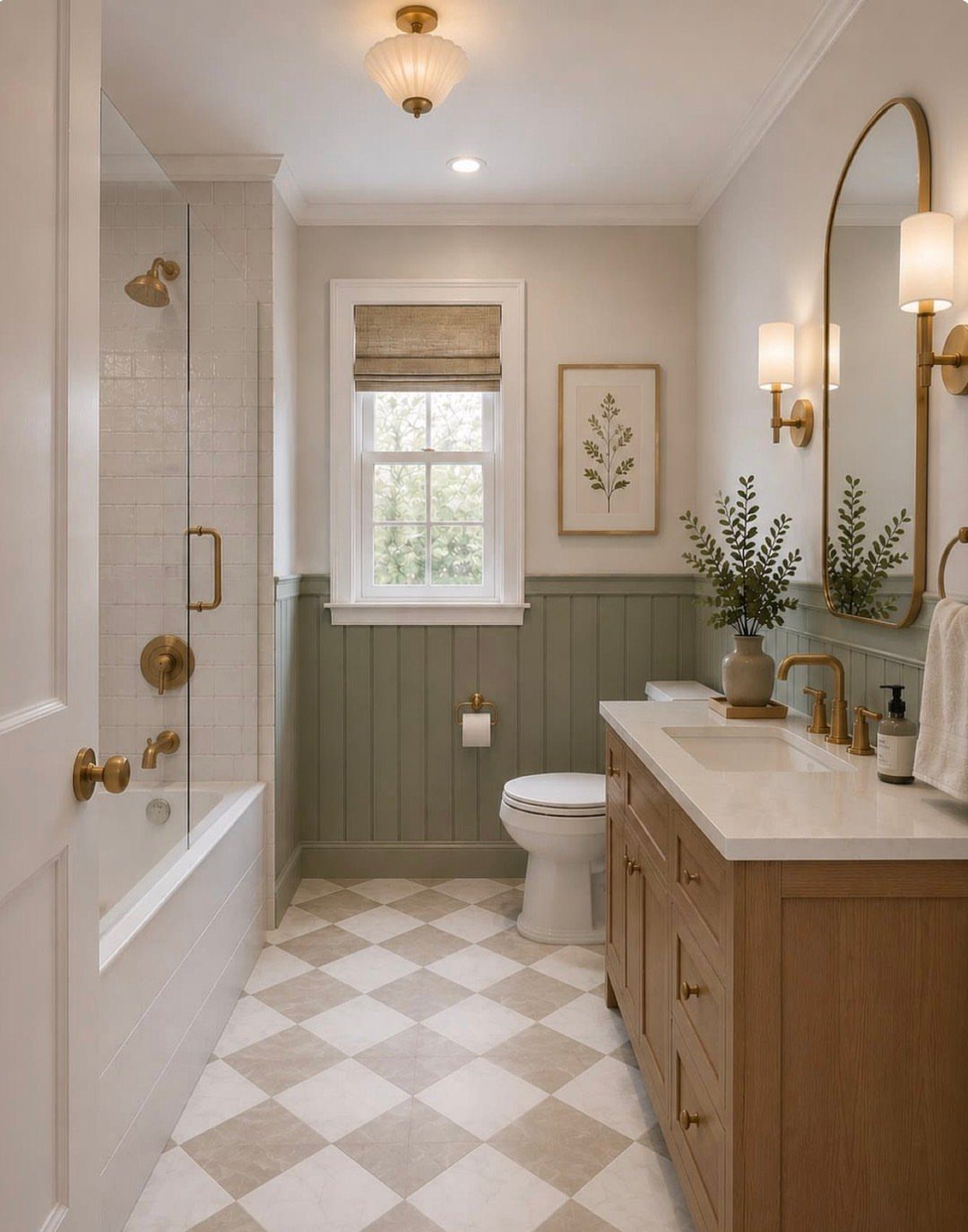
White and beige checkerboard feels fresher than the usual black and white, because the low contrast reads as texture instead of a loud grid.
I’d pick this version for a bathroom that already has warm wood and gold, since the beige ties those together.
Lay the squares straight, not on the diagonal, if you want the calmer look.
10. Aqua and Seafoam Floor Tiles
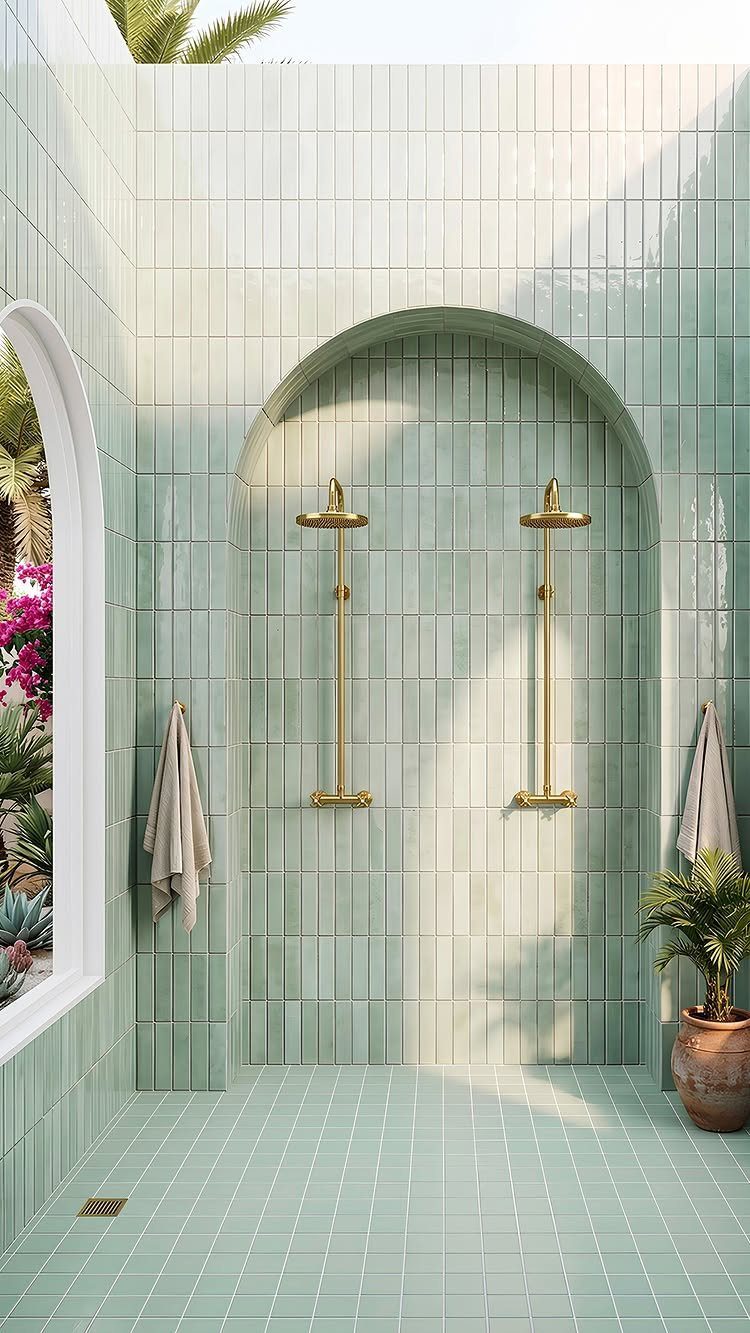
Light aqua-green tile that climbs the wall and continues onto the floor makes a shower feel like one tinted space. Square floor tiles in the same color as the vertical wall tile tie the two together.
I’d use this in a small shower, where matching color keeps the room from looking chopped up. Gold showerheads add warmth against the cool green.
Keep the plants and everything else neutral so the tile stays the color story.
Wellness and Spa Inspiration
A spa bathroom works better when it’s built around your own routine than when it copies a template.
For an early riser stepping into the shower around 5:30 a.m., heat under the feet and a dim, soft glow do more for the room than any new tile.
If you bathe at night, a deep soak and a ledge wide enough to hold a glass will serve you better.
On a budget, start with the pieces that fit how you actually use the room.
Of all the spa upgrades, radiant floor heat and a heated towel bar are the two I’d expect to get used every single day. Built-in seating and aromatherapy are worth adding if you’ll really use them.
Vanity drawers deserve the same thinking. Fit them to the tools, medicines and products you reach for daily, and mornings get less cluttered.
Saunas and steam showers belong in a custom, private bathroom. In a rental or a first home, skip them.
Sustainability in Bathroom Design
Sustainable materials are easy to buy and easy to get wrong, so match them to the wet zones.
Bamboo, recycled glass and cork are the options I’d look at first. Limestone, oak and marble are the natural choices if you want texture and a warm look.
Accept that natural surfaces change. Unlacquered brass picks up a darker patina wherever fingers touch it, and teak fades toward silver-gray over time.
Stone shows its veining and small imperfections. That’s the appeal, and if you want a showroom-perfect finish, these aren’t the materials for you.
Limewash and microcement can give plain walls some movement. Softer, less sharply machined edges also suit the lived-in look.
Before committing, ask whether a material needs sealing or care in a damp room. If you can’t keep up with it, pick a different one.
Yes, traditional bathroom materials might be practical, but combine dynamic tiling and marble and top it off with brushed stainless steel for a modern take on the washroom.
Layered Lighting
Plan bathroom lighting in layers, each doing a separate job.
Around the mirror, go for brighter, cleaner light so makeup and shaving are easy to see. Warmer bulbs suit a long soak or that last late-night visit before bed.
Add a low light near the floor. A small plug-in night light gives you enough sight in the dark without flooding the room, and it needs no wiring, which suits a rental.
Sconces can do more than a plain strip, and a pendant over a tub adds atmosphere. If your budget allows a system that dims or warms the light as evening comes on, it’s worth it.
Swap the lighting and the same bathroom feels like a different room, a bigger change than most pricey fixtures deliver. Spend there before you buy something fancier.
Frequently Asked Questions
What are some trendy bathroom ideas for 2027?
Warm, natural palettes and one bold tile surface lead. A shower wrapped in sage green tile, warmed up with a wood vanity, white walls and gold on every fixture, shows the look well.
A patterned accent wall, vintage-style red diamonds or blue florals for instance, works when beige or plain tile surrounds it. Textured dark panels, glass tile strips and layered lighting round out the list.
What makes a bathroom look outdated?
Cold, clinical schemes and lighting from only one overhead source date a bathroom fastest. Cool gray-leaning white tile lit by one blue-ish downlight drains color from faces, and it makes every water spot stand out.
Vessel sinks that sit above the counter, open shelving across a whole wall, and a big tub that rarely gets used also read as dated.
Mixing light at the mirror, near the floor and in warmer tones fixes much of it.





