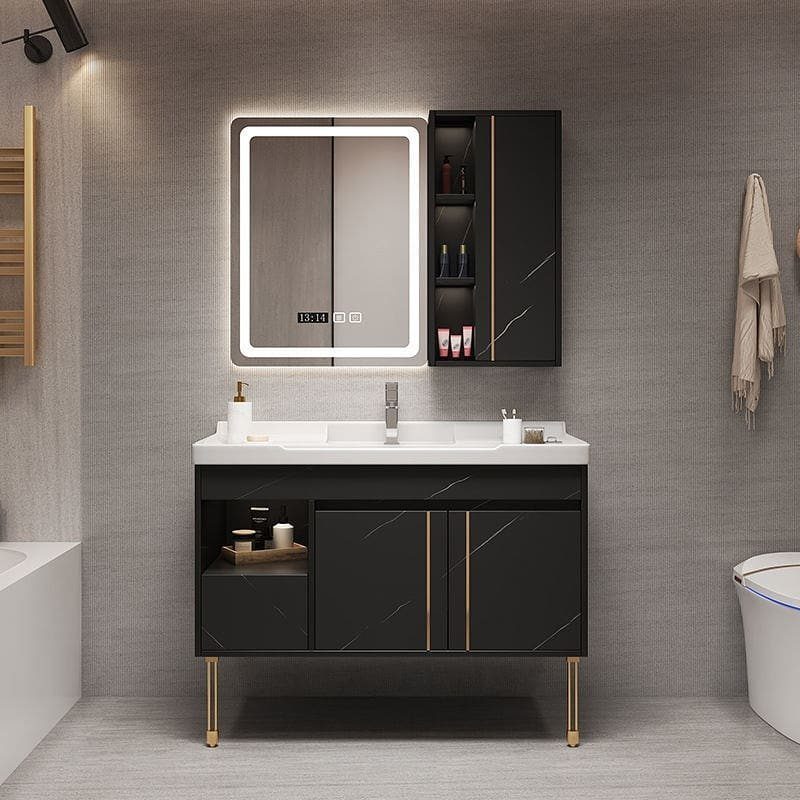
Every vanity here is 42 inches wide, and the options run from new knobs and pulls at a few dollars apiece to a wall-mounted cabinet that needs studs or blocking behind it.
What picks yours is how the bathroom is built around it: a tight room favors a wall-mounted cabinet that shows the floor, while a spot where an older cabinet already sat suits a freestanding one that slides straight in.
Open shelves, drawers and closed fronts then come down to whether you want your storage seen or hidden.
1. Bathroom Vanity with Open Shelves
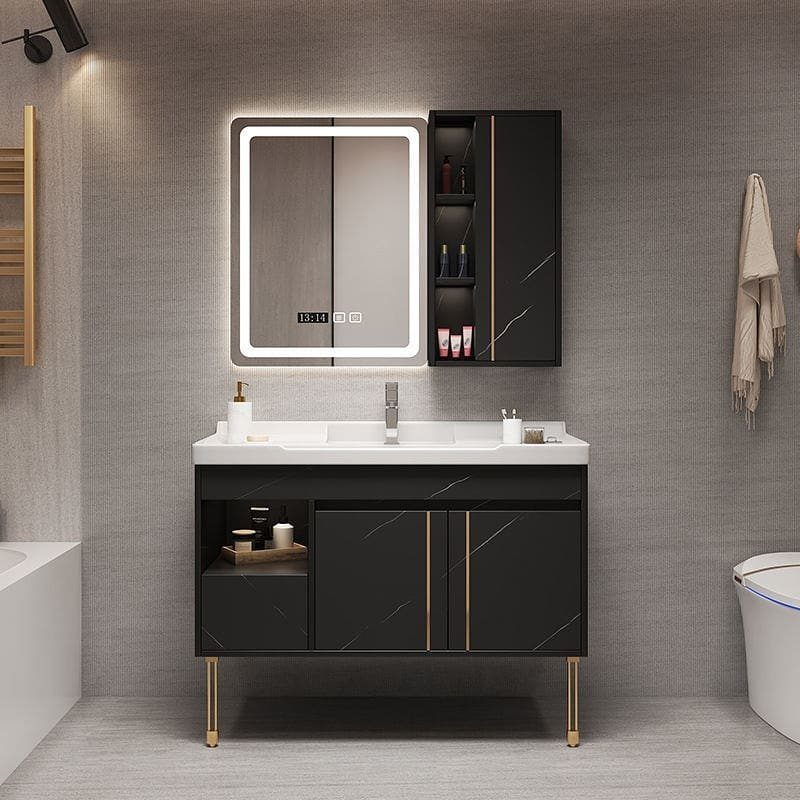
Open shelving on a 42 inch vanity swaps one bank of cabinet doors for baskets or rolled towels, and the black frame with gold legs gives those shelves a strong outline to sit in.
Stock the lower shelf with something that looks good in bulk: matching washcloths, a woven basket, a few jars.
A vanity like this suits a bathroom where you want visible tidiness more than hidden clutter.
2. Wall-Mounted Bathroom Vanity
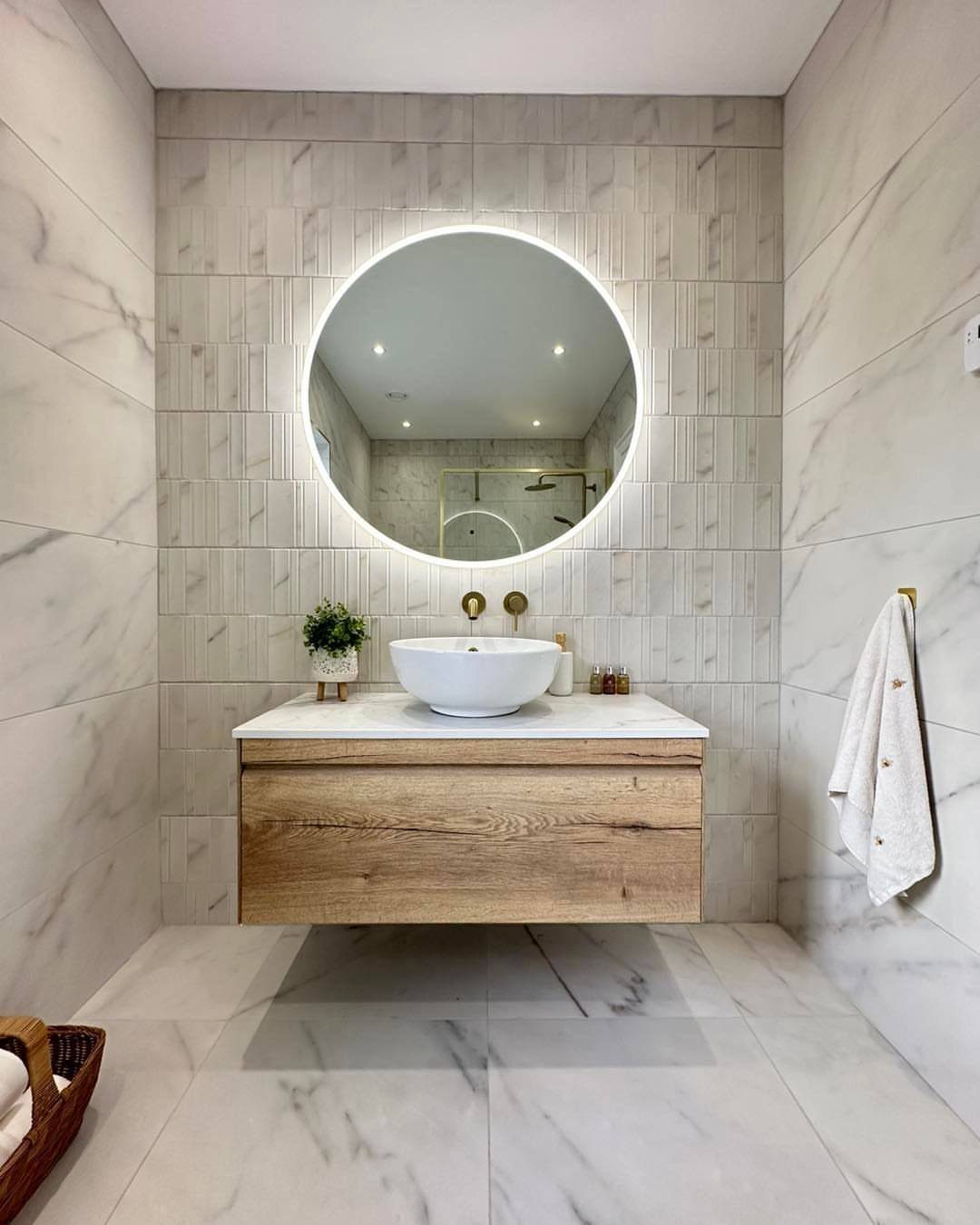
Mounting a vanity straight to the wall leaves the floor visible underneath, and when the bathroom is tight that extra stretch of tile makes the room read bigger.
A wood front like this one also warms up a lot of white marble-style tile.
Plan on locating studs or adding blocking inside the wall before you hang anything, since the cabinet, a stone or ceramic top and a vessel sink all pull downward.
Plumbing stays exposed or goes into the wall, so decide that early.
3. Bathroom Vanity with Knobs and Pulls
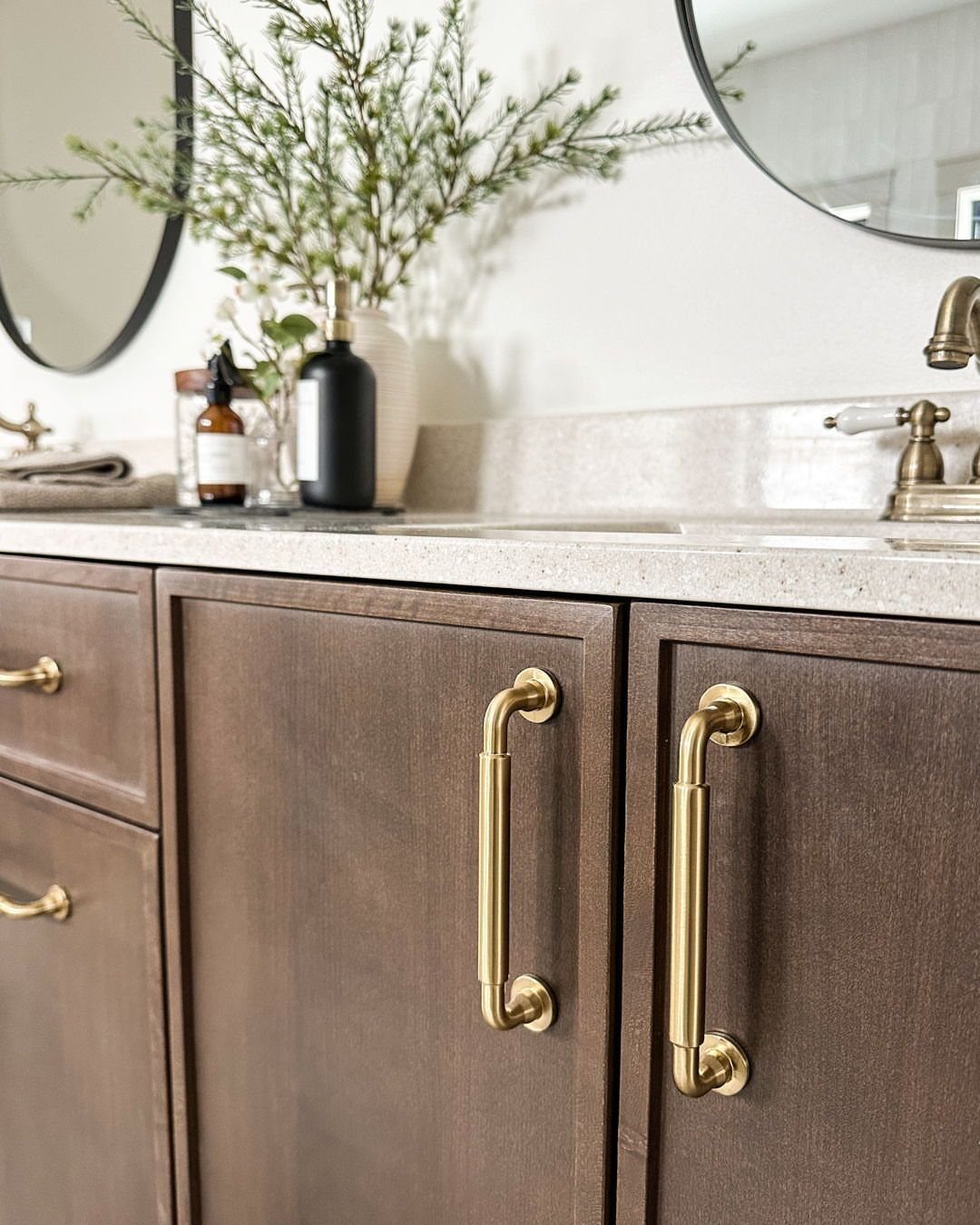
Swapping knobs and pulls is the cheapest way to change a vanity, and gold metal against brown wood is a pairing I’d pick over nickel every time.
Measure the center-to-center spacing of the existing drawer holes before ordering, so new pulls land on the old screw holes without drilling.
Use knobs on doors and pulls on drawers, with the finish identical across both. A weekend with a screwdriver and a few dollars per piece is plenty of time and money.
4. Grey Freestanding Bathroom Vanity
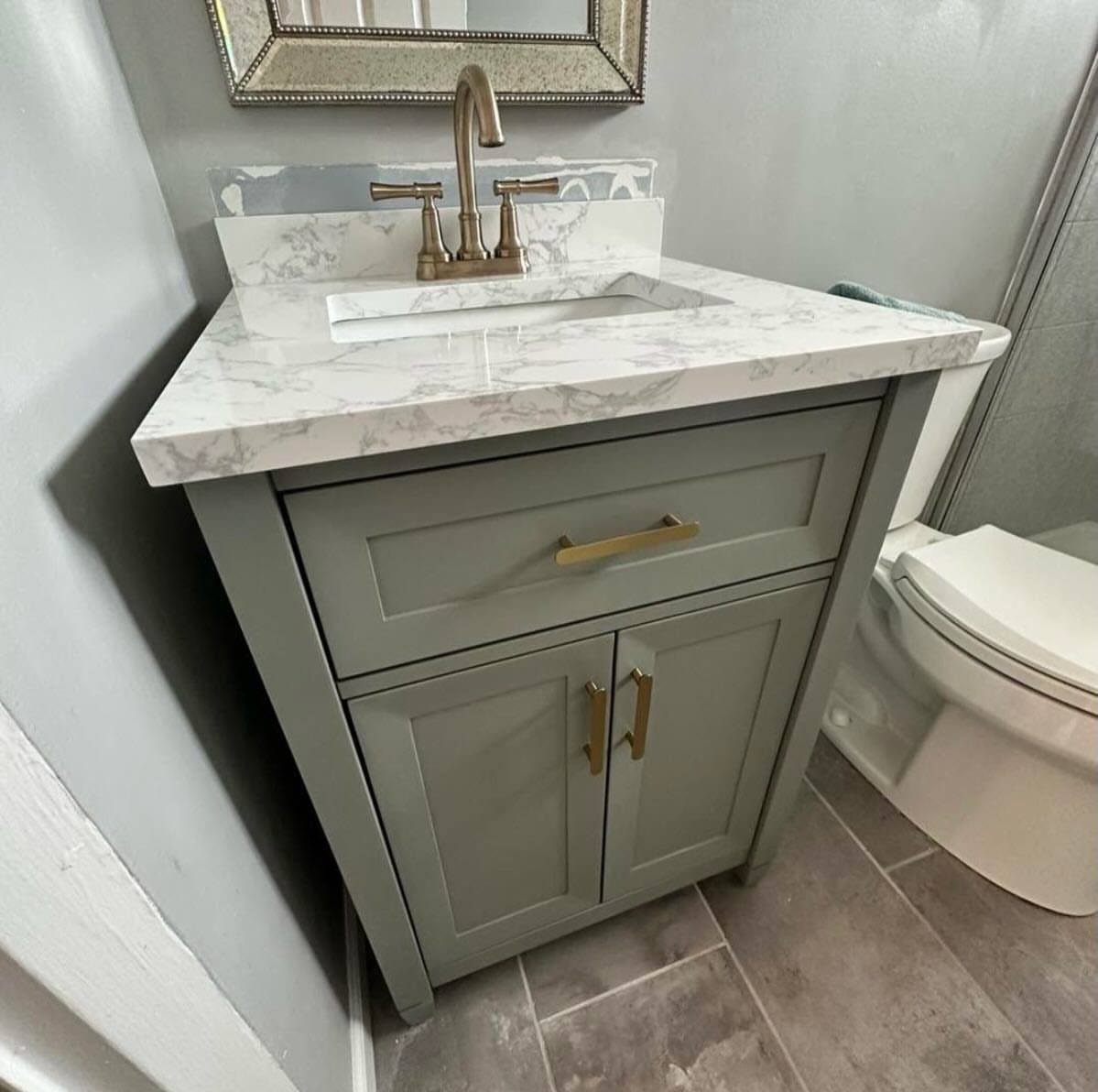
Grey cabinetry with a white marble top is a safe, calm combination, and matching gold on the handles and faucet is what keeps it from feeling flat.
Pick one gold tone and stick with it, because mixed brass shades look like a mistake rather than a choice.
Freestanding means the vanity stands on its own base, so a 42 inch model can slide into the spot where an older cabinet sat. It beside a toilet needs enough clearance, so measure that gap first.
5. Green Fluted Bathroom Vanity
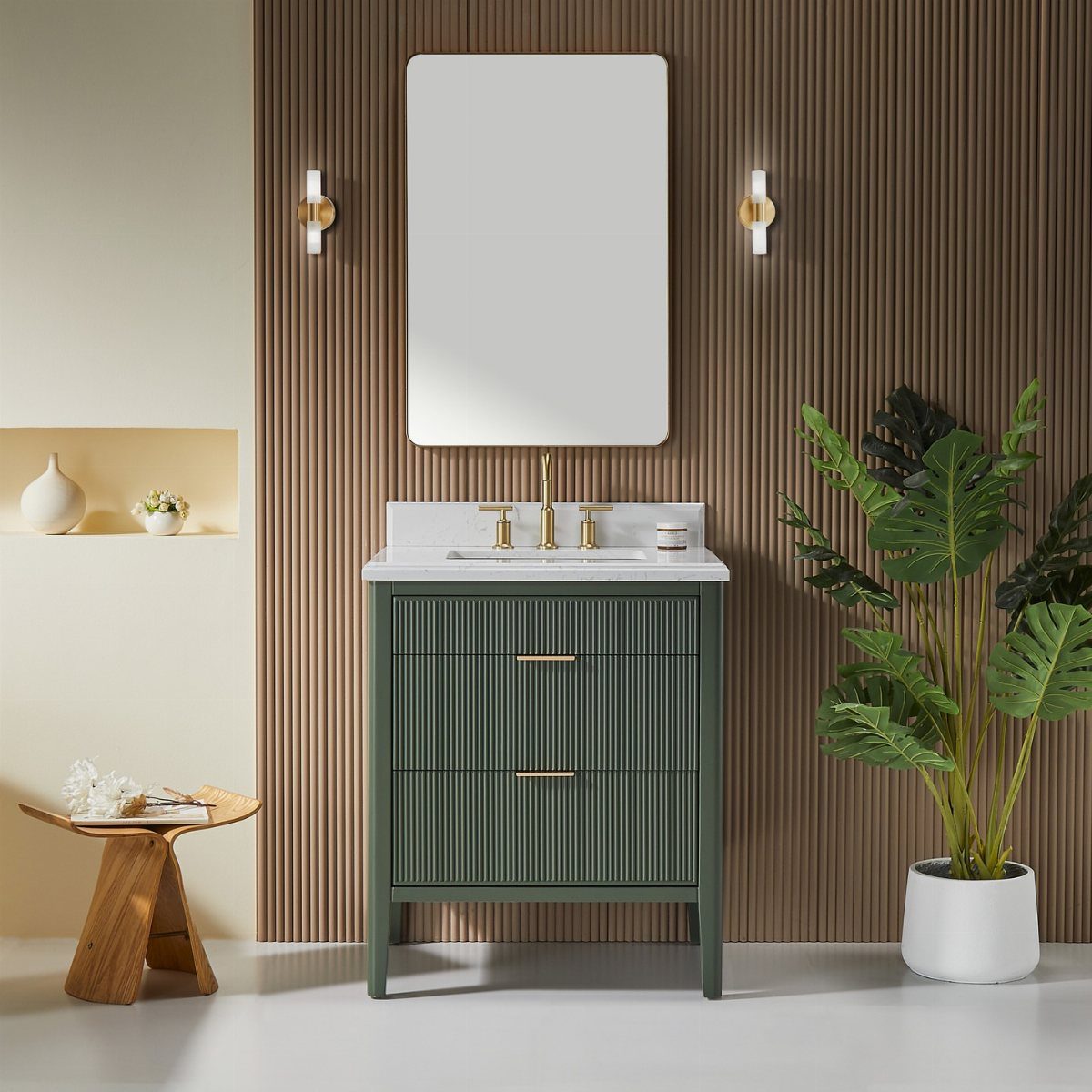
Fluting adds texture without adding a pattern, and deep green makes it look rich when the room is tight.
White marble on top keeps the dark base from feeling heavy, and gold hardware picks up the warmth of the ribbed wall behind it.
Because the front carries all the interest, I’d keep everything else quiet: one mirror, simple sconces, a single plant. Wipe the grooves regularly, since dust and splashes settle in them.
6. Navy Blue Bathroom Vanity
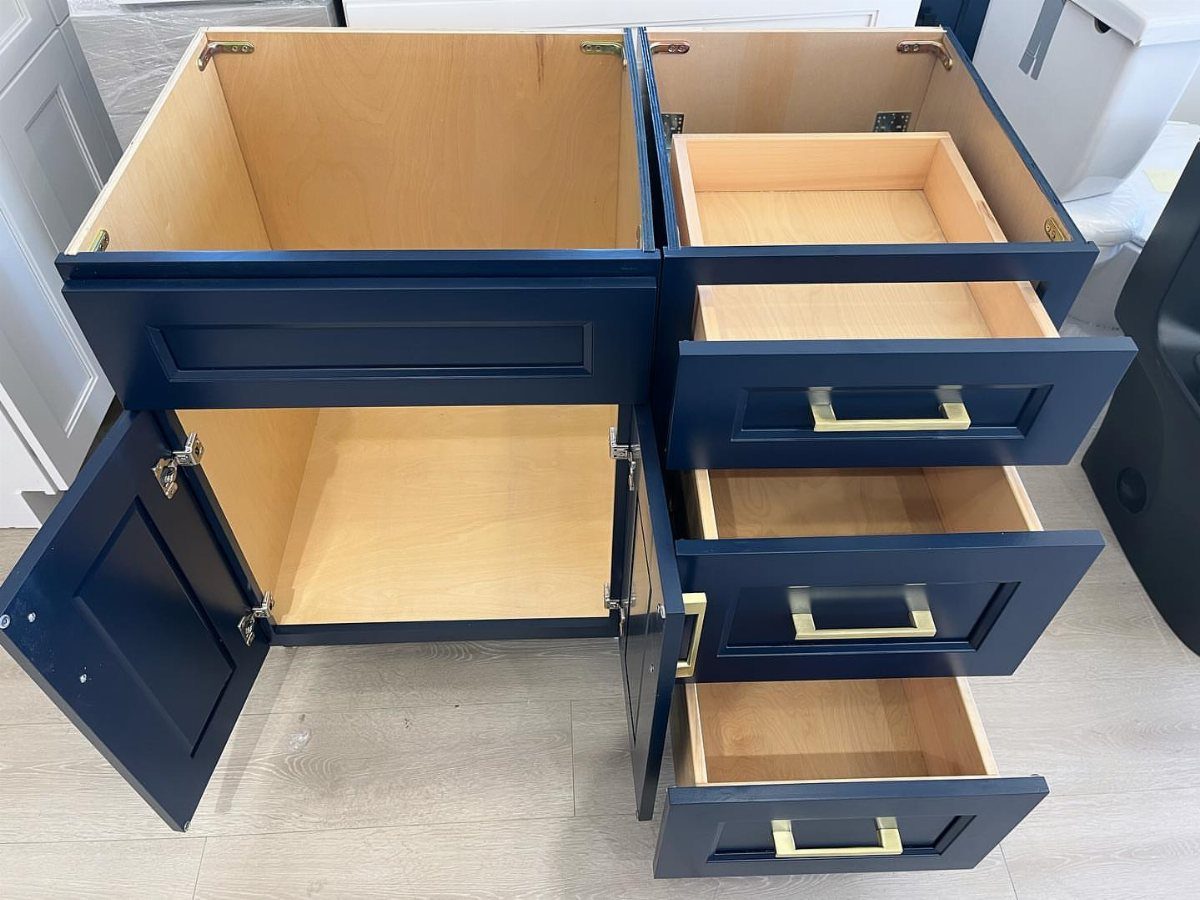
Navy on the outside and light wood inside is a detail you only see when a drawer opens, and I like that it feels like a small reward.
Gold handles against the dark blue add warmth, and the pale floor stops the whole thing from going gloomy.
If you are choosing a finish, navy hides less dust than you might expect, so a quick wipe now and then helps. This works well when you want color but don’t want to paint a whole room.
7. Warm Wood Bathroom Vanity
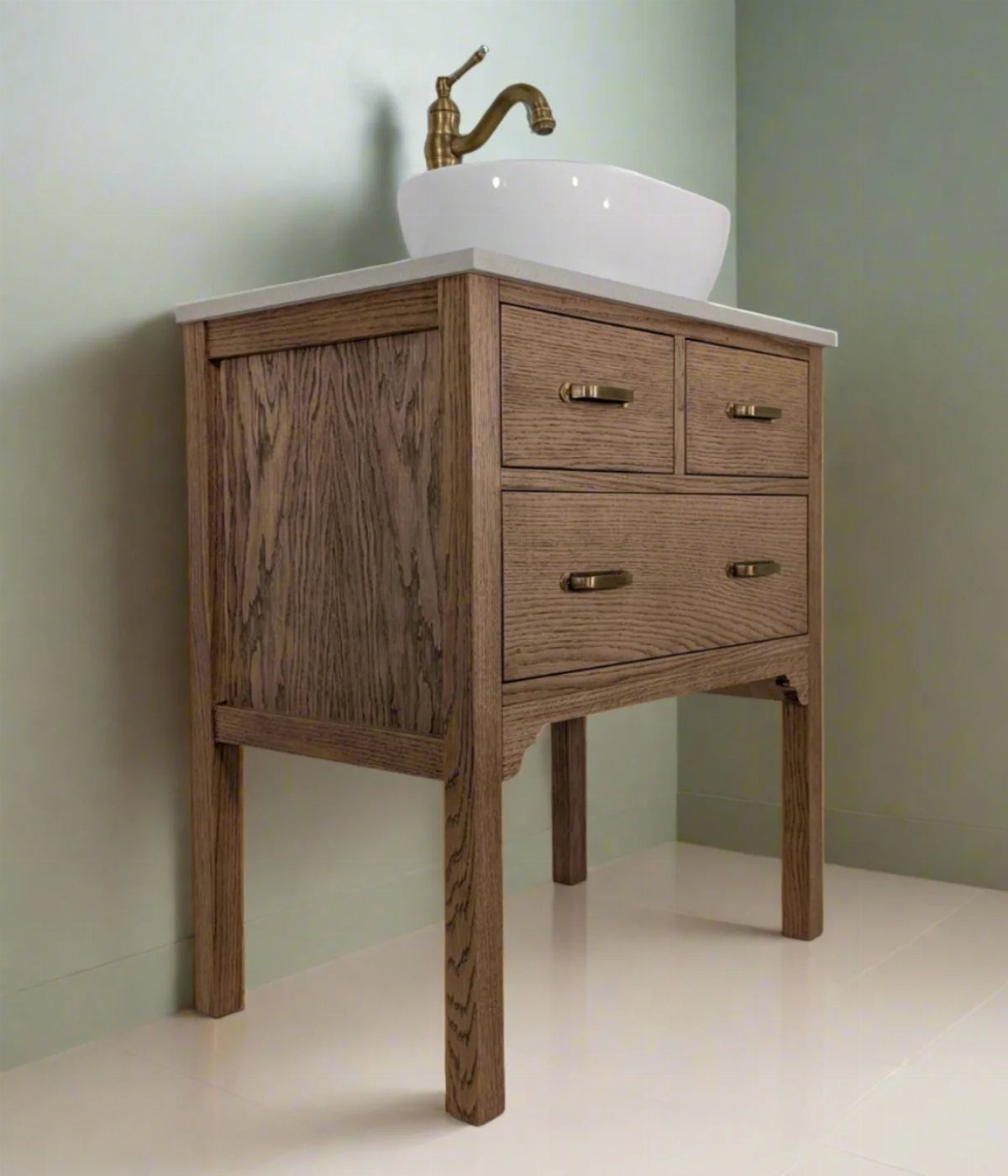
Light natural wood paired with a crisp white top and vessel sink is a combination that stays easy to live with, and the gold faucet adds just enough warmth to match the grain.
Against a pale green wall, the wood reads soft instead of orange.
Keep the other finishes simple: white sink, one metal tone, a pale floor.
Vessel sinks sit above the counter, so choose a faucet tall enough to clear the bowl rim, and wipe the wood dry after splashes since the top edge takes the water.
8. White Bathroom Vanity with Drawers
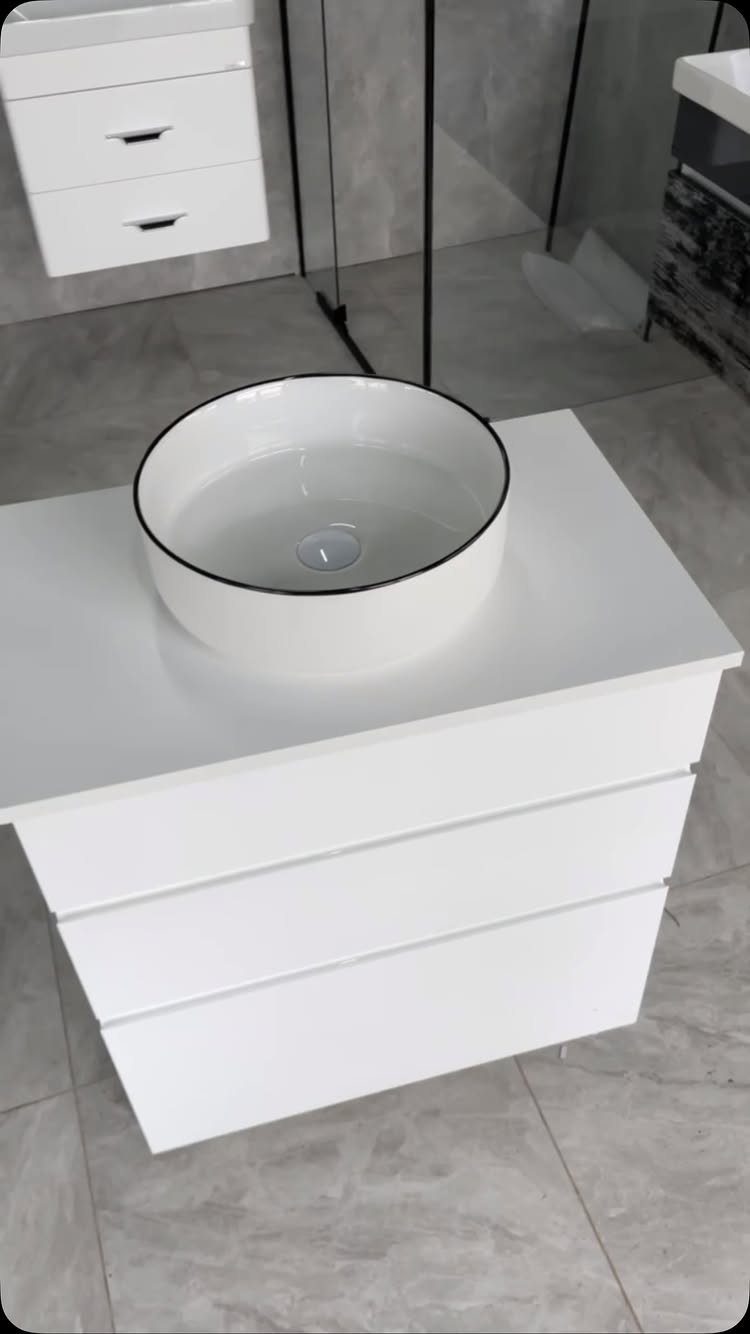
3 wide drawers instead of doors means you pull out the whole shelf and see everything at once, which beats reaching into a dark cabinet for the spare toothpaste.
A black-rimmed vessel sink gives the all-white front a crisp outline, while grey floor tile holds the whole bathroom to a cool, clean look.
Drawers will sit around the plumbing, so check how the sink drain cuts into the top drawer before buying. Small dividers or trays keep the contents from sliding around.
On a 42 inch width, wide drawers also mean fewer handles to line up and a calmer front.
Installation Tips
Find the studs before you pick a spot, then mark the vanity’s top edge with a level line across the wall.
Floating and freestanding cabinets both need it, since a vanity that leans even slightly sends water toward one side of the top and away from the drain.
For a freestanding model, set the cabinet in place and check it front to back and side to side. Slip thin plastic shims under the legs or base until the bubble sits centered, then trim them flush.
Screw the cabinet back to a stud through its mounting rail. This keeps it from tipping if someone leans on it, and that matters most with kids in the house.
Turn off the water at the stops and test every connection for drips before you close up the cabinet.
Maintenance Advice
Wipe the top dry after each use, because standing water is what stains stone and dulls wood. Marble is porous, so skip vinegar and abrasive cleaners; a soft cloth with mild dish soap handles daily grime.
Wipe up toothpaste, hair dye, and mouthwash spills right away. Those stain faster than plain water does.
For wood finishes, use a barely damp cloth and dry right after. Check the cabinet’s underside near the sink drain every month or two for moisture, since a slow leak does more harm there than any splash on top.
If the top is sealed, plan to reseal it about once a year, following the sealer’s label.
Design Considerations
Start with the room’s fixed elements: the floor tile, the wall color, and the metal on the shower fixtures. The vanity should agree with at least two of them, and one can be the contrast.
Check the sink and faucet pairing before you fall for a finish. Some tops come with an undermount sink already cut in, and the faucet is often sold separately, so budget for it.
Look at the listed color options, too. A vanity offered in several finishes lets you match the room instead of redoing the room to match the vanity.
One more detail: some tops come without a backsplash. If your wall is painted, plan on a bead of caulk or a small tile strip to guard it from splashes.
Frequently Asked Questions
What are the benefits of a floating vanity?
Hanging the cabinet off the floor exposes a strip of tile beneath it, and that continuous floor line is what makes a small bathroom read as roomier.
Settle on exposed or hidden plumbing before you buy, because it changes which wall setup and trap you need.
What materials are commonly used for bathroom vanities?
Solid wood and plywood are common for the cabinet, and the tops are often stone such as marble or ceramic.
Wood can be finished in a natural tone or painted, as in navy, grey or green. Marble is porous, so keep vinegar and scrubby cleaners off it, and dry wood after any splash.
How do I choose the right size vanity?
Measure the spot where it will go, then check how much clearance you have beside a toilet or other fixtures.
A 42 inch vanity is a natural fit when you are replacing an older freestanding cabinet, and on the drawer fronts you have fewer pulls to space out evenly.
Then match storage to how you live: drawers show everything at once, while open shelves suit someone who wants visible tidiness.
How do I install a 42 inch bathroom vanity?
Start by locating the studs, then use a level to draw a line across the wall at the top edge of the vanity.
With a freestanding cabinet, set it against the wall, check it level in both directions, and slip in thin plastic shims until the bubble centers.





