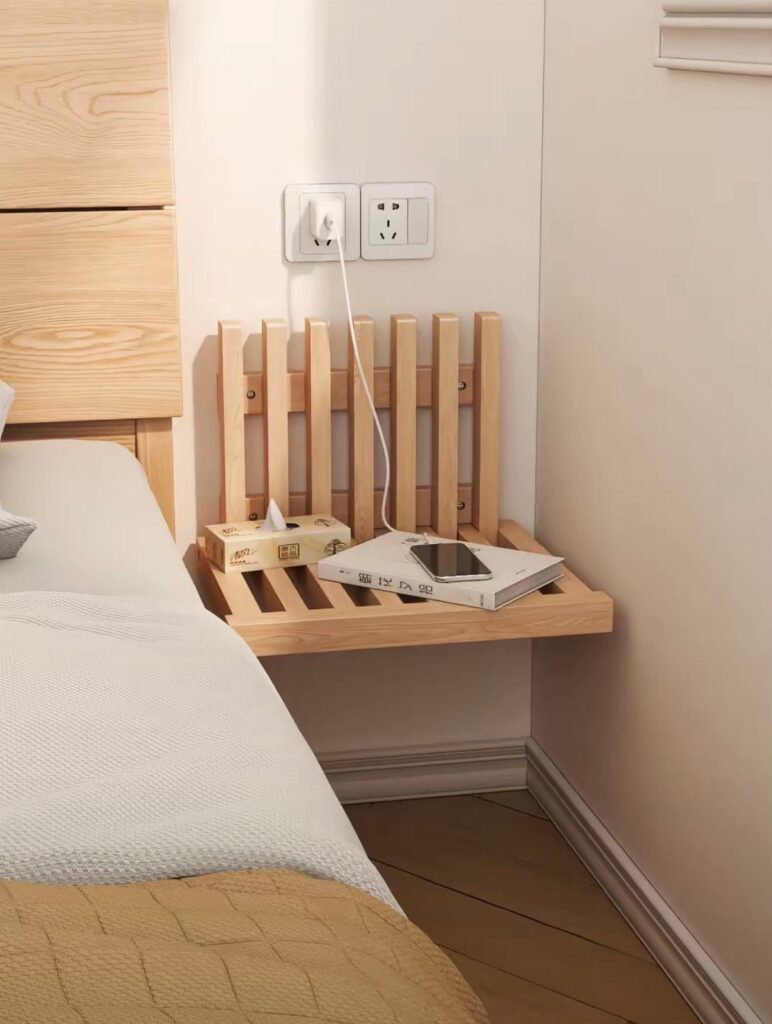
Which of these ideas fits depends on where the spare space in your room sits: under the bed, up on the walls, or behind the door.
Renters can stick with the movable end of the list, such as shallow bins on wheels, and anyone with a few spare hours can hang a corner shelf with a drill and a level.
1. Under Bed Storage Containers
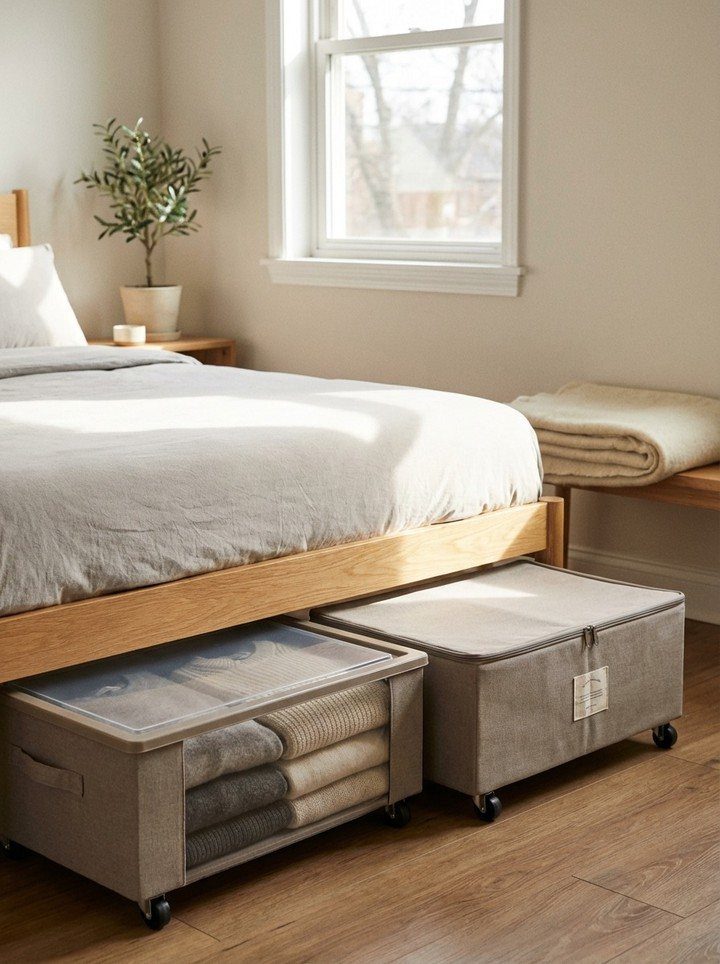
Shallow bins on wheels turn the dead zone beneath a bed into a pull-out closet for blankets, off-season sweaters, and spare linens.
Wheels matter more than people expect, because a bin you can slide out with one hand actually gets used.
A clear lid, like the one on the bin here, lets you see what’s inside without opening anything. Measure the gap between floor and frame first, since a bin that’s half an inch too tall just won’t fit.
Fabric bins in a neutral grey blend into a light wood frame and keep the room calm.
2. Rolling Cart
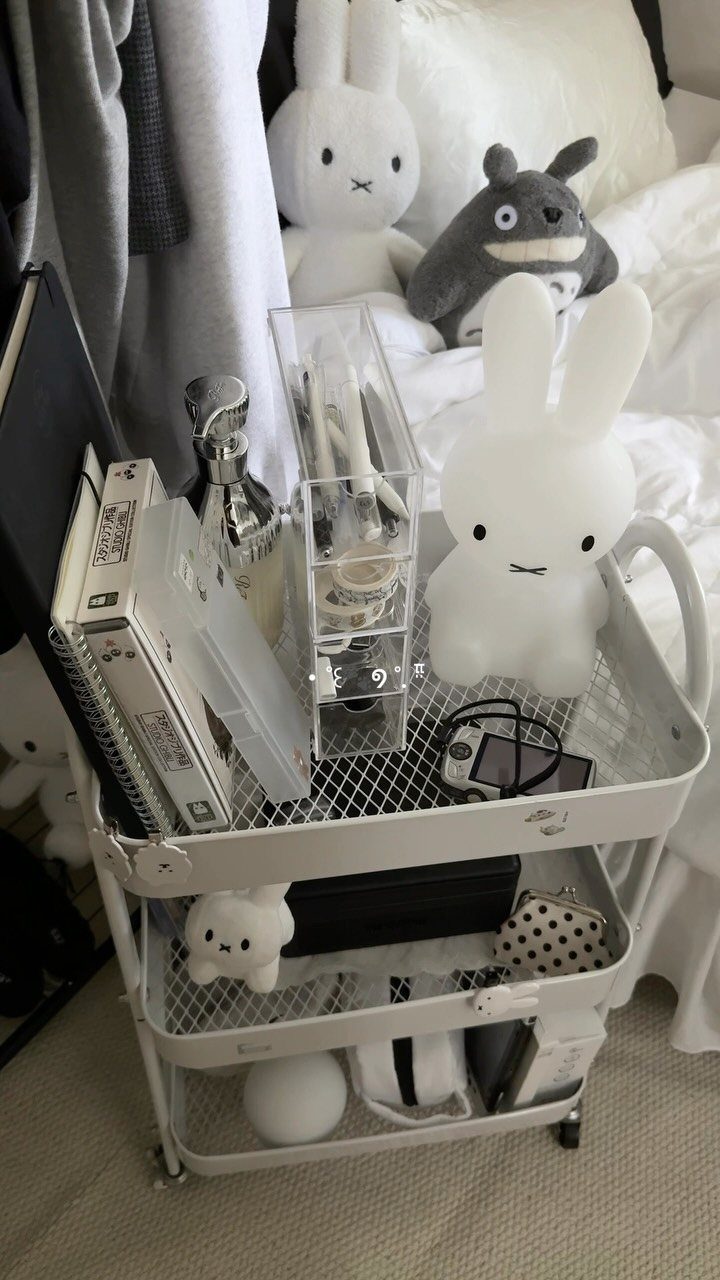
A three-tier cart earns its spot because it moves: roll it beside the bed at night, then park it in a corner during the day.
Each tier holds a different job, so a lamp can sit on top while stationery and toiletries stay sorted below in small organizers.
White is my pick for tight quarters because it fades into the walls. Keep the heaviest items on the bottom tier so the cart doesn’t tip when you roll it.
Small baskets or trays on each shelf stop things from sliding around.
3. Storage Sofa
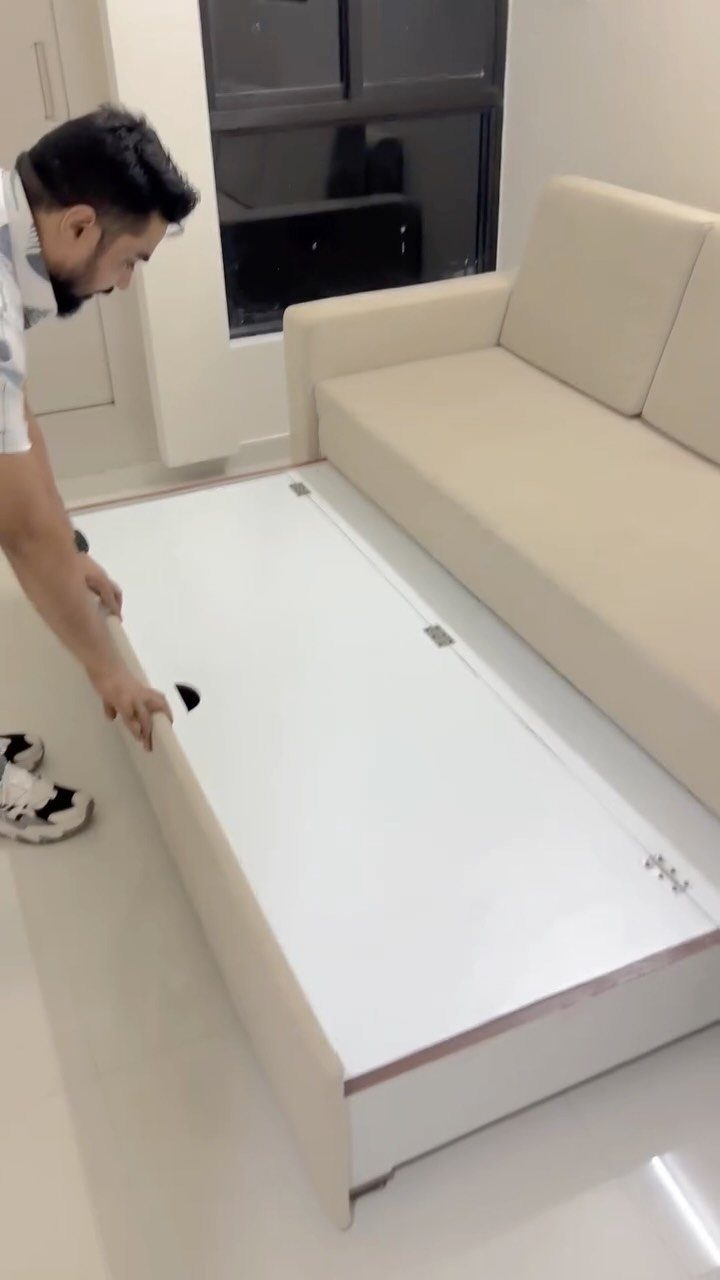
Lifting the seat or pulling out a drawer on a storage sofa gives you a hidden closet where a living room has no spare wall.
Blankets, pillows, and bulky seasonal items fit best here, since they’re light and rarely needed day to day.
A neutral beige keeps a compact room from feeling crowded. Before buying, check that the drawer or lid has clearance to open fully in your layout, because a sofa pushed tight against a wall can lock its own storage shut.
4. Corner Shelves
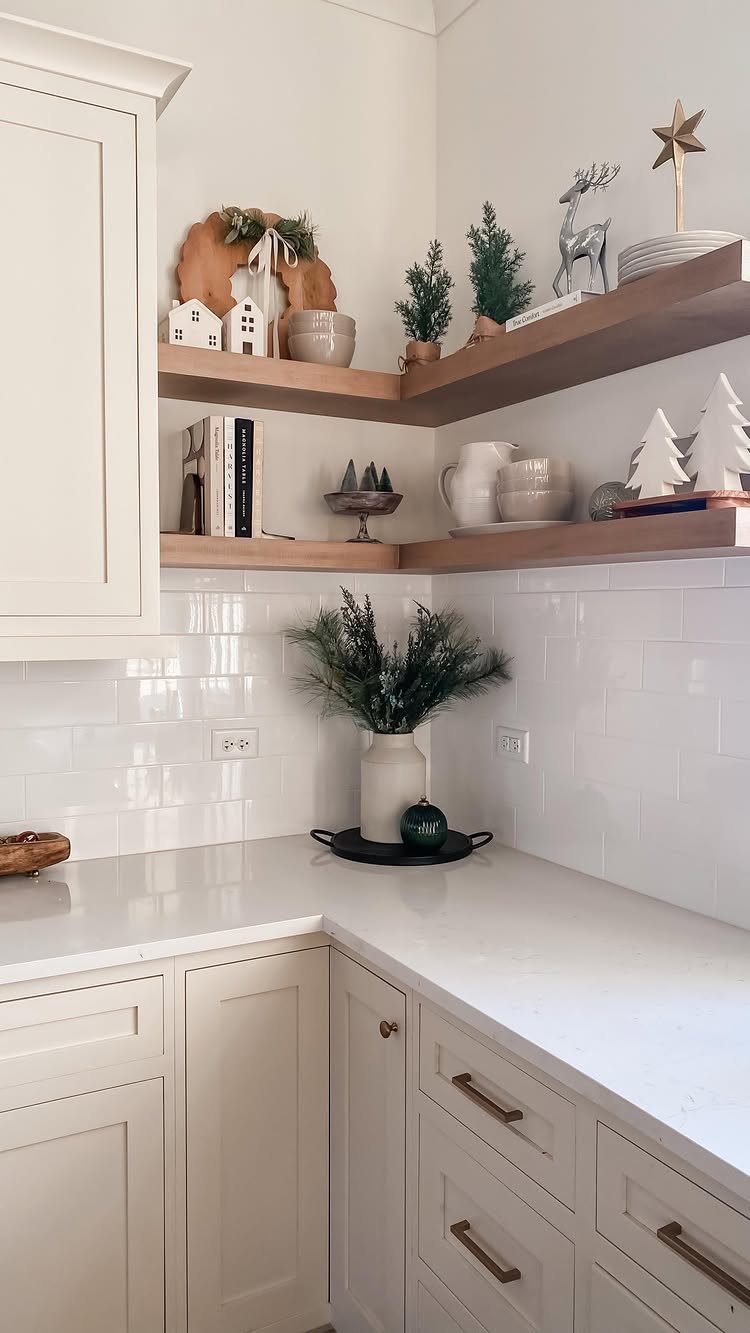
Corners are the wall space nobody uses, and a pair of wooden corner shelves fills one without eating any floor. Above a kitchen counter, they hold small decor and lightweight kitchenware at eye level.
Stagger 2 shelves rather than stacking a tall column, so the display stays airy. Keep the load light: corner shelves have small footprints, and heavy cookware belongs elsewhere.
Wood against a white wall adds warmth cheaply, and a single shelf takes only minutes to hang with a drill and a level.
5. Wall-Mounted Storage
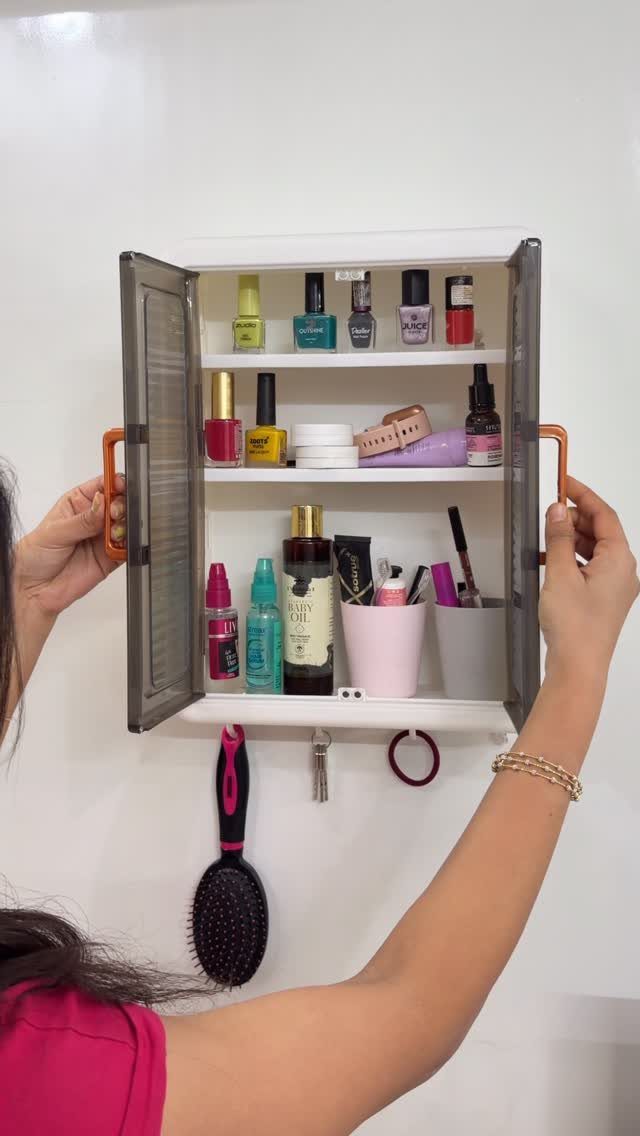
A shallow wall cabinet works best when the items are small, like the nail polish, skincare, and makeup stored in this white one. Because it hangs at hand height, it clears a dresser or counter completely.
Hooks along the bottom edge are the detail I’d copy: a hairbrush and keys hang there, so the cabinet does double duty as an entry drop zone.
Anchor into studs or use proper wall anchors, since a closed cabinet hides how heavy it gets once it’s full.
White blends into the wall and stays quiet.
6. Shoe Organizer
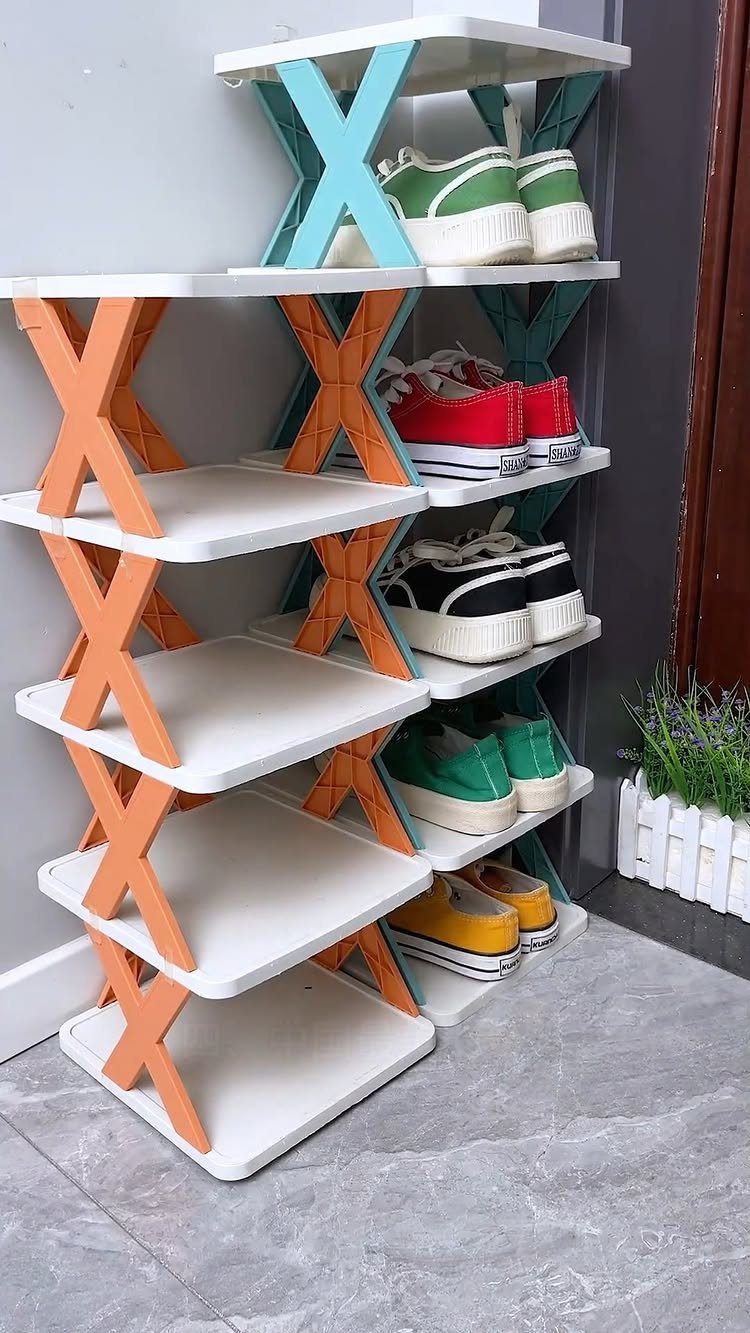
A narrow rack stacks shoes vertically, so a tall, skinny footprint replaces the pile by the door. This 6-tier version, according to its maker, is built for small spaces, and it holds a stack of sneakers with room for more.
I’d choose a narrow rack over a closet organizer when floor space by the entry is the only spare spot. Leave the bottom tier for your muddiest pairs, and set a tray beneath if the floor is tile or wood.
Rotate seasonal shoes elsewhere so the rack stays usable.
7. Trundle Bed
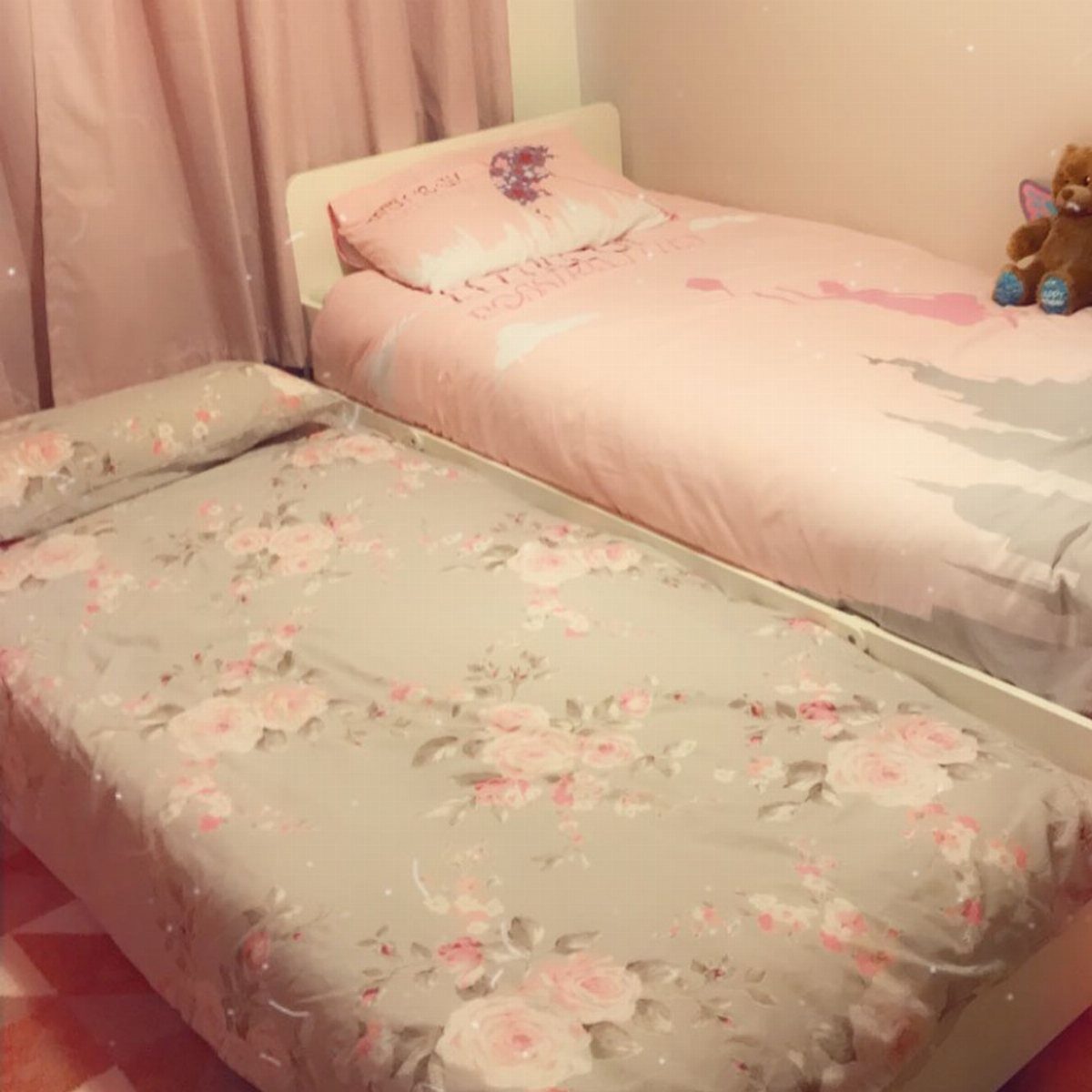
A trundle slides a second mattress out from under the first, so a small bedroom sleeps two without a permanent second bed. Pull the lower mattress out only at night and the floor stays clear all day.
Keep the bedding on both levels in the same color family, as in this room, and the pair reads as one bed.
Leave a few feet of open floor along the side where the trundle rolls out, or it will jam against a dresser.
8. Ottoman Benches
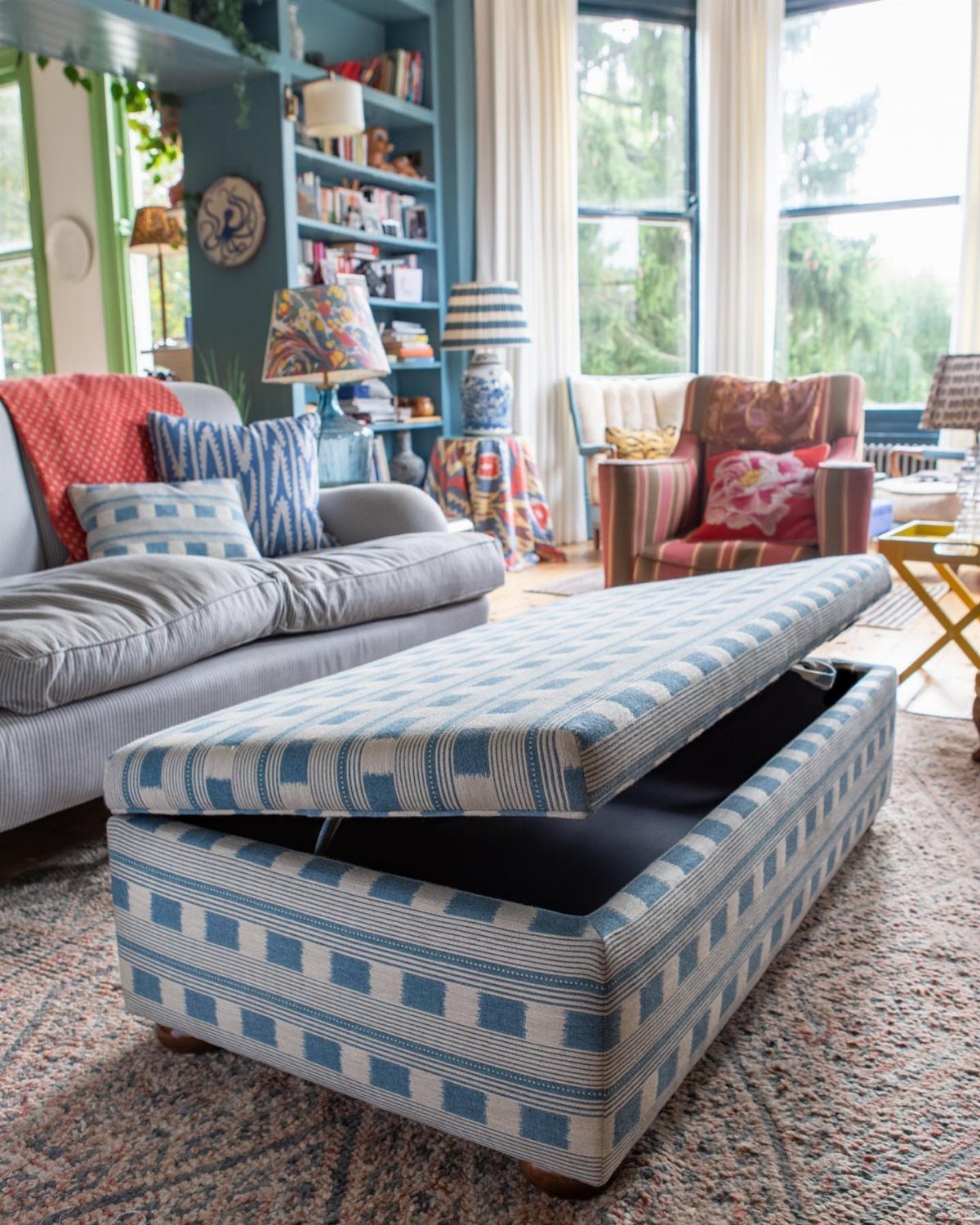
Open the lid of a storage ottoman and you find a hollow box that doubles as a seat, a footrest, and a place to hide throws, magazines, or kids’ toys.
A bold stripe like this blue and white one works best when the sofa behind it is a quiet solid. Pick one with a lid that stays upright when open, so you aren’t holding it while you dig around.
At the foot of a bed, a longer bench version holds spare bedding.
9. Over-the-Door Hooks
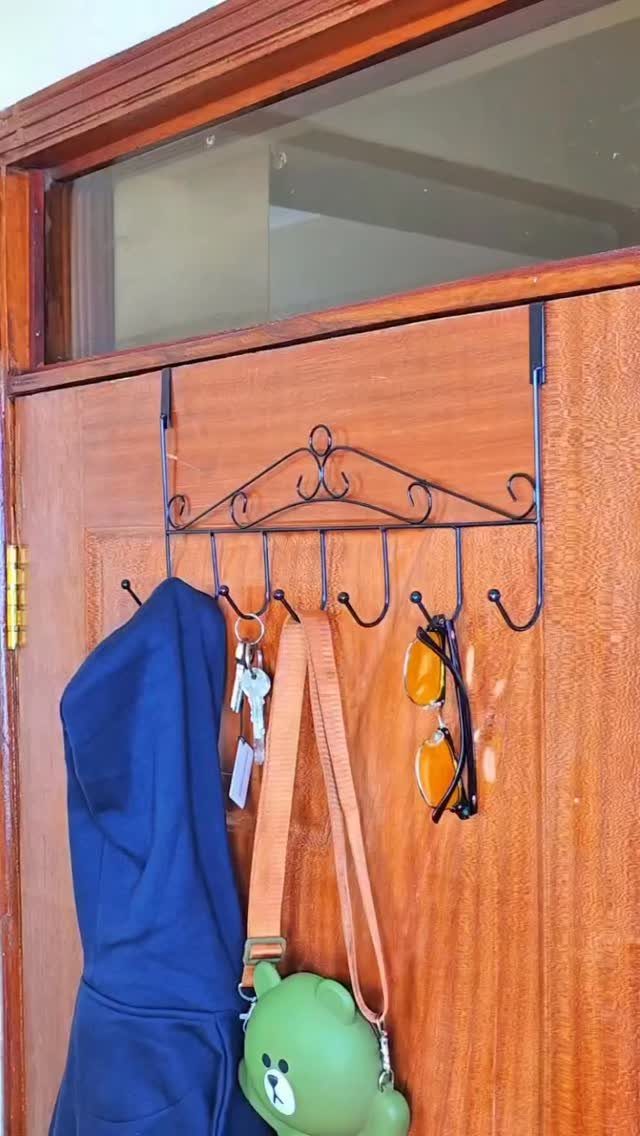
An over-the-door rack gives a bare door the job of a coat closet, with no drilling and nothing to patch when a lease ends.
Black metal, like this one, holds up to daily jackets, bags, and keys and looks tidy against a wood door. Hang heavy items on the outer hooks and lighter ones, such as sunglasses, in between so the rack hangs straight.
Measure the door’s thickness against the hook gap first, since hooks that don’t clear it will keep the door from closing.
10. Loft Bed with Integrated Storage
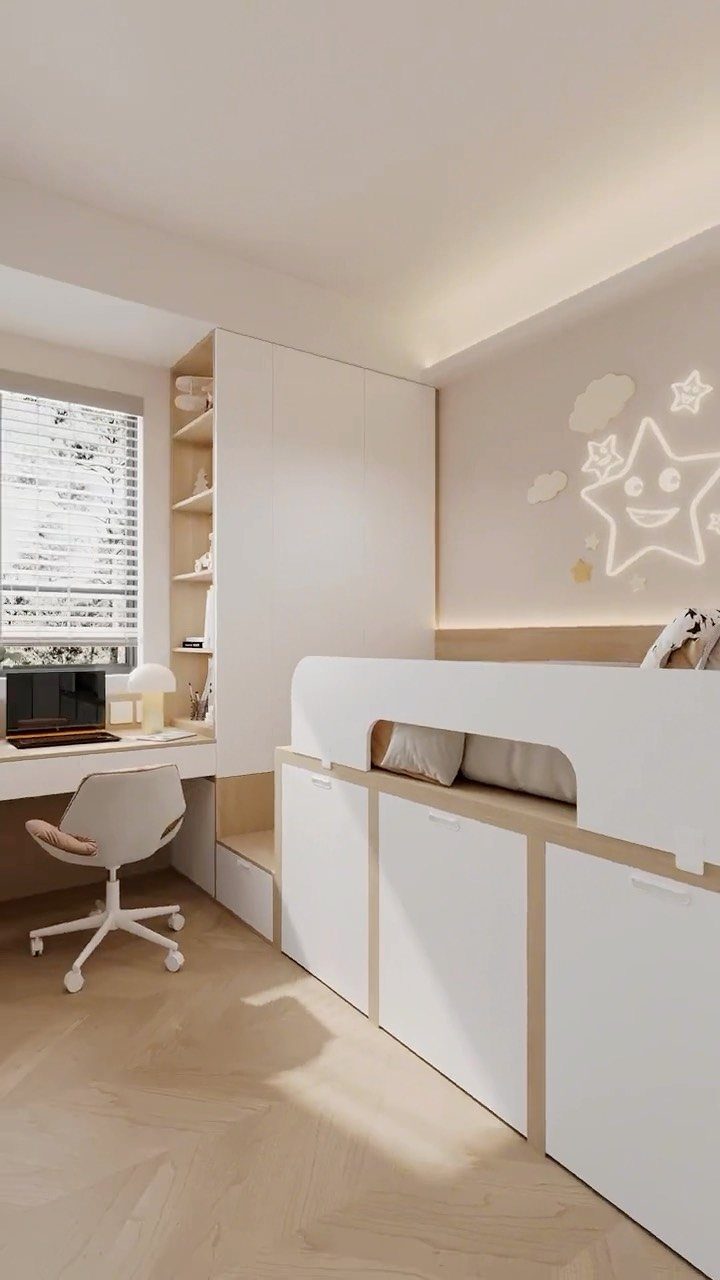
Raising the bed up high hands the whole floor beneath it to cabinets and a desk, which is how a small kid’s room gets sleeping, storage, and homework space in one footprint.
White cabinets under the bed keep the lower half bright instead of cave-like. Choose a frame with closed cabinets for clutter and one open shelf for things used daily.
Check your ceiling height first, since a loft bed leaves little headroom above the mattress, and I’d skip it for anyone who sits up fast in the morning.
11. Bed with Built-In Drawers
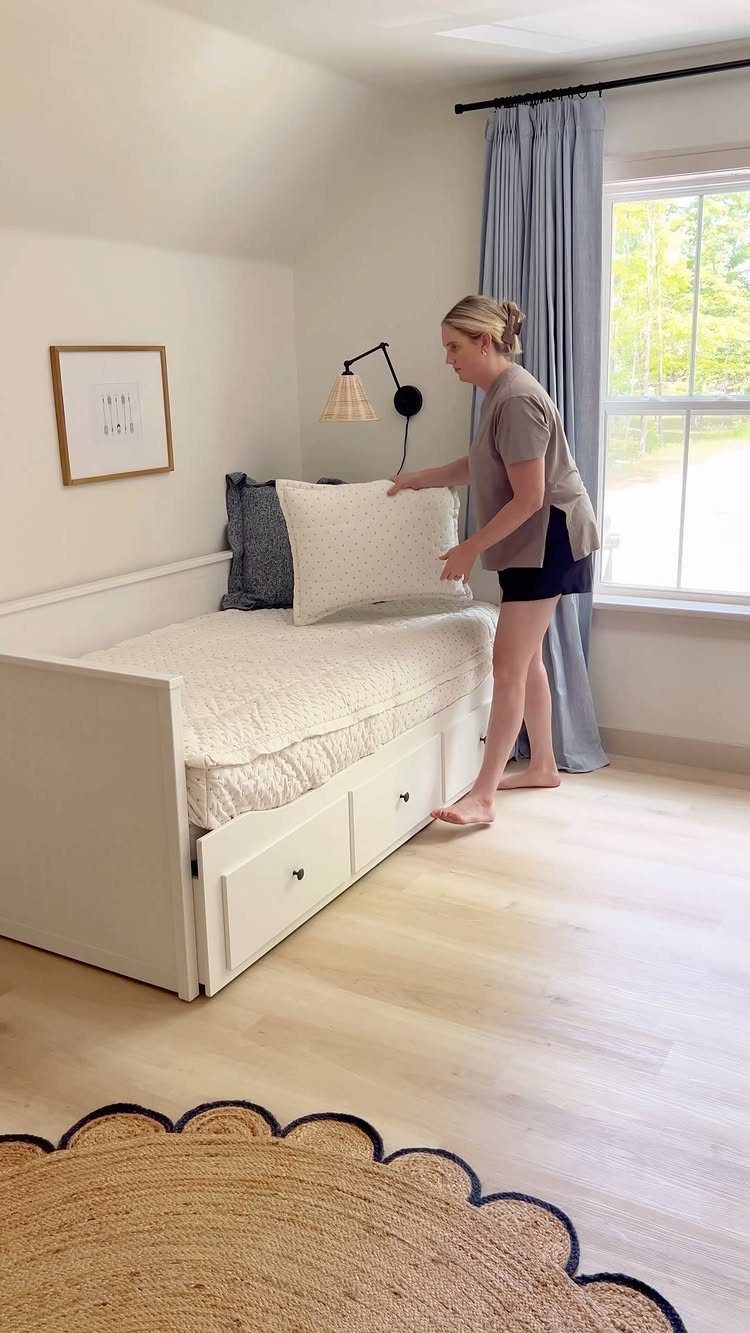
A daybed with drawers built into the base stores bedding without any extra furniture. According to its maker, the 3 drawers on the front hold a lot, and I’d put sheets and spare pillows there.
White blends into a bright room and looks right next to light wood floors. Leave enough open floor in front for the drawers to slide fully out.
Drawers beat lift-up lids when the bed sits against a wall, because you never have to move the mattress to reach anything.
“A well-organized space directly impacts how restful the room feels, which is why built-in storage beds are such a game changer.”
12. Bed Frame on Cubby Shelving
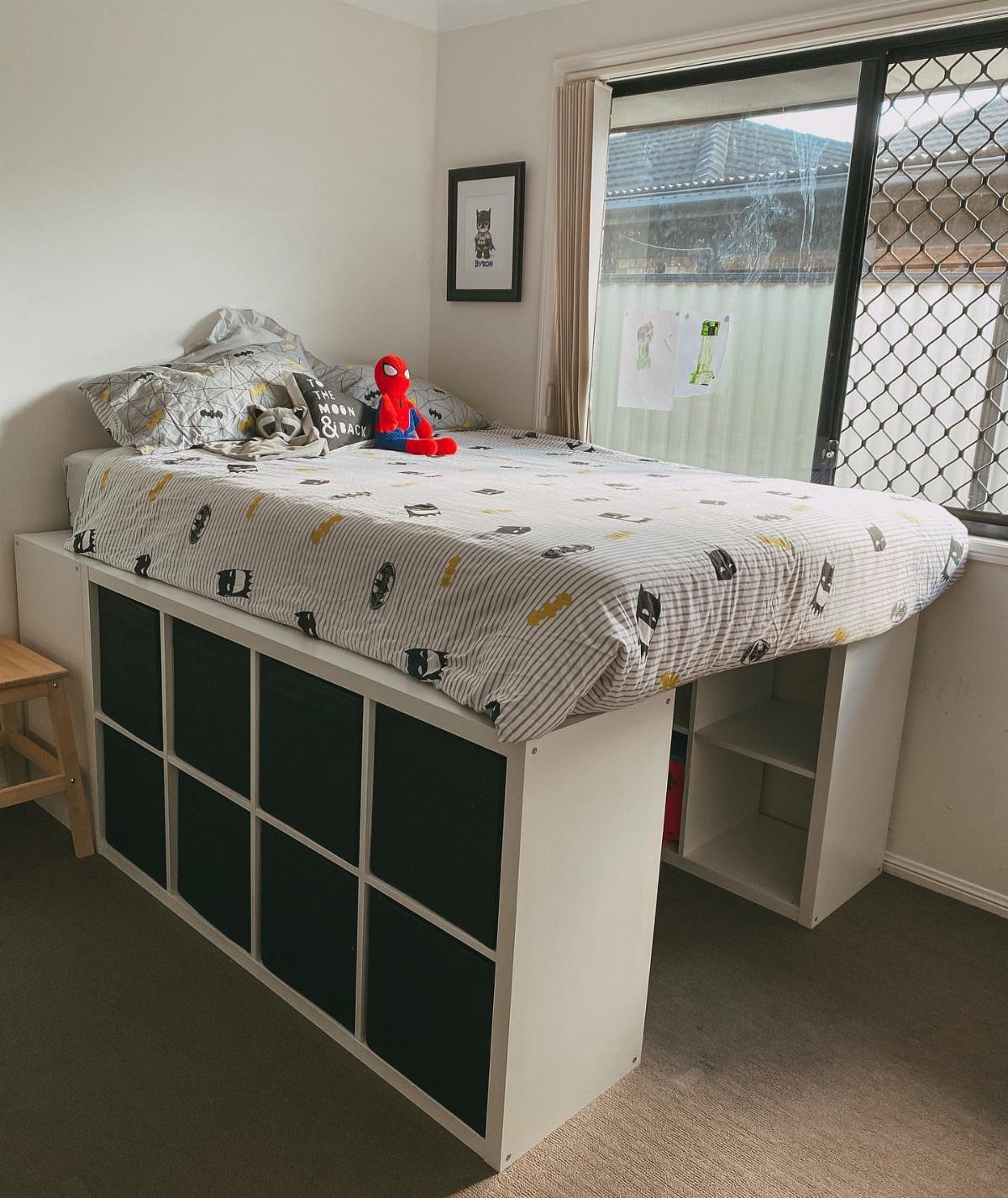
Setting a bed on cubby shelving swaps a bed frame for storage, and each cube takes a fabric bin you can pull out like a drawer.
Black bins on white units give a crisp, graphic look, and they hide scuffs better than light fabric. Make sure the units are sturdy and level, since they carry the mattress and sleeper.
Sort each bin by category and label the fronts so you aren’t pulling out four to find one sweater.
13. Storage for Small Kitchens
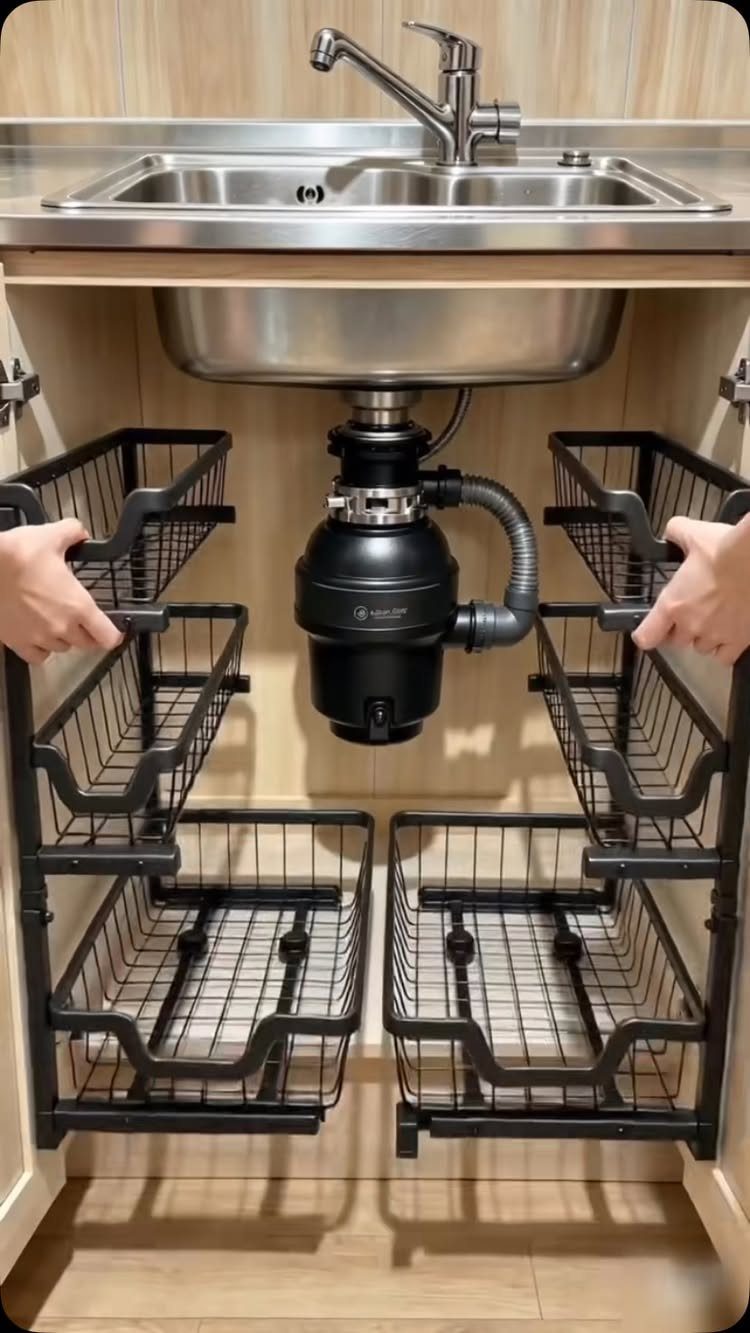
Pull-out wire baskets turn the cabinet under a sink into usable storage, since you slide the whole load toward you instead of reaching past the pipes.
Cleaning sprays, sponges, and dish soap sit in front, where a stack of bottles would normally hide.
Black wire reads sharper than chrome against light wood and keeps the cabinet looking tidy. Measure the opening around the disposal and drain before buying, because the baskets have to clear both when they slide.
Keep the heaviest bottles low and pushed to the back of each basket.
Maximizing Vertical Space
Height should come before width.
Skip the wide dresser for now and check how much height the room is wasting: a narrow tall cabinet, one good wall shelf, or a rack over the door can add more storage than floor furniture without costing any floor.
Keep the top shelves for things you touch a few times a year, such as labeled bins, spare bedding, duffel bags, and holiday decor.
Daily items belong at eye level or below, so you never have to grab a step stool to get them.
I’d also keep the vertical storage in one defined zone. One tall storage block on a single wall looks calmer than a handful of small shelves spread around, and the other walls stay open.
Furniture Arrangement Tips
Protect the main walkway first. Trace the path from the door to the bed, the window, and the closet, then place furniture around that line instead of squeezing a path through whatever is left.
Choose pieces that solve more than one problem, and don’t try to fill every blank wall. Leaving a wall mostly empty makes the whole space feel bigger than it is.
A desk braced between a wardrobe and a bookcase is a good model for a bedroom workstation: the furniture frames the desk, and nothing sticks into the floor. Matching finishes, such as a sanded-wood dresser nearby, keep the arrangement quiet.
Organizing Strategies
Sort what you own by how often you use it and how messy it looks, before buying any new storage. Sorting first stops you from handing the most convenient spot to the wrong things.
Everyday items stay within reach: remotes, chargers, books, throws.
Cords, game controllers, paper piles, cleaning supplies, and extra toiletries go behind doors or drawers. Seasonal linens, luggage, holiday decor, and off-season clothing can go up high or below furniture.
Declutter first, and ask 3 questions of each item: do I need it, do I like it, does it work? Broken items, unworn clothes, expired pantry food, chipped mugs, worn-out linens, and bulky unwanted furniture can go right away.





