Where the window sits on the wall decides which of these ideas is yours: a window at eye level near a neighbor calls for Frosted Windows or Window with Wooden Blinds, while Transom Windows and Slim Vertical Windows sit high or narrow enough to keep daylight without the audience.
The list runs from Frosted Windows, which a renter can handle in a weekend with film, to Skylight Windows, which means cutting into a roof and getting a quote from a pro.
Glass block falls in between, with ridged glass that blurs the view and a fixed pane that never opens.
1. Transom Windows
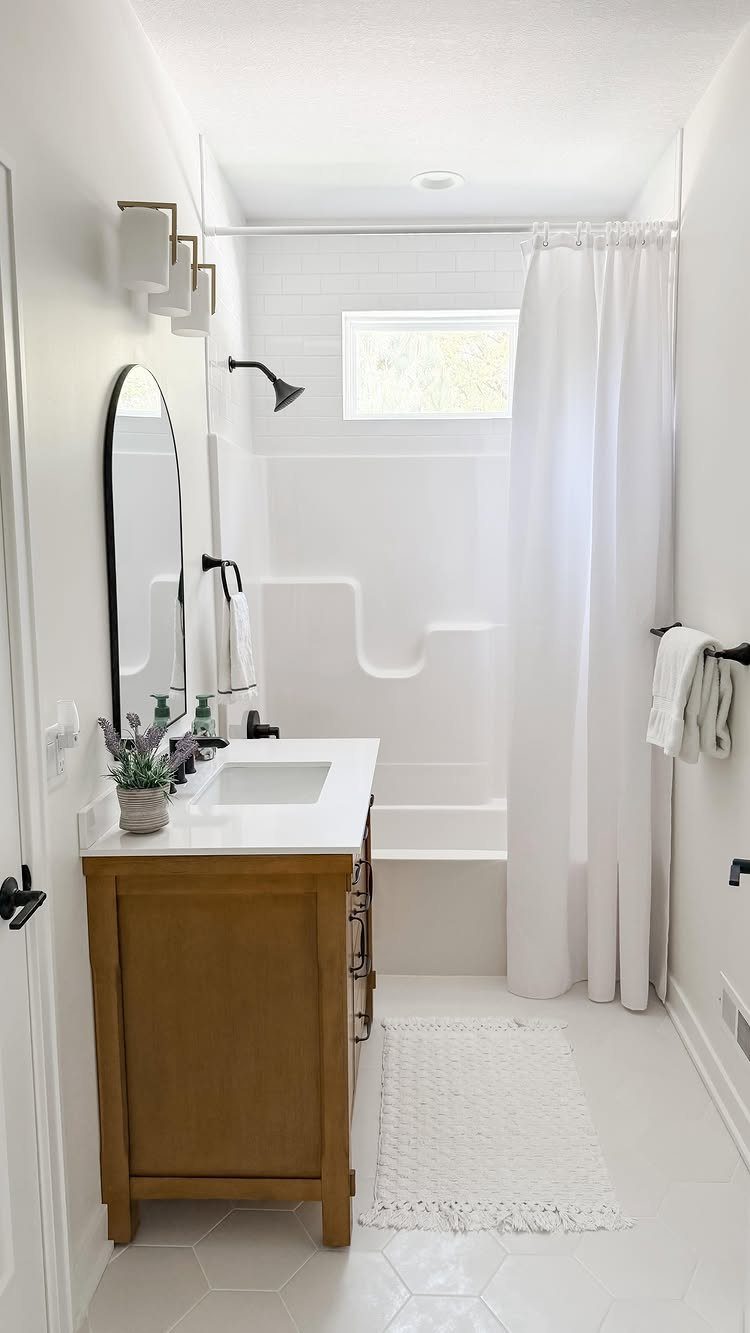
A transom sits high on the wall, which is why it works in a bathroom where the tub or shower is close to the neighbors or the street. Light comes in over everyone’s head, and nobody outside sees anything.
Above a tub, like this one, I’d keep the frame white to match the walls so the window reads as part of the room.
Pair it with a light shower curtain and daylight spreads to every corner, including the far wall by the toilet.
2. Frosted Windows
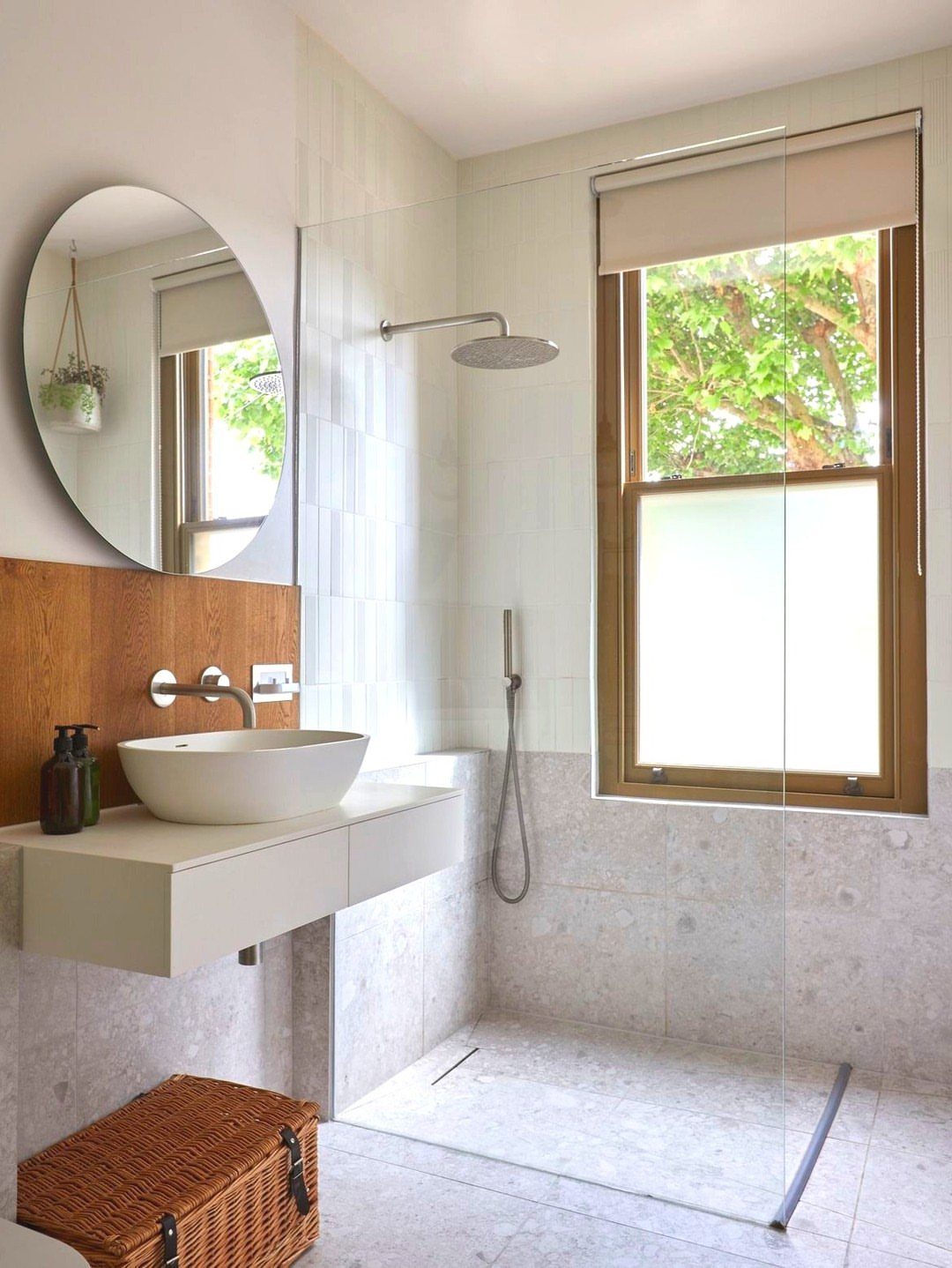
A frosted lower pane with clear glass above is my pick when the window sits at eye level and the bathroom has no room to move the fixtures.
The bottom half blocks the view in, and the top half still lets in daylight.
A roller shade adds a second layer for nights, when lit windows show more. Frosted film on existing glass costs far less than replacing the window, so renters should start there.
3. Casement Windows
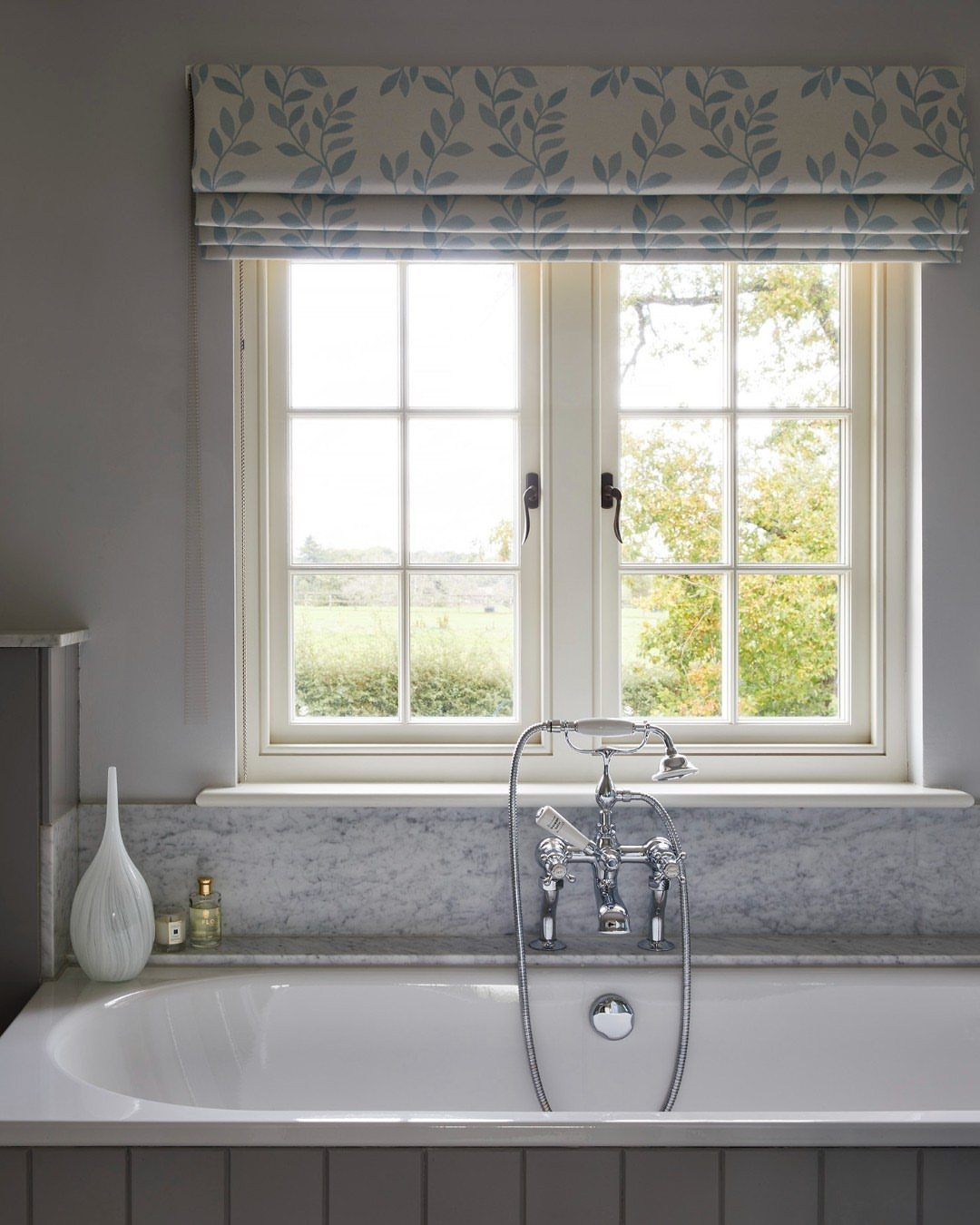
Casements swing out on a side hinge, so the whole sash opens and air moves through a steamy bathroom better than with a sliding window.
Moisture lingers on the walls of compact bathrooms, and an opening sash lets it out faster.
Above a tub, add a roman shade you can lower for privacy, and keep it in a washable fabric.
The trade-off: an outward swing needs clear space outside, and a crank within reach of the tub is easy to forget until you install it.
4. Skylight Windows
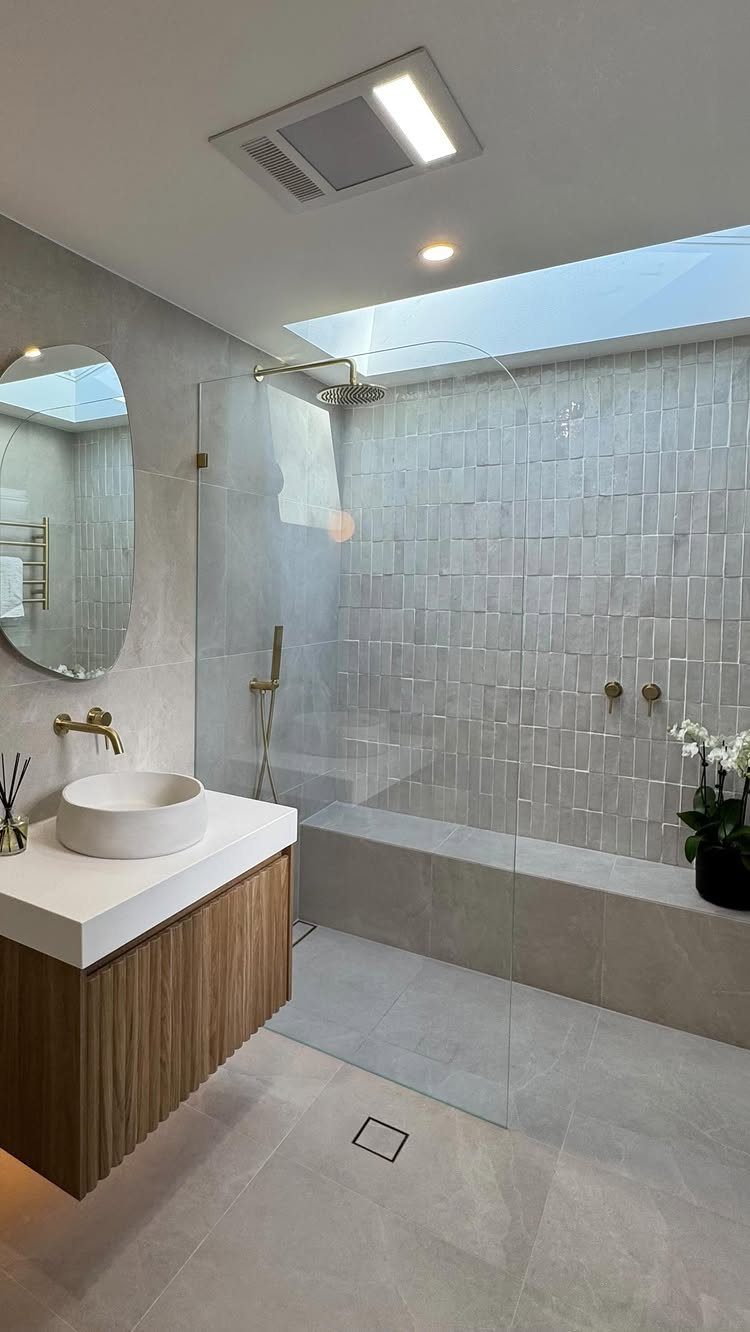
A skylight puts the light overhead, so the walls stay free for tile, a vanity, or a mirror, and no one can see in.
With no usable outside wall, a skylight is often the only way to bring daylight into a tiny bathroom.
Over a walk-in shower, grey tile like this takes on a softer glow. Cutting into a roof is not a weekend DIY job, so I’d price a pro before planning around it.
5. Stained Glass Windows
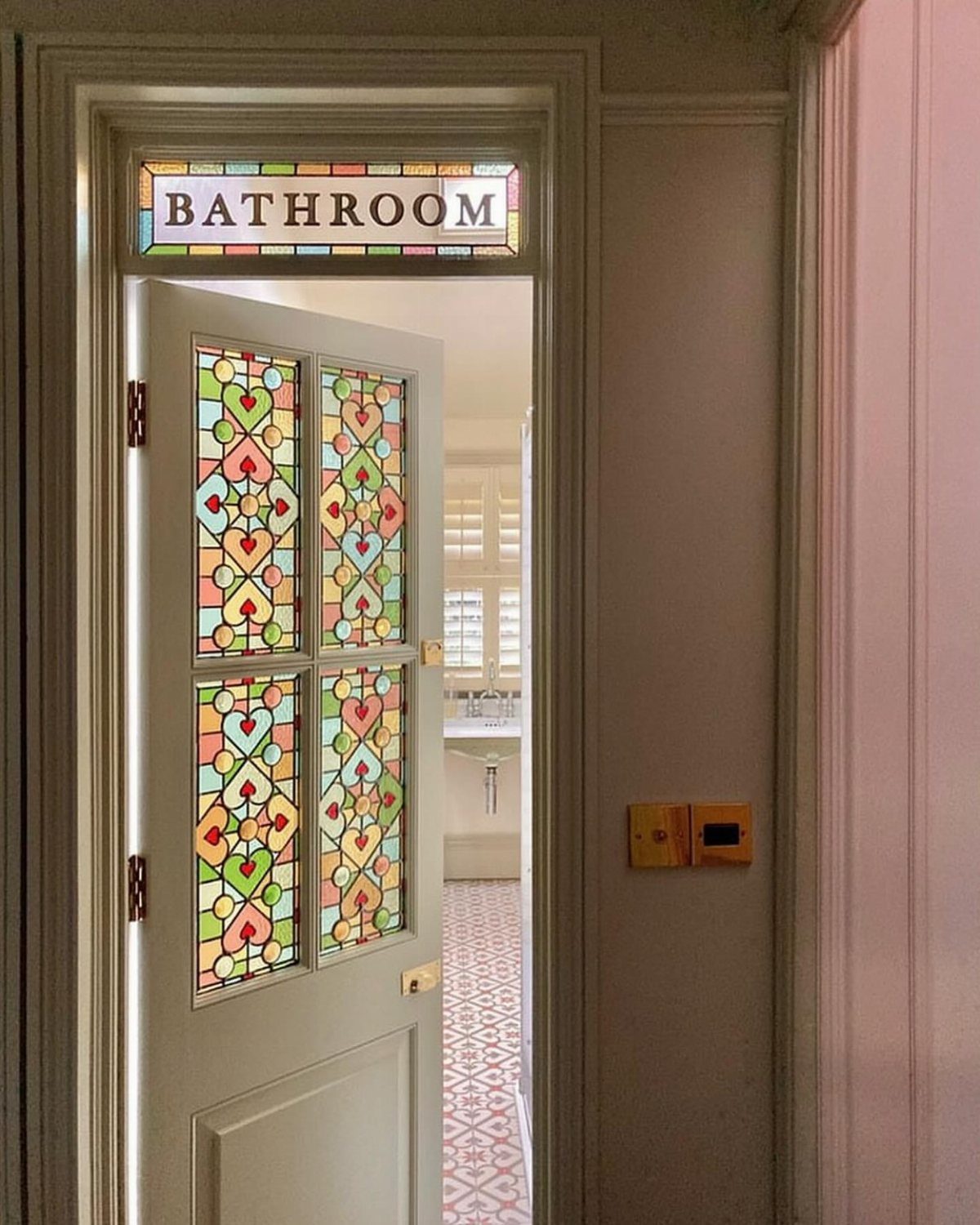
Stained glass turns a plain bathroom door or window into the focal point. The colored panels pass light and blur whatever is behind them, so privacy comes built in.
Panels in a door, as here, bring color without touching the wall.
A patterned floor tile can compete with busy glass, so I’d go plain on the walls, vanity, and fixtures. Stained glass is a good option when you want character more than a clear view.
6. Slim Vertical Windows
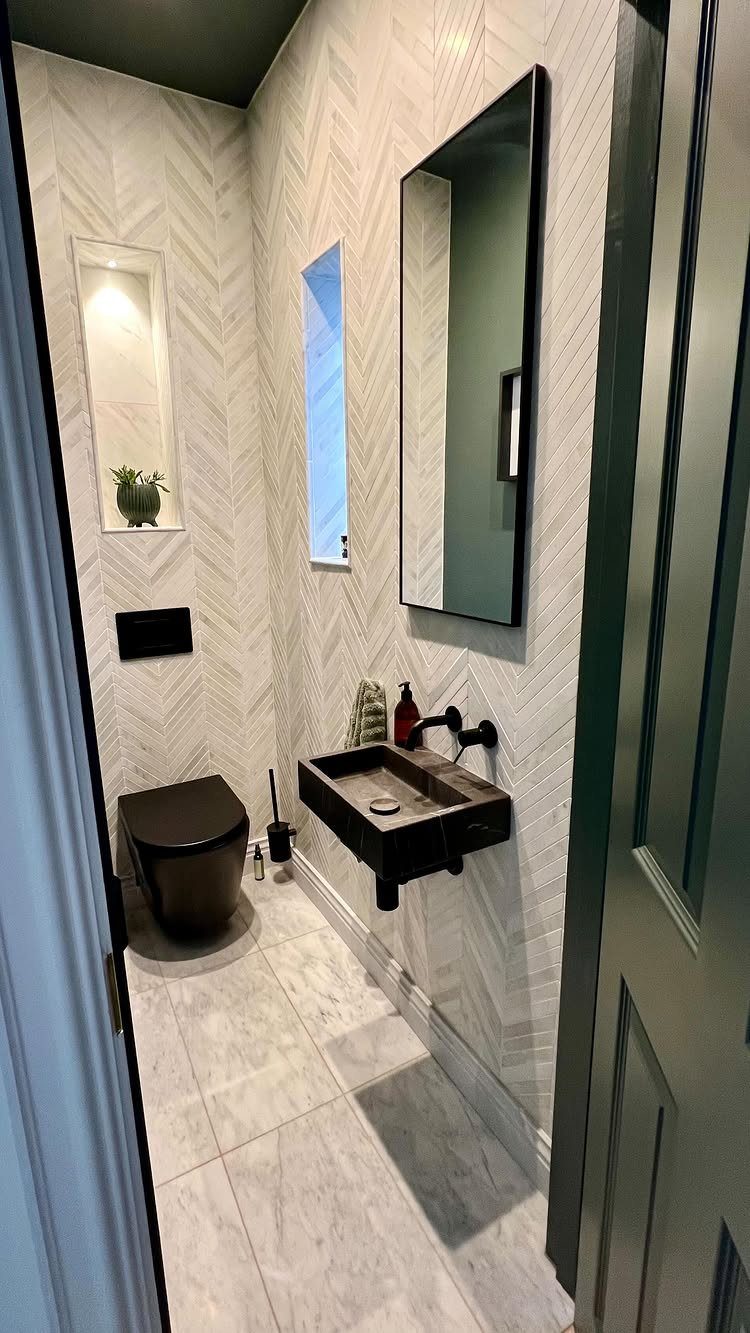
A slim vertical window draws the eye upward, which makes a narrow bathroom feel taller than its footprint. It also fits between fixtures or tile runs where a wide window never could.
Against white herringbone, a narrow opening looks deliberate rather than leftover.
I’d keep the trim simple and the frame close to the wall color. A narrow window lets in less light than a wide one, so glossy tile helps by bouncing what comes in.
7. Glass Block Windows
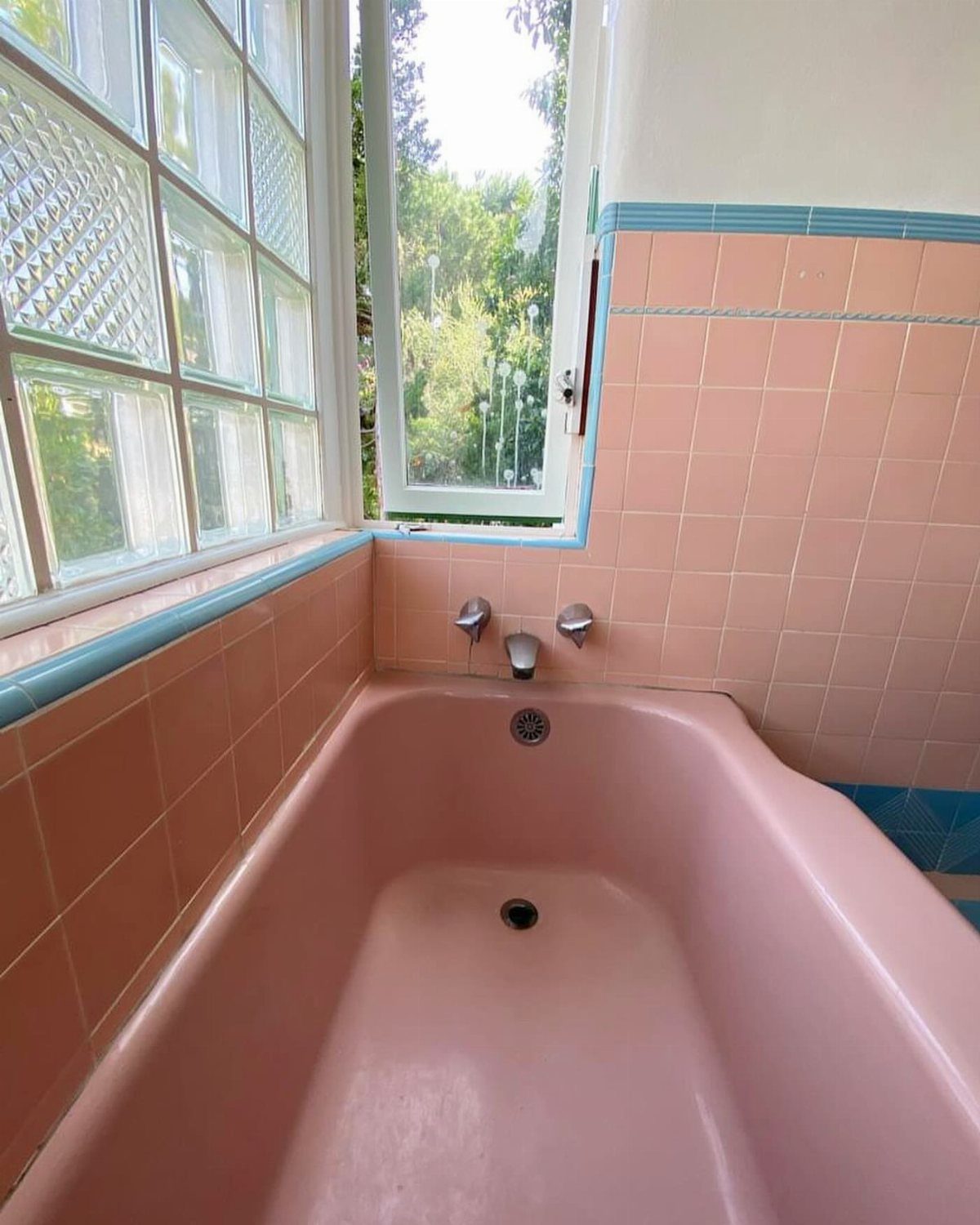
Glass block lets daylight through while the ridged, bubbled glass blurs everything outside, so privacy is built into the material.
Beside a tub, as here, it can sit right next to a clear window, and the two together give you light plus a view of the trees.
Pair it with a narrow opening that actually opens, because glass block itself is fixed.
Around glass block, I’d lean into the tile instead: a soft pink paired with a pale blue gives the textured glass a playful partner, as long as both colors stay muted and the grout stays light.
8. Window Over the Bathtub
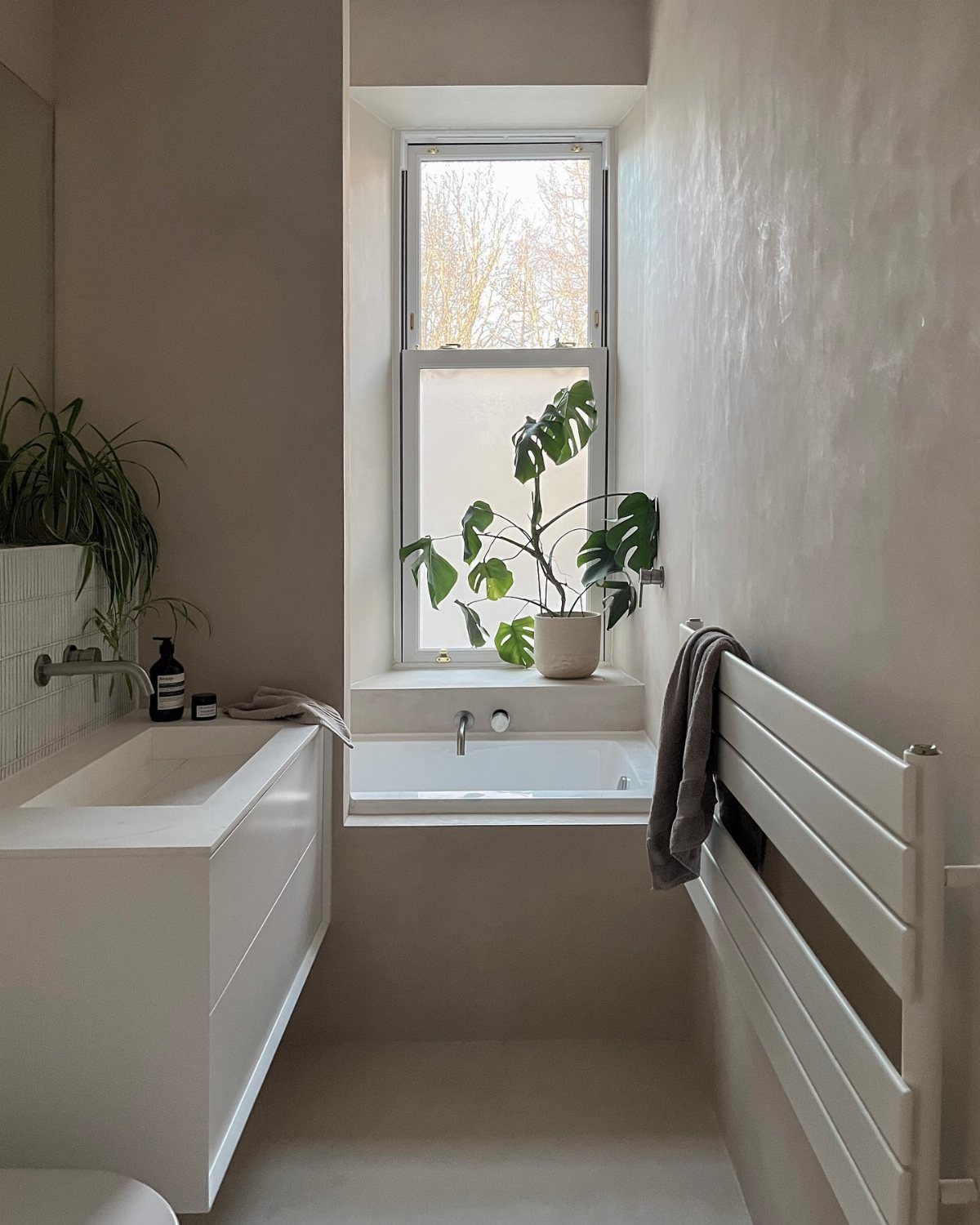
A window over the tub puts the brightest light in the room right where you bathe, and the sill above the faucet makes a handy shelf for a plant.
A Monstera like this one likes the light, and the steam suits it too.
Keep the wall and trim white so the window disappears into the room.
In a tight space, I’d skip a heavy curtain and use a shade you can lower when you need privacy. Check that the sill can handle splashes and a pot’s weight.
9. Window with Wooden Blinds
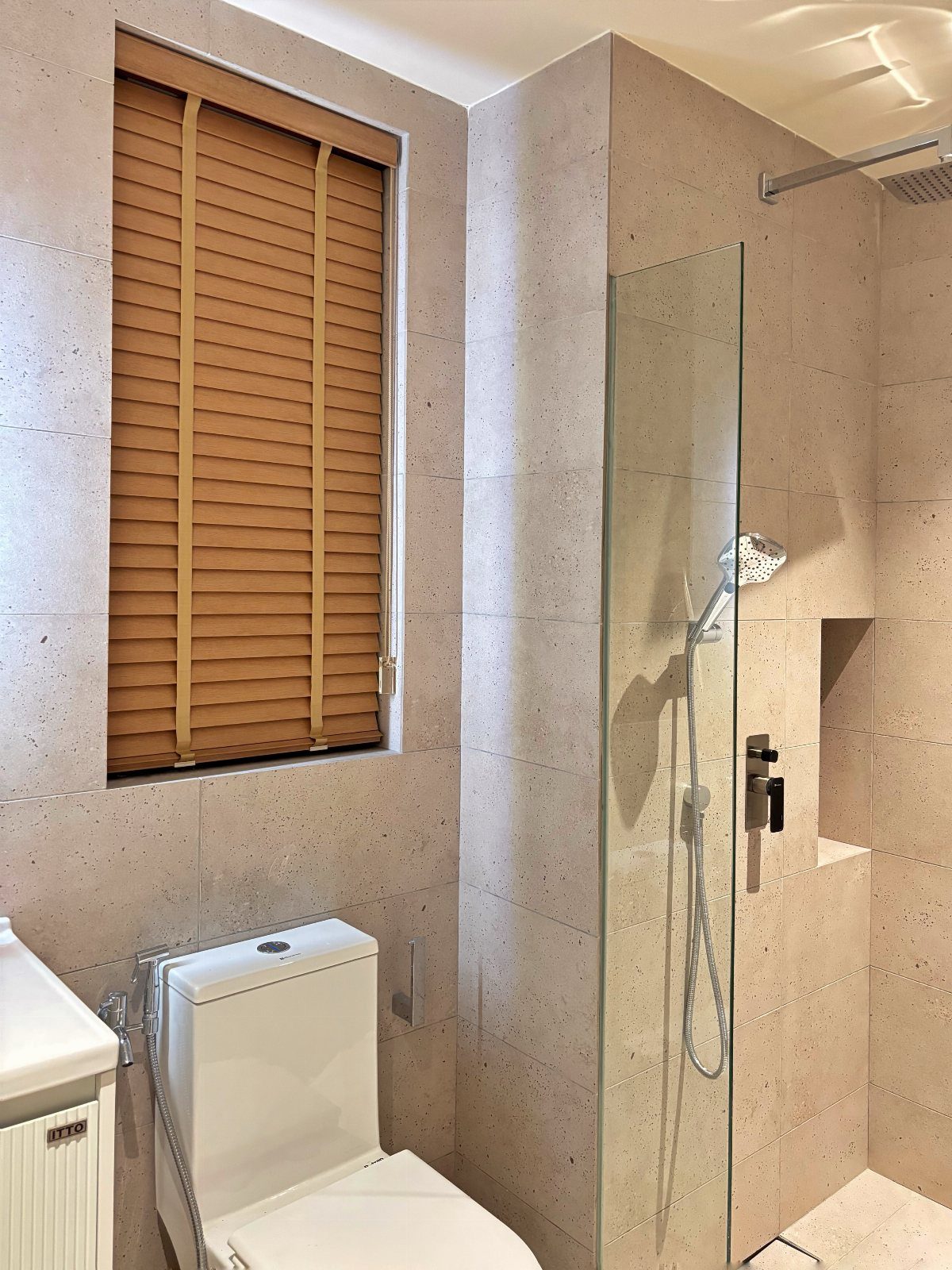
Wooden blinds bring warmth to a bathroom full of tile, and closed, they handle privacy in one move. Against beige tile, a brown wood tone reads as a deliberate choice rather than an add-on.
Steam and splashes are hard on real wood, so I’d choose faux wood slats if the window sits near the shower.
Mount the blinds inside the window frame to keep the look tidy, and wipe them down with a damp cloth.
Importance of Bathroom Windows
Daylight also helps a damp bathroom stay healthier, since UV exposure slows some mold and bacteria, and a window does that job in a way a light fixture never will.
Daylight also shows tile, paint, and finishes in their true color, so I’d judge grout and paint samples next to the window before committing.
During the day, a window cuts the need for artificial light and can reduce how often you run the exhaust fan, which means less noise and less energy.
If the wall is deep, treat that depth as a feature.
Give the window a deep sill and you get a shelf for free, with room for a bar of soap, a small pot of pothos, or the few things you reach for every day.
Buyers also respond to a bathroom with natural light, so a window helps the home’s value and curb appeal.
Color also plays an important part in how spacious a bathroom feels.
Privacy Solutions for Bathroom Windows
Frosted or privacy glass is the option I’d pick first, because it gives full privacy without cutting daylight.
Frosted film or textured glass suits a shower wall, the space over a tub, or any spot where you want the light but not the audience.
If replacing glass isn’t in the budget, window film is sold at most home stores and is easy to apply yourself.
For coverings, you have plenty of choices that anyone can install: roller shades, roman shades, mini blinds, venetian blinds, faux wood blinds, wood shades, and shutters. Near a shower, I’d lean toward the materials that tolerate moisture best.
Layering works well too: frosted glass for daytime, a shade for night.
Window Placement Tips
Place it above eye level and passersby can’t see in, yet daylight still comes through.
High-set horizontal windows also free the wall below for plumbing, shelves, or a cabinet, which matters most when floor space is tight.
If your layout is unusual, such as a sloped wall or a narrow gap between fixtures, price a custom size before settling for a stock window that leaves dead space.
A made-to-fit window costs more up front, but it can place light exactly where the room needs it.
Sketch the wall first, marking where the vanity, toilet, and shower sit, then choose the window height around them.
Frequently Asked Questions
What type of window do you put in a bathroom?
A casement is my pick when ventilation matters, since the whole sash swings open and lets steam out faster than a sliding window.
Sliders are common and more affordable, and awning windows are another popular choice. Pair any of them with frosted glass if the window faces neighbors or the street.
What should I put on my bathroom window for privacy?
Frosted or privacy glass is my first pick for a bathroom window, since it hides the view in and still lets the daylight through.
Renters or anyone without budget for new glass can press on frosted window film, which most home stores carry and which goes on in under an hour with a spray bottle and a squeegee.
Shades and blinds add a second layer, and near a shower I’d choose moisture-tolerant materials like faux wood slats.
Why don’t they put windows in bathrooms anymore?
Newer homes often skip them because mechanical ventilation is common, and a fan meets the usual code requirement.
A small one lets in daylight, helps a steamy room dry out sooner, and makes it harder for mold to settle in, which is why plenty of owners keep adding them.





