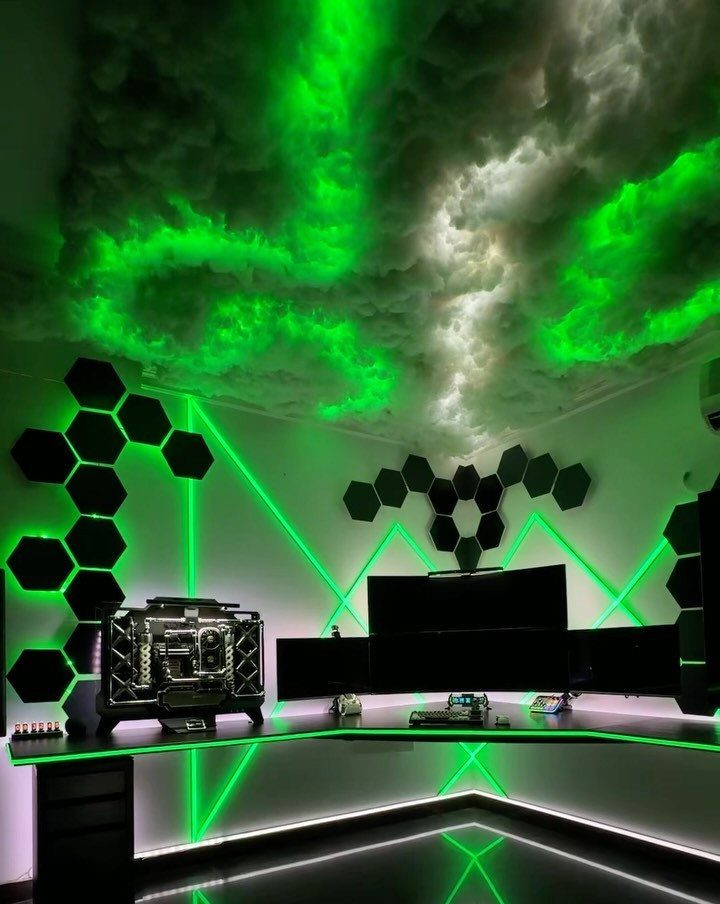
In a small game room, the floor you have left decides which idea is yours: if the room is already full, go up the walls with wall-mounted storage, a pegboard organizer, a poster grid, or lit console shelving, and if you still have a corner free, a hexagonal board game table or a bit of extra seating earns the space.
Options in this post range from a single strip of LED lights to a floating gaming setup, a compact desk, and a ping pong table with built-in storage.
1. Wall-Mounted Storage
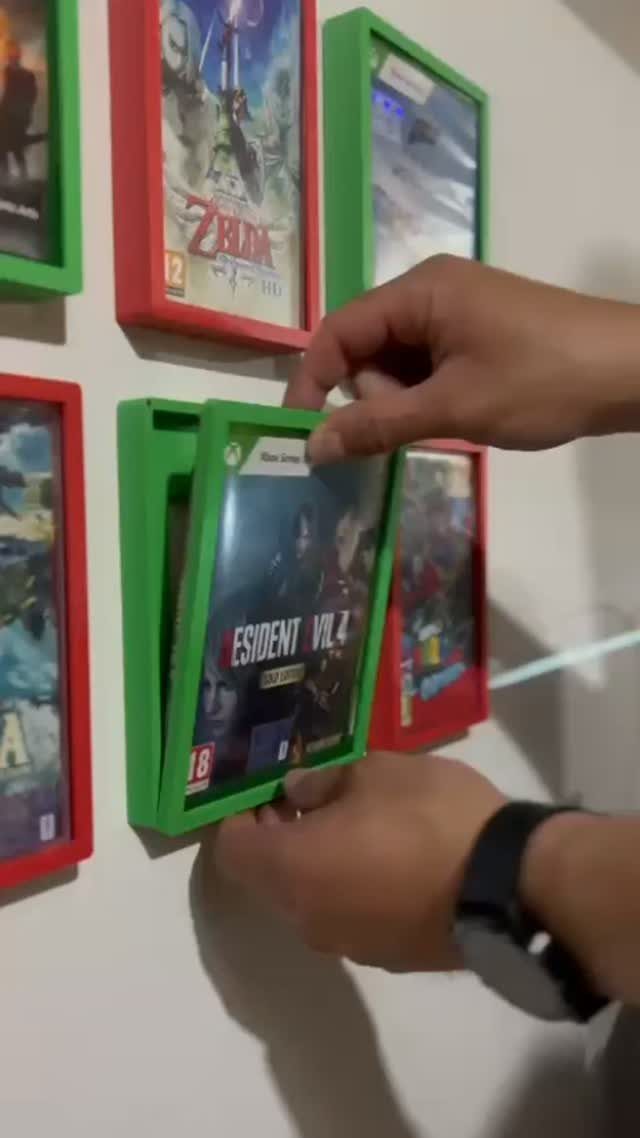
Game cases stored on the wall free up the shelf and desk space a tight room can’t spare.
Individual holders, especially ones in a bold color, keep each case facing out, so you can read a spine or cover at a glance.
Mount them in a grid or a loose row at eye level, and match the holder colors to the room so the wall looks planned. Cases that go back in with one hand mean the collection actually gets put away.
2. LED Lights
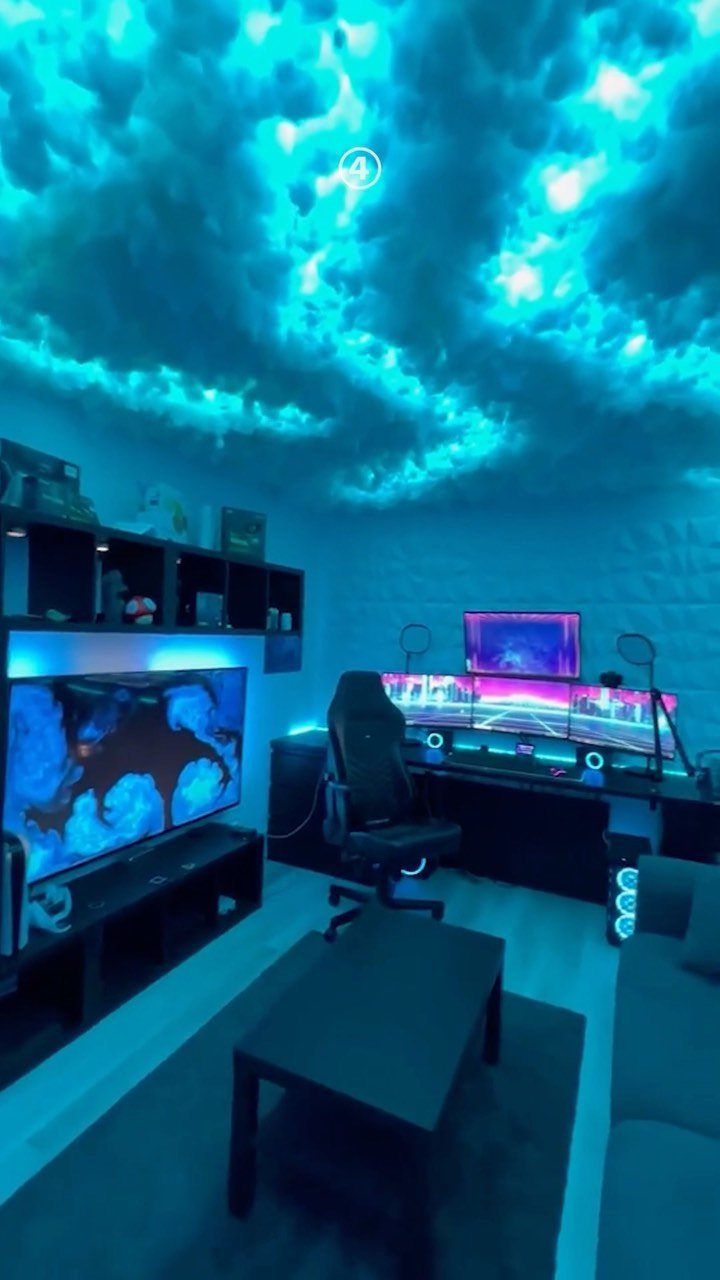
A glowing ceiling does more for a small gaming room than any piece of furniture, because the light fills the whole space instead of sitting in one corner.
Blue cloud-style LEDs overhead, as in this setup, give a low, even glow that keeps monitor glare softer than a bright bulb would.
I’d choose one color and stick with it. Mixing too many shades across the ceiling and desk makes a tight room feel busier and smaller, so pick one main color and one accent.
3. Choose a Theme
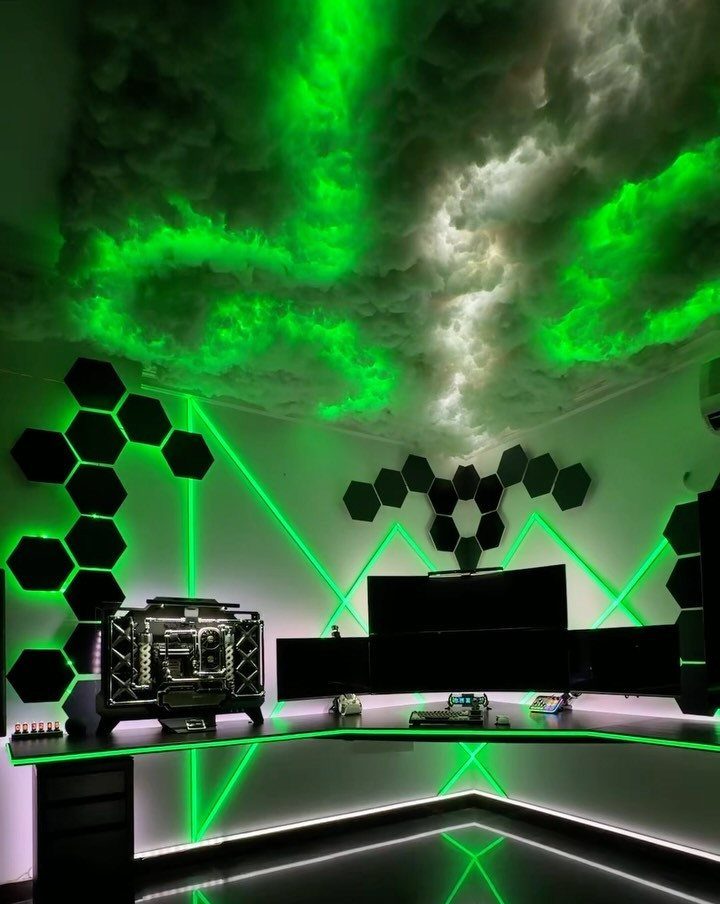
Pick one color and one shape, then repeat them until the room feels designed.
Pick one color for the LEDs, repeat a shape in the wall panels, and echo both overhead. That repetition is what makes a compact room look deliberate rather than crowded.
A theme also saves money, since it tells you what to skip. If a piece doesn’t fit the color or motif, leave it in the store.
Start with the wall, because panels and paint set the tone before any gear goes in.
4. Seating Space
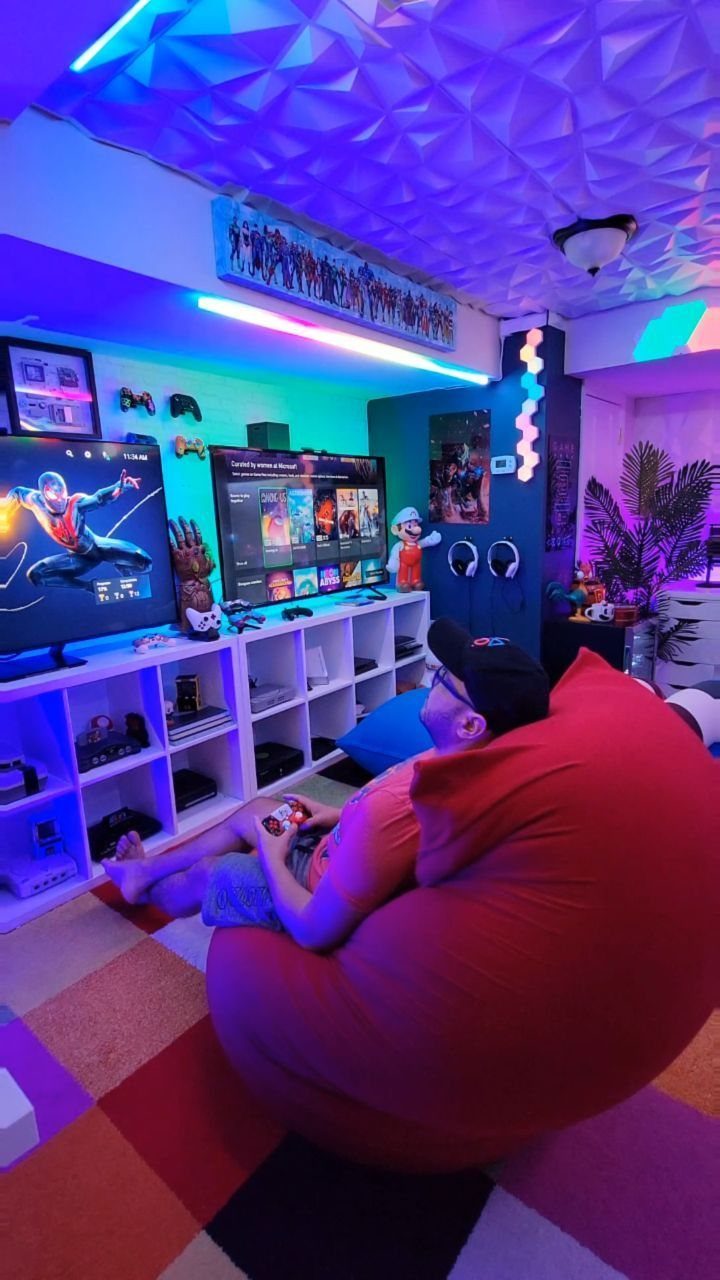
A bean bag is the seating I’d choose when floor space is tight. It has no frame, so it slides into a corner when you need the room and comes back out when friends show up.
The red one here sits low in front of the TV, which suits console play on a couch-free budget. Bean bags can seat a few people without a sofa, and they cost far less than one.
The trade-off: a bean bag gives less back support than a chair, so it’s better for casual sessions than marathons.
5. Ergonomic Gaming Chair
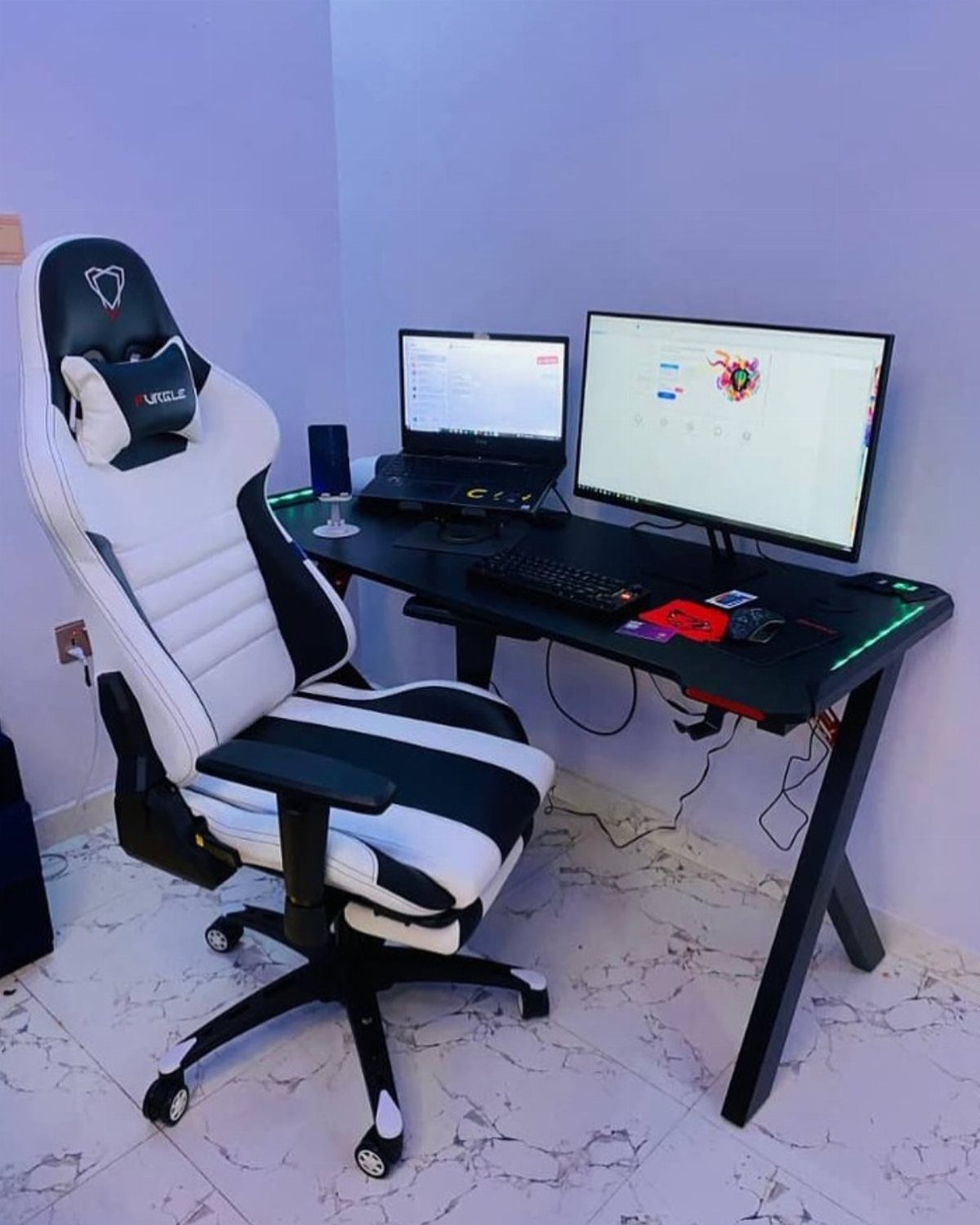
Long sessions punish a bad chair, and this is the one place in a small setup where I’d spend more than I planned.
A supportive seat at a dual-monitor desk like this one keeps you comfortable far longer than any lighting or decor upgrade.
Look for adjustable height and armrests, plus a backrest that supports your lower back. Test the chair against your desk before buying, since a chair that doesn’t slide under it eats floor space.
6. Floating Gaming Setup
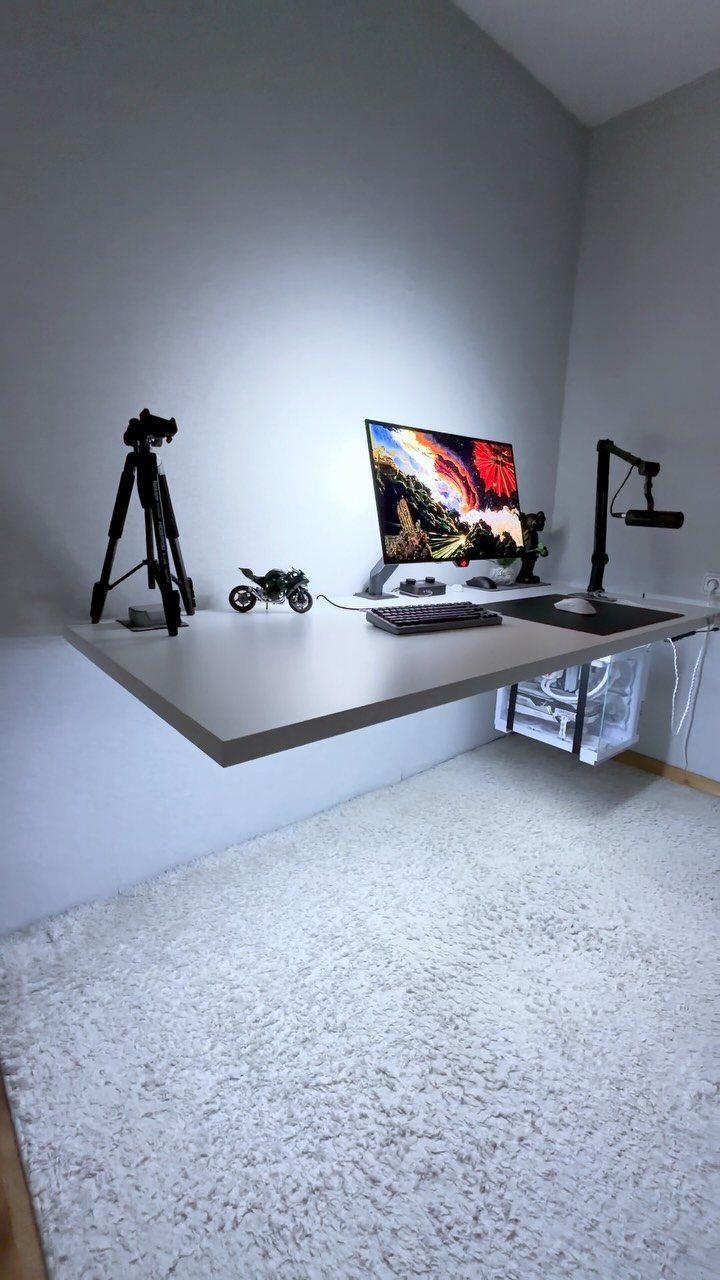
A floating desk leaves the floor open, which is a big gain when the room is small.
Fixed to the wall, it holds a monitor, keyboard and mouse at a clean white line, and the PC tower can sit beside it or below.
Anchor the desk into wall studs, not just drywall, because monitors and a tower add real weight. Keep cables tucked behind or along the wall so the open space underneath stays tidy.
A floating setup locks in one height and depth, so measure your seated elbow height before drilling.
7. Compact Gaming Desk Setup
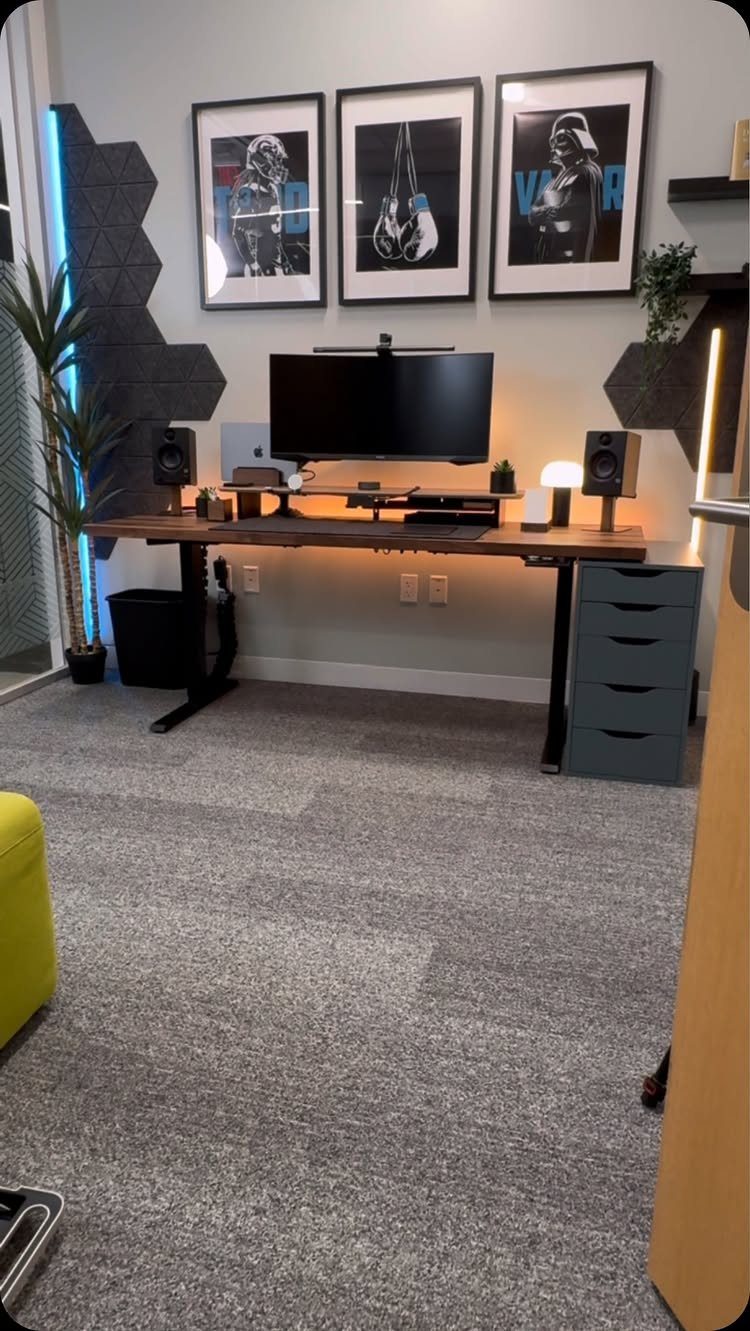
A desk this tidy comes from keeping the pieces few: one monitor, a pair of speakers, and a small drawer unit that holds everything else.
The drawers matter most in a tight room, because loose controllers and cables are what make a compact corner feel crowded.
Hexagonal acoustic panels on the wall add some sound control and double as decoration, so they earn their spot twice. I’d hang framed posters beside them rather than over them, keeping the wall to one pattern.
Carpet underfoot helps too, since it softens the room.
8. Hexagonal Board Game Table
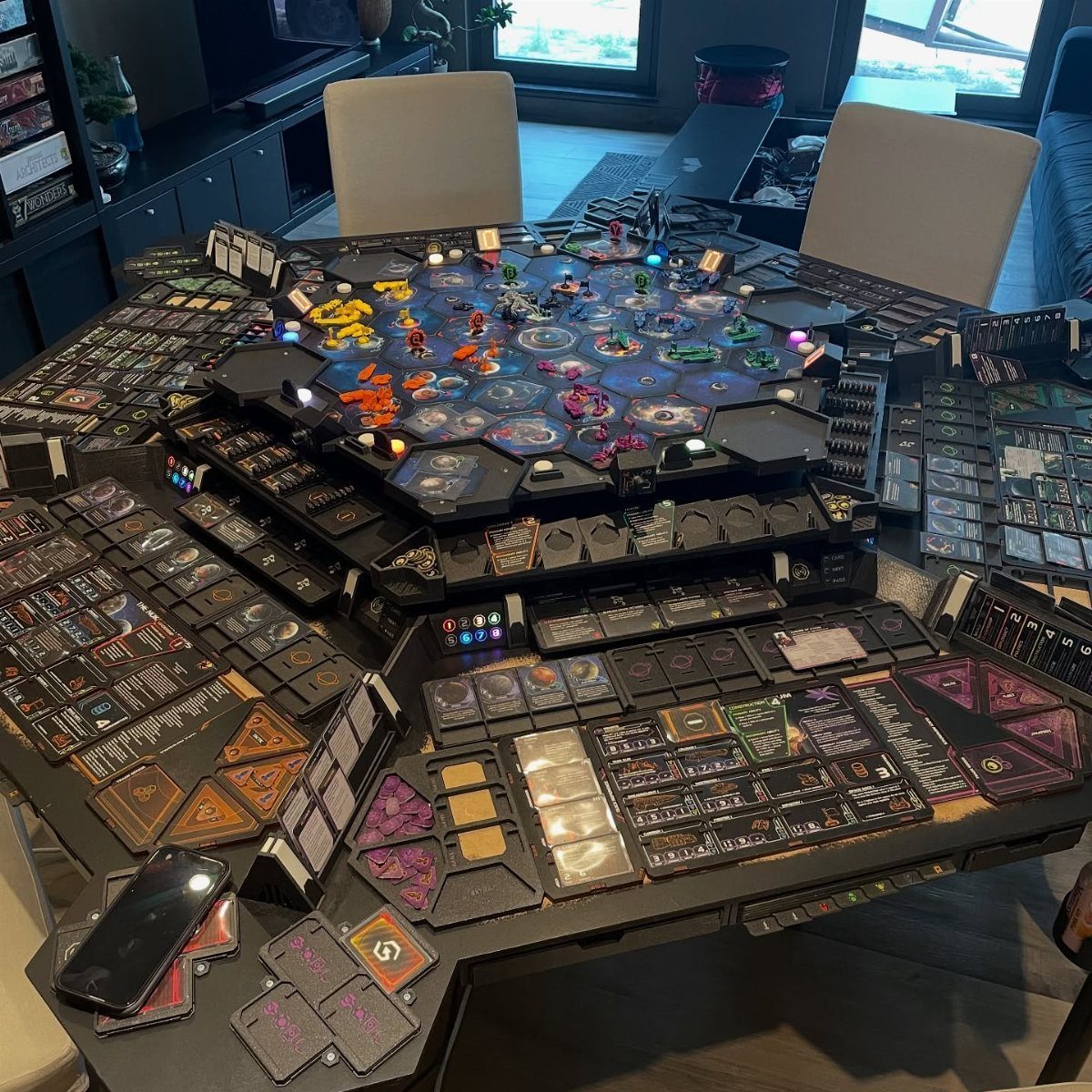
A hexagonal table gives every player an edge of their own, which a square table can’t do in a living room that has to hold a crowd.
Integrated LED lights and individual player stations keep cards, tokens and rules from spilling across one shared surface.
Because the table is a dedicated piece, I’d place it where 2 chairs can stay pulled up to it permanently.
Leave walking room on every side before you commit, since a hexagonal top takes up more floor than it looks like it will.
Black reads sleek in a light room, though it shows dust.
9. Ping Pong Table with Built-In Storage
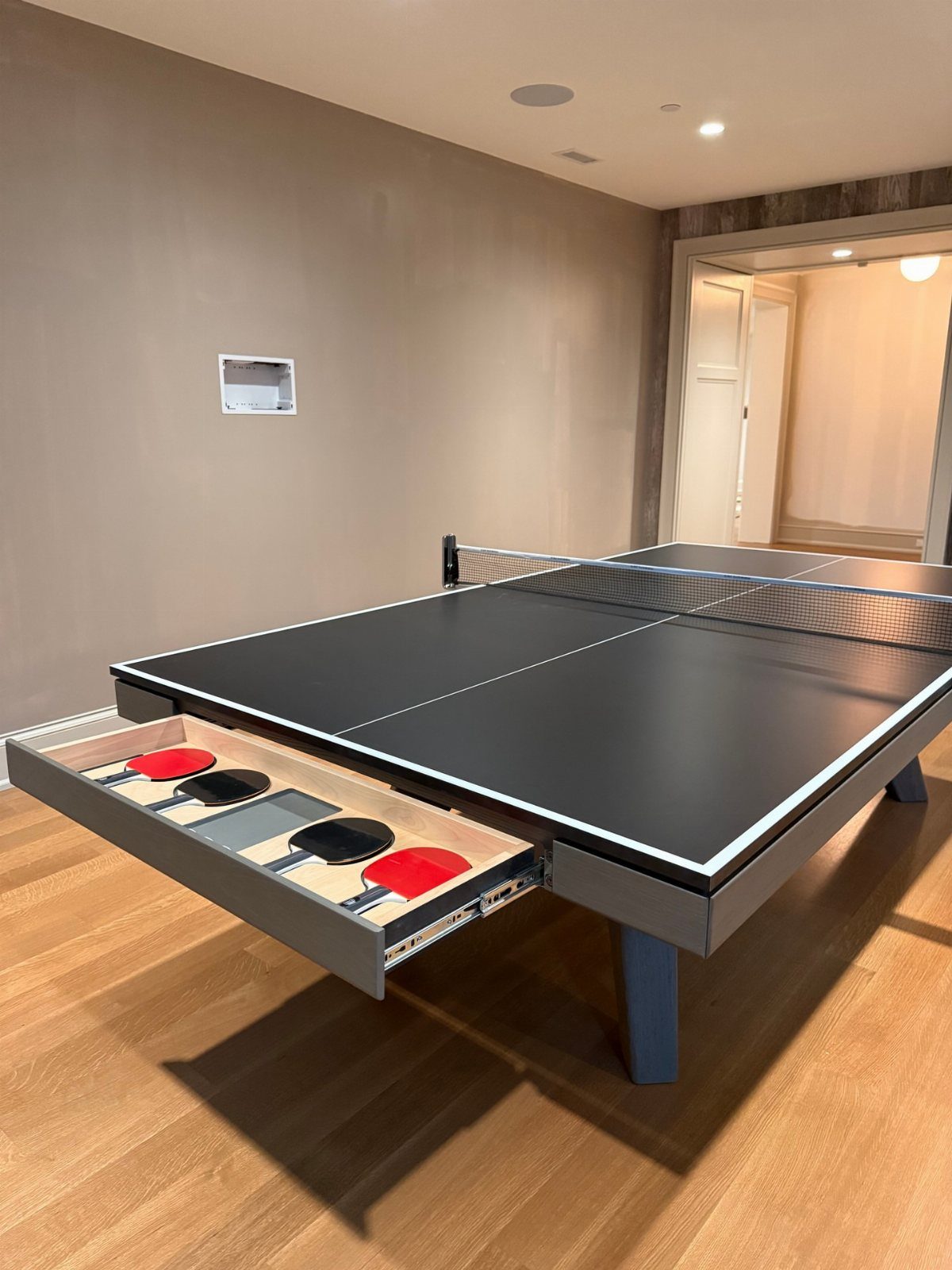
Paddles and balls vanish easily, and a slide-out drawer built into the table solves that without adding another piece of furniture. Pull it open, grab what you need, and slide it shut when the game ends.
That is a real gain in a room where the table already takes most of the floor. A black finish looks clean against light brown walls and hardwood, so the table doubles as a design piece when nobody is playing.
Check that the drawer opens fully before you set the table against a wall.
10. Pegboard Accessory Organizer
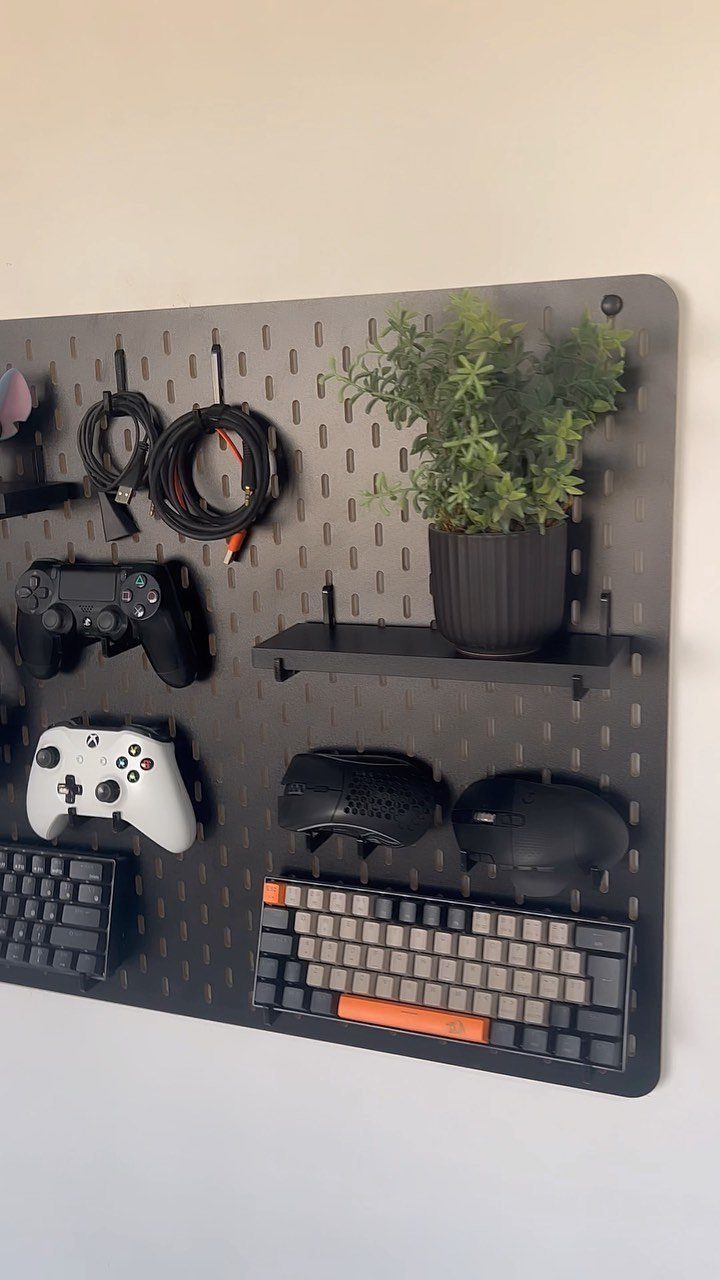
Pegboard is the cheapest way I know to get controllers, keyboards, mice and cables off the desk and onto a wall.
Black pegboard on a white wall gives strong contrast, so each item reads clearly and the board looks chosen instead of improvised.
Hang the heavy pieces on the lower pegs and keep coiled cables on hooks of their own. Leave a few holes empty so new gear has a place to go.
A small potted plant softens all that plastic. I’d keep it to one.
11. Illuminated Console Display Shelving
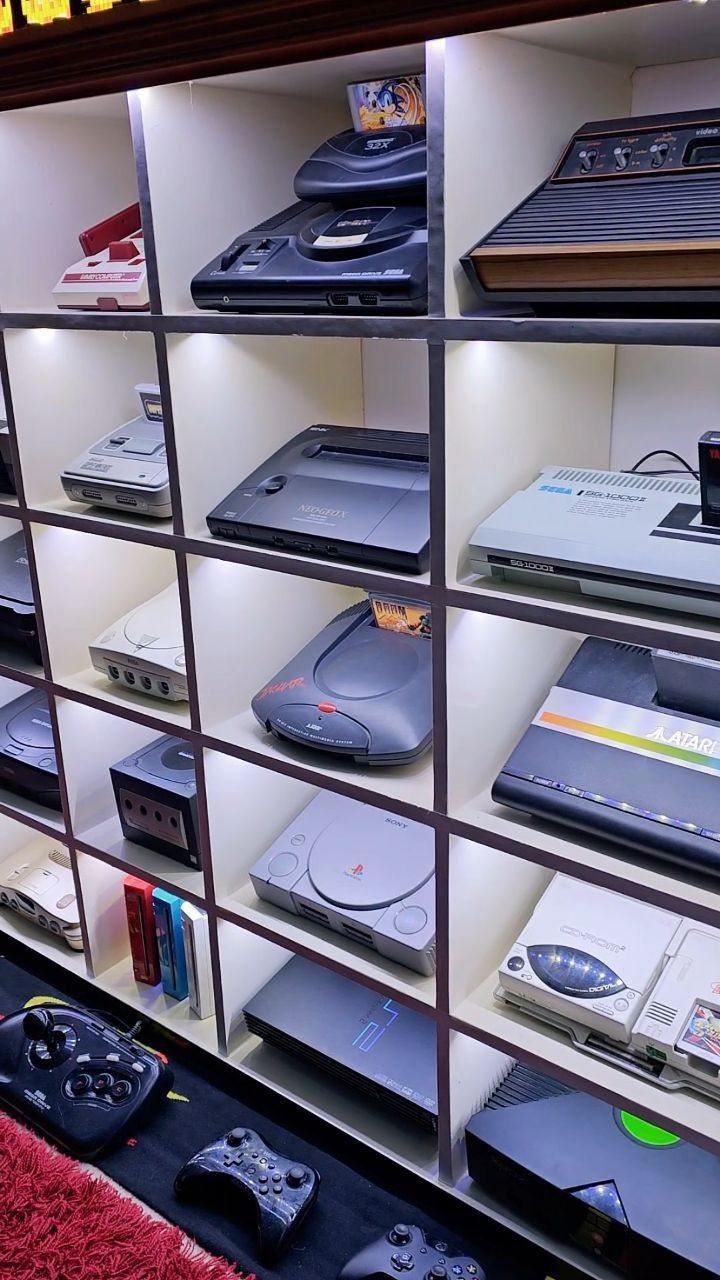
Retro consoles deserve better than a cabinet shelf, and a white unit with built-in lights lets Sega and Atari hardware glow like a collection instead of clutter. White keeps the focus on the colors and shapes of the machines themselves.
Give each console its own level and leave a little air around it. Stack too many and the lit display turns into a heap.
Controllers can wait on the surface below, within reach but out of the display. Pick a unit with built-in lighting over bolting on strips later.
12. Video Game Poster Grid Wall
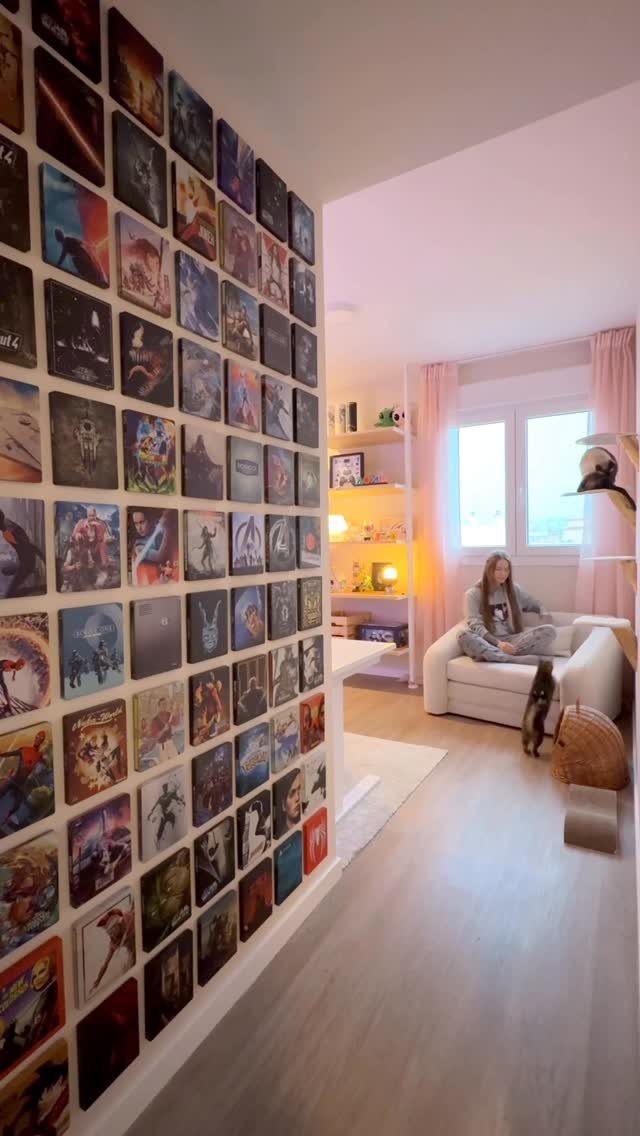
A grid of posters turns one blank wall into the room’s main event, and it costs little compared with art.
Rows and columns with even gaps keep a busy collection looking orderly, which matters when the wall is all you see from the couch.
Lay the posters on the floor first and shuffle them until the grid fits. Then mark the wall with painter’s tape before any hanging.
I’d go with matching spacing over matching frames. Pair the wall with a low seat like a beanbag, so the posters stay at eye level.
Measuring Your Space
Measure before anything goes in the cart. Get the room’s length and width, then multiply them for the square footage.
Those numbers do 2 jobs: they tell you whether a piece will physically fit, and they show you how to use the floor you have.
Write the measurements on a note in your phone so they’re with you in the store or at a checkout page. A desk that looks modest online can swallow a corner once it’s in the room.
Choosing the Right Color Scheme
Lighter shades like soft grays or pastels bounce light around and make a cramped room feel more open. White walls with a few neon accents read as futuristic, and the room still feels open.
Darker tones such as navy or charcoal feel cozy, but they need contrast to keep from going flat. Metallic pieces and glowing LED strips do that job well.
If you want a dark color, I’d limit it to one accent wall behind the monitor and paint the other walls lighter. That gives the room a focal point.
Wall-mounted lights keep floor and table space clear, and they make the room read as bigger.
Pendant lights hang into the open air, which tends to shrink the look of a compact room, so I’d pass on them. Layer a few light sources instead of relying on one.
Acoustic Considerations
Small rooms bounce sound around, so echo is the first thing to fix. Foam panels or acoustic tiles reduce it and sharpen clarity.
Thick rugs and heavy curtains soak up sound as well, so less noise reaches the hallway. Soft textiles work best when you combine them.
A good headset is the cheapest fix if roommates or family share the walls. It gives detailed audio without disturbing anyone.
Speakers sound best at ear height, with each one angled toward the seat you use most.





