Whether you can drill decides half the list: renters get over-the-door organizers, shower caddies and a freestanding corner unit, while owners can add floating shelves, a pegboard or wall-mounted crates.
The ideas run from a $20 DIY shelf pair to a pull-out vanity organizer, and from a drawer tray that takes minutes to a hidden-storage mirror.
Most of these start the same way, with a tape measure, because pipes, door swings and faucet placement limit what fits.
1. Invest in a Drawer Organizer
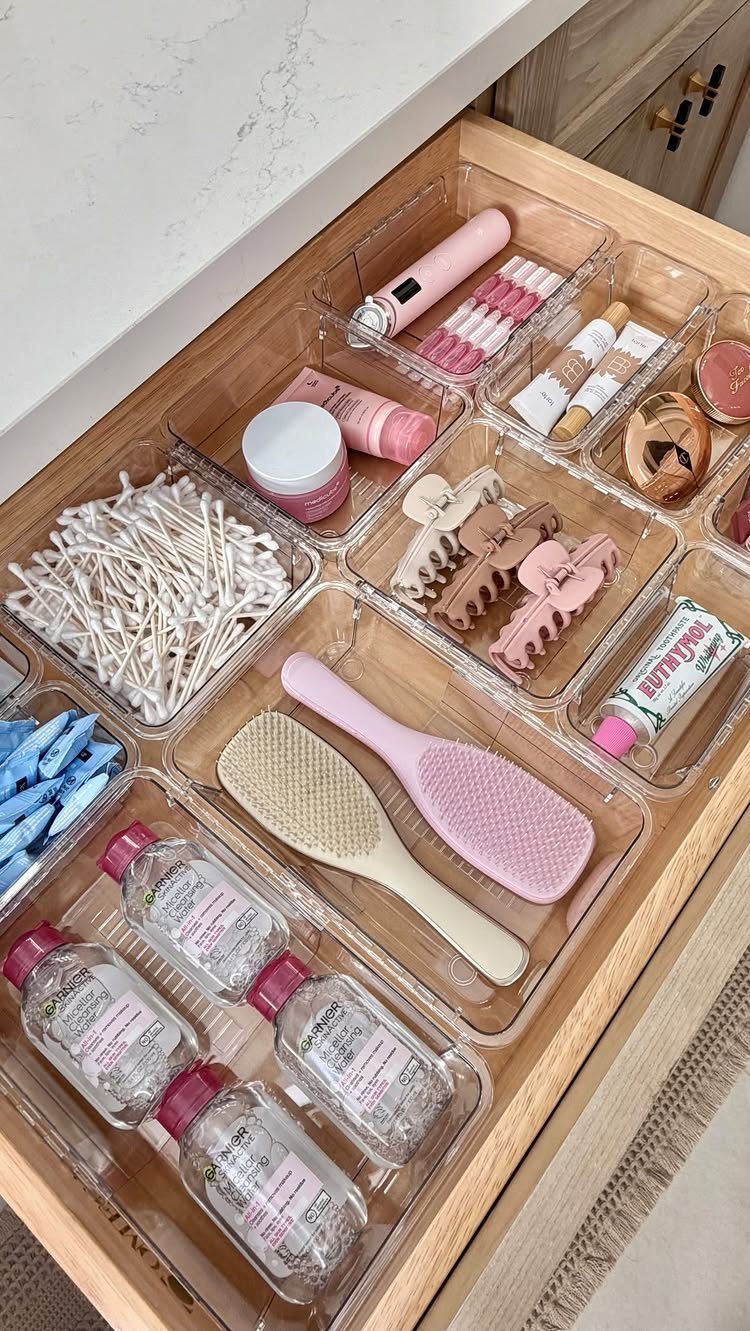
Bathroom drawers turn into junk pools fast, and clear acrylic dividers stop that. Small trays sort hairbrushes, cotton swabs and skincare into their own zones, so nothing slides into the back corner.
Clear acrylic also lets you see what’s inside without lifting anything. Measure the drawer’s width and depth first, then buy trays that fill it with no gaps, since loose trays shift every time the drawer opens.
I’d group by task: hair in one tray, face products in another, swabs and small bits in the smallest.
2. Over-the-Door Organizers
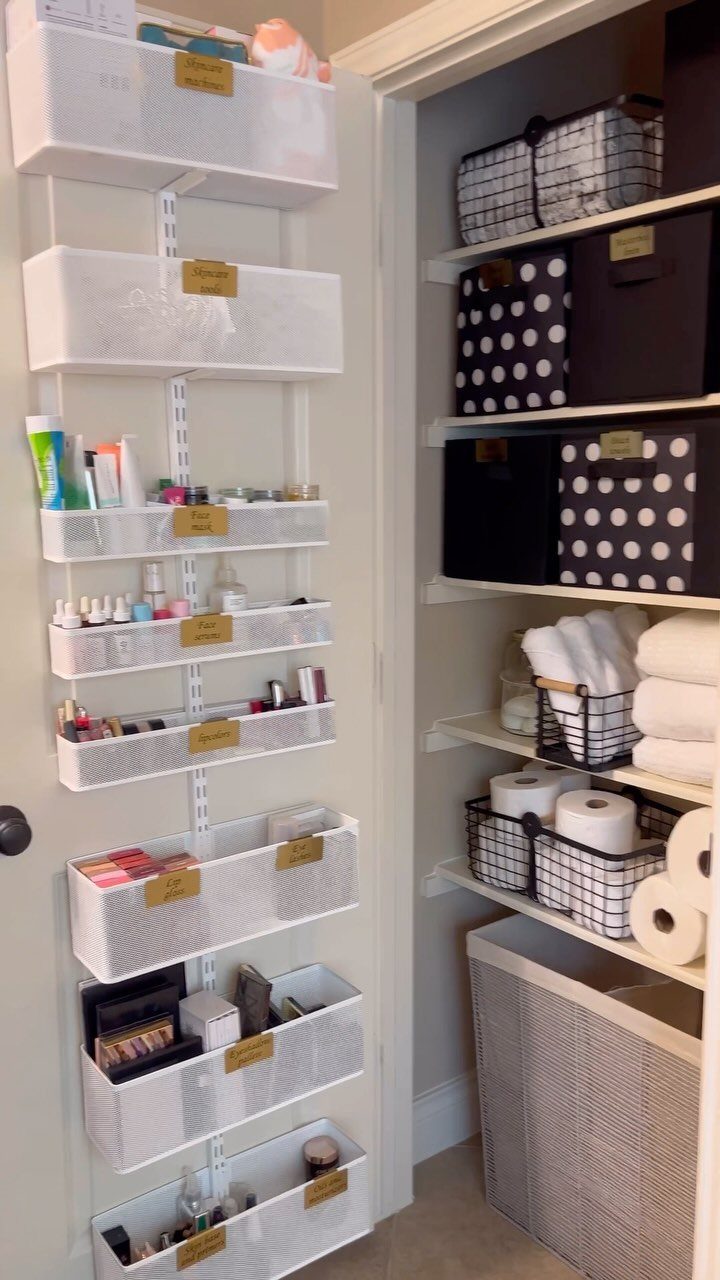
Floor space is the first thing a tiny bathroom runs out of, and the back of the door has none of it in use.
A hanging organizer with labeled bins puts skincare, makeup and toiletries at eye level without adding a single piece of furniture.
Labels matter more than they seem. If you assign a bin to hair tools, another to first aid, and a third to cleaning supplies, the system holds.
Check that the door still closes cleanly with the organizer loaded, and keep the heaviest items in the lowest bins.
3. Countertop Organizer Tray
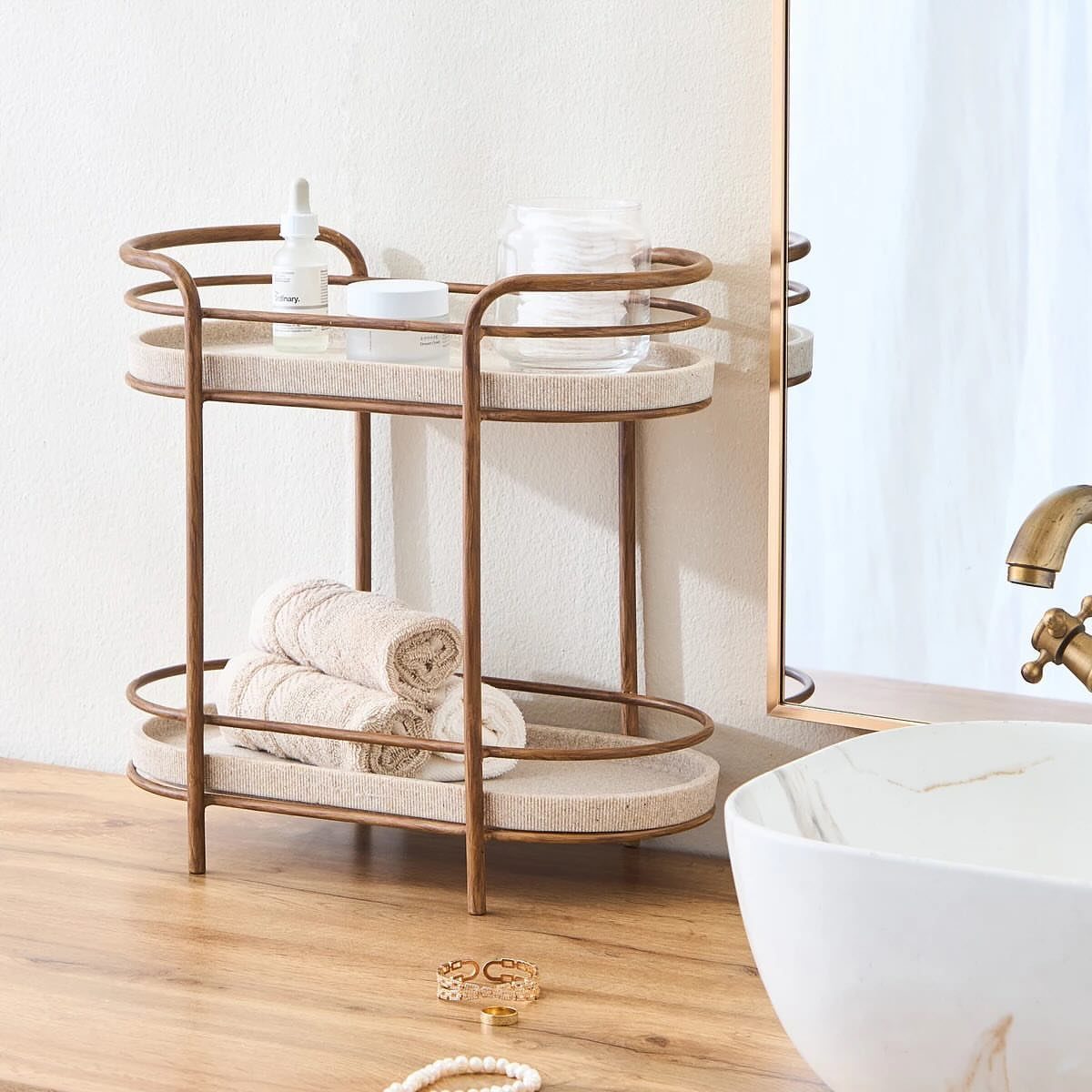
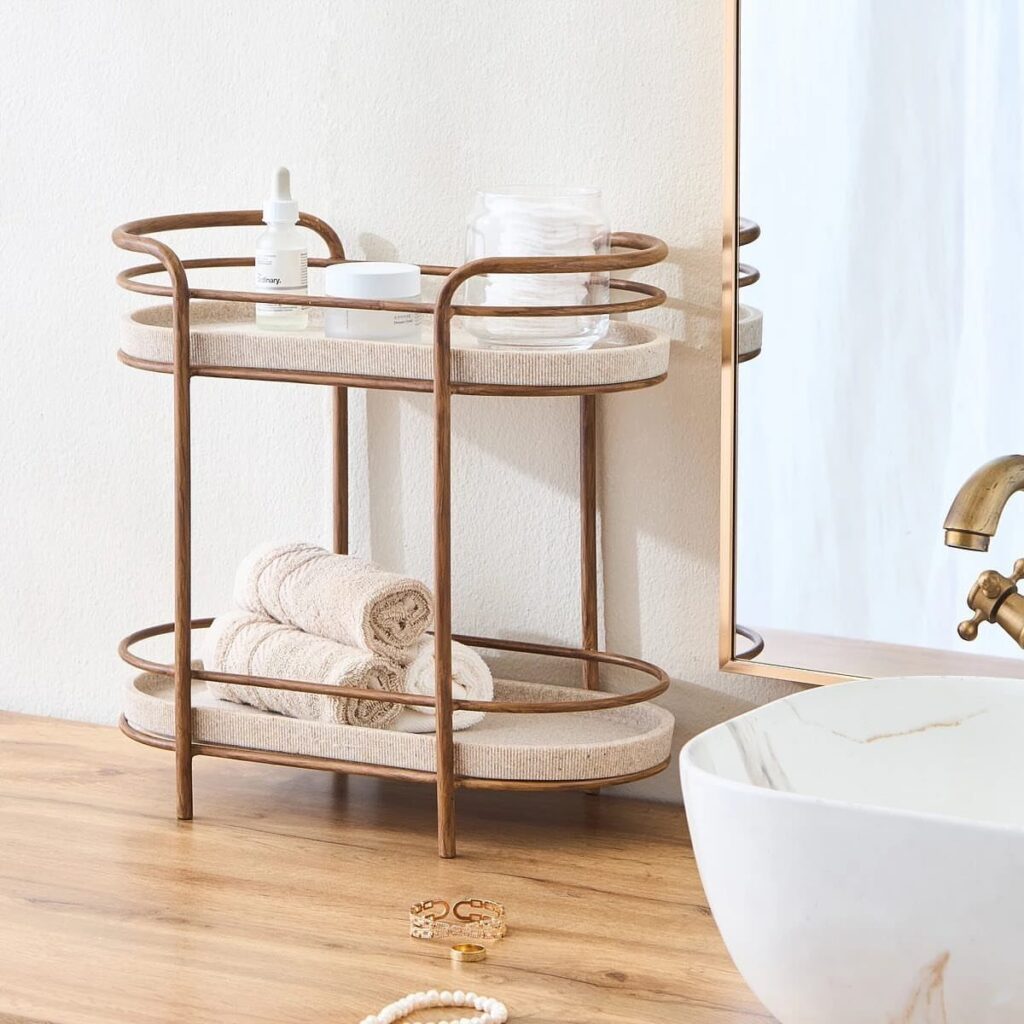
A two-tier tray gives a counter a second level, so skincare sits on top while rolled towels fill the lower deck. Gold metal with fabric bases looks dressier than plastic and costs about the same as a basic caddy.
Rolled hand towels are a smart fit here, since they stay in view and keep the cabinet free.
Pick a tray that leaves room beside the sink. If it crowds the faucet, it will just move the clutter somewhere else.
4. Use Clear Stackable Bins
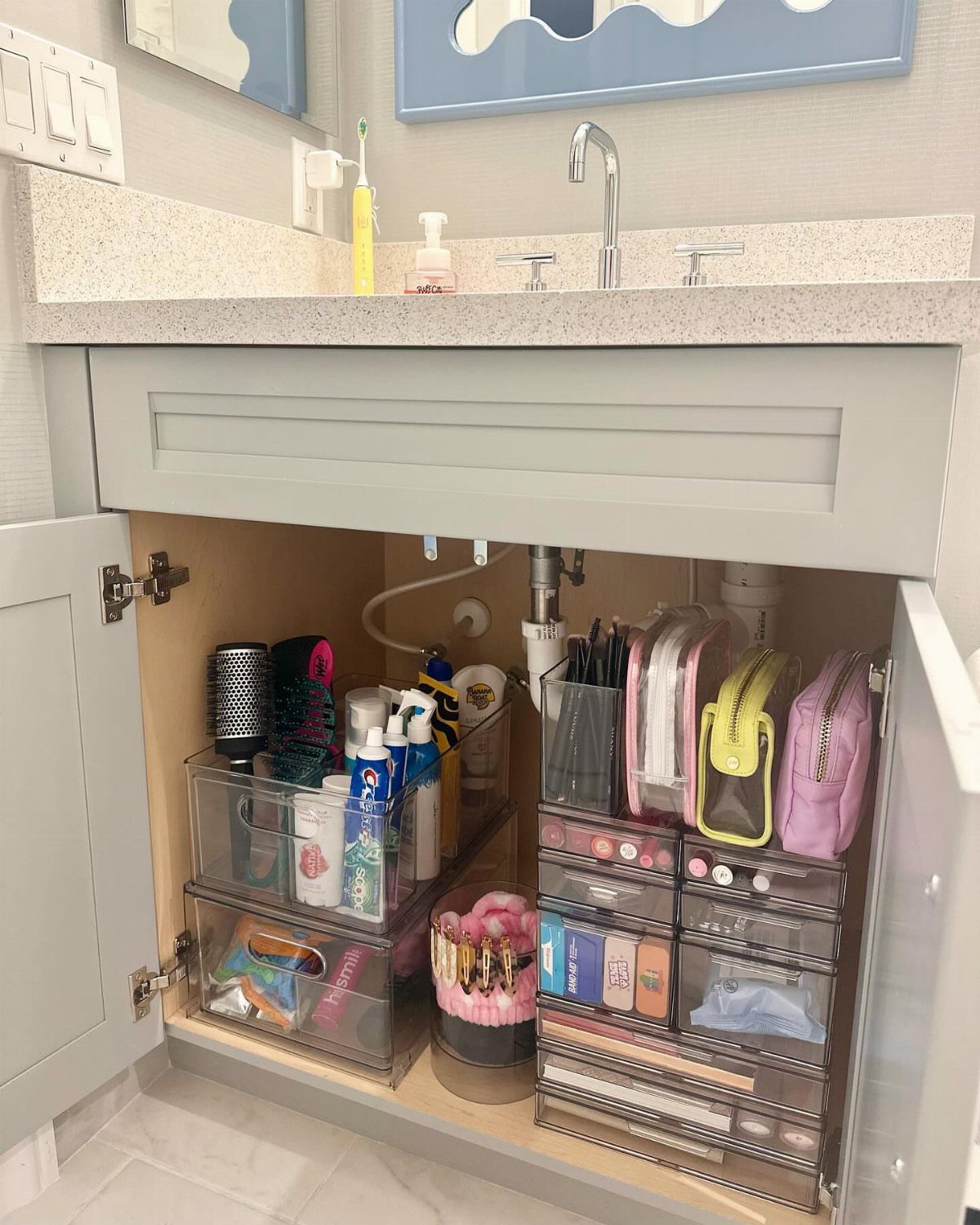
Vanity cabinets waste space because everything lies flat on one level. Clear plastic bins and small drawers fix that, and stacking them uses the cabinet’s height.
I like clear over opaque here: you spot the hair ties or spare toothpaste without pulling out a bin. Sort by category, such as hair tools in one, makeup in another, and keep daily items in the front bins.
Measure the cabinet opening before buying, because pipes under the sink limit what fits.
When you can’t rely on a bathroom vanity for organization needs, consider bringing in freestanding furniture pieces, as well as floating shelves, étagères, and stools. If you’re extra handy, built-in shelves can be a game changer.
5. Use a Decorative Basket
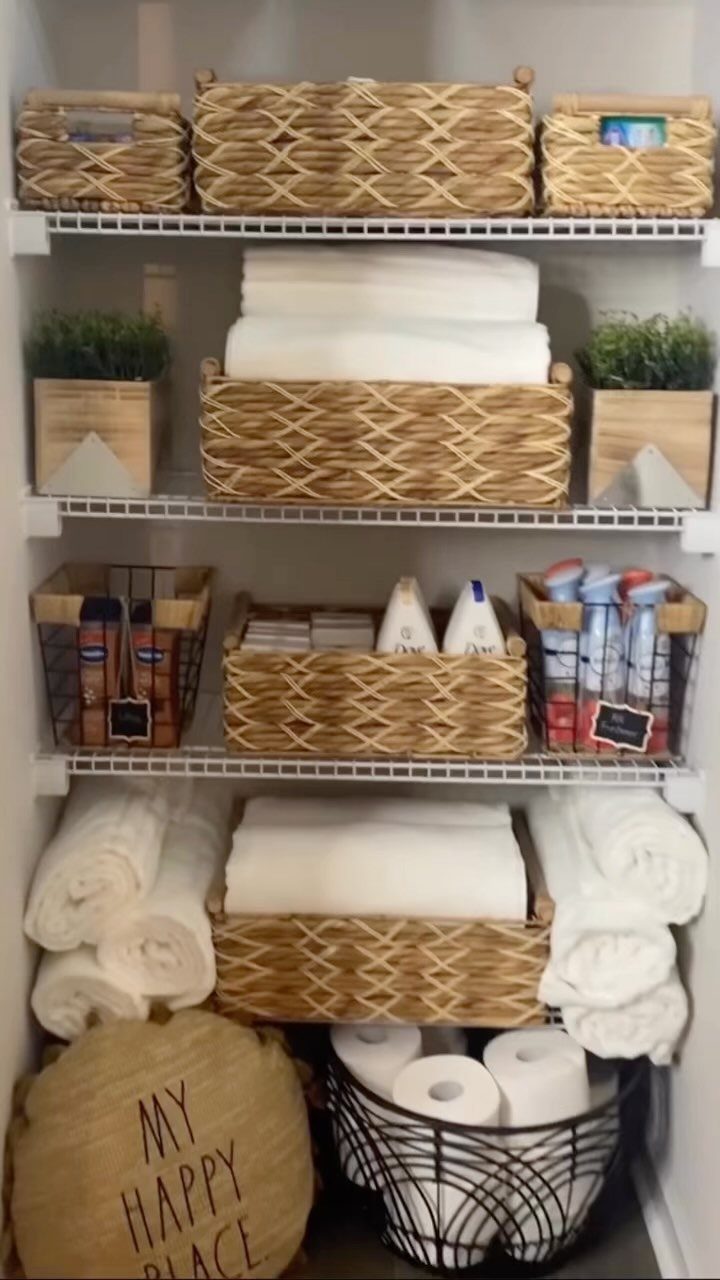
Baskets let you hide visual noise and still keep things reachable. Woven wicker softens a hard-edged bathroom, while wire bins suit items you want to see, and mixing the two on one shelving unit looks deliberate.
Use the wicker for towels and toilet paper, and the wire for smaller toiletries. Choose baskets sized so they fill each shelf with little gap.
A basket with no lid stays easy to use daily, which matters more than looks when you’re in a hurry.
6. Floating Shelves Above the Toilet
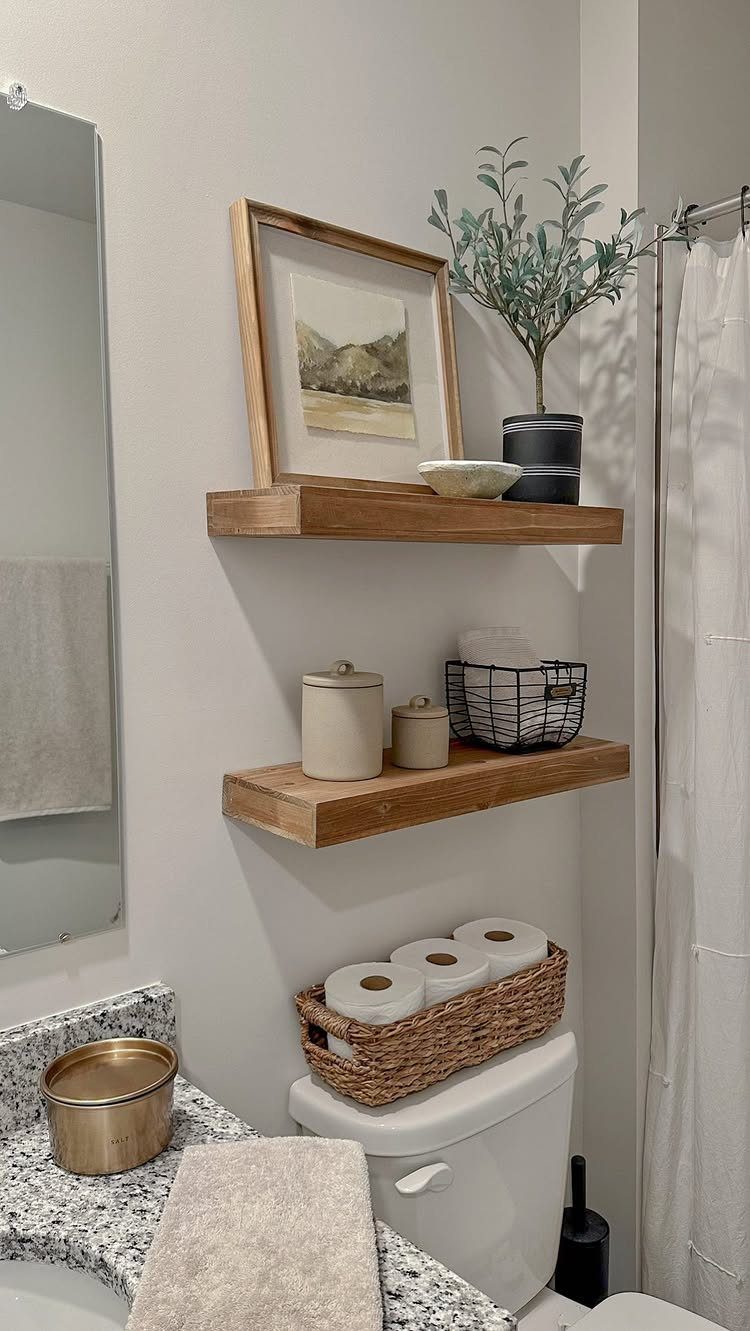
The wall above the toilet is dead space in most small bathrooms, and 2 floating shelves put it to work. The height between shelves sets what fits: stack two towels on the lower one, stand bottles upright on the upper.
Cost is low if you build them. The maker of this pair says the DIY shelves cost $20.
Anchor into studs or use proper wall anchors, and keep heavy items off the top shelf so a drop doesn’t land on the tank.
7. Towel Ladder Rack
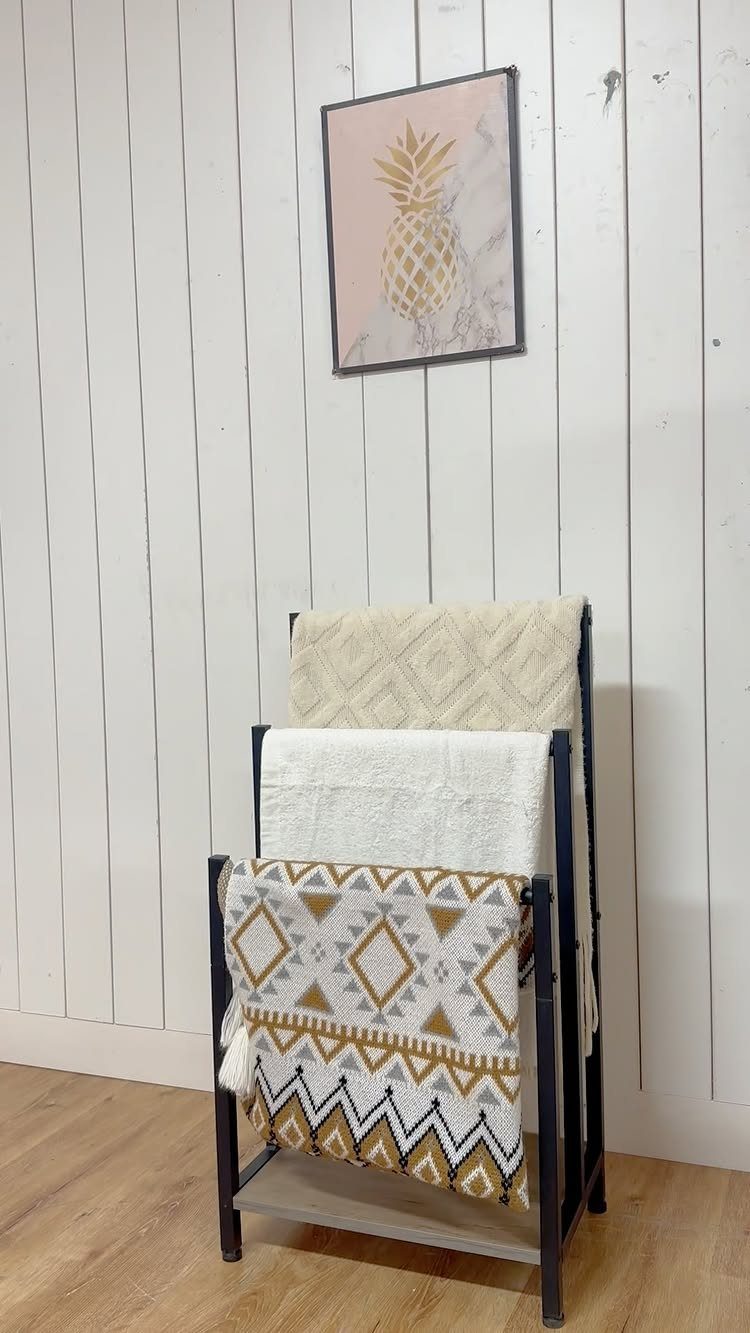
A leaning ladder rack stores towels with no drilling, which makes it a good fit for renters. Black metal reads crisp against white walls, and each rung holds a folded towel in view.
Fold towels in thirds and drape them over the rungs so they hang flat. Keep it a few inches from the toilet and tub so a wet towel doesn’t brush against them.
8. Install Hooks for Towels
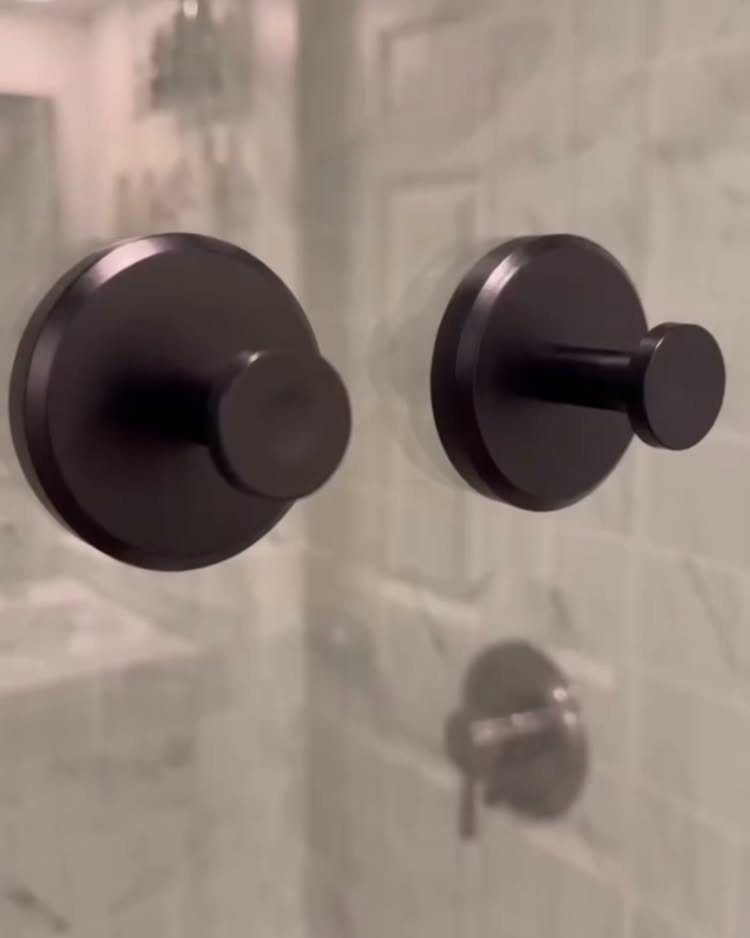
Hooks take towels off the floor and off the bar, and a matte black circle is about the cleanest-looking version. 2 hooks give each person a spot, so towels dry apart instead of in a damp pile.
Mount them at shoulder height so a bath towel hangs without dragging. Check that the hook suits the surface: a glass door and a tiled wall need different fasteners.
I’d pick hooks over a bar in a tight room, since they stick out less.
9. Create a Towel Shelf
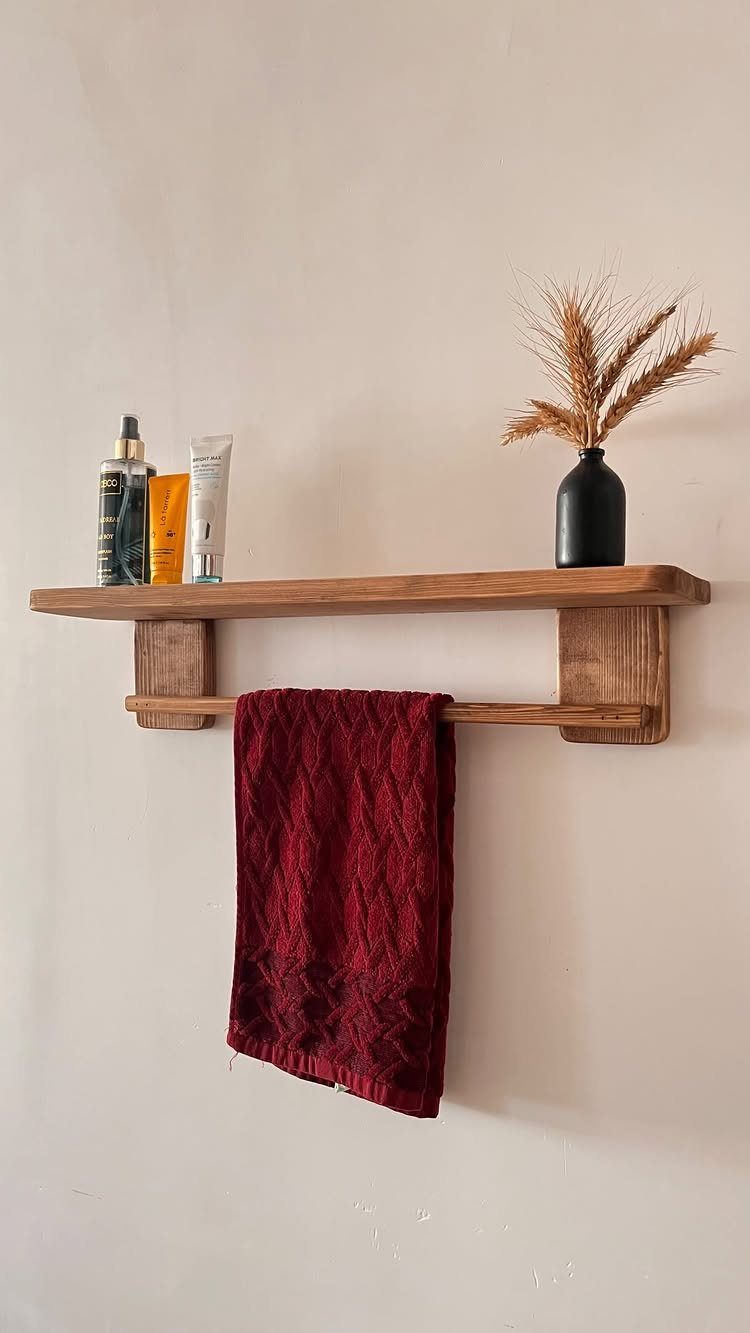
A wall shelf with a towel bar underneath does two jobs in one patch of wall. Towels hang below, and the top holds the small things you reach for daily.
Keep the top light: a few toiletries and one small vase look tidy, while a crowd of bottles brings the clutter back. Wood warms up a bathroom of hard surfaces.
Leave enough space under the bar for the towel to hang fully, and screw the shelf into studs or proper anchors.
10. Pull-Out Cabinet Organizer
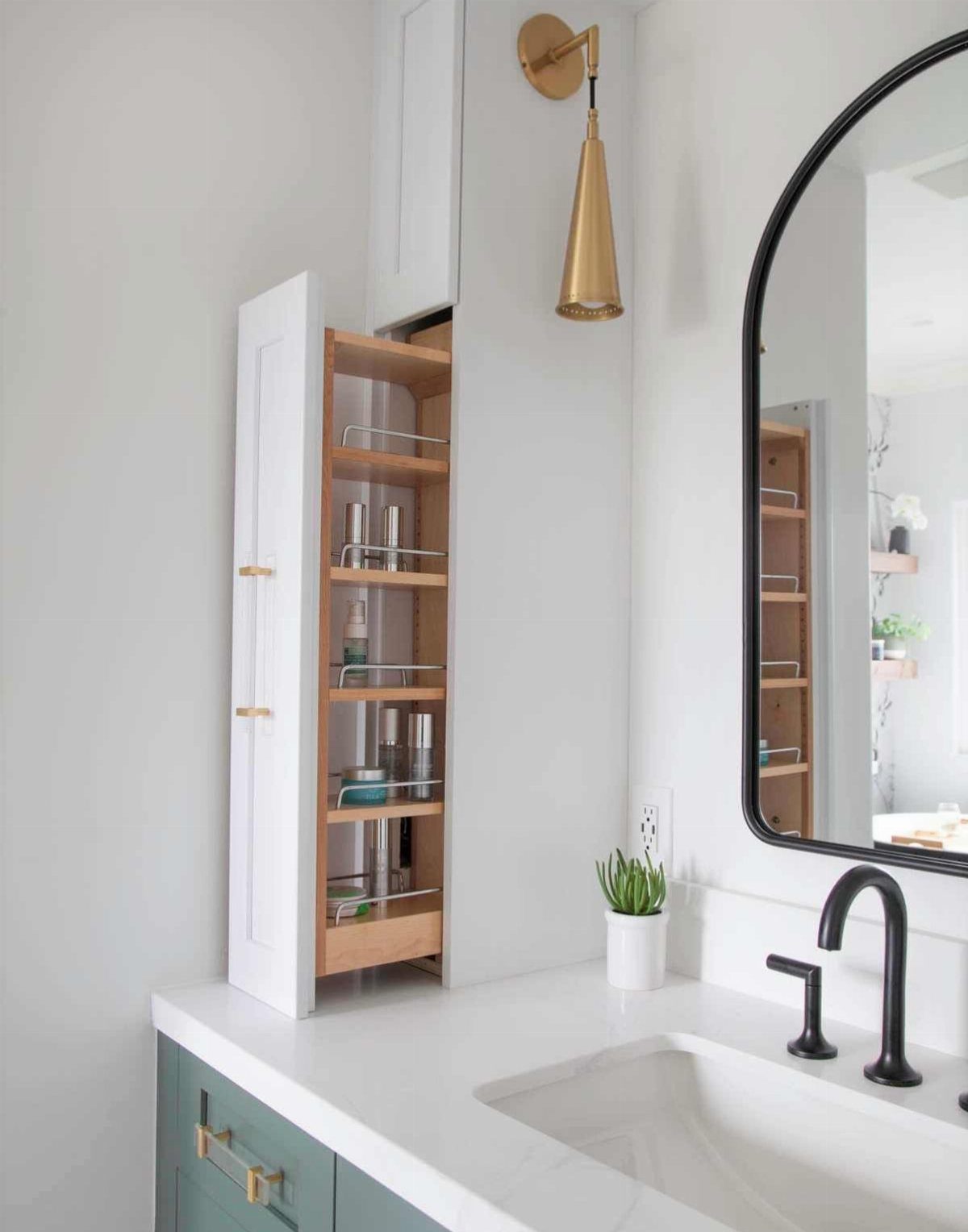
Deep vanity cabinets hide things at the back, and a pull-out organizer brings that back row to you. Slide the drawer out and every bottle is in reach, with no digging.
Wood looks better than bare wire when the cabinet door is open. Measure the opening’s width and depth first, and check that pipes won’t block the tray’s path.
I’d keep daily toiletries on the pull-out and send backups to a higher shelf.
11. Wall-mount Your Soap Dispenser
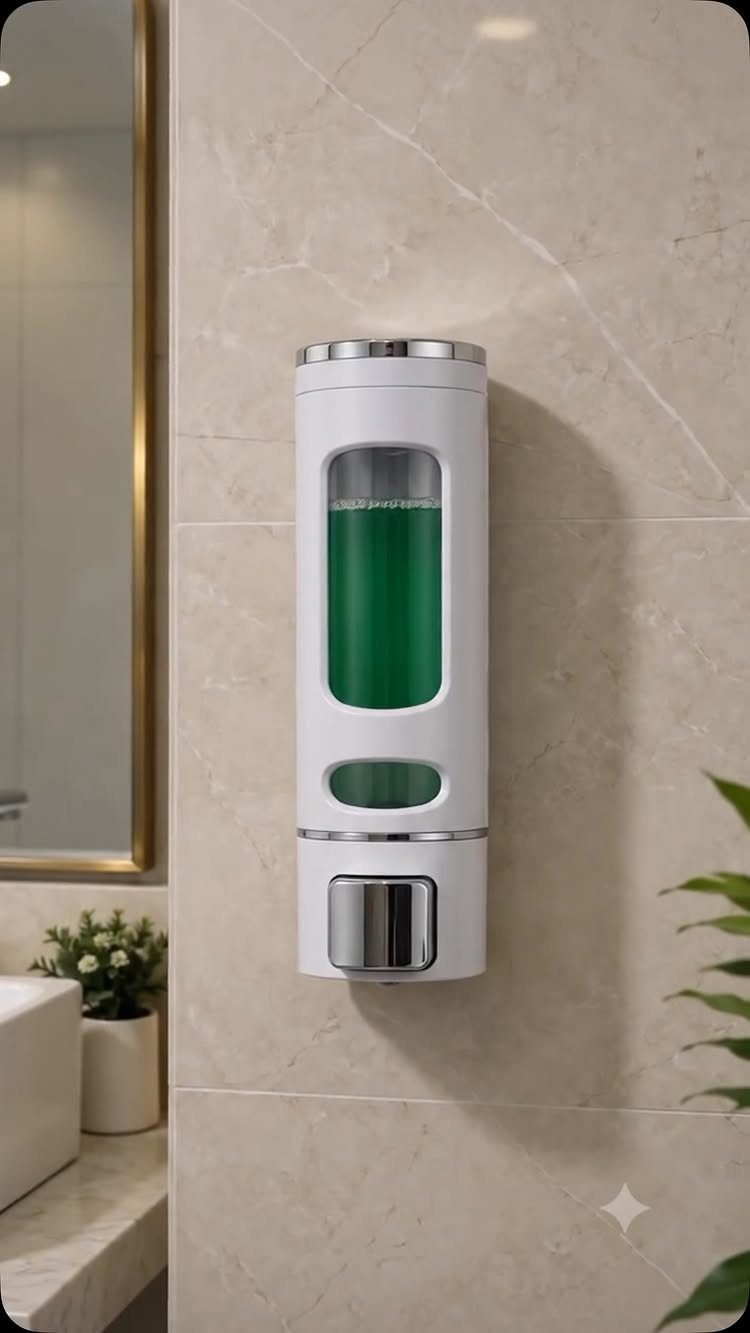
A wall-mounted soap dispenser clears the one spot on a small counter that always collects sticky rings. The counter space goes back to you, and refilling is as simple as topping up the tank.
Mount it beside the sink, at a height where your hand reaches it without stretching. Make sure it sits over the basin so drips land in the sink, not on the counter or floor.
Pick a clear tank if you like seeing when it runs low.
12. Use a Hidden Storage Mirror
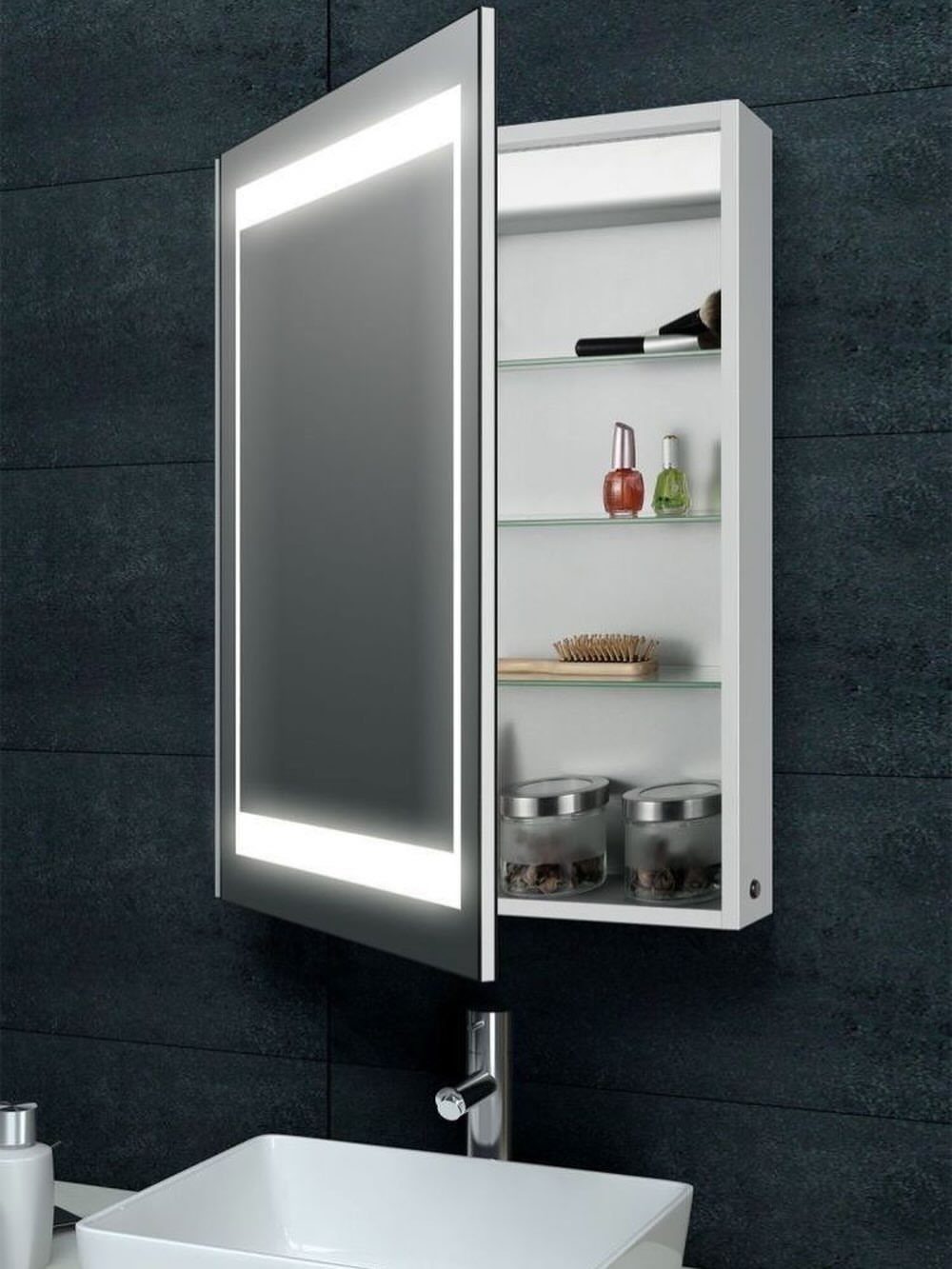
A mirrored cabinet gives you a mirror and shelving in the same footprint, so the wall does double duty. Closed, it looks like a plain mirror; open, glass shelves hold everyday toiletries at face height.
Built-in lighting is a bonus, since it lights your face while you use it. Keep the shelves for daily items only, and put overflow elsewhere.
Measure the door’s full swing against the faucet and the nearest wall first, since a mirror that hits either one will not open all the way.
13. Shower Caddies
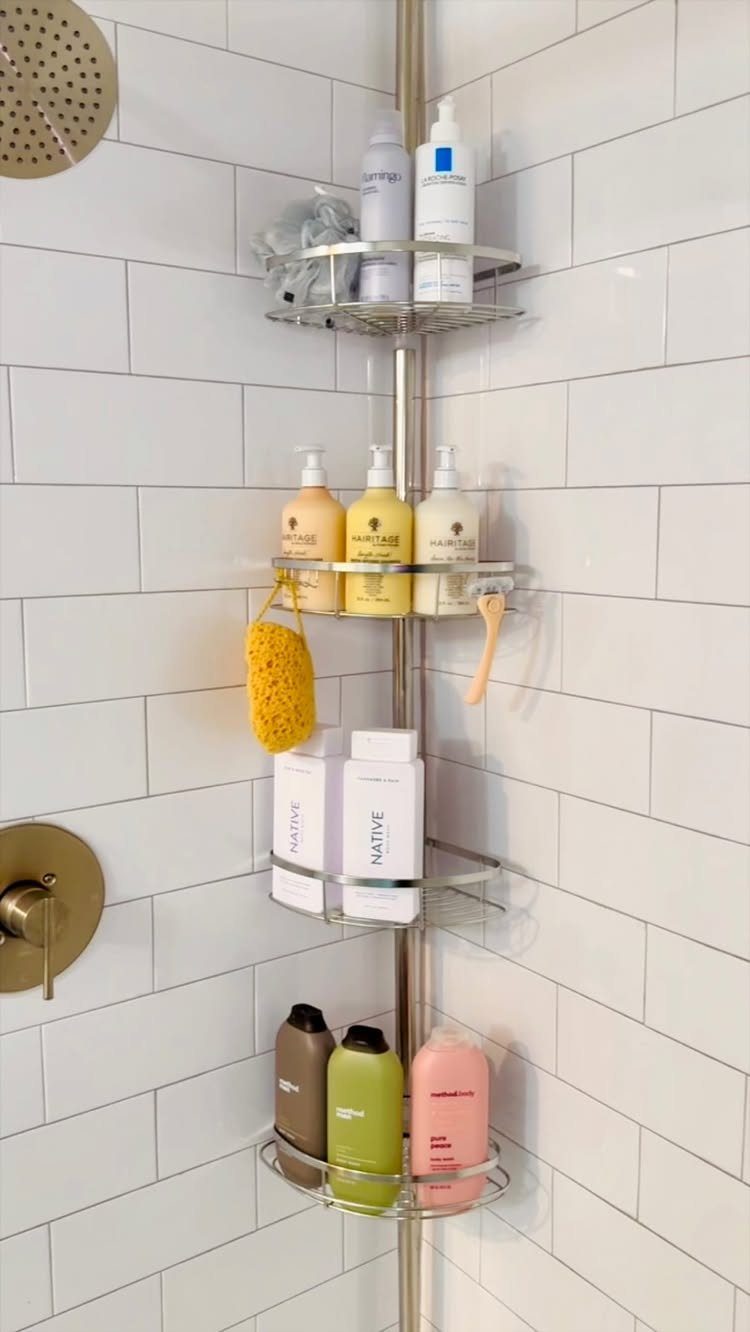
A corner shower caddy in silver metal puts the dead space where 2 tile walls meet to work, and it keeps bottles off the tub ledge.
The maker of this one says it fits various heights, so you can space the shelves to suit tall shampoo bottles on one level and a sponge on another.
Metal holds up better than plastic in constant steam, and a corner caddy keeps bottles out of the spray.
Load the lowest shelf with the heaviest bottles, and keep the lighter items like razors and travel sizes on the upper tiers.
14. Hang a Pegboard
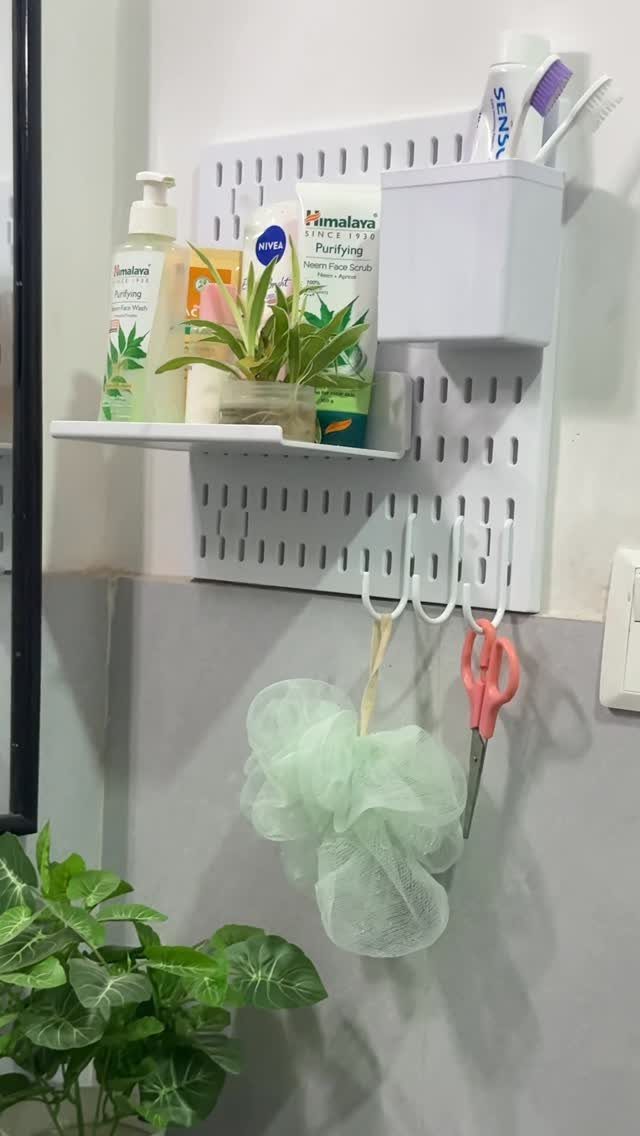
Pegboard is the most flexible wall storage in this list, because the pegs move whenever your routine does. Give skincare, toothbrushes and a loofah each their own hook or small shelf, and leave one spot open for a small plant.
White keeps it quiet against a white wall. Leave gaps between items so it reads as organized, not crowded, and I’d hang the daily products at chest height.
15. Use a Decorative Ladder
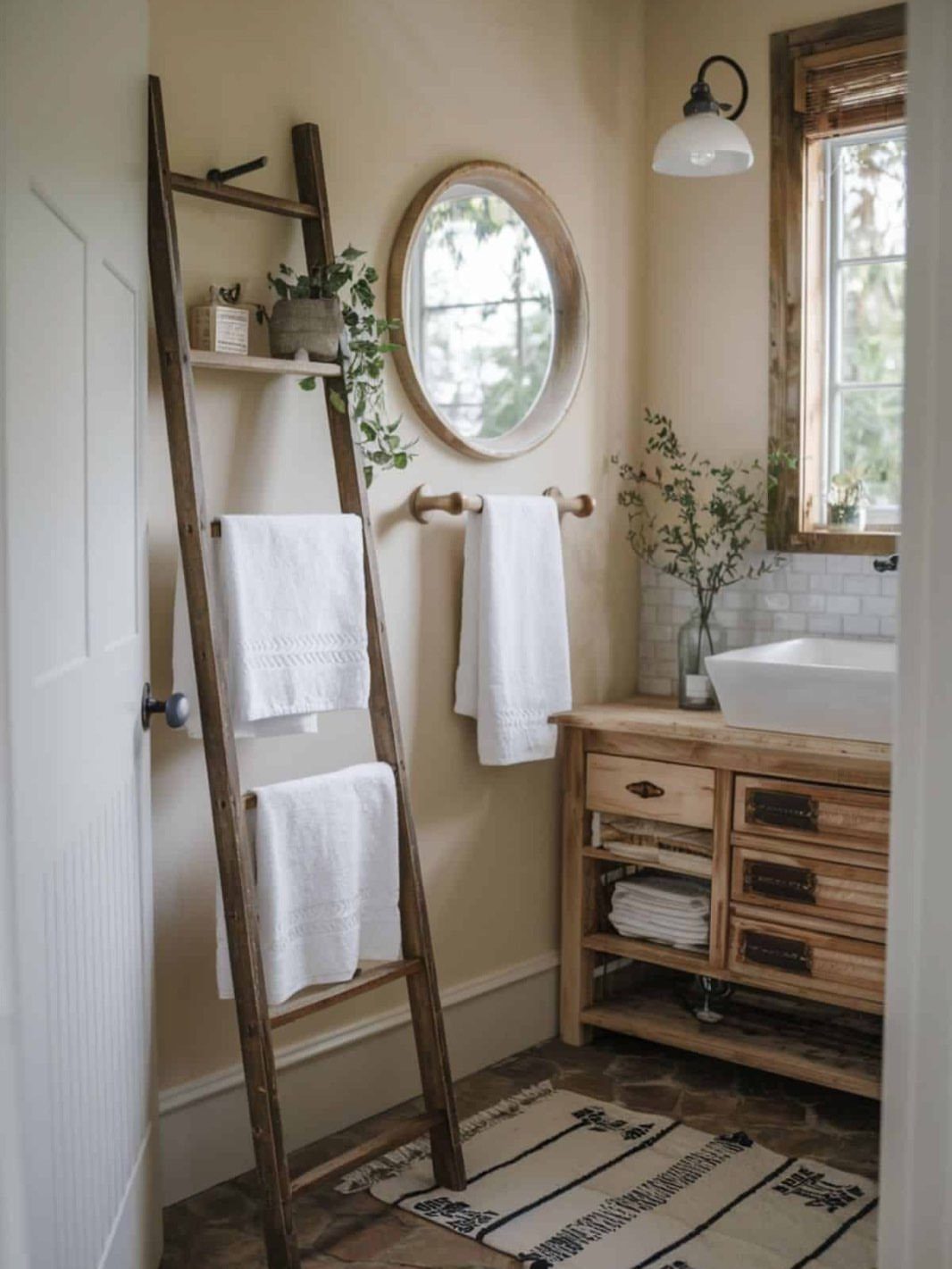
A wooden ladder leaned beside the wall studs or a bare stretch of drywall stores towels in a rustic bathroom with nothing to install. Drape one towel per rung so each hangs flat and dries on its own.
Check that the base sits steady on the floor, and keep it clear of splashes from the sink so the wood stays dry.
16. Use a Bathroom Caddy
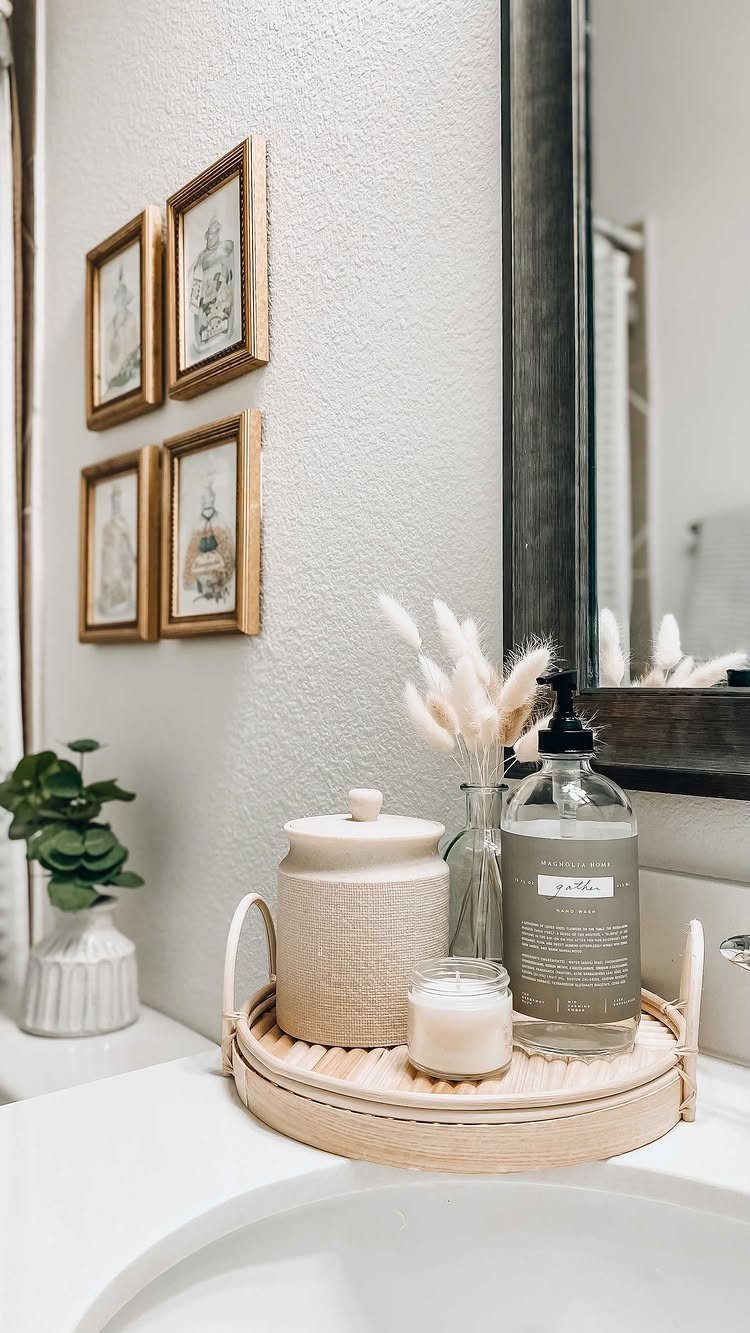
A woven bamboo caddy gathers the counter’s loose items into one portable piece.
I like bamboo for a caddy because the natural texture softens a white counter and handles splashes better than most raw wood.
Keep it to a few items, or it becomes a clutter tray with better looks. Choose one that leaves room beside the sink.
17. Narrow Side Toilet Cabinet
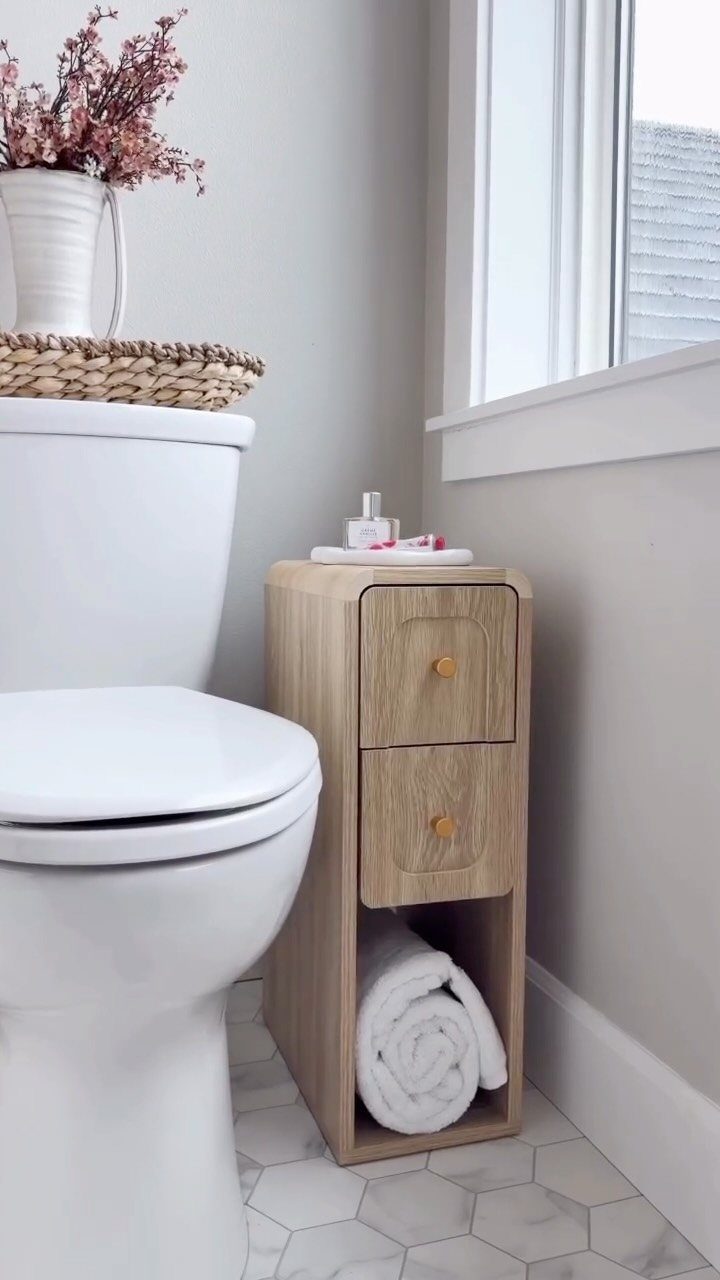
Many small bathrooms have a gap beside the toilet that fits nothing else, and a slim wooden cabinet fills it.
Measure the gap’s width and leave a little room beside the bowl so you can still clean. Put daily items in the top drawer.
18. Over-the-Faucet Shelf
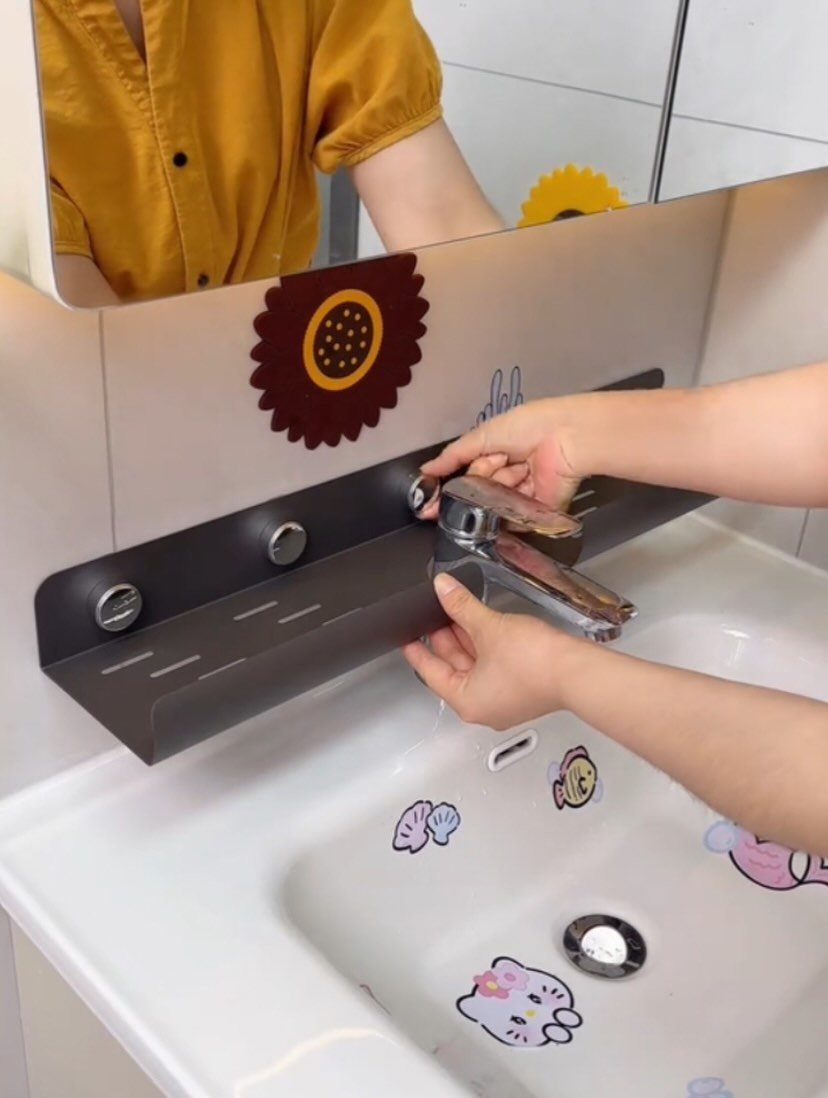
A metal organizer shelf that sits over the faucet uses air space above the sink, so it adds storage without touching the counter. Black metal looks sharp against a white basin.
Check the faucet’s shape and spout height before buying, since the shelf has to clear it and the water stream. Keep it for light items like a toothbrush cup or hand cream, and put nothing heavy up there.
19. Wall-Mounted Storage Crates
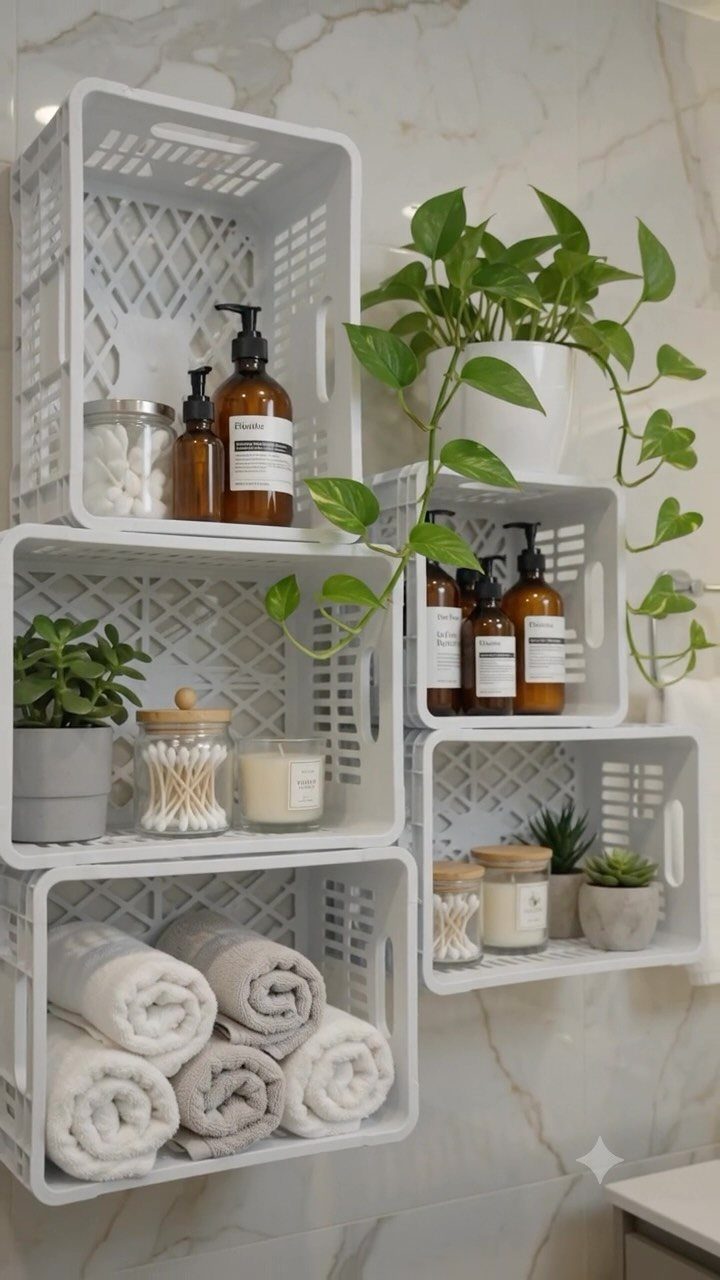
Open crates mounted on the wall work as cubbies, and a stack of them gives even a tiny bathroom a storage grid without any furniture. Rolled towels fit one square, toiletries another, and a plant can sit in a third.
Level every crate before you fasten it, because a tilted cubby makes the whole wall look off.
20. Wall-Mounted Corner Shelf
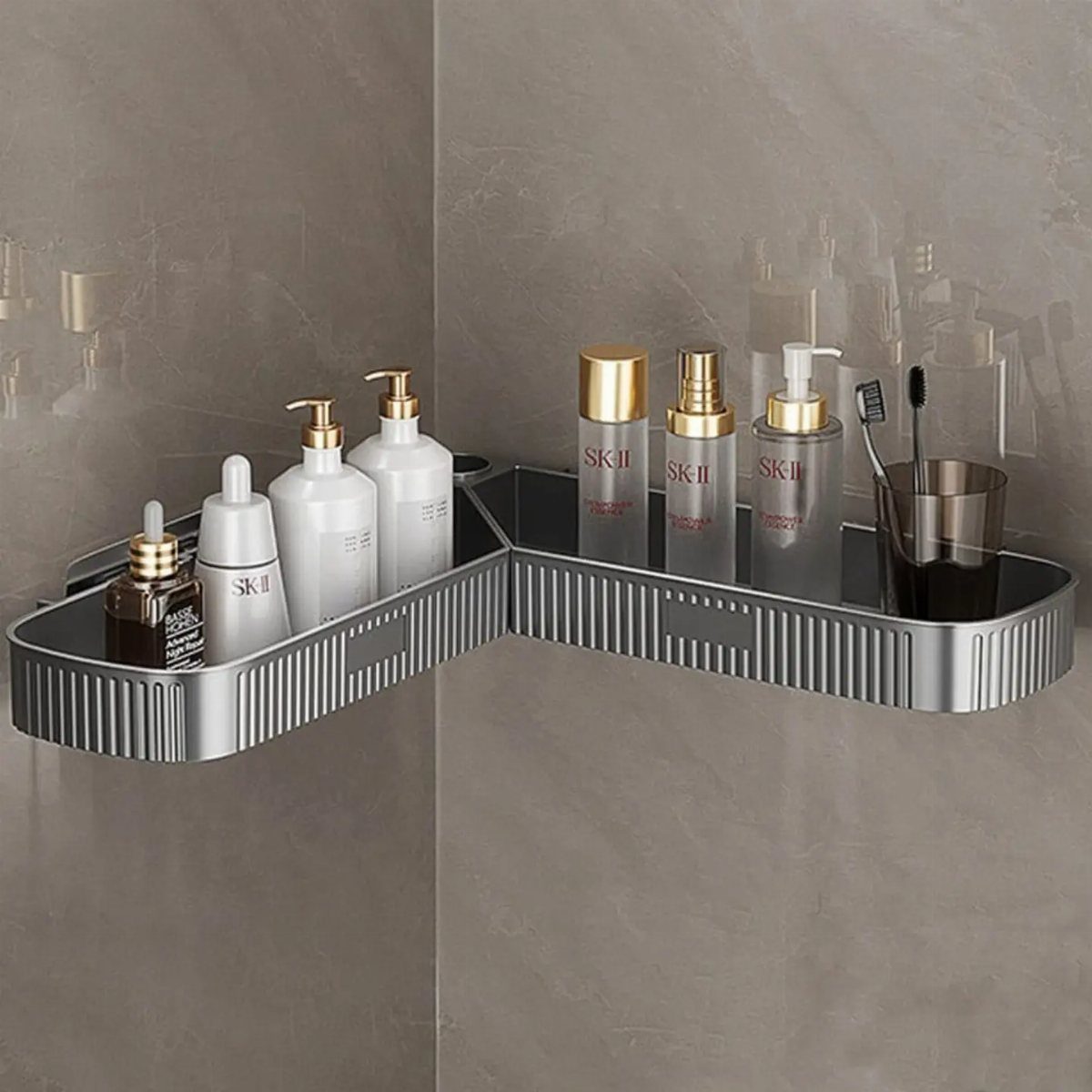
A triangular metal shelf uses the corner of the wall, a spot that almost never holds anything. Silver metal holds daily skincare and a toothbrush cup at eye level without crowding the sink.
Keep the load to the items you reach for every morning. Corner shelves have small footprints, so a few bottles fill them fast.
Fasten it with anchors suited to your wall. On tile, I’d drill into a grout line if the layout allows, since grout is easier to patch than a cracked tile.
21. Freestanding Corner Shelving Unit
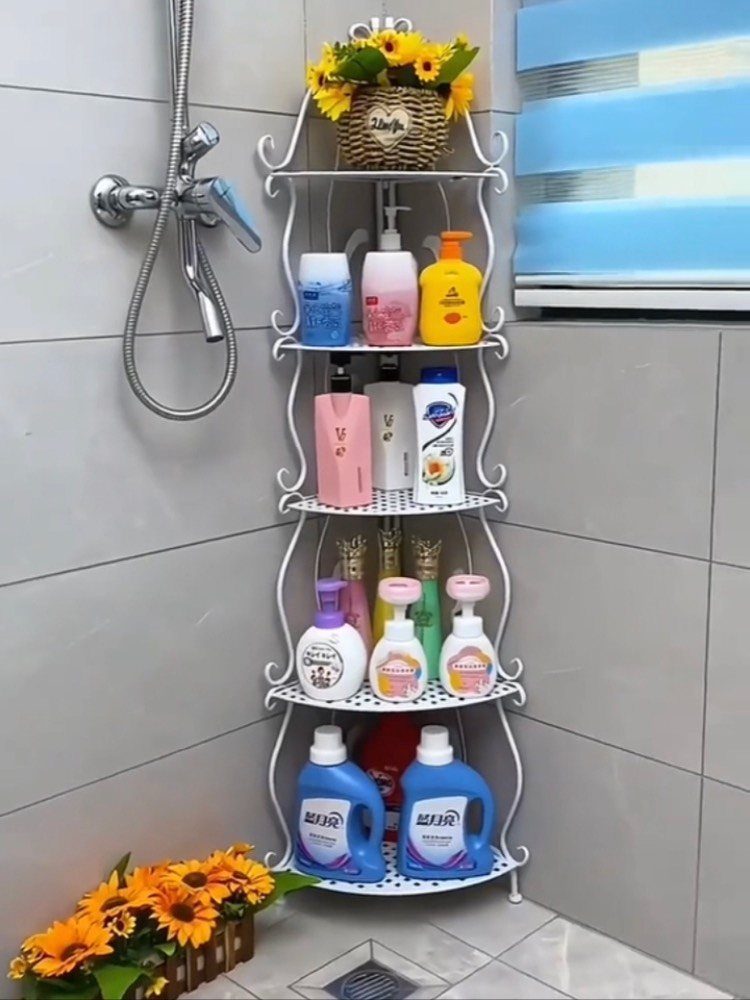
Freestanding corner shelving needs no tools, so it suits renters who can’t drill. A multi-tier white unit stacks bottles, soap and a vase of flowers into the footprint of a bucket.
Measure the corner and the height to the shower head first, so spray doesn’t hit the bottom shelves. Put the heaviest bottles on the lowest tier, where they keep the unit steady.
I like a single flower or small plant on the top shelf, since it adds color without using up storage.
22. Tiered Shelf with Labeled Bins
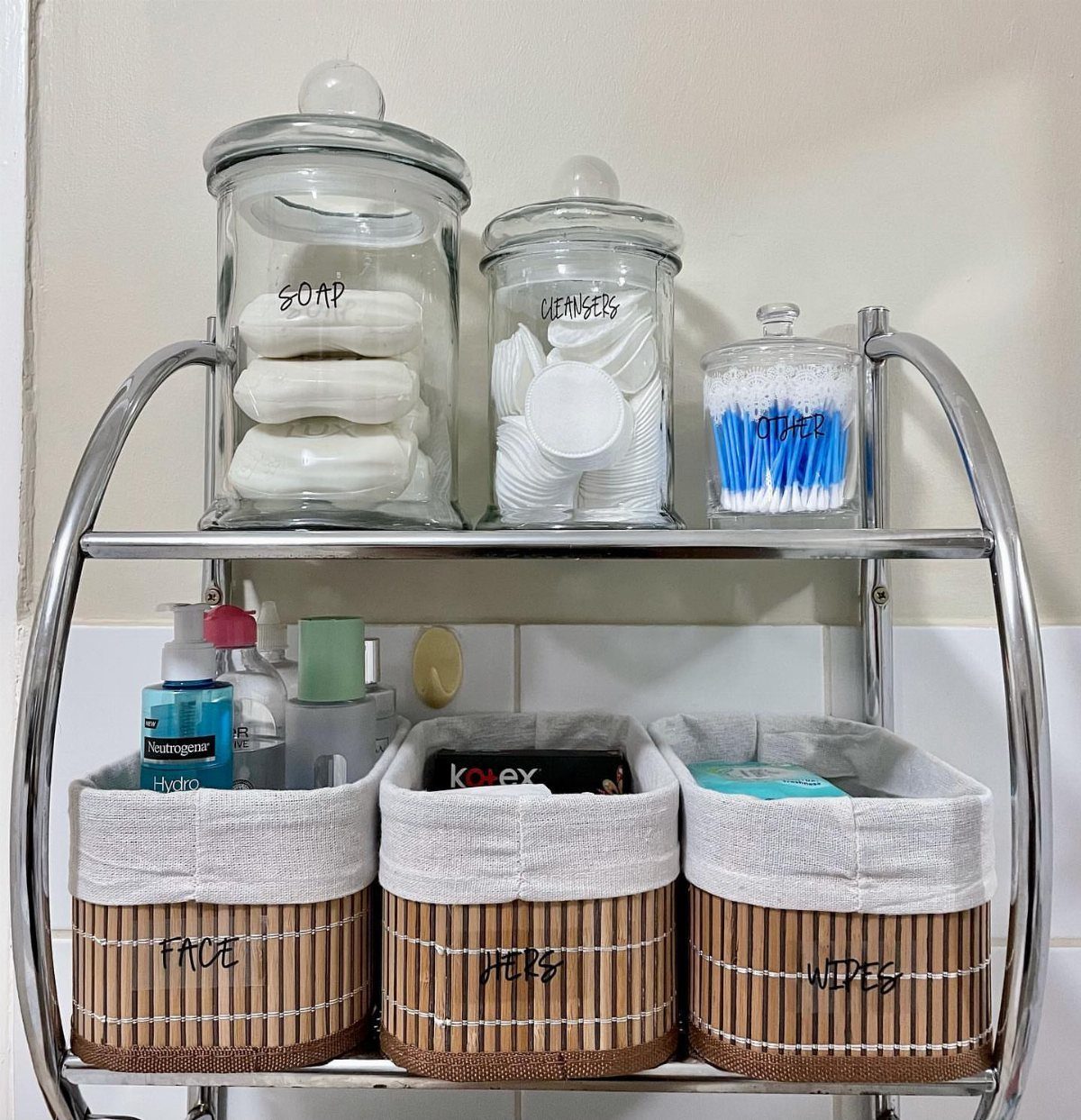
Labels do the work here. Glass jars on the top tier hold soap, cleansers and cotton swabs, while fabric bins below take bulkier items like wipes and face products.
Jars suit small things you want to see; bins hide the messier ones. Label every container so each person knows where things go back.
Pick a shelf that fits the counter with room left beside the sink, and use bins sized to fill the lower tier with little gap.
23. Rotating Countertop Turntable Organizer
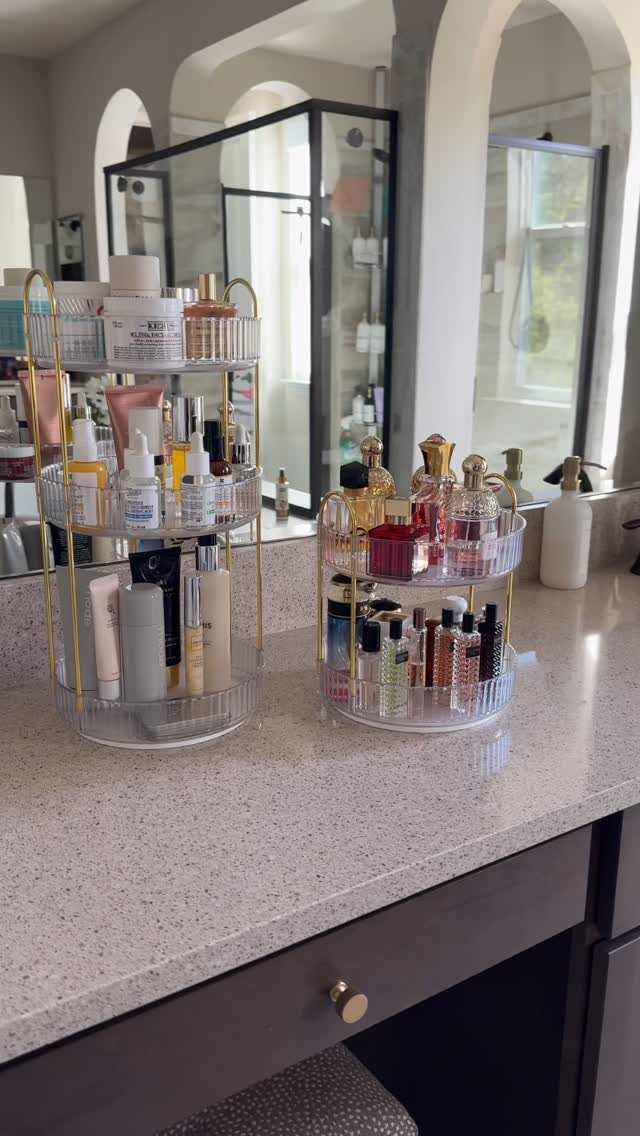
A clear acrylic turntable puts a whole row of bottles within reach with one spin, so nothing hides behind the tall bottle in front. Two of them side by side handle skincare on one and perfume on the other.
Clear acrylic stays quiet on a speckled counter. Choose a turntable with a small lip so bottles don’t slide off when it spins.
Measure the counter depth first, and I’d keep one for daily products and one for the rest.
24. Under-Sink Tiered Wire Rack
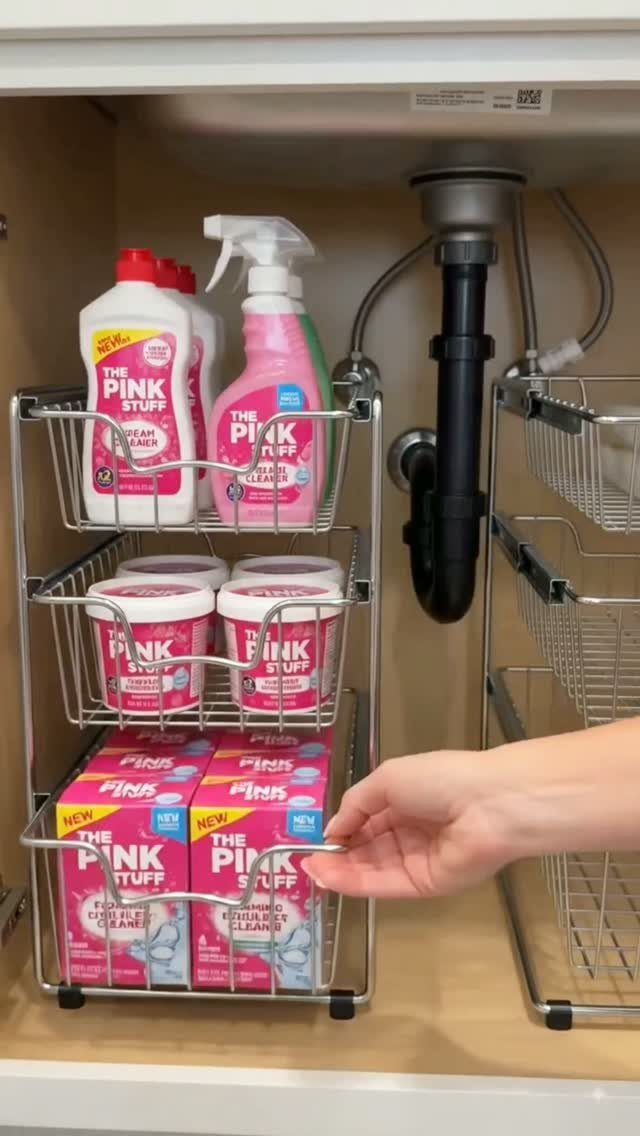
Under the sink, height goes to waste, and a three-tier wire rack stacks cleaning supplies in layers instead of one pile.
Measure around the plumbing before buying. Pick a rack that stands beside the pipes or straddles them, and check that no shelf touches the drain or supply lines.
Put the tallest bottles on the bottom tier and small tubs on top. Wire also lets air through, which helps in a damp cabinet.
25. Two-Tier Countertop Rattan Stand
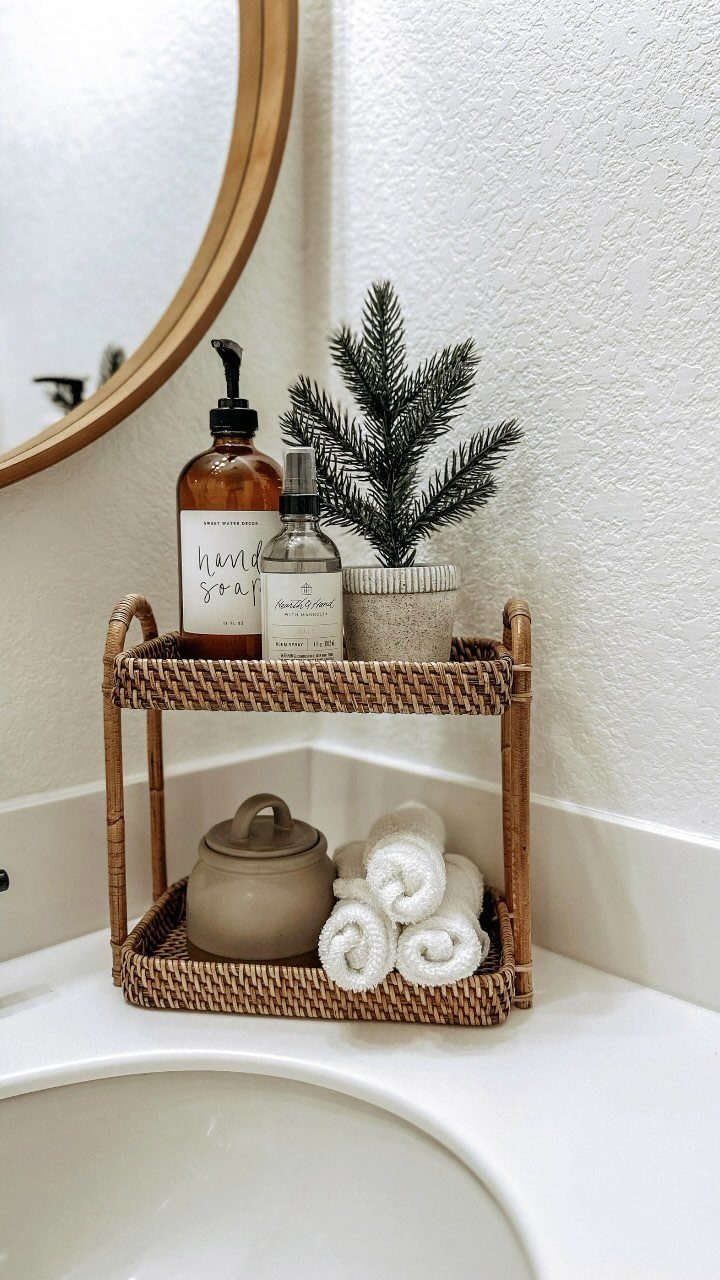
A two-tier rattan stand gives a vanity a second level, so soap, a small plant and rolled washcloths share one footprint instead of spreading across the counter. The woven texture also softens a white vanity.
Put the pump bottles on the lower tier, where a hand can press down without tipping the stand. Rolled washcloths and a small plant suit the upper level, and a plant that stays small keeps the stand from looking top-heavy.
Measure the counter depth first, and leave room beside the sink so water doesn’t splash the weave. Limit what goes on that stand to the things you reach for every morning, and keep the rest in a drawer or cabinet.
Decluttering Tips
Start with the expiration dates. Check makeup, skincare and medicine, toss anything past its date, then figure out what storage you need.
Next, pull out the duplicates.
Anything you haven’t touched in months can be donated or repurposed. Once you’ve pared down to what you actually use, you can see how much storage the room needs, and you often find it needs less than you thought.
Make this a habit, not a one-time purge. A quick check every so often keeps the shelves from filling back up.
Maximizing Space
Look at every blank stretch above eye level before you look at the floor.
The inside of a cabinet door is another spot people skip. It can hold small items without taking any shelf room.
Swapping bulky products for space-efficient versions also frees room. Detergent sheets, for example, take far less space than a jug.
Furniture that does 2 jobs earns its place in a tight room. Pick pieces that store things and serve another purpose, rather than adding single-use items.
Maintaining Organization
Put a clear label on every bin, drawer and shelf. When each item has a named home, putting it back takes seconds, and everyone in the house can follow the system.
Then set a weekly reset.
Before you bring home anything new, ask 2 questions: do I really need this, and do I have a place for it? If the answer to the second is no, the answer to the first usually is too.
Frequently Asked Questions
How should a bathroom be organized?
Daily items belong at eye level or lower, sorted by job into separate bins, so the blow dryer and brushes share one tray and the cleanser and moisturizer share another.
A label on each bin gives every item a named spot, which makes it easy for anyone in the house to put things back where they came from.
Start by tossing expired makeup, skincare and medicine, so you only organize what you actually use.
What are the best storage solutions for a small bathroom?
Go vertical first: floating shelves above the toilet, an over-the-door organizer with labeled bins, and a wall-mounted or pegboard setup all use space that sits empty.
A three-tier wire rack under the sink lets cleaning supplies sit in layers rather than in one tangled heap.
Before you buy, check where the pipes run and how far the door swings, since those 2 things decide what actually fits.
How can I add bathroom storage without drilling?
A leaning ladder rack holds towels on its rungs, a freestanding corner shelving unit stacks bottles into a small footprint, and a tension-pole shower caddy turns a tub corner into shelves.
All three need no drill holes, so they suit renters. Heavy bottles go on the bottom shelf, and a tension pole needs a hard twist to lock it in place.
How often should I declutter my bathroom?
A 5-minute sweep once a week stops the shelves from refilling, and a bigger purge each season picks up whatever slipped through.
Toss the doubles and anything untouched for months; most small bathrooms turn out to need less storage than the owner assumed.





