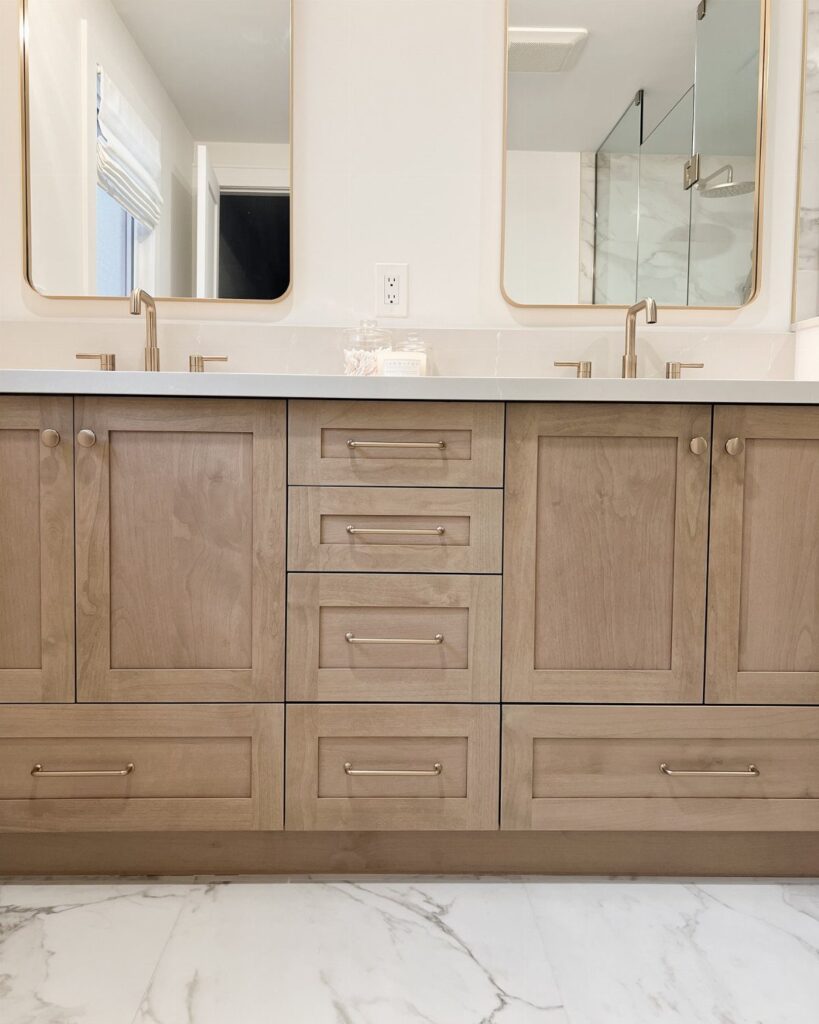
Paint, a pot of plants, or a single sculptural pendant can change a bathroom for very little, while a curbless shower with a floor sloped about 1/4 inch per foot or a platform for a freestanding tub means real planning.
Whether your walls and floor will let you move plumbing and framing decides how far you can go with a curbless shower or a freestanding bath, so check that before you pick a tile.
1. Showers with Benches
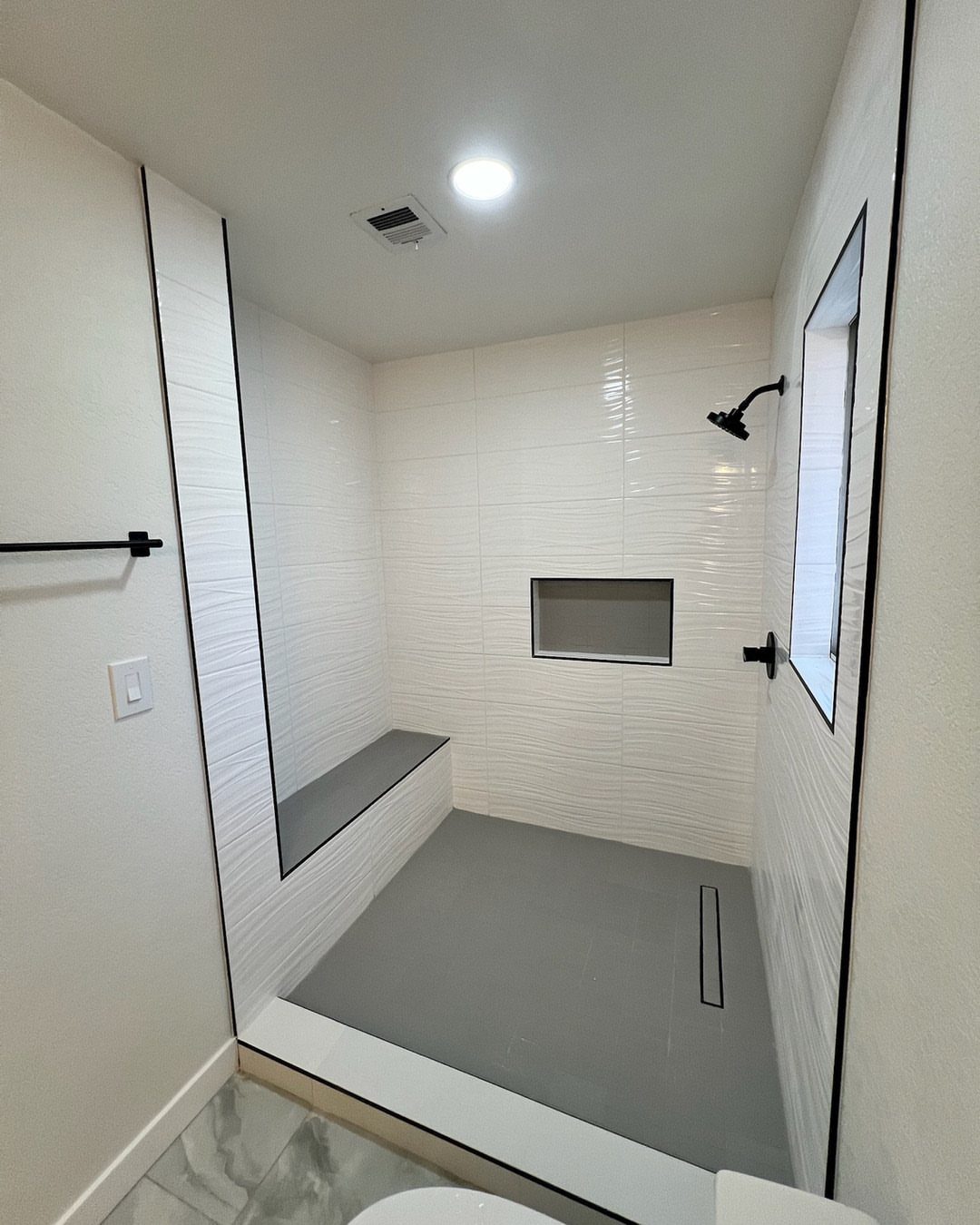
A built-in bench turns a plain shower into the part of the bathroom people remember. Pair a bench with a recessed niche in the shower wall, which keeps bottles off the seat and the lines clean.
I like a bench in the same stone or tile as the walls, since a contrasting seat can chop up a small shower. A matte black shower head against white textured tile gives enough contrast without adding more pieces.
Choose a bench only if the shower is big enough to hold it without crowding the spray.
2. Stone and Wood Natural Elements
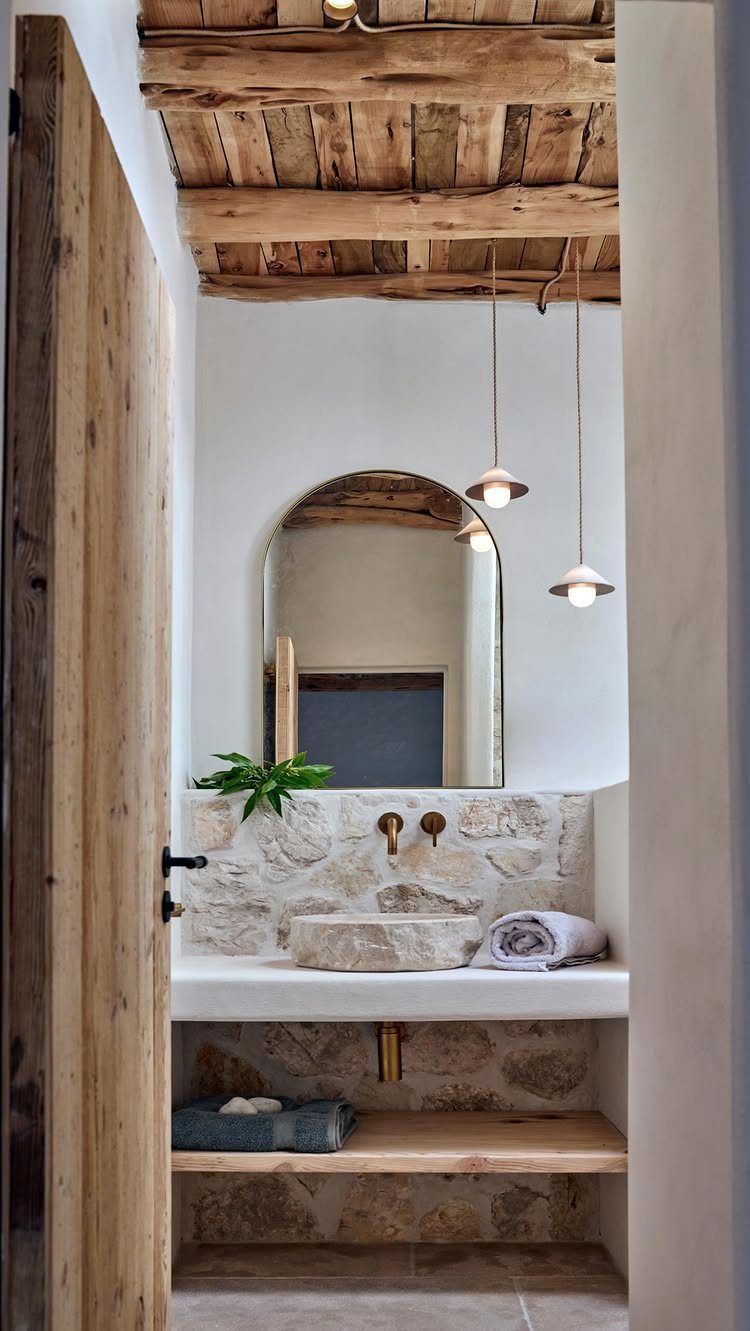
Wood overhead and stone all around is a combination that feels like a cabin spa, and the vessel sink sitting on top of the counter finishes it.
The ceiling is the move I would copy first, because it adds warmth without eating floor space.
Stone tile on the walls costs more than paint, so a single wall is a fair place to start on a tight budget.
3. Artisan Tile Designs
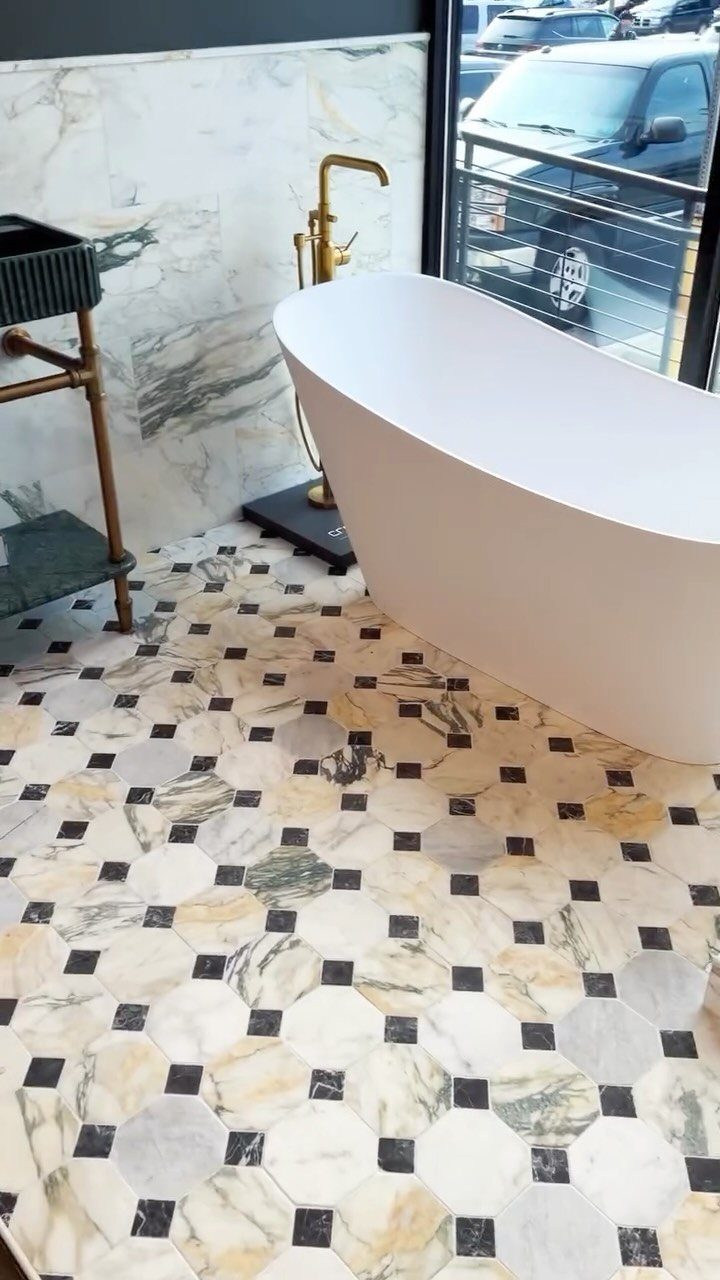
Hexagonal and octagonal floor tiles in marble do the work of a rug, and they can carry a bathroom that otherwise stays quiet.
Here the walls stay plain marble while the floor holds the pattern, which is the balance I would copy.
Handcrafted tile costs more per square foot than basic ceramic, so use it where the eye lands: the floor around a tub, or one wall. A gold faucet picks up warm veining without competing.
4. Curbless Showers
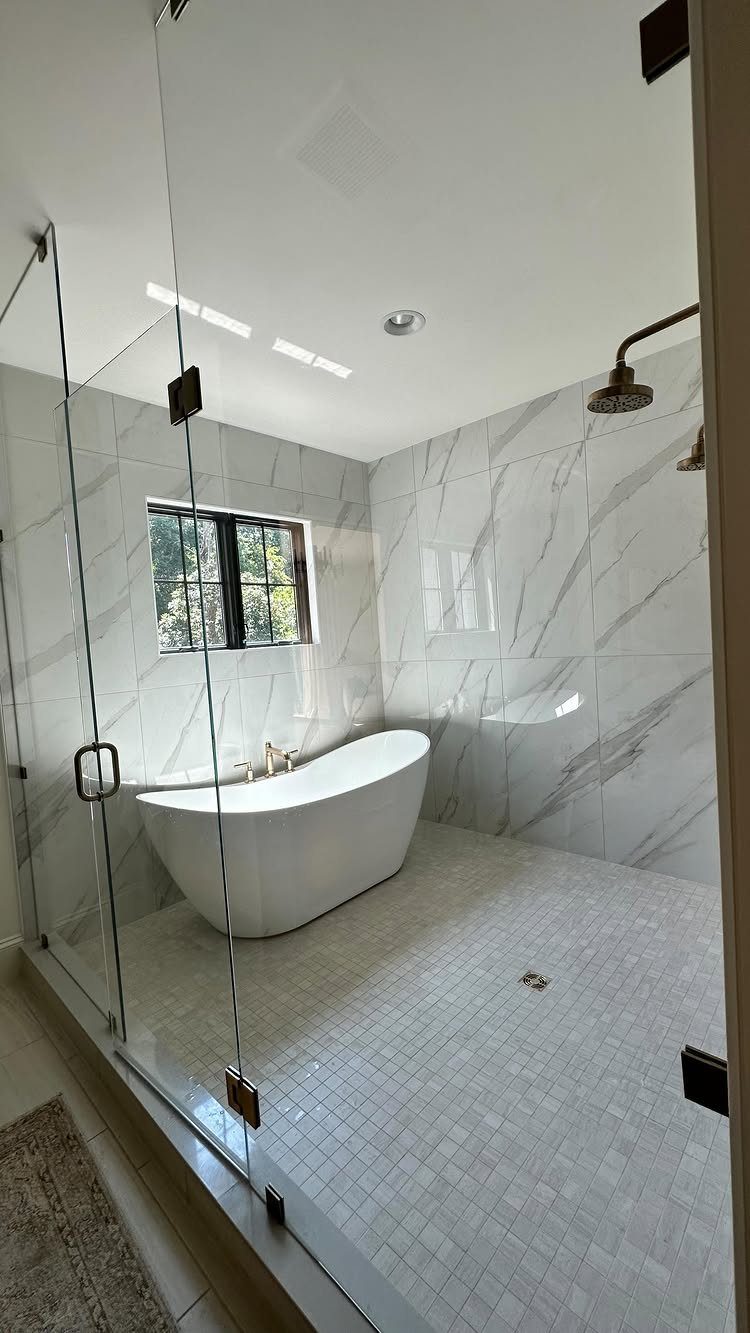
A curbless shower removes the step, so the floor runs straight into the shower and the water has to be handled by a slight slope toward the drain, usually about 1/4 inch per foot.
A curbless design also looks bigger, since the floor tile reads as one unbroken sheet.
Frameless glass panels instead of a curtain keep the sightline open, and white marble on the walls adds to the calm.
I would pick this over a standard curb for anyone who wants easier entry, though it takes more planning to slope the floor correctly.
5. Terracotta and Deep Greens
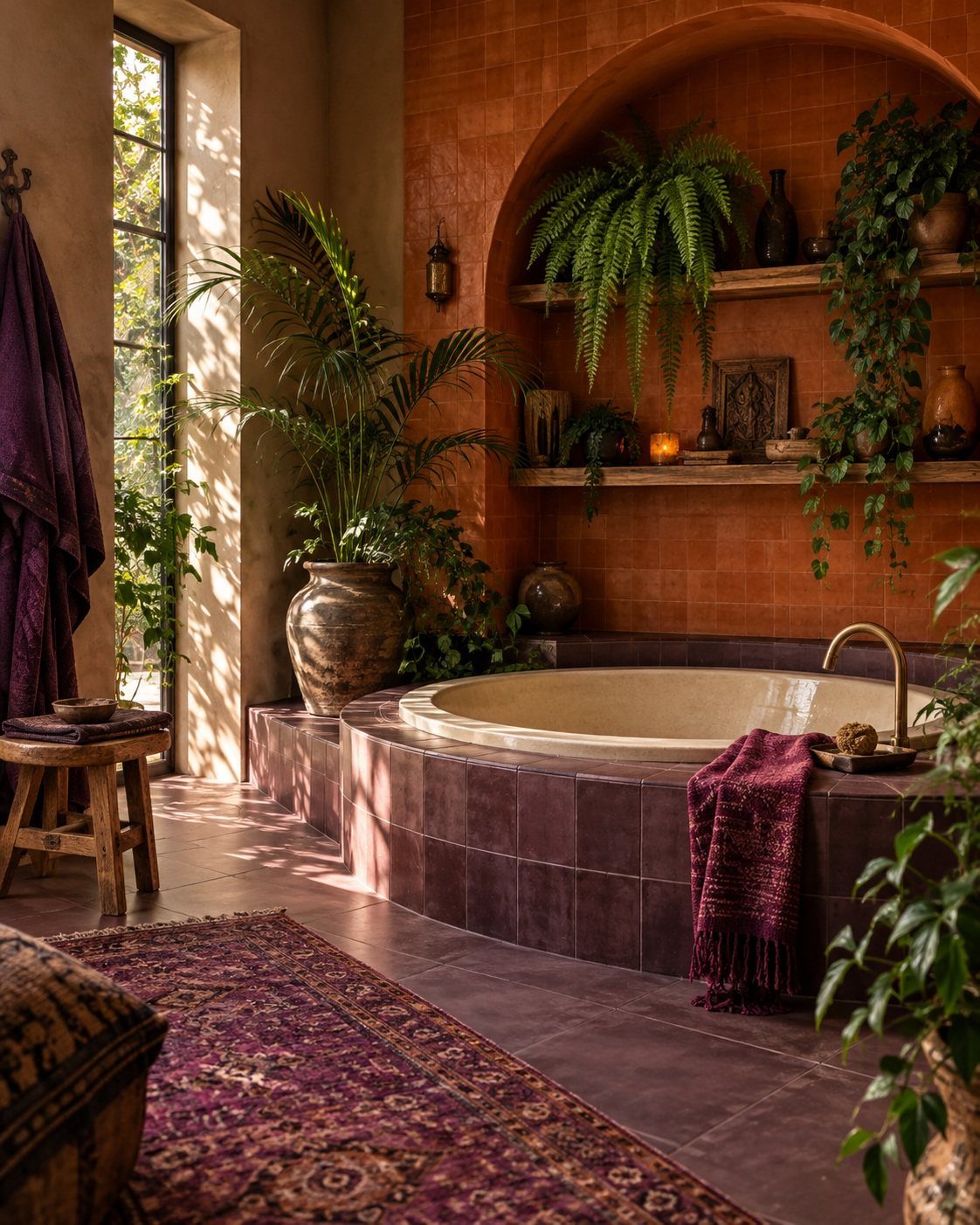
Warm terracotta walls and green plants make a good pair, because the green reads as a natural contrast to the clay color.
Plants are the cheap part of this idea and the easiest to swap.
I would start with the terracotta paint and two or three pots, then add a wooden stool for towels. Pick tile colors that sit comfortably beside the walls rather than fighting them.
6. Freestanding Baths
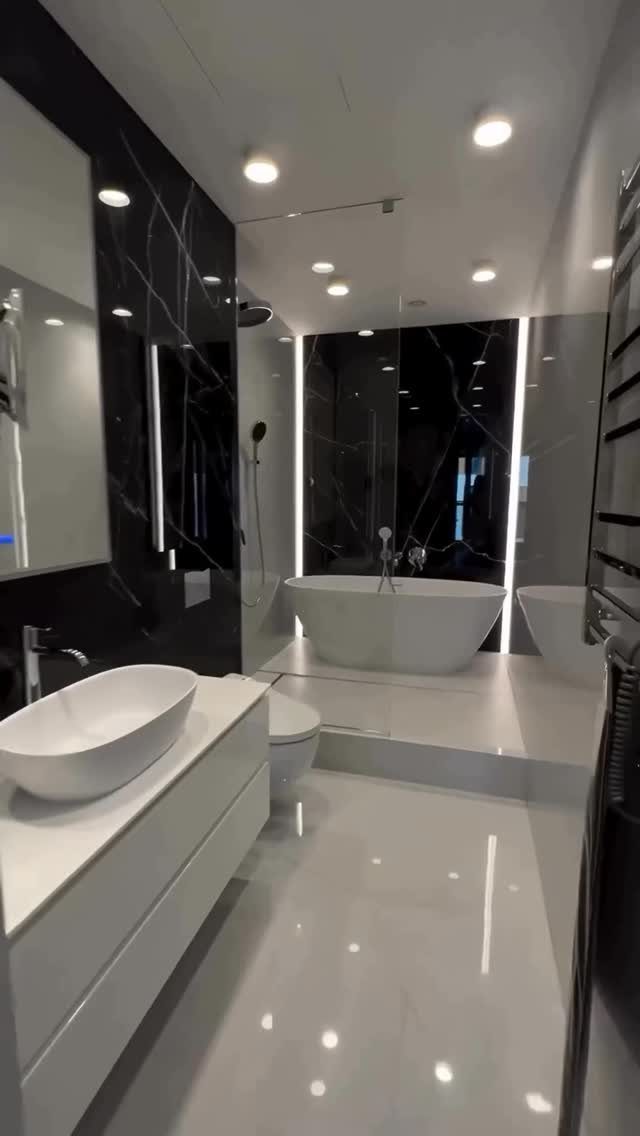
Setting a freestanding tub on a platform makes it a piece of furniture, and against black marble walls the white shape stands out sharply.
Glossy white flooring bounces light back into a dark room, which keeps it from feeling closed in.
A white vessel sink repeats the tub’s color, so the room has 2 bright points against the dark stone. I would keep everything else minimal here.
This is a bigger project than a swap-in tub, so plan the platform and plumbing before choosing the tub.
7. Terracotta and Burgundy
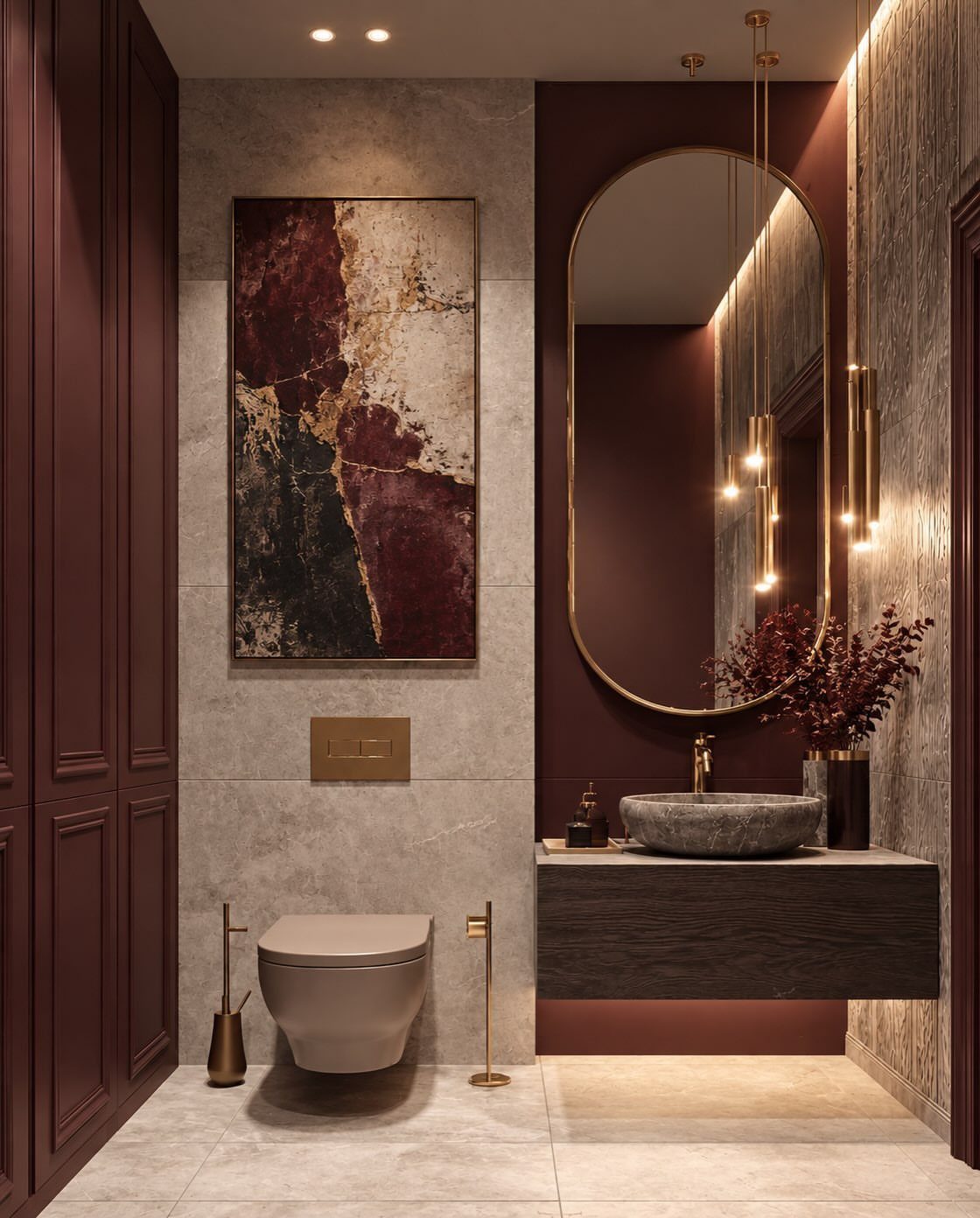
The gold-framed oval mirror is what I’d copy first, since gold reads warm against deep red.
Paint is the cheap way in. Try burgundy on the walls, keep the tile neutral, and let one painting carry the color.
Keep the finish matte so the wall looks rich, not shiny.
8. Sculptural Lighting
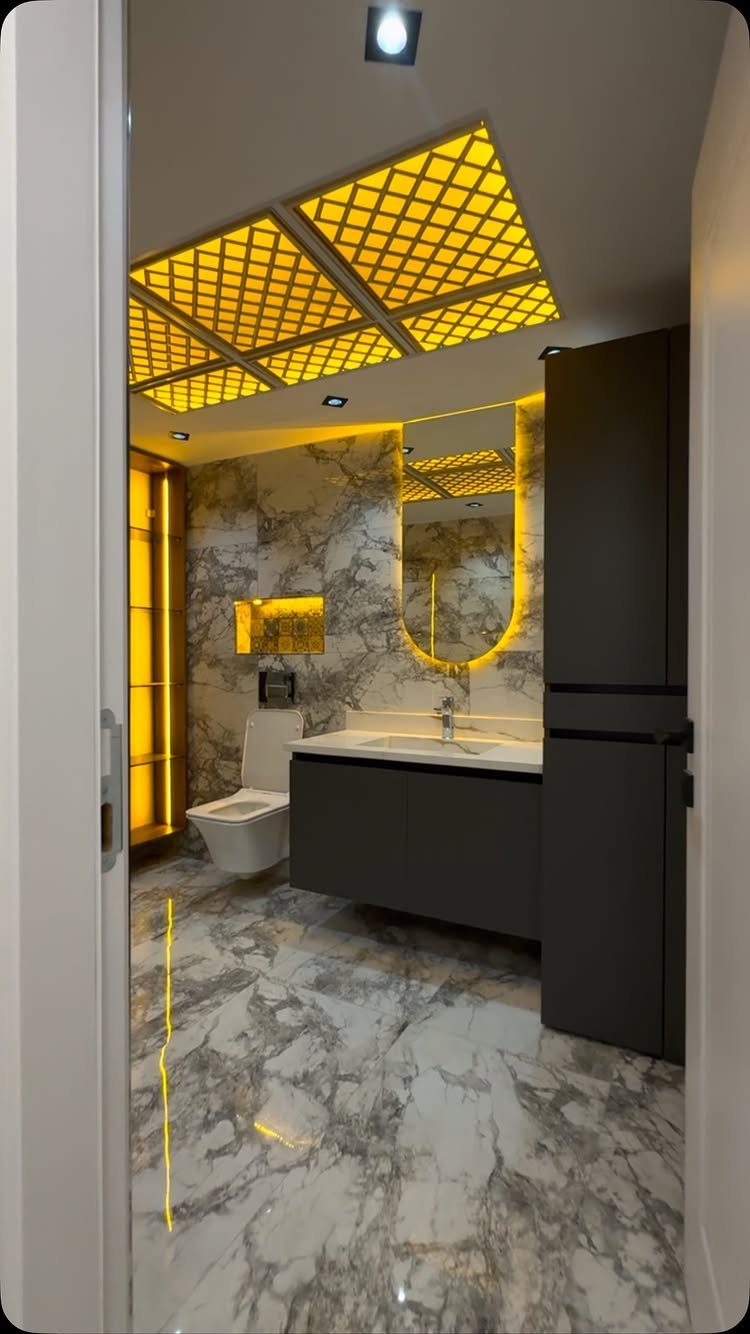
A lit lattice overhead works as art, and in a marble bathroom the warm yellow glow bounces off every polished surface. Because the light sits in the ceiling and walls, the floor and vanity stay uncluttered.
Marble carries the room, so a plain dark vanity is the right move.
A custom backlit panel costs more than a standard fixture. On a tight budget, one sculptural pendant or wall light gives a similar effect for far less.
9. Framed and Tinted Glass Panels
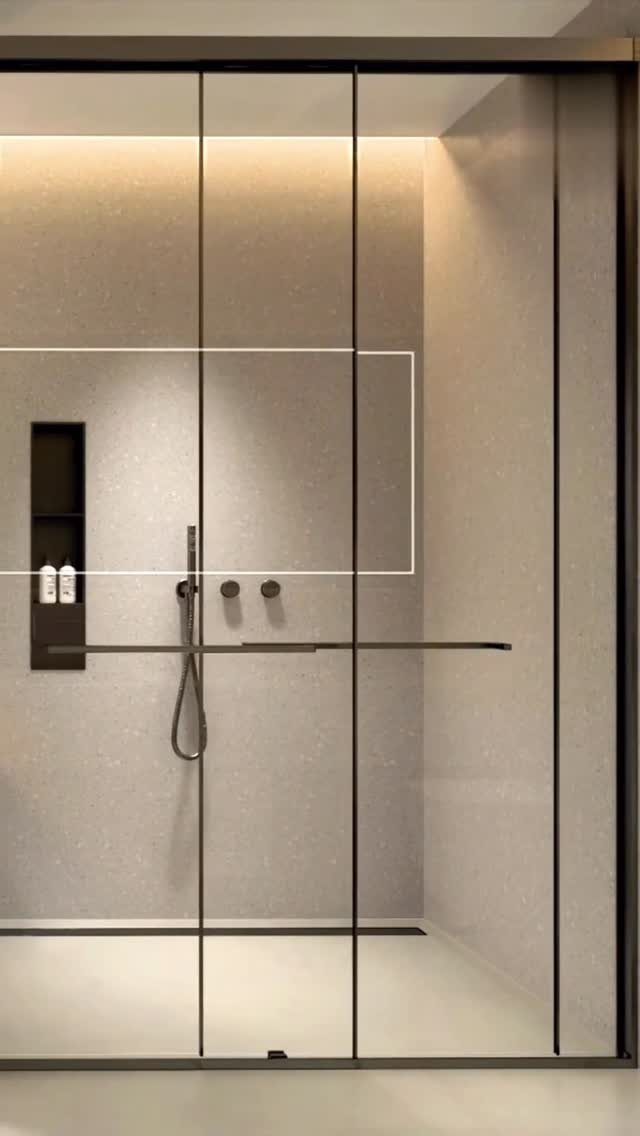
Dark-framed, tinted glass splits a walk-in shower from the rest of the room while the light still passes through.
Black frames add a graphic outline against beige stone, and I like that they look like a window more than a cage.
A handheld showerhead and a built-in niche suit this setup, since both keep the glass free of bottles and hoses. Tint also softens what the glass shows of the shower, which clear panes do not.
10. Glass Block Shower Walls
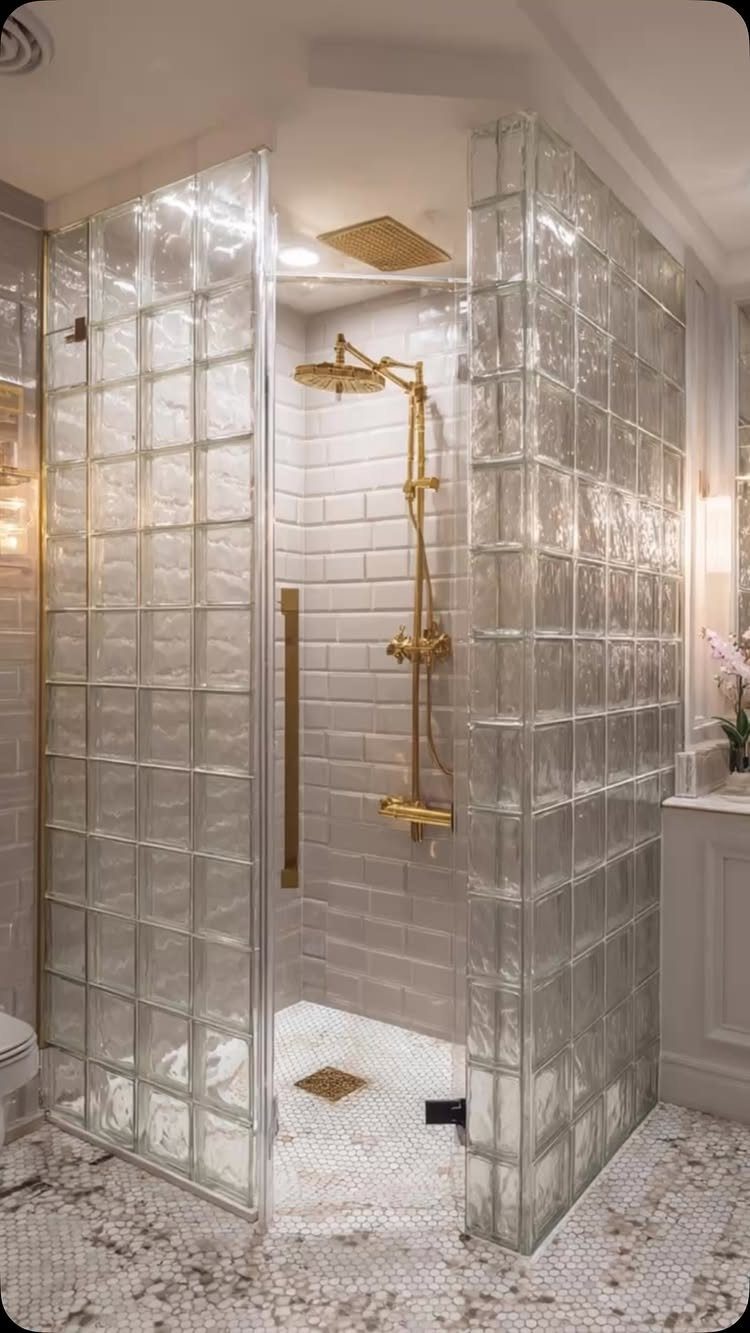
Glass block lets daylight into a shower while hiding the view, and the retro look works with white subway tile. Gold fixtures warm up all that white, and a pebble-style floor gives the shower texture underfoot.
I would keep the palette this tight: white, translucent, one metal. Adding more colors fights the glass.
For a weekend project, the block wall is the slower part to build, so plan on that before buying fixtures.
11. Vertical Kit-kat Tile Accents
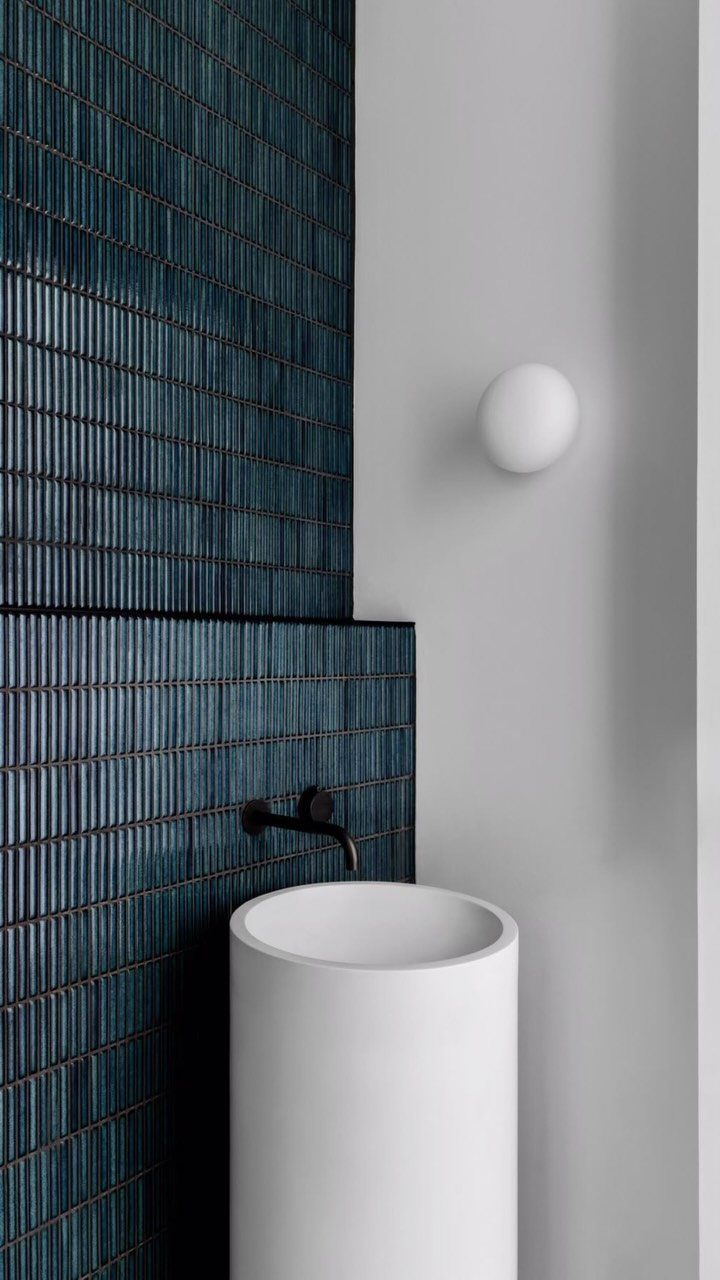
Deep blue finger tiles set vertically pull your eye up, and a plain white wall beside them keeps the color from taking over. One tiled wall behind the sink is a small enough area to afford a nicer tile.
A white cylindrical pedestal sink is a clean match, and a black wall-mounted faucet adds a crisp line against the blue. Choose a grout shade close to the tile so the wall reads as one deep color.
12. Heated Towel Rails
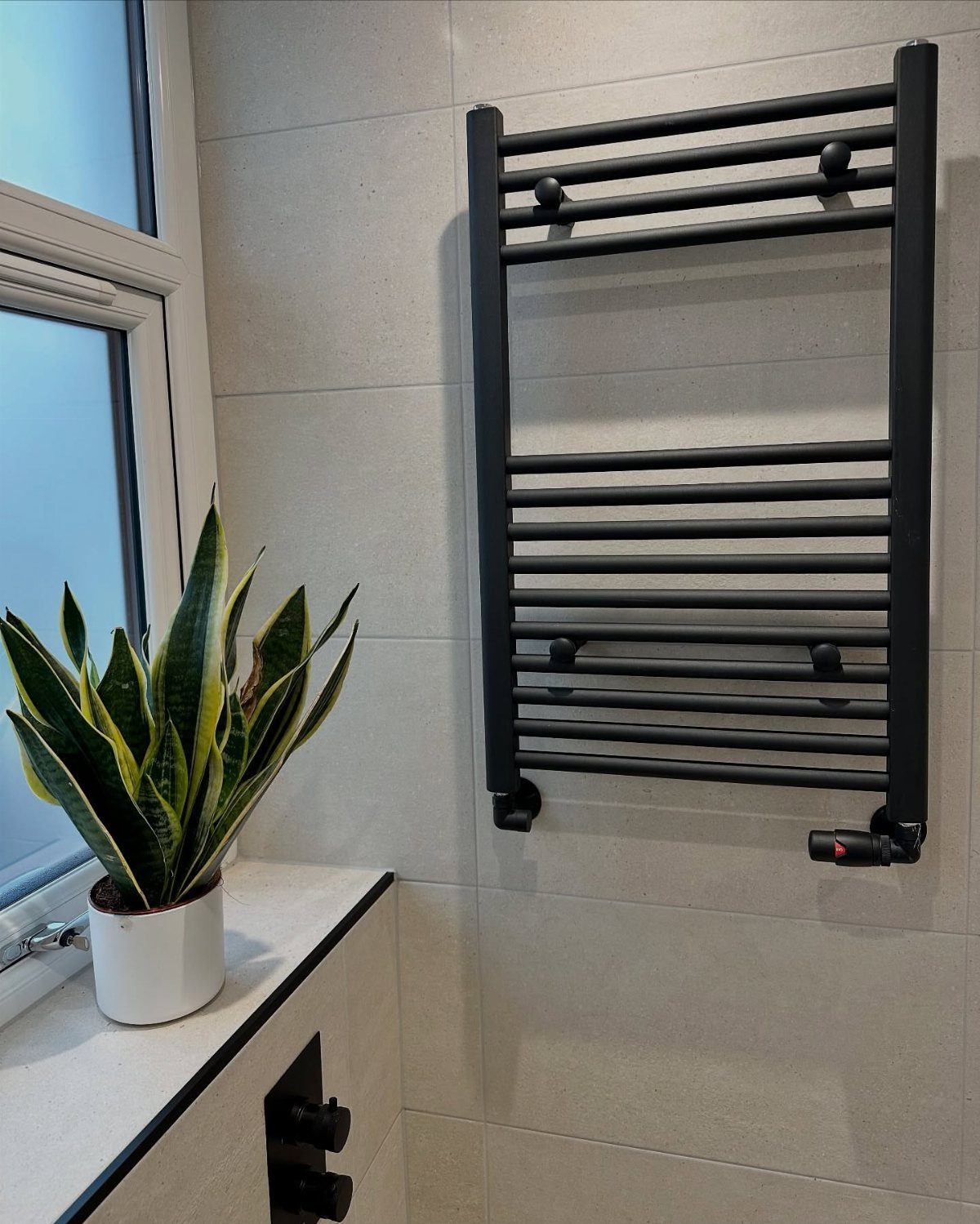
A black heated towel rail does 2 jobs: it dries towels and gives a plain tiled wall a strong line. Against light grey tile, the black stands out without needing any other accent.
I would mount it near the shower and beside a window, where a plant like the snake plant adds a soft counterpoint.
Check whether the rail plugs in or needs a plumbed connection before buying, since that decides where it can go and what the install costs.
Advice on Timeless Features
Loud pattern is the easiest thing to regret in a bathroom, because tile is the one finish you can’t swap in a year or two when you tire of it. Bold or patterned tile dates a room fastest.
Neutral colors and simple designs read as calmer and hold up better as tastes shift. If you want to have fun, put the personality in things that come off easily: paint, towels, a mirror, a light fixture.
Before settling on any permanent surface, ask yourself whether you’ll still like it once the novelty wears off. If the answer is "maybe," pick the quieter option.
“From there, it’s about layering in materials, lighting, and storage that not only perform well over time but also create a sense of ease and calm. The best bathrooms feel intuitive, not overdesigned.”
— Veranda
Importance of Functionality
Before choosing finishes, map how the room actually gets used. Measure clearances for the door swing, drawer fronts, and how far you reach for a towel from the shower.
Small fixes often matter more than big ones. If the wall framing has room and no pipes run through it, a pocket door removes the swing of a hinged door and gives that floor space back.
In a tight room, replacing the tub with a shower can open things up too.
A niche built between the studs holds your bottles and soap without sticking out, so you keep the inches a freestanding shelf would use up. Keeping plumbing runs short also holds down cost and scope.
Once it’s built, a well-planned layout looks obvious, and you stop bumping into things on the way from the door to the sink.
Sustainability in Design
Water use is the easiest place to start. Water use is now a standard way to judge showers, toilets, and fittings, so read the rating on each fixture at the store or in the listing, not after it’s installed.
A leak sensor under the vanity is a cheap, quiet upgrade. It can flag a slow leak early, so the cabinet stays dry, and you save on the repair as well as the water.
Pick low-maintenance materials too. Surfaces that don’t need constant resealing or replacing mean less waste over the years.
A smart shut-off valve, if you can fit one in the budget, closes the supply when your water use looks unlike your usual routine.
Frequently Asked Questions
What bathroom tile never goes out of style?
Soft whites, warm grays, and plain shapes like 3×6 subway tile or 2-inch hex age the best.
Bold colors and busy patterns date a room fastest, and since tile is stuck to the wall with thinset, you won’t be swapping it out in a couple of years.
Black and white tile, whether a checkerboard floor or a white wall with black trim, keeps returning because the contrast never really reads as a trend.
What are the hottest bathroom trends for 2027?
The strongest trends are warm, nature-inspired rooms with textured materials like stone and wood, plus statement showers. Designers also point to artistic tile on a single wall or area, red and burgundy tones, and glass block.
Bathrooms are being treated more like a place to relax than a purely practical space, and many people put the budget into the shower and storage.
What bathroom trends are going out of style?
Wall-to-wall open shelving and cold, clinical all-white schemes are fading, and warmer, textured rooms are taking their place.
A vessel sink sits the rim 4–6 inches above the counter, which makes you lean over to wash, and the seam where it meets the counter traps soap scum and grime.
Humid air settles on whatever sits out on open shelves, so towels stay damp longer and bottles pick up a film of dust. Overhead-only vanity lighting is also dropping off because it casts shadows across the face.
What are the interior design trends for 2027?
Expect tactile materials, sculptural detailing, and rooms with more mood and less clinical polish.
Soft neutrals still hold influence, while a bolder current brings in Neo Deco touches, red and burgundy marble tones, mid-century references, and more architectural glass block. Personalized spaces and integrated technology also lead the forecasts.





