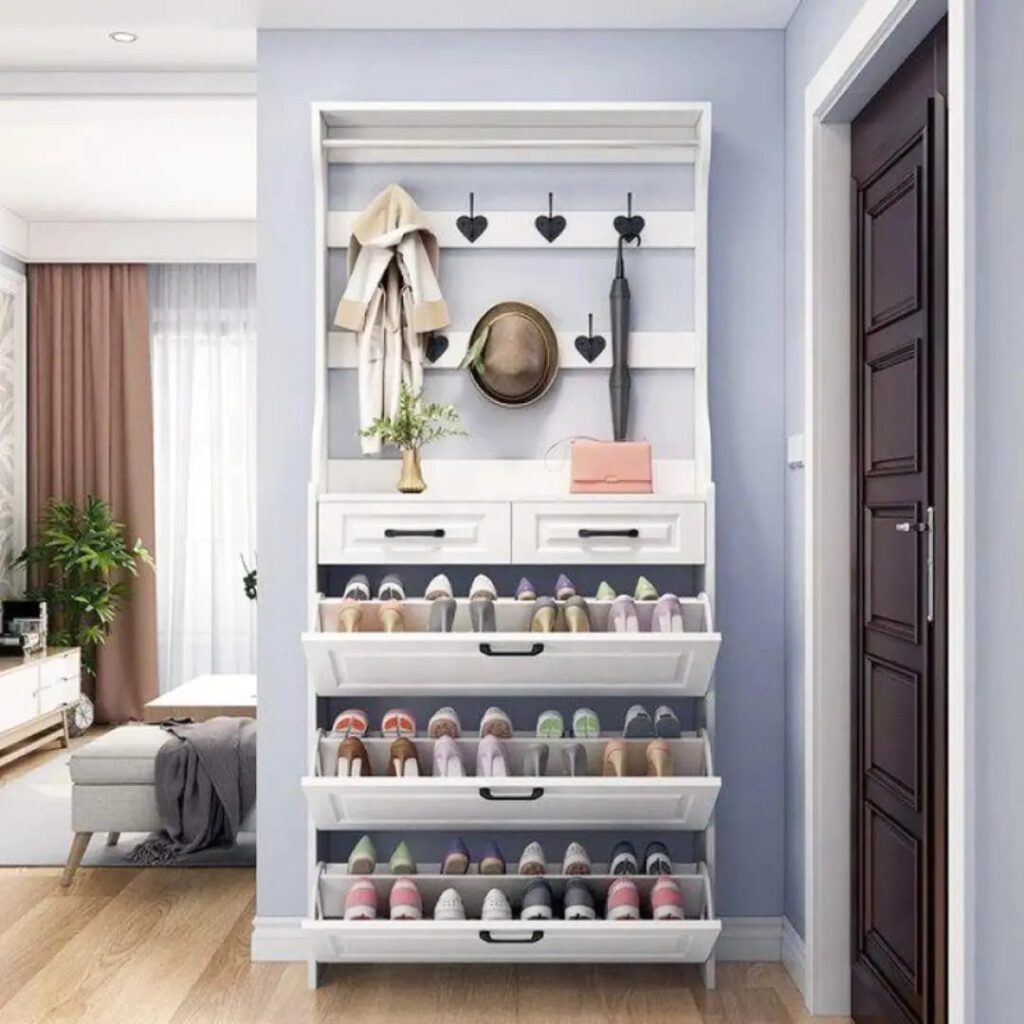
Floor space versus wall space decides most of this, so check which one your entry has more of before picking an idea.
A tight hallway with no floor to spare suits the wall-mounted pieces, like a peg rail under a mirror or a narrow vertical organizer, while a little more room opens up a bench or a console with 2 ottomans tucked underneath.
The ideas run from a weekend with a drill, a level and a couple of wall anchors to built-in cabinets that need an electrician for the lighting.
1. Storage Bench
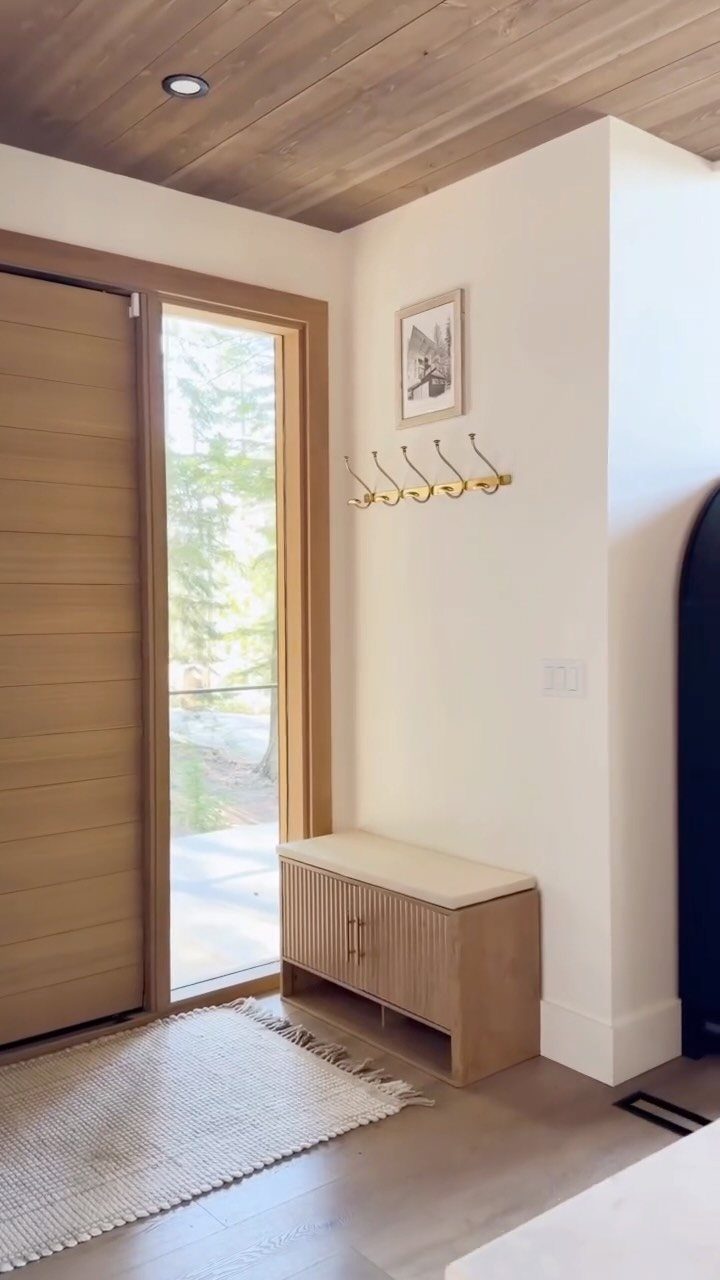
Pick a bench with a hinged lid or an open cubby base: the top holds you while you pull on boots, and the inside swallows the shoes, scarves and dog leashes that would otherwise end up on the floor.
Doing two jobs from one footprint matters because a narrow entry rarely has floor space to spare.
Pick one with a cushioned top if you’ll actually sit on it; a cream cushion like this one is easy to wipe and hides little.
Keep the inside for off-season items, and put daily shoes elsewhere so you aren’t lifting a lid every morning.
Hooks right above the bench finish the setup.
2. Vertical Storage
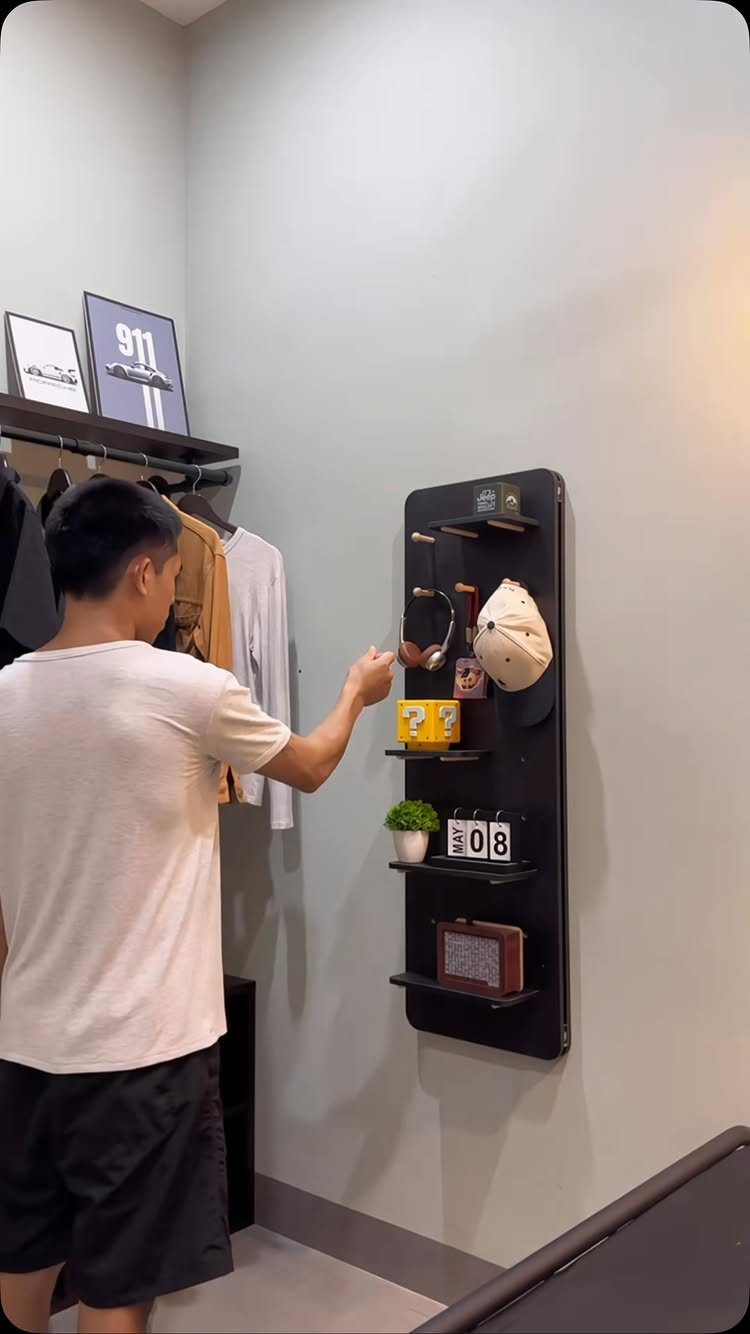
Wall space is the one thing a tiny entry always has, and a narrow vertical organizer with a mix of shelves and hooks puts it to work.
Headphones, a hat and a calendar can all live at eye level without touching the floor.
Mount it near the door so the things you grab last are the first within reach. Black reads crisp against a light wall and keeps the piece looking deliberate instead of cluttered.
Fasten it into studs or use proper anchors if it will hold anything heavy.
3. Shoe Storage Solutions
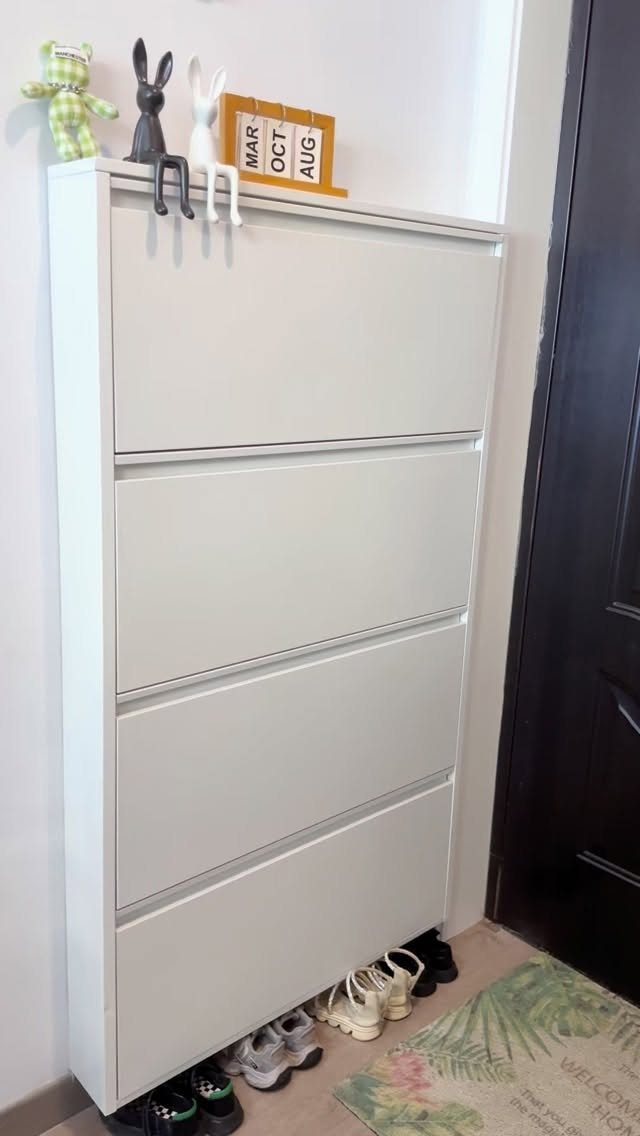
Shoes cause more entryway chaos than anything else, so a slim cabinet with tilting drawers is my pick for hiding them. The drawers tip open, which keeps the unit shallow enough for a tight hallway.
Leave a few pairs underneath on the floor for daily wear, and keep the rest inside.
The flat top becomes a spot for small decor, as it does here, though I’d keep it mostly clear so it doesn’t turn into a dumping ground.
4. Mirror Above Hooks
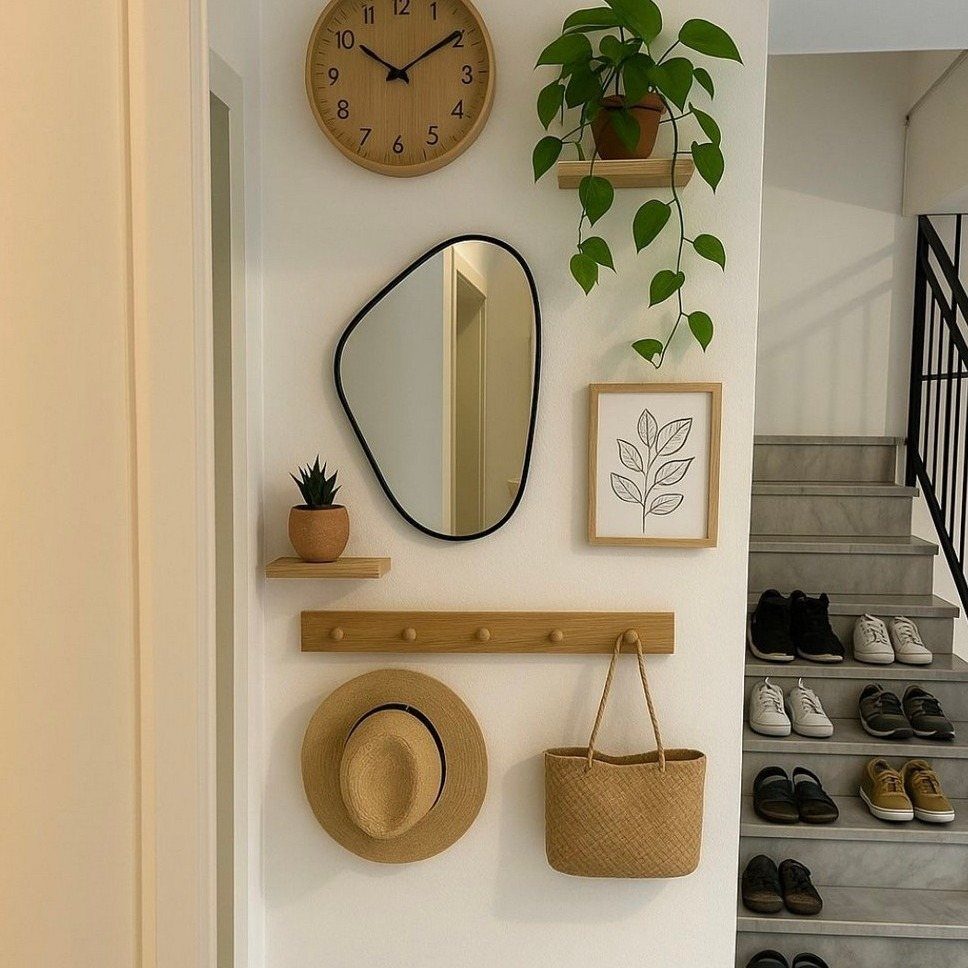
Hang a mirror directly over a row of pegs and one wall does two jobs: a last check on your way out and a landing spot for bags and hats.
A wooden peg rail costs little, and you can hang it in a weekend with a drill, a level and a couple of wall anchors.
An irregular, organic mirror softens a hard entry wall and doesn’t need to line up with anything. Keep the rail low enough for coats and bags, with the mirror a few inches above the top of whatever hangs there.
5. Ceno Console Table
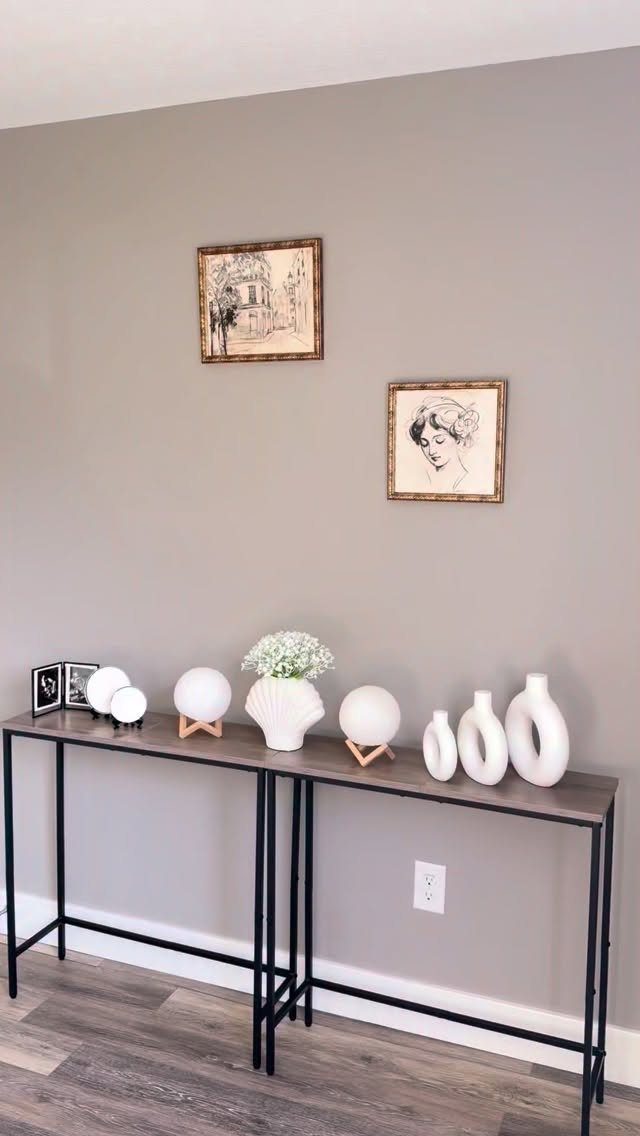
A narrow console table gives the entry a real surface, and that matters more than extra storage when floor space is tight. Look for a shallow depth so it doesn’t block the walkway.
Keys, mail and a small bowl cover the daily essentials.
Slim black metal legs keep the base visually open, so the room feels larger than a solid cabinet would. Add a vase or framed art, but stop at two or three pieces so the top stays usable.
6. Command Center
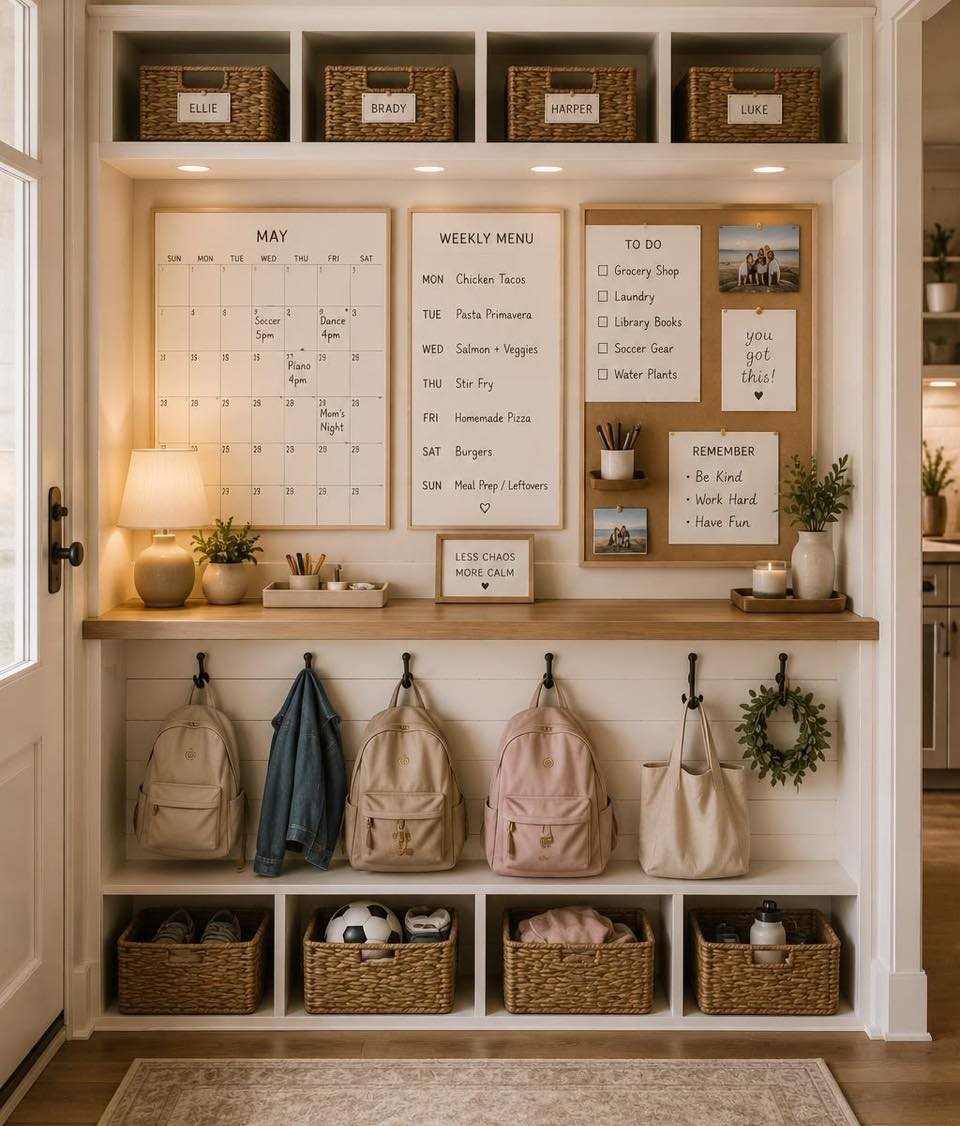
A command center turns one stretch of wall into the household’s brain: a calendar, a weekly menu, a to-do list and a place for keys and paperwork.
Everything gets read on the way out the door, which is when you need it.
Give each person a labeled hook or cubby, with a name on it, so backpacks stop wandering. Set baskets under the hooks to catch mail, keys and other loose items before they spread to the nearest counter.
7. Entryway Cabinets
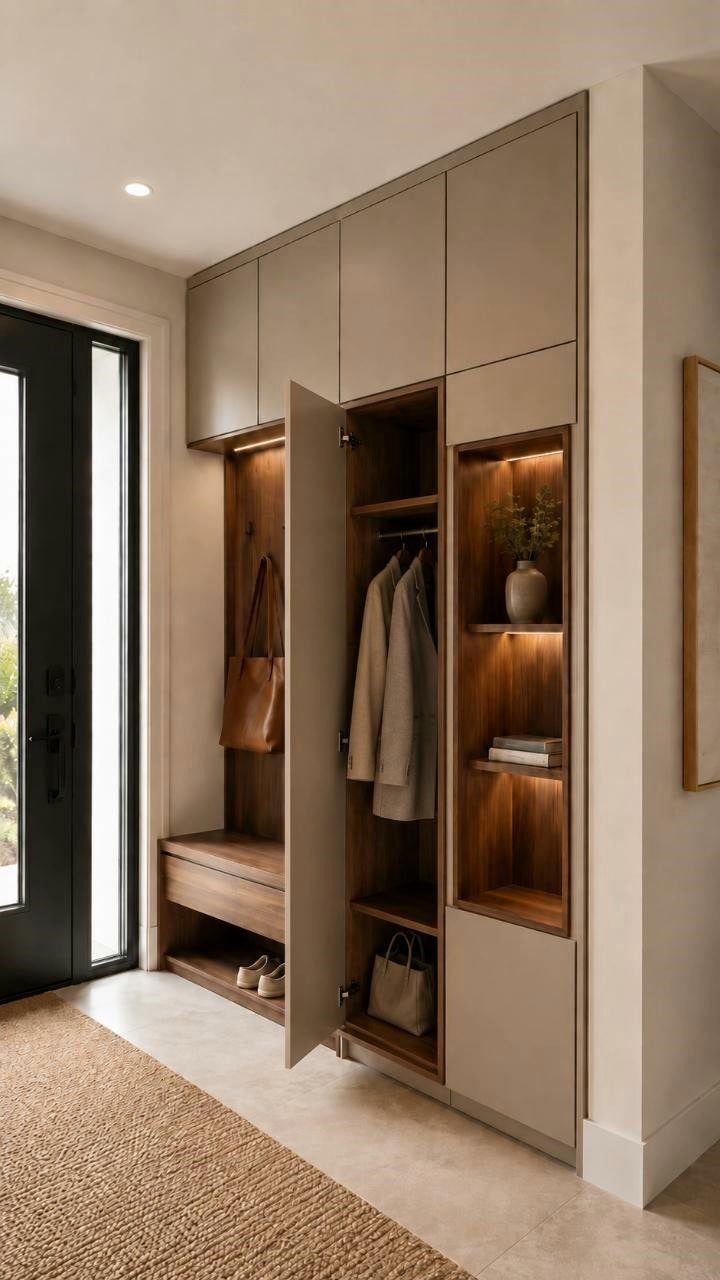
Closed cabinets hide the clutter that open shelves would show, so a built-in run beside the door keeps the entry calm even on a messy week.
Add a wooden bench and one open shelf if you want a place to sit and something you can style.
Taupe is a forgiving color: it reads warm, hides scuffs better than white, and suits a black door. Built-in lighting makes the unit feel finished, though it adds electrical work, so line up an electrician early.
Put the things you use daily behind the doors at hand height.
8. Labeled Storage Bins
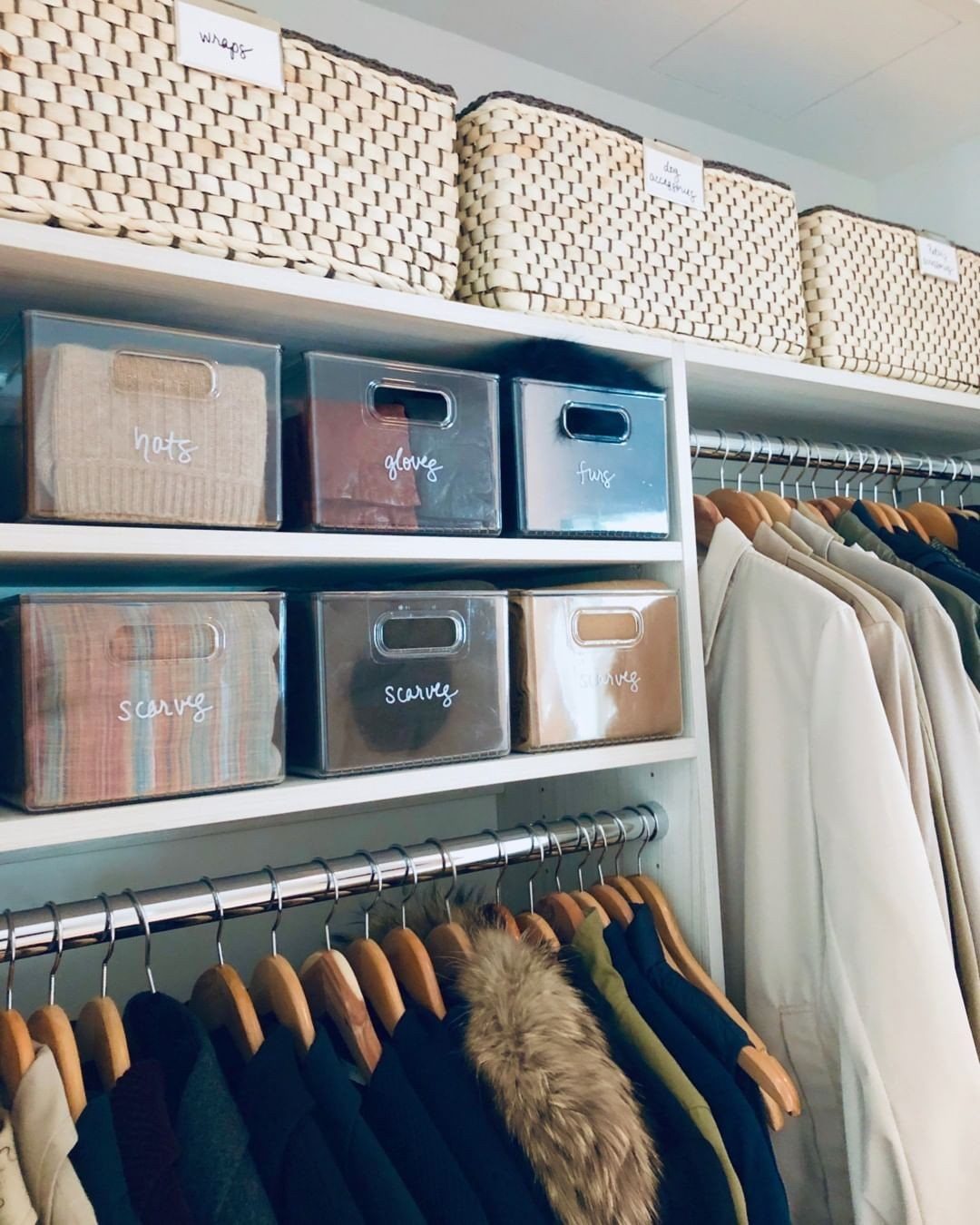
Labels turn a pile of bins into a system anyone in the house can follow. Words like "hats," "gloves" and "scarves" mean nobody has to open three containers to find one mitten.
Mixing woven baskets with clear bins works well: clear ones suit small items you want to spot at a glance, while woven ones hide the visual noise.
I’d label every bin on the front, at eye level, in plain block letters.
Keep the shelf beside the coat rack so you grab and go.
9. All-in-One Hall Tree Unit
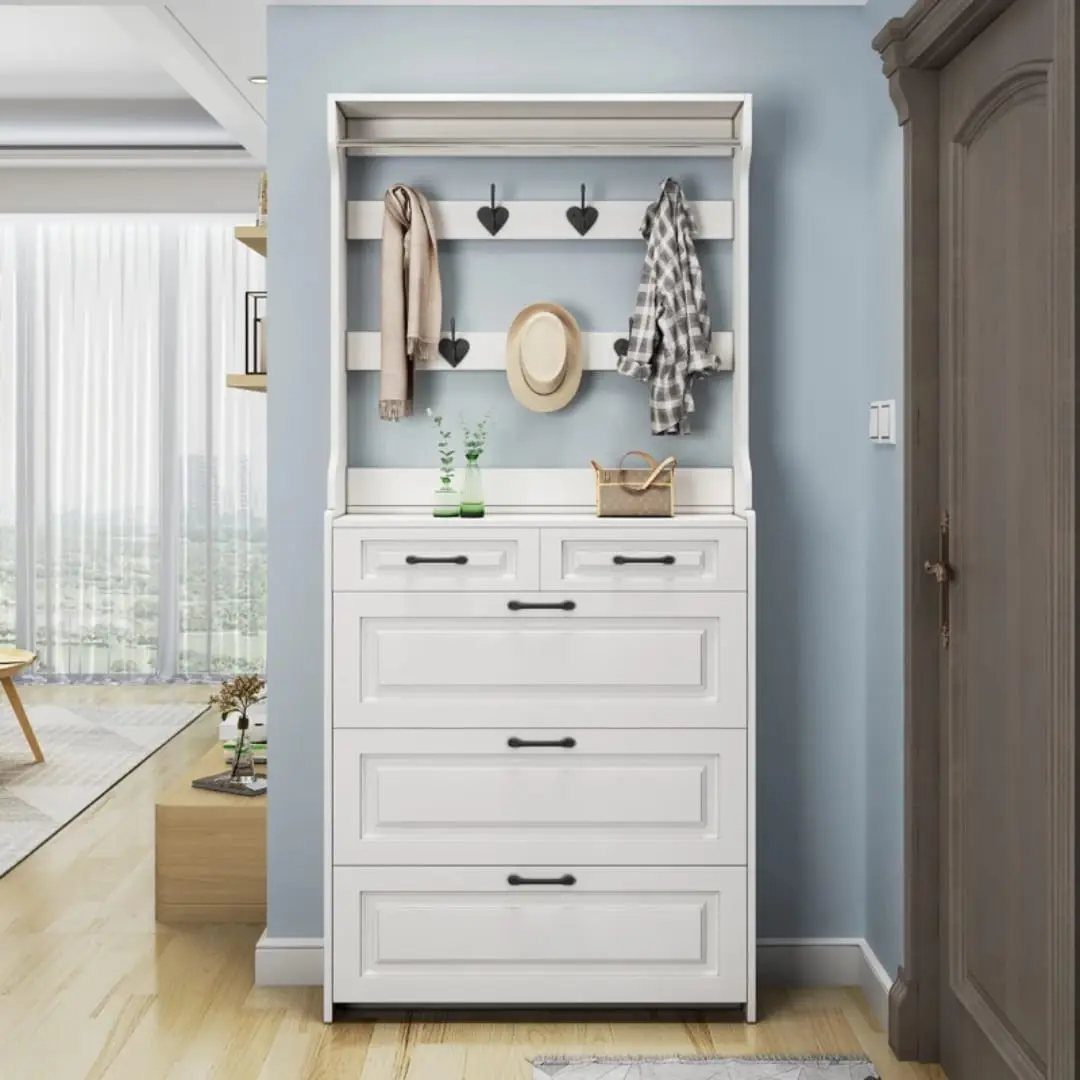
A hall tree packs hooks, a small display shelf and drawers into one narrow footprint, which is exactly what a tight entry needs.
Buying one piece is also faster than building a system from several, and you can set it up in an afternoon.
White keeps it light against a colored wall, and the drawers hide gloves, keys and other small things that would crowd the hooks. Limit the hooks to coats and bags you use daily.
Keep the display shelf for one or two items so it stays tidy.
10. Narrow Console with Tucked Ottomans
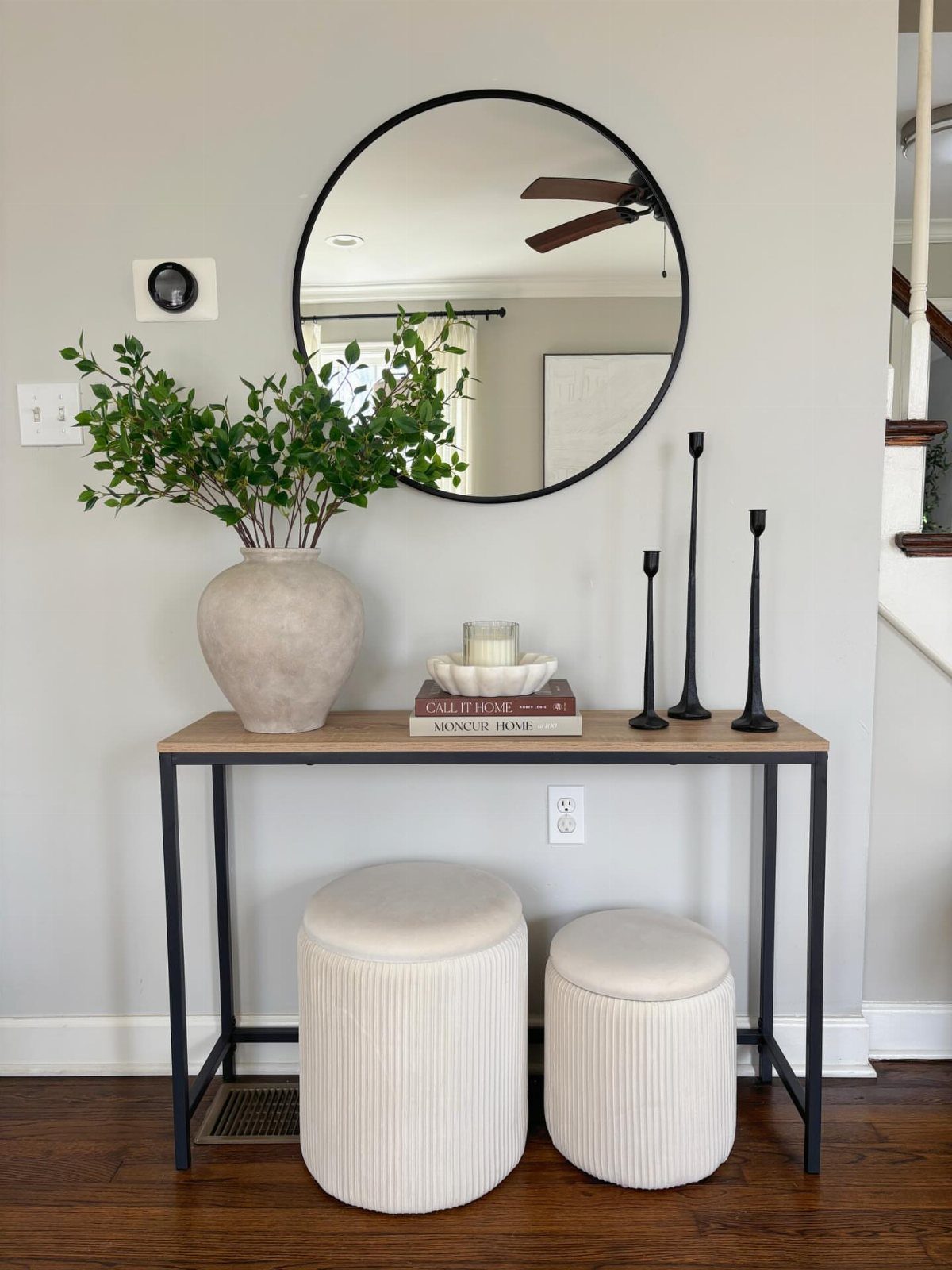
Tuck 2 ottomans under a slim console and you get a surface above, seating below, and nothing extra in the walkway.
Pull them out when you need to sit and tie shoes, then slide them back to open up the floor.
Pick ottomans short enough to clear the console’s underside with room to spare, and measure first. Ribbed white fabric looks tidy against dark metal legs, though it will show dirt, so choose a cover you can wipe or wash.
A mirror above the console finishes the wall.
11. Cubby Organizer with Baskets
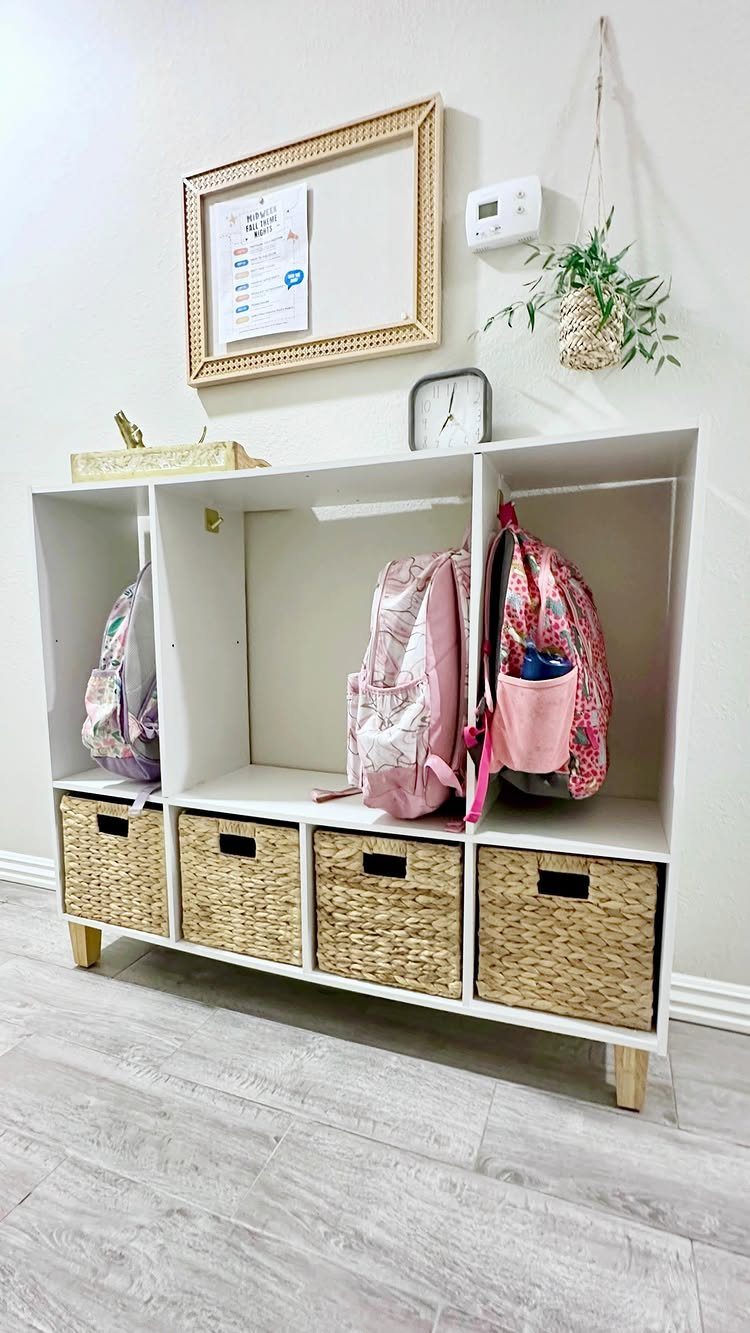
A cubby unit sorts a household by section: backpacks hang in the open upper compartments, and woven baskets below catch shoes, hats and whatever else needs a home.
The top spots stay quick to reach, and the baskets hide the mess.
Assign one cubby per person if you can, so nobody has to ask where their things go.
Anchor tall units to the wall.
Importance of Entryway Organization
Entryway clutter spreads on its own schedule. Entryway clutter builds fast: a few pairs of shoes turn into a heap by the door, coats pile on the nearest chair, and that heap is what greets every guest first.
A designated spot for each daily item stops that. When shoes, coats, bags and keys have a home near the door, the morning routine gets faster because nobody hunts for anything.
Small homes feel this most.
If the living area sits right next to the entrance, a messy landing zone is the first thing visitors see, and it’s also the first thing that leaks onto the couch, the kitchen counter and the dining table.
You don’t need a full system to see a difference. Start with one place to sit, a few hooks and a basket, then add pieces only after you notice what still ends up on the floor.
A tidy entry also makes the whole home feel more intentional. That effect is hard to measure, but I notice it every time I walk into a space where the door area has been sorted.
Frequently Asked Questions
How do you organize a small entryway?
Work upward and keep furniture slim. A narrow wall organizer with shelves and hooks, plus a bench with hidden storage, covers most of what a tight entry needs.
Walls are the one thing a small entry always has, so use them before you give up any floor.
A bench, 3 or 4 hooks and one basket make a solid first pass; hold off on buying anything else until a week of real use shows what keeps ending up on the floor.
What should I store in my entryway cabinet?
Keep the things you grab on the way out the door: keys, bags, hats, gloves, scarves, umbrellas and pet leashes. Seasonal accessories also fit well.
How do you keep shoes organized near the door?
For a narrow hallway, a tilt-out shoe cabinet around 7–9 inches deep holds more pairs than any open rack and keeps them out of sight.
Two or three everyday pairs can sit on a tray by the door, and everything else goes into the cabinet.
A bench with a cubby base also works. If you put daily pairs in a lidded bench, you’ll be lifting the lid every morning, so keep that space for off-season items.





