Whether a stand-in shower costs you a weekend or a full remodel depends on one fact: whether the water has to move.
A curtain, new fixtures or mosaic tile can go in without replumbing, while double heads, curved glass and a skylight mean framing or pipe work that needs a contractor.
The post’s own cost figure shows the gap, with walk-in installs running $1,000 to $15,000. Renters should stick to finishes and fixtures, and owners planning to stay can open walls for layout changes or built-ins.
1. Skylight Shower
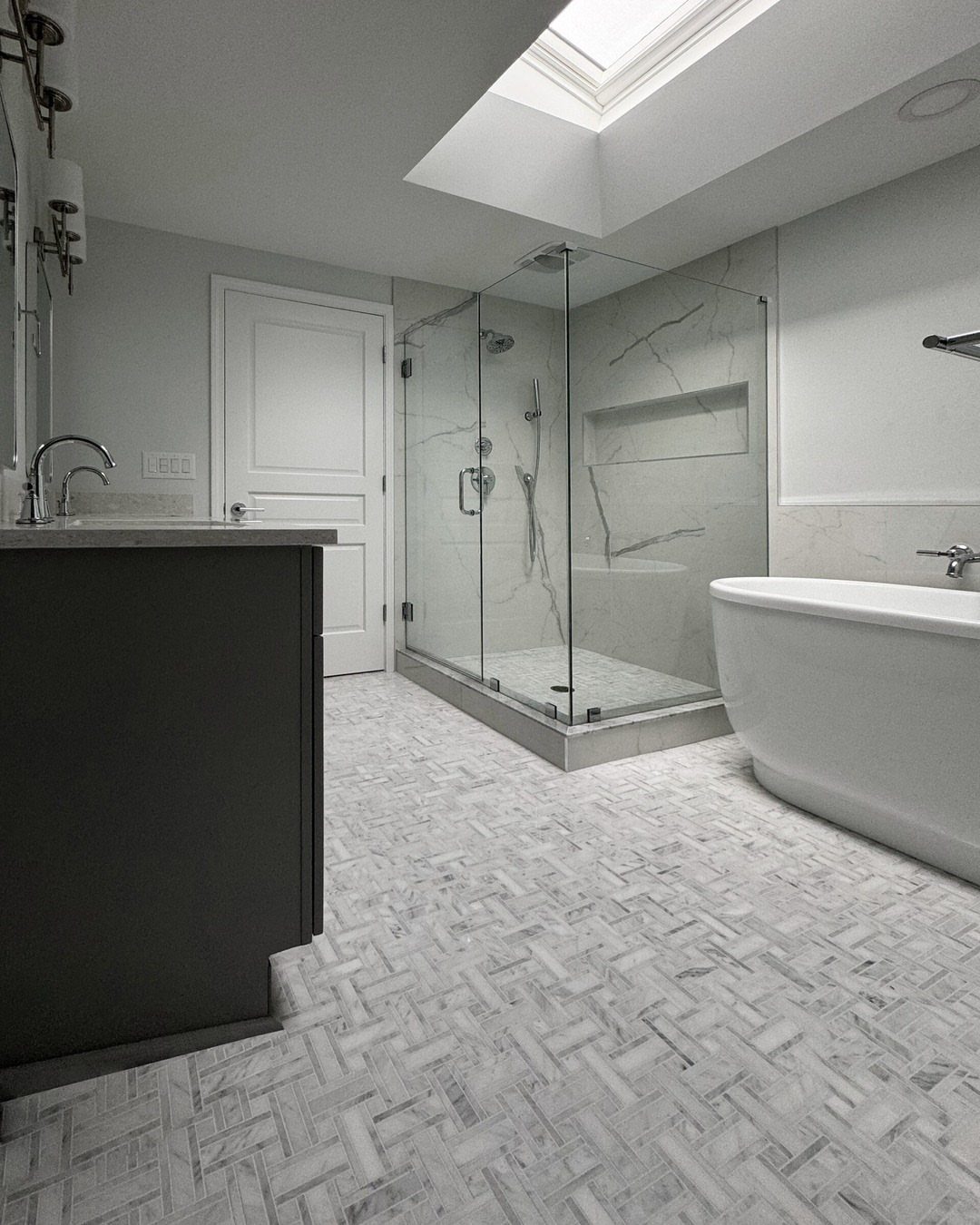
A skylight right over the shower puts daylight on the wet zone, which is the part of a bathroom that usually gets the least. With glass walls around it, the light reaches the rest of the room too.
Glass works better than a curtain here, since a curtain would block the overhead light.
This is a bigger project than most on this list, so I’d price it before falling for it. For a renter or a weekend budget, a light-colored wall and clear glass get you part of the way.
2. Bold Tiles
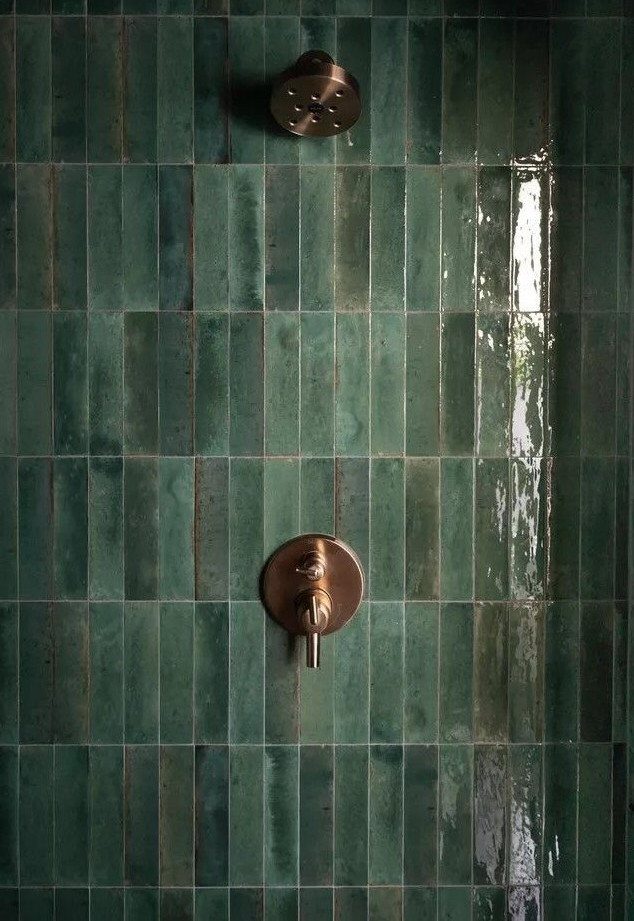
Tile is the cheapest place in a shower to take a risk, because a wall of it covers a small area. Glossy green laid vertically draws the eye up and makes a low ceiling feel taller.
Bronze fixtures suit a deep color like that better than chrome does, so pick the finish before you order the tile. If patterns tempt you more than solid color, let the tile be the only loud thing in the room.
One bold wall is plenty. Grout in a close shade keeps the color looking unbroken.
3. Frameless Glass
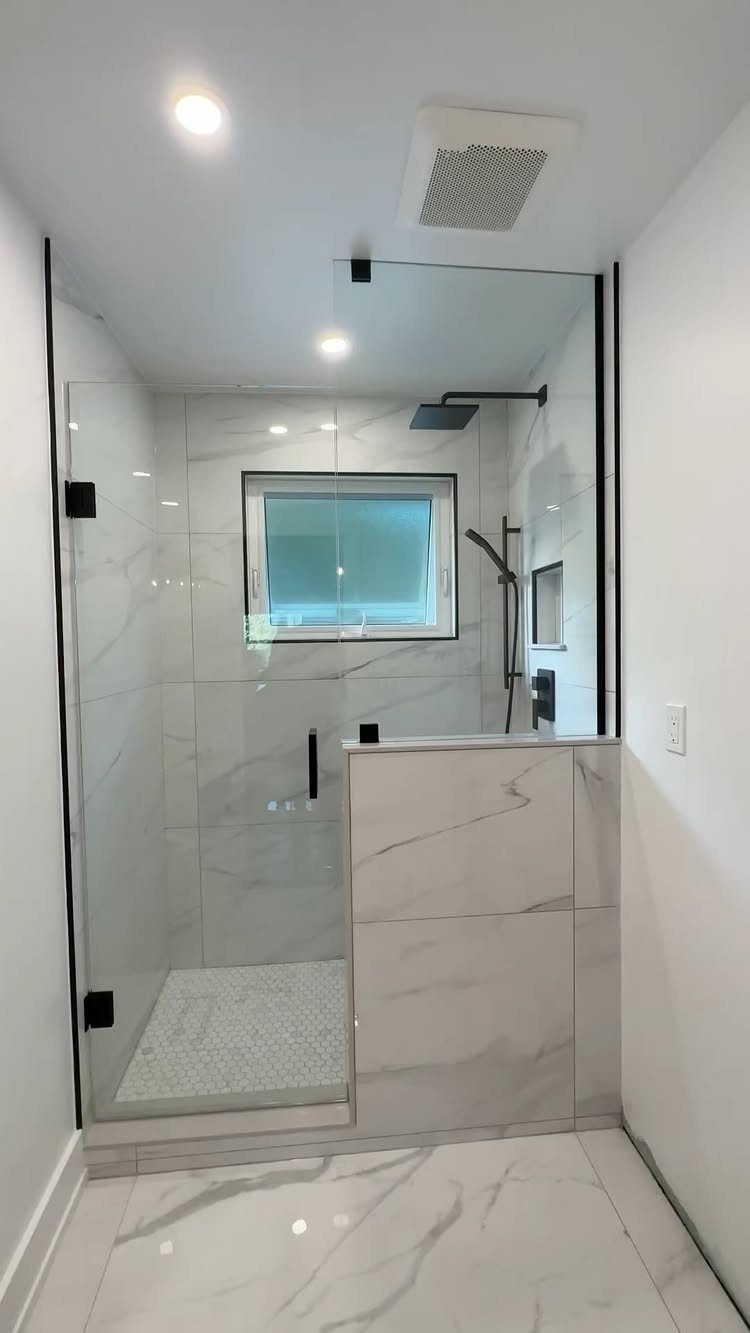
Frameless glass removes the metal grid that chops a compact bathroom into pieces. You see the whole wall of tile, so the room reads larger than it measures.
Clear glass pairs well with a pale marble-look tile, and a small window beside it keeps the space bright.
Frameless panels cost more than framed ones, so I’d put the money here only if the tile behind them is worth seeing.
Expect to wipe the glass down after showers, because there is no frame to hide water spots.
4. Black Fixtures with White Tiles
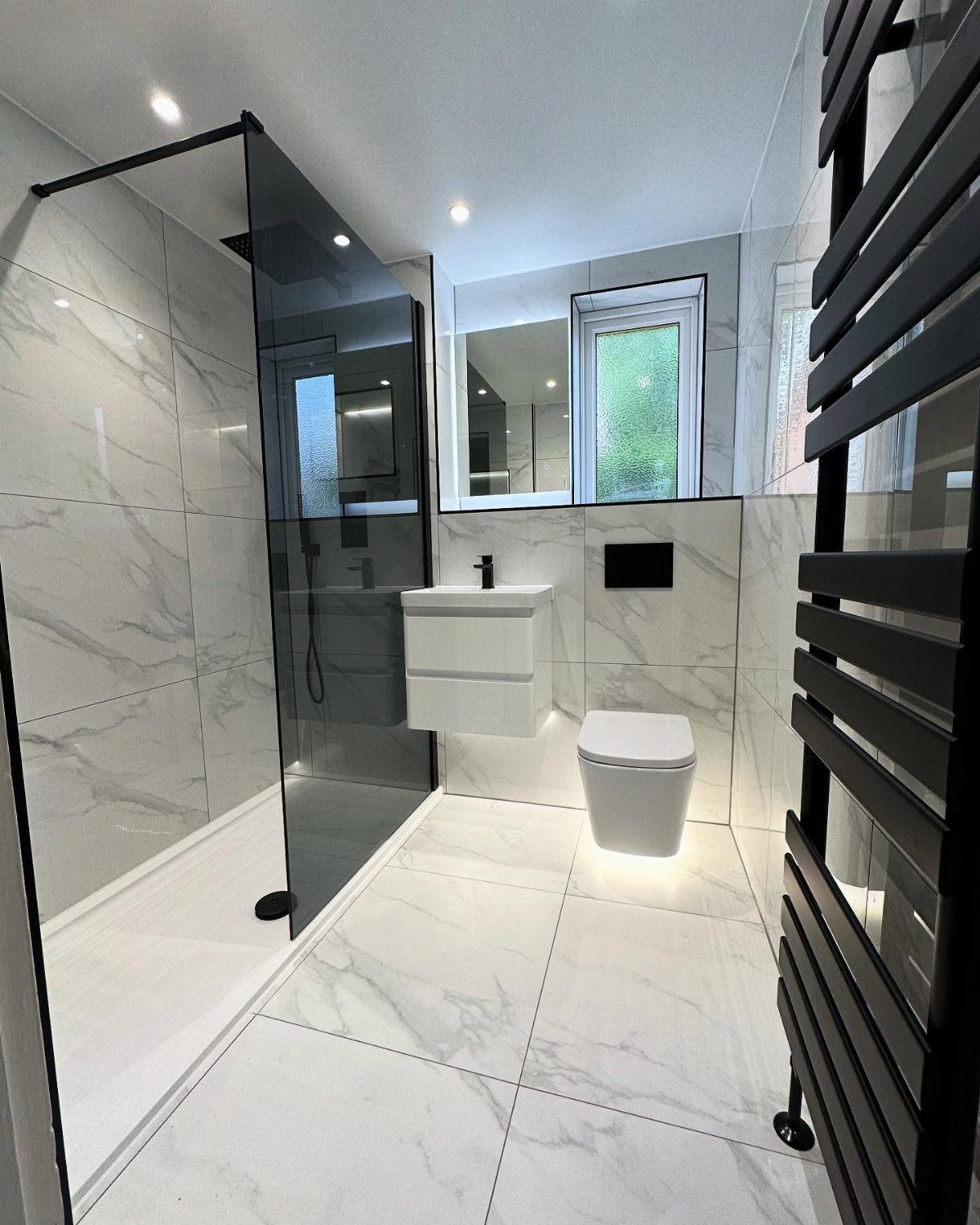
Black against white is the most dependable high-contrast scheme in a bathroom. White marble-style tile bounces light around, and thin black lines on the shower frame draw the layout like a sketch.
Repeat the black in 3 or 4 places and stop: faucet, frame, a towel radiator. That repetition is what makes it look planned instead of random.
A white floating vanity leaves the floor visible, which makes tight quarters feel larger. Black shows water spots, so keep a cloth handy.
5. Shower Curtain
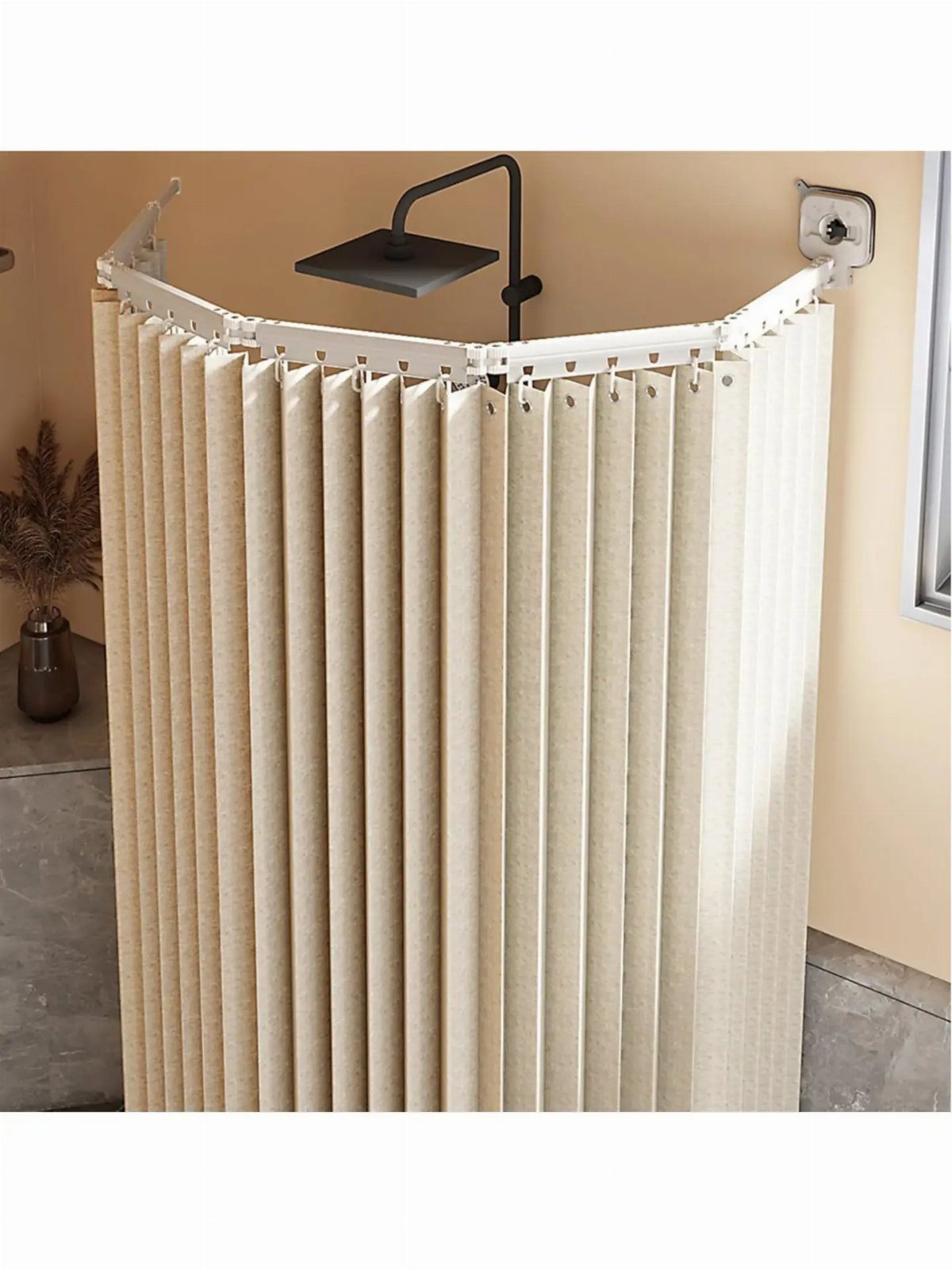
A curtain is still the cheapest way to enclose a shower, and a pleated beige one looks softer than most glass doors. Swapping it takes a few minutes, which suits renters well.
A curved rod is my pick for small stalls. It bows outward and gives you more elbow room inside, and a white rod fades into the wall.
Choose a fabric you can wash, or hang a plain liner behind it. Letting the curtain hang long adds height to the room.
6. Sleek Modern Fixtures
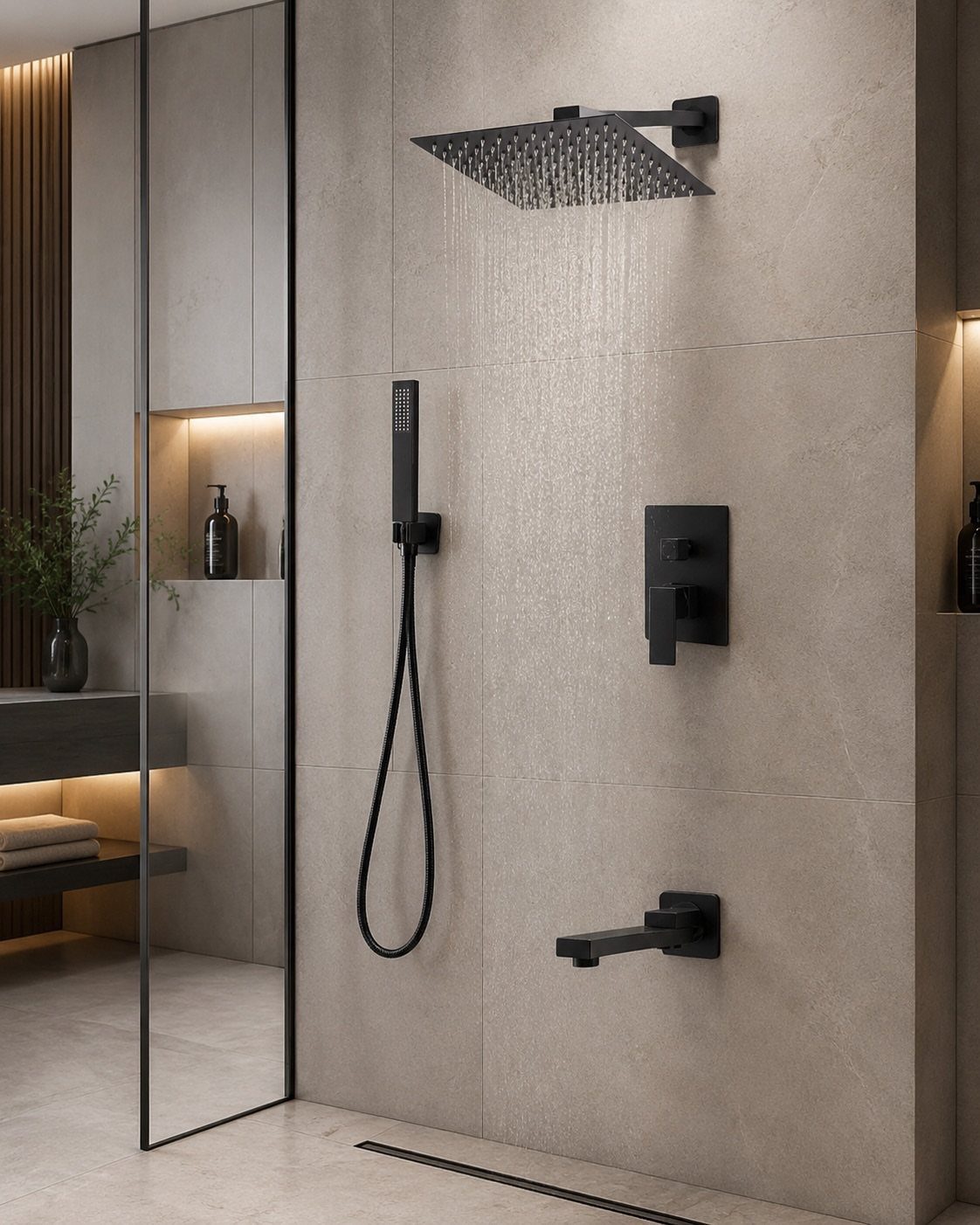
Matte black fixtures look sharpest against large, light grey tiles, where the contrast is clear without feeling harsh. Fewer grout lines on big tiles also keep the wall calm.
I’d choose that combination over a fancier single head.
Buy all the fixtures in one finish and ideally one line, since matte blacks vary between brands and mismatches show.
7. Relaxing Retreat
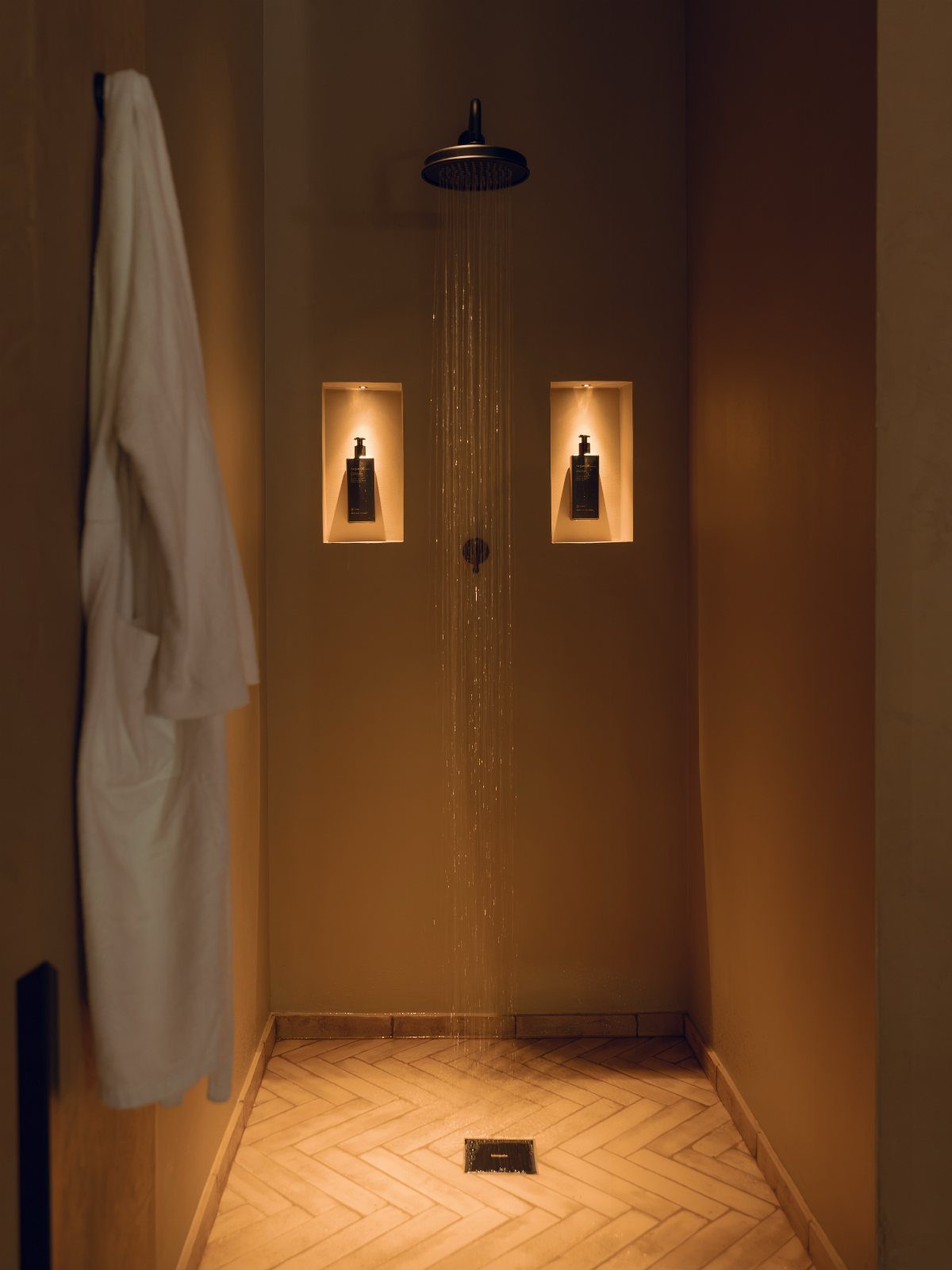
Lit niches do more for a shower’s mood than any fixture. A warm light set into the wall turns a row of bottles into part of the design, and it keeps shelves from cluttering the space.
A rain showerhead suits the setup because water falls straight down instead of spraying at you. Pair it with a herringbone floor in a tile that grips when wet.
Hang a robe on a wall hook just outside the spray. It costs almost nothing and adds to the spa feel.
8. Interesting Neutrals
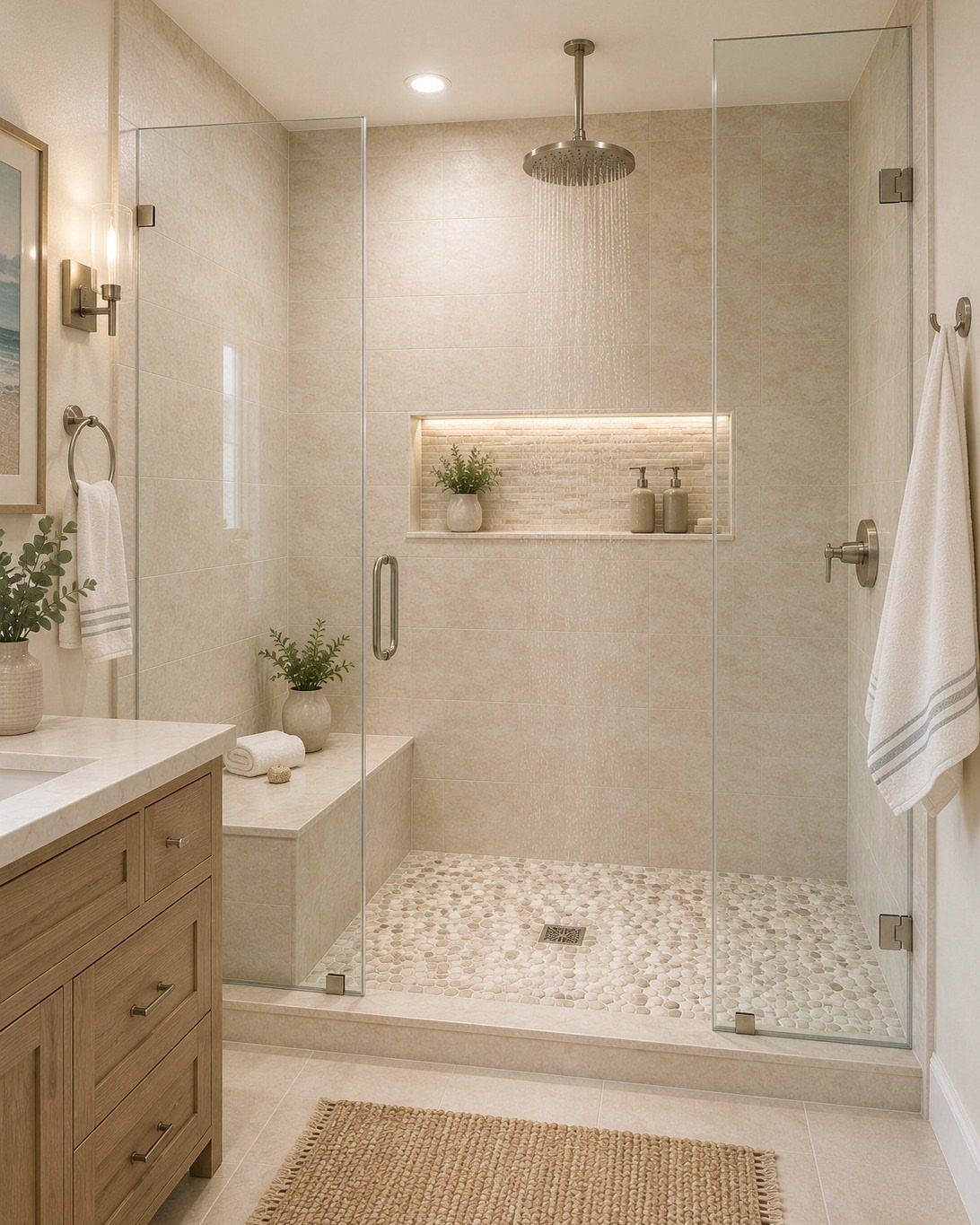
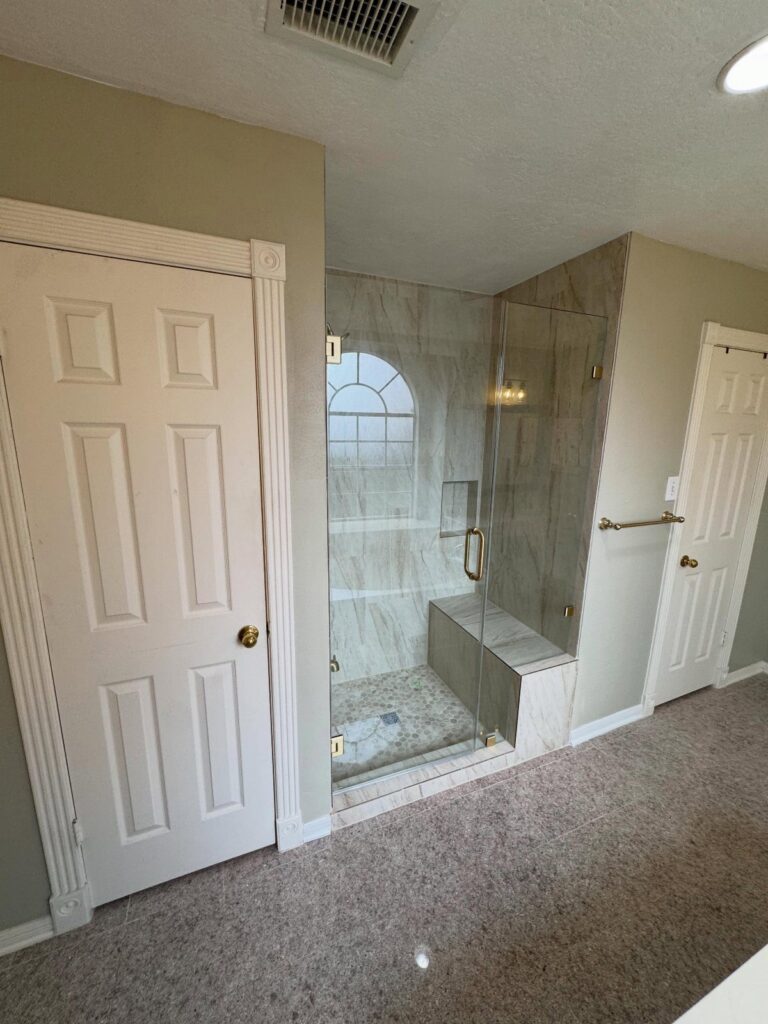
Beige tile, a pebble floor and a wooden vanity outside the glass all sit in one warm family, which is why this shower feels calm instead of plain.
Neutrals only look dull when every surface is the same texture, so vary them.
A built-in bench and niche give you a place to sit and a place for bottles without adding color.
Clear glass lets the eye run straight to the back wall, so a compact bathroom reads bigger than a curtain or frosted panel would make it.
A stand-in shower beats a tub for a tight bathroom, because the floor space is worth more than a soak.
9. Sculptural Shower Niche
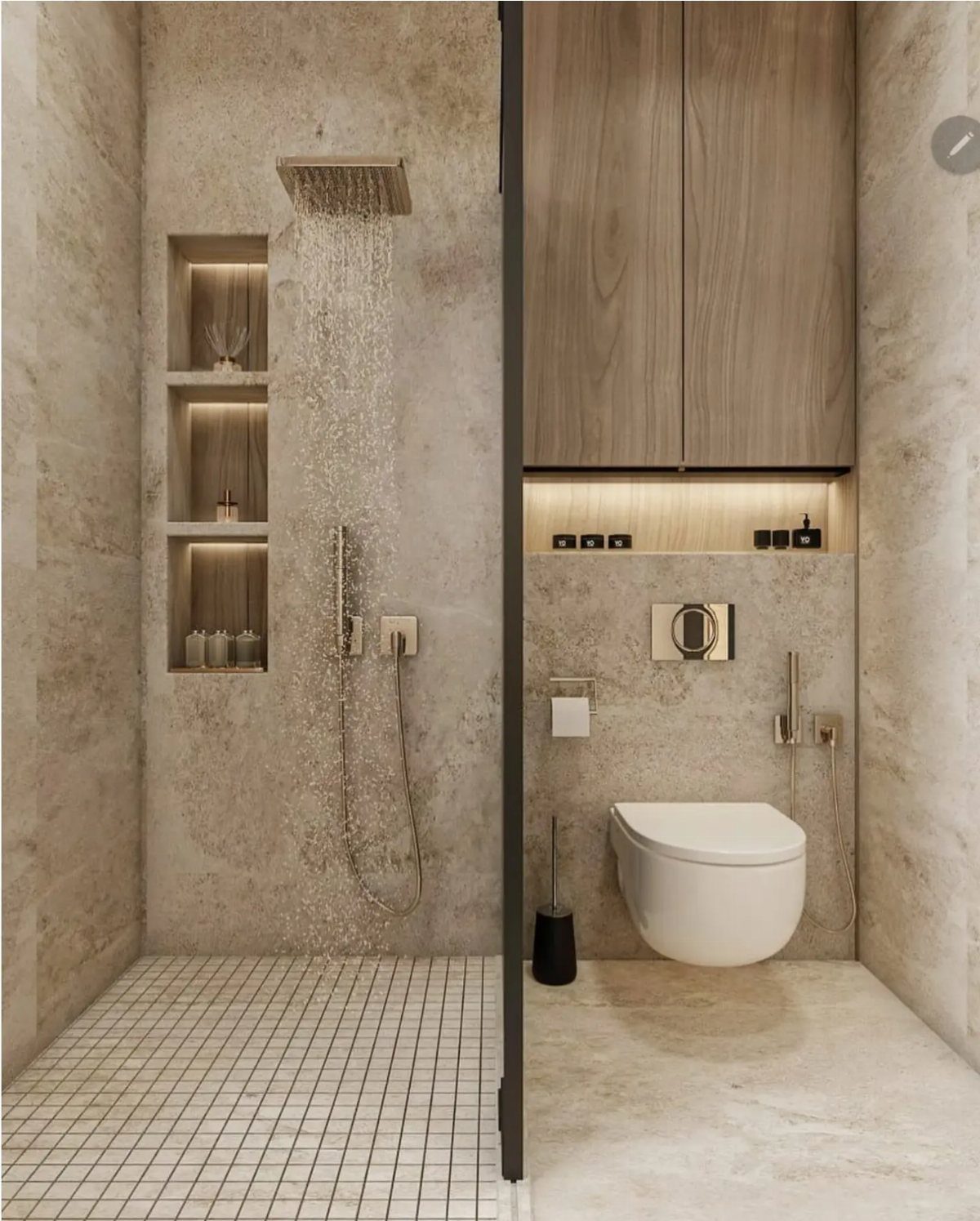
A tall, narrow niche reads as a design feature instead of a storage box. Set into stone walls with light inside, it holds a few bottles and a loofah at reach height.
Keep the shape simple and the contents few. A sculptural niche looks best when it is not crowded, so decant products into matching bottles if labels bother you.
Plan the niche before tiling, because it has to be framed into the wall.
10. Shower Seat
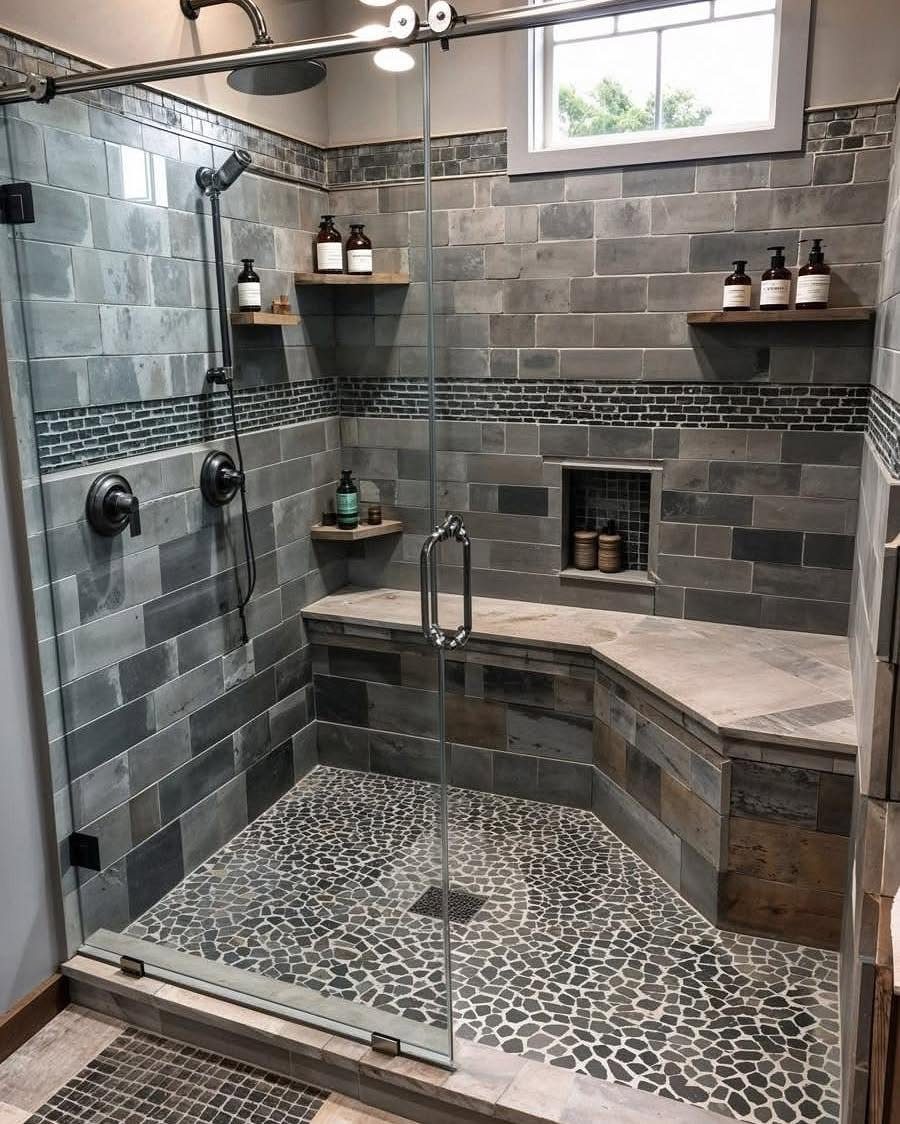
Sitting down in the shower is a small luxury, and an L-shaped stone bench makes it feel built for the room.
A seat is handy for shaving your legs, and just as handy when you want to sit down for a minute.
Matching the bench to the grey wall tile keeps it from looking bolted on. Small wooden shelves nearby hold bottles within reach of the seat.
A built-in bench takes real construction, so on a tight budget a fold-down seat is my pick. It gives you the same comfort and frees the floor when you stand.
11. Double Showerheads
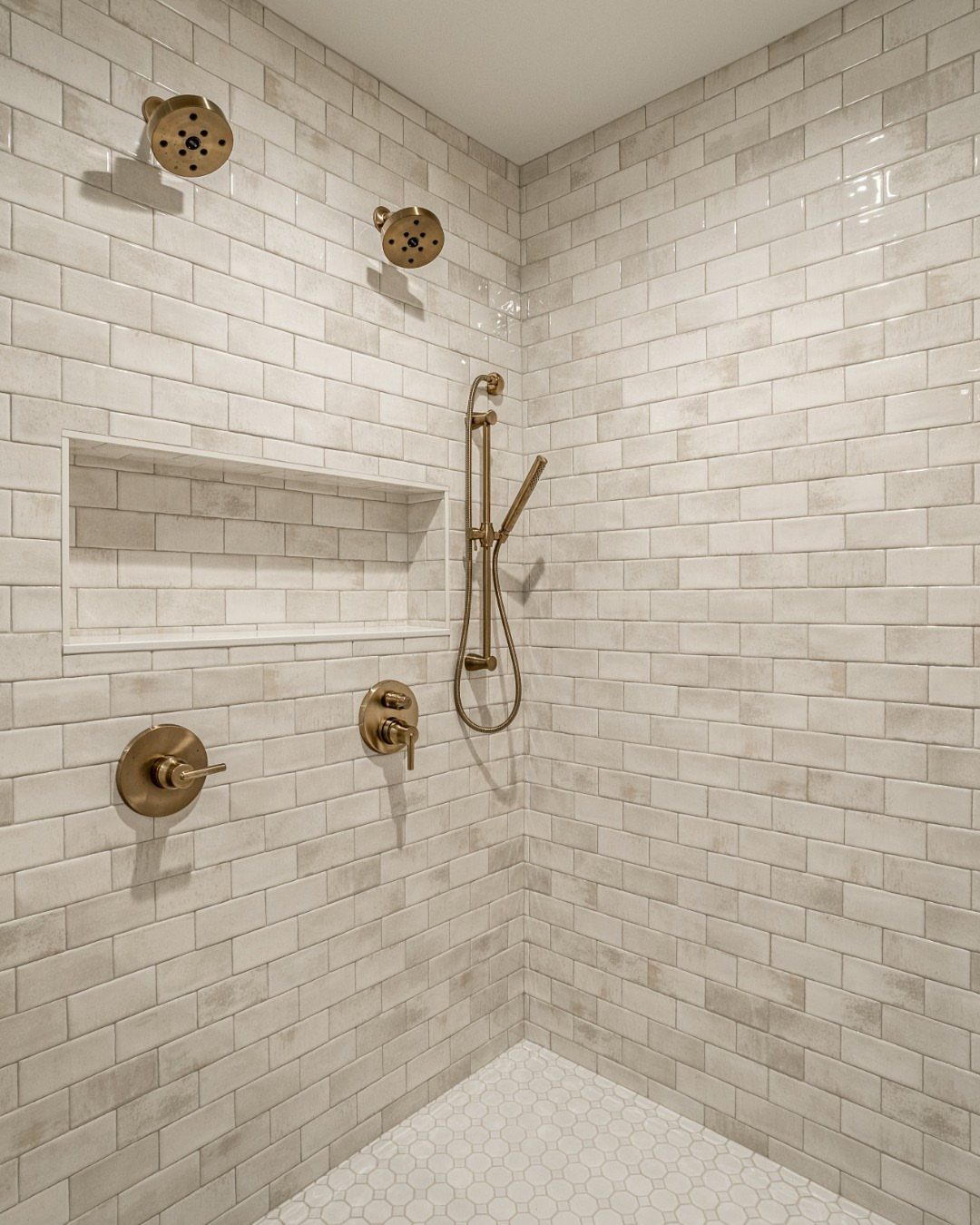
Two showerheads on one wall let a couple share the water, or give one person full coverage from shoulders to hips. A handheld sprayer on a slide bar makes rinsing the walls and corners much easier.
A mismatched head looks like a mistake.
This is a plumbing job, not a swap. Extra heads mean extra supply lines, so I’d price it with a plumber before committing.
12. Rounded Enclosures
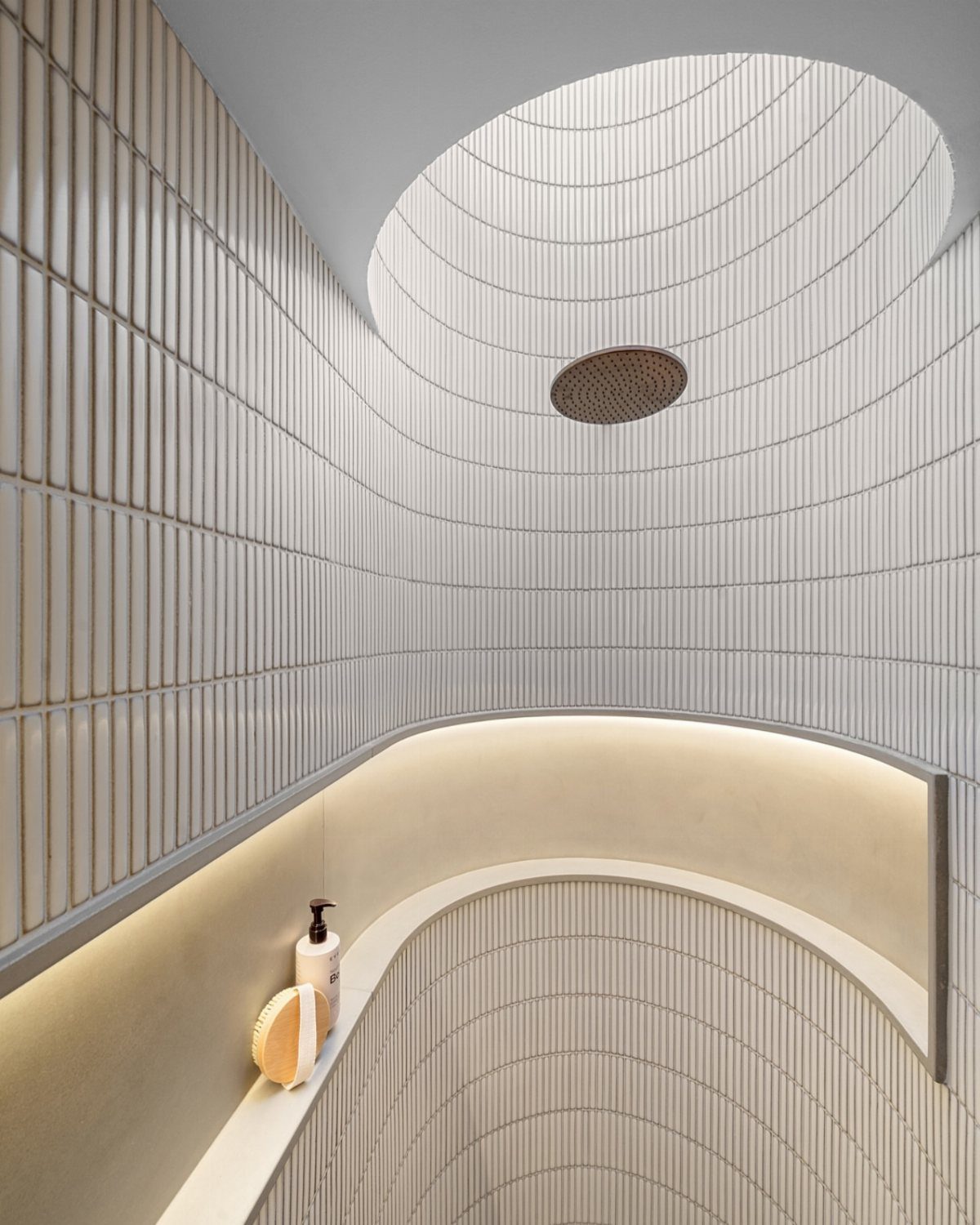
A curved wall softens a shower in a way flat tile never will. White ribbed tile follows the curve and catches light along each vertical line.
Round enclosures take curved glass or built curved walls, which costs more than a standard box. I’d treat it as a feature for a bathroom you plan to keep.
A circular rain showerhead repeats the curve of a rounded enclosure. A small built-in shelf inside holds a soap dispenser and brush, so nothing sits on the floor.
13. Built-in Shelves
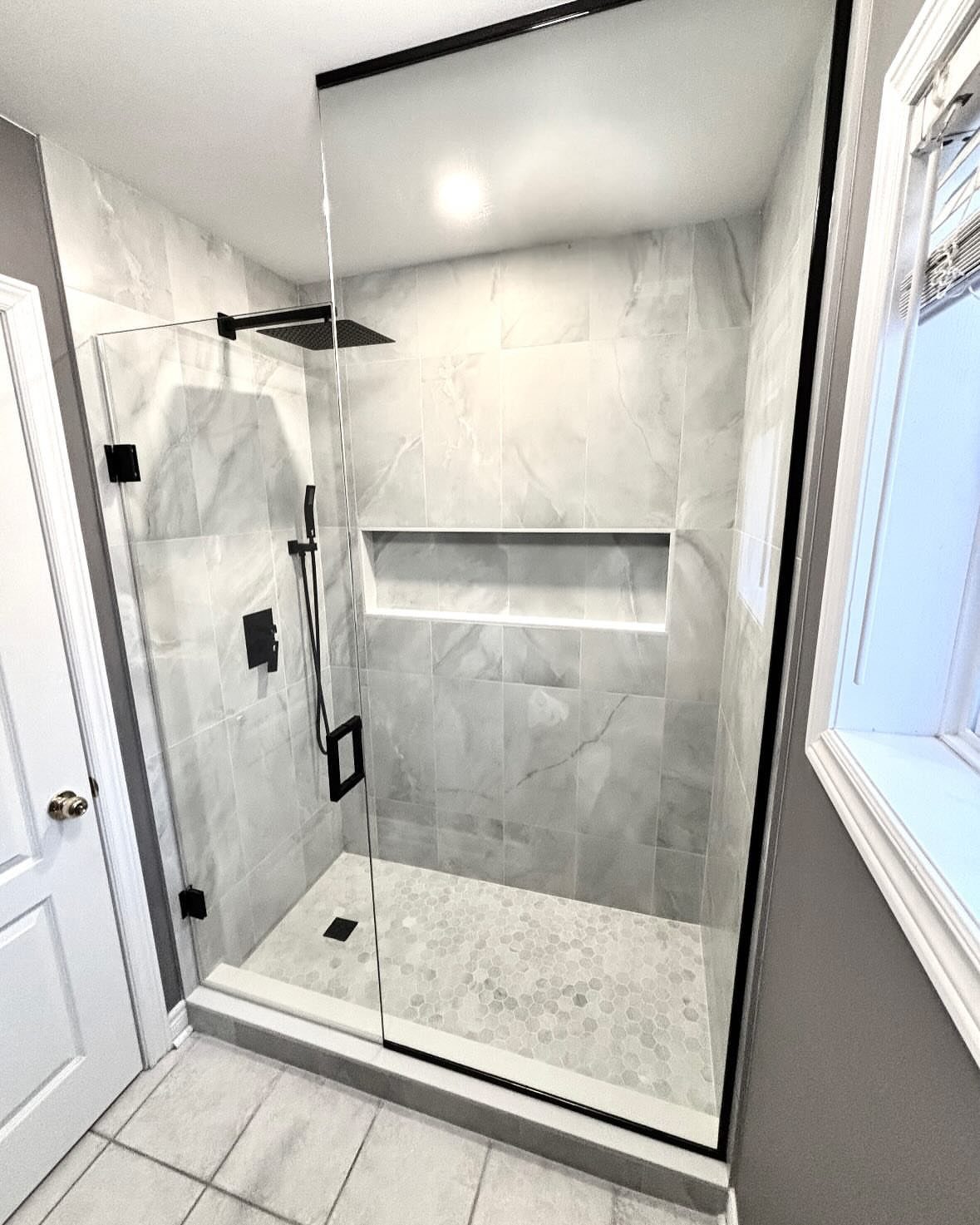
A recessed niche keeps bottles off the floor and off the ledge, and it takes up no room inside the stall.
Tiling the niche in the same marble as the wall makes it disappear into the design instead of reading as a box.
Black fixtures nearby tie it together.
A few shelves are plenty. Too many openings chop up a clean wall.
14. Mosaic Tiles
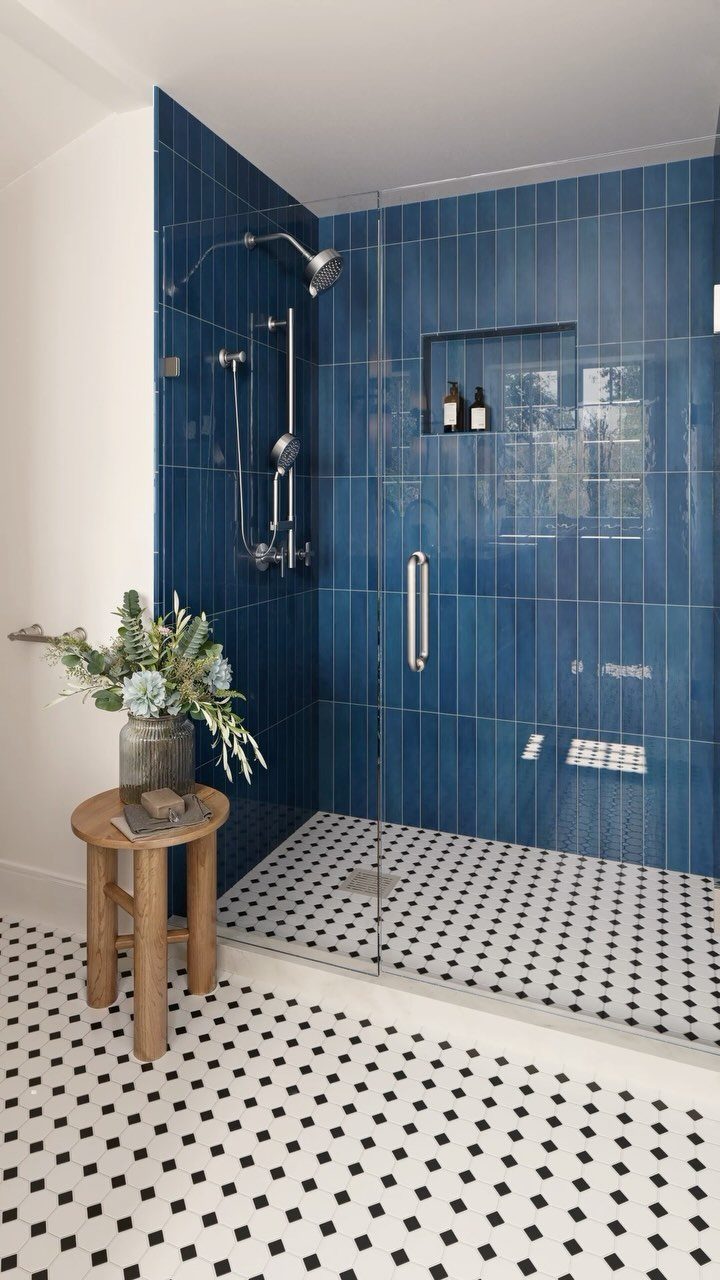
Mosaic tile on the floor gives a shower its pattern without covering every wall. Small black and white pieces under plain blue walls keep the busy part low and the color calm above it.
Small tiles mean many grout lines, so I’d pick a mid-tone grout that hides wear. Keep the walls solid, as here, and let the floor carry the detail.
A wooden stool with flowers adds warmth, and costs almost nothing to try.
15. Textured Tiles
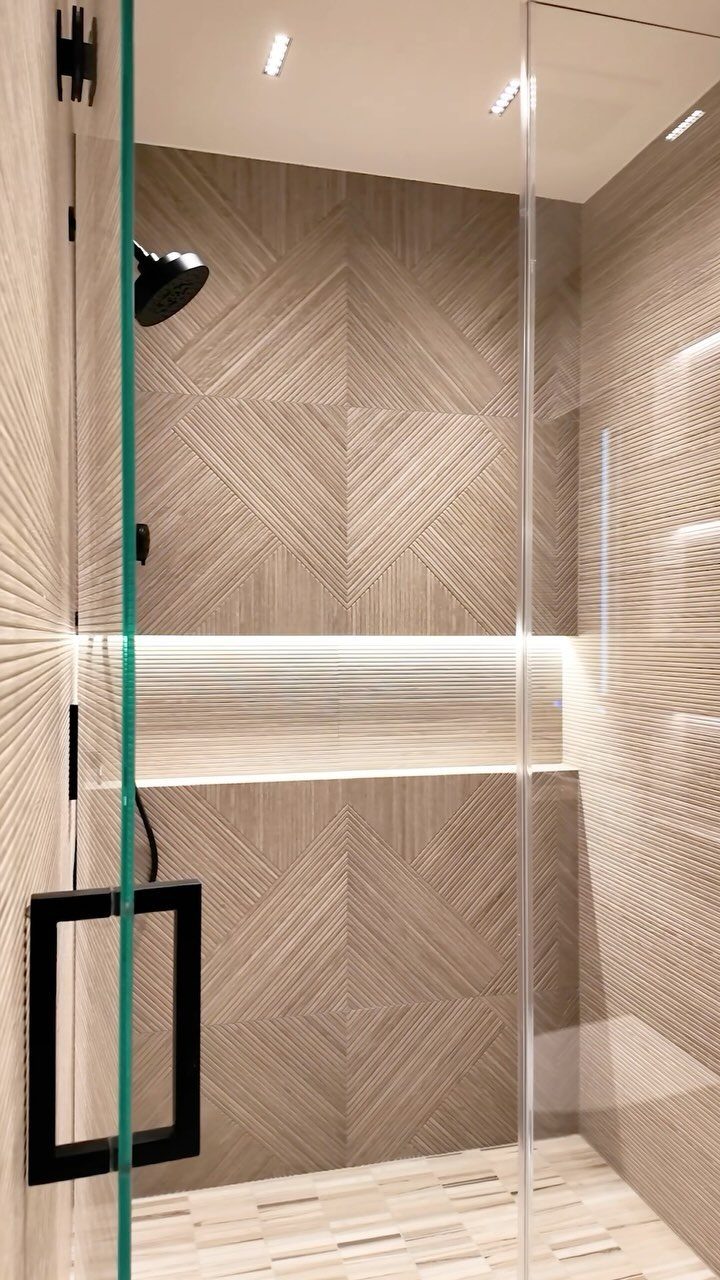
Beige tile with a raised texture, laid in a diamond pattern, gives a neutral shower real depth. Light catches each ridge differently through the day, so the wall never looks flat.
Stick to one texture and one color. The diamond layout is the feature, so keep the fixtures plain: a black showerhead and a black door handle are enough.
A recessed shelf set into the same tile stays quiet. Textured surfaces take more scrubbing than smooth ones, so plan a soft brush.
16. Pebble Floor Walk-In Shower
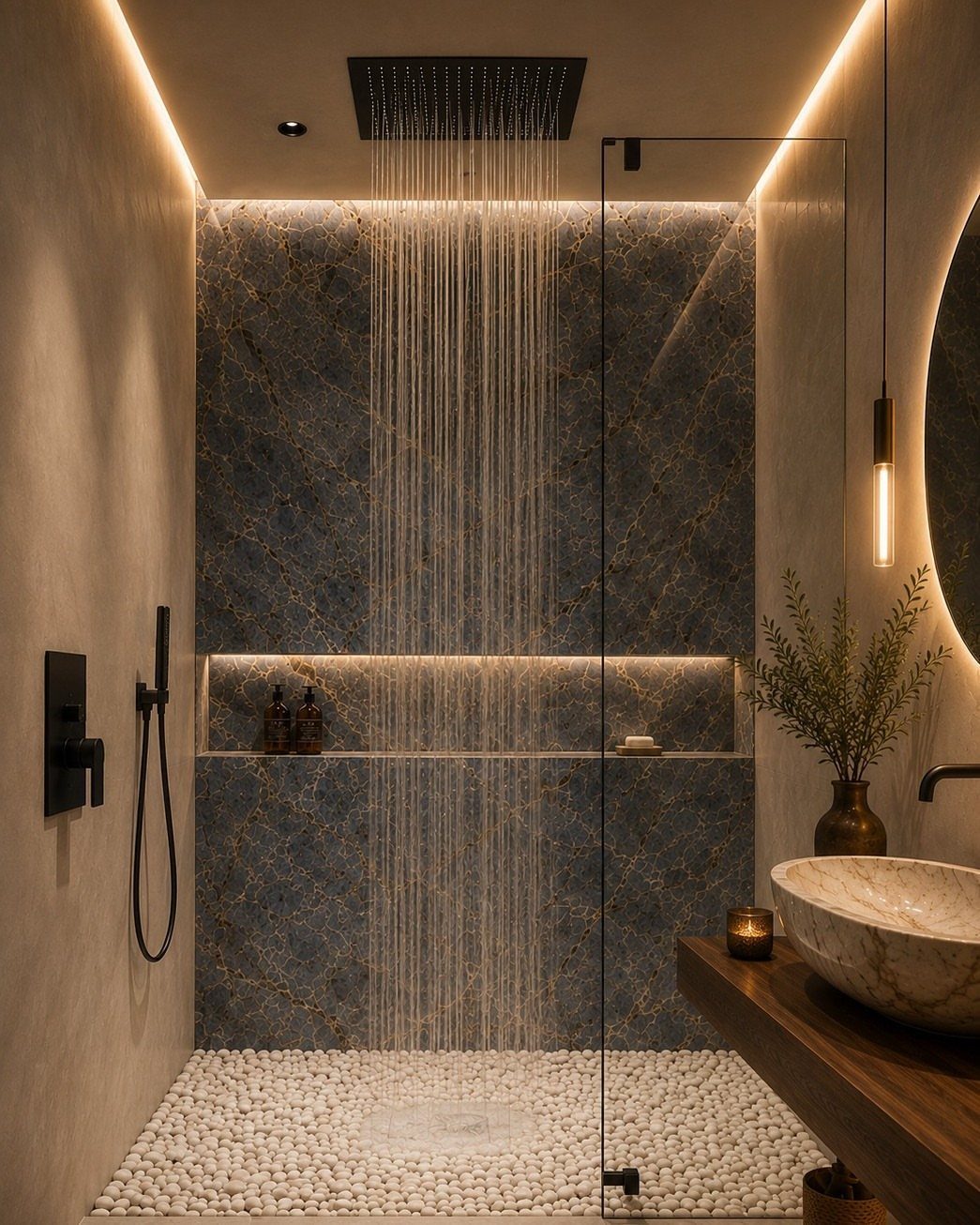
Dark blue marble walls over a white pebble floor give a shower contrast from top to bottom. The pale floor lightens a deep wall color, so the stall feels moody instead of heavy.
I’d choose this over all-dark floors in a small bathroom, since the white keeps it from closing in.
Cost of Walk-in Showers
Installing a walk-in shower runs anywhere from $1,000 to $15,000, with the average landing around $6,700. That spread is huge, so decide early which end you’re shopping.
The cheapest enclosure is a curtain on a rod. You skip buying and installing a glass panel or door, and the savings go toward tile or fixtures.
A fixed glass panel keeps water inside the shower zone, which matters most when there’s no door to stop it.
Spend where the water works hardest: the waterproofing and the floor. Cosmetic upgrades can wait for a later weekend.
Maximizing Small Spaces
Layout decides how much shower fits in a small bathroom, so plan it before you buy anything.
If the room has an angled corner, a corner shower uses space that would otherwise go to waste. The toilet and sink can then line up along the long wall.
Built-in storage saves more floor than any freestanding rack, since nothing sticks out into the room.
For very small rooms, keep shapes simple and colors neutral so the space doesn’t feel crowded.
A nearly invisible glass or acrylic enclosure adds no visual clutter. I’d pick that over a bulky framed unit when every inch counts.
Shower Accessibility
A walk-in shower can be built to be ADA-compliant, which makes it usable for nearly everyone. That’s worth planning for even if you don’t need it today, since a step-free entry suits kids, guests and aging knees alike.
A doorless entry helps here, because you come and go without opening a door. One fixed pane of clear glass beside the opening is usually enough to keep spray off the rest of the floor.
Put the showerhead and the controls on the wall farthest from the opening, so the spray points away from the gap.
ADA dimensions are set at the federal level, so check the published standard for the exact numbers before you build.
Frequently Asked Questions
What are some ideas for creating a spa-like shower?
A lit niche gives you a place to put shampoo without drilling into tile, and the warm glow makes the whole shower feel intentional.
If the floor gets slippery, switch to smaller tiles with more grout lines or a textured finish that still cleans easily.
How to add a stand up shower?
Plan the layout first, since that decides how much shower fits.
An angled corner gives you a place to fit the shower without eating into the center of the room, which matters more when you’re down to 30 or 40 square feet total.
Glass disappears, so the room reads as one space instead of a shower box and whatever is left over.
Any time you add a second showerhead or a handheld, the plumber has to run another line, and that cost sneaks up fast.
How much does it cost to put a stand up shower in your house?
Most walk-in showers land between $1,000 and $15,000 installed, with $6,700 as the middle. Pin down your budget before you start picking tile, because the range is wide enough to change every other choice.
A shower curtain costs $20 and a tension rod is another $15, so you can put the $1,500 you didn’t spend on glass straight into better tile or a rain head.
Put your money into waterproofing and the floor first, and leave cosmetic upgrades for later.
What is the best shower setup for my home?
In a small bathroom, a glass shower gives you back floor space a tub would cover, and that open sight line makes 50 square feet feel like 65.
A corner shower suits a room with an angled corner, and a curtain on a curved rod works for renters and small stalls.
If accessibility matters, choose a step-free, doorless entry with one fixed glass pane beside the opening. ADA grab bar height and spacing follow the federal standard, so check those measurements against it before you buy anything.





