The ideas here run from a can or two of paint and a new light fixture to a wet room expansion with a glass shower zone, so the price gap between the smallest and largest project is huge.
Jobs that involve waterproofing, like the wet room expansion, or tight tile cuts around a curve, like the arched niche, are better handed to a pro unless you’ve done them before.
1. Painting Walls and Updating Light Fixtures
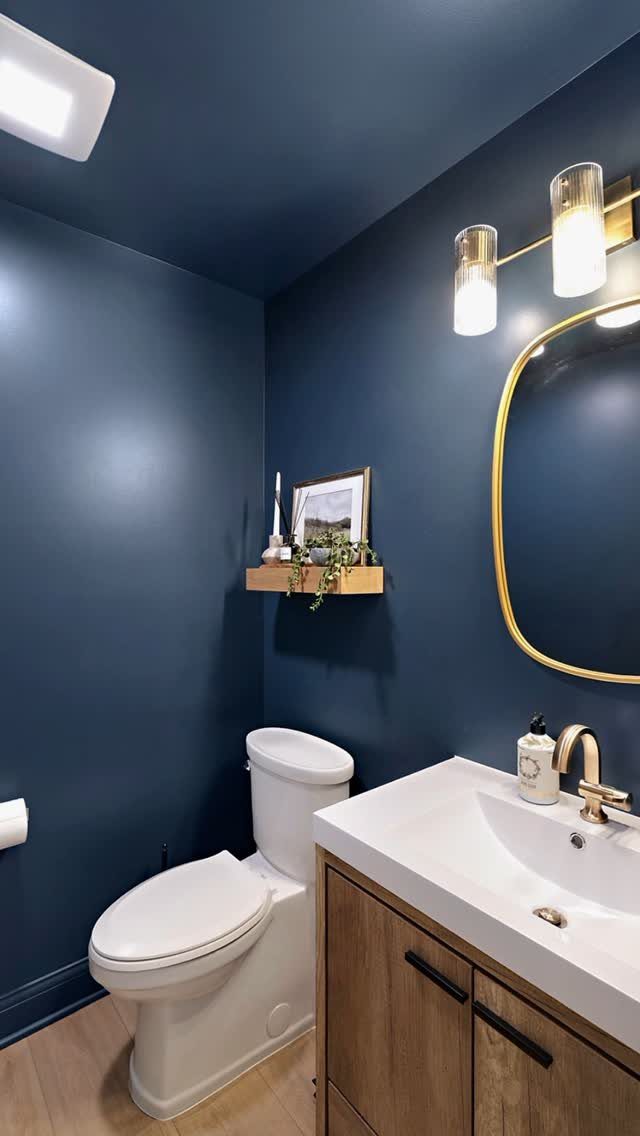
Deep blue on both walls and ceiling wraps a bathroom in color instead of closing it in, and it costs a can or two of paint.
Keep the ceiling the same color as the walls so the room has no hard line to stop the eye.
Gold light fixtures against that blue read warm, and a gold-rimmed mirror repeats the metal. I’d swap the fixtures before anything else, since they change the look more than the paint does.
A wood vanity keeps the dark color from going cold. This is a weekend job, and it suits renters who can swap fixtures back later.
2. Black Hexagon Tile Feature Wall
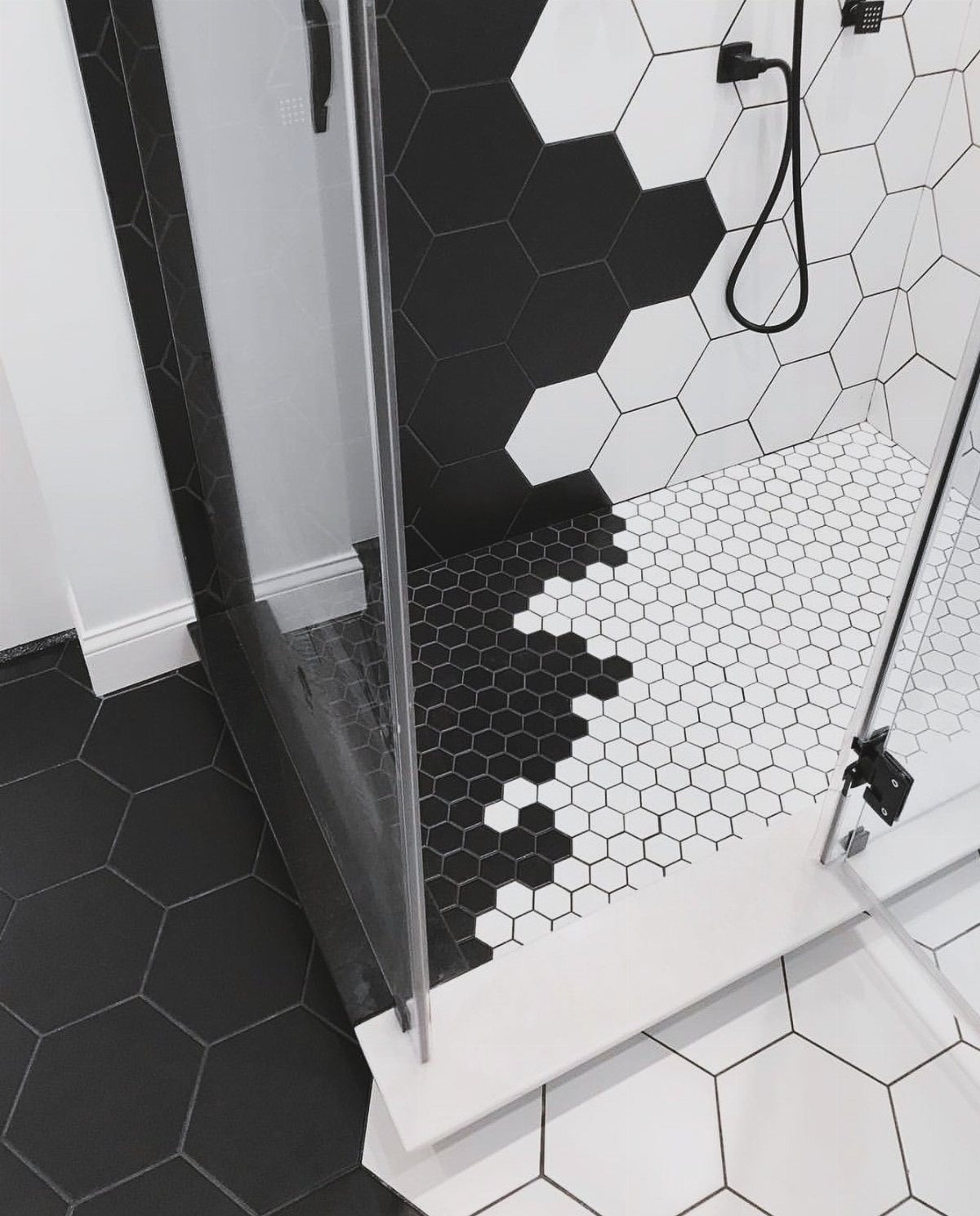
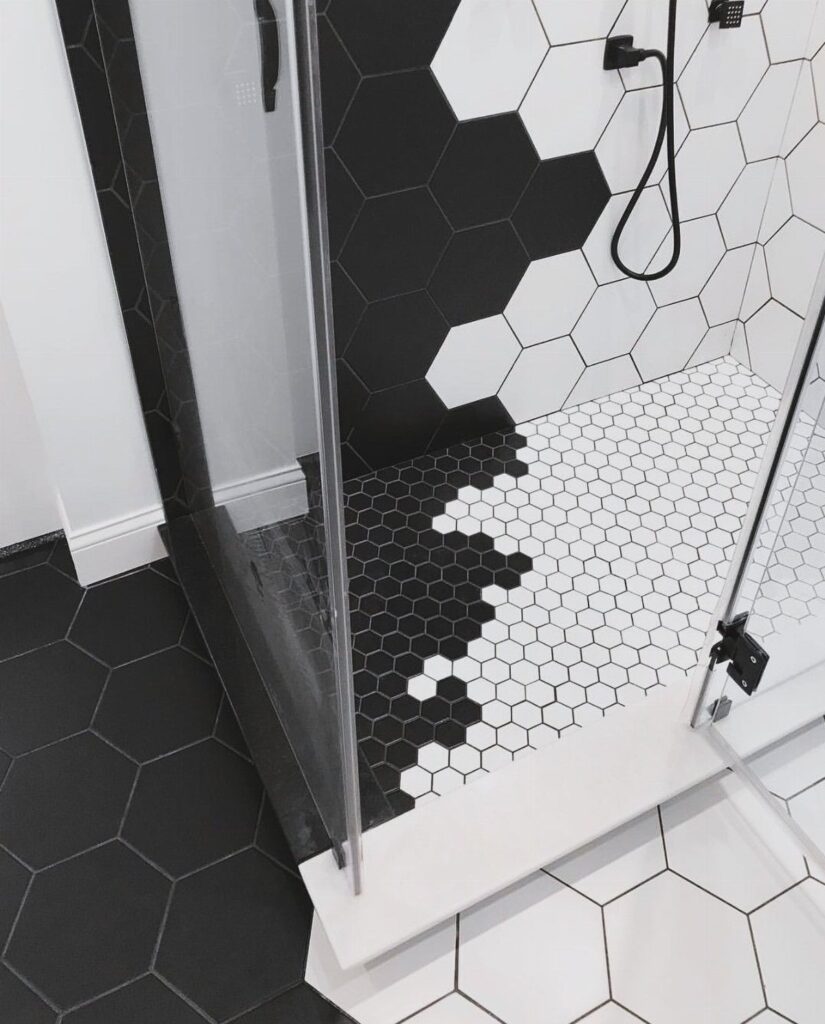
Large black hexagons on one shower wall give the room a focal point without tiling every surface. Pairing them with smaller black and white hexagons underfoot ties the floor to the wall while the shape stays the same.
Black tile with white grout lines shows every joint, so a straight, even layout matters more here than with a neutral tile.
Plan on a patient weekend of setting tile, and expect the small floor pieces to take longer than the big wall ones.
3. White Marble-Look Tile
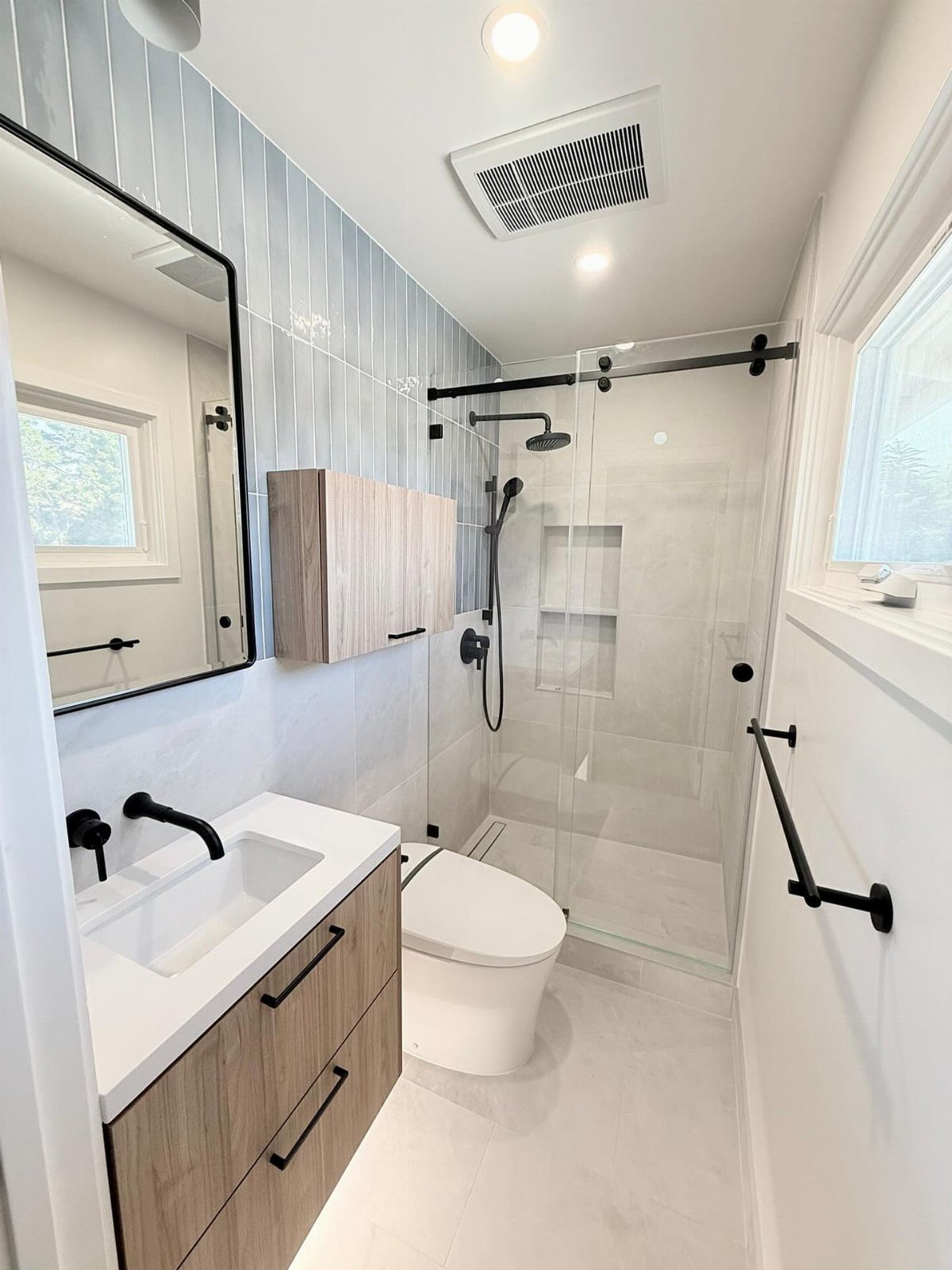
White marble-look tile gives you the calm of stone without the price or the upkeep of real marble. Running it on both the shower walls and the floor reads as one clean, continuous space.
Black fixtures sharpen all that white, and a wood-grain vanity adds the warmth it needs. I’d choose this pairing over all-white fixtures, which can look flat.
Pick a tile with soft, varied veining, and keep grout close to the tile color so the surface looks uninterrupted.
4. Wet Room Expansion
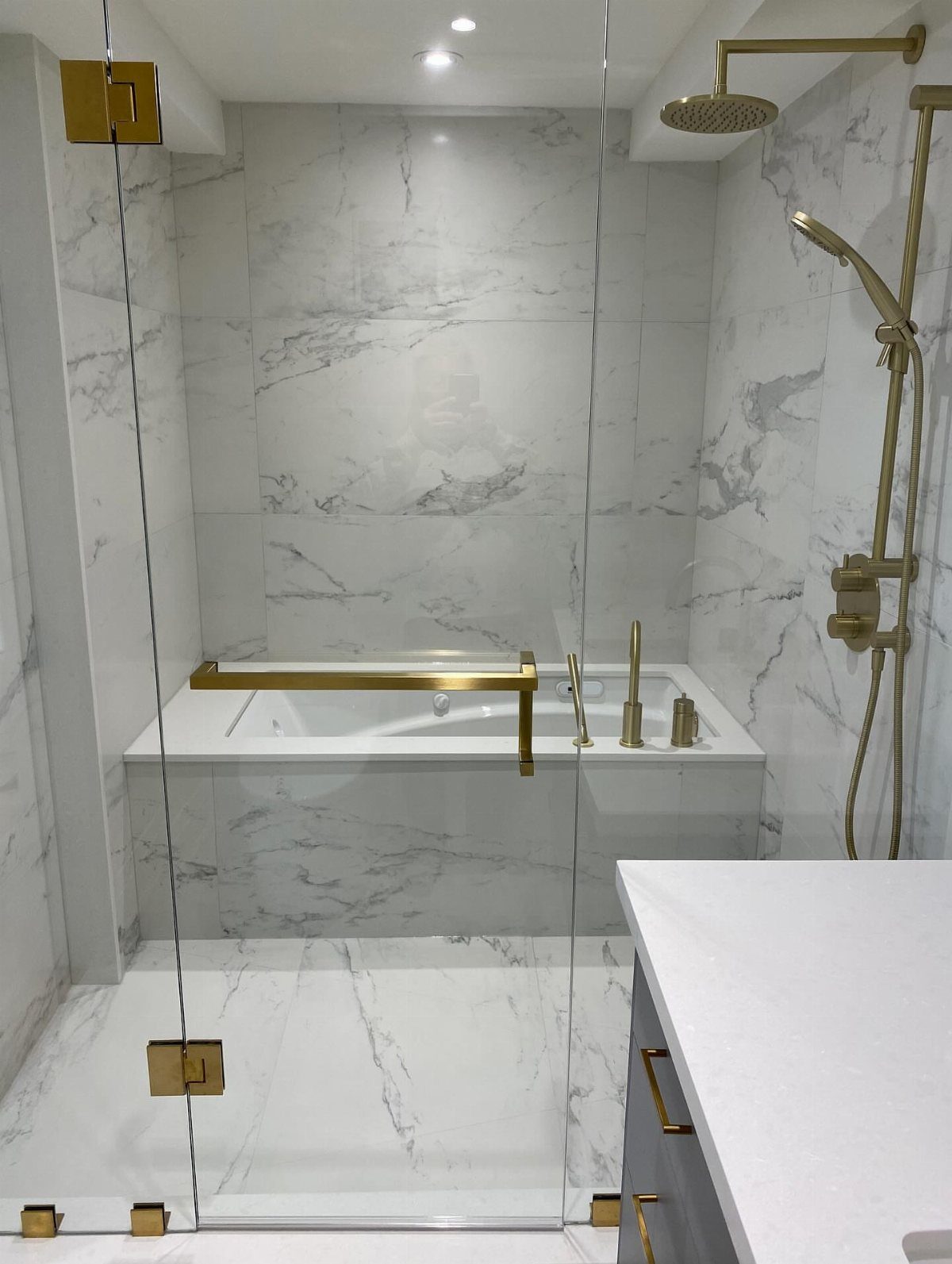
A wet room folds the shower and tub into one glass-defined zone, so the whole space is built to get wet. A rain shower head over a bathtub, behind a single glass partition, is the version I’d copy.
White marble tile throughout keeps the zone from chopping the room into pieces, and gold fixtures add warmth against all that cool stone.
This is a bigger project than a paint or tile swap, since the walls and floor need to handle water everywhere. Hire out the waterproofing if you’ve never done it, because a mistake there is expensive to find later.
5. Vanity, Tile, and Glass Shower Door
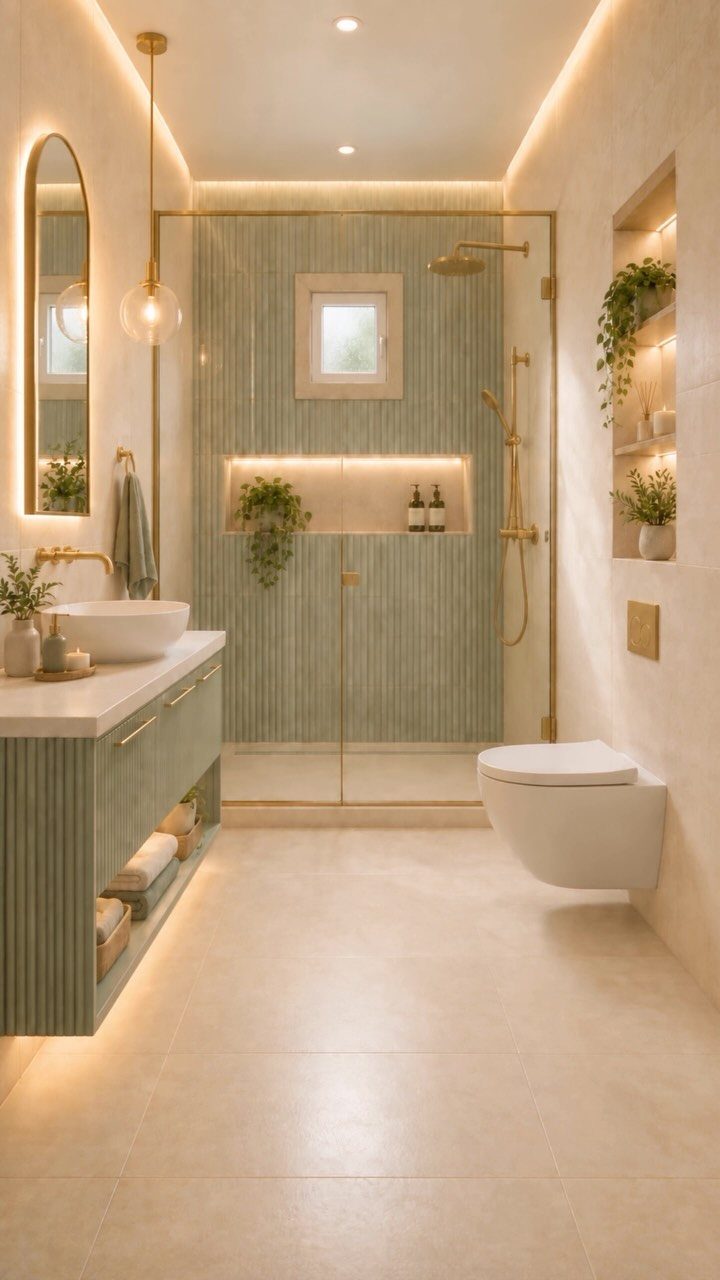
Green fluted vanity doors and green wall tile in the shower can turn one color into the room’s whole identity. Fluting adds texture that flat paint can’t, and gold fixtures give the green a warm edge.
A wall-mounted toilet leaves the floor visible, which opens up the room and simplifies cleaning. A glass enclosure keeps the green tile in view instead of hiding it behind a curtain.
I’d match the vanity green to the tile closely, or go clearly different. Near misses look like a mistake.
6. Travertine Stone and Tiered Vanity
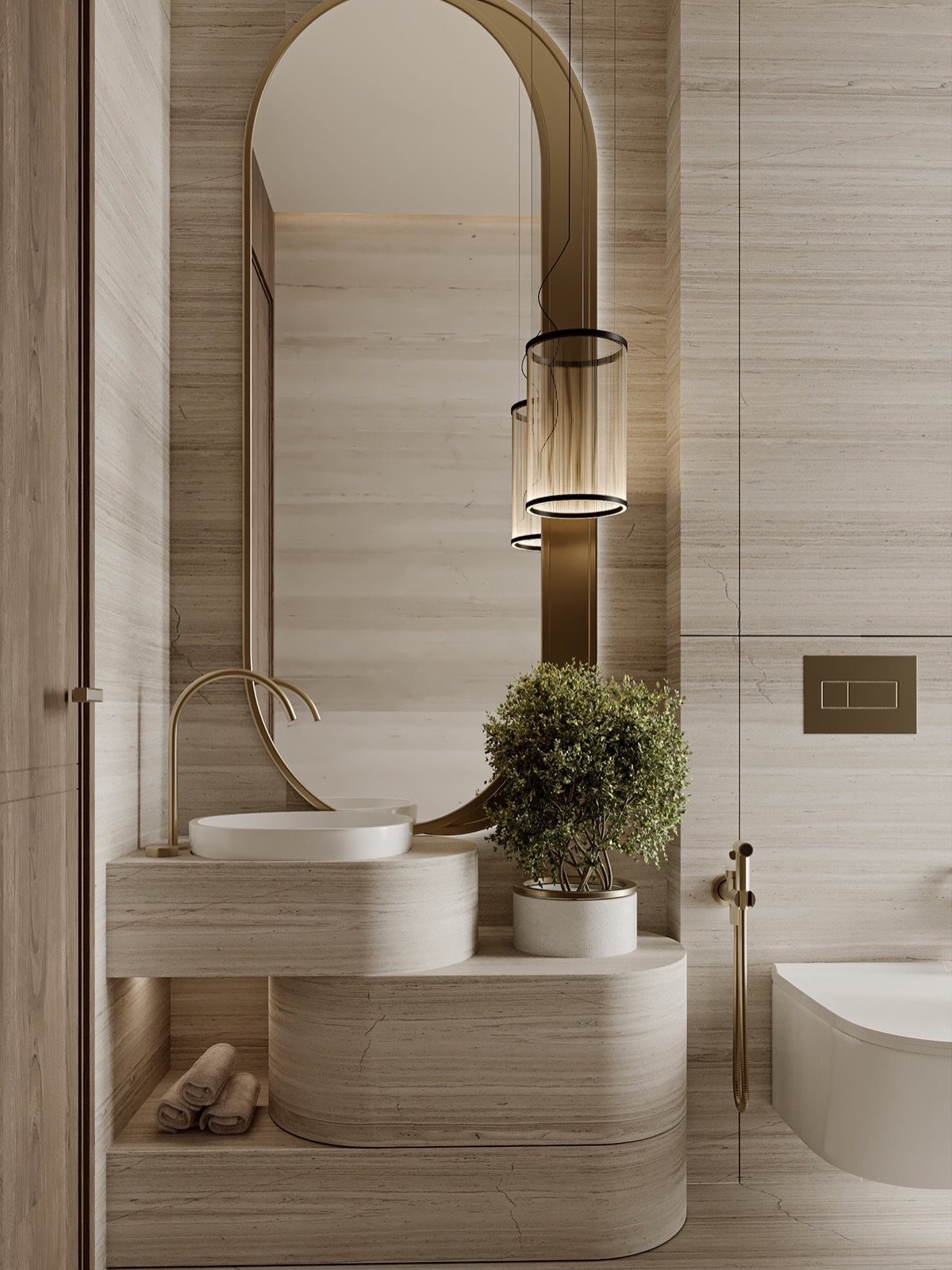
Beige travertine on the walls and a tiered stone vanity make a bathroom feel carved rather than assembled.
An oval mirror softens all the stone, and gold fixtures pick up the warm tones in the travertine. I like that the palette stays within one family of colors.
Stone this textured asks for a simple layout, so I’d keep accessories few and let the material do the work.
7. Patterned Floral Floor Tiles
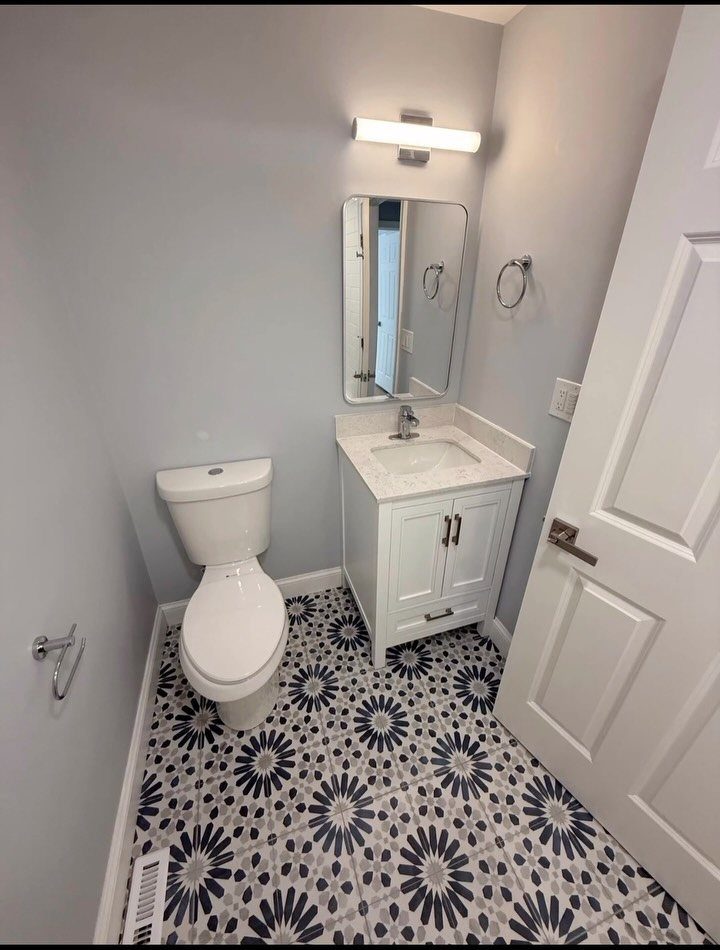
Blue-and-white floral tile on the floor gives a compact powder room or tight 5×8 bath plenty of pattern while the walls stay calm and uncrowded.
Light grey walls and a white vanity stay quiet around it, and that restraint is what makes this work.
I’d keep the pattern underfoot only. A floor this small needs just a few boxes of tile, so a bolder print costs less than it seems.
Match the grout to the lightest tile color so the pattern reads cleanly.
8. Arched Patterned Tile Niche
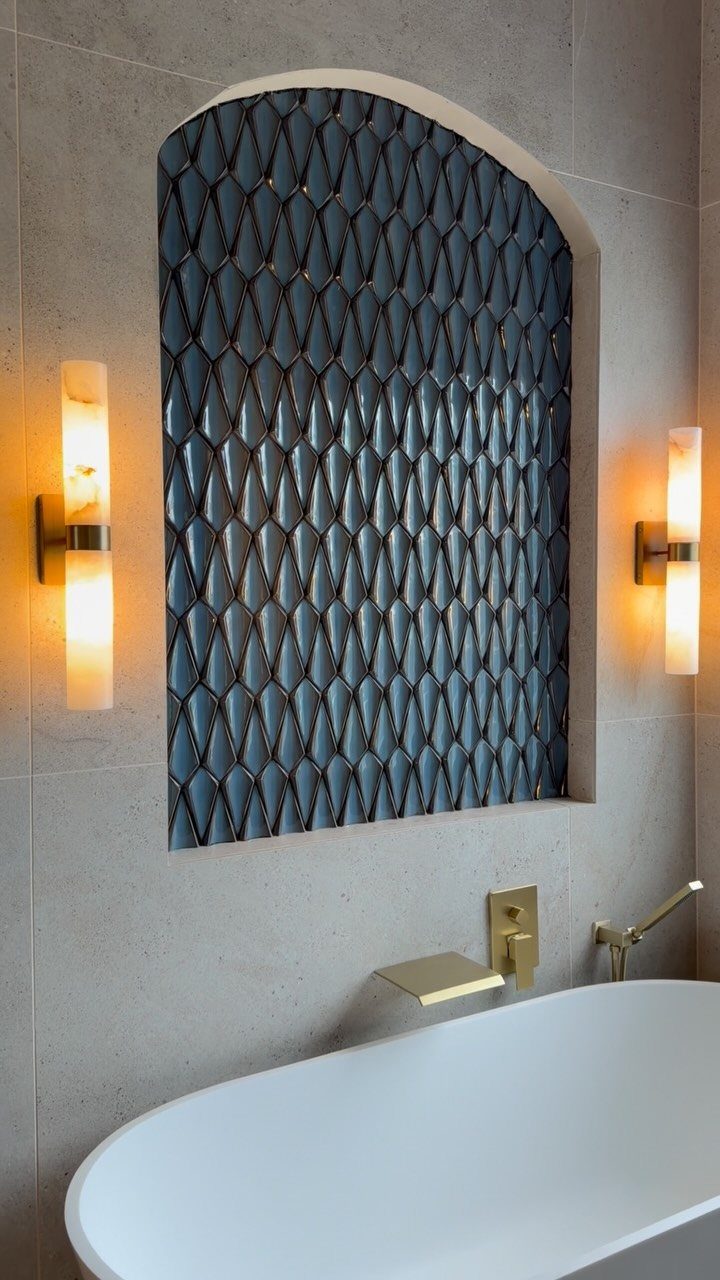
An arched niche lined with blue patterned tile turns a plain wall behind a soaking tub into the focal point of the room. Because the tile covers a small area, a busy print stays affordable.
Sconces on either side light the arch at night, and gold fixtures echo the warm glow against the blue. I’d choose a pattern with a white background so the niche stays bright.
The curve is the hard part: cutting tile to follow an arch takes patience, so smaller tiles are easier to fit than large ones.
9. Burgundy Wood Paneling
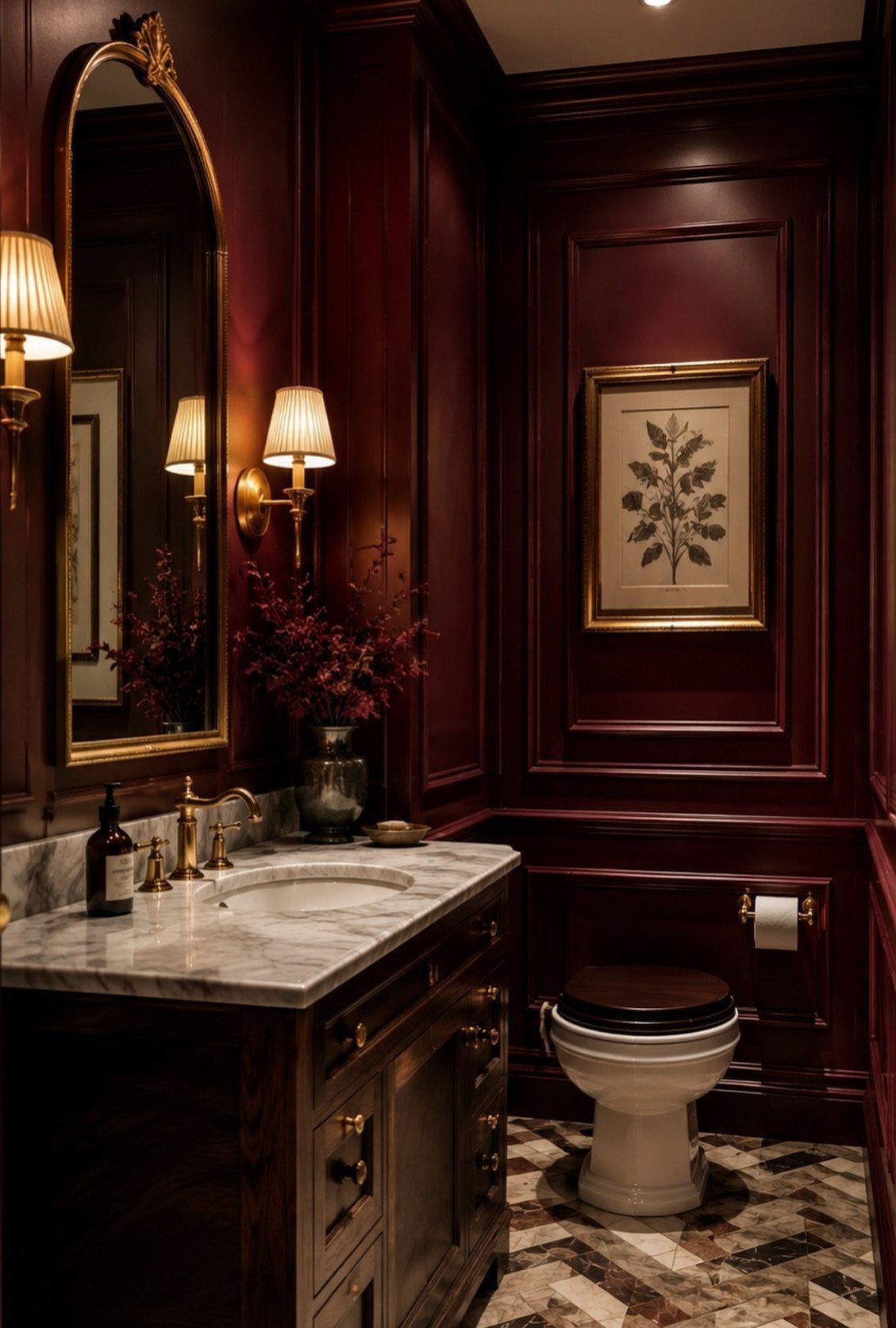
Deep burgundy wood paneling suits a powder room better than any other bathroom, since nobody showers in there and the walls stay dry. Paint the paneling itself instead of the walls above it, and the color reads rich and enveloping.
A marble vanity and an arched gold mirror keep the red from feeling heavy. I’d hang one framed botanical print and stop there.
Use a satin or semi-gloss finish so the surface wipes clean.
10. Curved Ribbed Glass Shower Partition
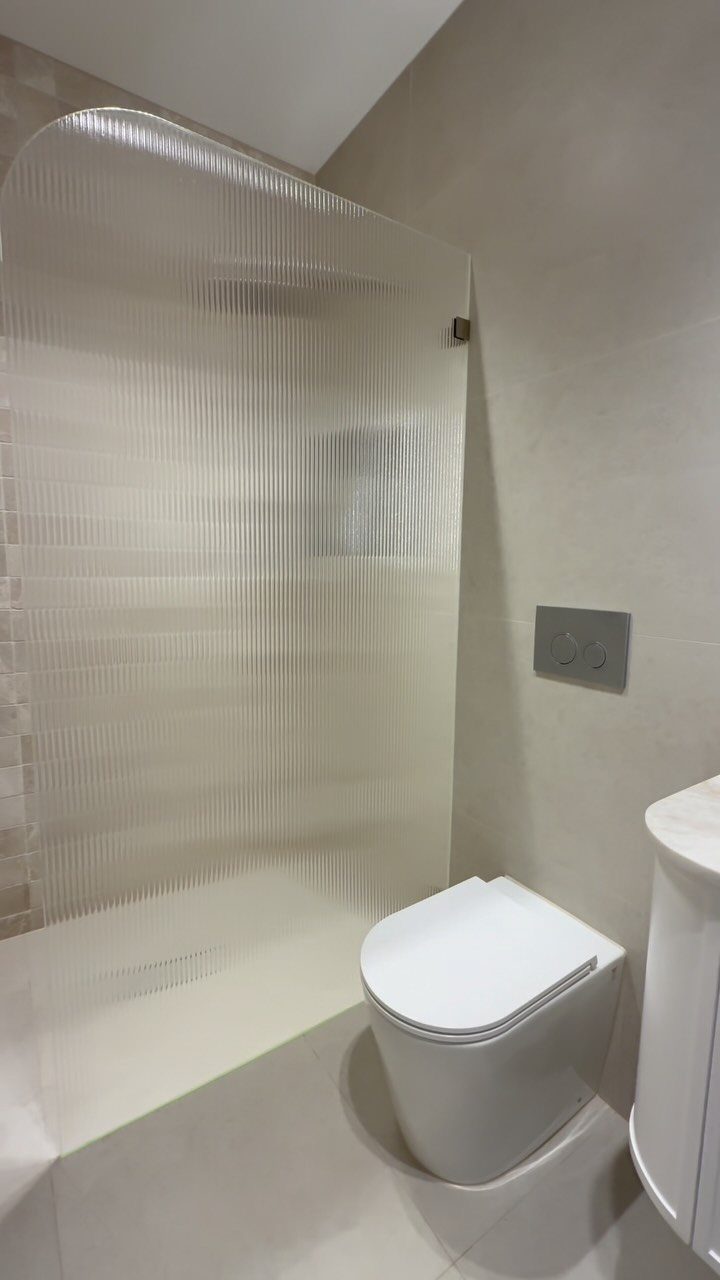
A curved ribbed glass screen softens a beige bathroom in a way a flat pane can’t, and the ribbing blurs the view into the shower without a curtain.
Next to a wall-hung toilet and a pedestal sink, the glass becomes the one piece with real shape.
Ribbed glass hides water spots better than clear glass does, which makes it easier to live with.
Curved glass usually costs more than a straight panel, so I’d spend there and keep everything else simple and neutral.
Budget Considerations
Bathroom remodels run from $2,000 for cosmetic updates to over $30,000 for a full renovation, so decide which end you’re on before you shop. On a few hundred to a thousand dollars, you’re in cosmetic territory, and that’s fine.
Swapping out a dated vanity gives you the most change per dollar, since $800 to $2,500 alters how the entire room reads.
If the vanity is the only thing you can afford to change, I’d spend there first and leave the rest for later.
Design Trends
Floating vanities, wall-mounted toilets, backlit mirrors, and a minimal, spa-like feel are what make a bathroom read like a boutique hotel.
That look leans on contrast, so pair black fixtures with white surfaces, or flip it and put white fixtures against dark ones.
Be honest about the skill level, though.
The high-contrast modern look leaves almost no margin for error, because tile work has to be precise and the fixtures have to match. Full versions are quoted at $30,000 to $50,000 with a contractor.
With a weekend and a small budget, I’d pick just one piece of the trend, such as a floating vanity or a backlit mirror, then let everything else stay simple.
Functional Improvements
Storage is where old bathrooms fail most often. 2 sinks with no countertop or cabinet space between them leave nowhere to put anything, so a vanity with drawers does more daily good than any finish.
Light matters too. A bulky tub or a closed-off corner can block a window, so move whatever sits in front of it before spending on anything decorative.
If two small, disconnected spaces share one bathroom, combining them into a single room with a walk-in shower makes it feel connected and bigger. White tile in the shower adds brightness and handles water well.
Frequently Asked Questions
Is $10,000 enough for a bathroom remodel?
For many bathrooms, yes, as long as you are not changing the layout.
One ranking guide puts mid-range work at $10,000 to $20,000, covering a new vanity, tile and a shower door, so $10,000 sits at the low end of that. Moving plumbing or gutting the room pushes costs well past it.
What do I wish I knew before my bathroom remodel?
Pick a project that fits your skill level and your budget, and settle that first, ahead of any trip to the store.
Sharp, high-contrast modern designs are the least forgiving, since every tile line has to be exact and every fixture finish has to match.
Storage deserves attention before style, and drawers in a vanity will help you every morning in a way a fancy finish never will.
What are the bathroom trends for 2026?
The look pulls from hotels: a vanity mounted off the floor, a toilet hung on the wall, a mirror with light behind it, all in a calm, pared-back palette.
The look relies on contrast, such as black fixtures against white surfaces or the reverse.





