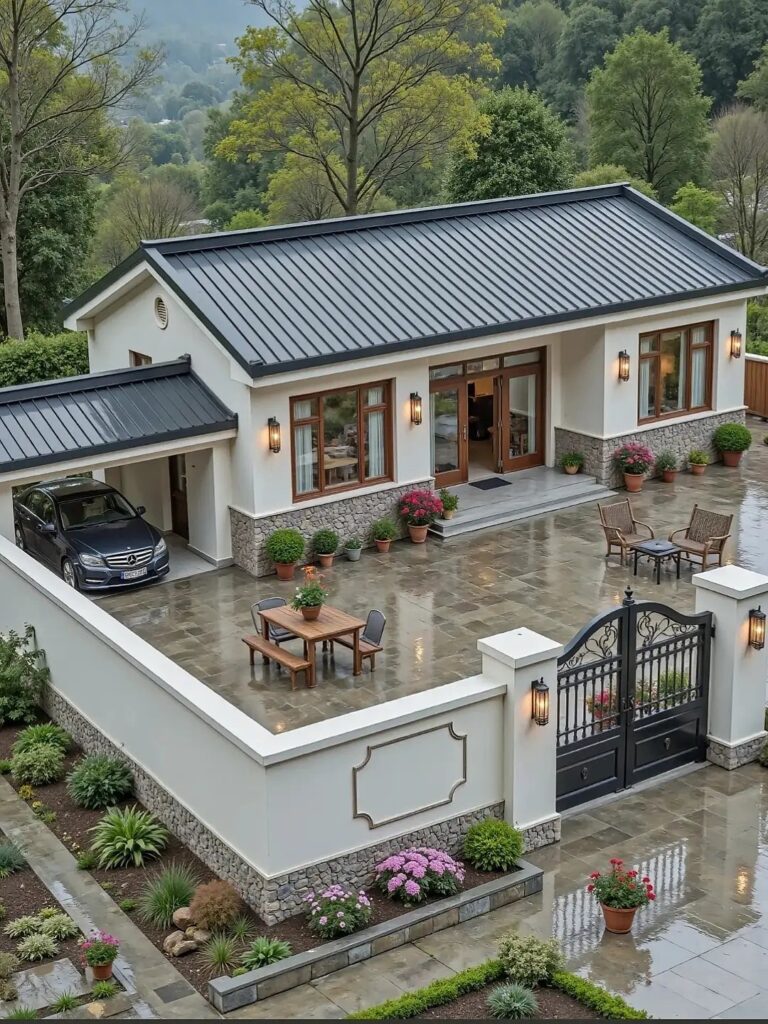
Costs in this list run wide: a weekend of placing pots and trimming shrubs sits at one end, and large glass walls or a perforated brick screen, priced well above standard windows and siding, sit at the other.
Your facade picks the winner: a plain wall can carry one strong move, like a dark front door against light siding, while a busy wall needs restraint and a simple, clean exterior before anything new goes on.
Most of these work best at 3 materials or fewer, so count what your house already has first.
1. Outdoor Lighting
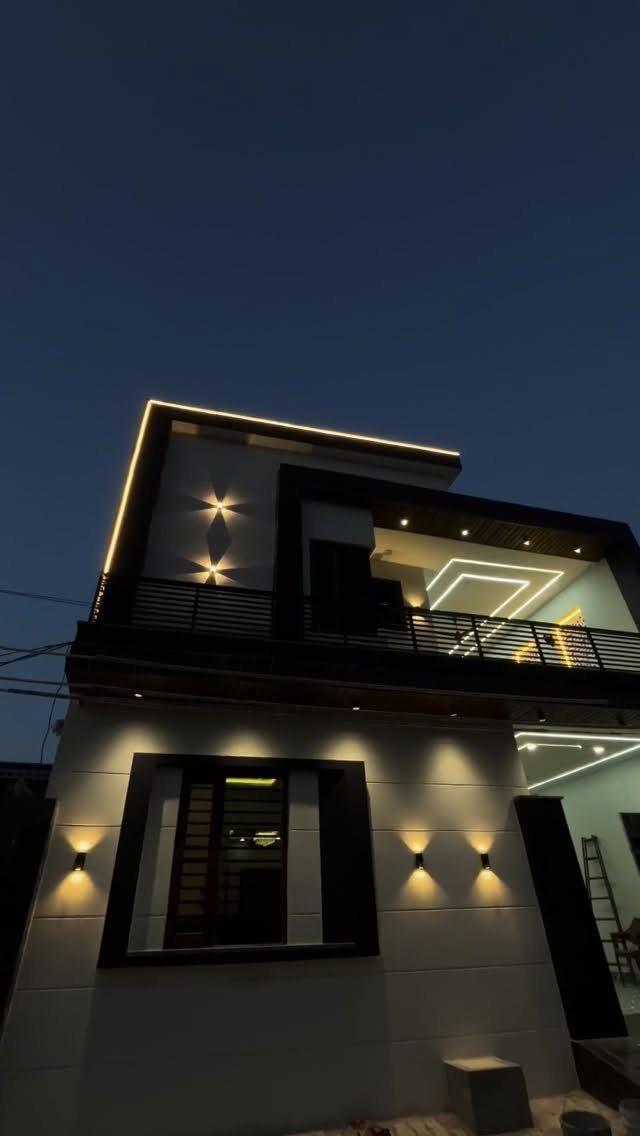
Warm yellow light does more for a small facade than any paint color, because it picks out the parts worth seeing and lets the rest fall away.
Wall sconces beside the door, recessed lights in the ceiling over a balcony, and a thin LED strip along the roofline each do a different job, so I like using all three.
Keep every fixture the same warm tone. Mixed whites make a compact house look patchy after dark.
Start with the entry and add the strip last.
2. Mix and Match Materials
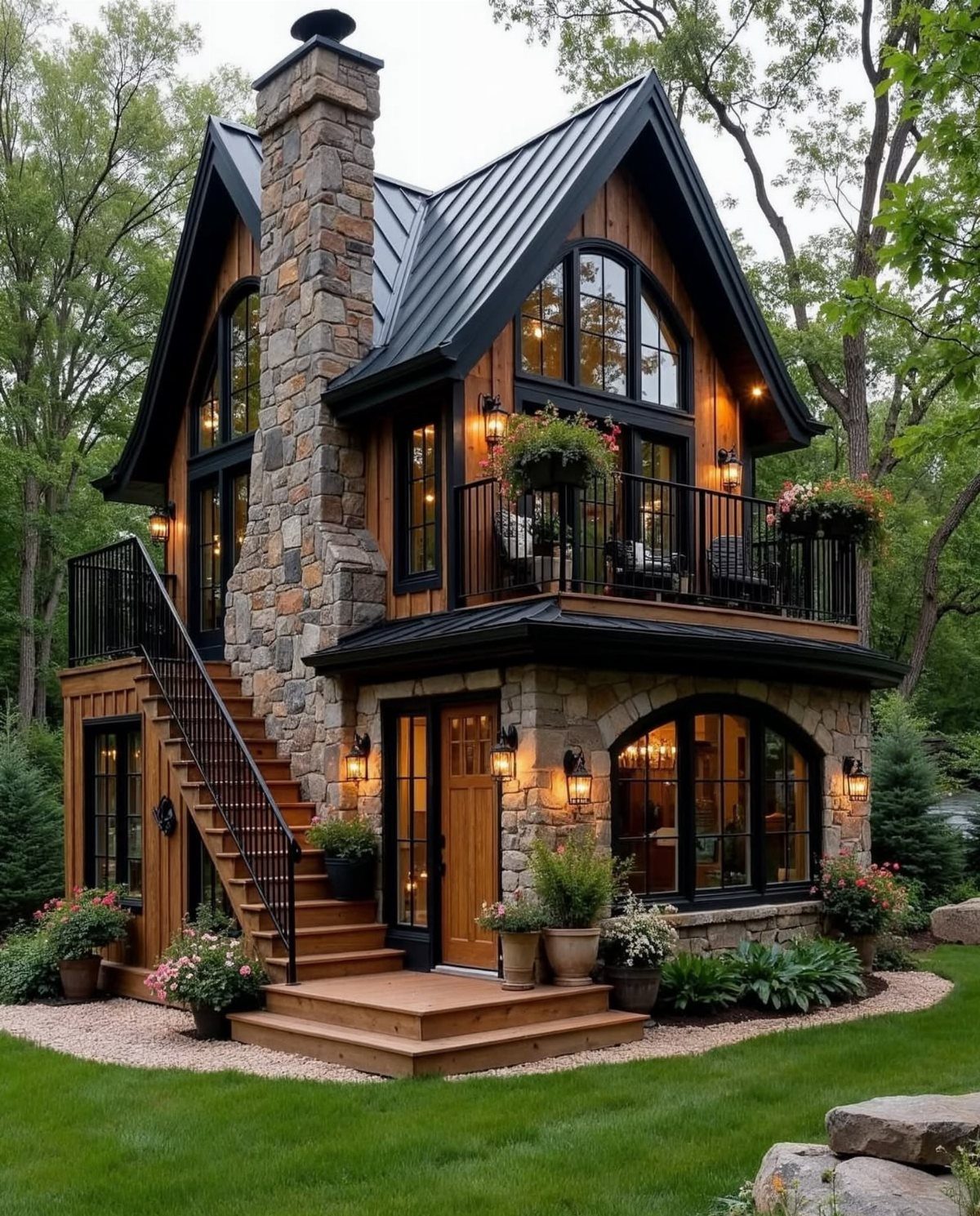
Wood siding, stone, and a black metal roof each carry a different job, and a small house can handle three materials if each one gets its own zone.
Stone anchors the chimney and lower walls, wood fills the upper story, and the dark roof caps everything.
I would stop at three. A fourth material on a compact facade starts to look busy.
Repeat one material somewhere else, like the balcony or stairs, so the mix feels planned instead of random.
3. White and Warm Neutral Colors
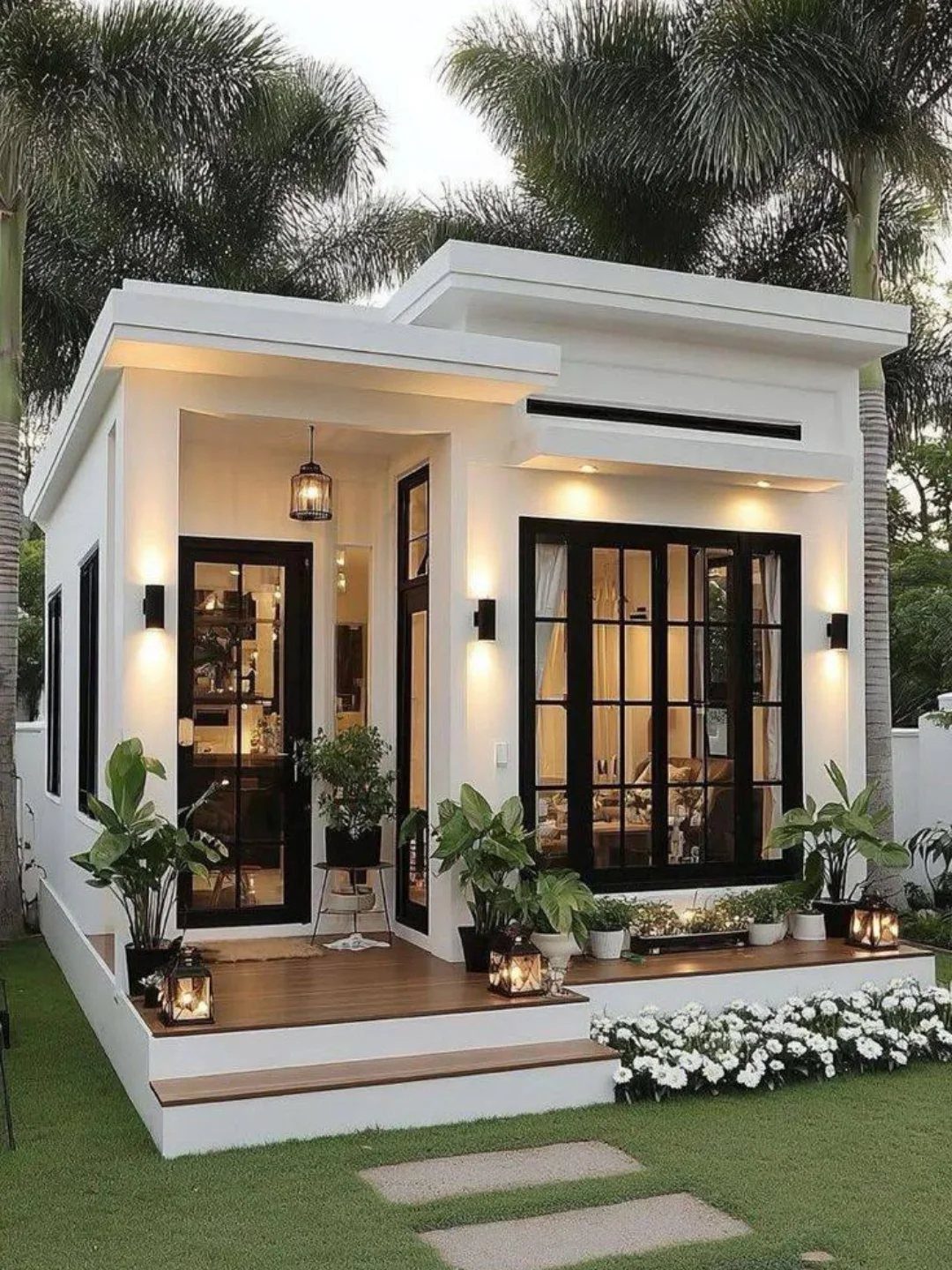
White walls with black window frames give a small house a crisp outline, and the wooden deck out front adds the warmth that keeps white from feeling cold.
Light colors make a compact house read larger, which is why I would pick this over a dark scheme on a tight lot.
Lanterns on the porch finish it without adding clutter.
If pure white feels stark, shift toward a warm cream and leave the black trim as it is.
4. Large Windows
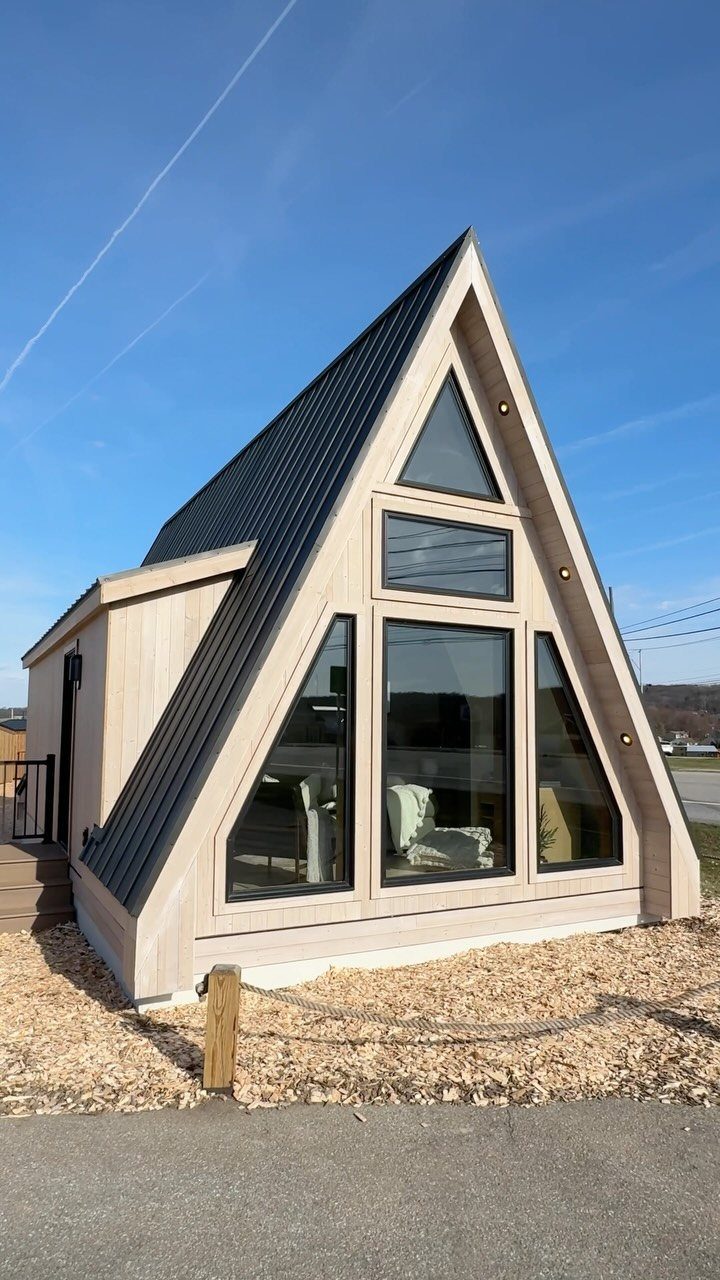
On a small house, one big wall of glass beats several scattered windows. An A-frame shows why: the front facade is mostly glass, so the shape of the house and the view do the decorating.
Window size and placement matter more than count. Put the largest glazing on the side facing your best view, then let the other walls stay quiet.
Cost is the downside, since large glass runs well above standard windows. Light wood siding around it keeps the look soft.
5. Try a Flat or Low-pitched Roof
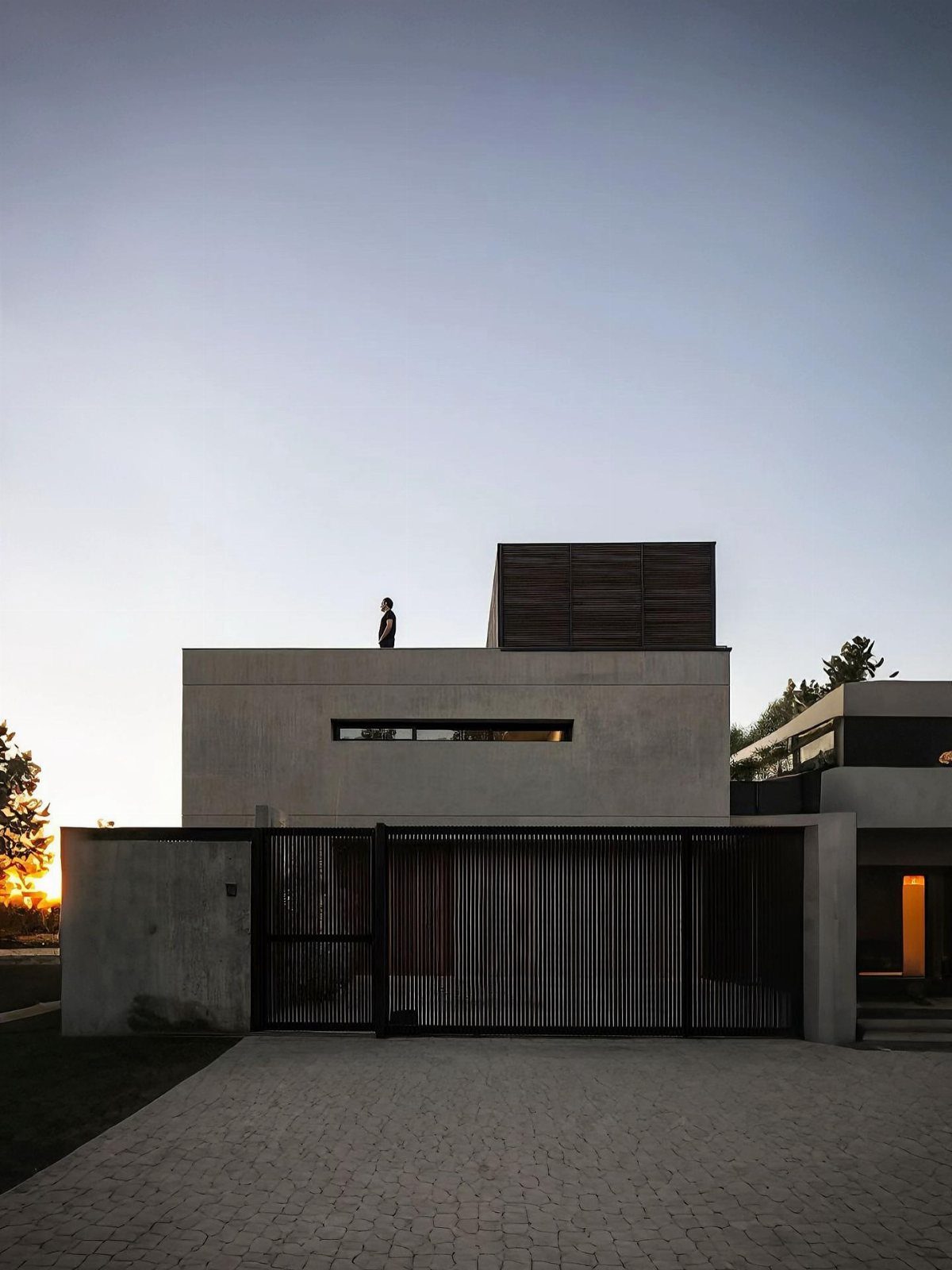
A flat or low-pitched roof lends a small house a clean, modern line, and it reads best over simple walls, like the smooth concrete and slatted dark gate here.
I would match the roof to every other part of the facade: plain walls, few details, one strong accent. A busy exterior fights a flat roofline.
A flat roof can also double as usable space, though that needs planning and a professional check before anyone stands up there.
6. Try a Modern Brick Exterior
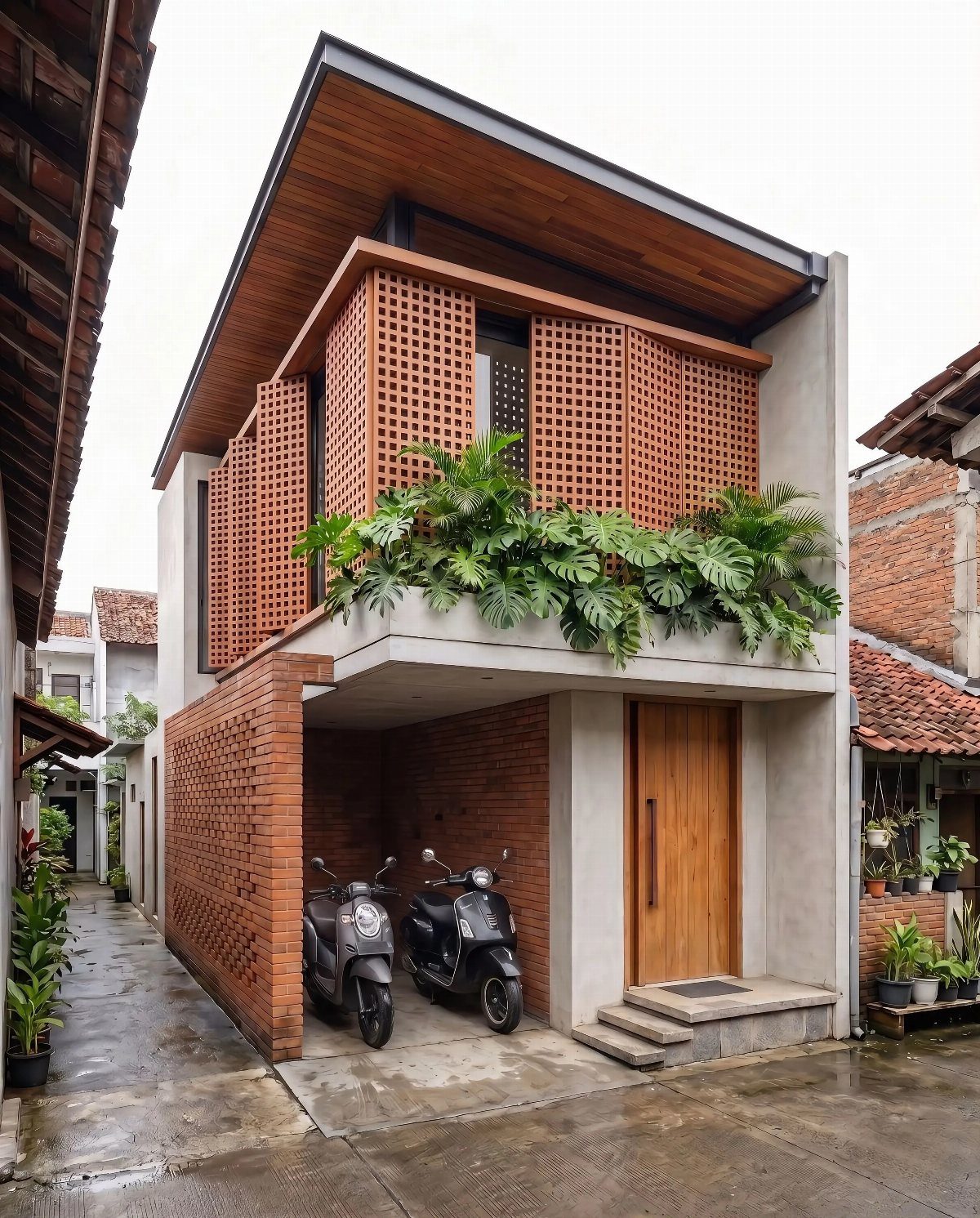
Red brick looks contemporary when the walls stay plain and the details do the work.
Perforated brick screens are the detail that sets a modern brick exterior apart: the open pattern lets light and air pass through while giving the facade a texture that standard running-bond brick can’t match.
I would pair brick with a wooden door, since the warm wood sits well against the red. A balcony of green plants softens a hard material without adding clutter.
Brick is a sturdy, low-fuss surface, so spend the effort on the screen and the door instead of extra trim.
7. Patios and Decks
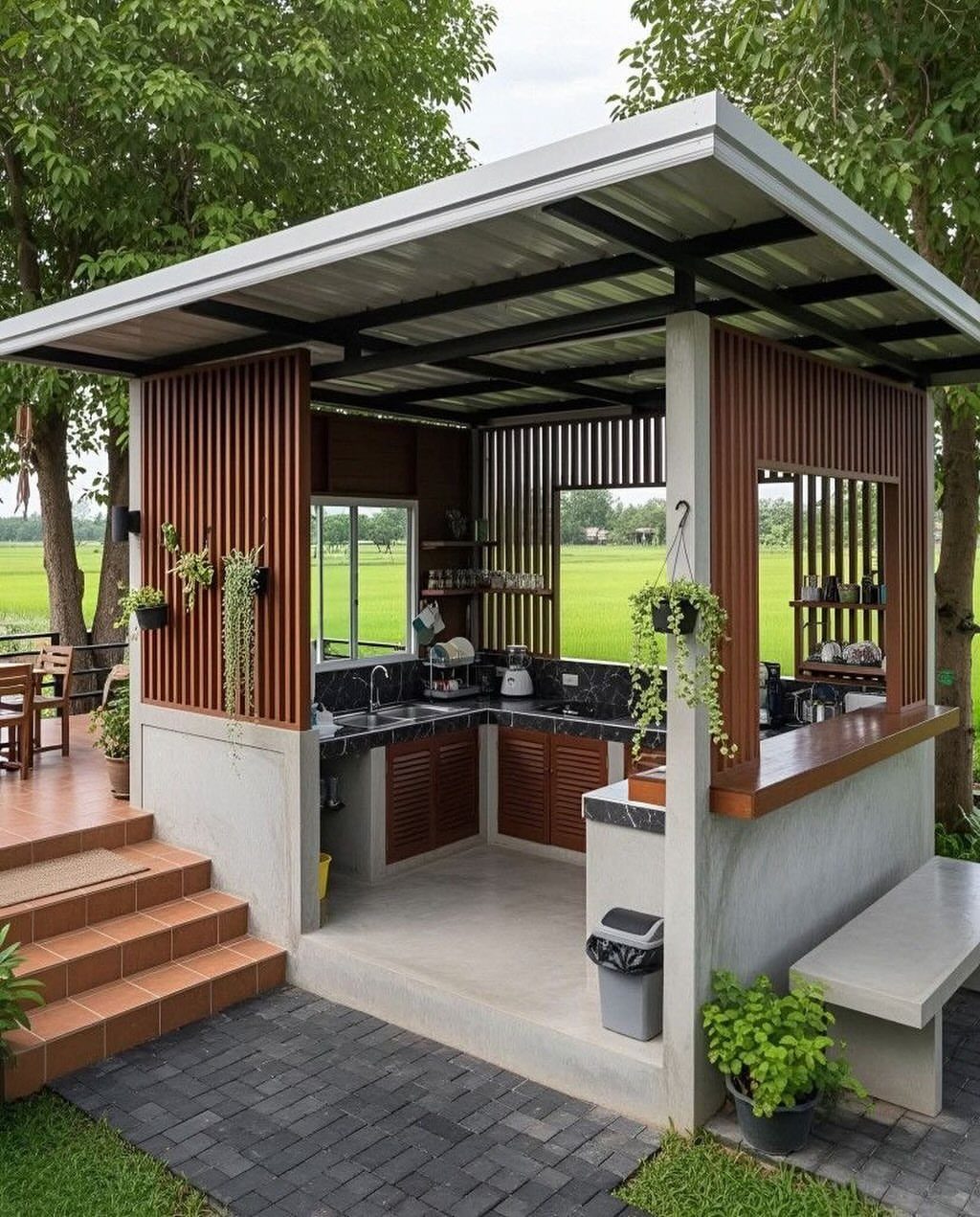
A patio works hardest when it has a roof, a counter, and a place to sit, and a built-in bench saves floor space that loose chairs would eat.
Concrete counters and wooden slats suit a small yard because the pairing is plain and the wood adds warmth.
I would build the bench into the structure rather than buy furniture to fill a gap. Fixed seating keeps a compact patio open.
Pavers or stone underfoot keep the whole thing looking like one piece.
8. Simple and Clean Exterior
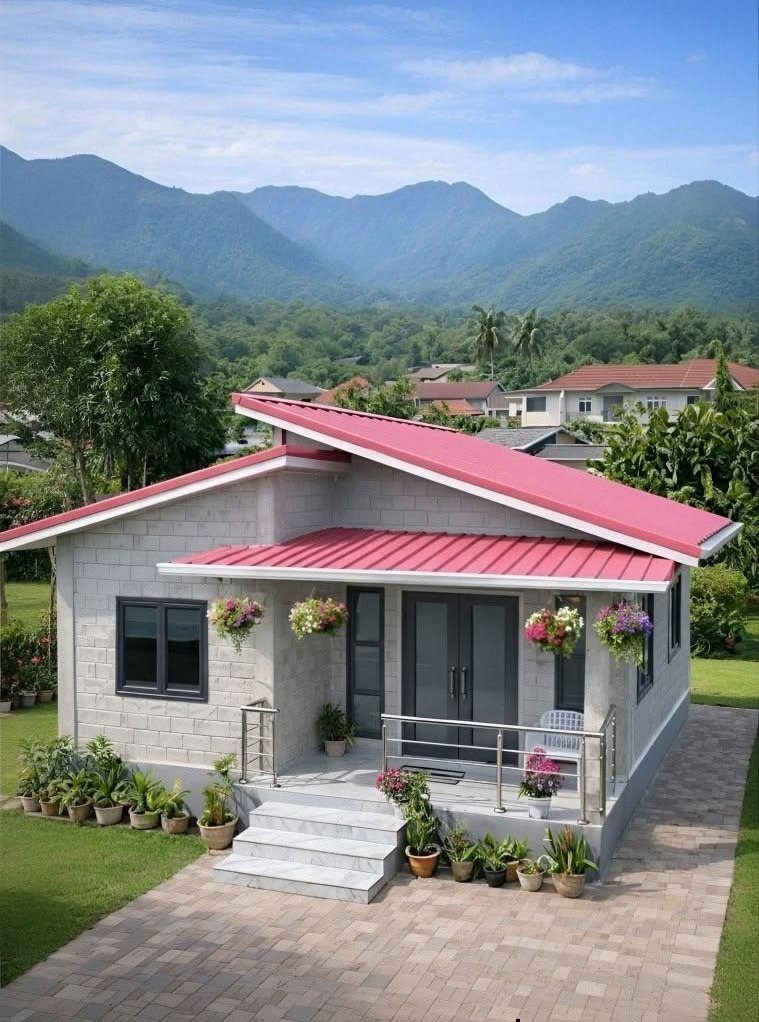
Grey block walls, a red roof, and a small covered entry: the palette stops there, and the restraint is why it works. A single bold color on the roof gives a plain house its personality.
I would leave the walls and porch neutral and pull attention to the roof.
Simple design leaves nowhere to hide, so clean lines and tidy edges matter more.
9. Choose a Strong Front Door
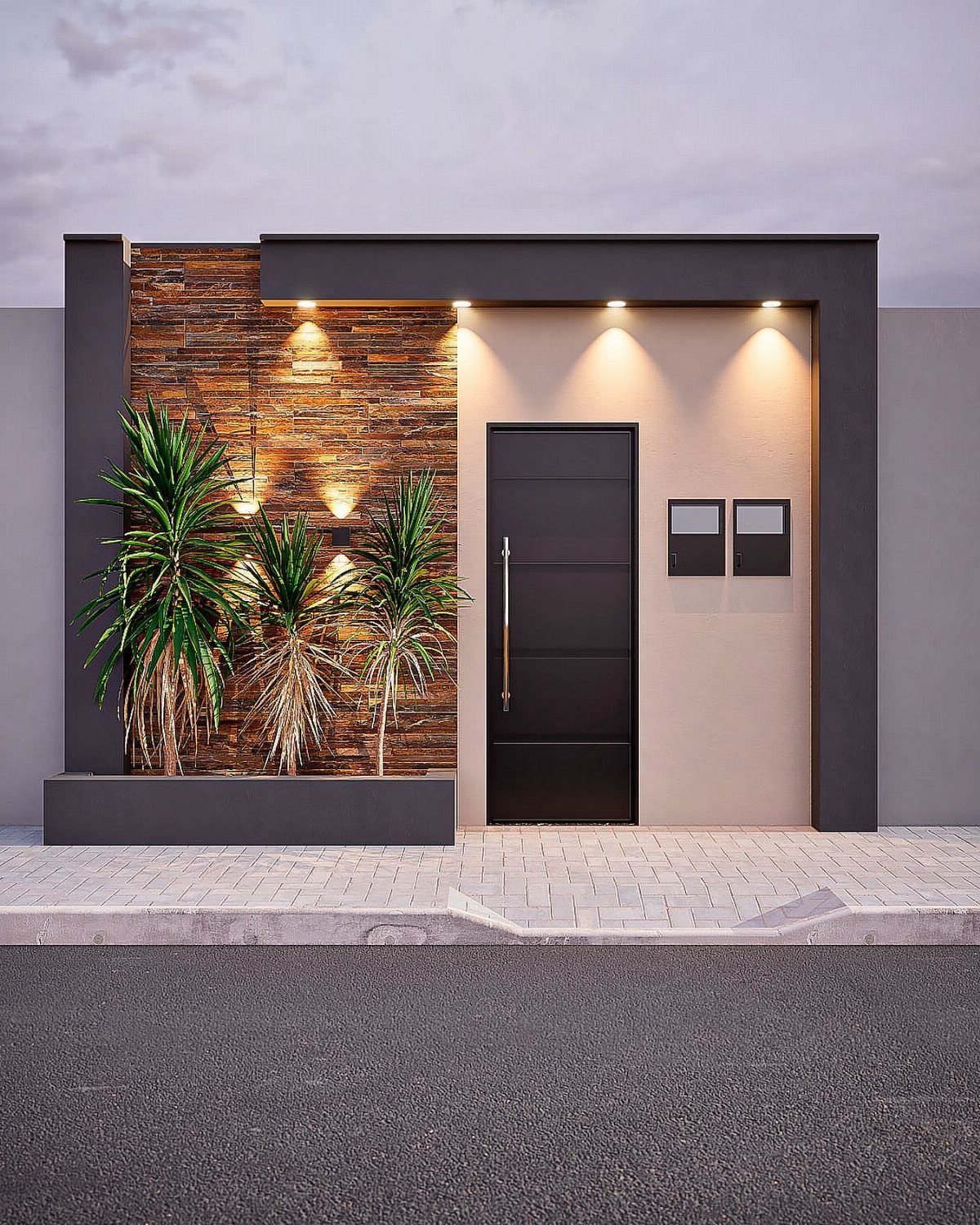
A dark front door set against textured stone reads as the focal point before anything else on the house does. On a small facade, one strong element beats several small ones.
I would keep the door a single solid tone and let the stone wall and a warm light beside it supply the texture. Plants in a planter near the door soften the hard edges.
Pick the door color first, then match the lighting to it.
10. Make Landscaping Part of the Design
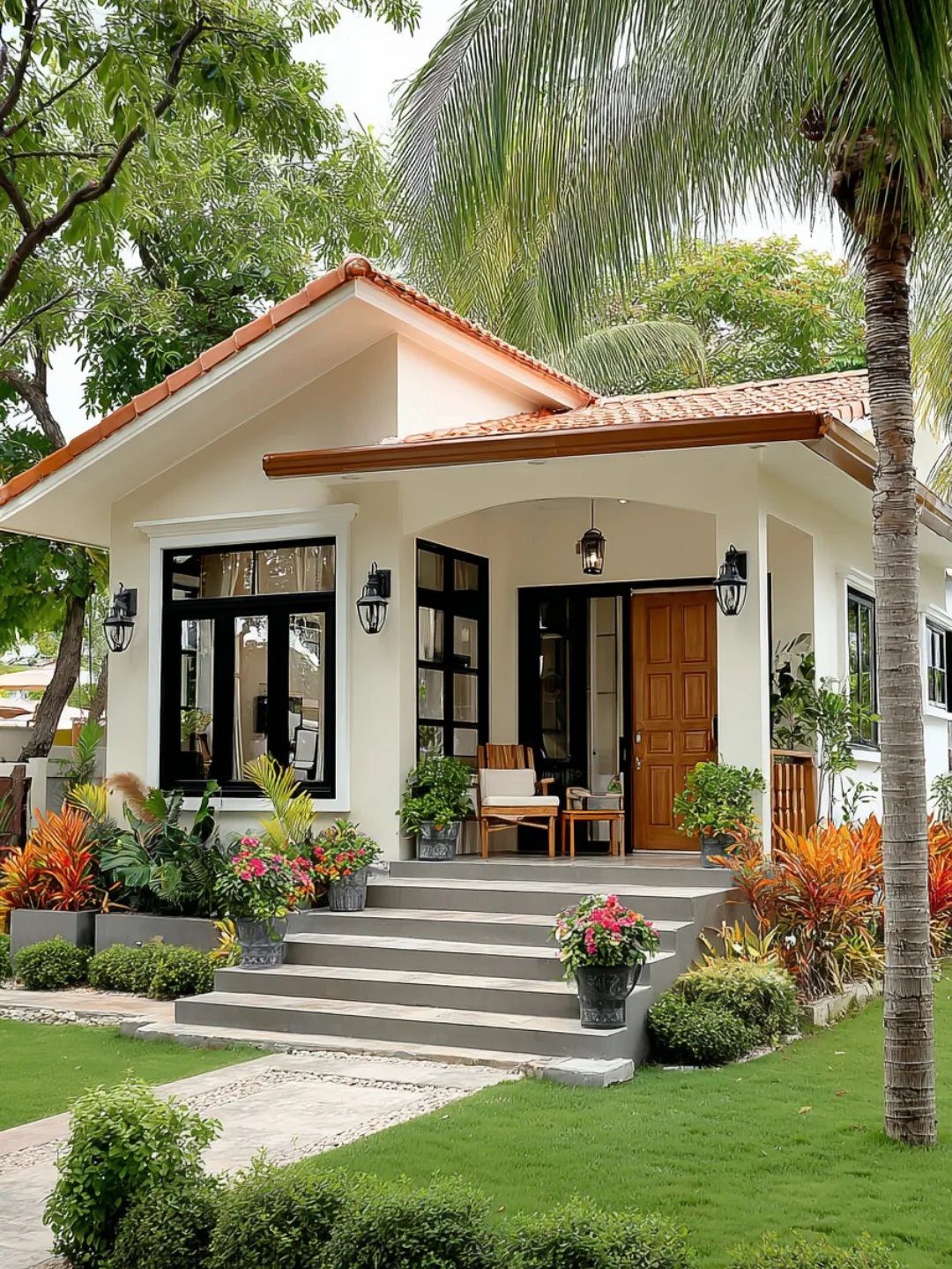
Clipped shrubs, a green lawn, and a few potted plants can finish a small white house, because greenery fills the space between the house and the street. White walls and a terracotta roof give plants a clean backdrop.
I like pots near the porch, since they are cheap and movable, and a weekend is enough to place them and trim the shrubs.
Keep the planting simple. Too many varieties crowd a compact facade.
Importance of Proportion
Scale decides whether a small house looks cozy or cramped. Scale mistakes shrink a small house fast: fat porch columns, a porch that runs too deep, or a roof that looks too heavy for the walls under it.
Pick parts that match the size of the structure: a modest canopy over the door, windows sized to the wall they sit in, and a narrow path to the entry.
Windows are where proportion quietly goes wrong. Ones that are too small or awkwardly placed make a facade look pinched, and a door that is underscaled for the wall makes the entrance look like an afterthought.
Before buying anything, hold a tape measure against the wall and sketch the door and windows at true size. If a piece looks borrowed from a bigger house, it probably is.
Avoiding Overcomplication
Overcomplication is the most common way a small exterior loses ground.
Pile stone, brick, wood siding, metal, and patterned tile onto one small facade and the eye has no place to rest, so the house ends up looking smaller than its real footprint.
Choose one main wall finish first. Then add one or two secondary materials, no more.
Repeating those same materials in different spots ties the building together, so a trim color or wood slat that appears twice looks planned.
The same rule covers lines and ideas.
Too many rooflines, window shapes, or accents break the facade into pieces. Before adding anything, ask whether it repeats something already there, and if it doesn’t, leave it off.
Frequently Asked Questions
What are the current trends in house exterior design?
Current small-house exteriors favor sustainable materials, mixed textures, and natural color palettes.
Mixing works best with restraint: 3 materials is my limit on a compact facade, each in its own zone, such as stone below, wood above, and a dark roof on top.
What exterior colors make a small house look bigger?
Light, low-contrast colors do it: white, cream, beige, light gray, and soft neutrals.
Dark shades work better as accents on window frames, the door, or the roof. Crisp white siding with black window frames draws a sharp outline around a small house, while a warm cream gives the same effect with less glare.
How can I make a small house exterior look expensive?
Keep a limited material palette and get the proportions right.
Money-looking exteriors usually come down to 4 things: tidy trim and paint, an entry with some presence, warm lighting at the door and along the path, and plantings kept neatly clipped, since peeling paint or overgrown shrubs will undo the rest.
Warm, matching outdoor fixtures and a single strong front door finish it better than extra trim.
How to decorate a small home?
For the outside, keep the front organized so the eye moves easily across it.
Use light wall colors, generous windows, and simple landscaping, and avoid filling the facade with decoration. I would add one bold element, like a strong door or a colored roof, and leave the rest plain.





