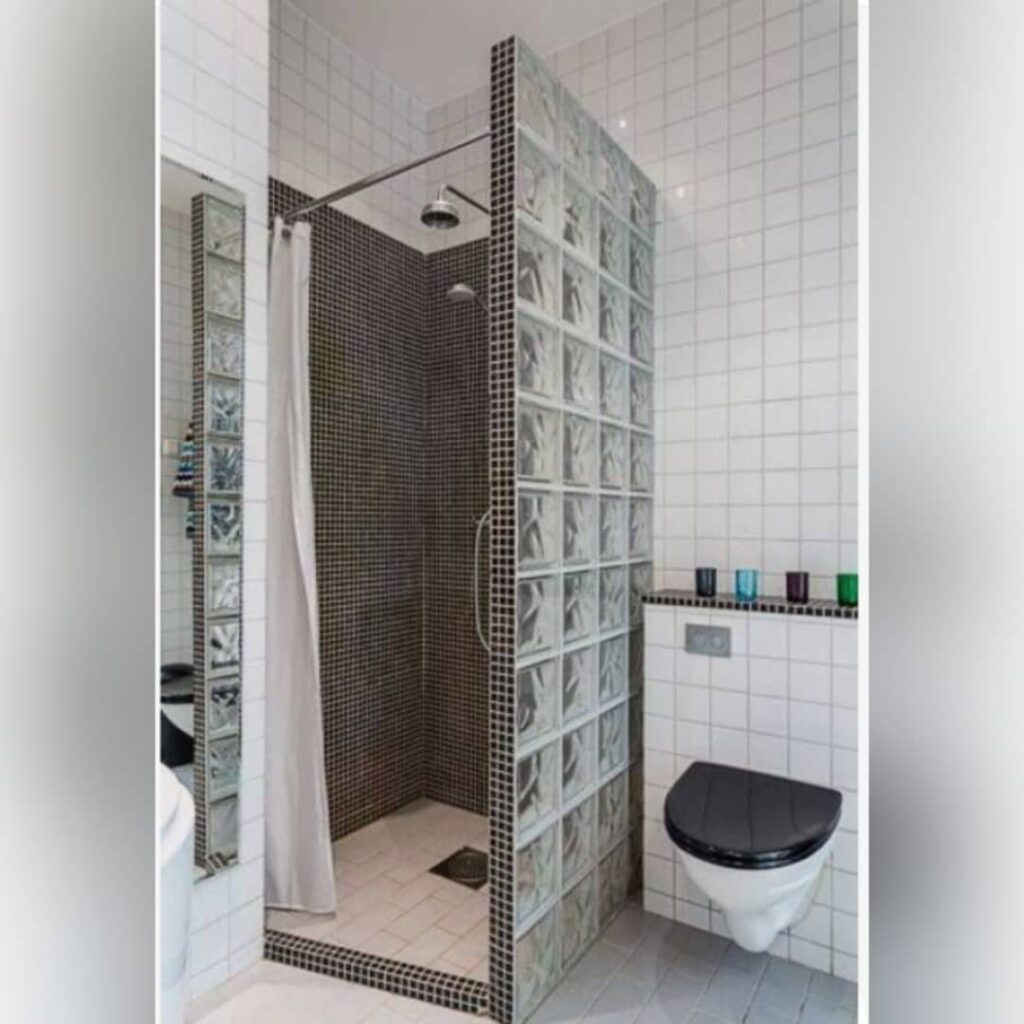
Glass tile covers a wide range, from a mosaic shower wall or a herringbone subway layout to a glossy full wall, a translucent glass block partition, or soft blue and green sheets.
What decides which one is yours is the surface behind it: glass is translucent, so adhesive ridges and wall dips show through, and only a flat substrate with an even thinset layer will let the glossier, bolder options look right.
If your walls are rough, start small with a shower niche, since a few square feet of glass mosaic is far easier to set and forgive than a full wall.
1. Glass Mosaic Tiles Shower Wall
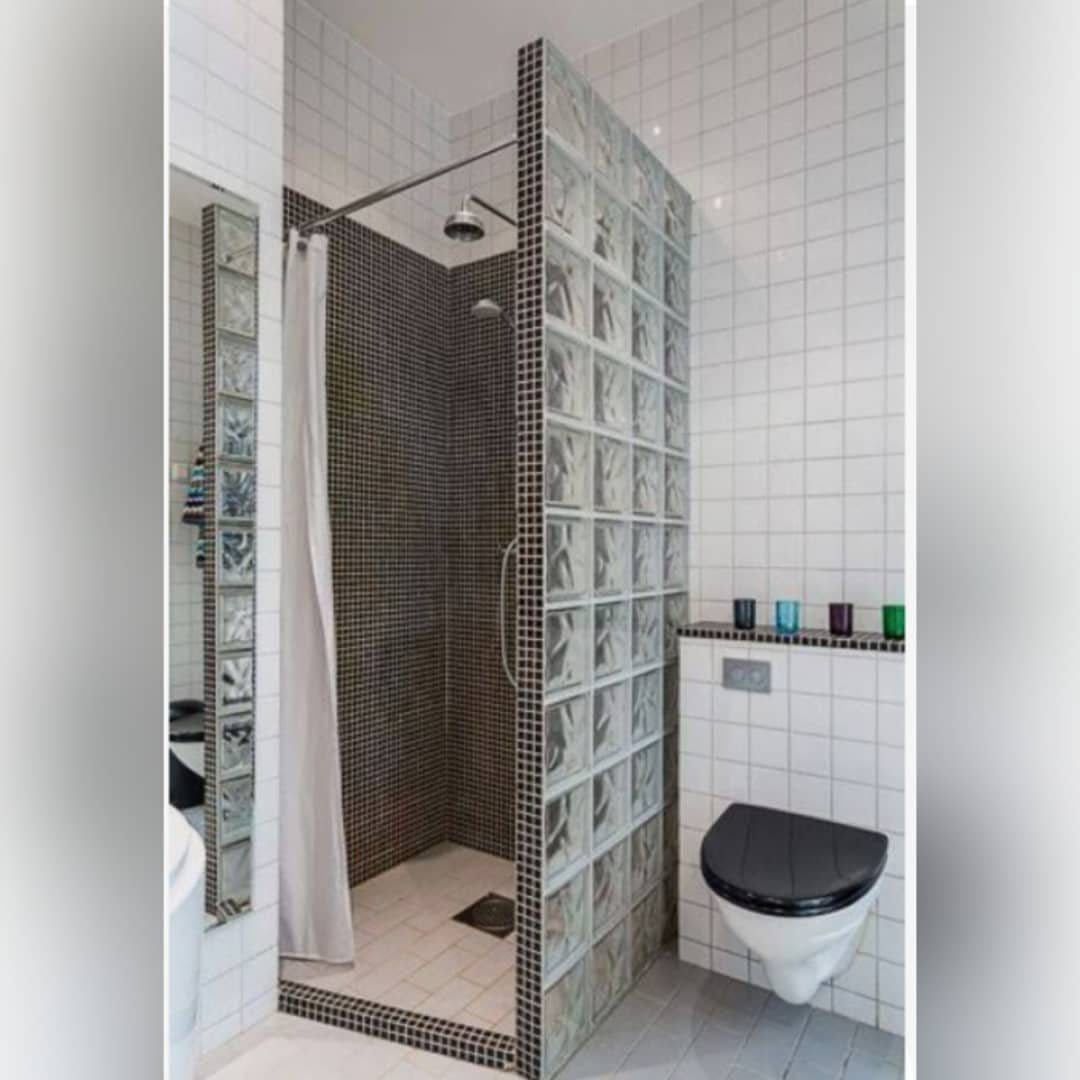
A single wall of dark brown glass mosaic does more than a whole room of it. Keep the rest of the shower simple, and the small tiles read as a deliberate accent rather than clutter.
Mosaic sheets also bend around tight corners and short walls, which suits a compact bathroom.
A dark grout will make the surface look like one solid piece, while a light grout turns every tiny square into a visible grid. I lean toward dark here.
2. Glass Subway Tiles Herringbone
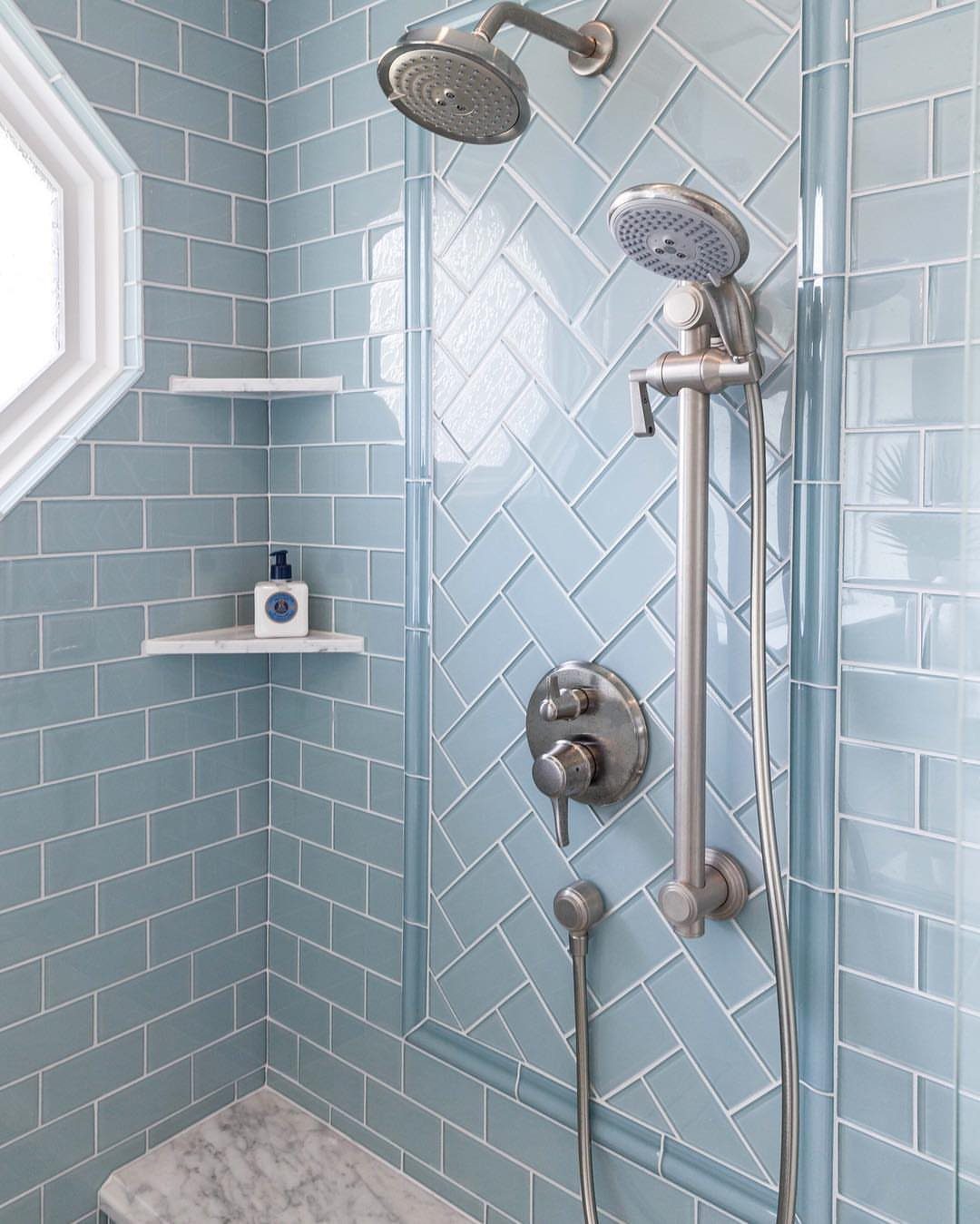
Herringbone is the cheapest way I know to make a plain rectangle of subway tile look custom. The same light blue glass tile that would run in rows becomes a zigzag with movement, and the glass adds depth.
Expect more cuts at the edges, so order extra tile and take your time on the layout.
Start from a centered pencil line, dry-fit a few rows, and check them before any adhesive goes down. A pattern this busy looks best when the grout color stays close to the tile.
3. Glossy Glass Tiles
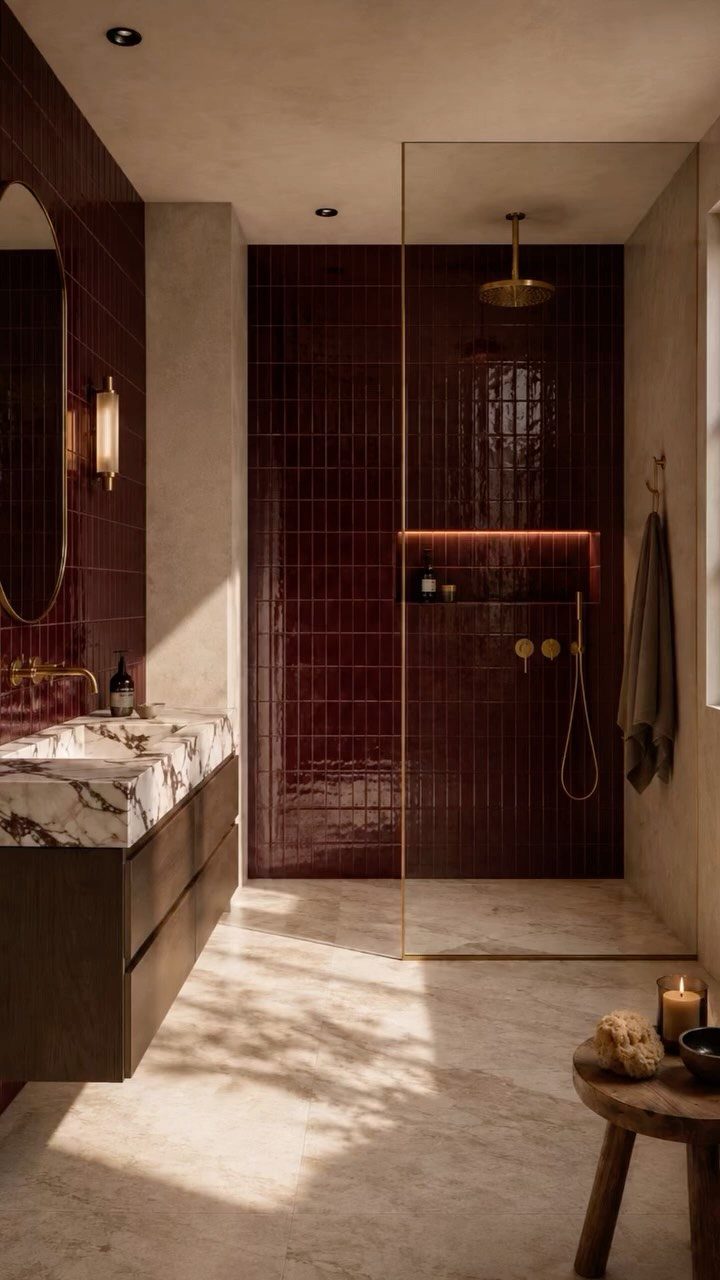
Glossy glass bounces light around the room, and that is the main reason I like it for a compact bathroom.
A deep shade such as burgundy keeps that shine from feeling cold, and it pairs well with white marble and warm metal fixtures.
High gloss shows every water spot and soap streak, and that is the price of the shine.
Plan on a squeegee after showers. If that sounds like too much upkeep, choose a lighter color, since pale tones hide spotting better than dark ones.
4. Earthy Contrasts
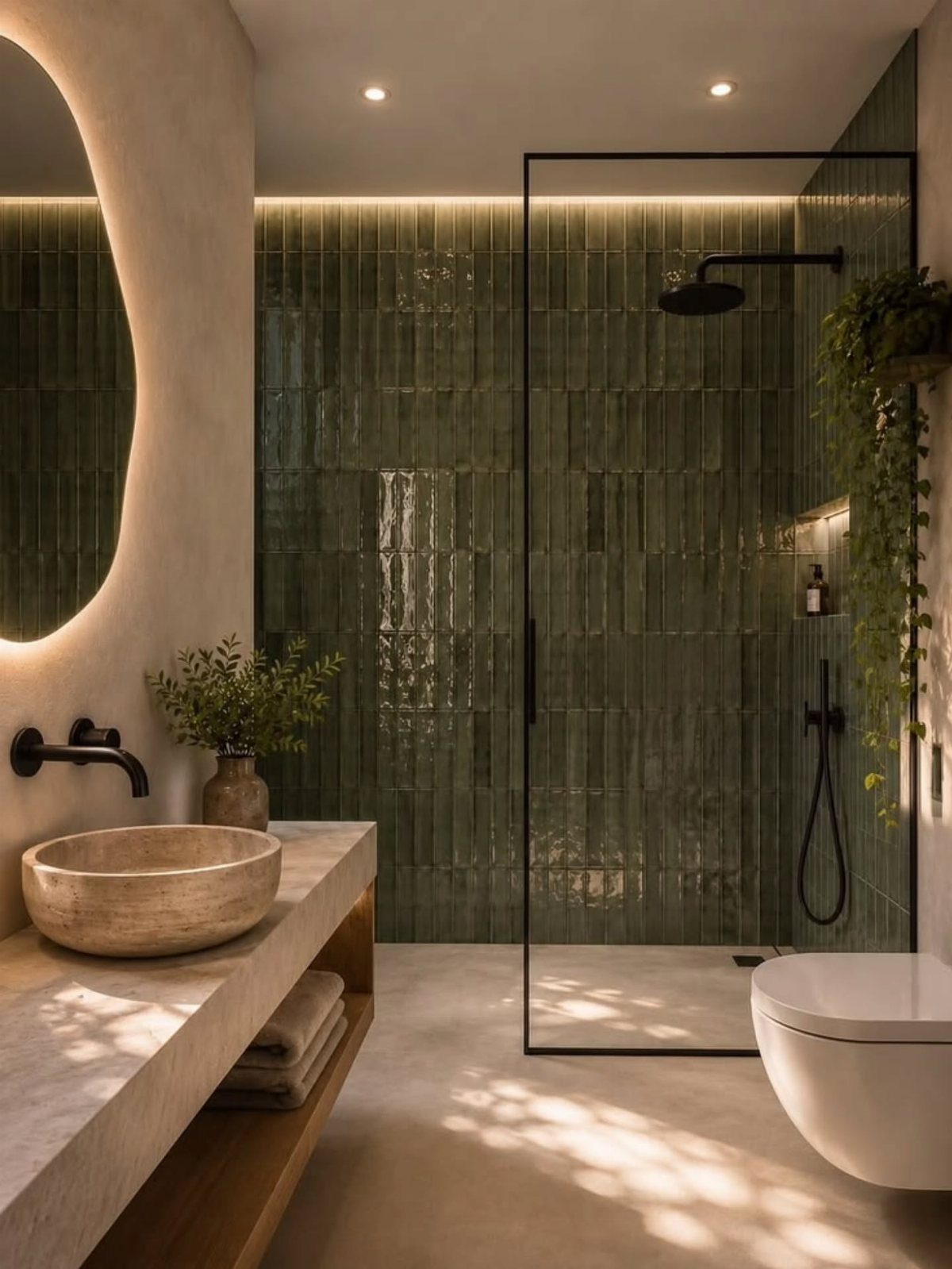
Pick one strong color and let everything else support it. Deep green glass tile set vertically draws the eye upward, and stone, concrete and a round mirror keep the mood grounded instead of loud.
I would keep the other materials matte and the palette short, so the glass is the only shiny surface.
Vertical stacking is easy to do over a weekend, but it shows crooked lines fast, so snap a plumb line first and check it every few rows.
5. Shower Niche
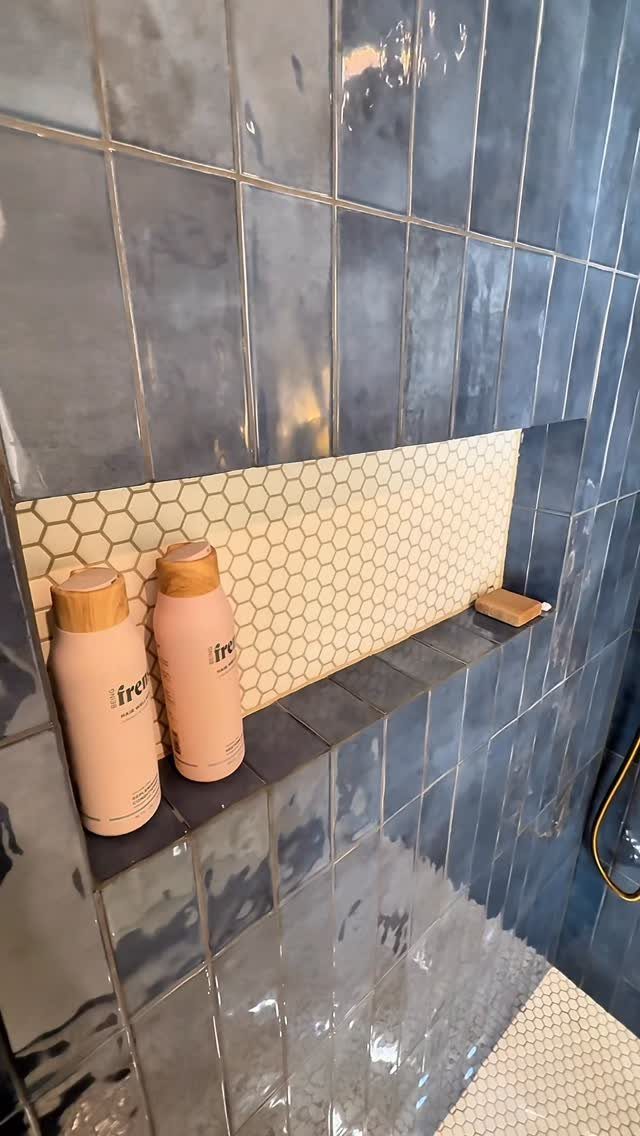
A niche is the best place to spend a little on small glass tiles.
Lining the back with cream hexagonal mosaic against larger blue wall tile gives the recess its own look, and it makes a tidy home for bottles and a soap dish.
The maker of this one notes the deep blue vertical tile and white hex floor, and the niche echoes that pairing.
Contrast is what makes it work, so choose a back tile that differs from the wall in color or shape.
“Depending on how it’s made and finished, this type of tile can add a jewel-like sparkle and depth,” says Nemo Tile + Stone design director Katie Michael-Battaglia.
— Domino
6. Full Wall of Glass Mosaic Tiles
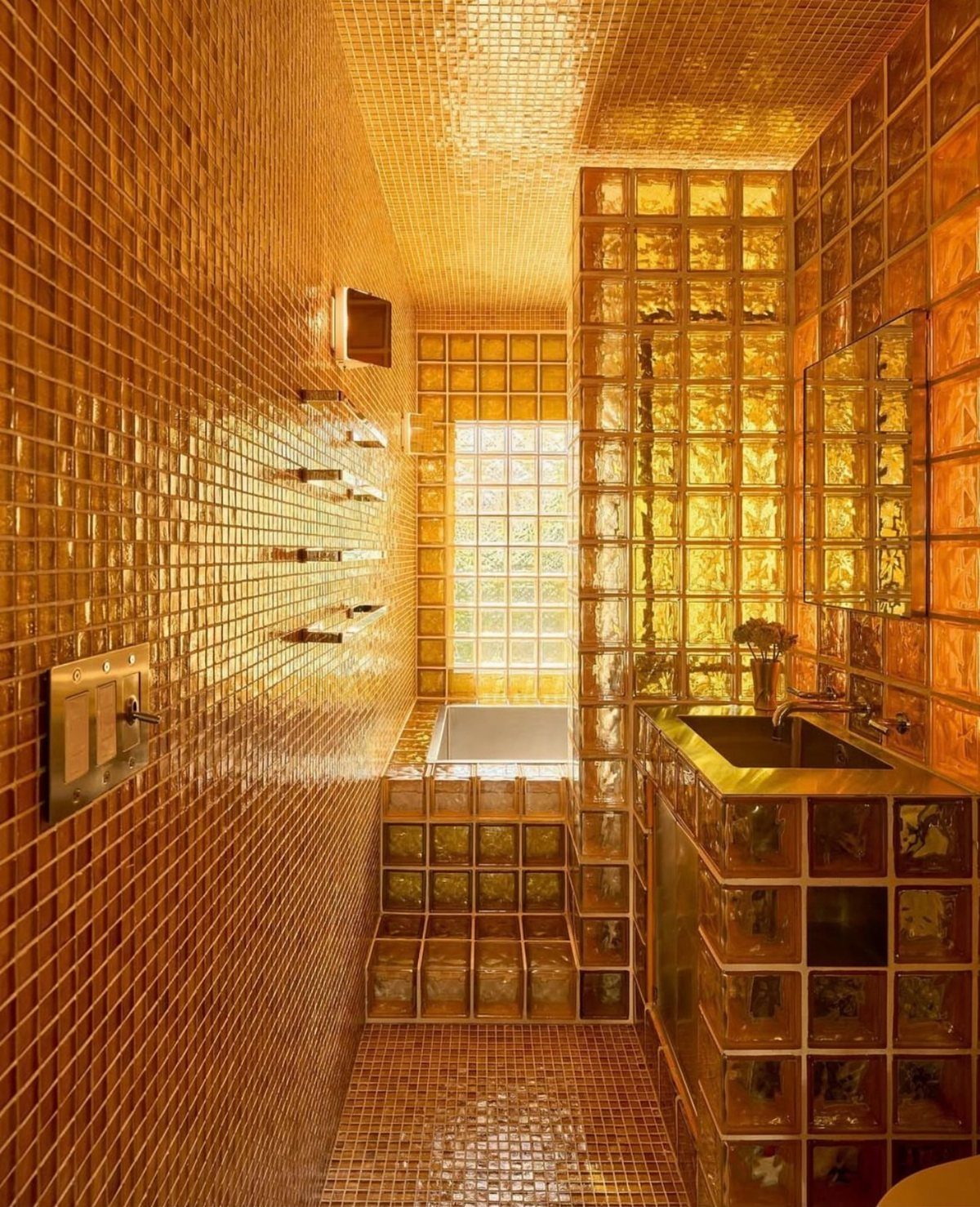
Covering walls, floor and ceiling in one amber glass mosaic turns a bathroom into a single glowing box. Golden-orange is warm enough that the room feels lit even on a gray day.
This is the boldest idea on the list, and I would only try it in a tiny room or half bath, where the sheets are manageable and the cost stays down.
Mosaic needs a lot of grout, so choose a color close to the tile and seal where needed. A glass block wall lets light in without breaking up the color.
7. Translucent Glass Block Shower Wall
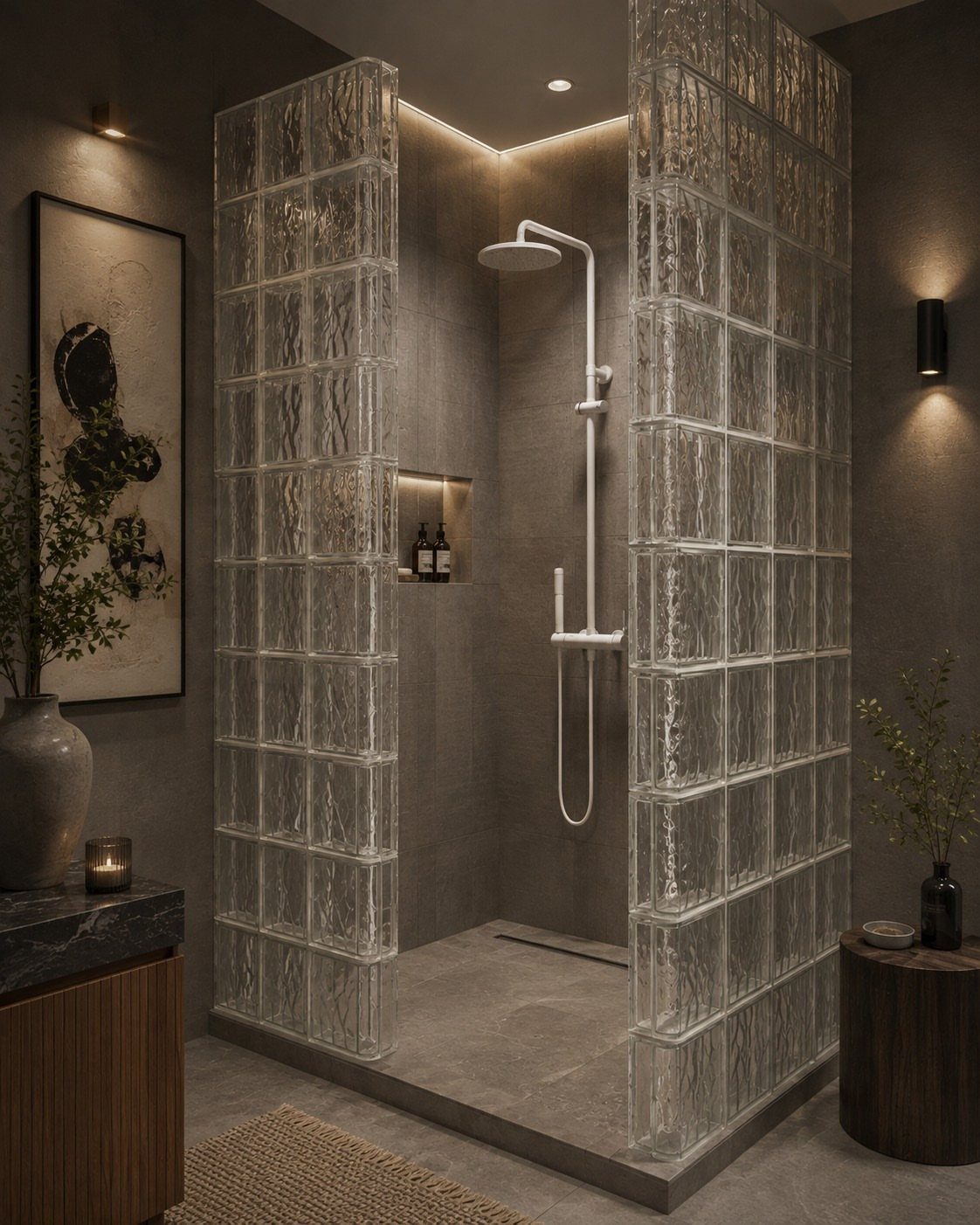
Glass block lets daylight through while keeping a walk-in shower private, and grey stone tile around it keeps the look calm and quiet.
The blocks blur whatever sits behind them, so you get a bright shower without a curtain or a framed door.
A recessed shelf set into the wall beside the blocks keeps bottles off the floor and frees up room where every inch counts.
Glass blocks are heavy, so sketch the layout on paper and count every row and spacer first, then order.
8. Light Blue Marbled Glass Tiles
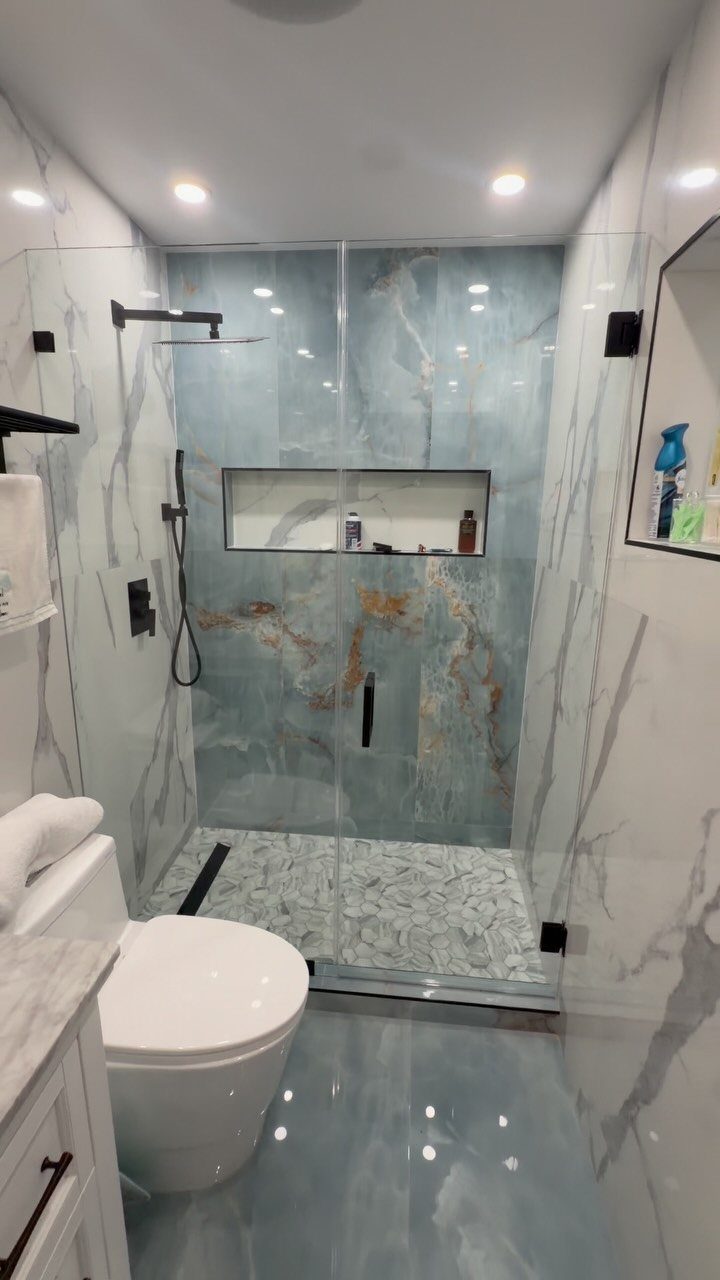
Light blue and white marbled glass reads like water frozen mid-swirl, and running it across both the shower and the floor makes a compact bathroom look like one continuous surface. The soft color keeps the room airy.
Pale tones hide water spotting better than dark ones, which makes this a forgiving choice for a busy household.
I would pair it with plain white fixtures and a quieter marble-patterned wall, so the swirl in the glass stays the star.
Choose a grout close to the tile color so the pattern isn’t chopped up into squares.
9. Green Glass Wall Tiles
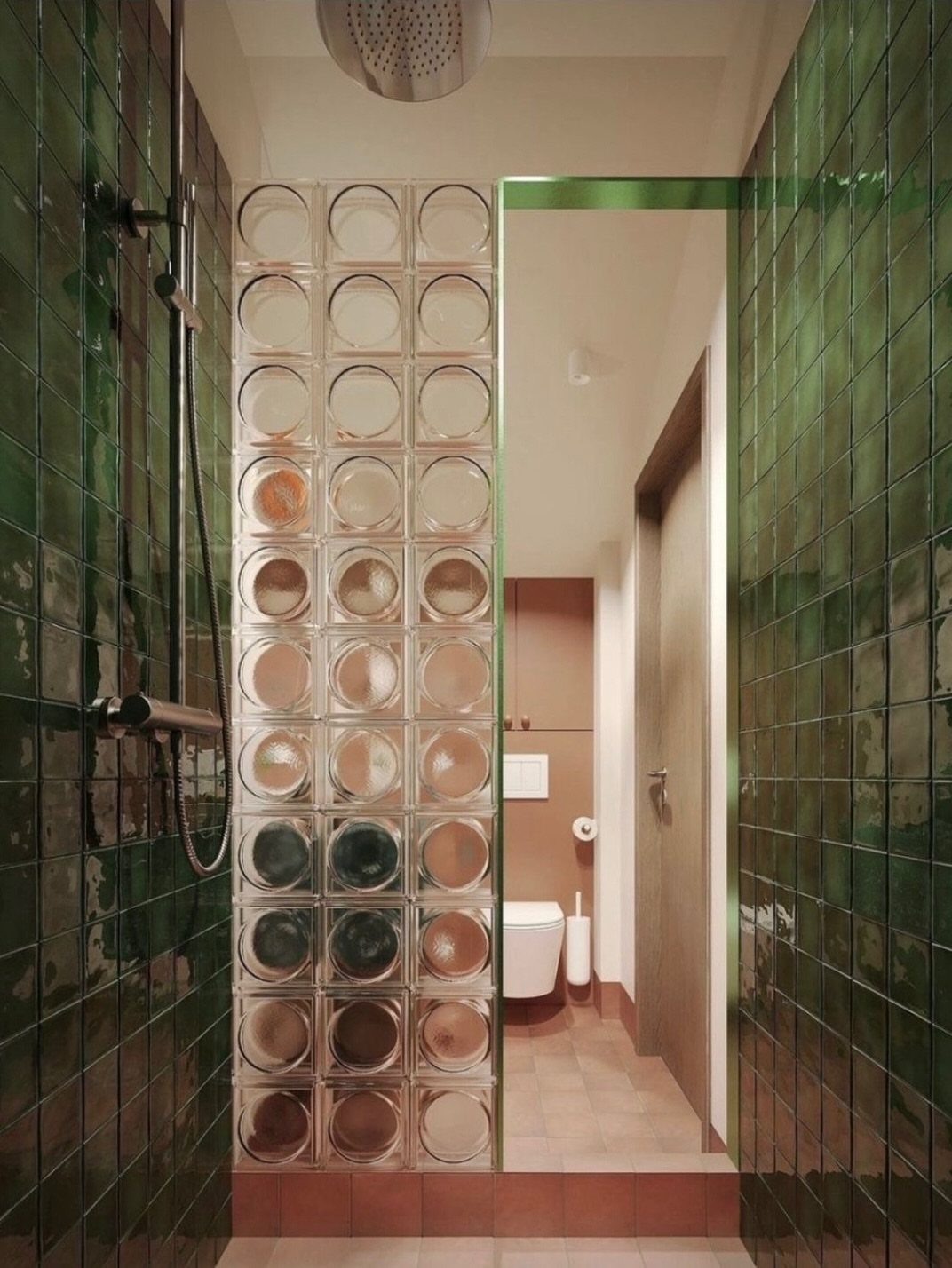
Glossy green glass on the shower wall, paired with a circular glass block partition, gives a shower 2 kinds of shine that behave differently. The tile is smooth and reflective, while the blocks scatter light and hide what’s behind them.
Round blocks are a strong move, but keep the rest of the shower plain so the curve and the green don’t compete. I like the pinkish-brown tile glimpsed beyond, because it shows green holds up next to warm colors.
Expect to wipe the glossy tile after showers, since gloss shows every streak.
Pros and Cons of Glass Tiles
Price is the first hurdle: glass costs more than ceramic or porcelain, so budget for it before you fall for a sample.
Fragility is the second. Glass is durable, but it can crack, and it is hard to cut.
Because the tile is translucent, whatever sits behind it shows through. Any adhesive ridges, wall dips, or grout telegraphing through from below will show, which means the substrate has to be flat and the thinset layer consistent.
Slip is the third concern. For a bathroom floor, pick a textured finish or small mosaic sheets, since smaller tiles mean more grout lines and better footing when wet.
On the plus side, glass is hygienic and easy to live with. If the cost bothers you, use glass where it counts and plainer tile elsewhere.
Glass Tile Maintenance Tips
Routine care is simple.
Mild soap and water works, and so does a vinegar-water mix. Use a soft cloth or sponge so the surface doesn’t scratch.
Skip abrasive powders and scouring pads. Glass is smooth, and scratches on a glossy face never go away.
A microfiber cloth after showers is the habit that pays off most, because it stops water spots and streaks before they dry.
Grout needs attention too.
Glass itself won’t harbor mold, but grout lines stay vulnerable if water sits long enough. Seal the grout twice a year and put the next date in your calendar the moment you finish.
Glass Tile Design Versatility
Glass doesn’t lock you into one style. It comes in clear, frosted, glossy, matte, and iridescent finishes, in many colors and shapes, so you can match it to a modern, traditional, or eclectic bathroom.
Finish matters as much as color. Frosted and matte glass soften light and hide marks, while glossy and iridescent glass pick up every bit of light in the room.
The material also stands up to moisture, so it works beyond the shower: a backsplash behind the vanity is an easy, low-risk place to try it.
Order samples and spend a few days watching how they look in your actual bathroom light at different times of day.
Frequently Asked Questions
What are the different types of bathroom glass partitions?
Glass block is the main partition type to know. Glass block passes daylight but scatters the view through it, which gives a walk-in shower real privacy with no curtain and no framed door.
Blocks come in straight runs or curved, and a round partition pairs well with plain glossy glass tile, since the tile reflects light and the blocks scatter it.
What are the bathroom tile trends for 2026?
Glass tile in herringbone or vertically stacked layouts is one of the clearest directions. Tall, narrow glass subway tiles laid vertically, with a few rows of black tile and some metallic accents, give a wall the look of custom work.
Deep single colors like green, burgundy and amber, kept to one accent wall or shower, are another way people are using glass.
Are glass tile backsplashes still in style?
Yes. Glass tile works as a backsplash, a shower wall or an accent wall, and its shine bounces light around small rooms.
Glass tile shrugs off splashes, so the wall behind a vanity is a safe, cheap place to test it before committing a whole shower. Order samples and watch them in your own light for a few days before you commit.





