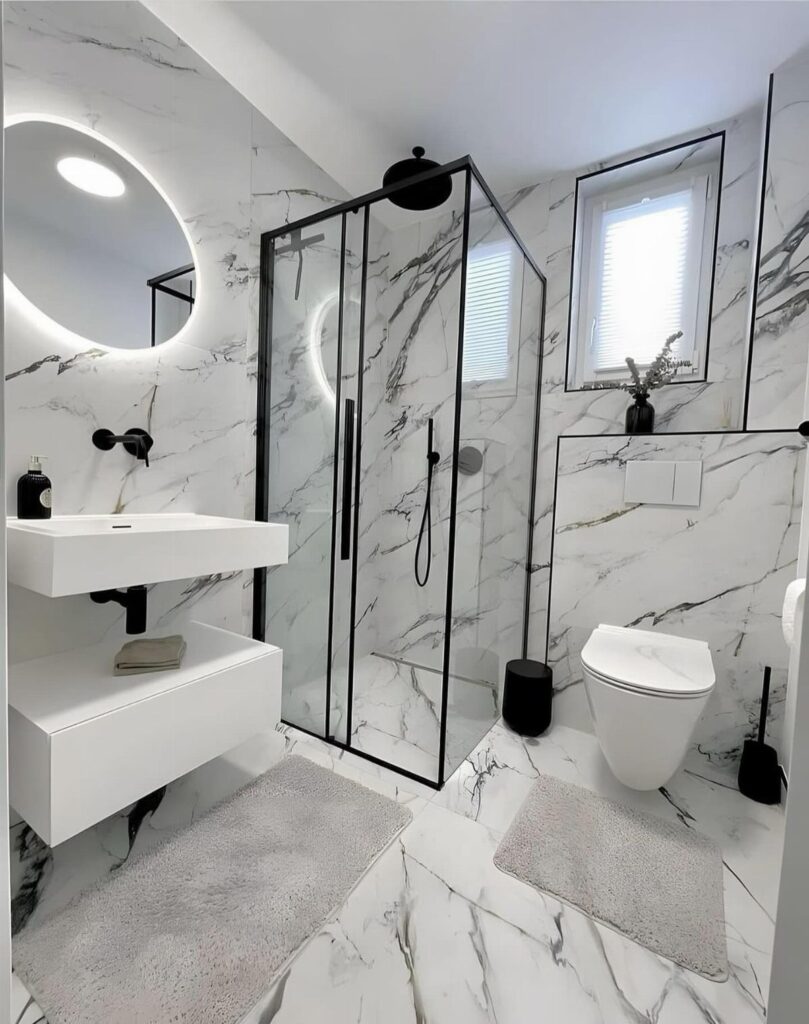
Which tile wall suits a bathroom depends on how much surface you’re willing to cover, because the ideas run from half-height tiling that buys roughly half the tile and lets paint finish the job to full marble-look or travertine runs across walls and floor.
Budget and patience set the choice: natural stone costs more than ceramic, and angled layouts like herringbone or chevron take extra cuts and a slow weekend.
Whatever you pick, cement backer board is the backing I’d use on any bathroom wall.
1. Smooth and Textured Tile Walls
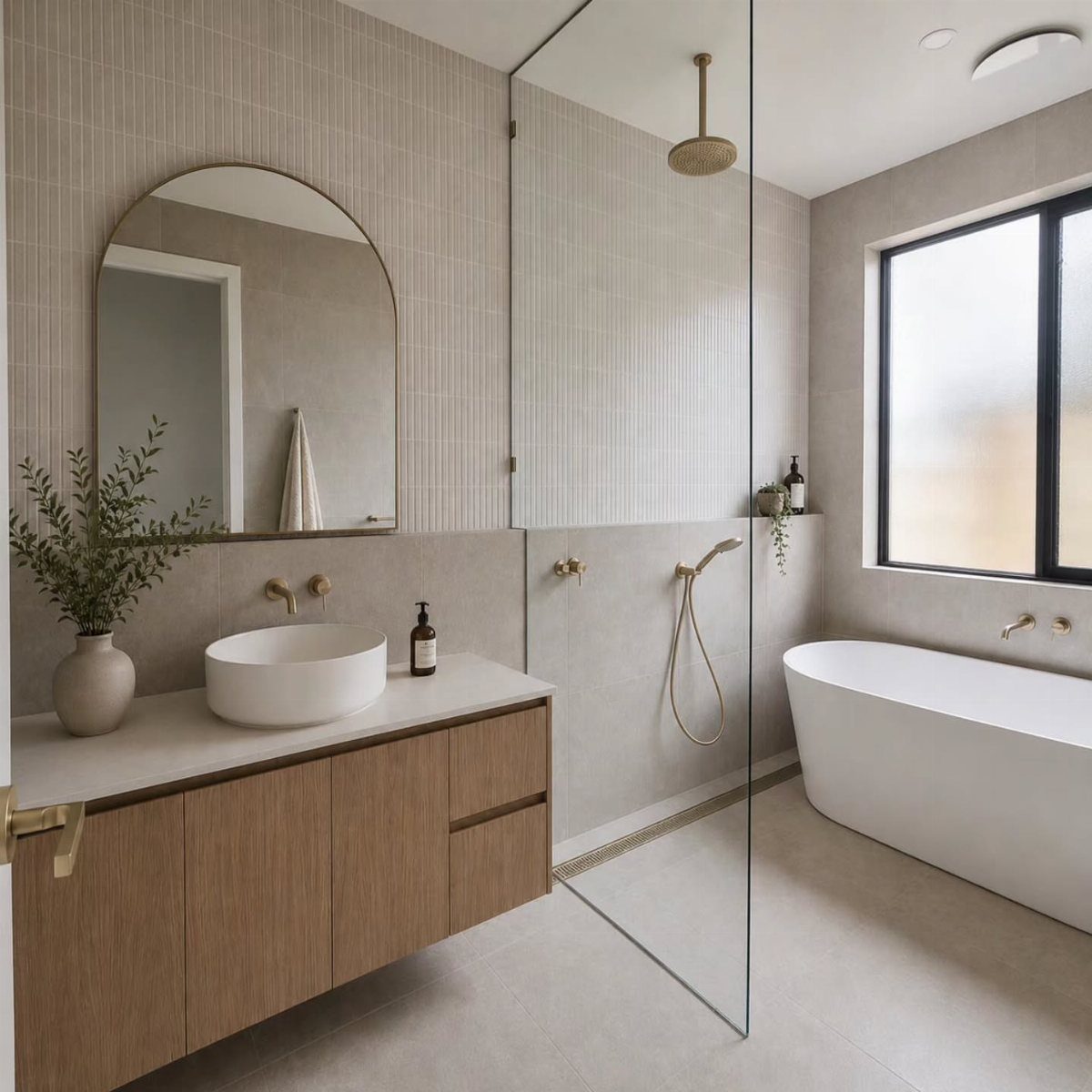
Mixing a smooth tile with a textured one in the same neutral tone gives a bathroom depth without adding a second color. Beige works well here because the surface change does the talking, not the shade.
I’d put the textured tile on the wall behind the tub, then smooth tile everywhere else. Texture catches light and shadow, so a single feature wall reads as intentional, while texture on every wall gets busy fast.
2. Half-Height Tiling with Paint
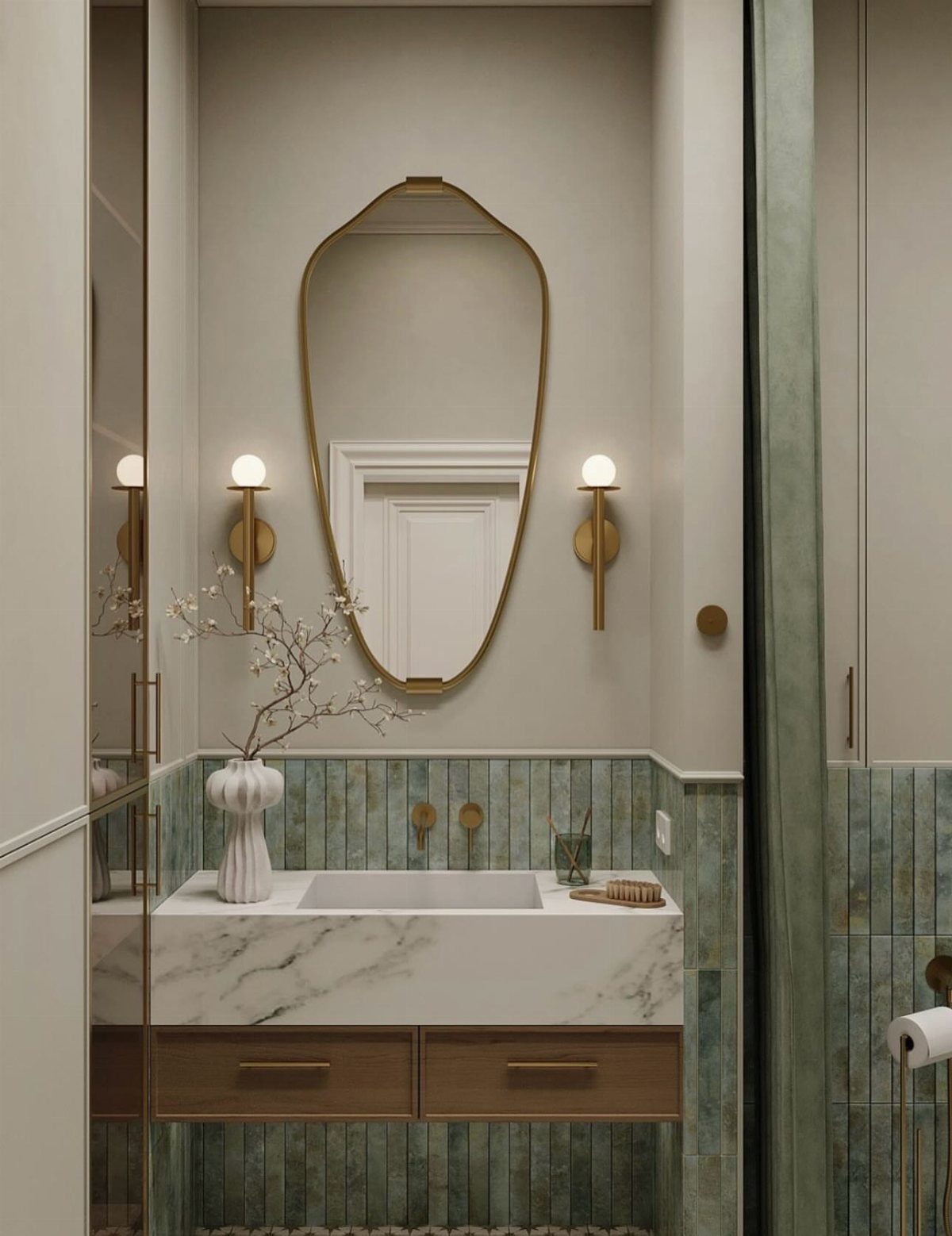
Tile that stops halfway up the wall and hands off to paint is one of the cheaper ways to get a colorful bathroom. You buy roughly half the tile, and paint covers the rest.
I’d pick a paint made for bathrooms and finish the tile edge with a trim piece so the line looks deliberate.
Splash zones around the sink and tub get the tile; everything above can be repainted whenever you tire of it.
3. Marble and Marble-Look Tiles
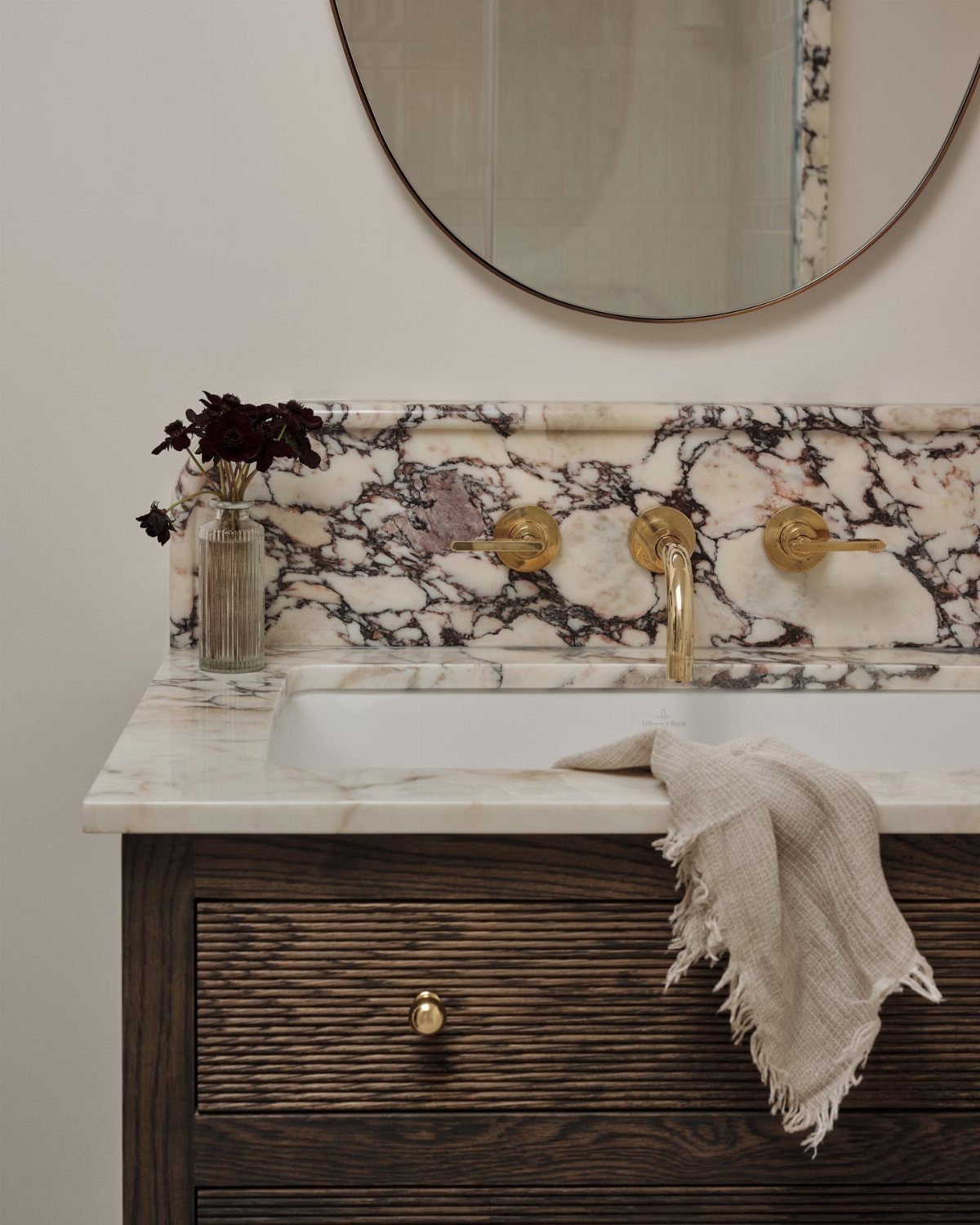
Veined marble pulls double duty on a vanity, running up the wall as a backsplash in the same stone so the whole area looks like one piece. Gold faucets and a dark wood cabinet give it the luxe modern feel.
Real marble costs more, so marble-look tile is my pick for a tight budget.
Keep the tiled area small, just the backsplash and a short run of wall, and the look holds up without the price of covering a full room.
4. Terrazzo Tiles
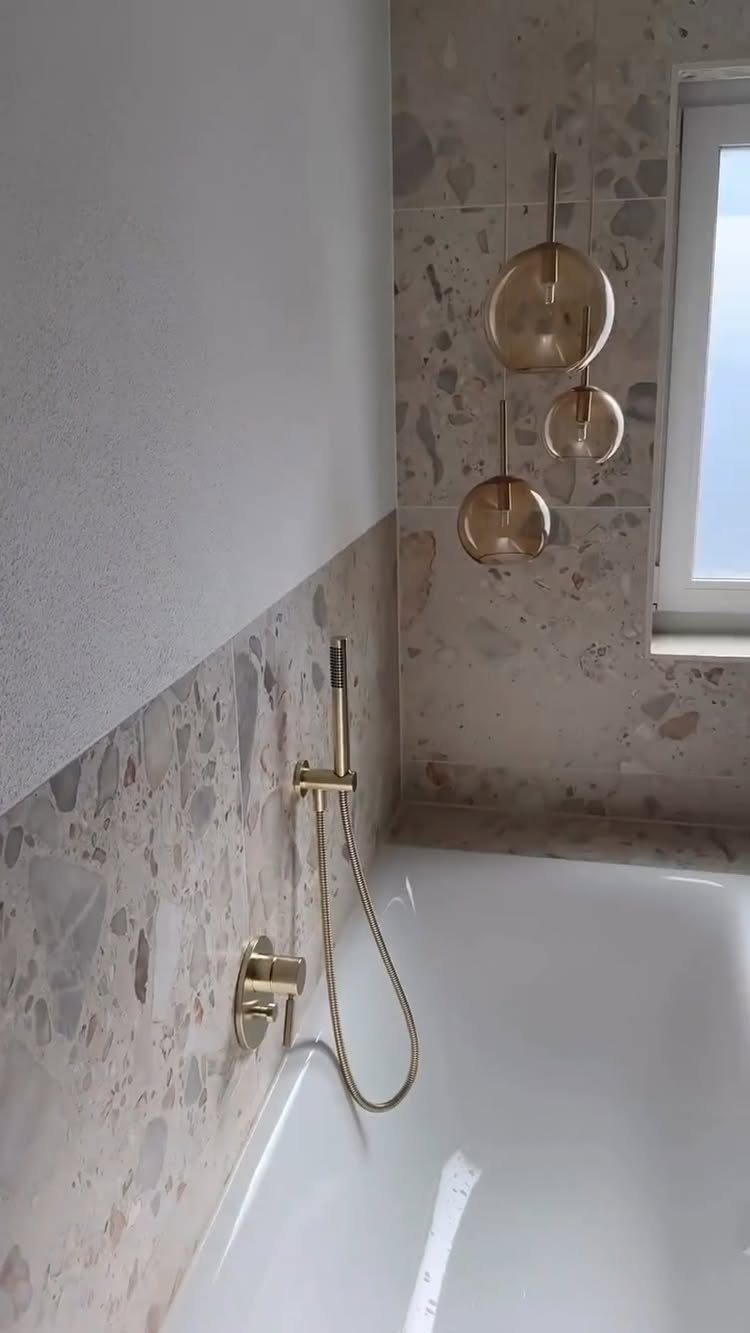
Terrazzo brings a retro speckle to a bathroom, and a light, beige-toned version keeps it calm instead of loud. Chips of color scattered through a pale base read as texture from across the room.
Run it on the walls around a tub and let the fixtures be the accent.
Gold hardware and glass pendants suit the warm tone. With a pattern this busy, I’d go plain on everything else: white tub, no extra patterned tile, simple grout that blends in.
5. Herringbone and Chevron Tile Patterns
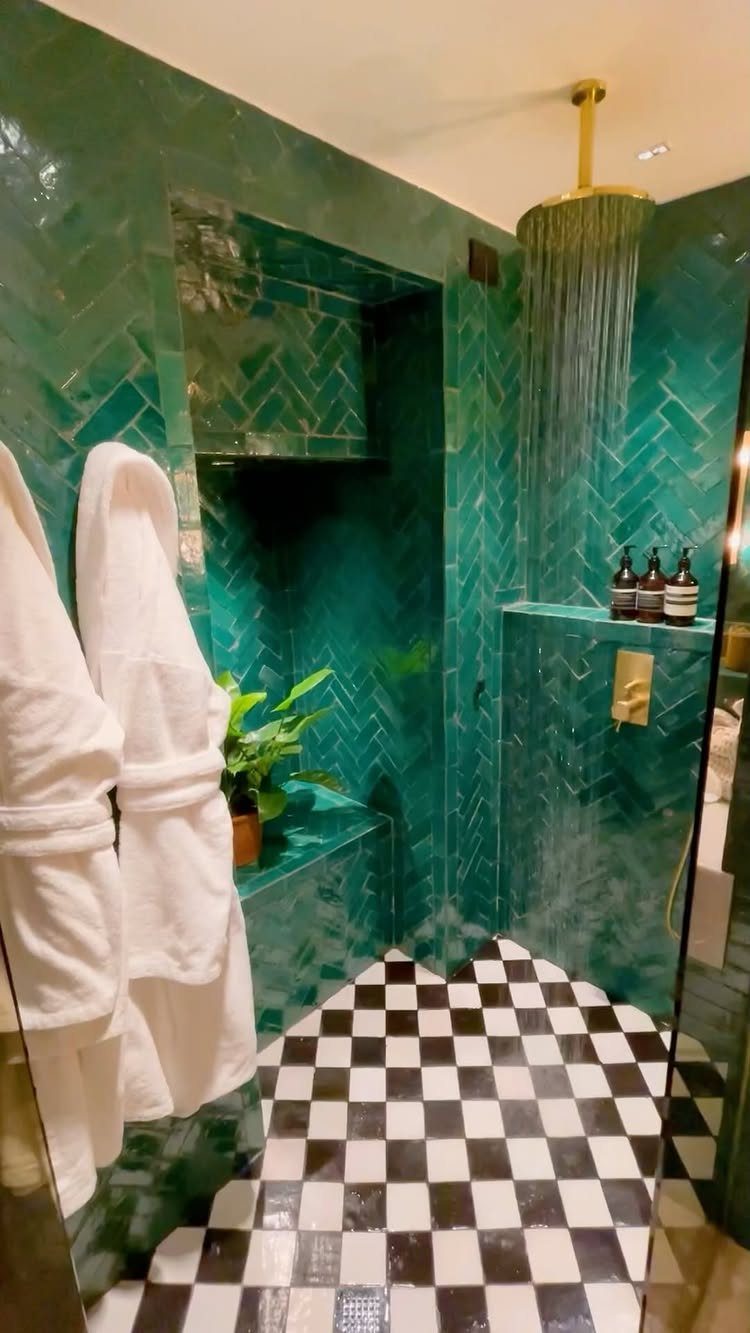
Herringbone and chevron both set rectangular tile at an angle, but chevron cuts the ends to form a continuous point, while herringbone leaves a staggered, broken zigzag.
Either one makes plain green tile look far more detailed than a straight stack.
Angled layouts take more cuts and more patience, so allow extra tile and a slow weekend.
A black and white checkered floor next to them is bold; I’d choose one patterned surface to lead, then simplify the other if you want a calmer room.
6. Contrasting Grout Colors
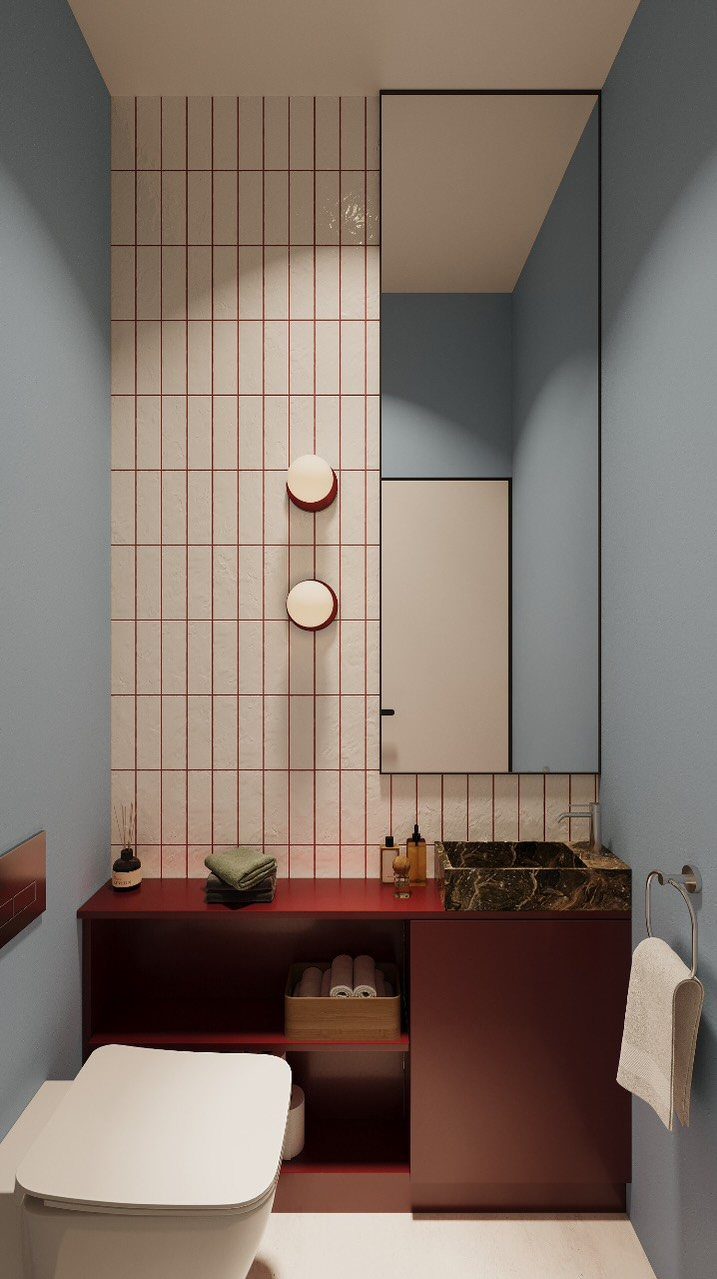
Grout usually hides, but a dark red line against white square tile turns the grid into the design. Every joint becomes a drawn line, so the pattern is the grout itself.
This works best with a matching red vanity.
I’d test a sample board before committing: dark grout makes uneven spacing obvious, so keep joints consistent. Plain white tile is the cheap part of this idea, and the grout color is where the personality comes from.
7. Ceramic Bathroom Tile
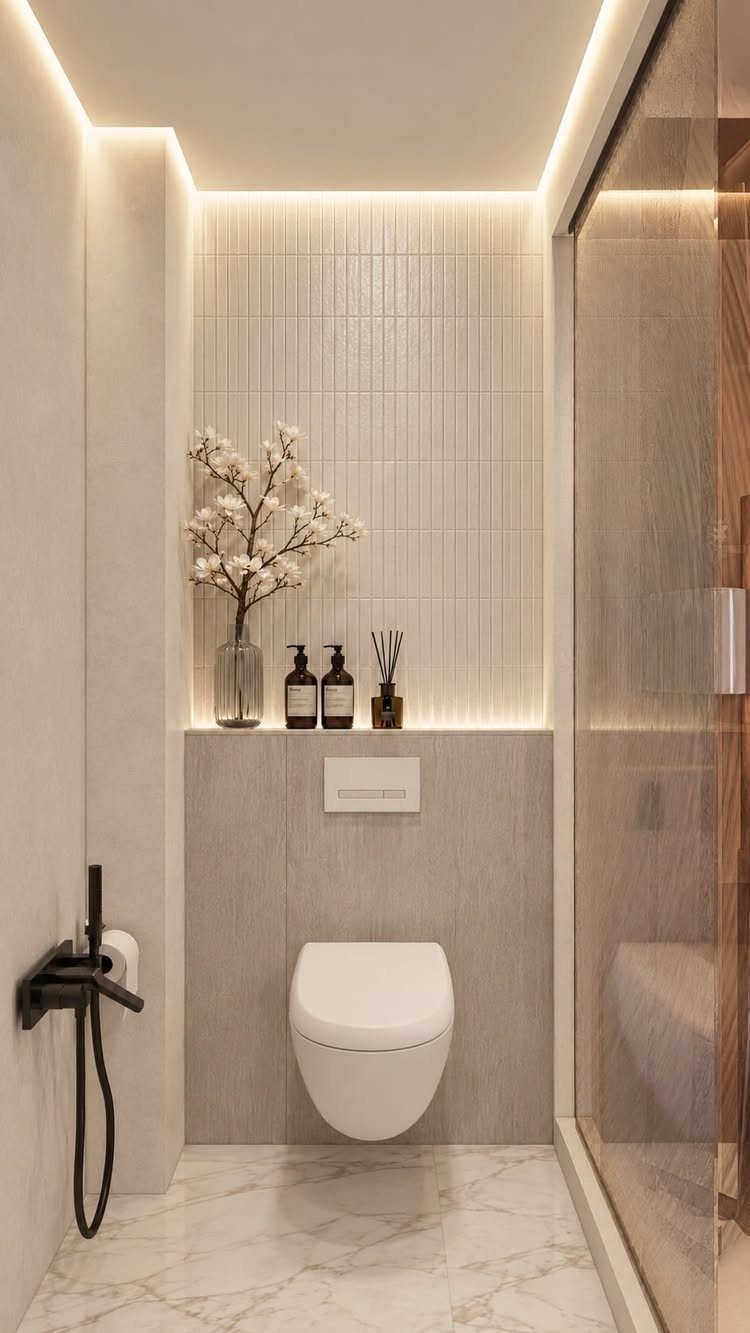
Ceramic is the tile I’d pick when the wall has to handle water and still be easy to wipe down. It resists moisture and takes little upkeep, which suits a weekend project on a modest budget.
White ceramic set vertically, as here, stretches a wall upward and keeps the room bright.
A marble floor against it adds contrast without a second wall color. Keep the tile plain and let one shelf or ledge hold the decoration.
8. Subway Tile
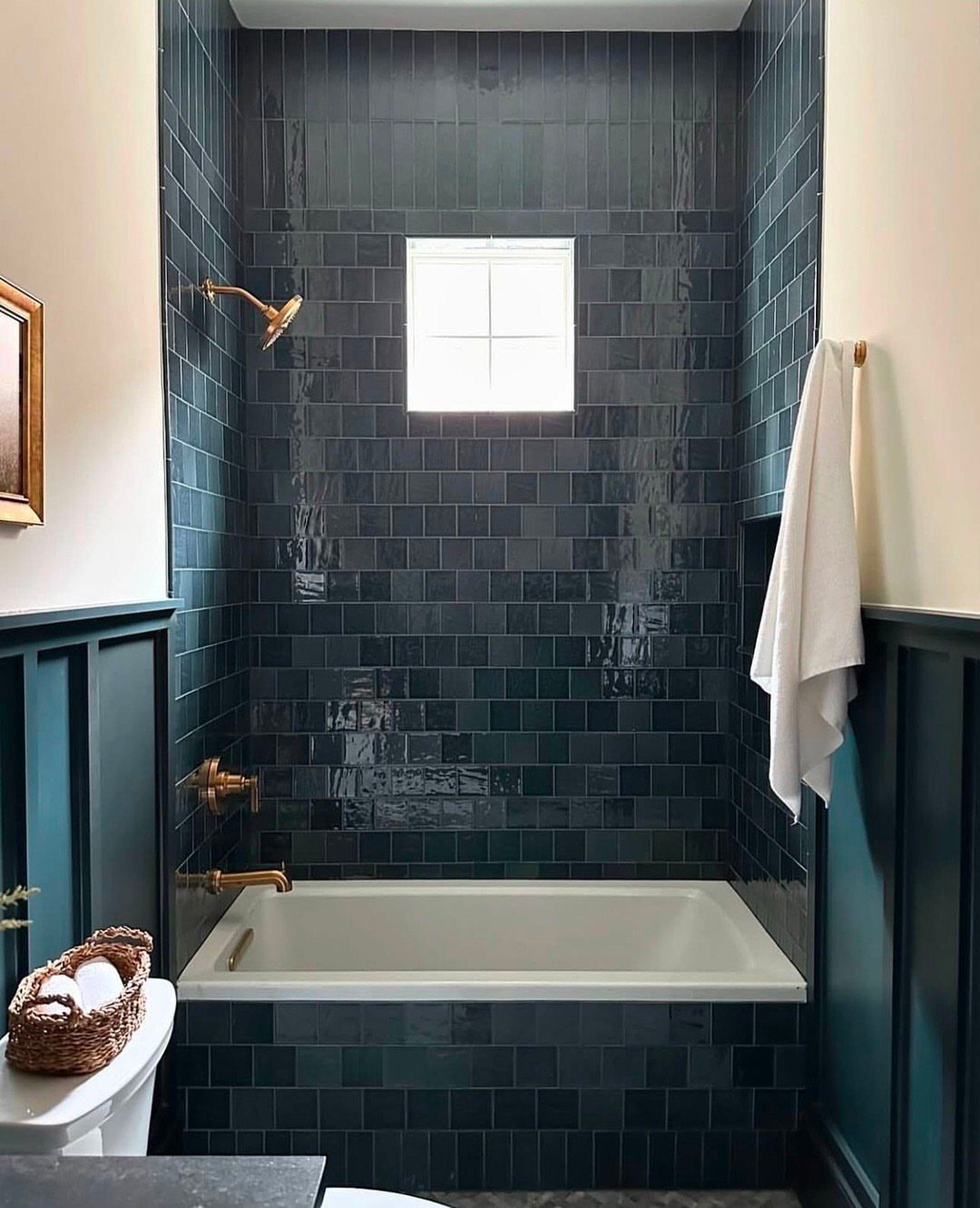
Subway tile stays modern when the color is bold, and a dark teal in a glossy finish proves it. Stacked vertically instead of in the usual horizontal brick, the rectangles pull the eye toward the ceiling.
I’d run it through the whole tub and shower surround so the color reads as one block, then match it with painted or paneled wainscoting elsewhere. Gold fixtures and a white tub keep the dark shade from feeling heavy.
As far as shower tile trends go, transitional designs remain the primary style, followed by contemporary and modern looks, according to the latest Houzz Bathroom Trends Study.
9. Travertine Tile
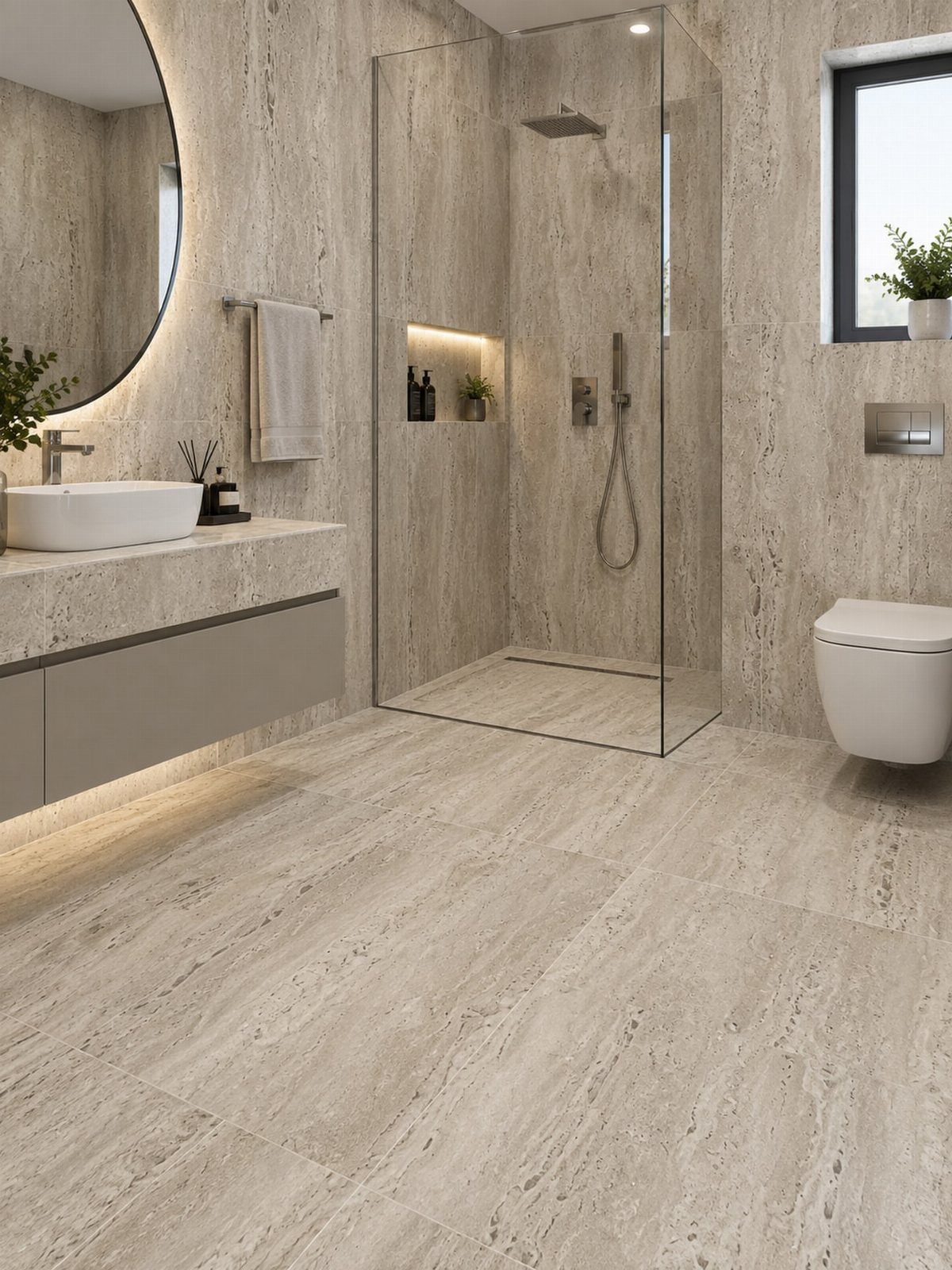
Travertine is a natural stone, and in a soft beige it makes a bathroom feel calm and polished. Running it across both walls and floor, as here, gives a minimalist room one continuous surface.
I’d pair it with simple pieces: a floating vanity, a white vessel sink, a round mirror and glass shower walls so nothing interrupts the stone.
Natural stone costs more than ceramic, so tile just the shower walls if the budget is tight.
10. Large Format Tiles
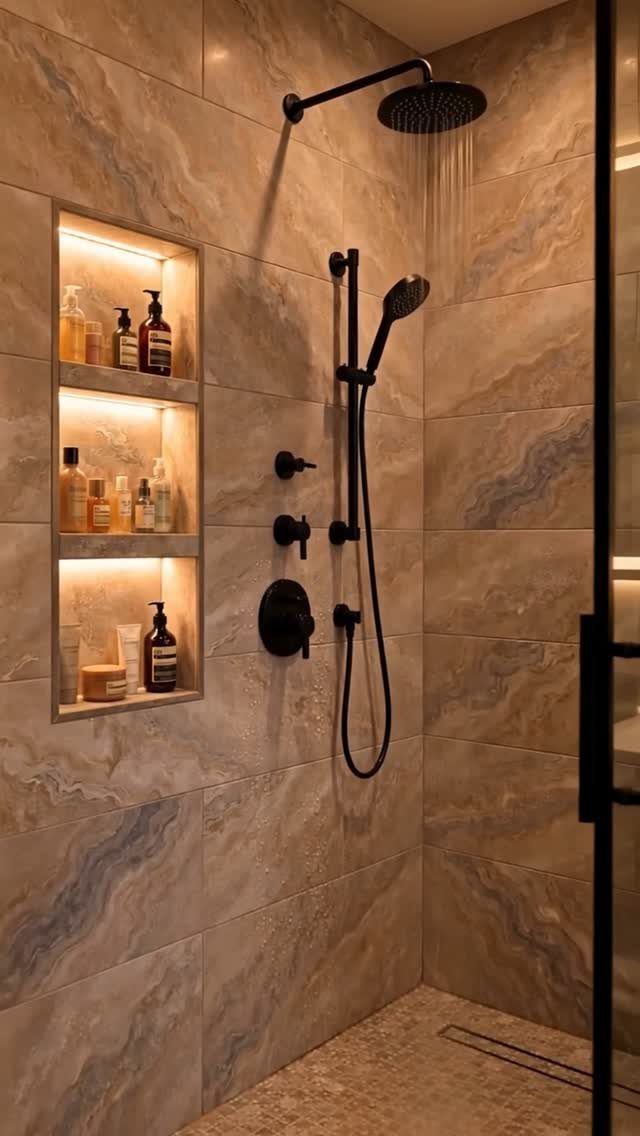
Large tiles mean fewer grout lines, and in a shower that gives the wall a clean, nearly uninterrupted look. A beige marbled pattern adds movement, so the surface never looks flat.
A recessed niche with a strip light tucked inside suits a large-format tile wall, since the few grout lines leave a clean surface to cut into.
I’d choose grout close to the tile color so the few joints that remain disappear.
11. Mosaic Tile
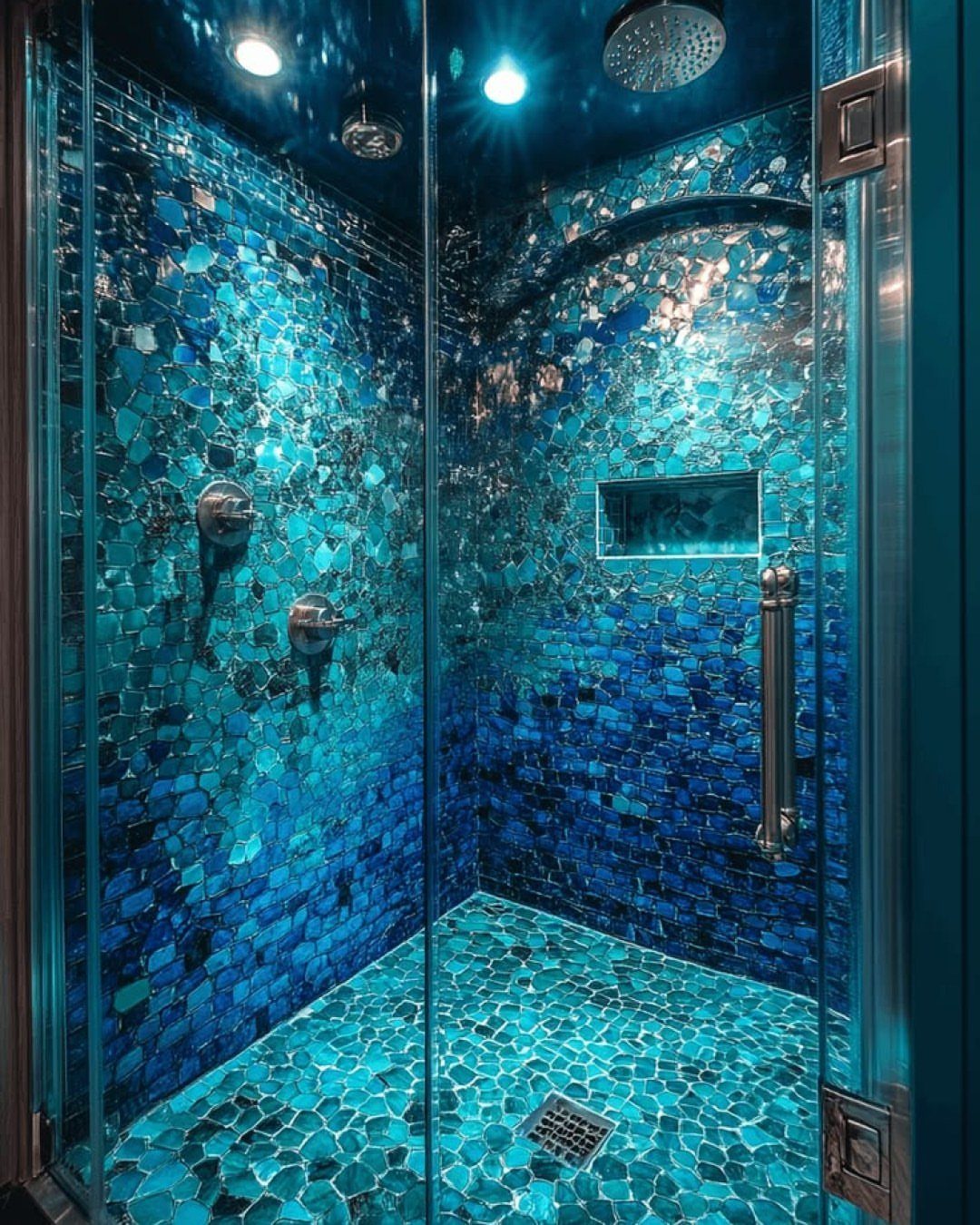
Mosaic tile is the idea for anyone who wants a shower that looks one of a kind. Blue and turquoise pieces mixed together, on the walls and floor, create a shifting color field that plain tile can’t copy.
I’d tile the niche in the same mosaic so it blends in, and keep fixtures simple. With so much color, a rain showerhead and handheld sprayer in a neutral finish let the tile lead.
12. Vertical Kit-Kat Wall Tile
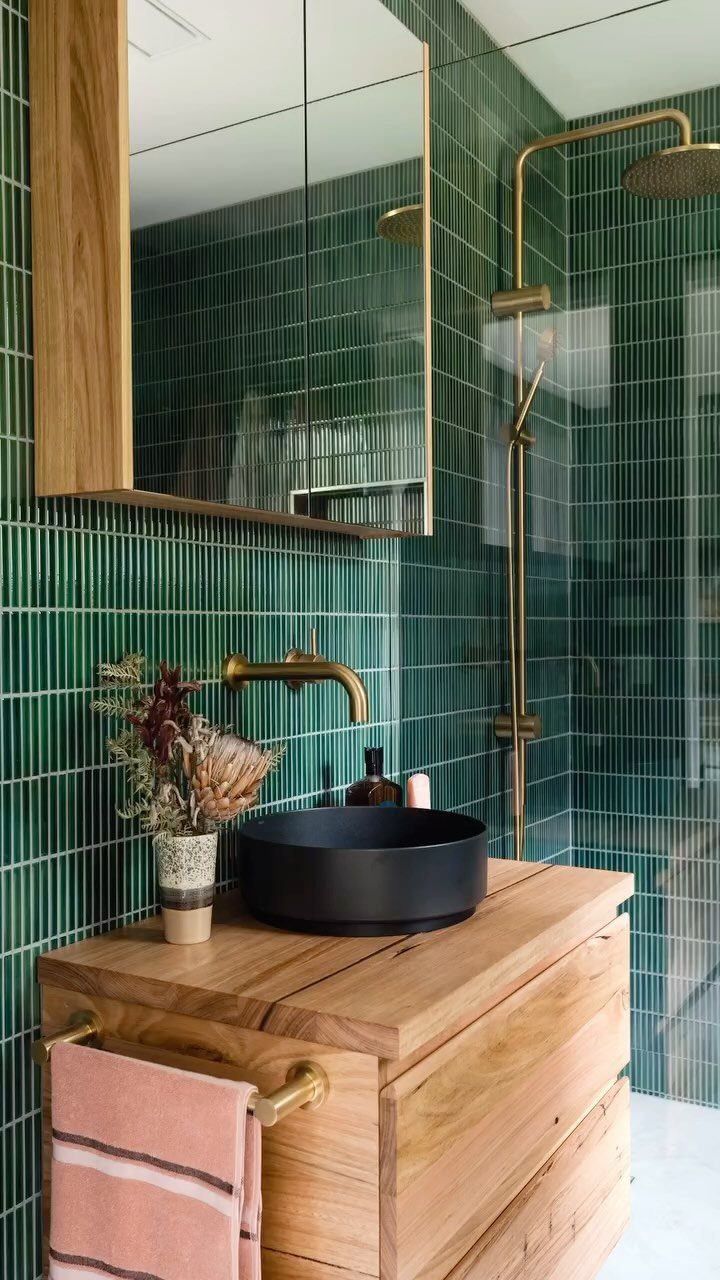
Slim kit-kat tiles stacked vertically turn a green wall into a texture of fine lines. The finger-sized shape does the work, so the color can stay quiet.
I’d pair them with a light wood vanity, as here, and gold fixtures: green, wood and gold all lean warm and sit well together.
Let the other surfaces stay plain, with a simple paint color and quiet flooring, so the tile wall does the talking.
13. Small Glossy Square Tiles
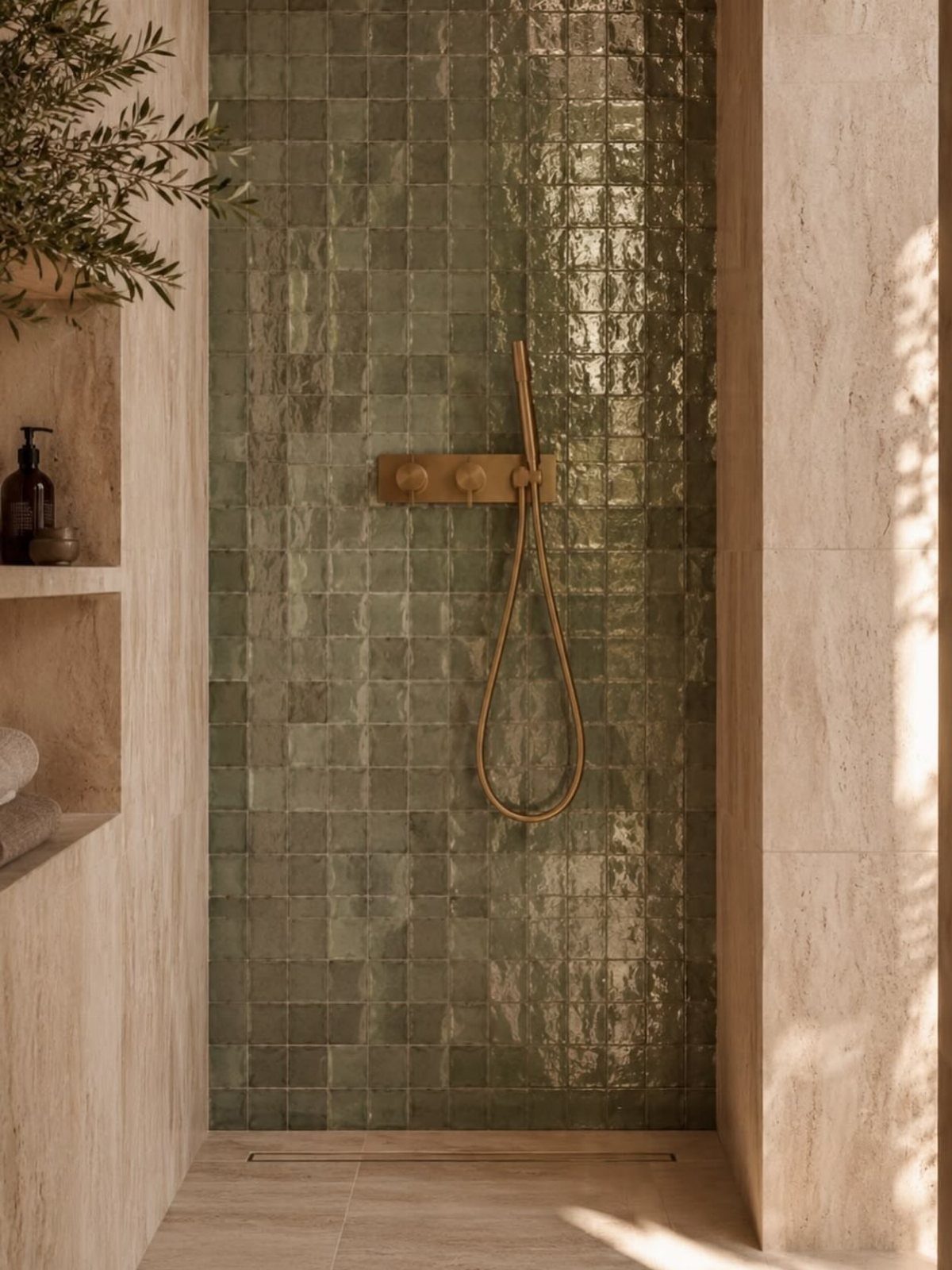
A single wall of glossy olive green squares against large beige stone tile gives a shower one clear focal point. The gloss bounces light, and the small squares add a grid of joints that the big neutral tiles don’t have.
I’d keep the green to the one wall and let the stone handle the rest. A small plant on a side ledge softens the hard surfaces.
14. Moody Brown Shower Tile
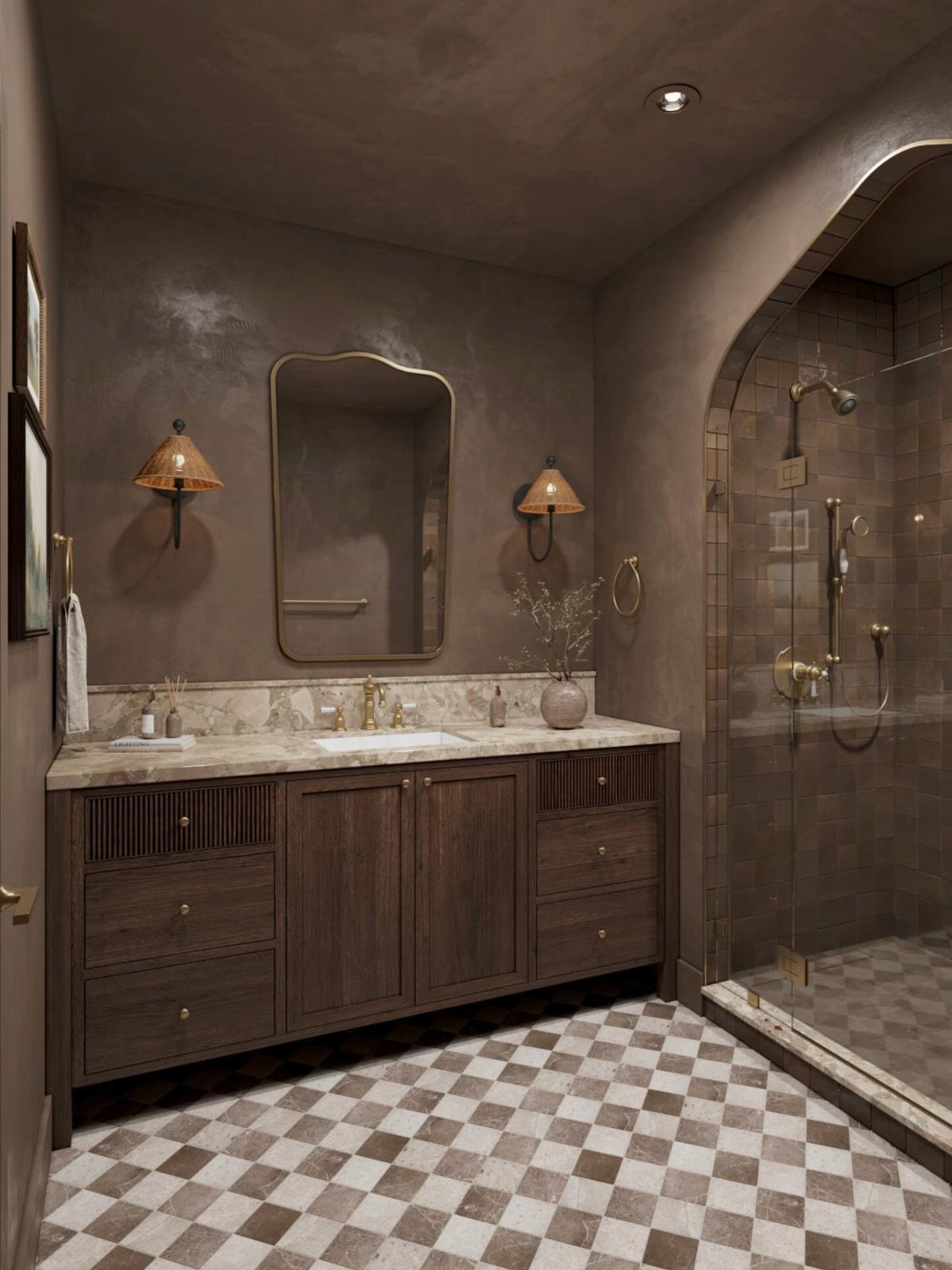
Deep brown shower tile in a walk-in makes a bathroom feel enclosed and warm, and it works best when the walls around it go dark too.
Brown, dark wood and gold all sit in the same warm family, so nothing fights.
A checkered floor breaks up all that darkness, and I’d pick it over a solid dark floor for that reason.
Keep the vanity top light, as marble does here, so the room has one bright surface to rest the eye on.
Choosing Tile Materials
Water is the first test for any wall tile. A bathroom wall has to be waterproof, or at least dry out quickly, because a material that soaks up moisture leads to leaks and water damage inside the wall.
Next, look for a surface that resists stains and scratches. Stain resistance means soap scum and dirt wipe off instead of settling in, and scratch resistance keeps the finish looking good for years.
Hardness matters too. A strong, hard-wearing tile outlasts a soft one, and stone is a long-lasting wall option if you accept the upkeep that comes with it.
I’d check all three on the box or the spec sheet before falling for a color.
Installation Tips
Backing decides how long a tiled bathroom wall lasts. Some backings can’t hold up to moisture, so I’d use cement backer board on any bathroom wall project.
The steps follow the usual order:
- Lay out the tile pattern before any mortar goes down.
- Apply the mortar.
- Adjust each tile so it sits properly.
- Let the tile dry.
- After 24 hours, grout.
Choose smaller tiles if adhesion worries you, since they bond better to the wall. Dry-fit a few rows first, so the layout is settled before the mortar starts to set.
Maintenance Advice
Natural stone needs regular sealing. The sealant is what protects it, so skip bleach, which breaks the sealer down and can damage the finish.
Natural stone like marble or travertine needs a stone-safe cleaner, because acidic or harsh products etch the finish and leave dull patches that are hard to reverse. If stone fades over time, polishing can renew it.
Glazed ceramic and porcelain are easier: a few drops of mild dish soap in warm water, or a cleaner labeled for tile, takes off daily grime and soap scum. Avoid abrasive products.
On grout lines and mildew spots, I reach for a pH-neutral cleaner first, and a half-and-half mix of white vinegar and water works too, as long as it never touches stone.
A quick wipe-down every week keeps buildup from settling into the grout, and a fresh coat of sealer once a year or so keeps those lines from soaking up water.
Sweep or vacuum textured tile and stone, because loose grit scratches them.
Grout color also shapes the whole look, so choose it with the same care as the tile, and keep it clean so it helps the design instead of dragging it down.
Frequently Asked Questions
How to choose bathroom tiles?
Look for resistance to water, stains and scratches first, and confirm all three in the product specs before the finish pulls you in.
The substrate needs to stay dry or shed water quickly, since tile that holds moisture can rot the framing or leak into adjacent rooms.
A dense, hard tile holds up longer than a soft one, and natural stone performs well if you’re prepared to seal and maintain it.
How to tile a shower?
Lay out the pattern first, then spread mortar, set and adjust each tile, let it dry, and grout after 24 hours.
Use cement backer board behind the tile, since some backings can’t handle moisture. Lay out a few rows without adhesive to check the pattern before committing, and use smaller tiles when you need stronger grip on the substrate.
Is ceramic tile ok for bathroom walls?
Yes, ceramic is a good choice for bathroom walls.
Ceramic handles moisture without trouble, cleans with a damp cloth and asks for almost no maintenance once it’s up. A quick wipe with dish soap and water or any tile-safe cleaner keeps glazed ceramic looking new.





