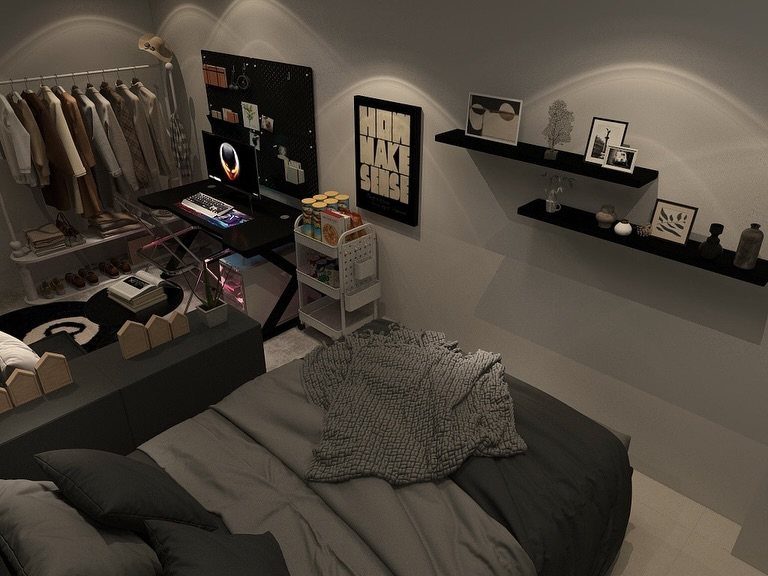
In a single room, the deciding fact is whether you need to hide the bed or just anchor it, since a sliding bamboo divider costs and builds more than a low bed with good lighting beside it.
If you sleep in the middle of your living space, the ideas that matter most are sliding bamboo screens on a ceiling or floor track, or a low platform bed tucked under built-in cabinets.
If the bed already has its own corner, cheaper moves like sheer curtains hung near the ceiling, one oversized canvas leaned on the floor, or a round mirror over a floating shelf do the work without drilling much.
1. Install Sliding Bamboo Room Dividers
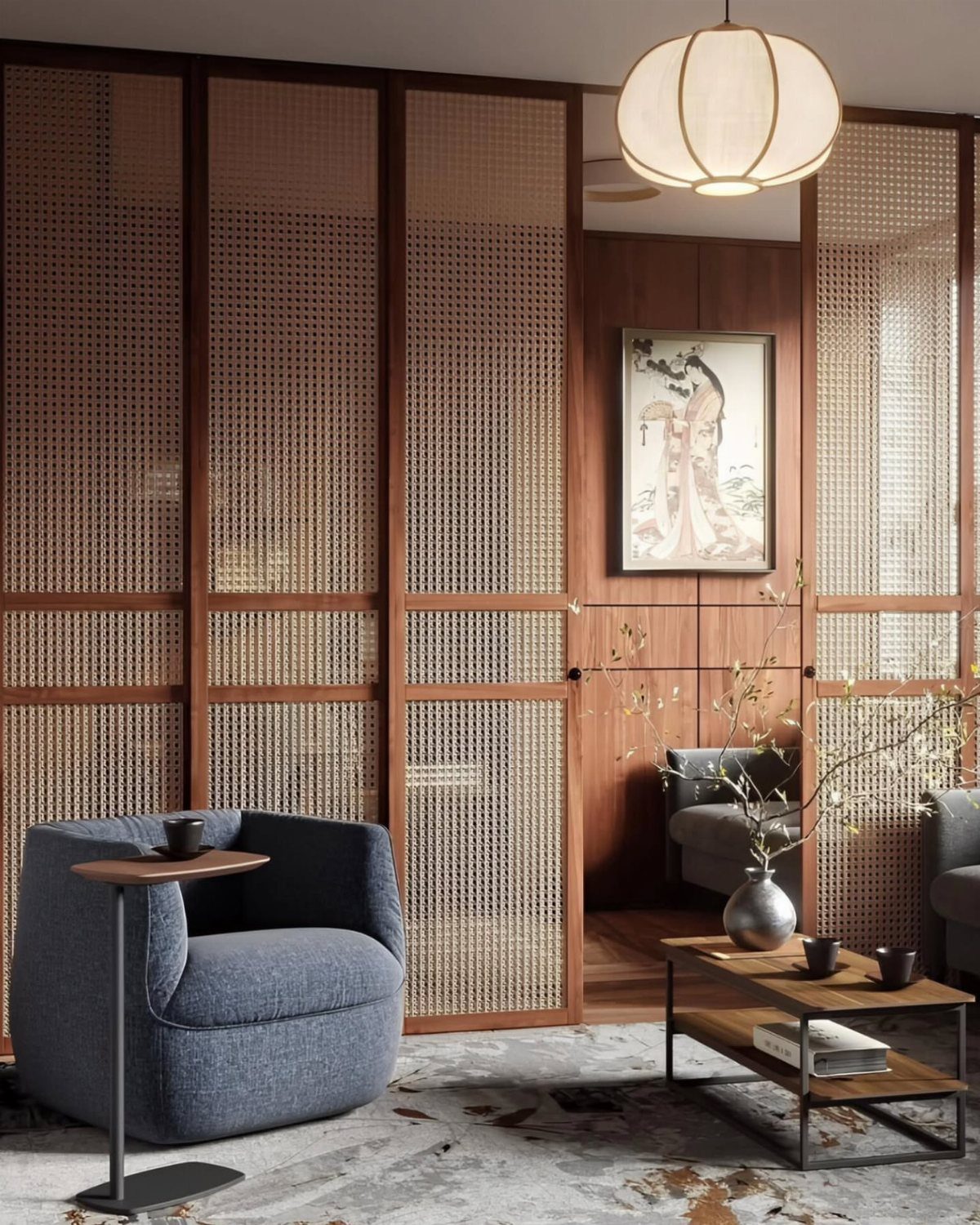
Sliding bamboo screens split a one-room apartment into a living side and a sleeping side without building anything.
Pull them shut at night and the bed vanishes behind the slats; slide them open in the morning and the studio is a single open space again.
For a renter, that flexibility is the draw. A screen on a ceiling or floor track needs no permanent walls, and each day you decide how closed off the space is.
Bamboo also lets some light through, so the sleeping corner stays brighter than it would behind a solid panel. Privacy is the cost: slatted screens soften sightlines rather than block them, and they won’t muffle sound.
2. Layer Lighting
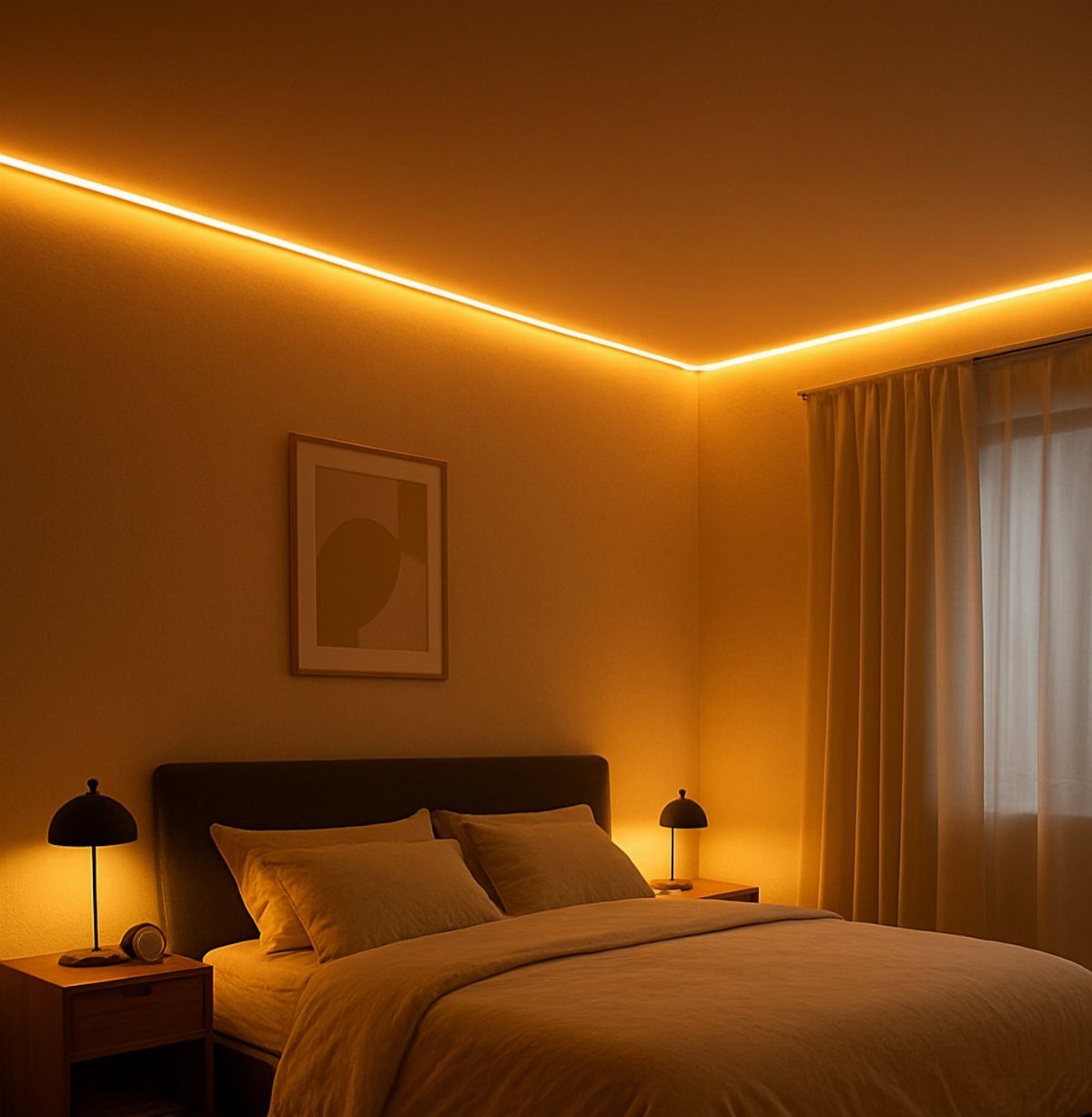
Warm LED strip along the ceiling edge, plus a small lamp on each nightstand, gives a bedroom two separate light sources, and that pairing is what makes the room feel finished.
Use the strip for the wide, soft glow and the lamps for reading. Put them on separate switches or plugs so you can run only the strip when winding down.
A strip is also cheap and renter-friendly, since it runs along the ceiling edge and needs no wiring into the wall.
Keep the glow warm. Cool white along the ceiling looks like a hallway.
3. Walk-in Closet
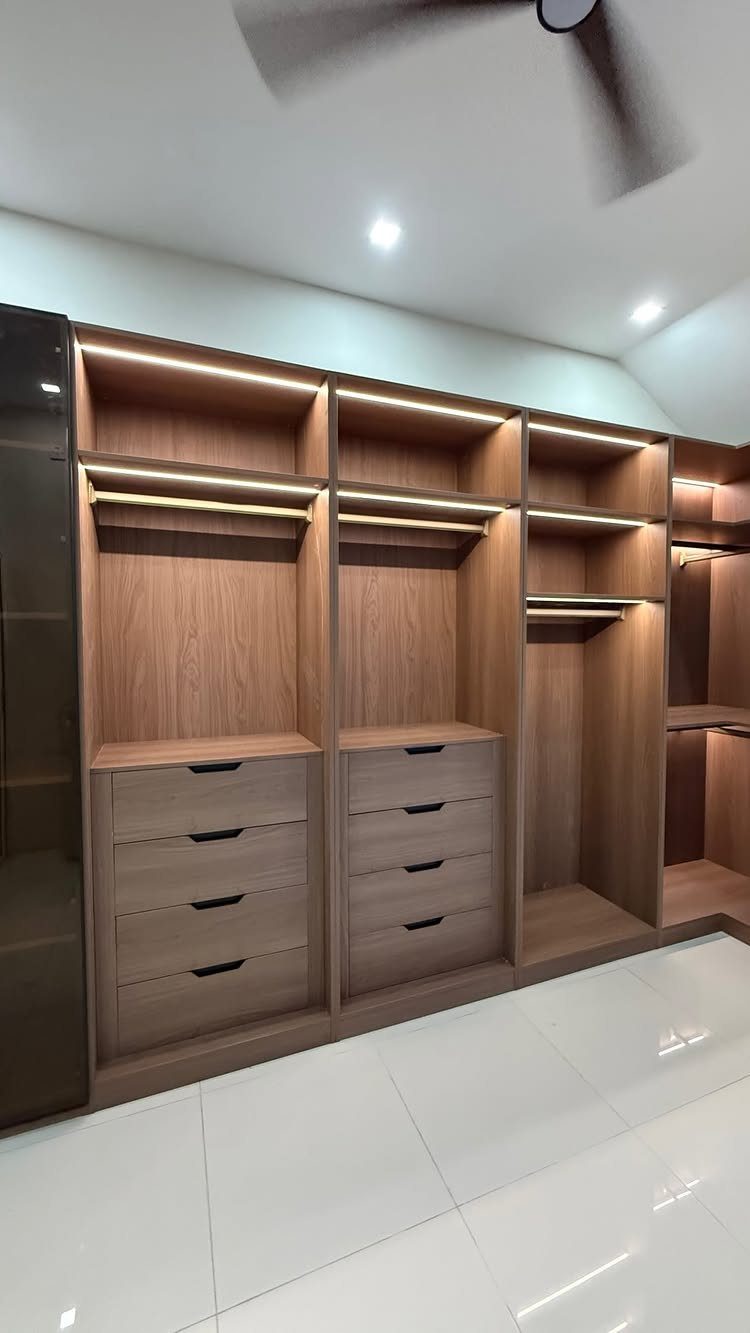
A walk-in closet earns its place in a one-room apartment when it holds everything you’d otherwise stack in the living area.
Open shelves handle folded knits and bags, drawers hide the small stuff, and built-in warm LED lighting means you can see the back row.
If you have no spare nook, a wall-length wardrobe system with the same mix gets you most of the benefit. Wood keeps it from looking clinical.
Plan the drawers first, then the shelves. Drawers keep clutter out of sight, and in a single room, visible clutter is the thing that makes the space feel small.
4. Use Mirrors
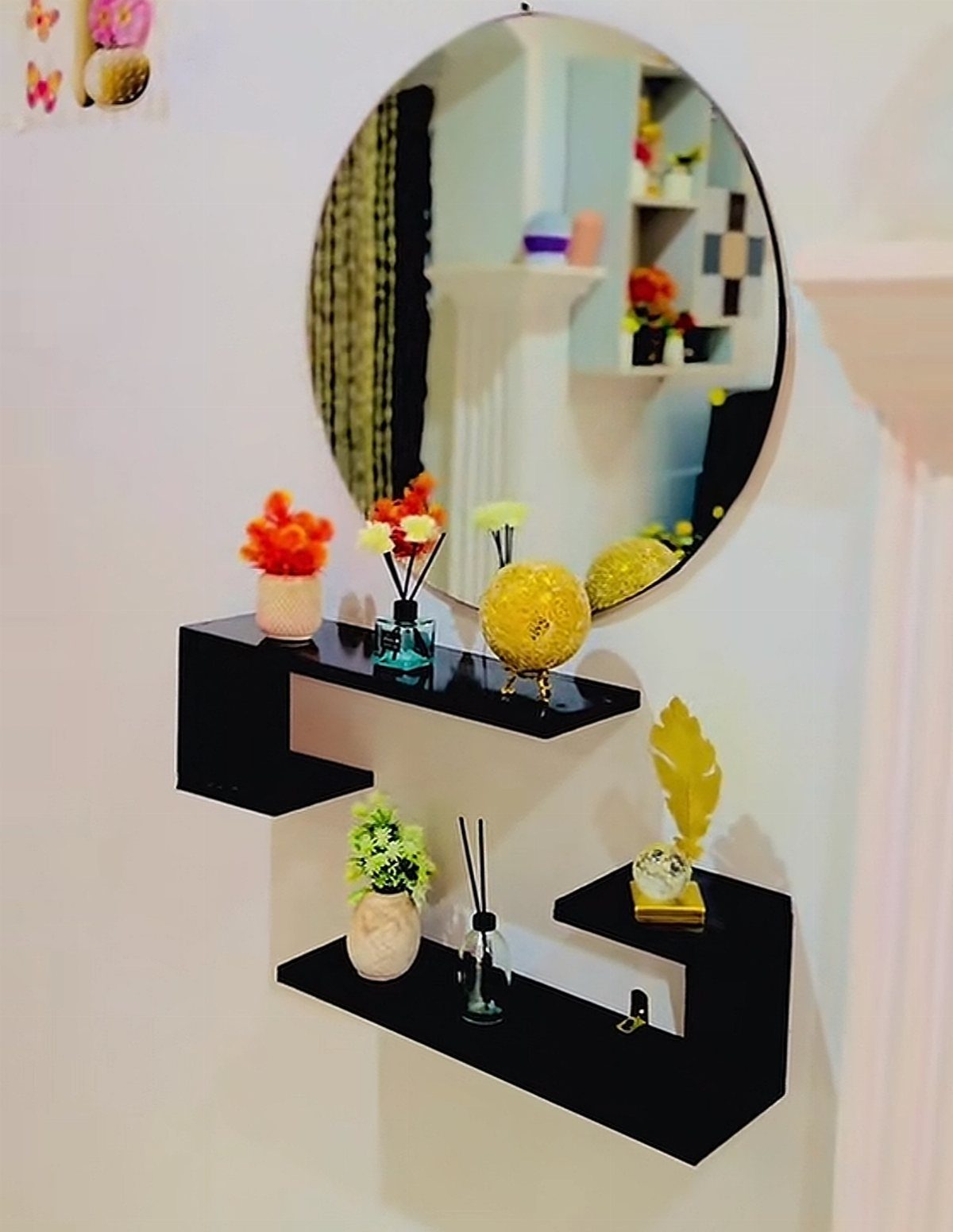
Hang a round mirror above a floating shelf and the wall does 2 jobs: it holds small plants and vases, and it bounces the room back at you.
Round shapes soften a space full of boxy furniture. A black geometric shelf adds contrast against a white wall, so the mirror and the shelf frame each other.
Place the mirror where it catches a window or a view of the room you like, such as curtains or a tidy shelf. Reflecting a messy corner only doubles it.
5. Choose a Low Bed
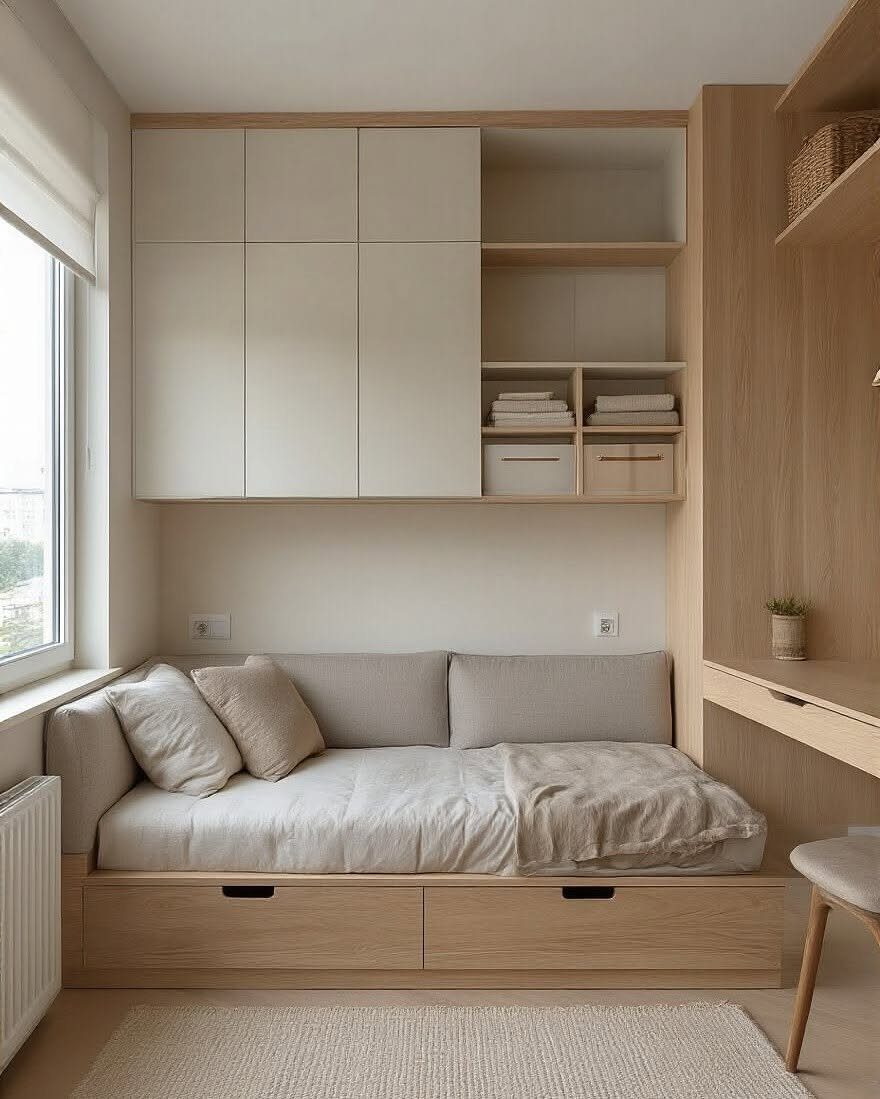
Low platform beds keep the sightline open, so the wall behind and above the bed stays visible and the ceiling feels higher.
That matters in a one-room apartment, where floor space is the scarcest thing. Tuck the bed under built-in cabinets, as in this neutral, minimalist setup, and the sleeping area reads as its own zone.
The cost is reach: drawers close to the floor mean bending to open them. Store things you use less often there.
6. Open Shelving
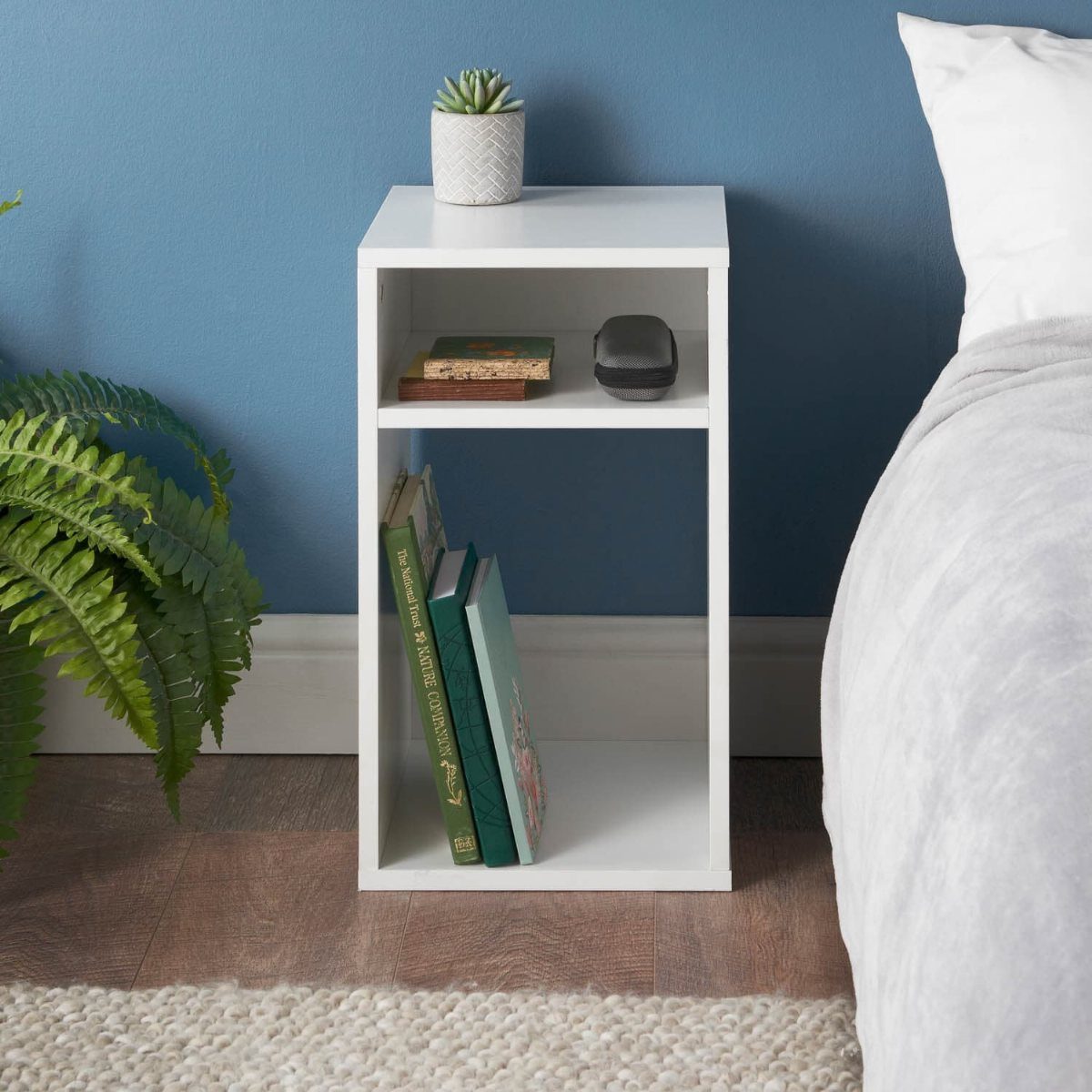
A white open-shelf nightstand works harder than a closed one because it shows its contents, which pushes you to keep only a few things on it. Books, a small succulent and a case are plenty.
White shelving against a colored wall, such as blue, stays light and doesn’t add visual weight beside the bed. For that reason I prefer it to a drawer unit when floor space is tight.
Open shelves do show dust and clutter. Use the lower shelf for items that look good stacked, and leave the top clear for a plant.
7. One Large Artwork
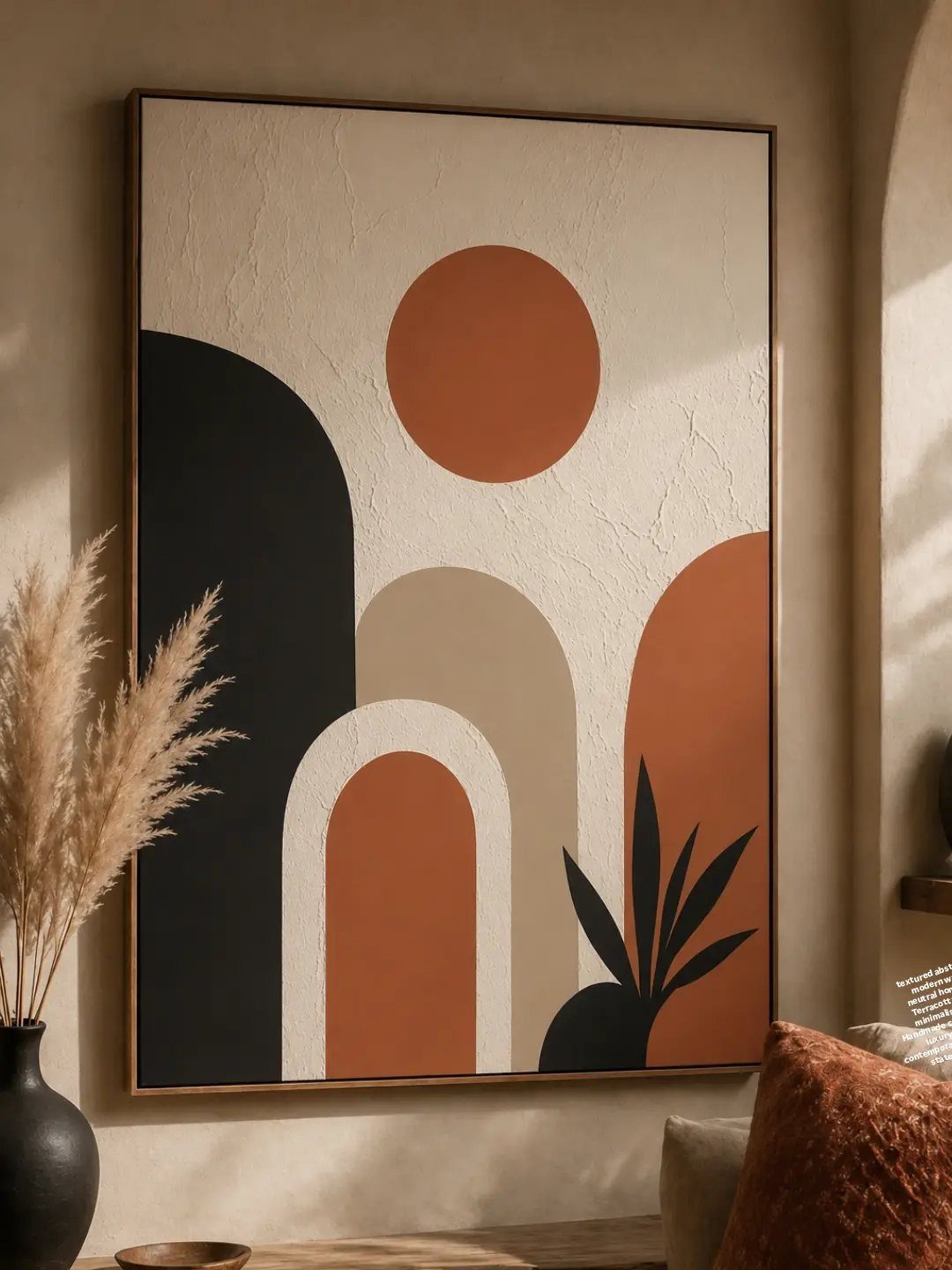
A single oversized canvas does more for a one-room apartment than a gallery wall of small frames, because one big shape reads as calm while a dozen little ones read as clutter.
Terracotta and black geometry against a neutral wall gives the room a focal point without adding a single piece of furniture.
Lean it on the floor if you’d rather not drill, which suits renters. Pull one color from the art into a pillow or a dried stem, and stop there.
A large print in a plain frame costs far less than an original, and at this scale you won’t notice the difference from across the room.
8. Curtains Close to the Ceiling
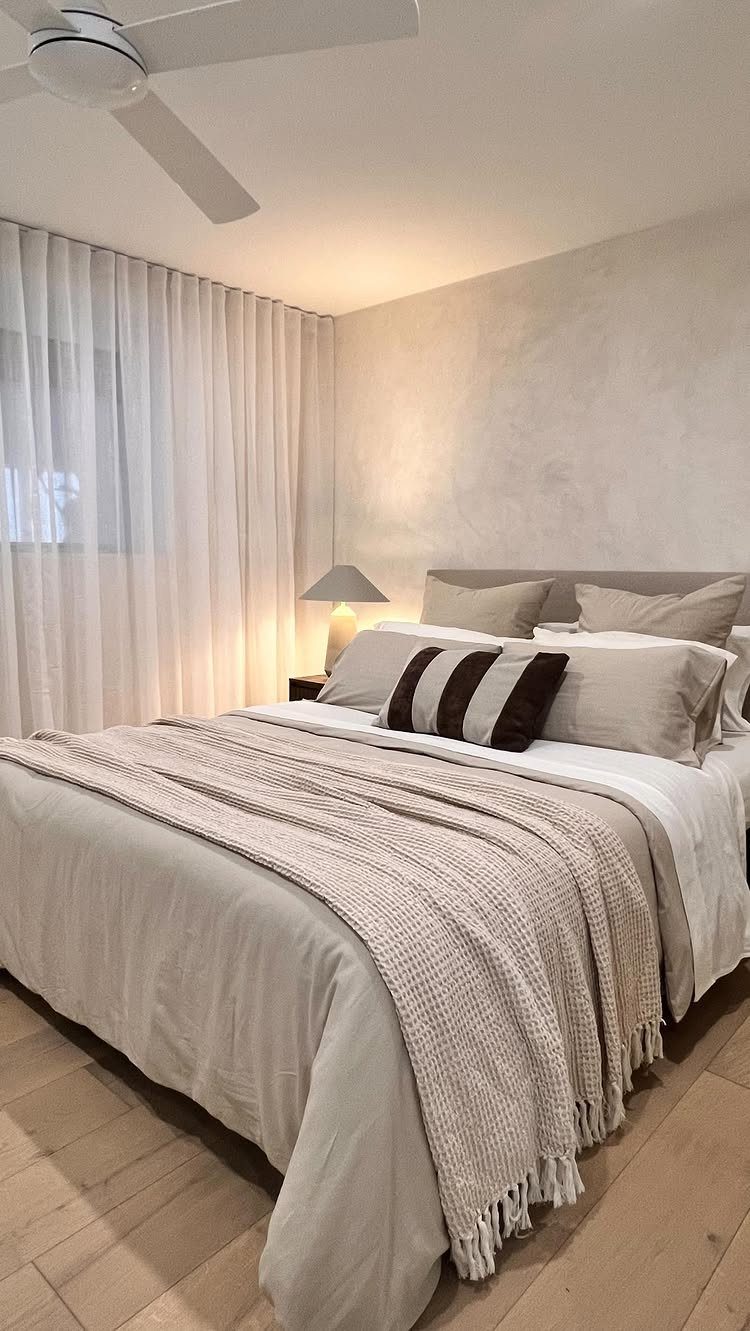
Hang the curtain rod near the ceiling instead of at the window frame, and sheer white panels turn a plain window wall into a tall, soft backdrop for the bed.
The eye travels up the fabric, so the ceiling reads as higher.
The maker of this bedroom says the whole look came in under $300, and that’s believable with sheers, since you’re buying fabric length rather than blackout lining.
Let the panels reach the floor and buy them long enough to do it. Short curtains hung high look like a mistake.
Sheers filter light rather than block it, so add a second layer if streetlights bother you at night.
9. Shelving System for Shoes and Bags
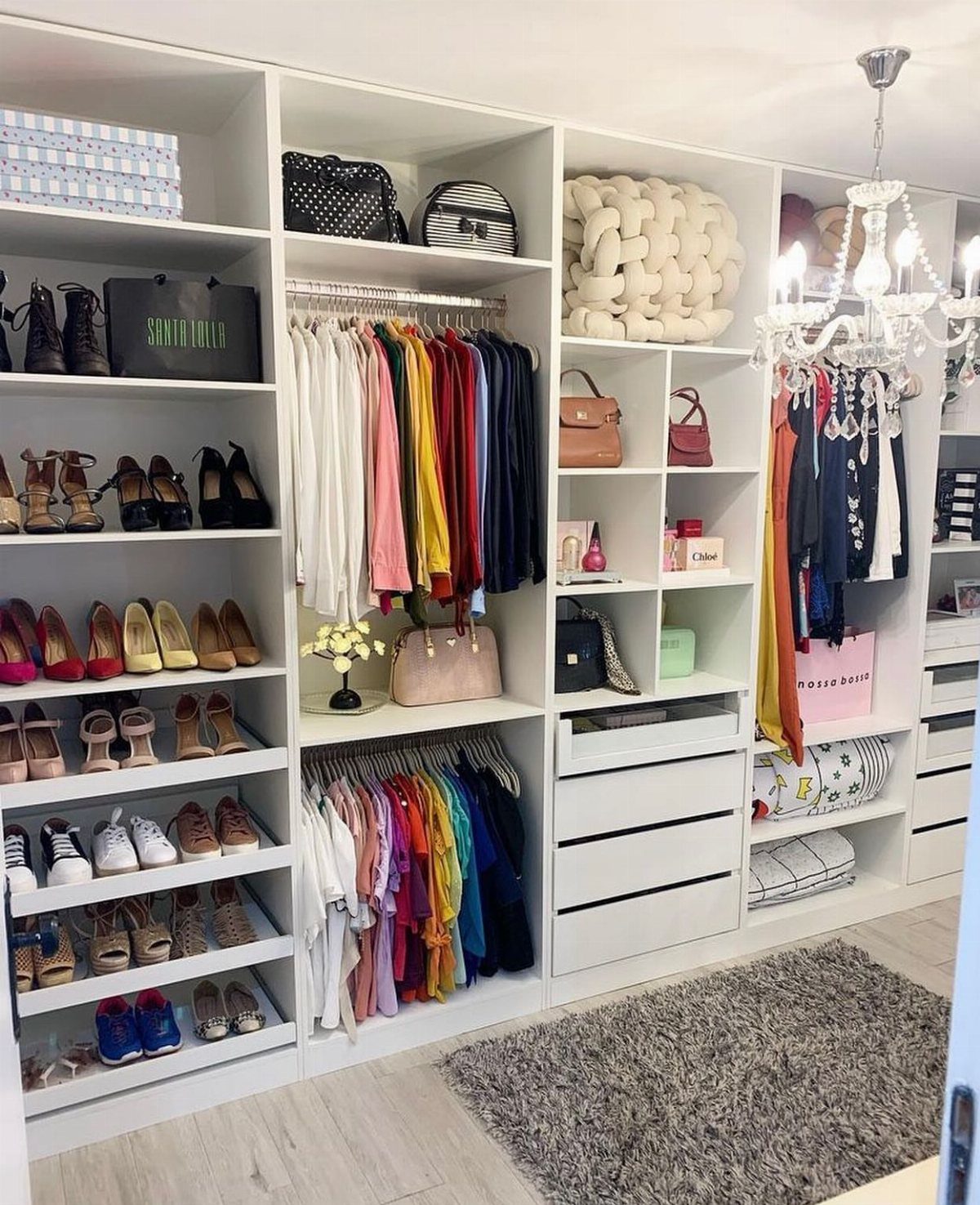
Give shoes and bags their own shelves and the hanging rail stays for clothes alone, which is why this white built-in closet looks so orderly. Each pair gets a slot, and each handbag sits upright where you can see it.
In a one-room apartment, that visibility saves floor space, because nothing ends up in piles by the door. A freestanding white unit gives you the same result without a build, and white keeps it from crowding the room.
Set the shelf height to the tallest thing you own, then add dividers for the rest.
10. Vases and Planters
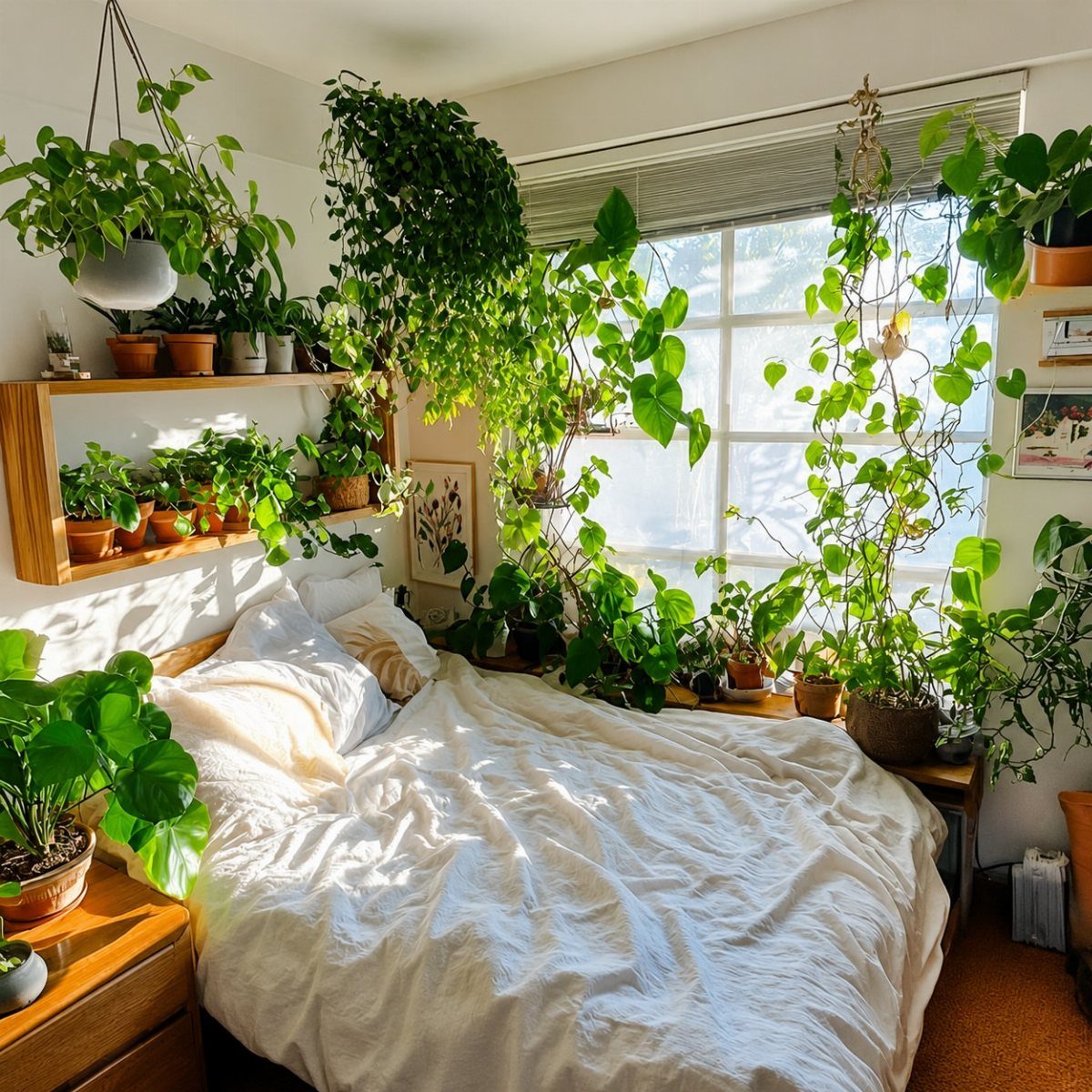
Plants at 3 heights give a bedroom the look of a small greenhouse: pots on shelves, trailing ones hanging from the ceiling, and a few grouped at the window where they get light.
Varying height matters more than the number of plants, since a mix of tall, mid and low pots stops the display from reading as a row of pots.
Pick vases and pots in one or two finishes so the greenery, not the containers, does the talking.
The cost is upkeep: more plants means more watering, so start with a few hardy ones.
Advice for Small Spaces
Put the biggest pieces against the longest wall.
Pushing furniture to the edges leaves the center of the floor clear, and in a single room that clear center is what makes the place read as a home and not a storage unit.
Choose pieces with a second function built in, like a lidded storage ottoman or a dining table sturdy enough to serve as a desk. Nesting tables and folding chairs come out when guests arrive and disappear afterward.
Don’t try to build separate rooms. A small footprint looks better when the whole space feels cohesive, so repeat a few colors and textures across both zones instead of fighting the openness.
A rug under the sofa and a different one by the bed marks each area without a single wall.
Leave a clear walking line from the door to the window, and don’t stack tall pieces where they block it. If you have to turn sideways to get past something, it’s too much for the room.
Mounted sconces give you light at eye level while the floor stays free for furniture.
Budget Decorating Strategies
Walk around the room first and check what you already own, because most pieces can take on a second job.
An old china cabinet makes a decent open pantry for pasta, rice, and canned goods. An antique chest can store linens and also serve as a side table under a lamp.
Set a walnut tea tray on top of an ottoman and you get a small coffee table; lift the tray off and the ottoman seats a guest. That’s a cheap fix, and it keeps the pieces you love.
Fill the gaps with thrift finds and weekend DIY projects, such as sanding and repainting a secondhand table. Mixing a few vintage pieces with new basics gives the room a look no single store can sell you.
Creating Flow in Small Apartments
Start with the longest wall and put your largest piece against it. Everything else should orbit a clear central floor area, so you can walk from the door to the window in a straight line.
Choose lightweight pieces you can move, such as nesting tables or folding chairs, so the layout can change between a quiet night and a dinner for four.
When you can see across the whole room, the zones read as connected parts of one space instead of crowded corners.
A studio is one open space, so plan it as zones with rugs and shelving instead of cutting it up like a bigger home. Cohesion beats forced separation in a small footprint.
Unlike one-bedroom apartments, studios typically have a main space that functions as a combined living room, bedroom, kitchen, and dining room. Larger studios—often featuring an alcove for a bed or a partially separated dine-in kitchen—can be closer to 600 square feet, she says.





