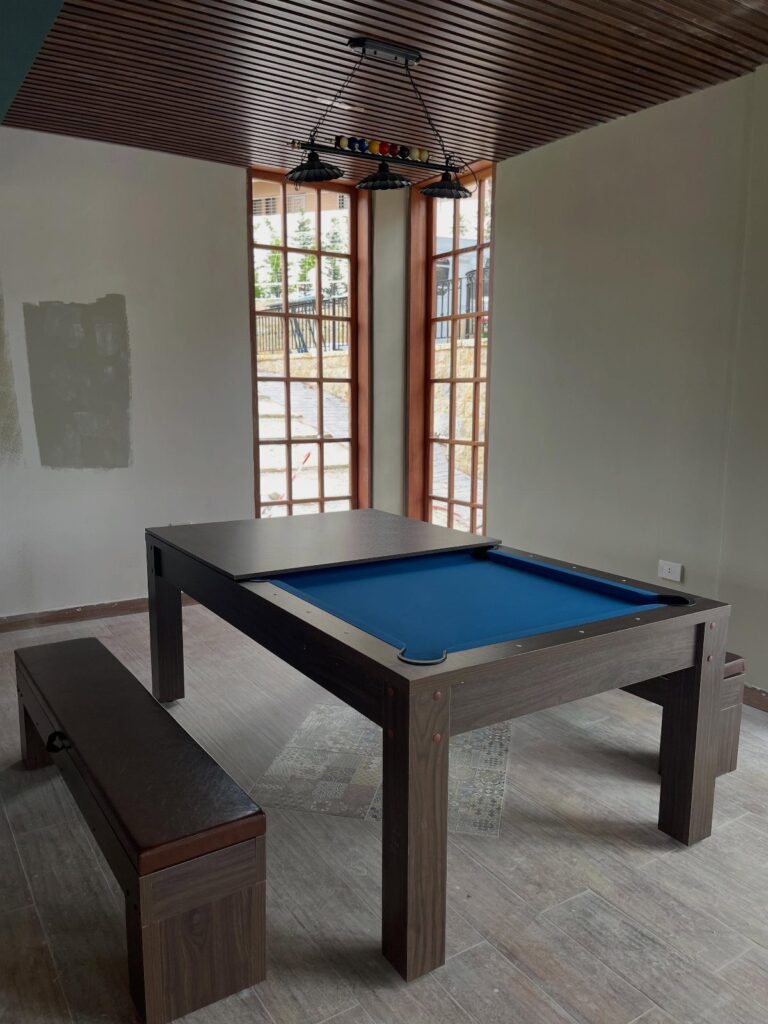
Floor space decides which of these is yours: a tabletop model sits on a desk or console and slides away after the game, while a compact table with green felt needs clear floor on every side so a cue has room behind the shot.
The list starts with that tabletop version and ends with a pool and ping pong combo, with black, blue, red, grey, pink and traditional green felt in between.
Before you pick a felt color, tape the table’s footprint on the floor, because even the combo model takes up as much room as a full table.
1. Tabletop or Portable Mini Pool Table
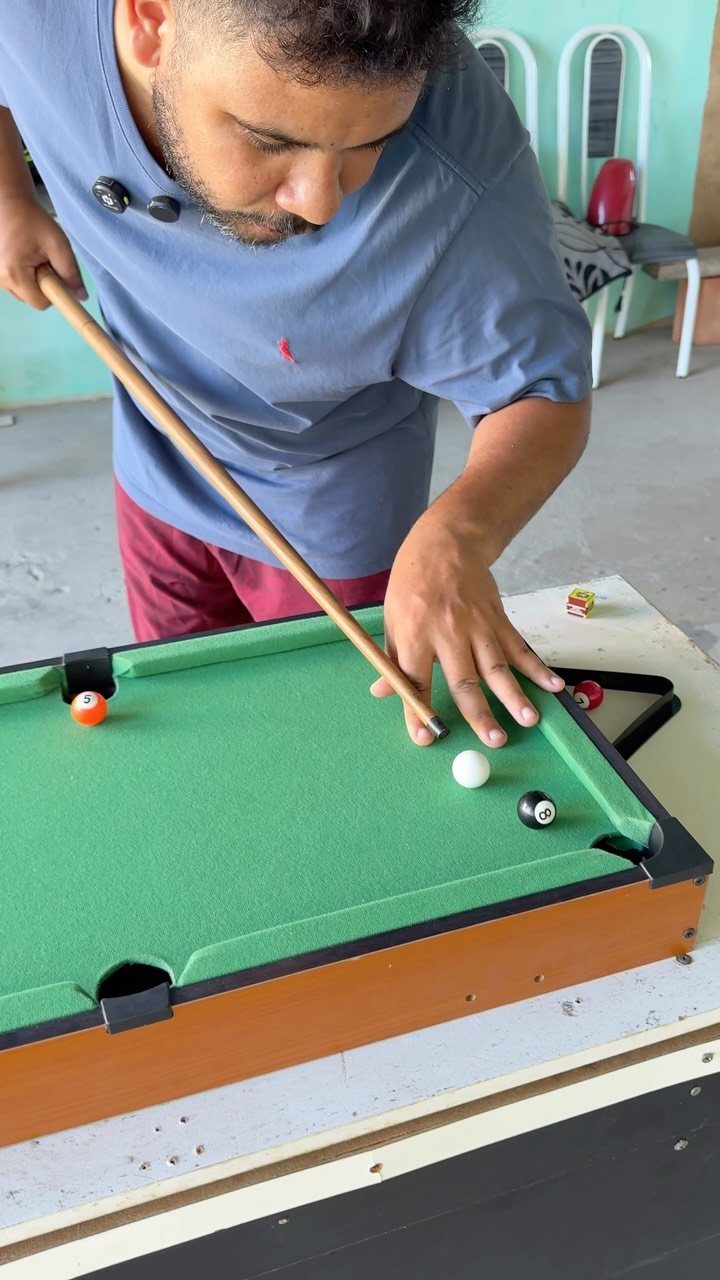
A tabletop pool table with a wooden base is the version I’d pick for a room where a full table is never going to happen. It sits on a desk, dining table, or console, so the floor stays clear.
Set it on a sturdy, level surface and slide it away when the game ends.
Play it as a casual game rather than a serious one, since a small table means short shots and a different feel from the full-size game.
Check that the surface under it is steady before the first break.
Choosing the right pool table size is key for gameplay, comfort, and the look of your game room. Before buying, it’s important to know how much space you’ll need so players can move freely and enjoy every shot.
2. Compact Black Pool Table
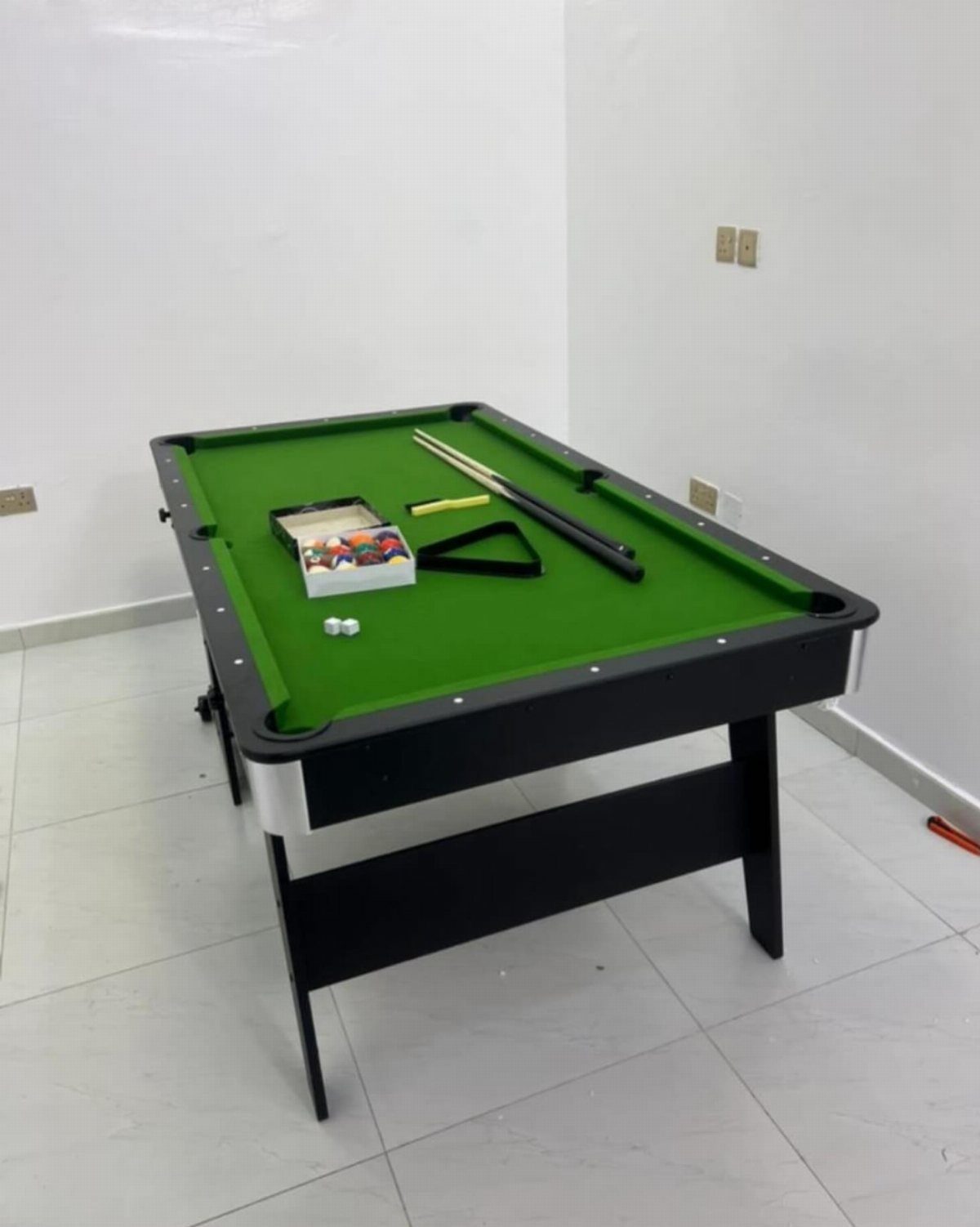
Black does a lot of work in a tight space: a compact black table with green felt reads as one clean block, and the cues and balls give it the only color it needs.
Against white walls and light tile, the dark frame anchors the space instead of crowding it.
I like this pairing for renters because the neutral frame won’t fight with a changing room. Keep the cues racked or stored nearby so the table stays the one big object in the room.
3. Small Blue Felt Pool Table
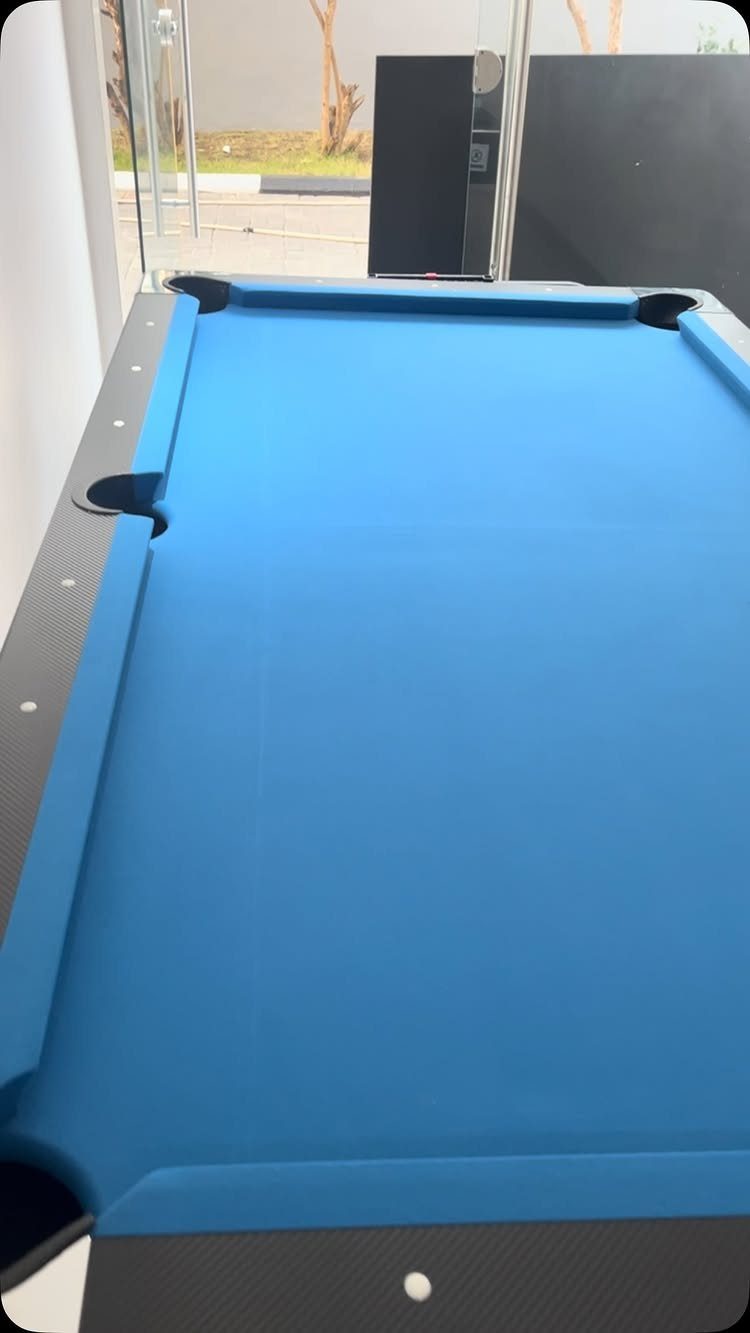
Bright blue felt with black rails is the bolder pick, and it suits a modern room with plenty of glass and daylight. The black rails keep the color from looking toy-like.
I’d choose it if you want the table to act as a focal point rather than blend in.
Keep walls and furniture quiet, since the felt already carries the color. A compact size also leaves a clear path around it, which matters most when floor space is tight.
4. Red Felt Compact Pool Table
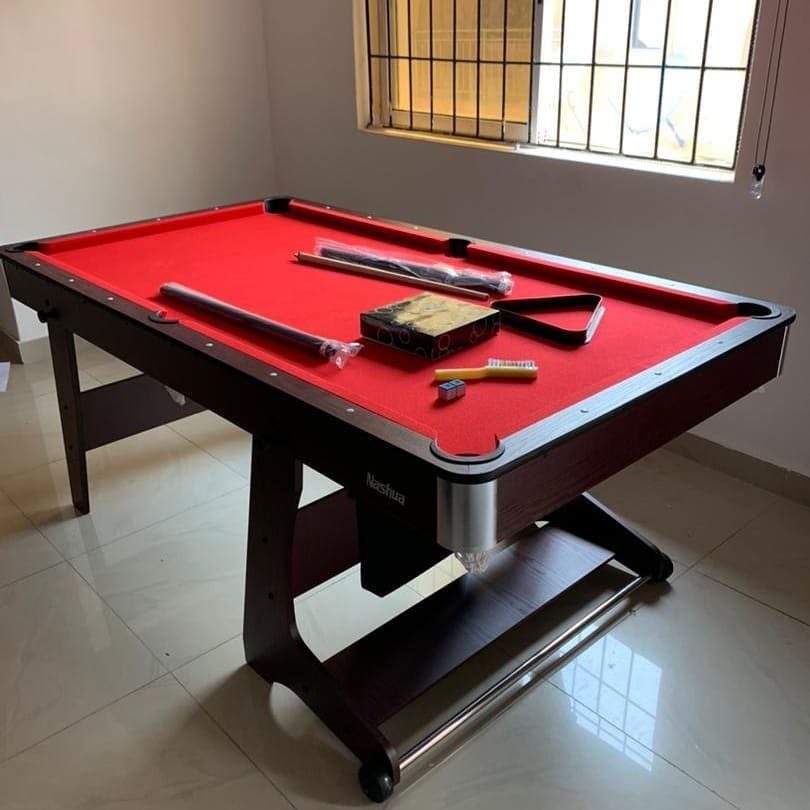
Red felt on dark wood gives a small table the look of an old-school game room, even in a tiled room with white walls. The dark frame and red surface are warm, so they balance cool, bright surroundings well.
This is the one I’d choose if you want character over neutrality.
Because the table is compact, the strong color stays in proportion instead of swallowing the room. Keep the cues and accessories tidy so the look stays deliberate.
5. Grey Felt Pool Table
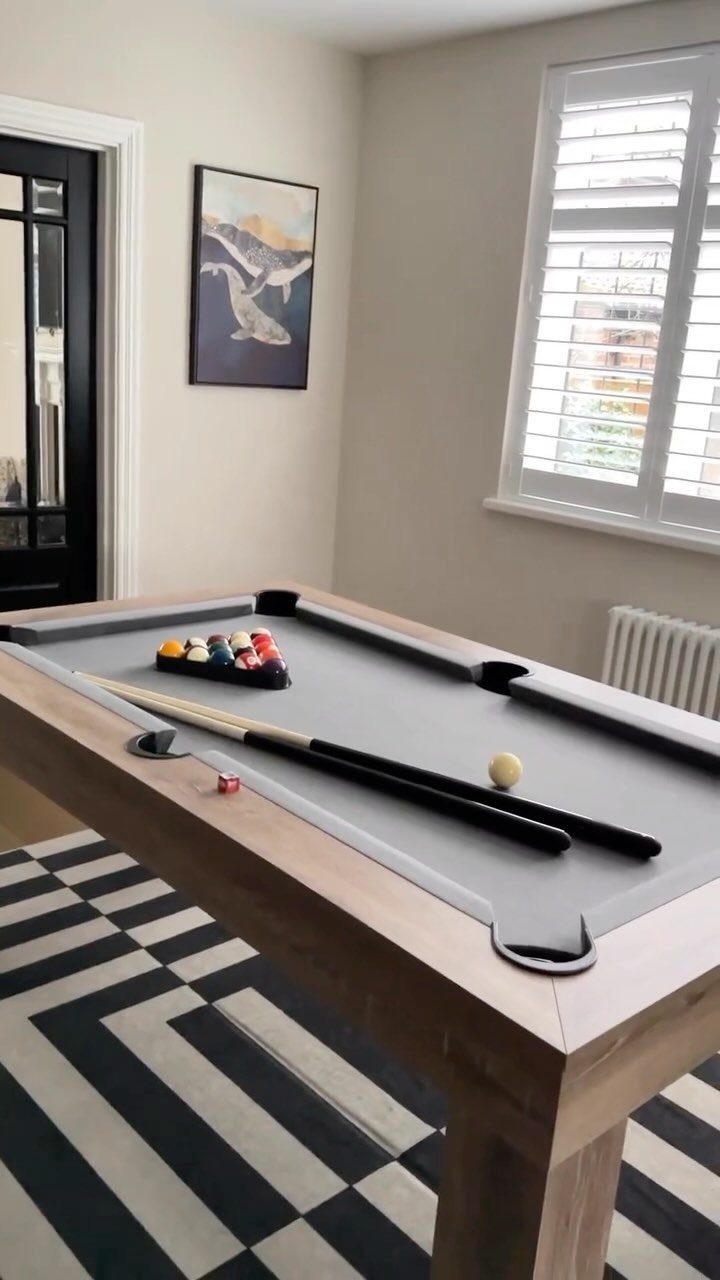
Grey felt on a light wood frame is the calmest option here, and it blends into a cozy room instead of announcing itself. Beside a geometric rug and shuttered window, it reads as furniture first and game table second.
I’d go this route if the room does double duty and you don’t want a loud green or red surface. Soft, muted colors let the table sit alongside art and patterned textiles without clashing.
6. Pink Felt Pool Table
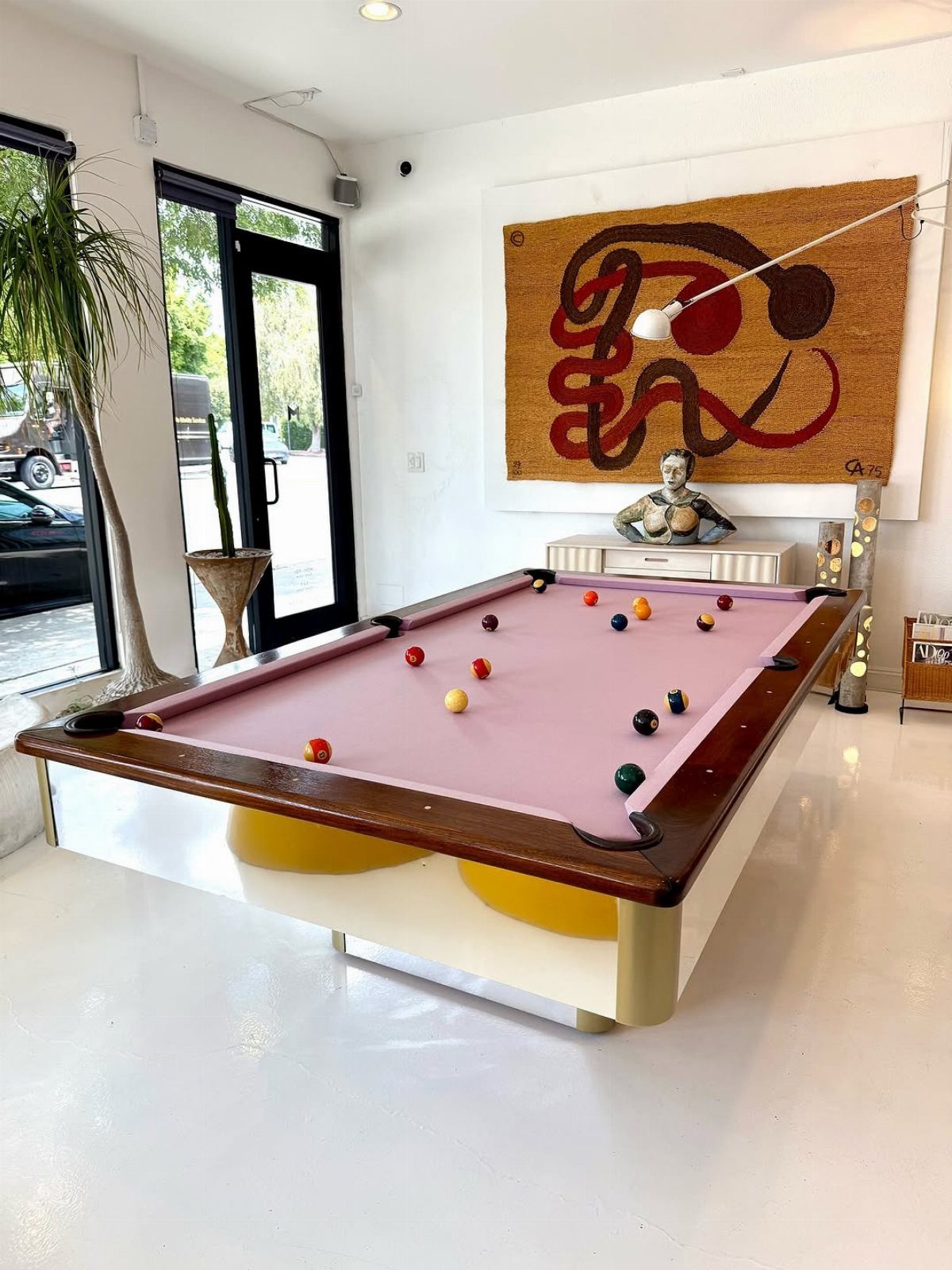
Pink felt over a yellow base is a playful choice, and a bright white room is what lets it work.
White walls give the colors room to breathe, so abstract art, a sculpture, and a plant can join in without clutter.
I’d pick this for a studio where the table is meant to be a statement. Keep the rest of the palette simple, and let the table be the loudest thing in the room.
7. Pool and Ping Pong Combo Table
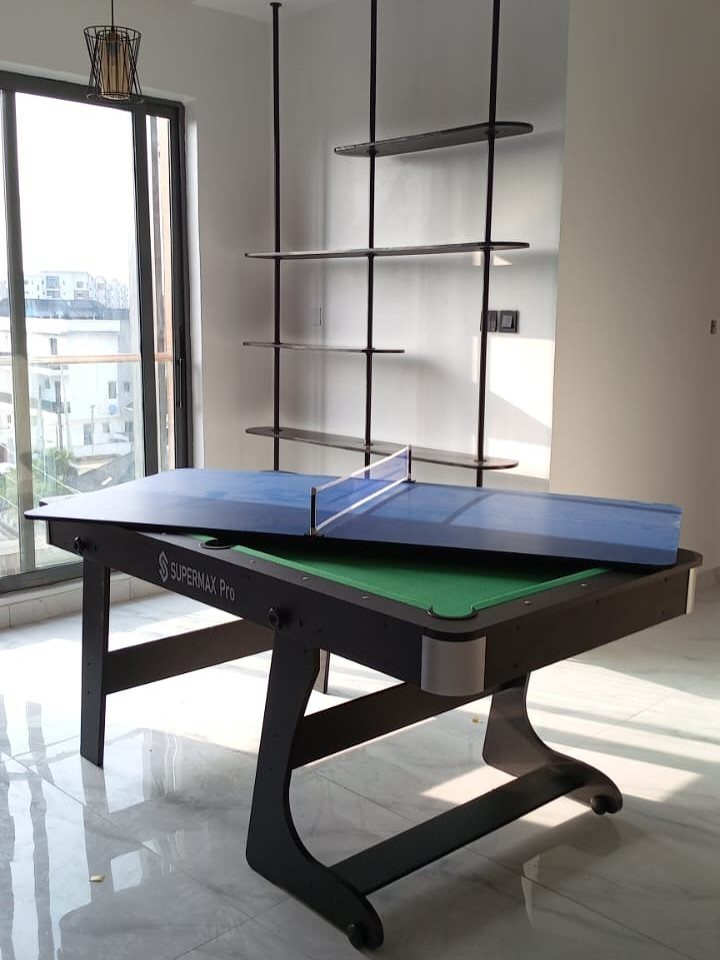
A swappable blue ping pong top over a green pool table gives a compact space two games on one footprint.
That is the real argument for it: one big object doing double duty instead of two pieces competing for floor space.
I’d pick this over a standard table if the room has to serve a whole household. Keep a spot nearby for the top when pool is on, such as against a wall, so it doesn’t end up on the sofa.
Fair warning: the combo is still a full table, so measure the room first.
8. Compact Traditional Green Felt Table
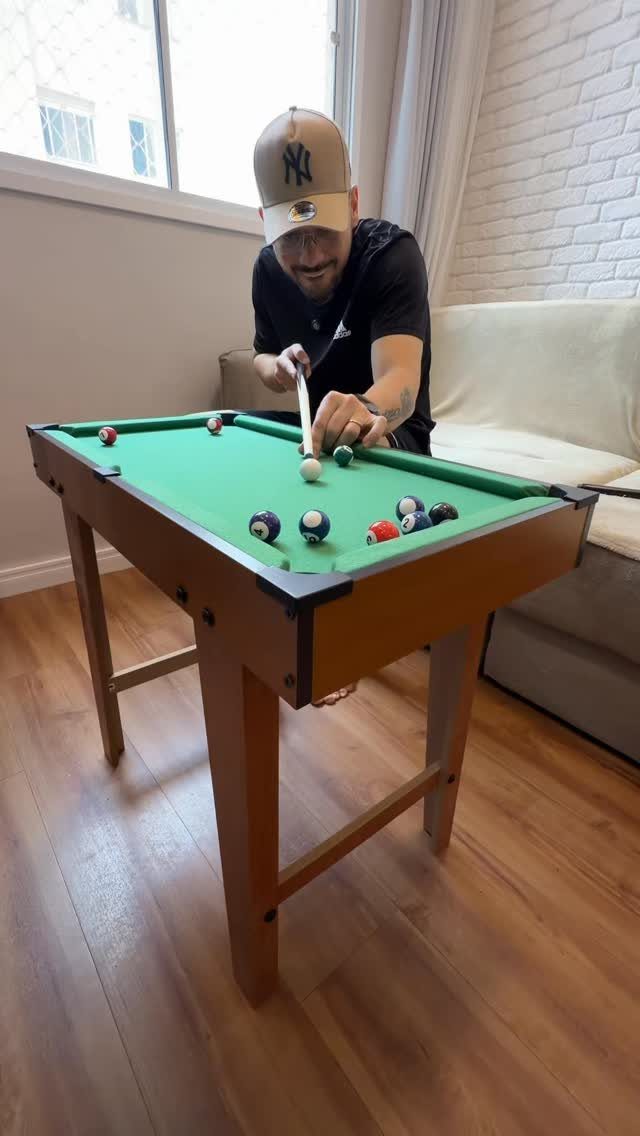
A downsized freestanding table with classic green felt and wooden legs is the closest thing to the real game in a living room. It looks like furniture, which helps when the sofa and the table share one room.
I’d choose it over a tabletop model if you want to stand and shoot properly. Leave clear floor on every side, since a cue needs room behind the shot.
9. Wall-Mounted Racks
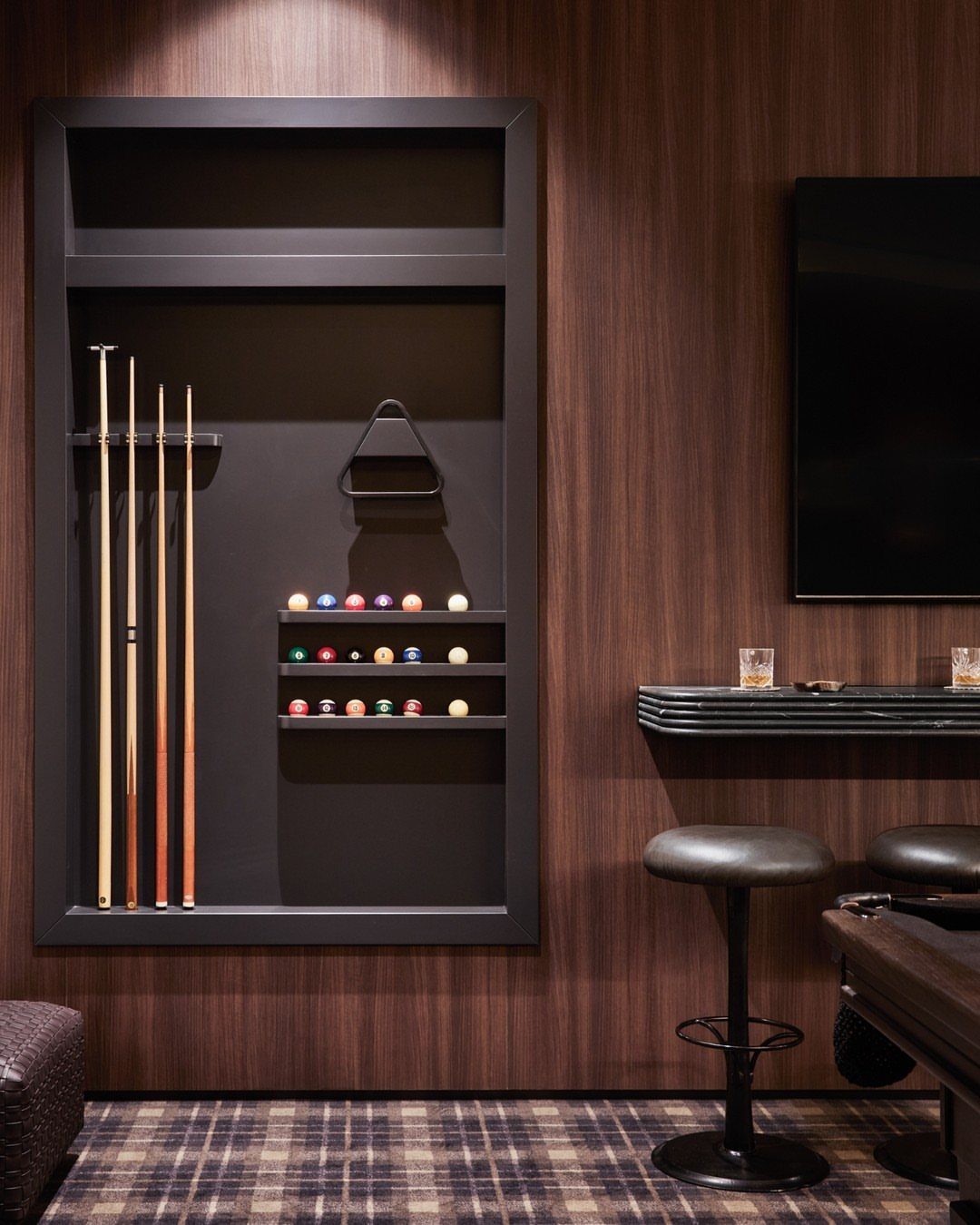
A built-in wall rack keeps cues, the triangle, and balls off the table and off the floor. With tight square footage, that matters more than any accessory.
I like a dark finish that matches the wall, because the rack then reads as part of the room instead of clutter. Mount it where nobody walks, with enough spacing that each cue slides out without catching.
A rack is the cheapest way to make a compact table feel intentional.
10. Dining Surfaces
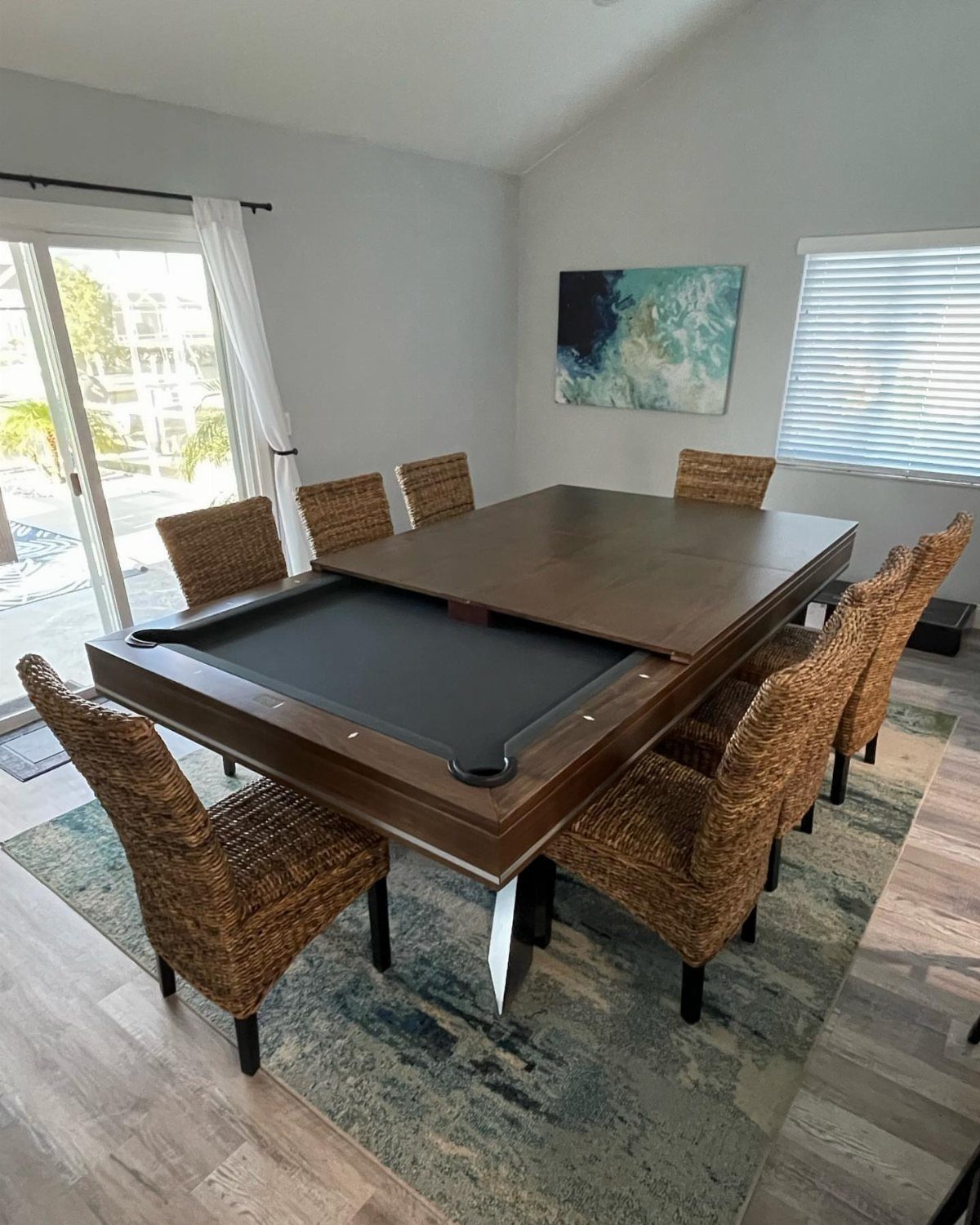
A dining surface laid over a pool table lets one piece of furniture be a table for meals and a game table after.
Wicker chairs suit it well, since their open weave looks lighter than solid wood in a tight room.
I’d go this way when a separate dining table would crowd the floor. Choose a topper that sits flat and snug, and clear it completely before anyone picks up a cue.
The cost is routine: every game night means moving the top and the chairs.
Maintenance in Smaller Environments
Small rooms often have less airflow, and a basement can run damp.
Both are hard on a table, especially a wood or MDF one, so a cheap hygrometer is worth having nearby. If the reading stays high, a dehumidifier will keep the room in balance.
A cover keeps dust off the felt between games. A soft brush swept lightly across the cloth, or a vacuum on its lowest setting, lifts chalk and dust without fraying the fibers.
Check the leg levelers every so often and adjust them until the balls roll true to all 4 corners.
A table that is slightly too short or long for the room has one side effect: you will start placing the cue ball to dodge the wall without thinking about it. Measure the clearance first.
Functionality of Smaller Tables
A smaller table doesn’t have to mean fewer features. Even small tables often come with an MDF or slate bed, adjustable leg levelers, a ball return built into the frame, and sometimes a storage drawer or shelf.
Check the spec list for those before paying, because they separate a real table from a toy.
Some models also work as a dining table or a work surface, which suits a room that has to do more than one job.
If you rent or move a lot, check the table’s weight and whether it breaks down into pieces you can carry down a stairwell. Lighter and folding models can be stored when company comes, or carried to another room.
Price is the other draw: compact tables usually cost hundreds of dollars, not thousands. A smaller playfield also demands sharper control on every shot, so it can sharpen your aim.
Design Styles for Compact Tables
A compact table used to mean a traditional design with everything scaled down, and that’s no longer the case. Modern versions rely on straight lines and almost no decoration.
Traditional ones keep details like ball and claw legs. Transitional tables pair classic details with newer proportions, and a few are built with apartments and shared living spaces in mind.
Finish is the easiest way to tie a table to the room. Walnut, cherry, mahogany, and laminate are the common options, so match the one closest to your flooring, cabinetry, or main furniture.
Look at the details too. Tapered legs, a thin rail, and a frame sized in proportion to the bed keep a small table looking deliberate rather than squeezed in.
When floor space is the real limit, I’d pick a folding table for an apartment or a room that does double duty: set it up to play, then tuck it away.
Frequently Asked Questions
Are there pool tables for small spaces?
Yes. Apartments, basements and spare bedrooms are where compact pool tables earn their place, since they’re sized for rooms that can’t take a full table.
Options include tabletop models that sit on a desk or dining table, downsized freestanding tables with wooden legs, folding tables, and combo tables with a ping pong top. A smaller table also costs hundreds of dollars rather than thousands.
Can you put a pool table in a 12×12 room?
It’s a tight fit and may not work well with a full freestanding table.
A 7-foot table needs more cueing room than a room that small can give you. A tabletop or folding model that you set up for play and put away afterward is the safer pick for a room that size.





