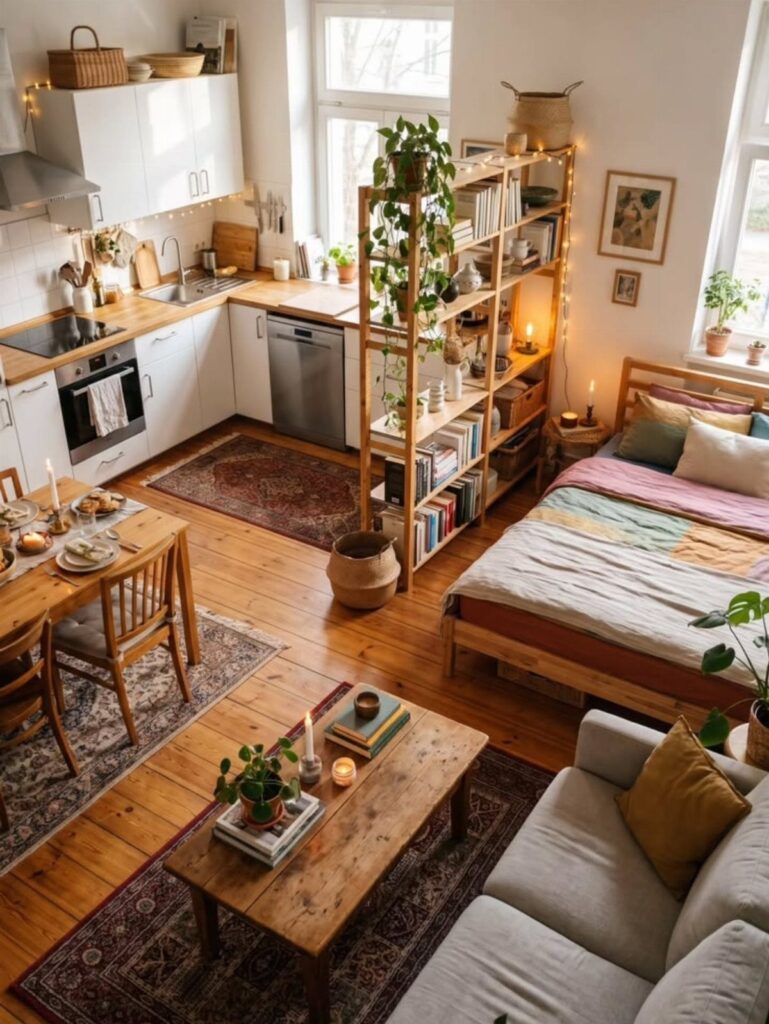
Whether you rent or own decides most of this list: a Murphy bed has to be anchored into wall studs, so the lease settles it before taste does, while a leaning floor mirror, a plug-in pendant or a gallery wall hung on adhesive strips need no permission and no drilling.
The ideas run from light paint colors to a Murphy bed, and from larger rugs and sheer curtains to overhead, task, and ambient lighting.
1. Multi-Use Sofa Beds
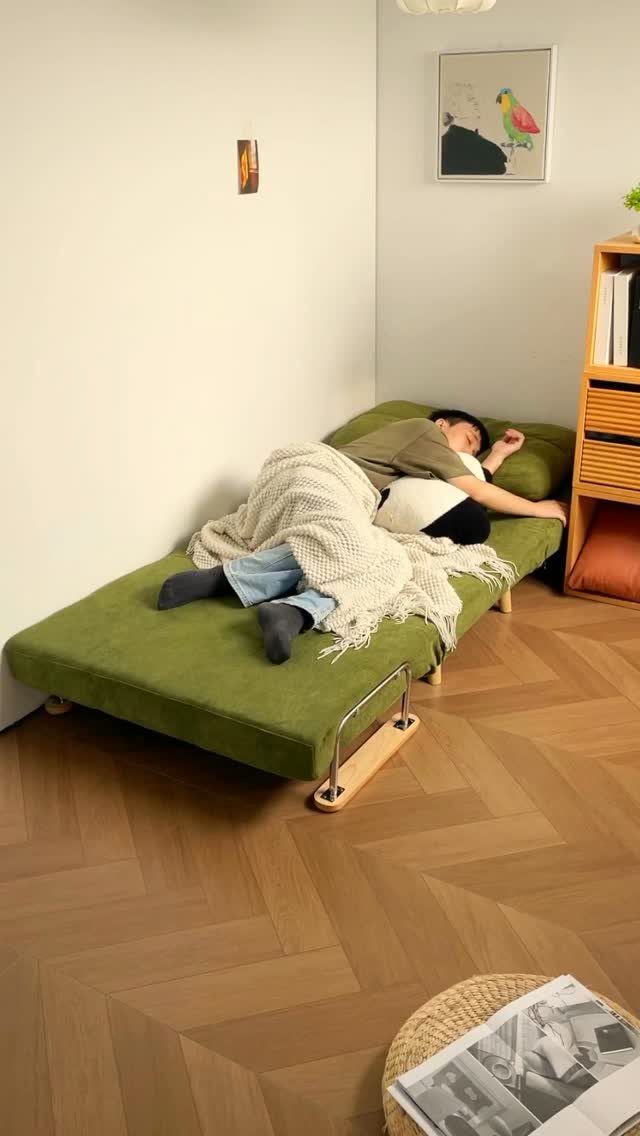
A sofa bed earns its place in a studio because one piece does two jobs, and floor space is the thing you have least of.
A deep green like this one hides daily wear better than white or cream, and it reads calm next to wood floors.
Test the fold-out before buying. If the mechanism needs a coffee table moved every night, you will stop using it, so pick a model that opens in one motion.
Keep the bedding in a closet or a lidded basket nearby, and the sofa goes back to being a sofa in under a minute.
2. Light Colors
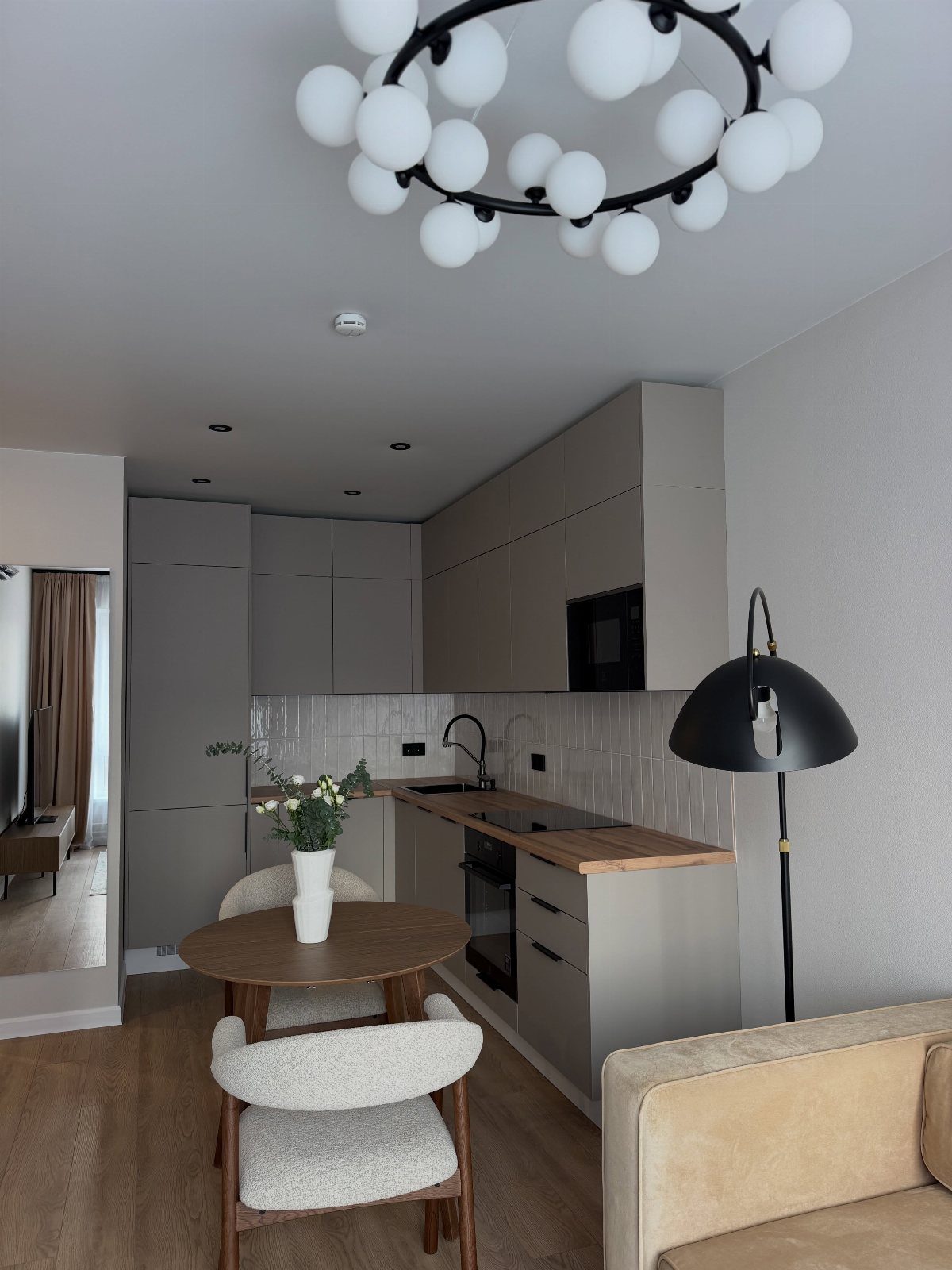
Pale grey cabinets against a soft, light wall color stretch a compact kitchen and dining corner, so it looks wider than the floor plan says it is.
Keep the large surfaces quiet, then let one warm material, like the wood countertop here, carry the contrast.
For a rental, paint is the cheap route. A single gallon covers a lot of wall, and it costs far less than replacing cabinet fronts.
Stay with soft greys or warm whites rather than stark white, which can look cold and show every scuff.
3. Large Mirrors Opposite Windows
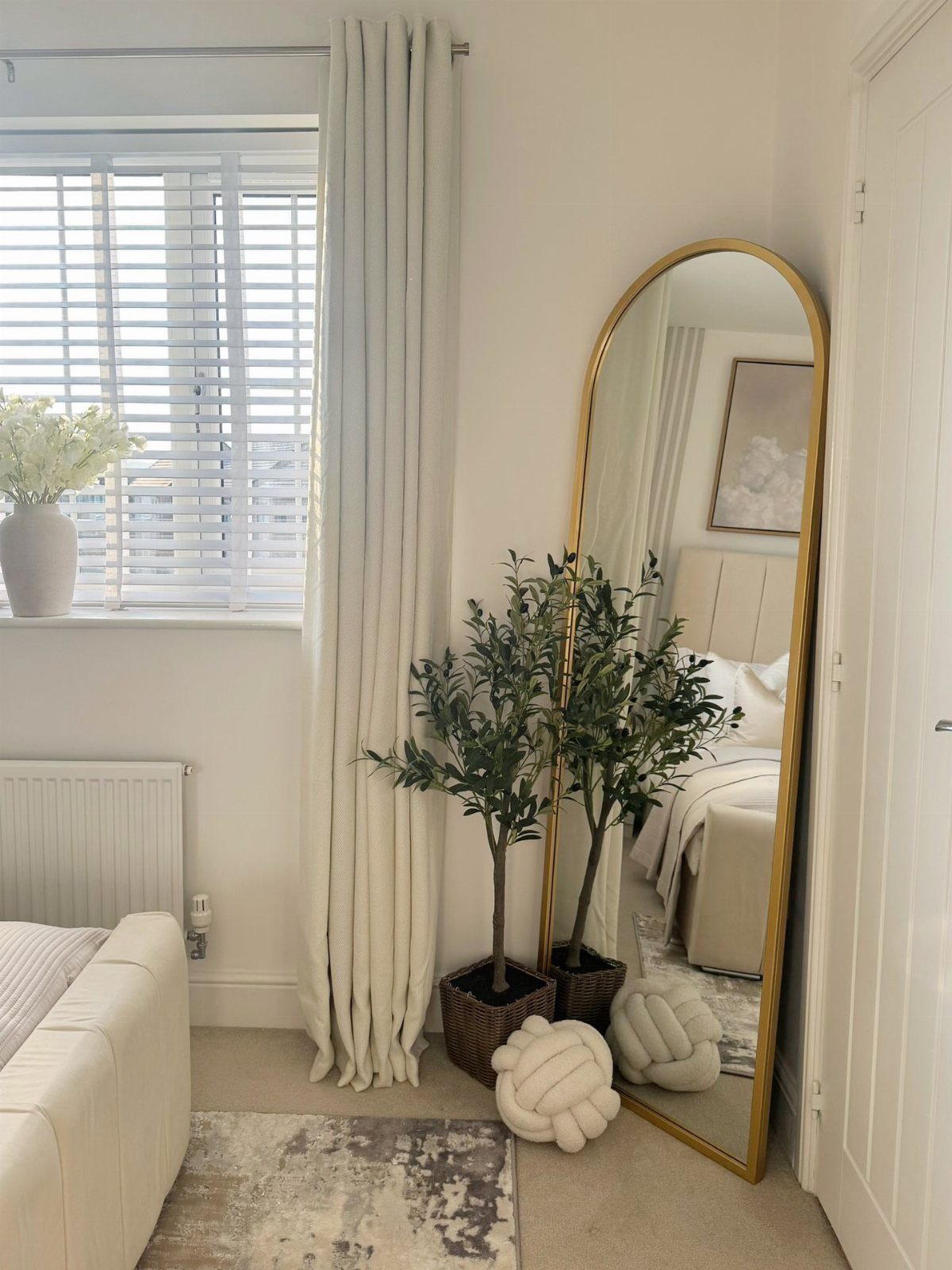
Place a large mirror so it faces a window and it bounces daylight back into the room, which makes a bedroom feel deeper.
A leaning floor mirror like this arched one needs no drilling, so it suits renters, and you can move it if the glare is wrong.
Choose the tallest piece that fits your wall. A small mirror reads as decoration, while a full-length one reads as extra room.
Lean it at a slight angle against the wall and put a rubber stopper or felt pad under the base so it stays put.
4. Larger Rugs
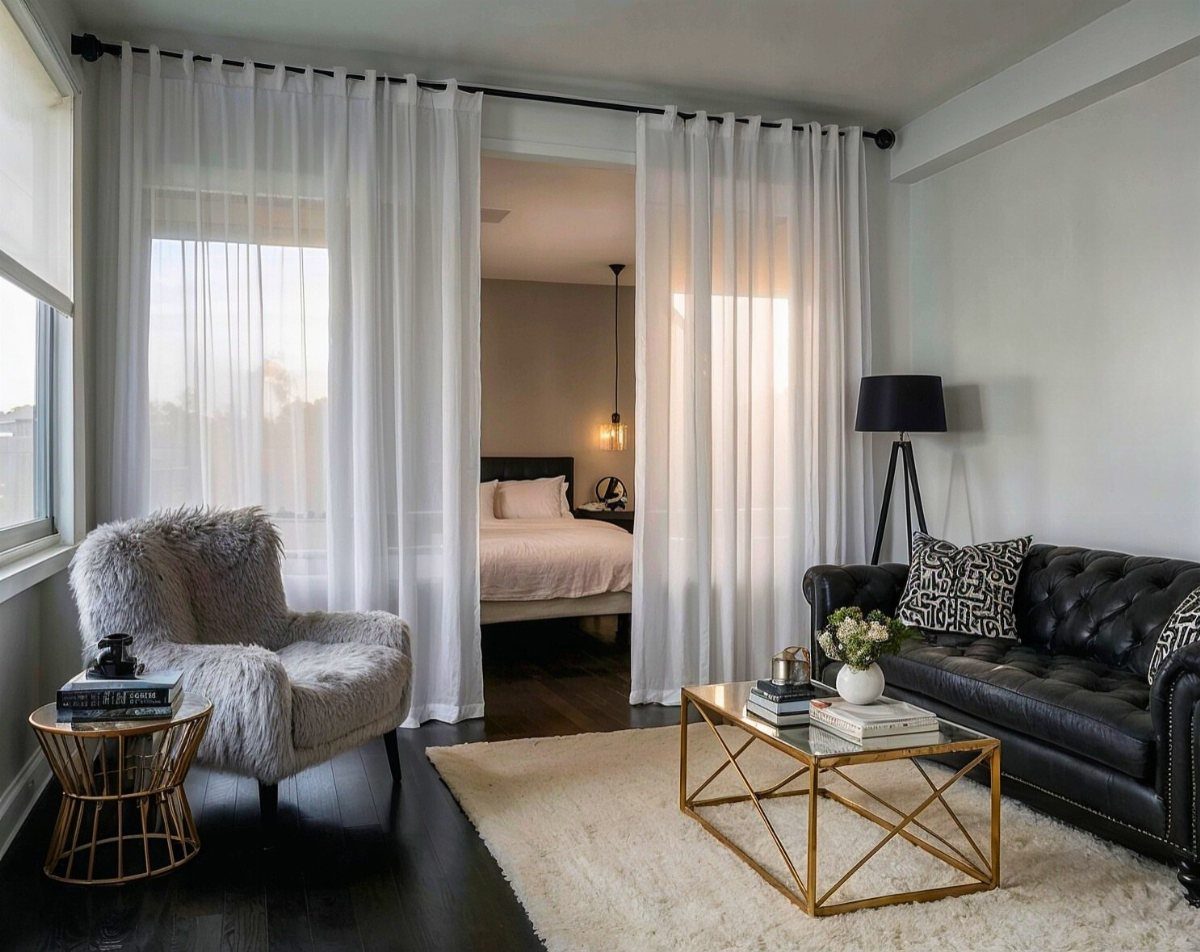
Small rugs are the common mistake: a rug that stops short of the furniture chops the room into pieces.
Pick a rug large enough that at least the front legs of the sofa rest on it, and the seating area pulls together into one zone.
In an open layout, the rug draws the line between living space and sleeping space without a wall. A cream or white rug, as here, keeps that line soft and bright.
Add a rug pad underneath to stop slipping and bunching. It also adds cushion on hard floors.
5. Sheer Curtains
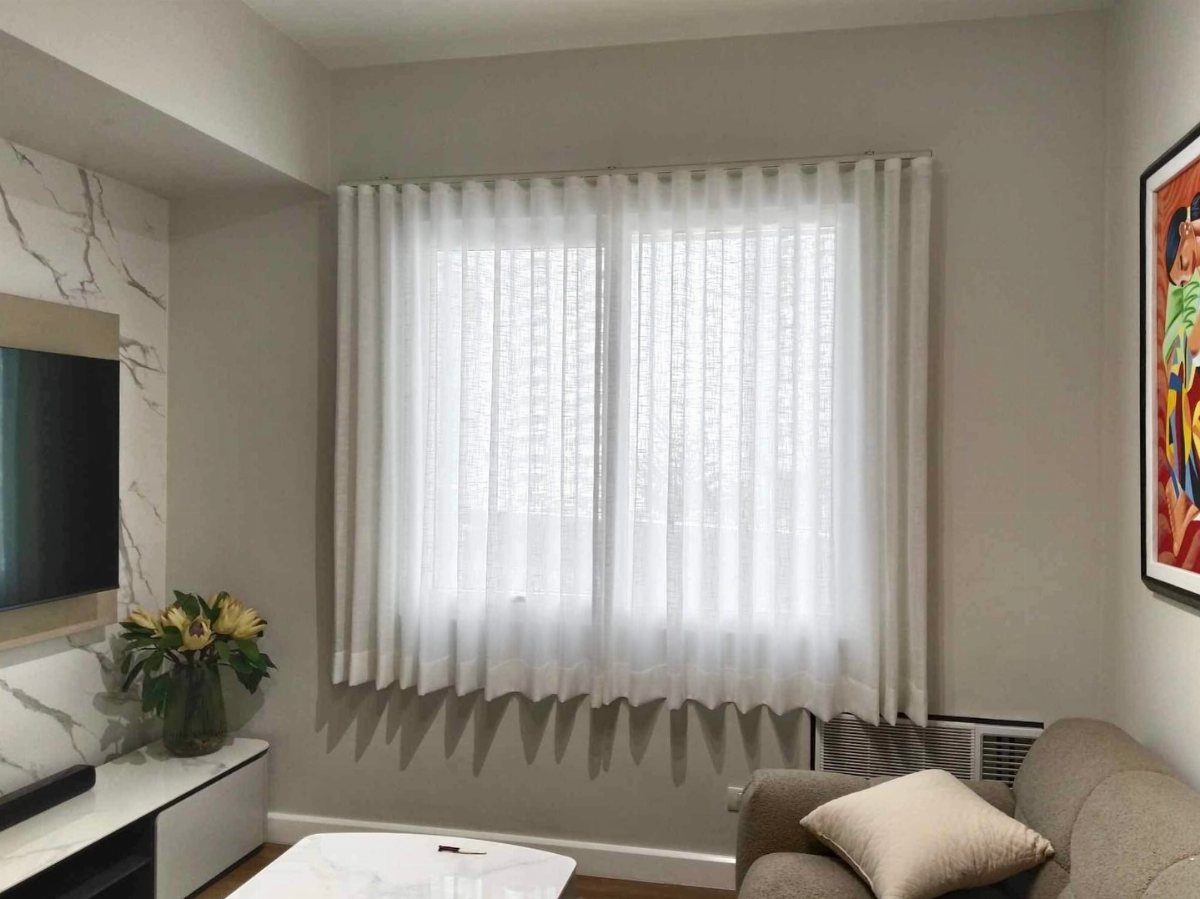
Sheer curtains soften a window without blocking daylight, and tight quarters need that light more than anything. White voile scatters the light, so everything looks brighter and the glare drops.
Hang the rod a few inches above the window frame and let the panels fall nearly to the floor. That pulls the gaze upward and makes the window look bigger than it is.
Buy panels about twice as wide as the window so they fold into gentle gathers rather than hanging flat. Flat sheers look cheap.
6. Install a Murphy Bed
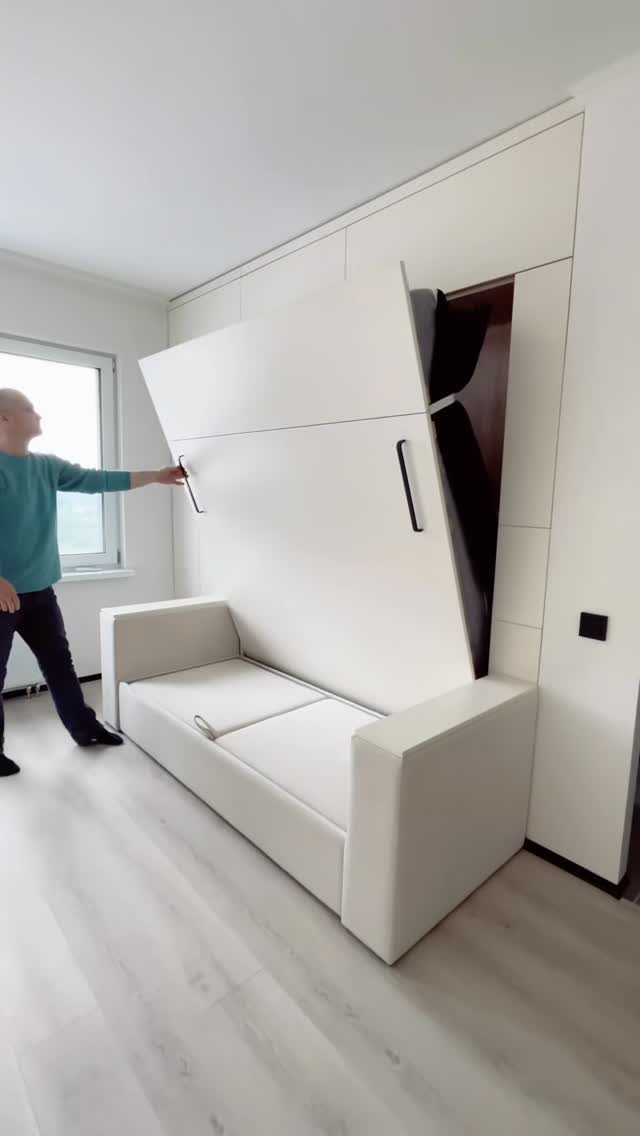
A Murphy bed folds up into the wall, so the bedroom floor becomes a living room again each morning. In a studio, that can mean the difference between a cramped sleeping spot and a usable lounge.
Putting a sofa beneath the bed frame gives you seating all day and a full bed at night. A white finish keeps the unit from looking bulky.
Installation is heavier work than most weekend projects. The unit has to be anchored into the wall studs, so read your lease first, since many landlords will say no.
7. Create a Gallery Wall
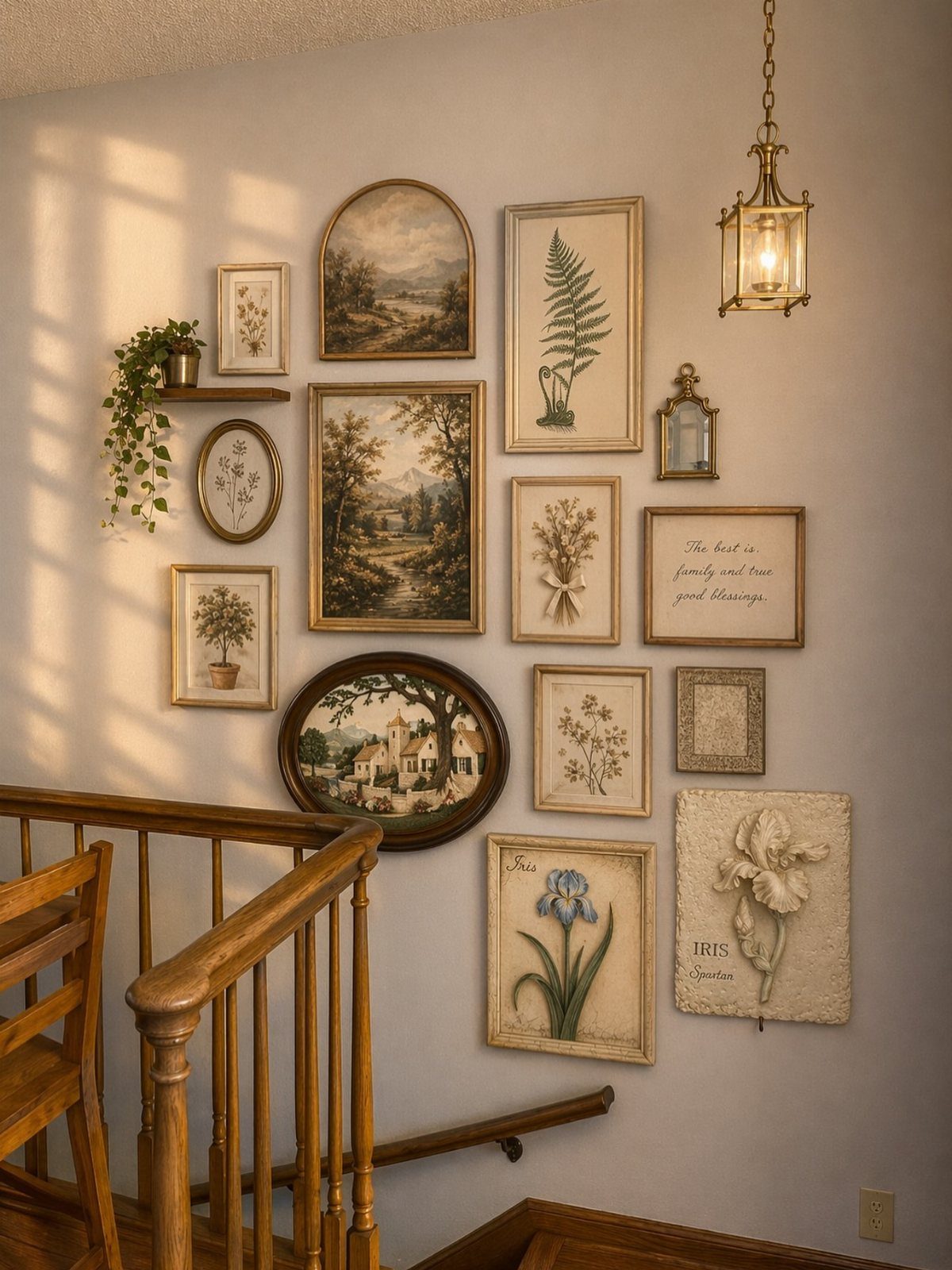
Mixed frames work better than a matched set if the art shares a mood. Botanical and landscape prints do that: greens and earth tones tie together even when the frame colors vary.
Lay the pieces on the floor first and shuffle until the gaps look even. Then trace each frame on paper, tape the paper to the wall, and adjust before you make any holes.
Renters can swap nails for adhesive strips on lighter frames. Keep the spacing tight, so the group reads as one shape.
8. Under-Bed Storage Drawers
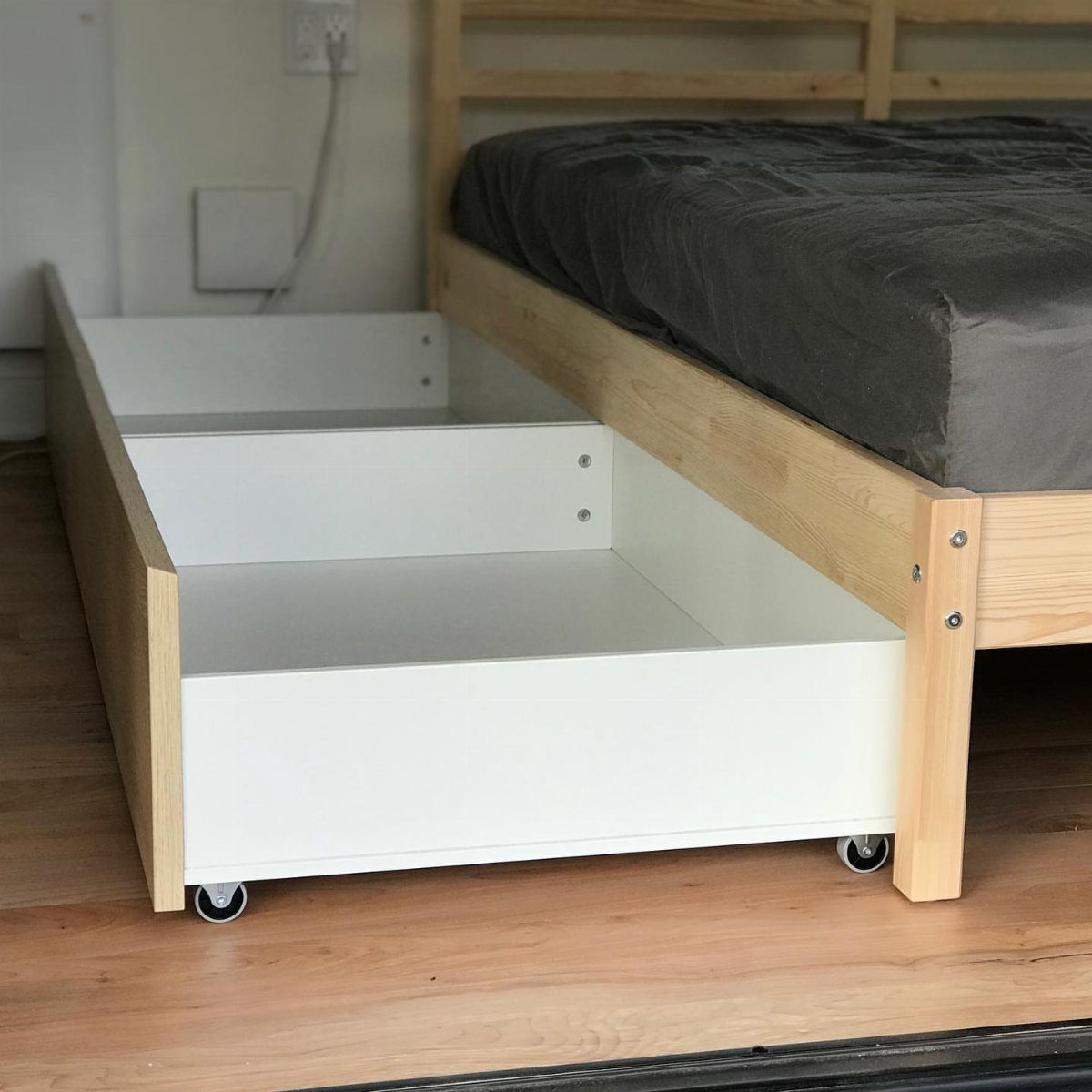
Rolling drawers turn the dead space under a bed into a dresser you never see. White ones against a light wood frame blend in, so the bed stays the focus.
Measure the clearance between floor and frame before you buy anything, since a drawer that jams on the rails is worse than none.
Wheels matter on a wood floor: they glide, and you can pull a drawer out without lifting the bed.
Use them for off-season clothes, spare linens and shoes, and the closet gets room to breathe.
9. Floor-to-Ceiling Drapes
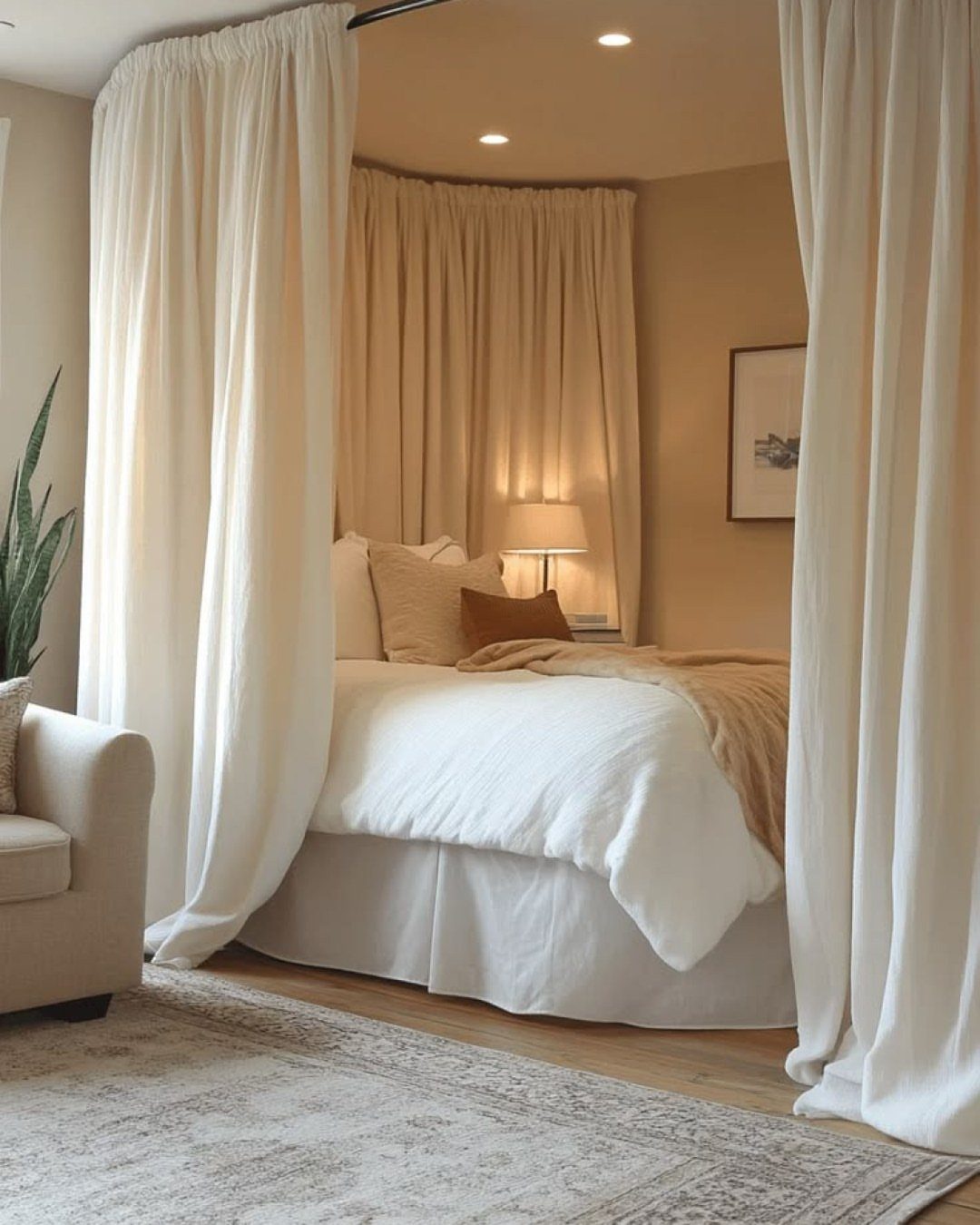
Hang the drapes from the ceiling line, not the window frame, and the walls look taller than they are. Cream panels in full length, as around this bed, also soften the room and add a layer of calm.
Choose a fabric with some weight if you want the drapes to close off a sleeping nook. Thin panels will not hold their folds at that height.
A ceiling-mounted track is neater than a rod in a rental, and it lets the fabric run wall to wall.
10. Tall Bookshelves
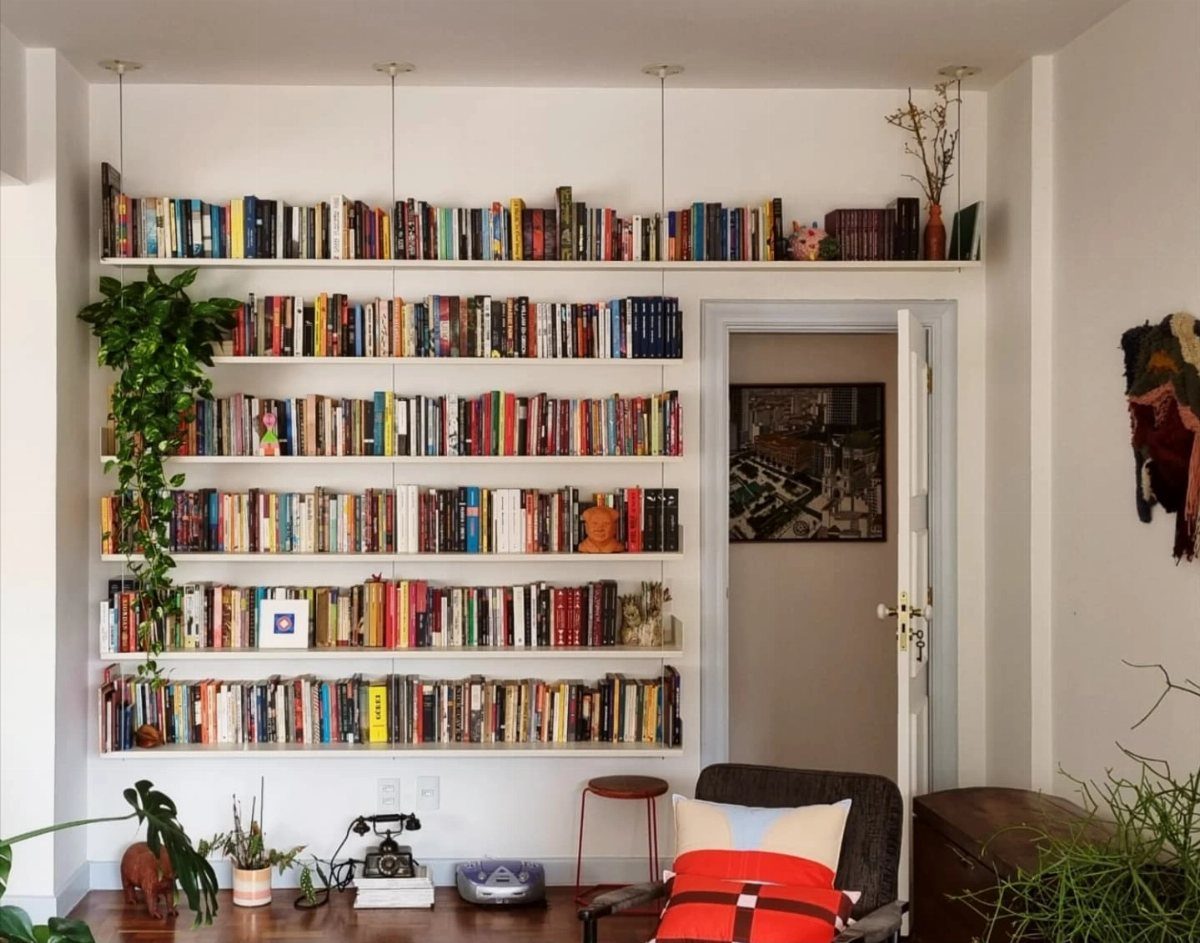
Shelves that run high use the wall space most rooms leave empty. Six long white ones, as here, keep the look light because they match the wall and the books supply the color.
Put the heaviest books on the lowest shelves and save the top rows for lighter items or a trailing plant. Anchor every shelf into studs or proper wall anchors, because a full run of books weighs a lot.
White finishes fade into the wall, which makes a tall unit feel less bulky in a small room.
11. Overhead, Task, and Ambient Lighting
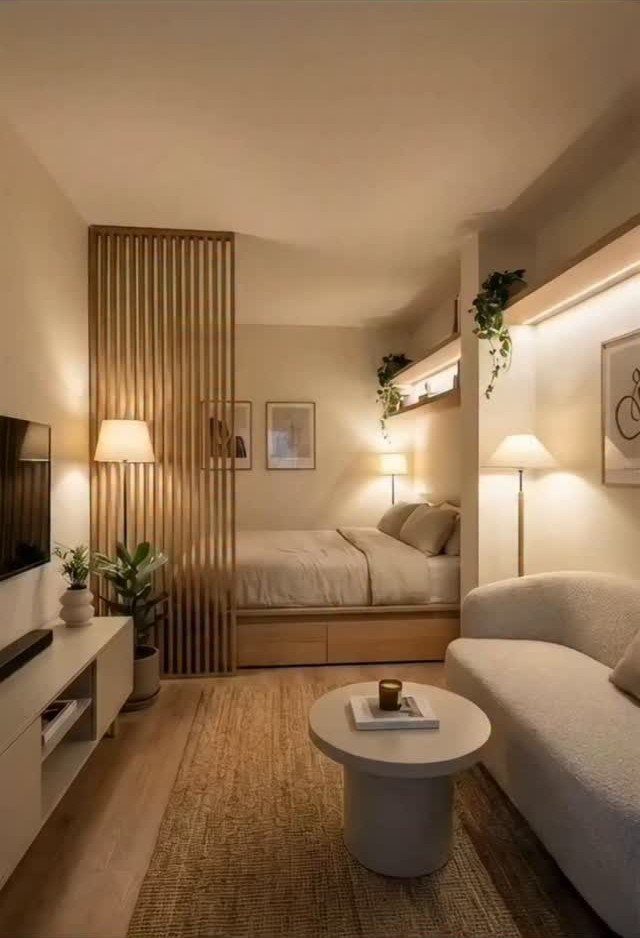
One ceiling light flattens a room. Layering a soft glow from cove lighting with 2 floor lamps gives a studio depth and warmth, and each lamp can mark its own zone, like the sofa side and the bed side.
Floor lamps are the easy renter version, since they plug in and need no wiring. Use warm bulbs so the light stays cozy at night.
I would put the lamps at different heights and turn the overhead off most evenings.
12. Add Greenery
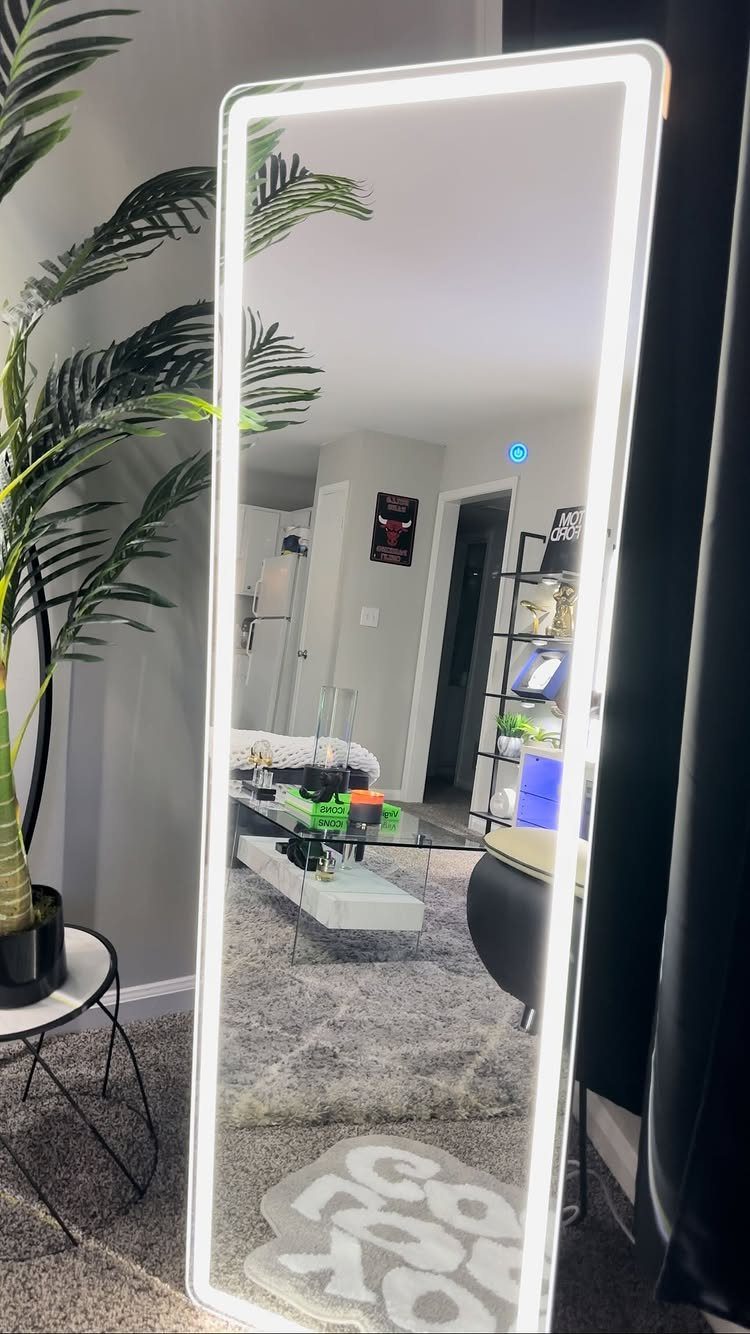
A tall plant beside a full-length mirror gives the corner height and a bit of life, and the mirror doubles the effect by reflecting the leaves.
An artificial one, like this, suits a dim apartment or anyone who forgets to water.
Pick a pot that matches your room’s tones so the plant looks planted, not parked. Put it in a corner or next to a mirror, not in a walkway.
If you have a bright window, a real plant is the cheaper, fresher option.
13. Use a Bar Cart
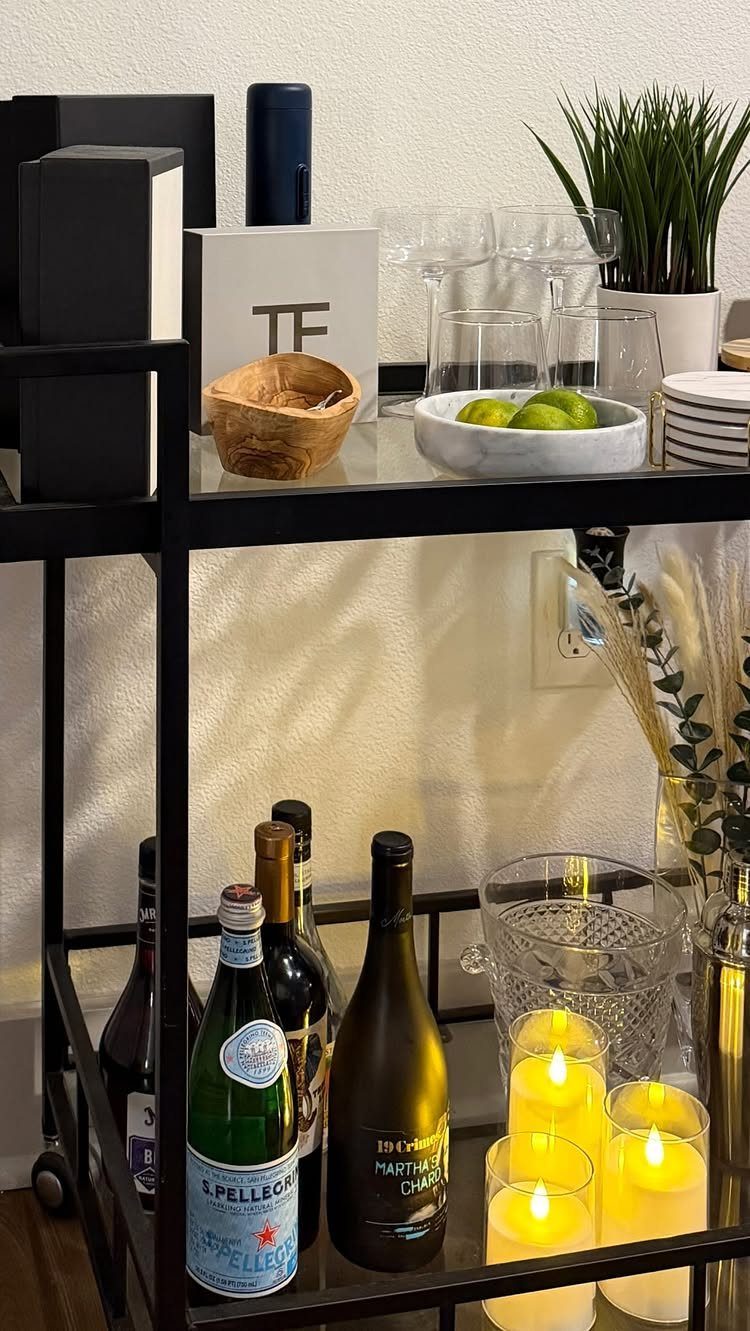
A bar cart works as a small sideboard on wheels, and glass shelves keep a black metal frame from looking heavy.
Limit the cart to what you actually serve. Overloading it turns a display into clutter, and a tight edit looks better in a small room.
Roll it next to the sofa for guests, then park it against a wall when you need the floor.
14. Slimmer Furniture
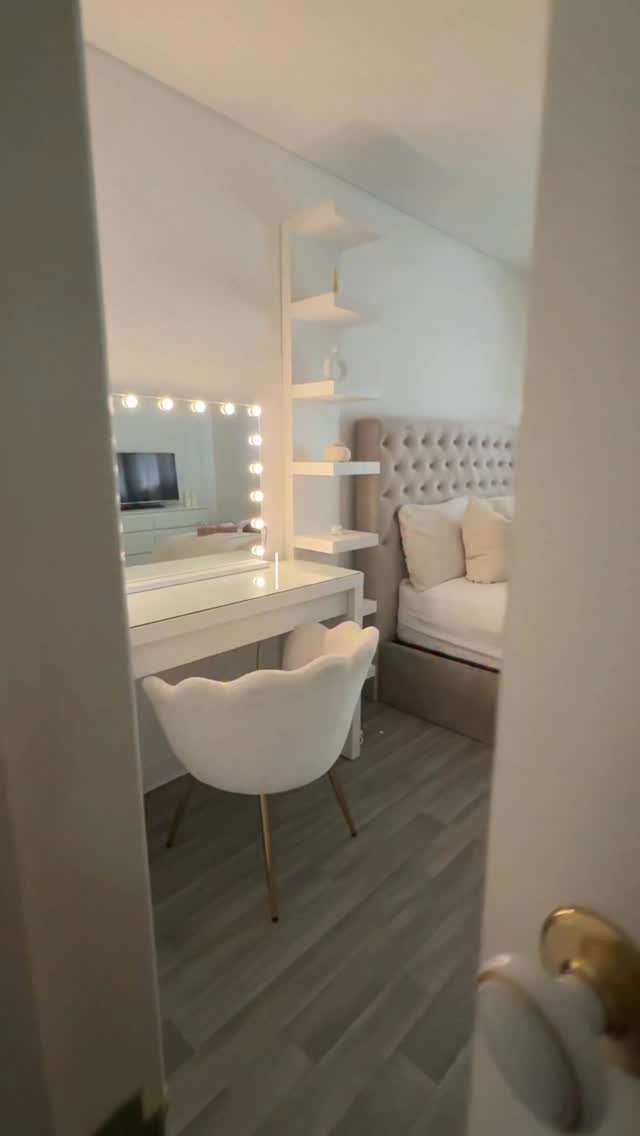
Narrow pieces let a bedroom hold a desk, a chair and a vanity without eating the floor. A slim white desk with a lighted mirror can handle both getting ready and laptop work, so you skip a separate dresser top.
Measure the walkway before you buy. Leave enough room to pass the bed without turning sideways.
Narrow wall shelves above the desk add storage that takes no floor space at all. White furniture next to a soft grey bed keeps the corner calm.
15. Low-Profile Beds
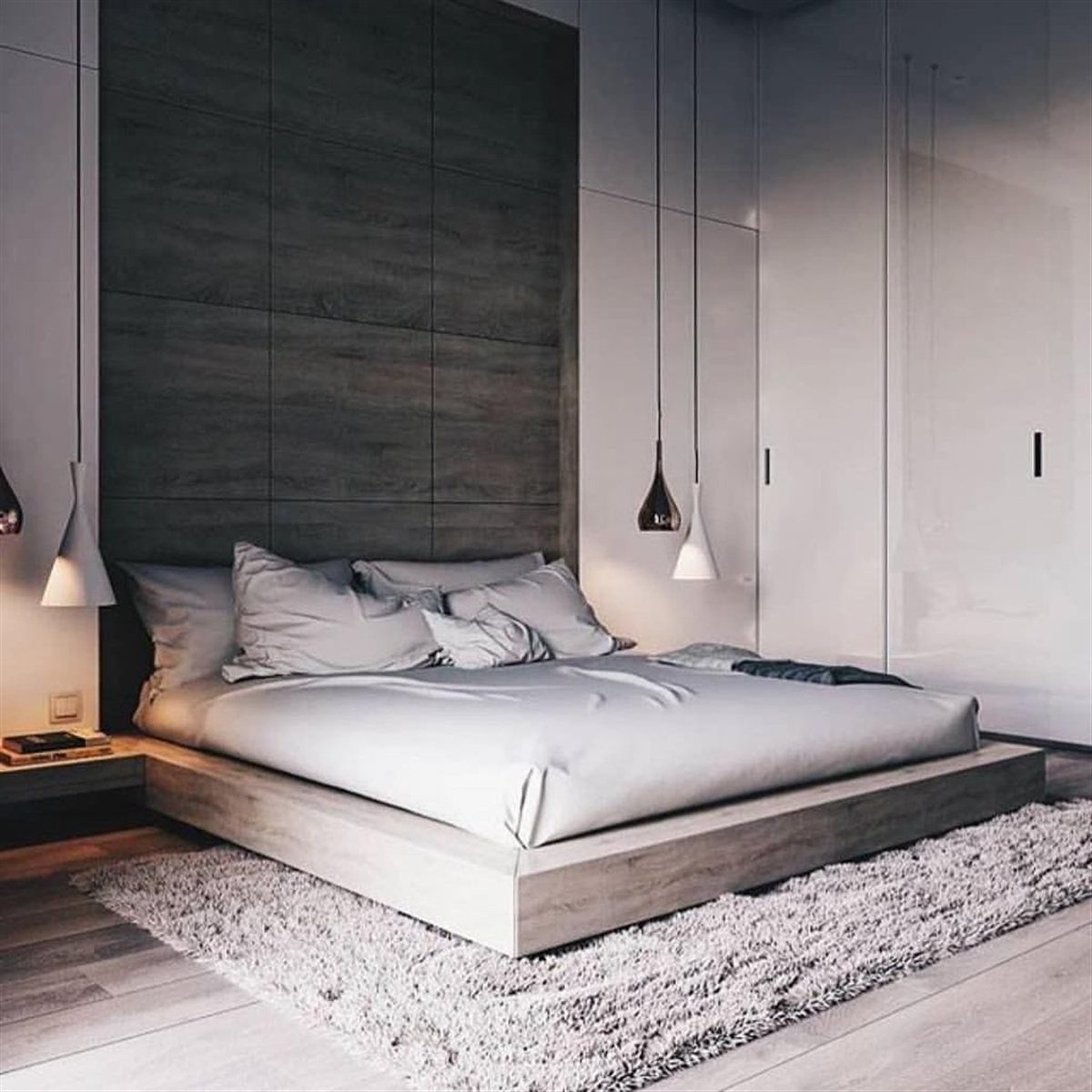
A low bed leaves more bare wall above it, and that open space makes the ceiling seem higher. A platform frame with white linens keeps the look clean, and a dark wall behind it gives the bed a solid backdrop.
Hanging pendants on either side of the bed save nightstand space, and they draw the eye upward too.
A thick rug, like a grey shag, softens the low line of the bed and feels good underfoot. Pick a frame you can still sit on comfortably to put on shoes.
16. Use a Statement Light Fixture
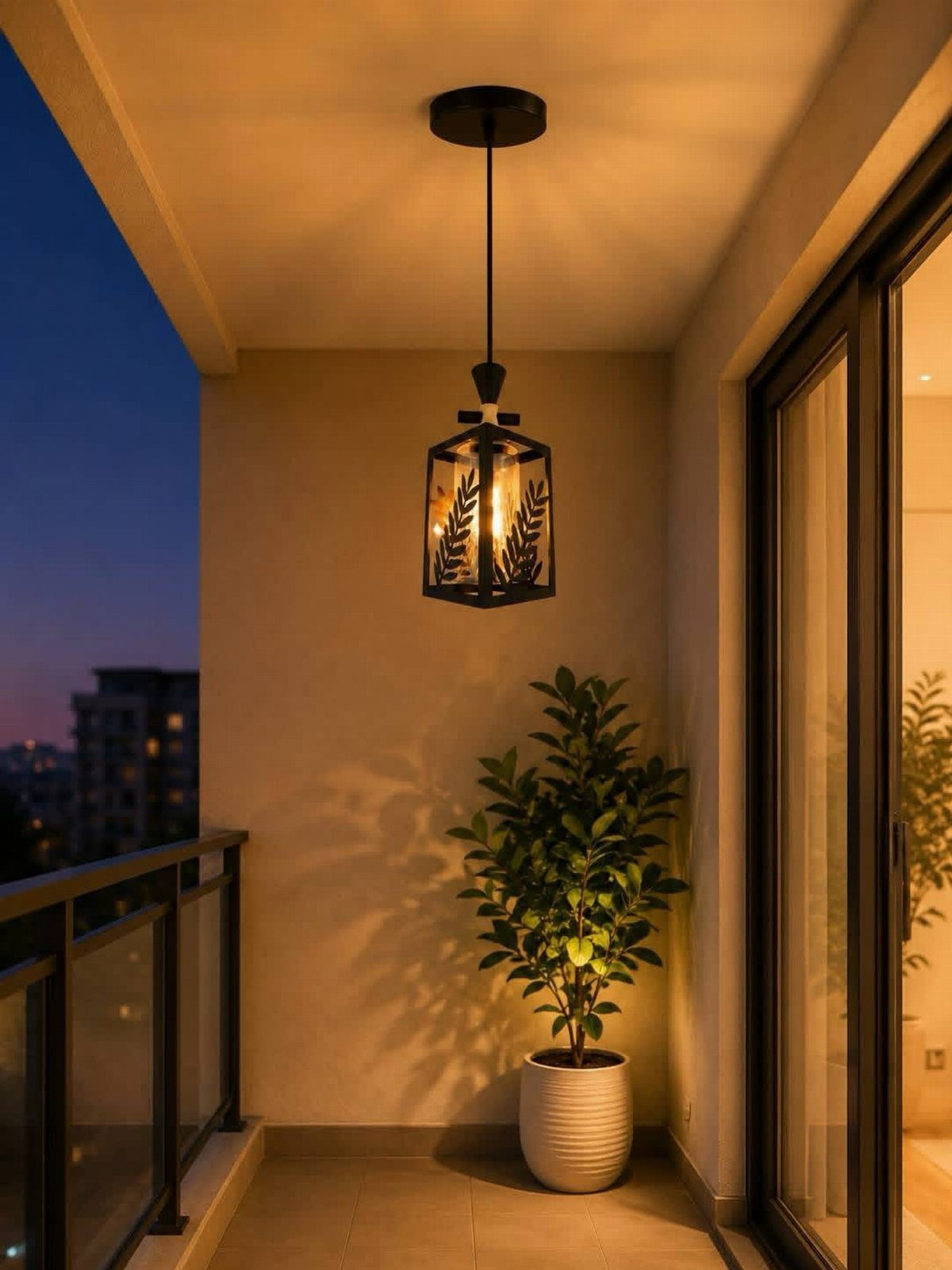
One bold fixture can do the decorating for a whole space.
Choose one statement piece and keep everything else around it simple. A single plant is plenty.
Renters should check the lease before wiring anything. A plug-in pendant, hung from a ceiling hook, gives the same look without an electrician.
17. Mounted TV
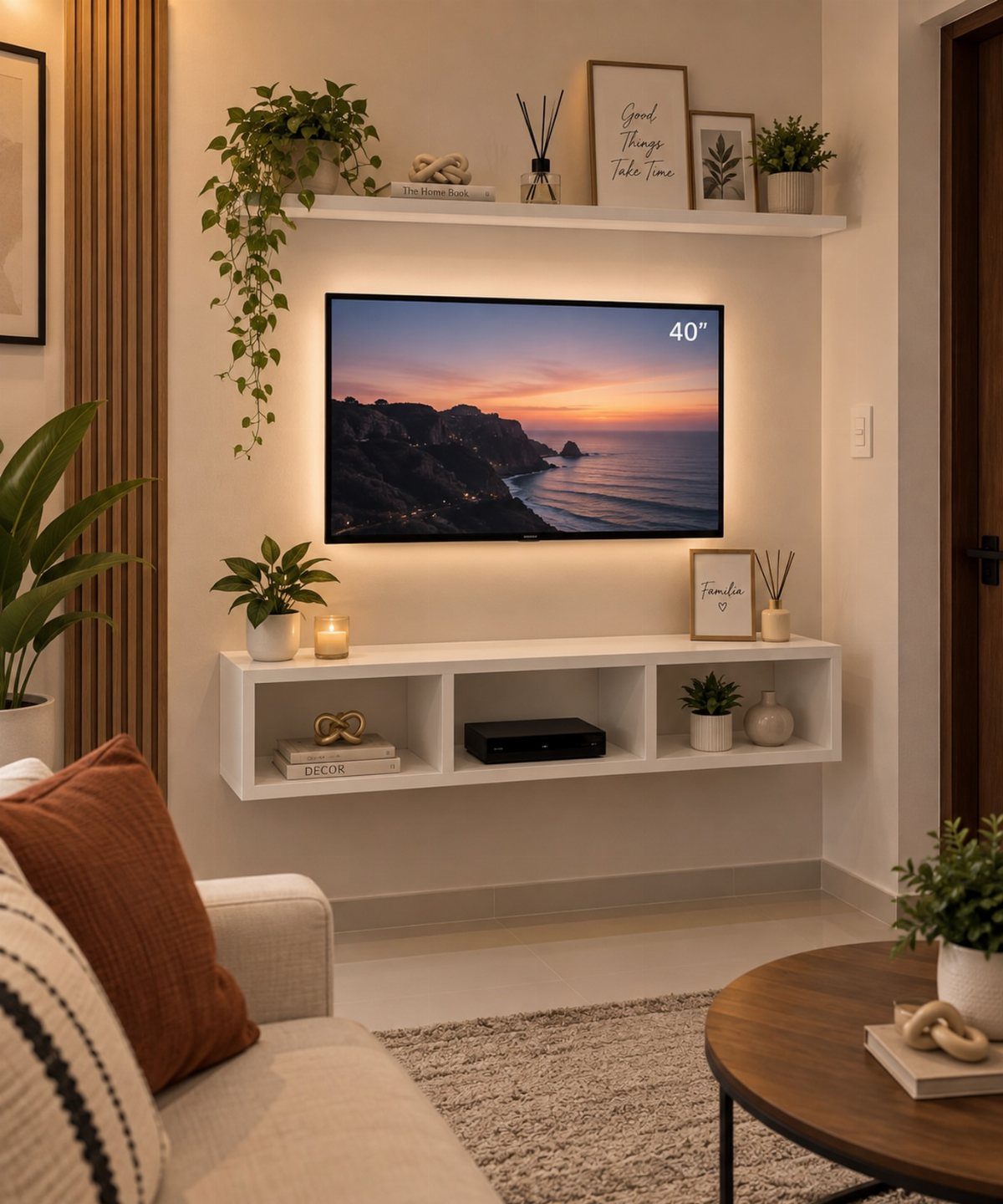
A wall-mounted TV frees the console top, and the wall above it becomes room for a floating shelf. A 40" screen suits a small living room because it doesn’t dominate the wall.
Use the freed space for plants and framed prints, and keep the shelf items few so the screen stays the main event.
Mount into studs, and read your lease first, since the holes are small but landlords differ. Hide the cord behind a cable cover painted the wall color.
18. Rethink Rooms
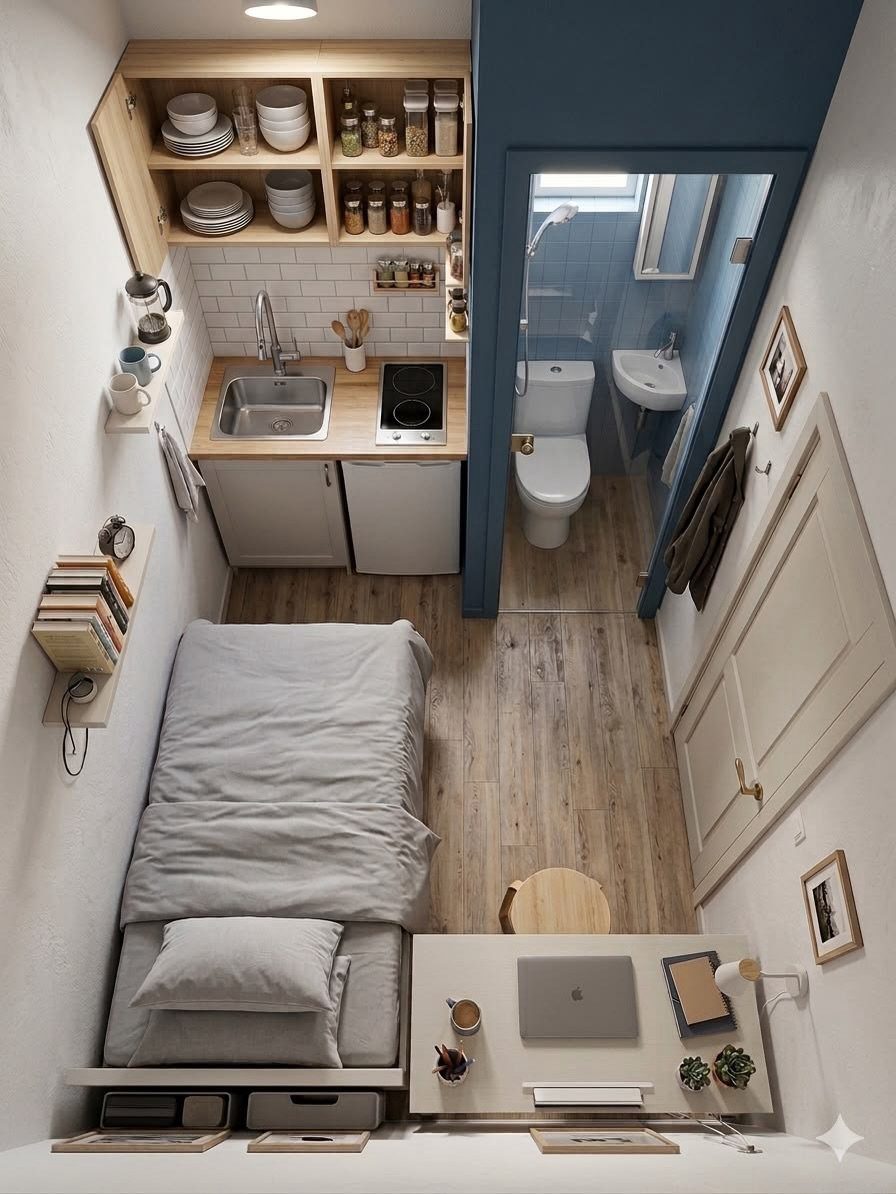
Nobody says a bed, desk and kitchenette must each get a room. In a studio, I would treat each corner as one job and let a rug, a shelf or a change in lighting mark where it ends.
Put the desk where it faces away from the bed, so work stays out of sight at night. Keep the kitchenette counter clear, because it sits right in the middle of the living area.
Start by deciding which activity you do most, and give that one the best corner.
Unlike one-bedroom apartments, studios typically have a main space that functions as a combined living room, bedroom, kitchen, and dining room. Larger studios—often featuring an alcove for a bed or a partially separated dine-in kitchen—can be closer to 600 square feet, she says.
19. Get a Room Divider
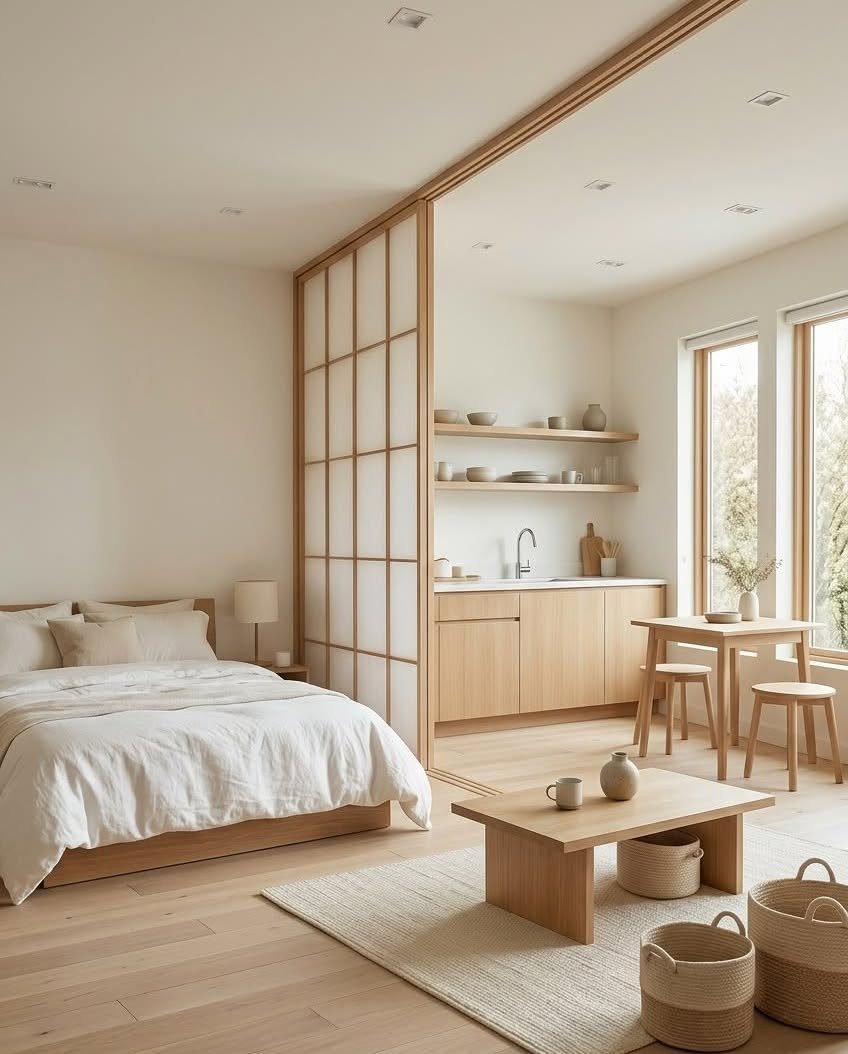
Swinging doors eat floor space, and a sliding divider like this shoji-style one skips that problem entirely. The panels glide along a track, so nothing needs clearance and the layout stays open.
Wood and paper-look panels let some daylight through, which keeps the sleeping side from feeling boxed in. I would pick this over a solid partition in a studio for that reason alone.
Slide it shut at night and the kitchenette disappears from view. Leave it open by day so the room reads as one space.
20. Entryway & Hallway
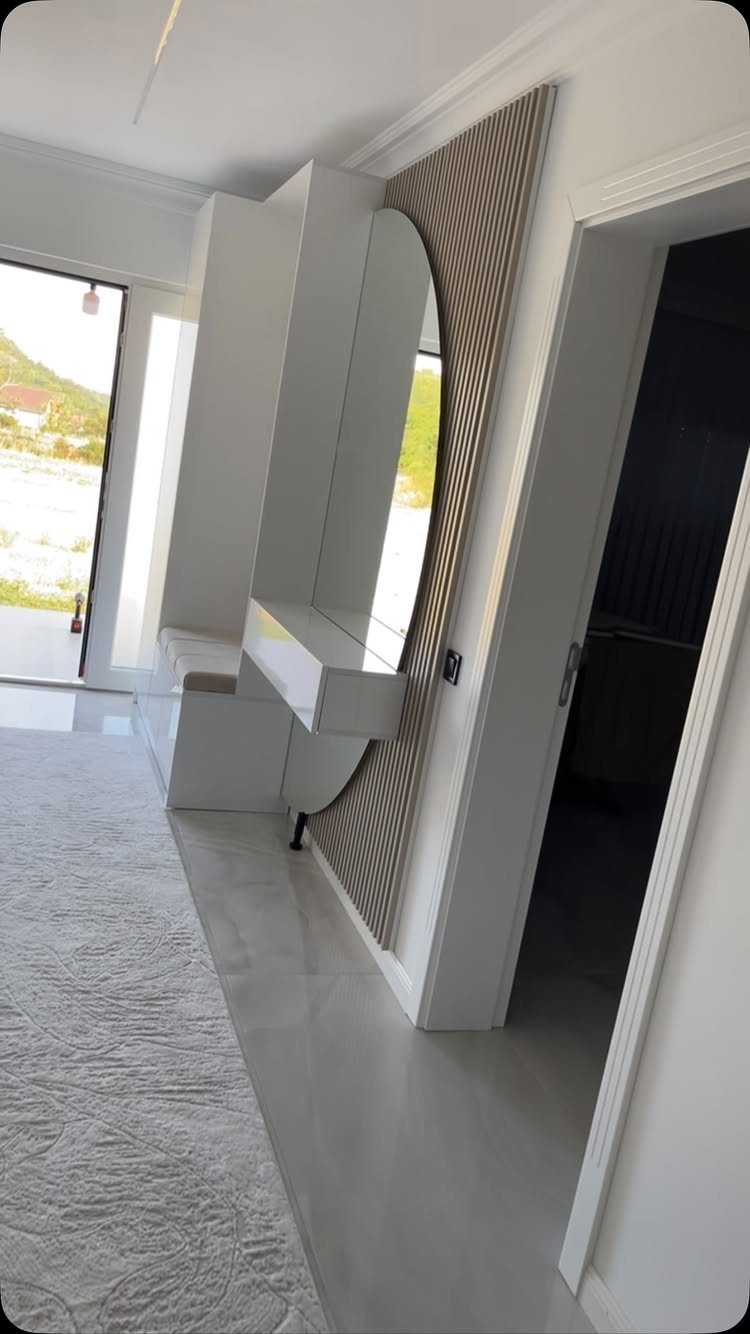
Even a narrow entry can hold a bench, a shelf and a mirror, and together they give a small home a real arrival spot.
A large oval or arched mirror makes the passage feel wider and gives you a last look before heading out.
A built-in bench handles shoes, while a floating shelf above keeps keys and mail off the floor. Floating pieces leave the floor visible, which makes the space look larger.
A grey runner adds a strip of softness and hides scuffs. Choose a rug with a pad underneath so it stays flat.
21. Add a Cozy Corner
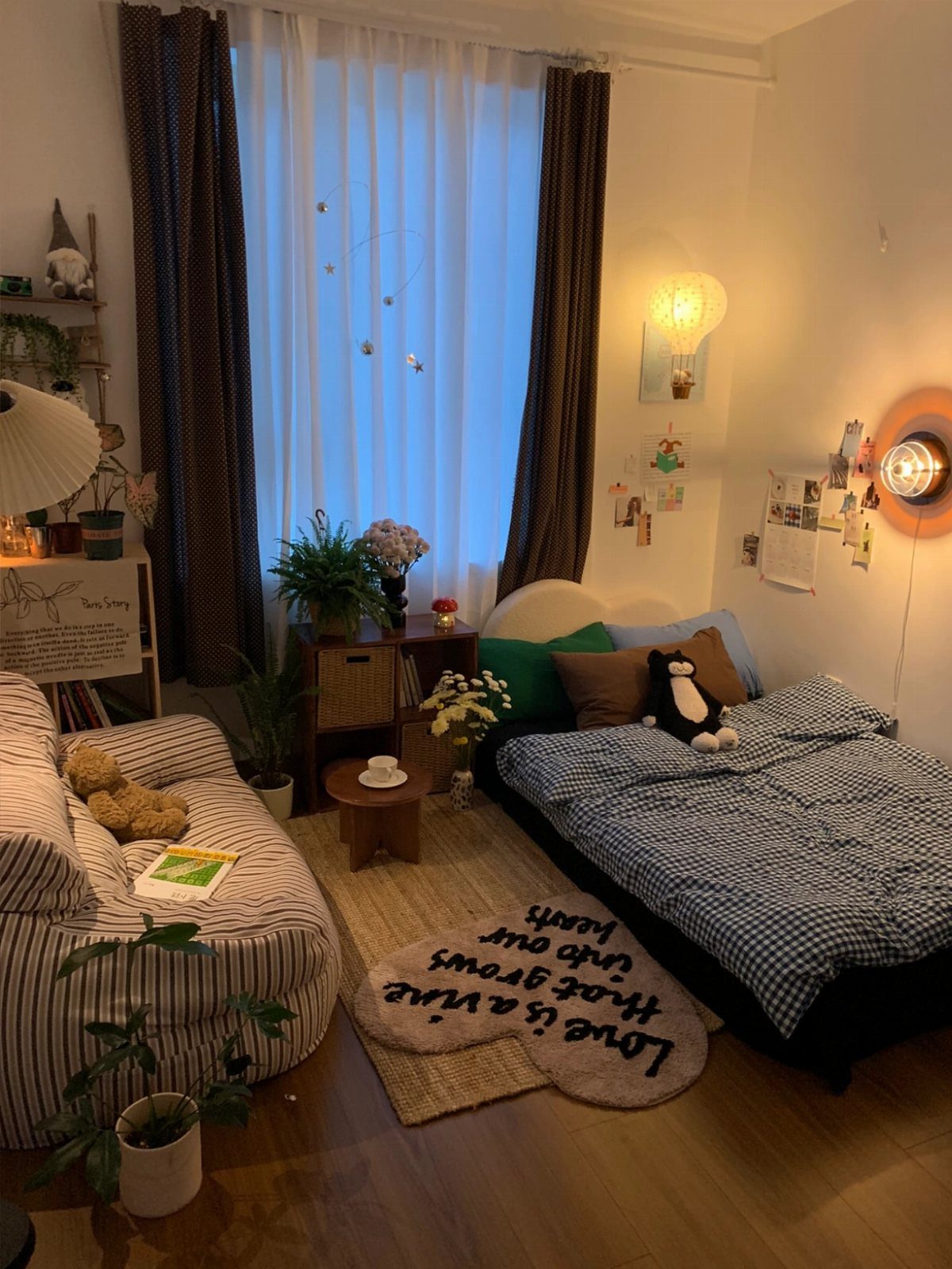
A cozy corner gives a small bedroom a second job: a place to sit and read that isn’t the bed. A beanbag or small sofa, a little table and a couple of plants are enough to make one.
A rug marks the nook as its own zone, so the corner reads as intentional instead of leftover. I like a playful shape, like the heart here, because it adds personality for very little money.
Keep the table small, so the corner invites sitting instead of storing things.
Avoid Overcrowding
Clutter comes in 2 kinds, and small rooms suffer from both. One type is the literal pile: last week’s mail, the coffee table stack of magazines, whatever got dropped on the dining table and stayed there.
The other kind is visual: a counter full of appliances, a table ringed by too many chairs, or shelves with no breathing room.
Clear the surfaces, or edit them down hard. A few well-placed objects look deliberate, while a crowded shelf just looks full.
Empty space does real work.
When surfaces stay clear, the eye has somewhere to land, and the whole space reads calmer and bigger than it measured. Even one plain, unadorned wall can make the whole place read as bigger.
Edit your belongings before you decorate. If an object has no job and you don’t love it, it doesn’t earn a spot.
Choose the Right Furniture
Furniture that’s too large is the single fastest mistake in a small room, so take measurements before you buy anything. Choose pieces that fit the room, not pieces that fit your wish list.
Then look for furniture that works twice. A storage ottoman gives you seating, a coffee table surface and a blanket bin in one piece.
Nesting tables come out for guests and tuck away after. A dining table with fold-down leaves shrinks when you’re eating alone.
Chairs you can move easily help too, since they shift from the table to a corner as needed.
On a tight budget, multi-use pieces beat buying separate items for each job. Fewer pieces also means less clutter to manage.
Use Lighting Intentionally
Lighting can steer attention. Wall sconces and art lights spotlight what you want seen and pull focus away from the corners you’d rather not show off.
Layers matter more than any single fixture.
Mix a few sources at different levels, such as a paper lantern, candles and daylight, and the room gains depth and a warmer mood. Each layer can also make the room feel larger.
Treat lighting as a style choice, too. A fixture with some personality adds character the way a piece of jewelry finishes an outfit.
Start with the spot you most want to highlight, such as a favorite print, and light that first.
Frequently Asked Questions
How to layout a small apartment?
Assign every corner a single purpose, then set its edge with a rug, a shelf or a different light source rather than a partition.
Leave a path of about 24–30 inches beside the bed so you can walk past it straight on. Turn the desk so its back faces the bed, and the laptop and papers disappear from view once you lie down.
Notes from other sources add that larger pieces go against the longest wall and the main path should stay about 3 feet wide.
What are some beautiful interior design ideas for a small house?
Light colors, large mirrors and furniture that does 2 jobs work best.
Soft greys or warm whites make a compact room look wider and show fewer scuffs than stark white. Hang a large mirror opposite a window and it throws daylight deeper into the room, which makes the space read as larger.
One storage ottoman does three jobs, as a seat, a tabletop and a place to stash blankets, so you can skip buying separate pieces.
How to decorate a really small living room?
Start with one well-scaled sofa, then draw the eye up with tall shelves, a mounted TV and drapes hung from the ceiling line.
Paint tall shelves the same white as the wall and they fade back, leaving the book spines to bring in the color.
A 40" screen on the wall frees the console top without dominating the room. Leave some wall bare, since empty space gives the eye a place to land and makes the room read bigger.
What are some good ways to style an apartment?
Keep a tight palette and edit your decor hard. Quiet large surfaces in soft grey or warm white, plus one warm material like wood for contrast, look planned instead of busy.
Three or four chosen objects with room around them read as intentional, but a shelf packed edge to edge just looks stuffed.
Layer a few light sources at different heights, such as floor lamps and a soft cove glow, to add warmth and depth.





