The sofa that fits your room is the one that first fits your route to it, so write down every doorway, stairwell and hallway turn between the street and the spot before you pick a style.
After that, the choice is about what the room lacks: a sofa with built-in side tables or hidden under-seat storage suits a floor with no space for extras, while a low-profile or single modular unit suits a room you may rearrange or move out of.
The list runs from a single modular chair to a compact chaise sectional, with wood-frame and storage sofas in between.
1. Wood Frame Sofa with Cushions
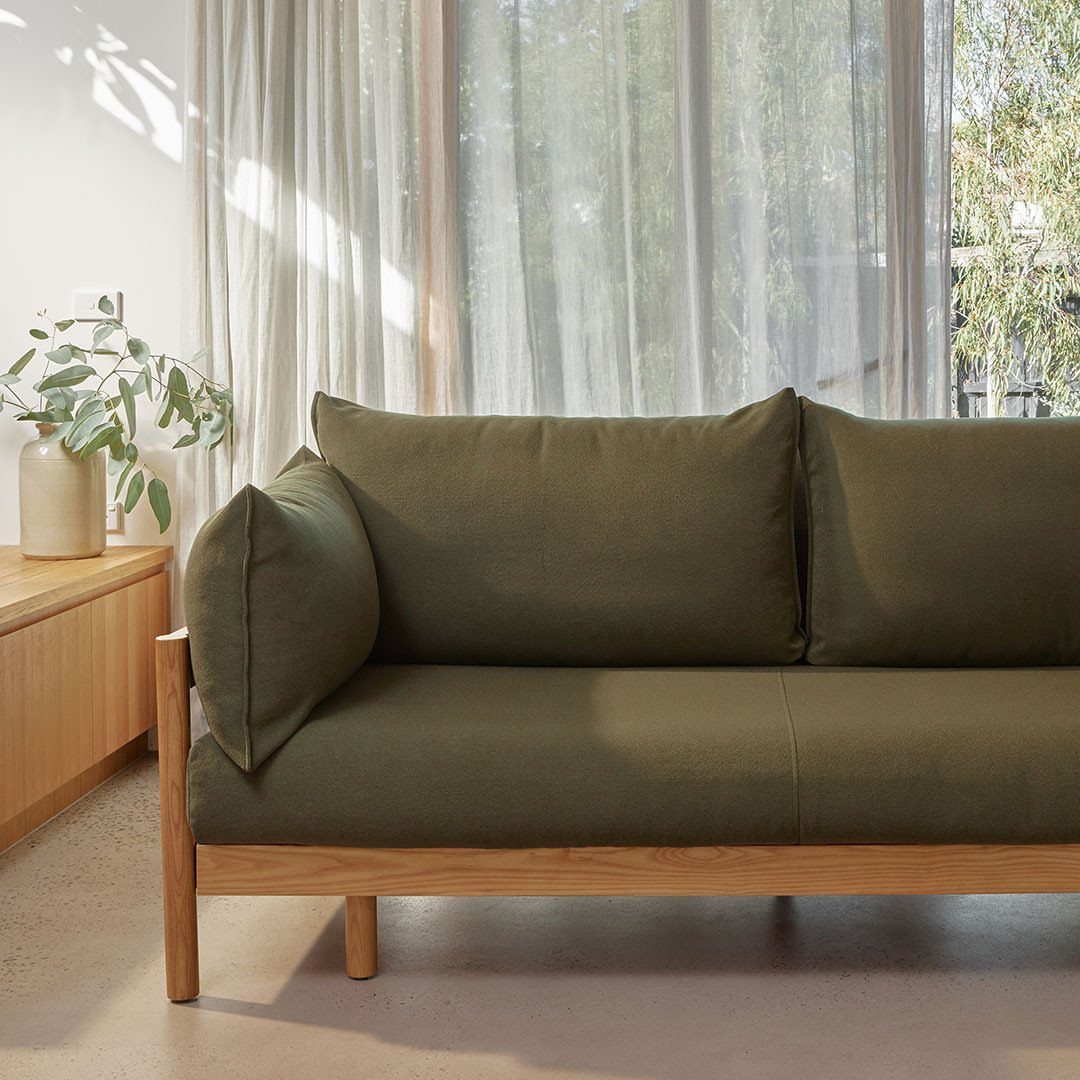
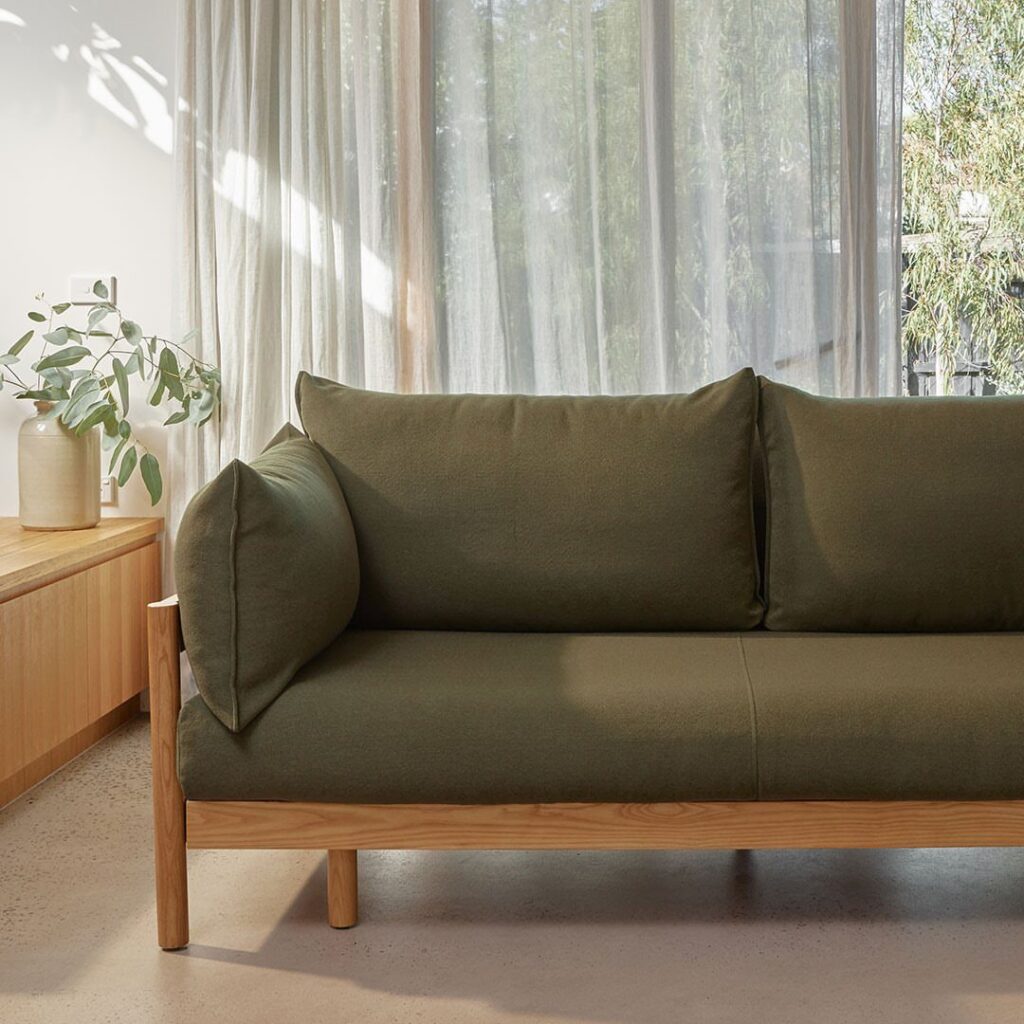
An exposed light wood frame does something upholstery alone can’t: it gives a sofa a visible outline, so olive green cushions read as a deliberate color choice instead of a big soft block.
Light and air show through at the arms and legs of a wood frame, and a compact living room needs exactly that.
I’d pair it with sheer curtains and a wood side table in a similar tone, so the frame feels like part of the room. Keep the rest of the palette quiet and let the green carry it.
2. Compact Two-seater Sofa with Wood Base
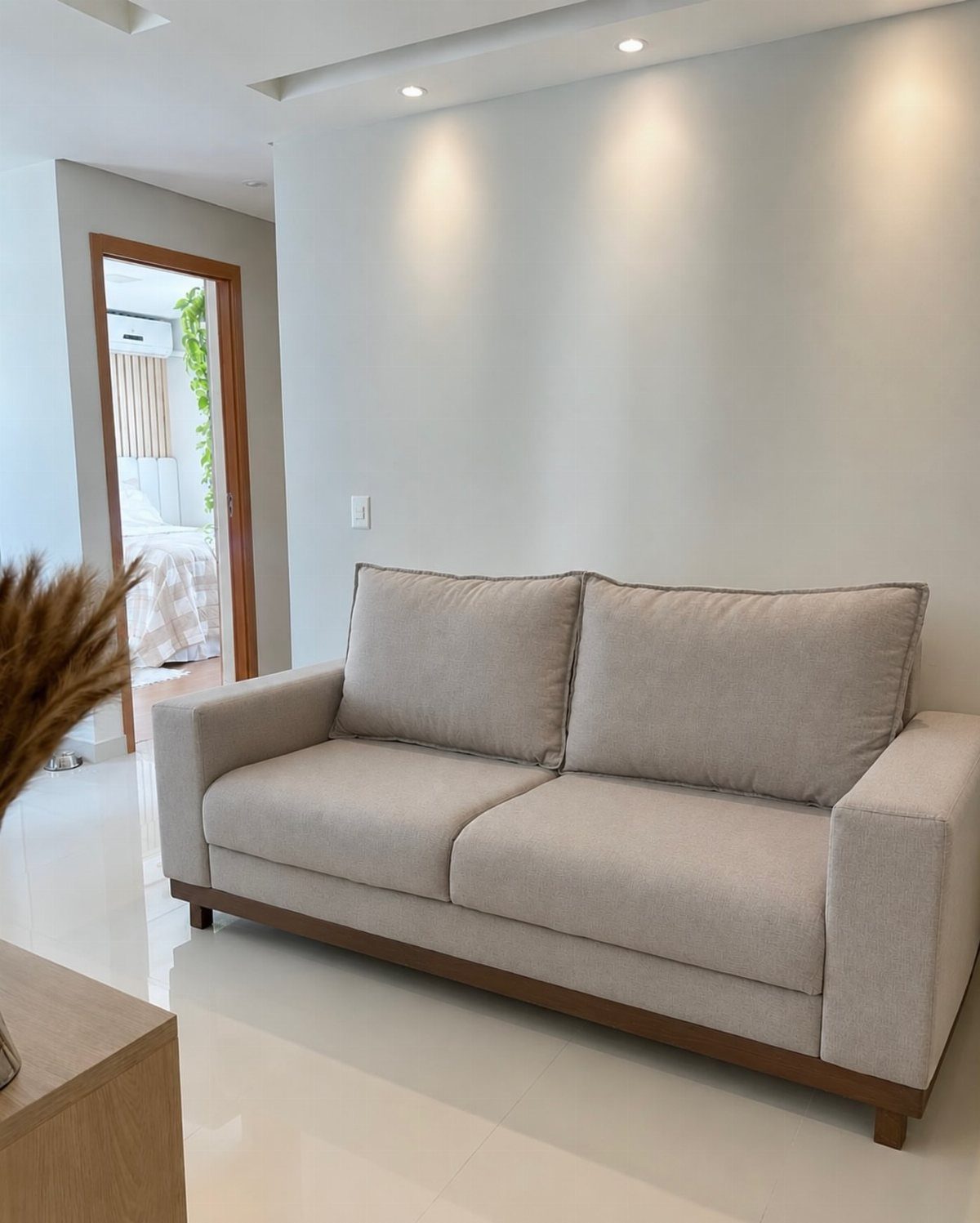
2 seats, a wooden base and a plain white wall behind it: that is a whole living room setup for a studio or small apartment.
A light grey fabric stays calm next to white and won’t crowd a doorway the way a bulky sofa can.
Because the base is exposed wood, I’d choose a tone that matches your floor or your nearest piece of furniture. Add throw pillows in one accent color, and swap them when you want a change.
3. Sofa with Built-in Side Tables
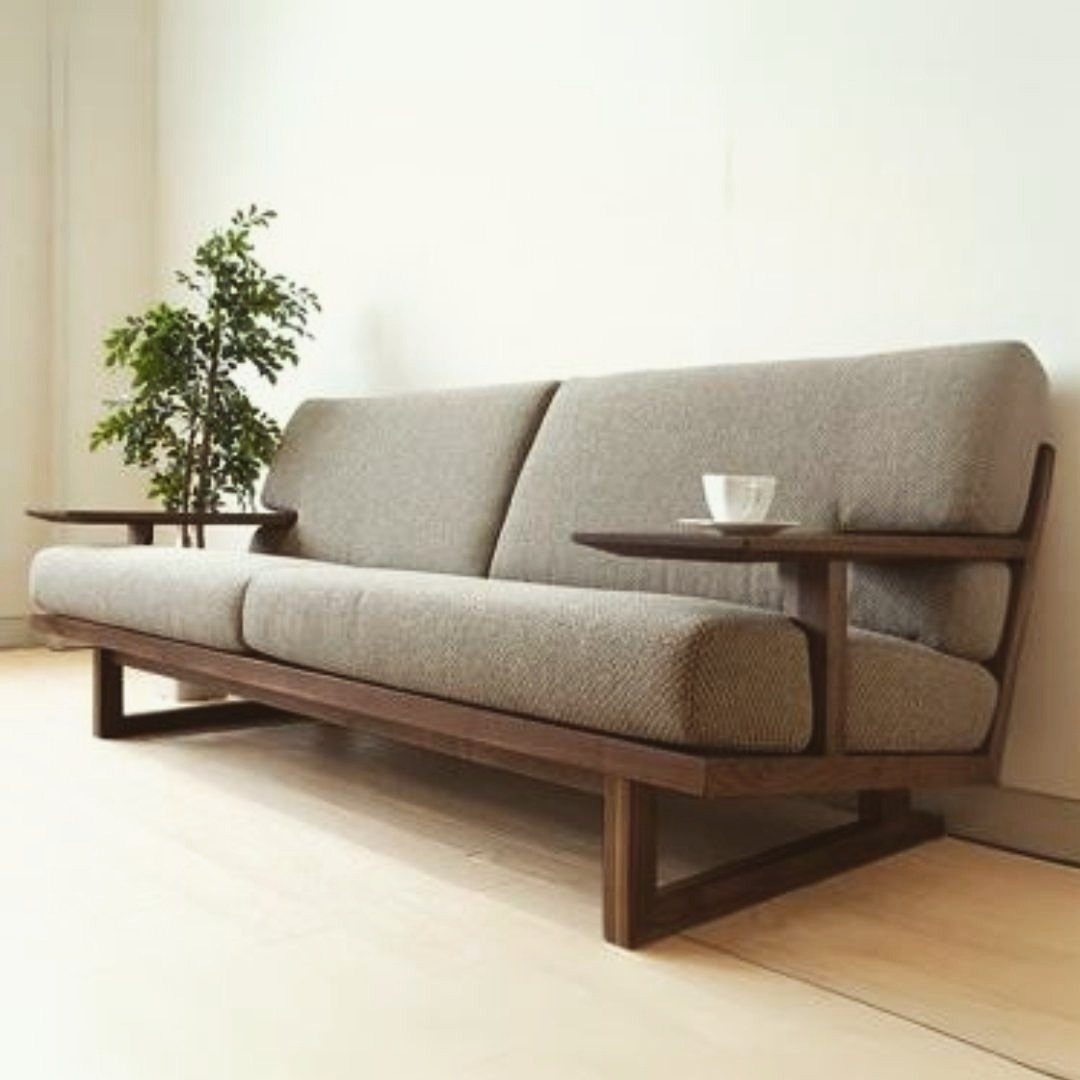
Extended dark wooden armrests that double as side tables solve the problem most small living rooms have: no floor space for a separate table.
A cup, a phone or a book sits right at arm’s reach, and nothing extra needs to fit beside the sofa.
I like this with grey fabric because the dark wood frame gives it a clear edge. The surface is narrow, so it holds drinks and remotes well but not lamps or stacks of books.
4. Compact Chaise Lounge Sectional
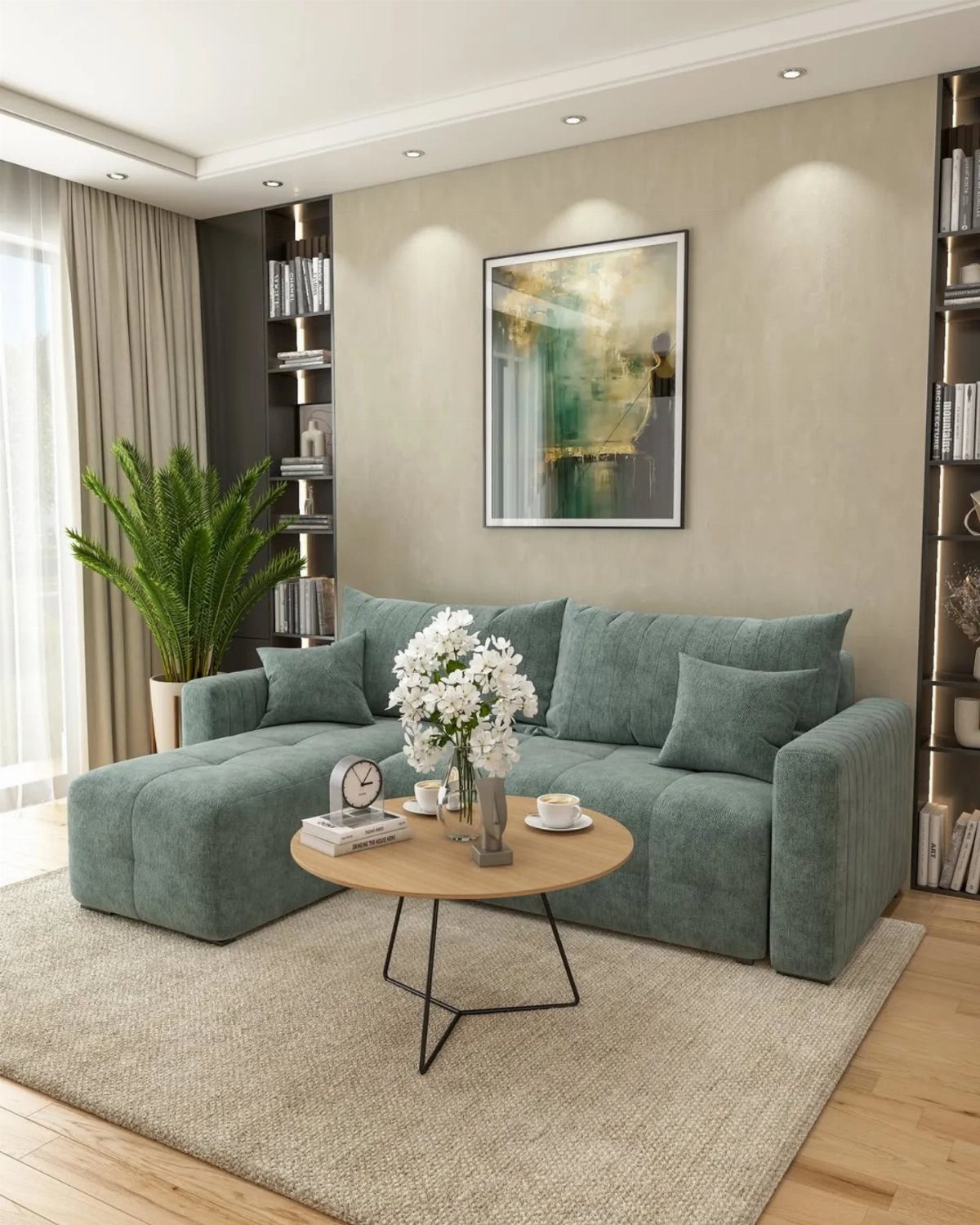
A compact sectional with an attached chaise gives you a seat and a place to stretch out in one footprint.
Teal is a bold pick for it, and I’d keep the walls and the rest of the furniture neutral so the sofa is the single strong color in the room.
Clean-lined cushions help the shape stay tidy. A round coffee table is a smart companion: with no corners, it’s easier to walk around next to a chaise.
There are 11 sectional configurations for every room size, plus options for two-seaters, three-seaters, and four-seaters, so you absolutely have options even if you’re not working with much square footage.
5. Low-profile Modular Sofa
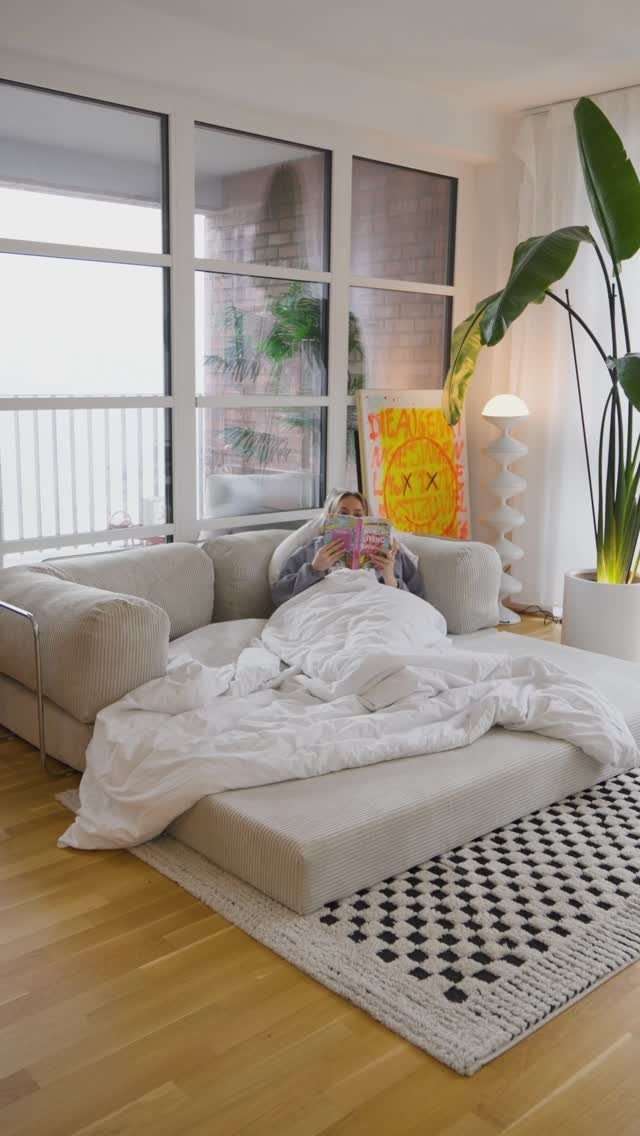
Sitting close to the floor makes a ceiling feel higher, which is why a low-profile modular sofa suits a room with big windows.
Beige keeps it light and easy to live with, and white bedding turns it into a spot for reading or a nap.
Modular pieces can be moved around as the room changes, which helps renters who move often. I’d choose deep, loose cushions if lounging is the goal.
6. Tailored Sofa with Wooden Legs
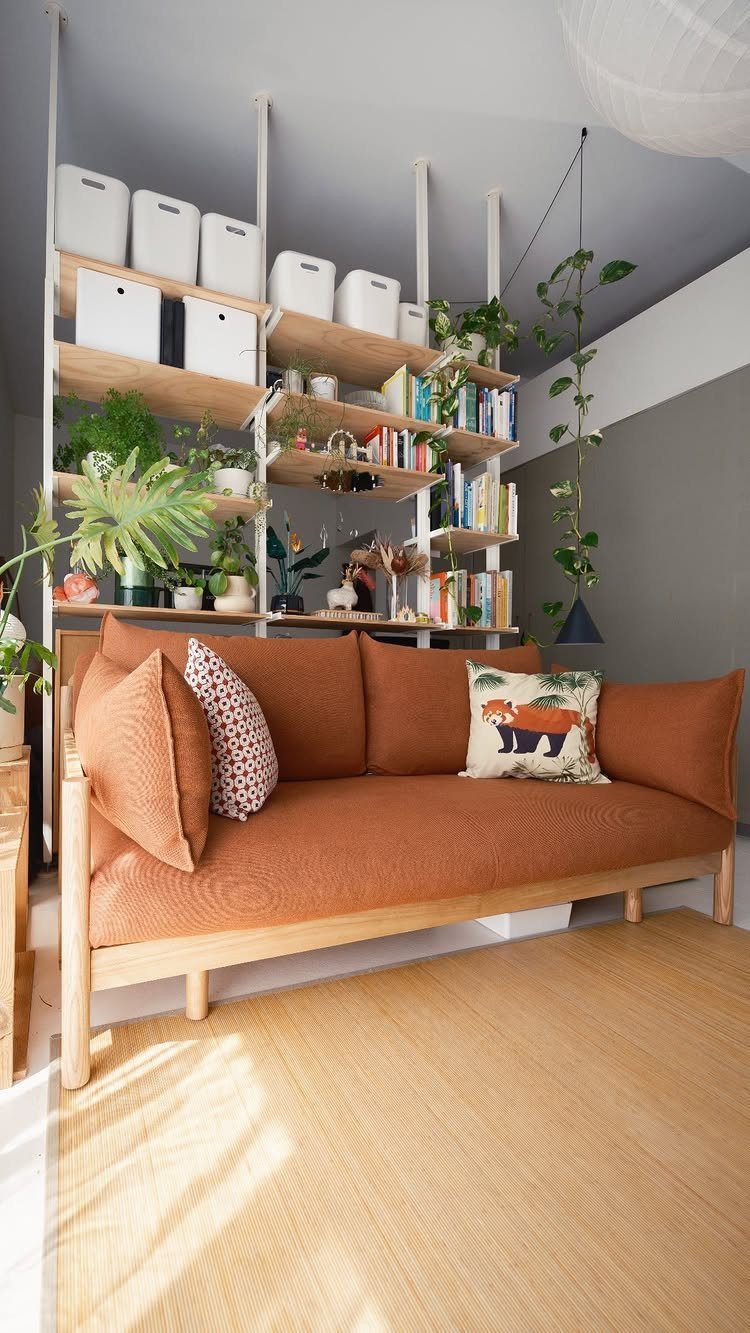
Tapered wooden legs lift an orange sofa off the floor, so you see the floorboards under it and the room feels larger.
Orange is a confident color, and I’d let it stand alone against white wall shelving rather than competing with other bright tones.
Decorative throw pillows are the cheap part to change: swap them seasonally for a few dollars each instead of replacing the sofa. Keep the shelves tidy with bins, and the sofa becomes the focal point.
7. Single Modular Sofa Chair
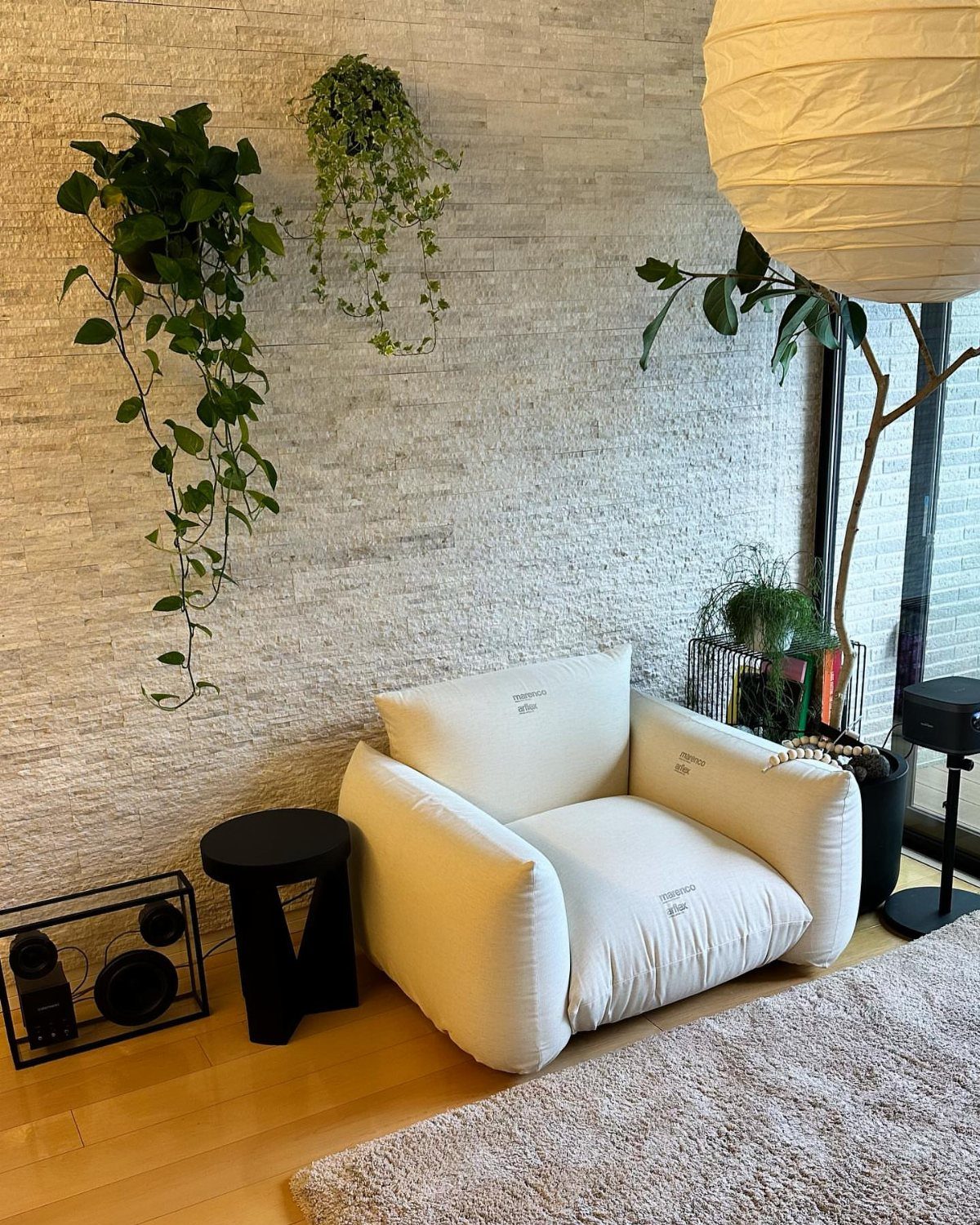
A single modular chair is the smallest way into a modular system: one low white unit that fits beside a side table and nothing else.
In a room with textured walls and plants, white keeps the seat from competing with the surfaces around it.
I’d start with one unit and add more later if the room allows, since that is what modular pieces are for.
A dark side table next to white gives you a clear contrast and a spot for a drink or a small speaker.
8. Sofa with Hidden Under-seat Storage
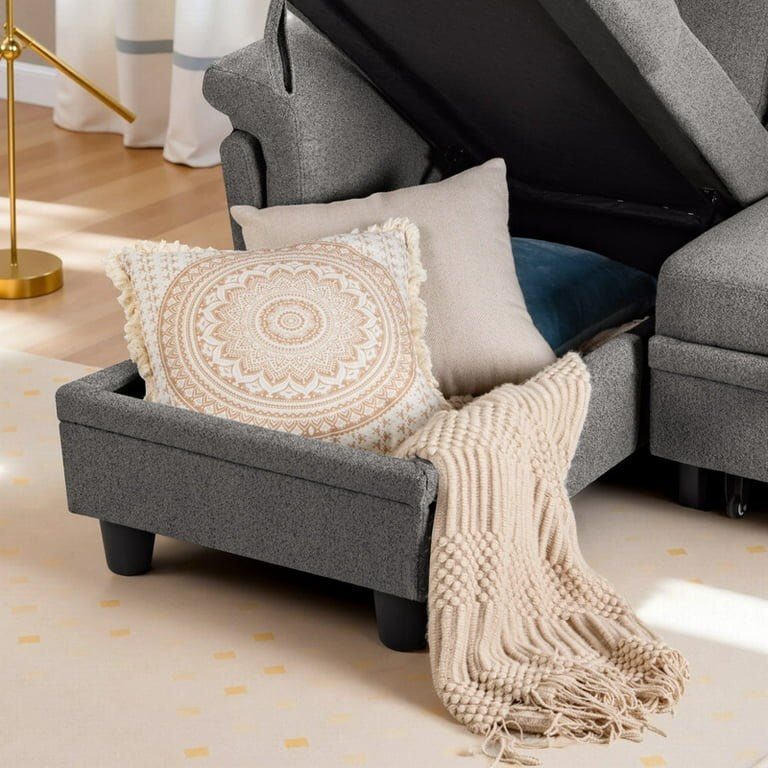
A sofa with a lift-up seat gives a small living room storage it would otherwise lack, so blankets, spare pillows and games can disappear without taking up any floor space.
Pillows and a knit throw fit inside, which clears the corners and the floor around the sofa.
I’d choose grey fabric because it hides the everyday wear of a seat that opens and closes.
Before buying, check that the lid lifts or pulls out with the sofa sitting where you plan to put it, so the front stays clear.
Keep the stored items soft and light; one for blankets and spare pillows is the easiest use.
9. Chunky Rounded-arm Sofa
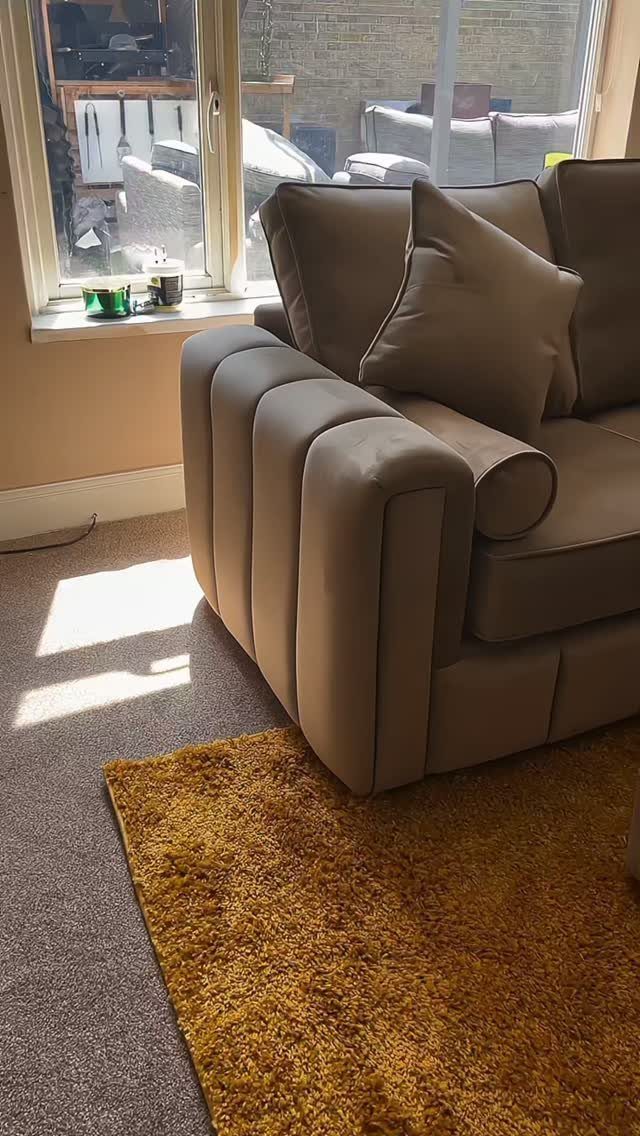
Thick, rounded arms and deep cushions make a sofa look soft before you sit on it, and tan fabric keeps that bulk calm. Rounded arms also have no sharp corners to bump when you pass by in a tight room.
I’d place it near a window so daylight softens the shape, and let one rug carry the color, as a mustard shag does against grey carpet. Keep the pillow matching the sofa so the chunky shape stays the focus.
Considerations for Small Spaces
A sofa that fits the living room can still get stuck on the way in, so measure the stairwell, the door frames, and any tight hallway turn along with the room itself.
Doorways, stairwells and elevators are where most small-space sofas get stuck, so write down every width and turn between the street and the spot where it will sit.
Leave walking room around the sofa too. A sofa that technically fits but blocks the path from door to window will annoy you every day.
Modular sofas ship in boxes, which makes them far easier to carry up tight stairs than one big piece. If the room is really limited, a loveseat is worth a look before you commit to a full-size couch.
Upholstery Options
Performance fabric is the one I point most people toward. Performance fabric shrugs off spills, stains, and daily wear, which makes it the safest pick if kids or a dog share the couch.
Real leather holds up for years and wipes clean with a damp cloth, though it scuffs and scratches more easily than fabric, so plan on conditioning it. If you’d rather not baby your sofa, fabric wins.
Color deserves a thought here too, since light, low-contrast shades make a compact living room read wider than dark ones do.
Lighter neutrals make a space look larger than it is, so if the room feels tight, choose a pale tone for the biggest piece in it.
Customization Benefits
Awkward layouts are where customization pays off. A made-to-order sofa solves the odd wall or alcove, because you pick the exact length and width instead of squeezing a stock size into a gap that was never meant for it.
Look at extras that earn their space, too.
Frequently Asked Questions
What is the best type of sofa for a small space?
A modular sofa is the best pick for most small rooms.
The pieces can be rearranged as the room changes, you can start with a single unit and add more later, and the boxed pieces carry up tight stairs far more easily than one big sofa.
A compact two-seater with an exposed wood base is a close second for a studio.
What is the 2/3 rule for sofas?
The rule says a sofa should take up about two-thirds of the wall it sits against. It keeps the piece in proportion so it neither swamps the wall nor looks lost.
Even a sofa that follows the rule needs a clear walkway, about 24–30 inches, so nobody has to squeeze past it between the door and the window.





