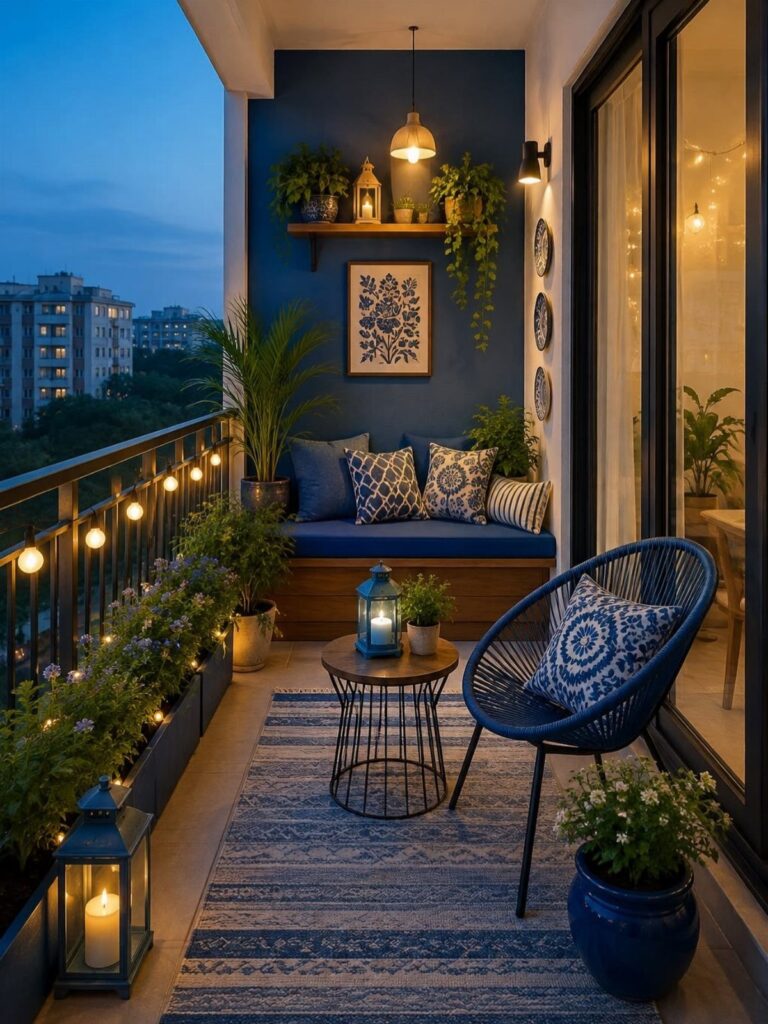
The list runs from cheap, renter-friendly fixes like snap-together deck tiles, outdoor rugs and string lights to bigger commitments like a pallet lounge or a hanging swing chair.
Measuring your balcony comes first, since the depth you have left decides which of these ideas fits.
1. String Lights
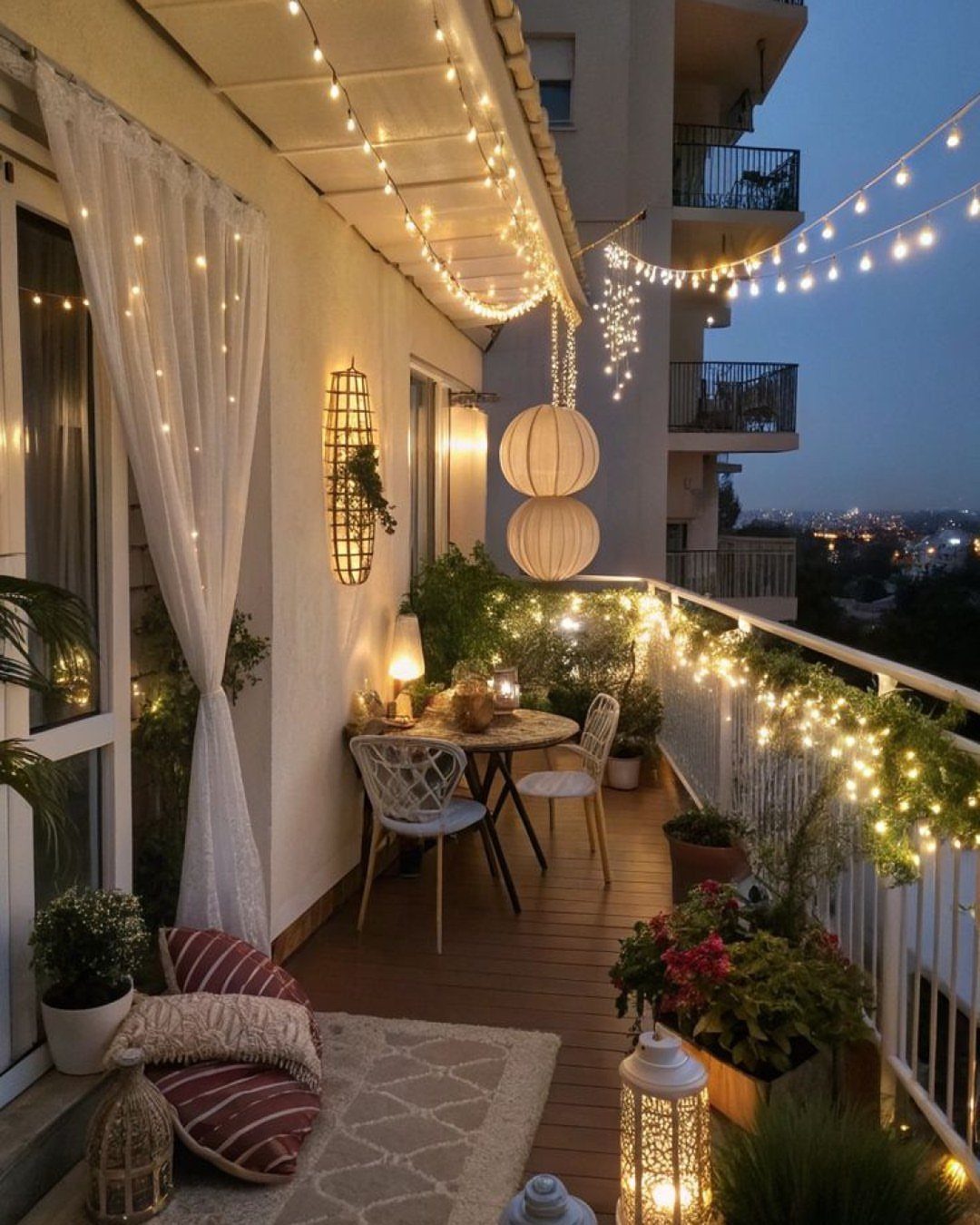
Warm white bulbs, around 2700K, give a balcony a cozy, lamp-lit glow after dark, and cool white bulbs just look like a parking lot.
Hang the strand along the railing or where the wall meets the ceiling, and leave the center open so no one has to duck.
Lanterns on the floor or table add a second, lower layer of glow. With light at 2 heights, even a narrow balcony gets a cozy corner after dark.
2. Foldable Chairs and Table
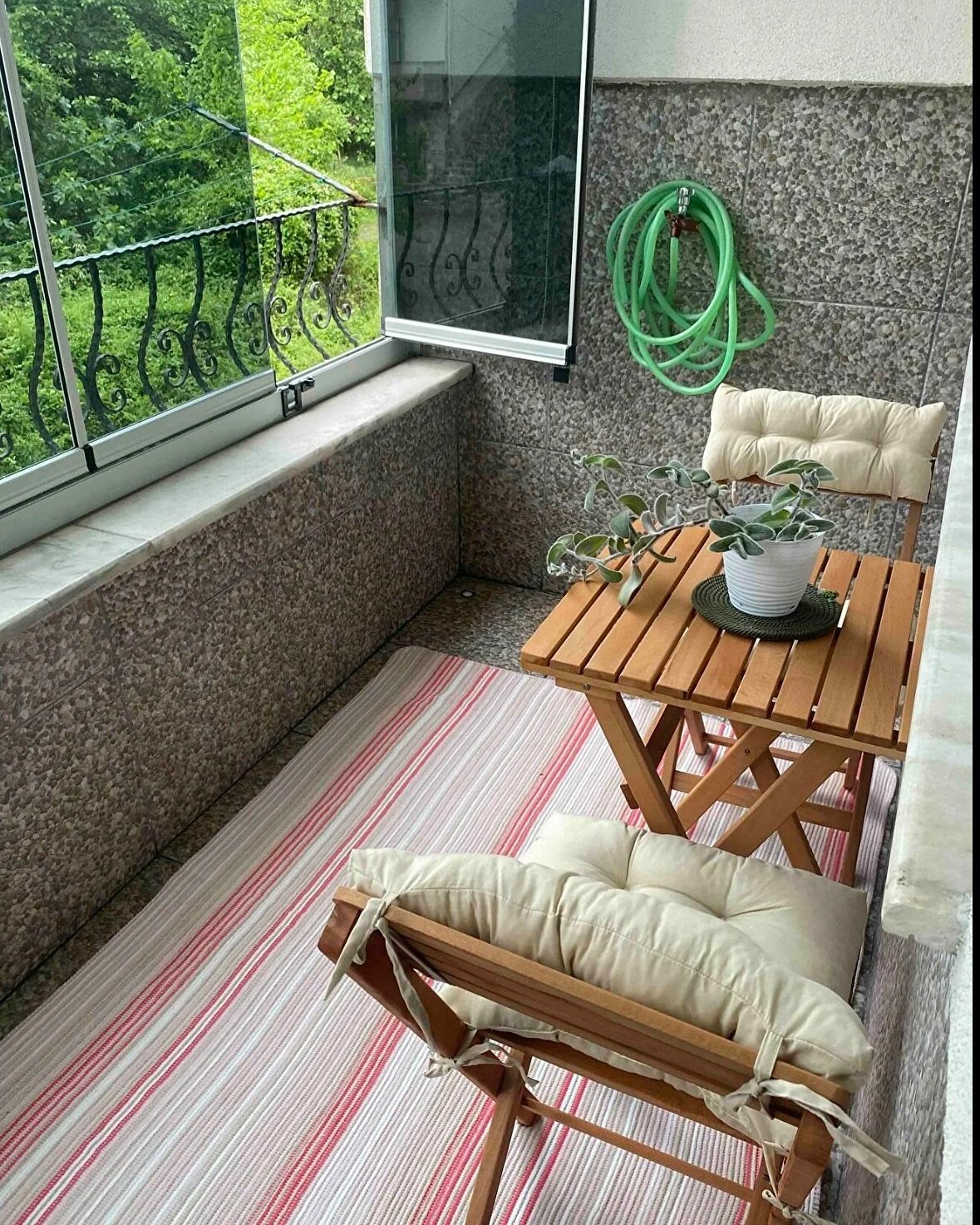
With a folding table and 2 chairs, the balcony serves as a dining spot at dinner and clears back to open floor during the day. For renters with little room, that flexibility is the whole appeal.
Wood looks warmer than metal, and a pair of cushions makes the seats comfortable for longer than a quick coffee. When you want room to stretch or water the plants, fold it all flat and lean it against the wall.
Only buy a set you can lift easily, since you will be moving it often.
3. Bamboo Privacy Screens
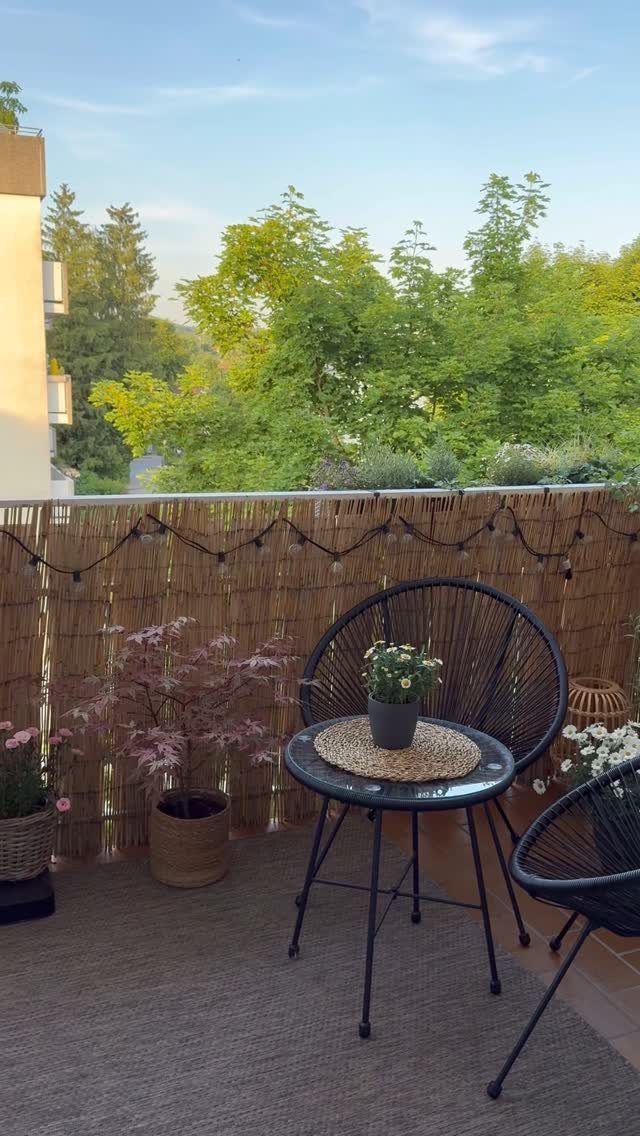
Bamboo screens are one of the cheapest ways to add privacy to a balcony, and the natural texture sits well beside black furniture and green plants.
Fasten one to the inside of the railing so it blocks sightlines from neighbors without eating floor space.
Check your lease first, since some buildings limit what can hang on railings. Zip ties are a renter-friendly way to attach a screen and come off cleanly when you move.
4. Outdoor Poufs
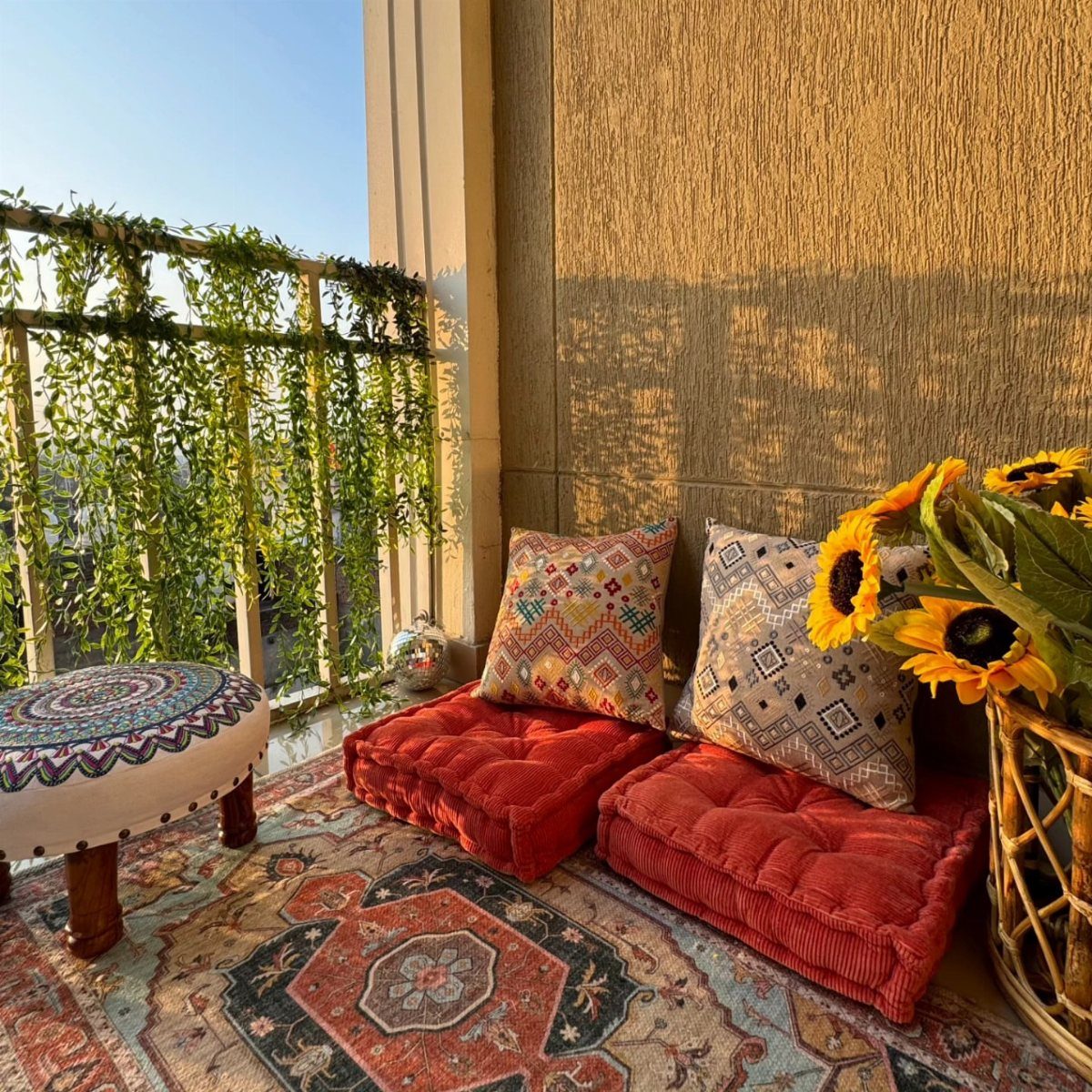
Poufs beat chairs on a small balcony because they tuck away. 2 floor poufs can sit around a low stool for company, then slide against the wall when you need to walk through.
Pick a tough, washable cover, and I like a bold color such as red because it stands out against green plants. Pull a pouf over as a footrest, or hand it to a guest when the chairs run out.
Set them on a rug so the fabric stays off damp, gritty concrete.
5. Outdoor Rug
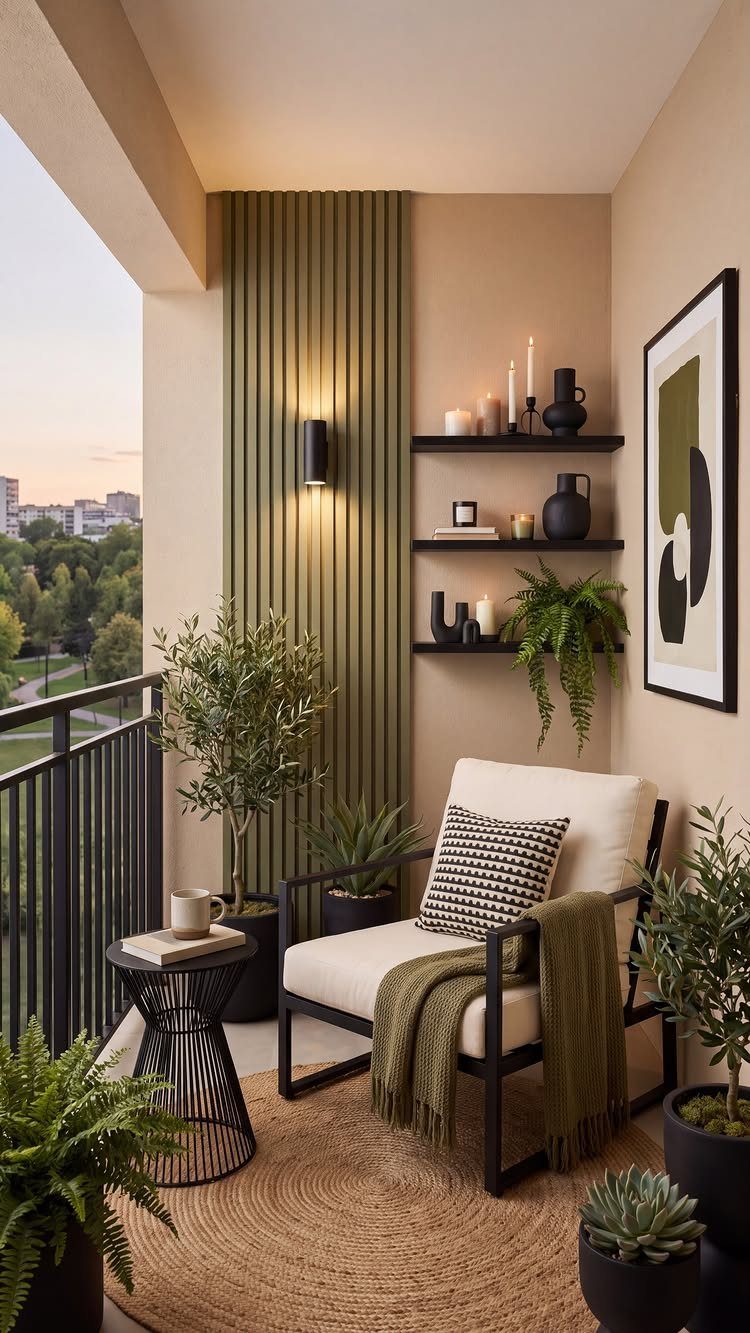
A round jute rug marks out a seating zone, so an armchair and a few plants read as one deliberate corner instead of scattered pieces. It also softens bare concrete or tile under bare feet.
Pick a rug big enough that at least the front legs of each chair rest on it.
Natural fiber gives the warmest look, but I would check that it is labeled for outdoor use, since indoor jute can hold moisture and start to smell.
6. Bistro Set
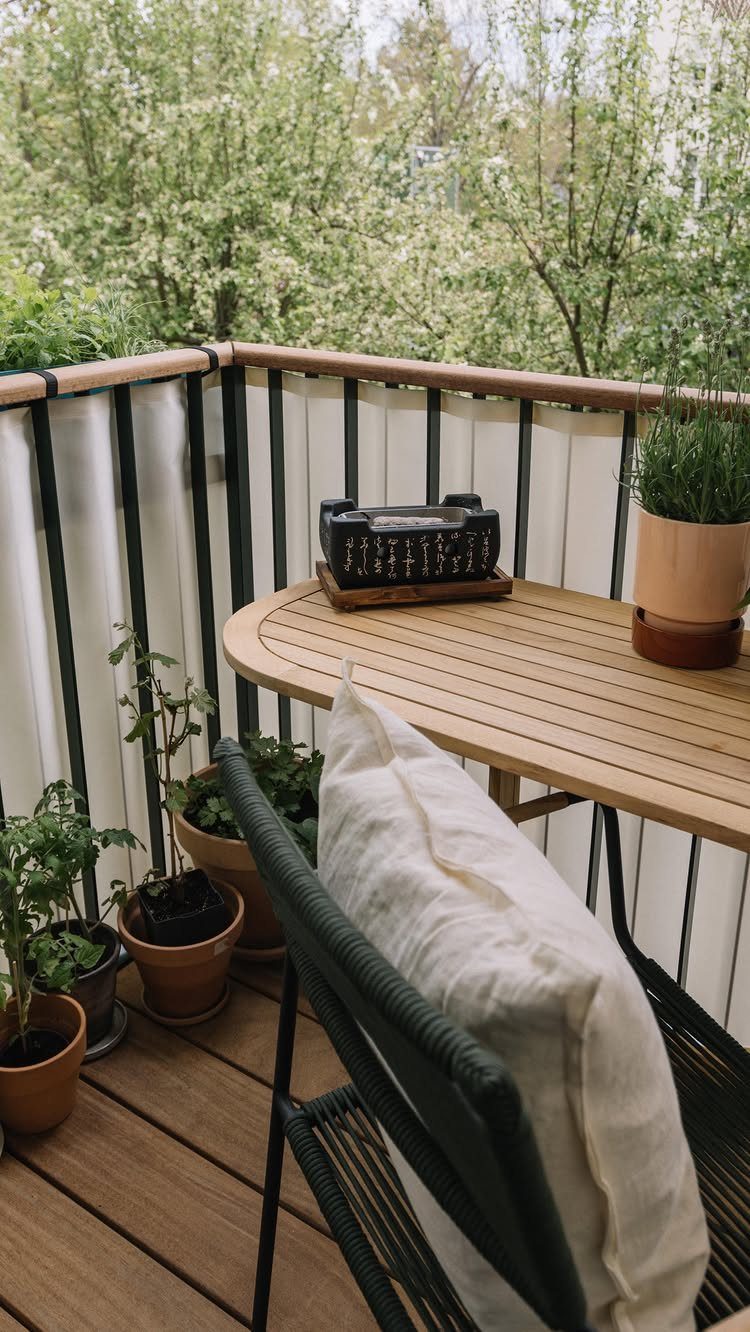
An oval wooden bistro table suits a tight balcony better than a square one, because the rounded ends leave more room to walk past. One table and a single chair are enough for morning coffee or a laptop session.
Add a second chair only if you will use it. A white cushion brightens a dark chair, though it will show dirt, so choose one with a removable, washable cover.
7. Storage Benches
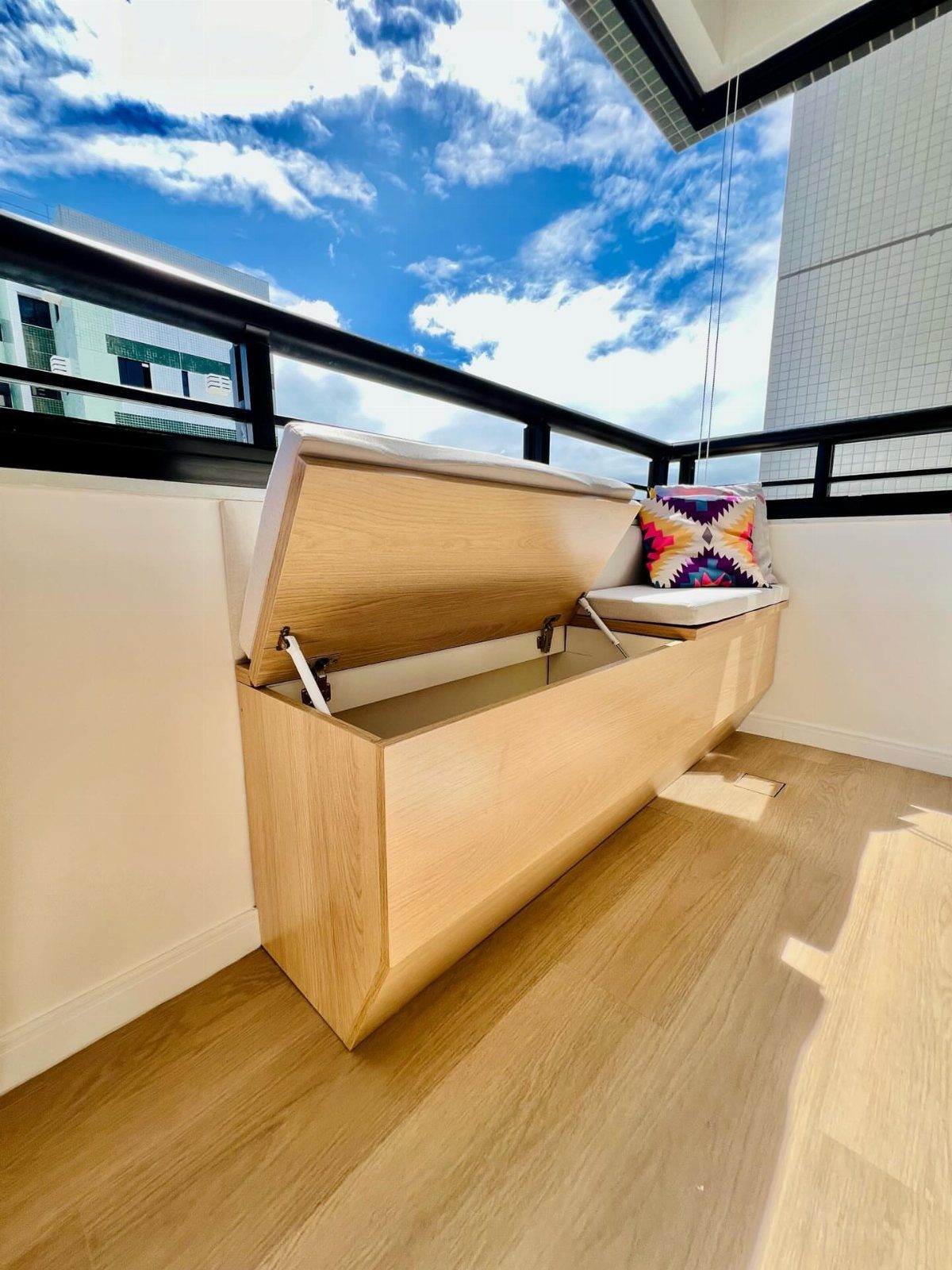
A storage bench puts seating and hidden storage in the same footprint. Cushions, a watering can, gardening gloves and a throw blanket all fit under the lid, so the floor stays clear.
Measure the swing of the lid first, because it needs room to open fully against the wall.
Skip anything stored inside that you would hate to find damp.
8. Interlocking Deck Tiles
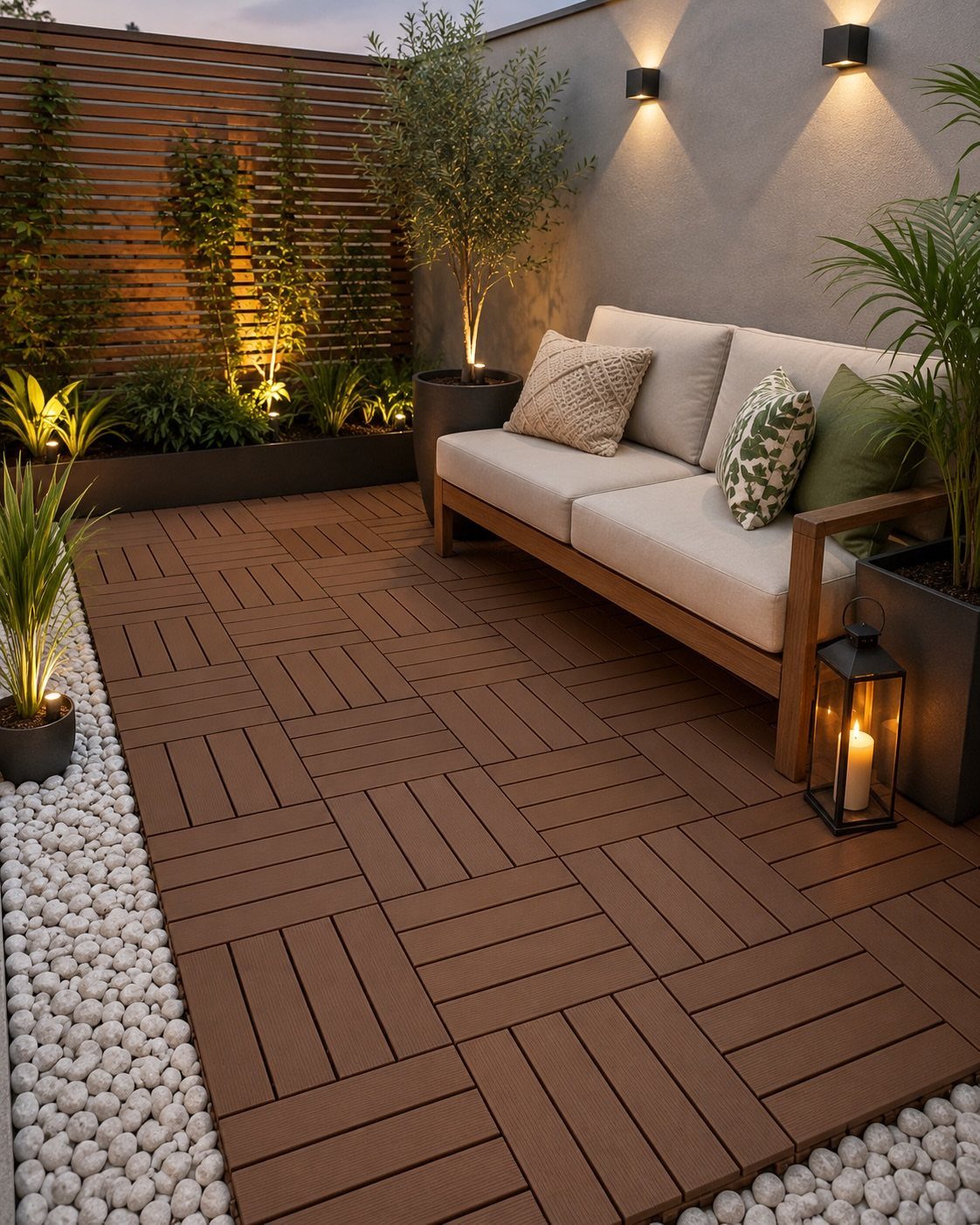
Interlocking deck tiles snap together over bare concrete, so a plain balcony floor turns into warm wood in an afternoon. No glue or tools are needed, which suits renters, and the tiles lift out when you move.
Start in one corner and work outward, then trim edge tiles to fit with a utility knife or saw if the tile material allows it.
9. Hammock or Swing Chair
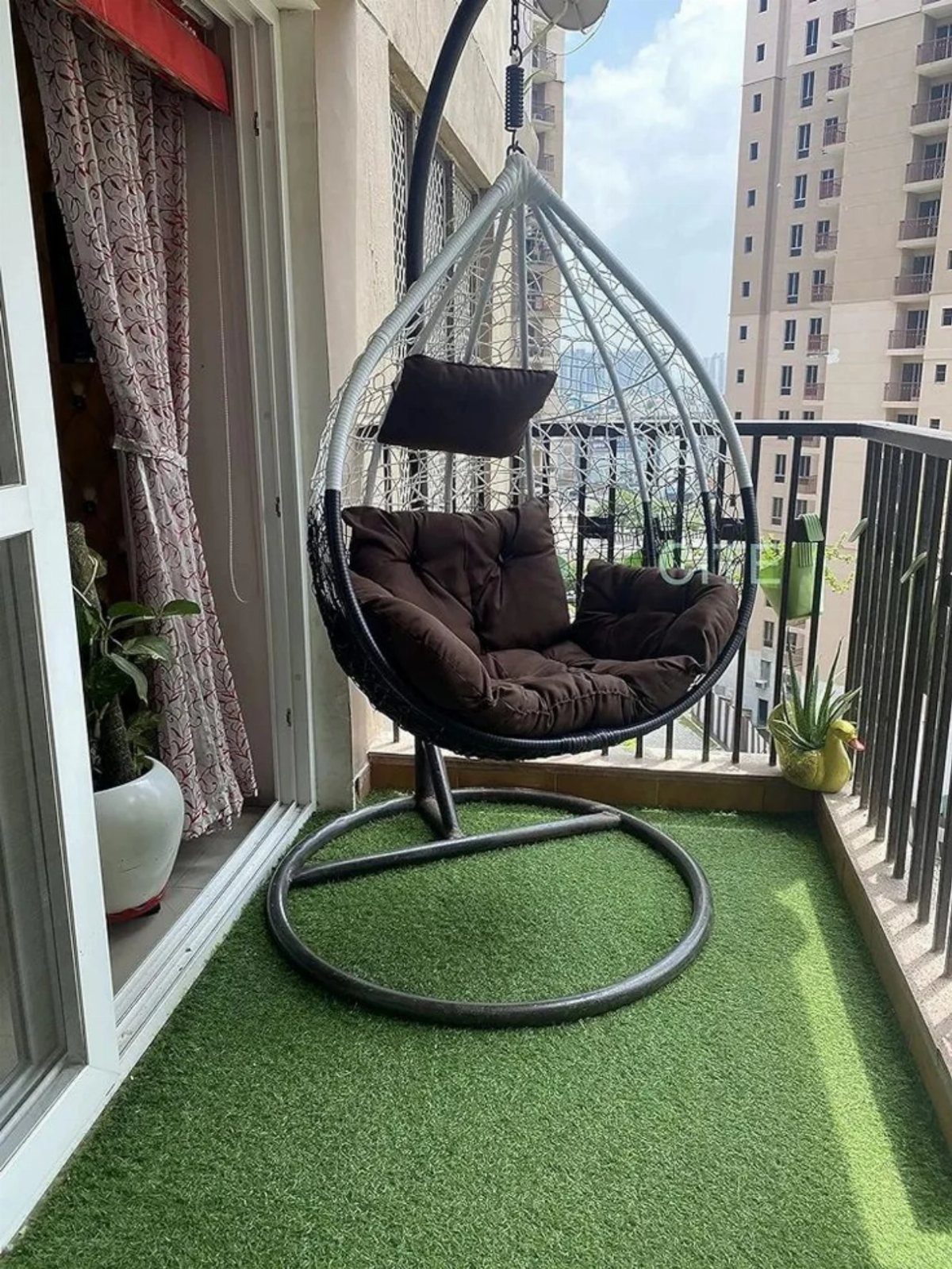
A hanging swing chair turns one corner into the spot everyone fights over. A teardrop shape with deep cushions lets you curl up with a book in a way a straight-backed chair never does.
Hang it only from a structure rated to hold a person, and check your lease before drilling into a ceiling. A freestanding stand is the safer choice for renters, though it takes more floor space.
I would pick a cover or cushion you can wipe clean.
10. Wall-Mounted Planters
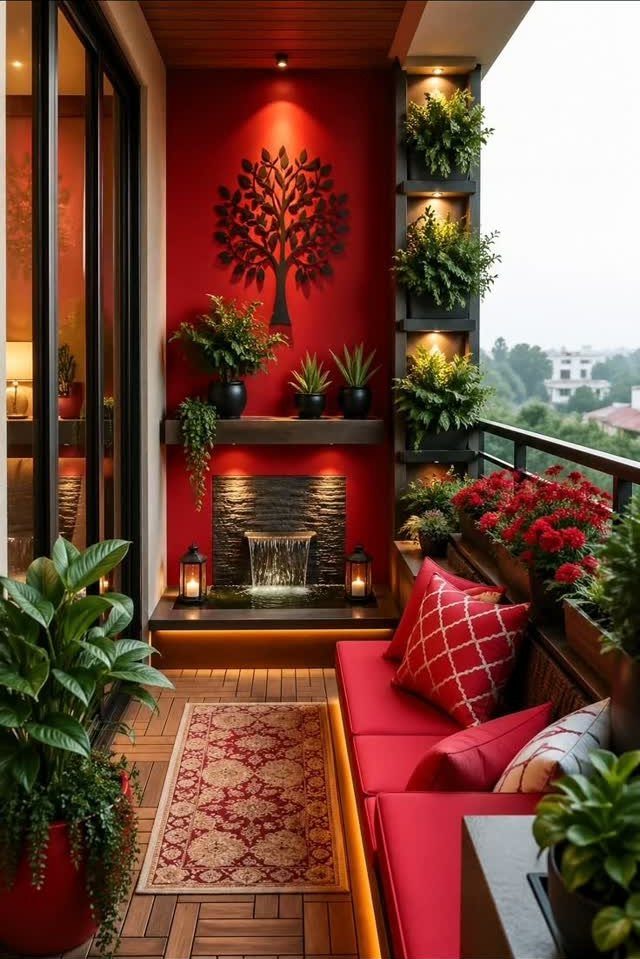
Wall-mounted planters move your garden off the floor and up the wall, which matters most when every square foot is spoken for. A grid of small pots can hold herbs, trailing greens or flowers while the seating below stays untouched.
A bold wall color like red makes the green pop, so pale walls need darker planters to get the same contrast.
I mount the planters at staggered heights instead of lining them up in a row. Pick lightweight pots, since a watered planter gets heavy fast.
11. Mini Water Feature
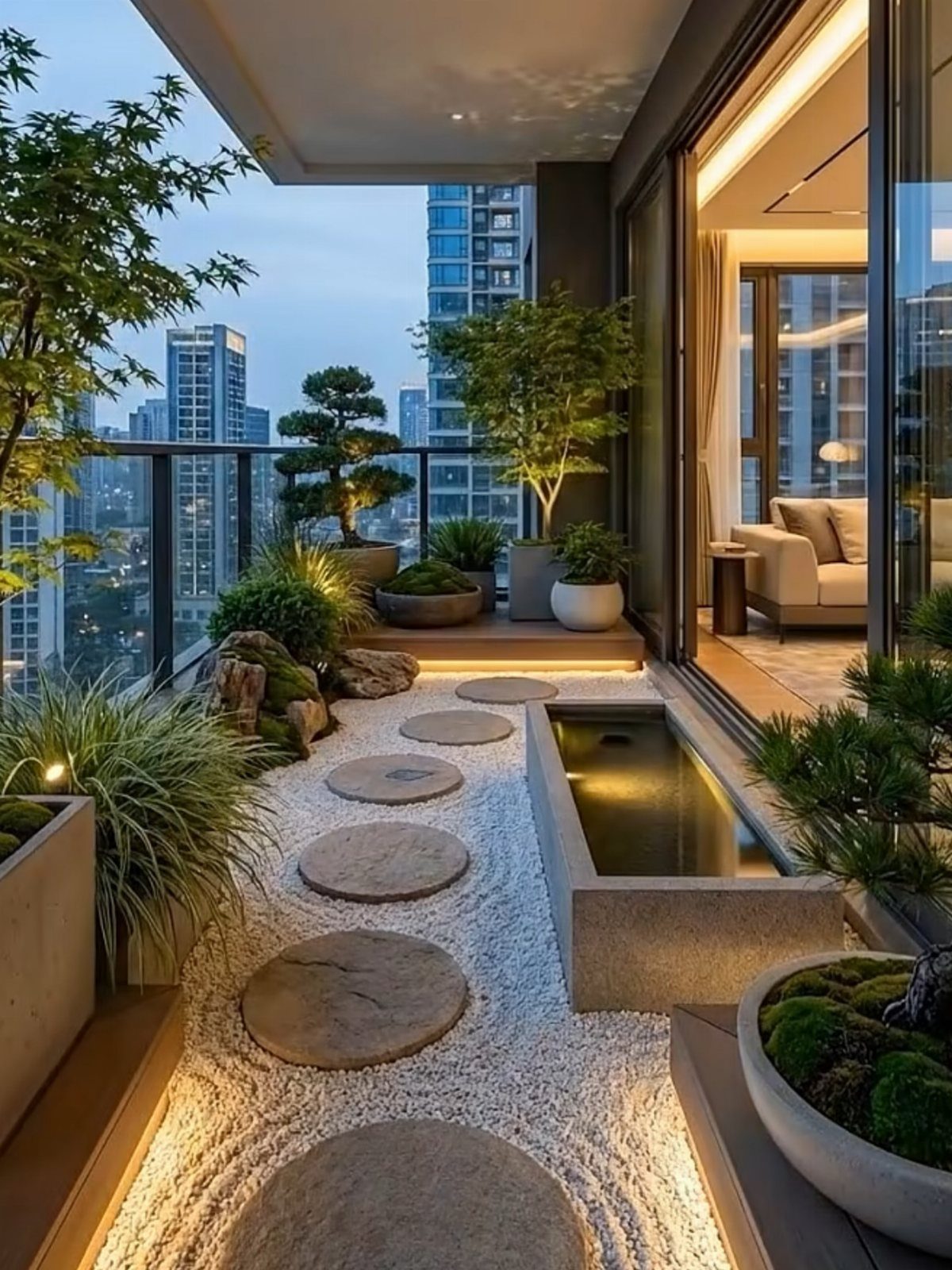
A small water feature adds the sound of trickling water, which helps cover street noise and makes a balcony feel calmer at dusk. A low, rectangular basin works well because it sits flat and takes up little room.
Surround it with white gravel and a few potted plants so it reads as a deliberate spot instead of an add-on. Choose a tabletop model with a small pump, and top up the water so the pump never runs dry.
12. Pallet Lounge
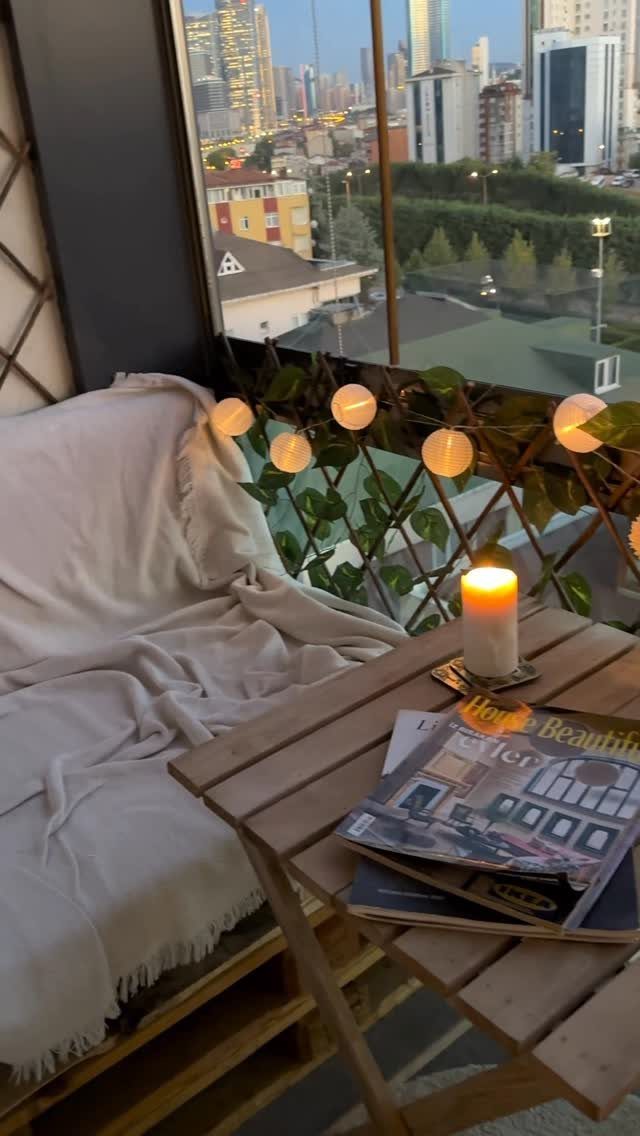
Pallets turn into a sofa and a matching table for far less than store-bought lounge furniture, which is why I like this idea for tight budgets.
Stack them two or three high for the seat, then lean one upright for the back.
Sand every board until no splinters remain, then seal the wood for outdoor use. White blankets and cushions soften the look, and string lights overhead finish it.
Pallets vary in size, so measure your balcony before you start hauling.
13. Hanging Shelves
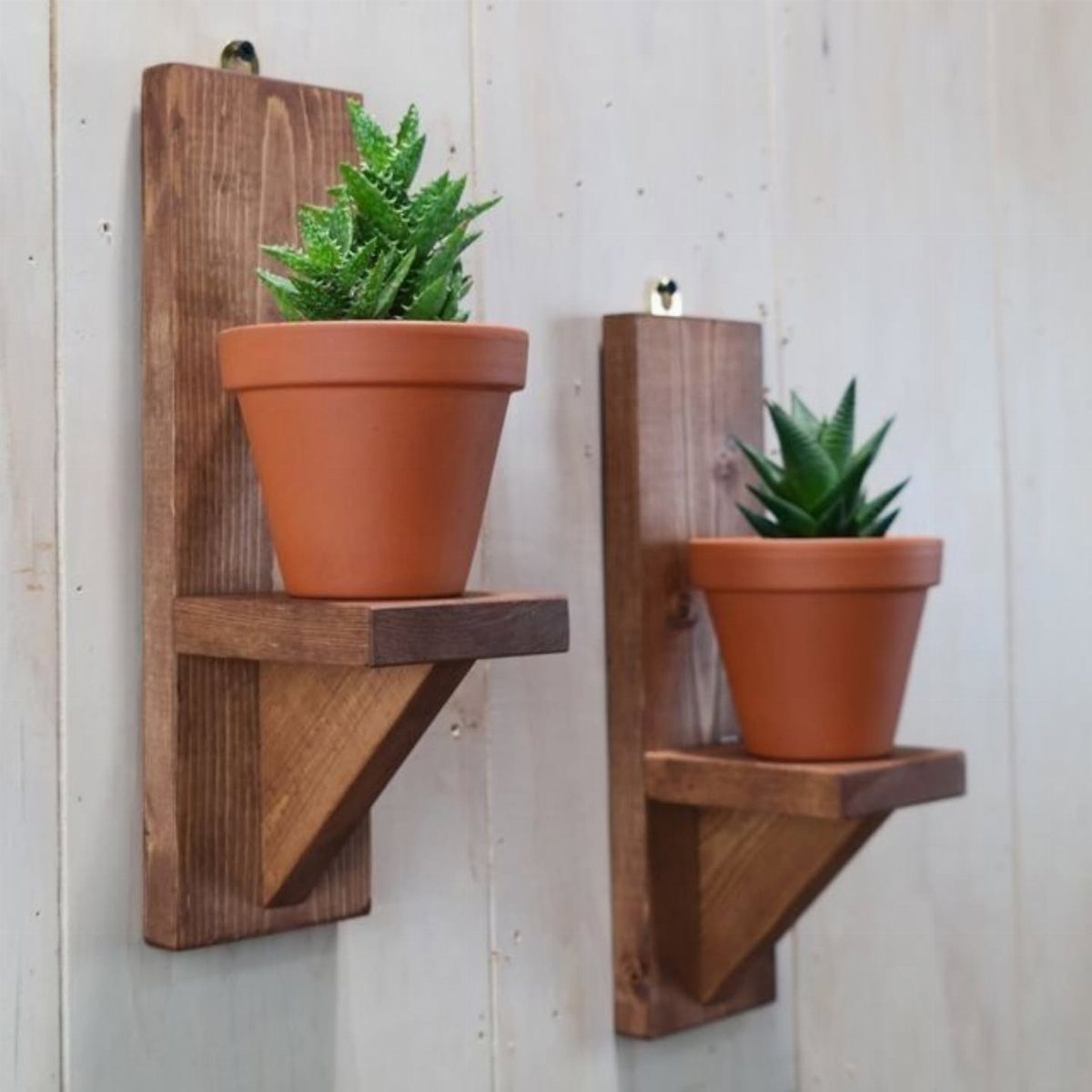
2 small shelves on a wall give a balcony a plant display without touching the floor. Terracotta pots with succulents suit this setup, since the shelves are small and the plants stay compact.
Dark-stained wood looks sharper against a light wall than a matching tone would. Keep the pots light, because a shelf this size has little margin, and check your lease before drilling into the wall.
14. Outdoor Cushions and Throws
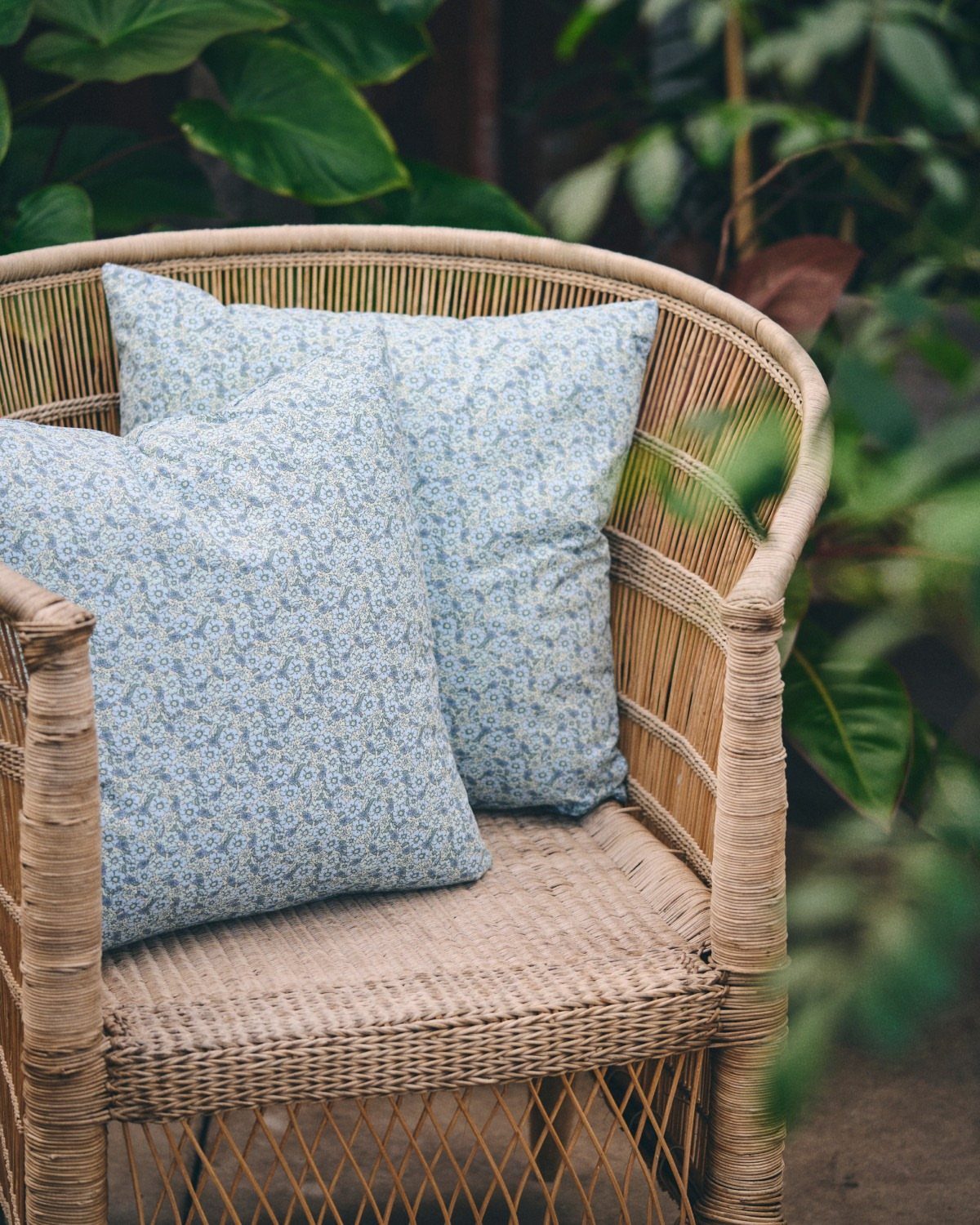
Patterned cushions in blue and white stand out best against a lot of green, so if your balcony has a few big leafy plants, a floral or botanical print on a wicker chair will hold its own beside them.
The pattern reads as part of the garden instead of an extra layer.
Pick covers you can unzip and wash, and pair a cushion with a throw for cooler evenings. 2 cushions per chair is plenty on a small balcony; more just crowd the seat.
Bring them inside when rain is forecast.
15. Outdoor Curtains
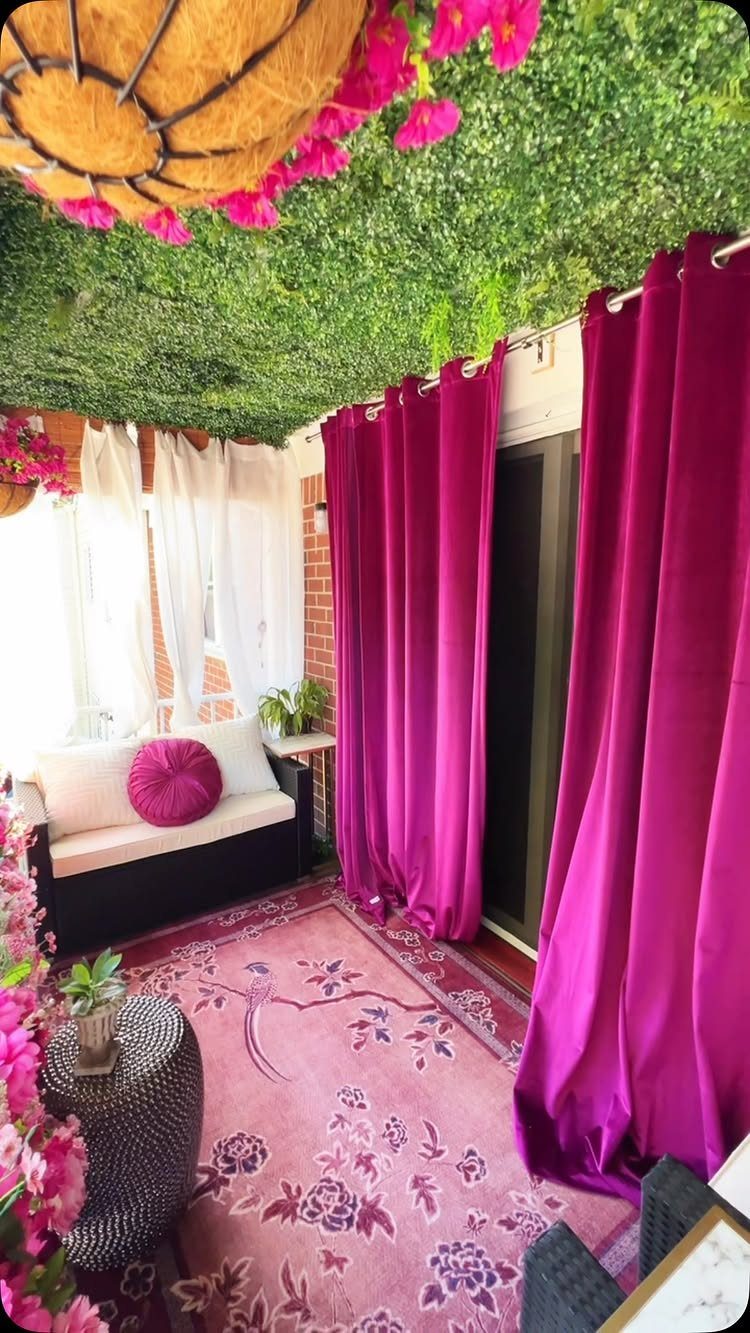
Bright magenta curtains turn a balcony edge into a soft wall, which adds privacy and color in one move. They hang from a rod or line along the railing or ceiling and pull aside when you want the view.
A pink floral rug picks up the color so the curtains look planned, not random. If you go this bold, keep the sofa white, as it does here, so the room has a place to rest the eye.
16. Balcony Mix of Wood, Fabric, and Metal
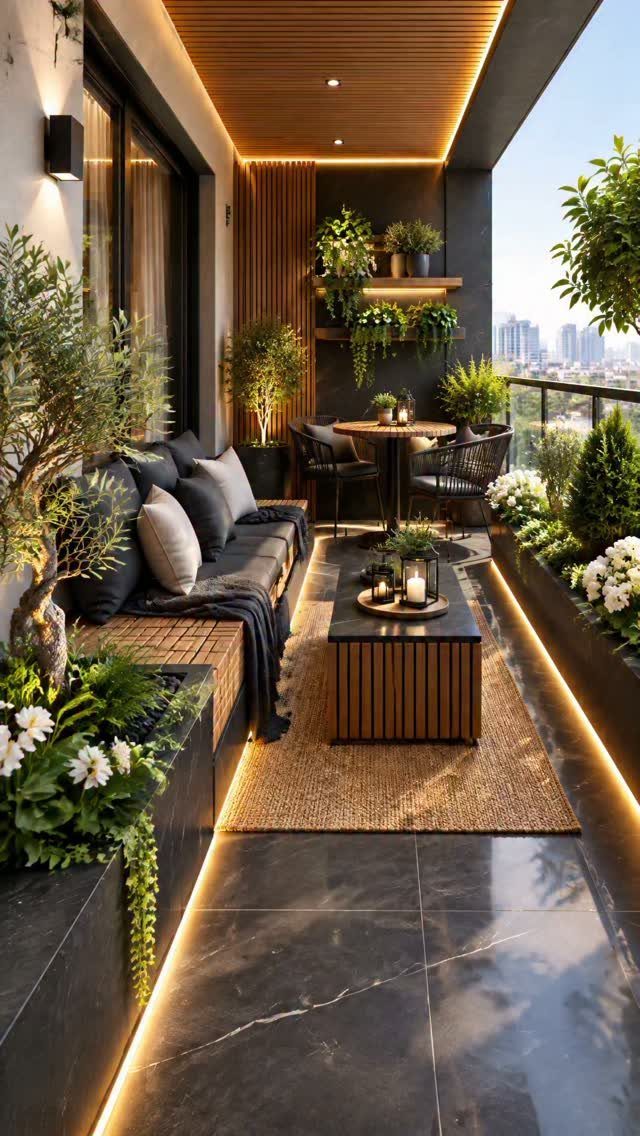
Mixing 3 materials keeps a small balcony from looking flat: wood for warmth, fabric for softness, metal for a clean edge. A wooden coffee table, grey cushions on a built-in bench and metal chairs divide the job neatly.
I would let one material lead, wood in this case, and use the others as accents. Potted plants in varied sizes tie them together.
Repeat each material at least twice so nothing looks like a stray piece.
17. Shade Umbrella
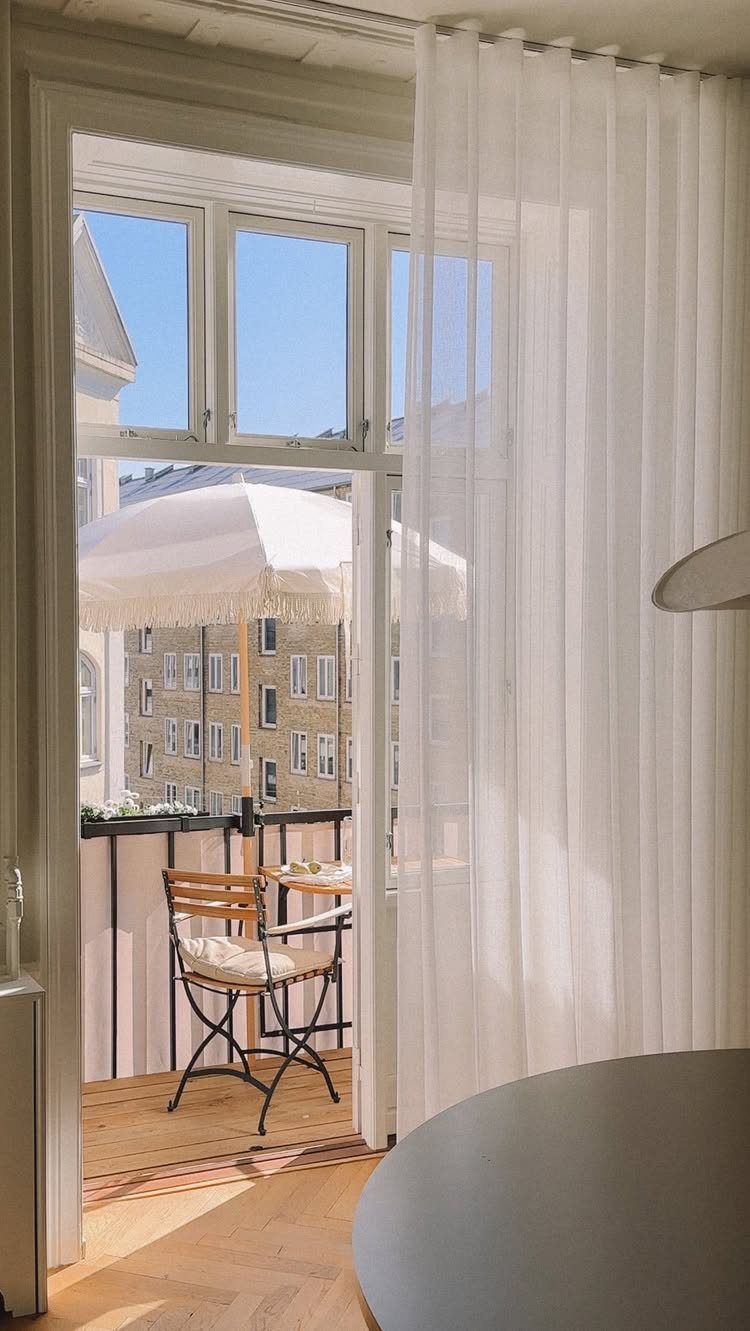
A white fringed umbrella over a small table and chair gives you shade and a little charm at once. White keeps the spot looking bright instead of heavy, and the fringe adds a soft edge.
Choose a size that covers the seat and table without hanging far past the railing. Open it for midday coffee and close it when you want the sky back.
18. Artificial Grass Turf
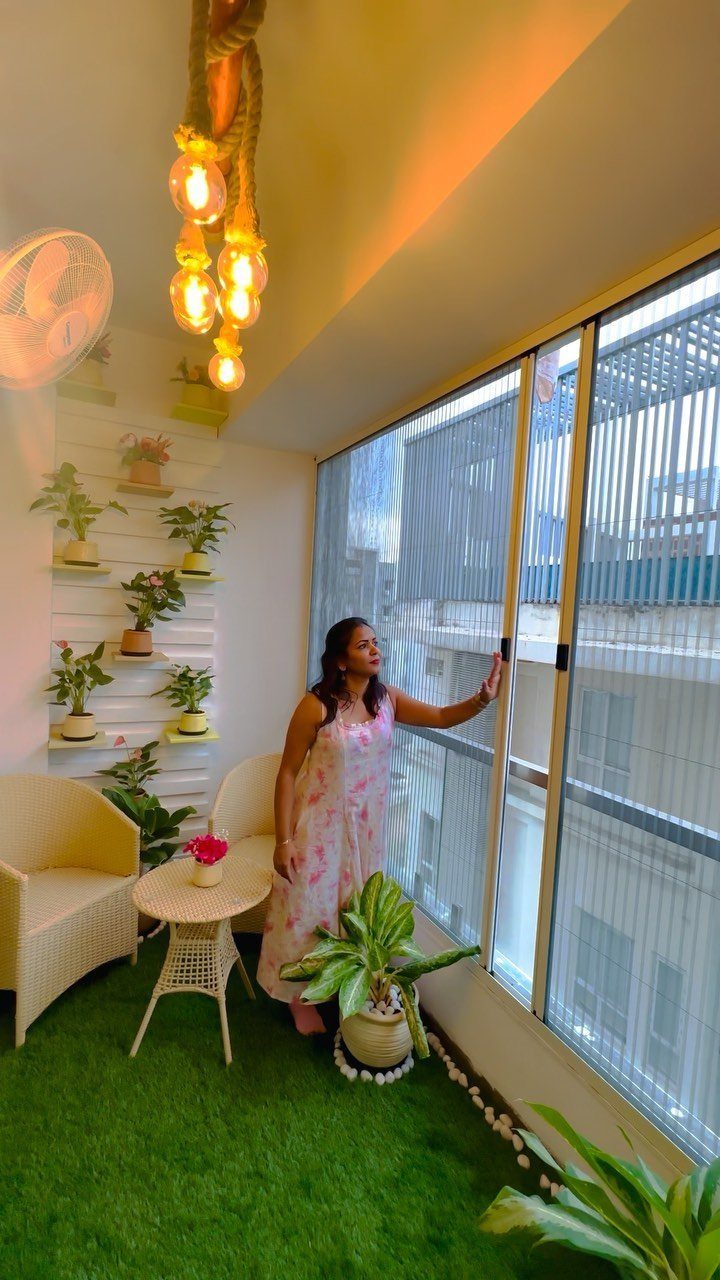
Artificial grass on a balcony floor gives you a lawn feeling several stories up, and it makes bare feet happy.
Roll it out, cut it to the floor’s shape with a utility knife, and lay it flat so it lies without ripples. I prefer a thicker, soft-feeling blade for sitting on.
Check your lease first, and use loose-laid pieces so the floor stays clean when you leave.
19. Colorful Cushions, Planters
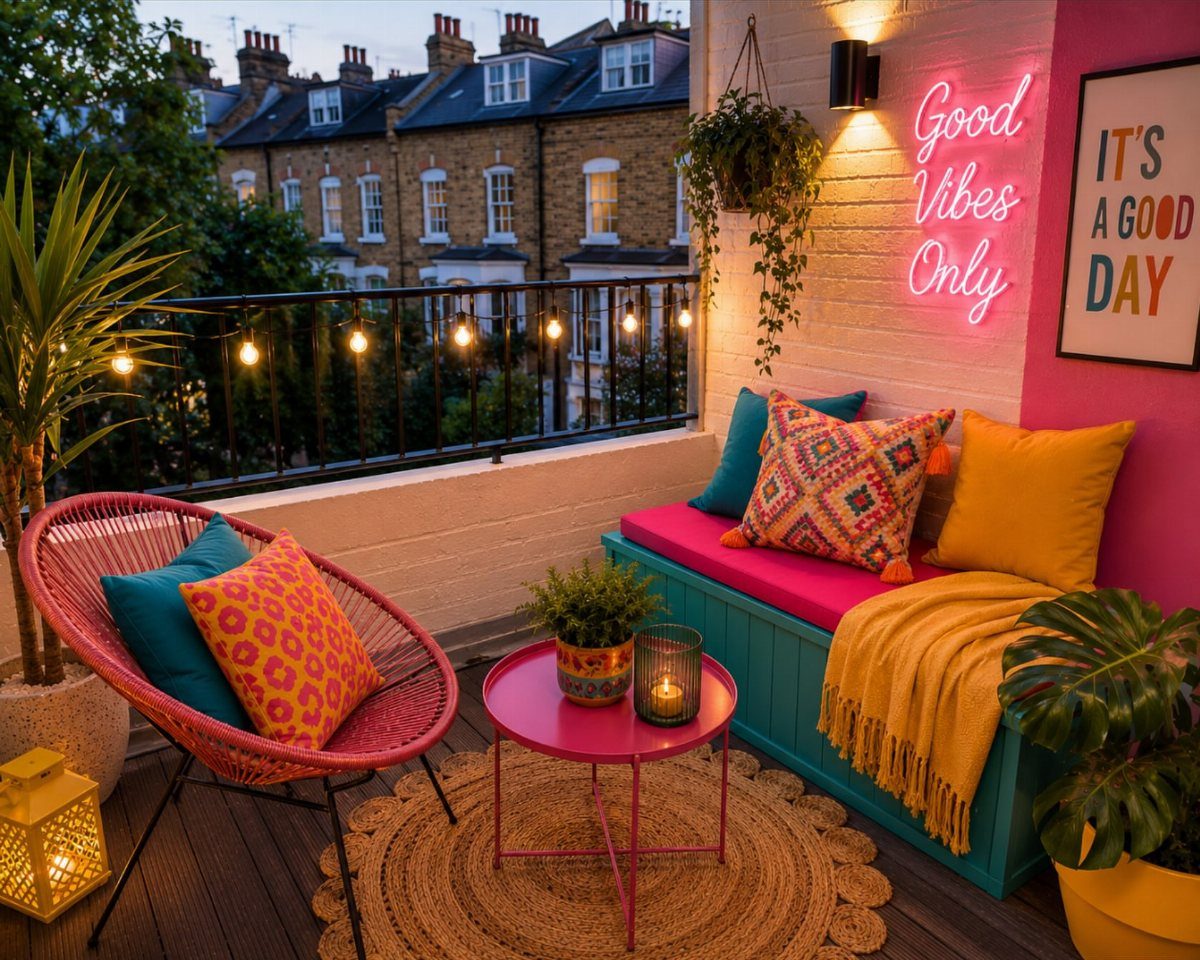
Color does the work here, and it works best when it repeats.
Pink works best as the lead color, repeated on a few pieces like a chair, a sign and the cushions, with blue and green in smaller amounts to keep it from tipping into candy.
Pick 2 main colors, then bring in the third through the plants.
Mix cushion patterns, but keep one shade running through all of them so they read as a set. Planters can echo the same colors, and a bench in a bold shade gives the cushions a base to sit against.
A neon sign is a fun extra if you have an outlet, though a plain string of lights does the same job for less.
Measuring Your Balcony
Typical apartment balconies measure somewhere from 4×6 to 5×10 feet, so a chair set that looks compact in a product photo can take up half the floor.
Skip that gap and you end up squeezing around your own chairs every time you step out.
Measure the doorway opening too, so a piece that fits the balcony can also get through the door. Knowing your exact depth lets you rule out oversized furniture quickly, and I shop by dimensions first and looks second.
Weight matters in both directions. Buildings limit how much a balcony can hold, so ask your building manager before bringing in anything heavy like a stone side table.
Furniture that is too light blows over in a storm or turns into a hazard. I look for mid-weight furniture, heavy enough that wind won’t push it around but still well under the balcony’s load limit.
Choosing the Right Plants
Match plants to the sun your balcony actually gets, not to the photos you have saved.
A shady north-facing spot suits pothos, ferns, and begonias. Other bloomers can do well there too, as long as the light matches what they need.
Wind counts as much as light. Up on a high floor, I stick with low, sturdy plants and add weight to each pot so wind can’t tip it.
If you are unsure about your light, snake plants tolerate almost any balcony condition, so they make a safe first purchase.
For vertical gardening, stack plants on walls, rails, or tiered stands. That keeps the floor open and gives you more growing room in the same footprint.
Creating a Cohesive Look
A balcony feels like part of your home when its palette echoes the room just inside the door. Pull one or two colors from your living room and repeat them outside.
Layer textures: outdoor cushions, a linen throw, and a textured pillow or two add comfort fast. Keeping those textiles neutral reflects light and makes a tiny balcony look larger.
Then let plants and one bolder accent supply the color, so the base stays calm.
Think from the outside in! If you—like many city dwellers—like to glance up at your apartment on your way home from work, a heavily floral assemblage on your balcony can be the ticket to that post-work, pre-home serotonin boost.





