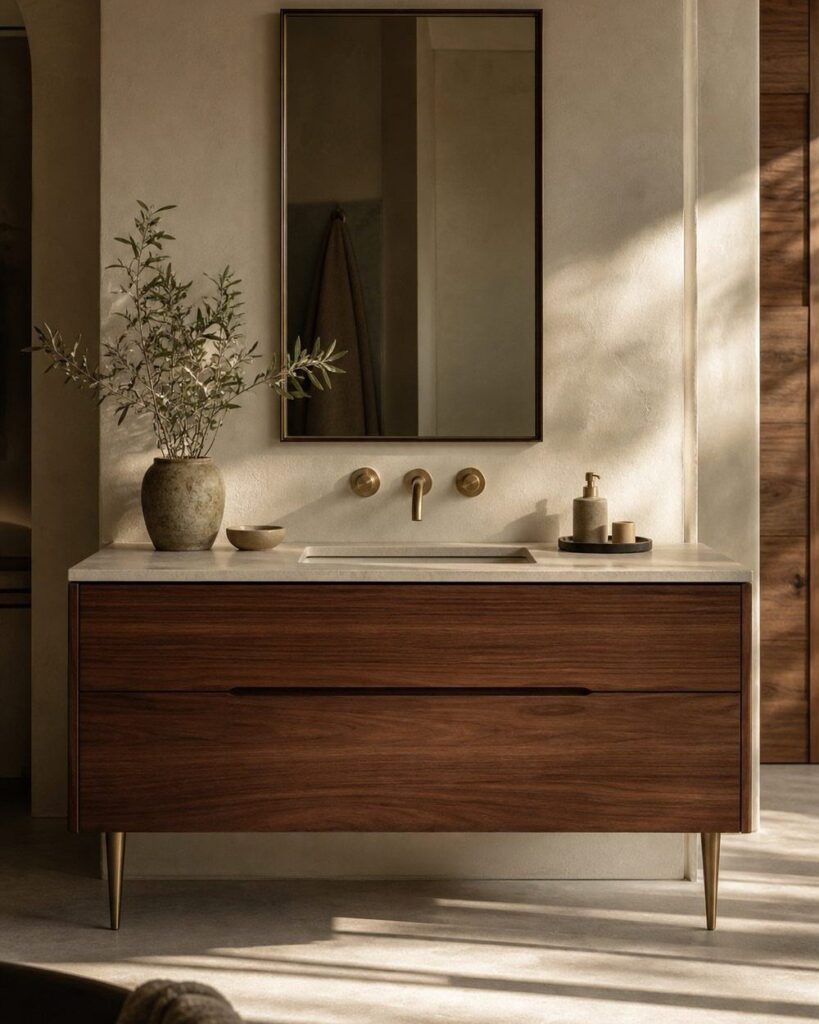
Ideas here run from peel-and-stick starburst wallpaper and a bold accent wall to terrazzo flooring and vintage green tile, so the cost depends mostly on how much surface you cover.
Renting or owning decides your pick: renters should stick to starburst wallpaper, plants, and a bold accent wall, while owners can commit to colorful sinks, geometric or pastel blue tile, or a skylight.
Wherever the budget lands, I’d let one element be loud and keep everything else plain.
1. Warm Wood Vanities
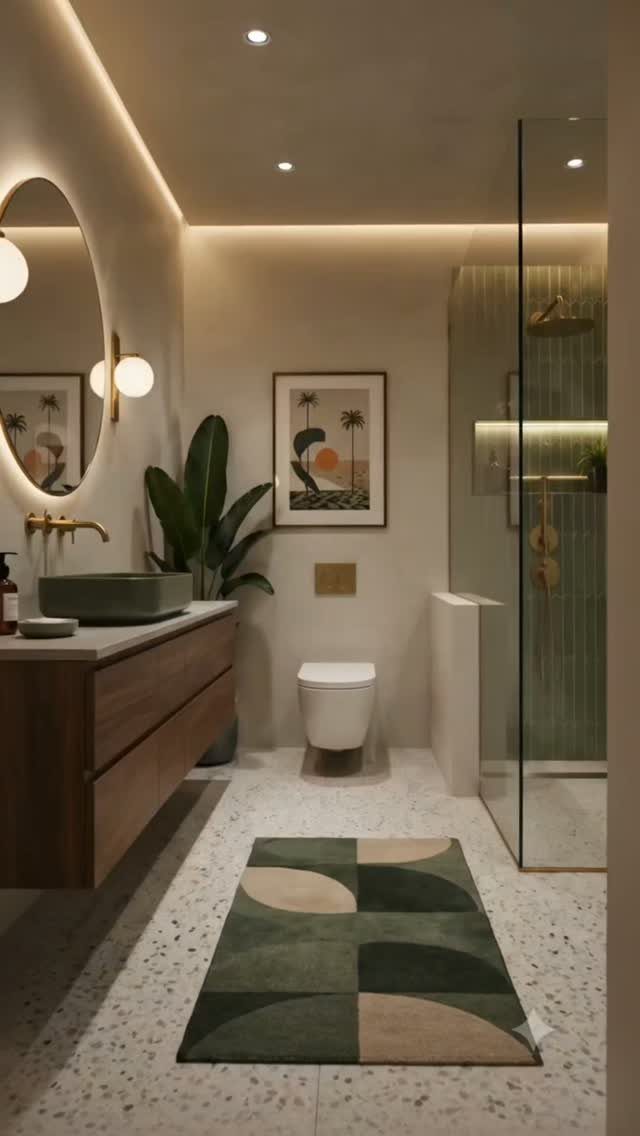
A wall-hung vanity in warm wood lets you see the floor running underneath, and that extra stretch of visible floor is what gives a tight bathroom its sense of space.
Wood also softens the hard surfaces around it, like the glass shower and white toilet.
A bold sink color, like a green vessel, pairs well with a wood vanity, because the grain gives the color a warm base so it looks chosen rather than loud.
White toilet, plain walls, nothing else competing: that restraint lets the wood grain do the work.
2. Geometric Tile
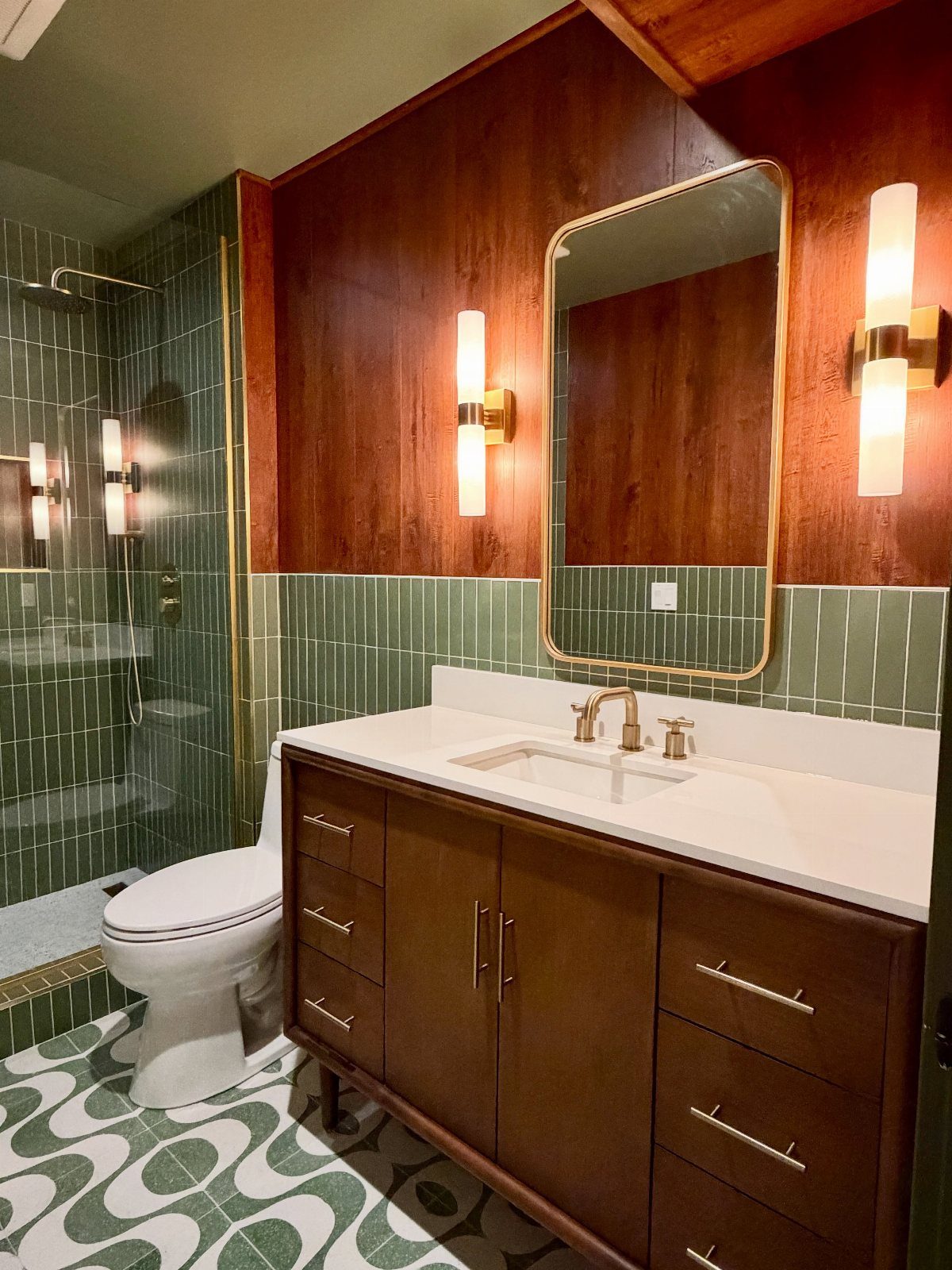
Graphic floor tile in green and white does more for a mid-century bathroom than any piece of furniture. Pattern on the floor and a solid color on the walls is the split I’d choose, since 2 busy surfaces compete.
On a tight budget, tile just the floor, since a bathroom floor takes only a modest amount of material, and paint the walls or use plain tile there.
3. Colorful Sinks
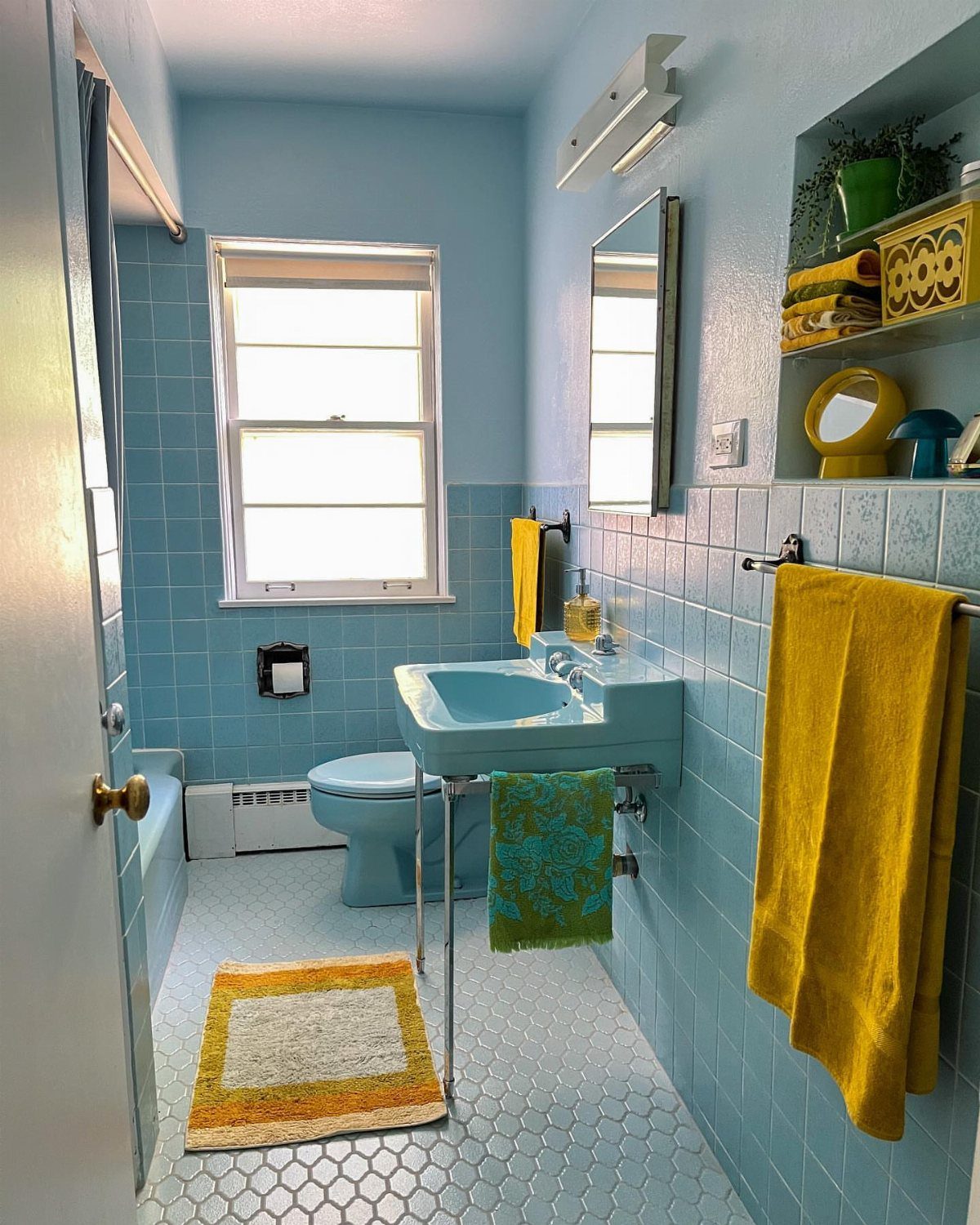
Light blue fixtures turn the sink and toilet into the design, so everything else can stay simple. Matching the walls to the fixtures, as here, gives a soft, one-color room.
A colored sink or tub is a big commitment, so I’d start with the towels and rug before replacing fixtures, or choose a color you’d honestly live with for years.
4. Terrazzo Flooring
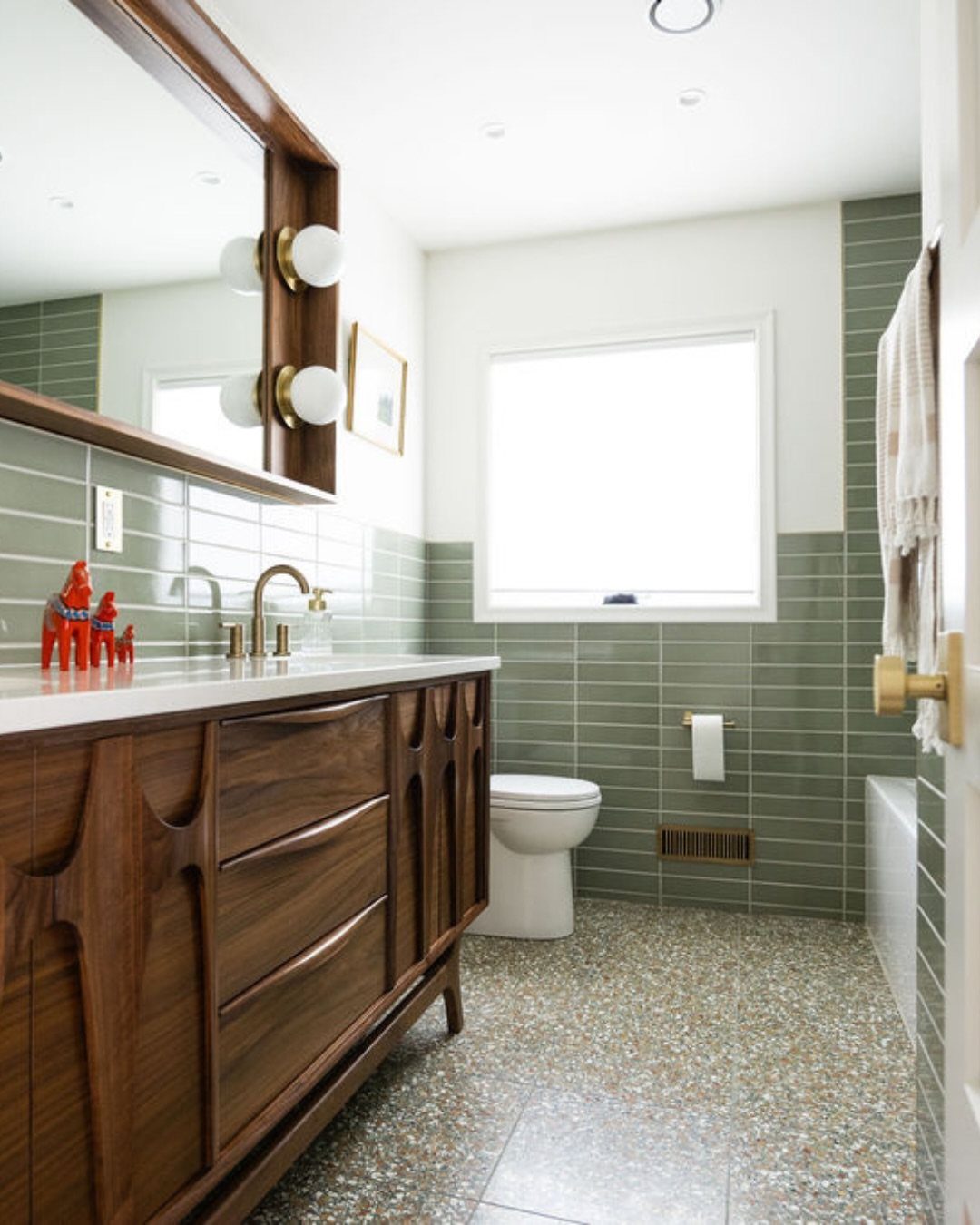
Speckled terrazzo gives a floor texture without a single bold color, which is why it sits so well beside green tiled walls. The flecks hide small bits of dust and hair better than a plain white floor would.
Pair it with a wood vanity and a white toilet so the speckle stays the only busy element.
Terrazzo can run pricey, so if the real thing is out of reach, terrazzo-look tile gets you close, especially with a calm, limited color palette around it.
5. Skylights and Plants
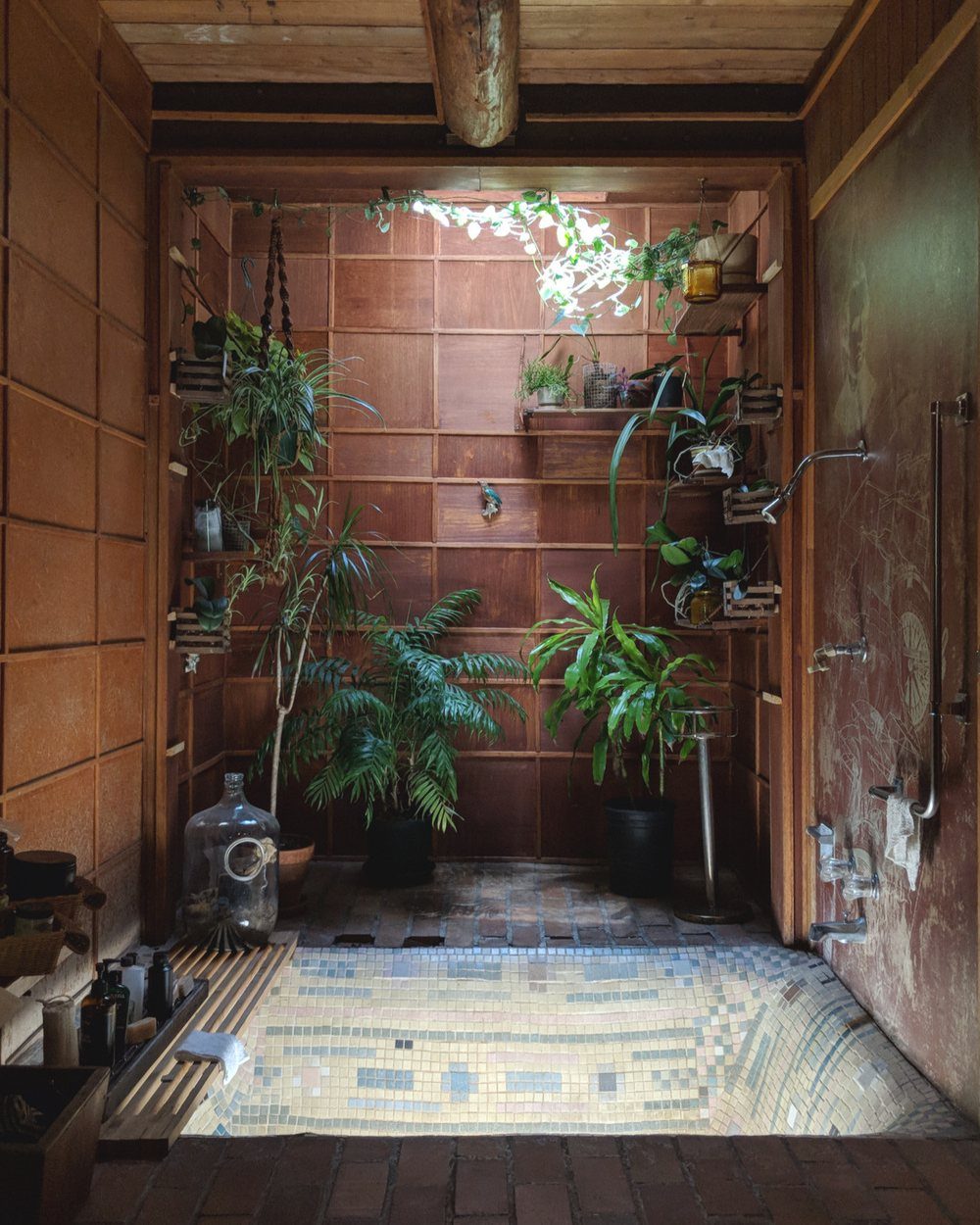
Add a skylight and a crowd of plants, and a bathroom starts to read as a small greenhouse. Light from overhead reaches the tub area without any window privacy problem, and terracotta walls turn warm in it.
Plants do best in a bathroom that gets that daylight, so place them nearest the glass. A skylight is a real construction job, so renters should skip it and lean on plants near whatever window exists.
6. Bold Accent Wall
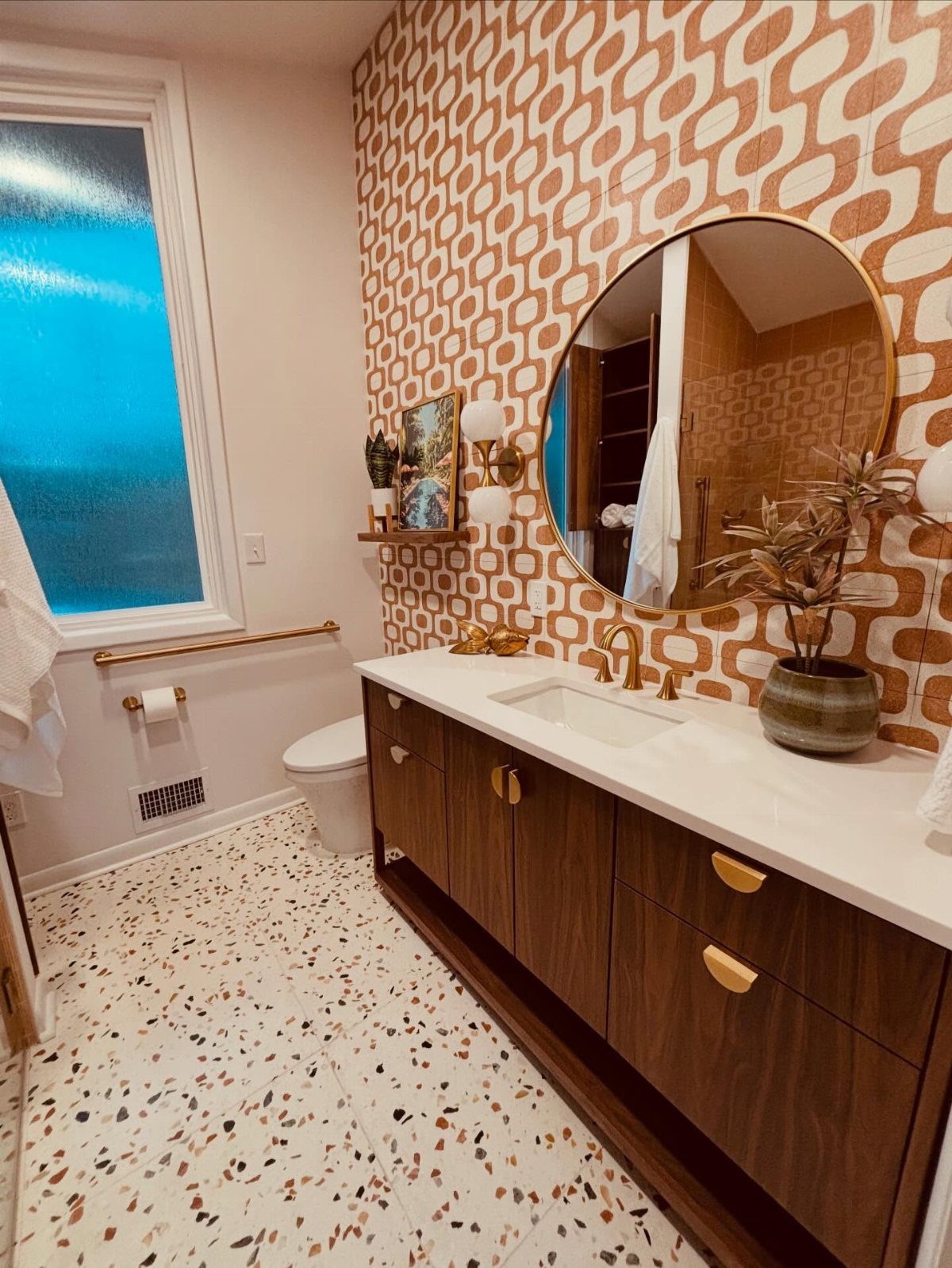
Brown and white geometric wallpaper on one wall gives a bathroom a clear focal point for little money. A single wall needs only a few rolls, which suits a weekend project.
Choose the wall behind the vanity, as here, and let the wood and gold hardware pick up the brown tones.
With terrazzo underfoot, I’d keep everything else plain. Peel-and-stick paper is the renter’s route, though damp walls can loosen it, so skip the wall nearest the shower.
7. Functional Simplicity
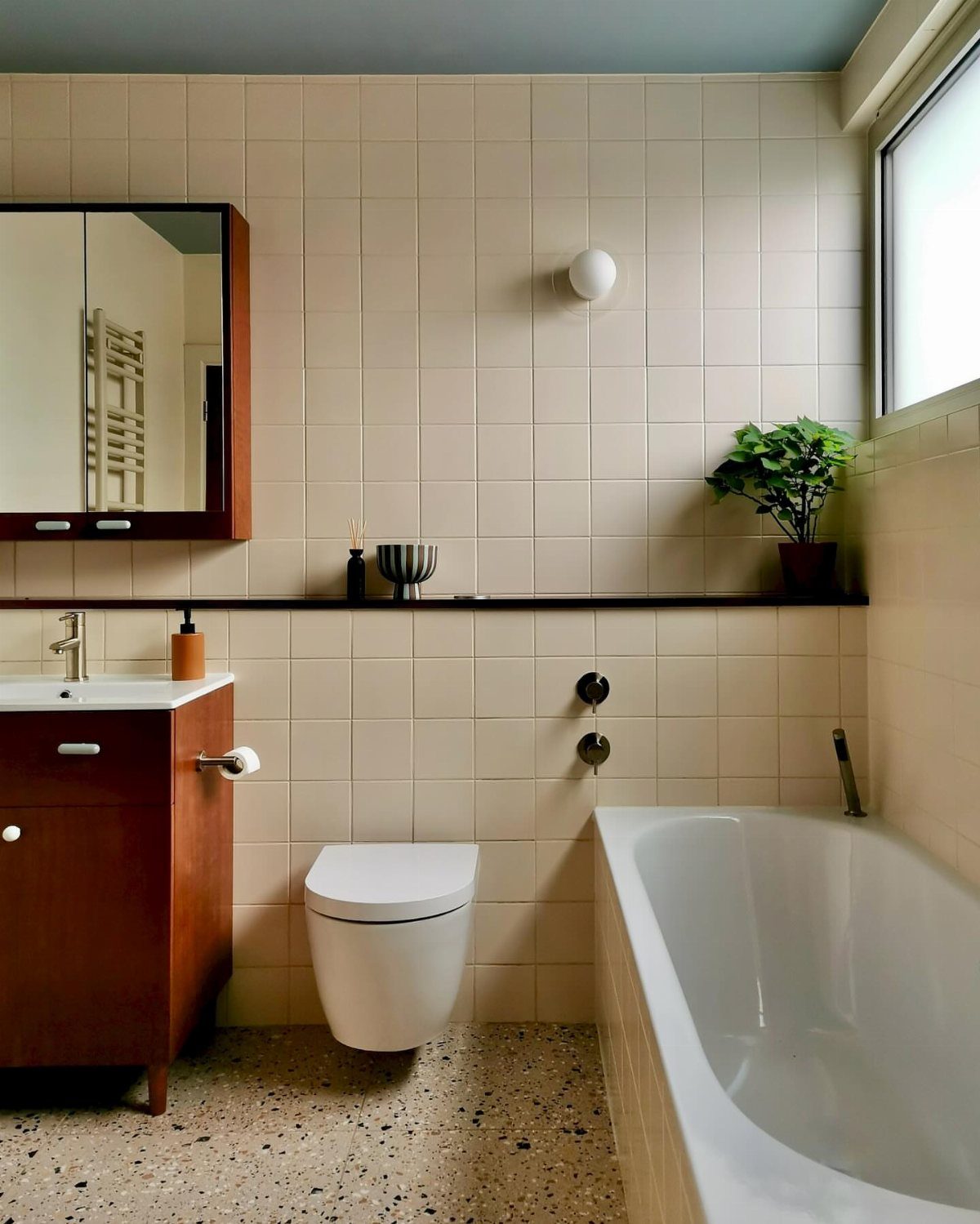
Clean lines carry this idea: a plain wood vanity, a white tub and toilet, and nothing on the surfaces but one small plant on a shelf. Fewer objects make a small bathroom read as calm instead of cramped.
Beige wall tile and a speckled floor already supply the texture, so I’d keep towels and accessories in one or two quiet colors. Clear the counter down to soap and a single item you actually use daily.
8. Vintage Green Tile
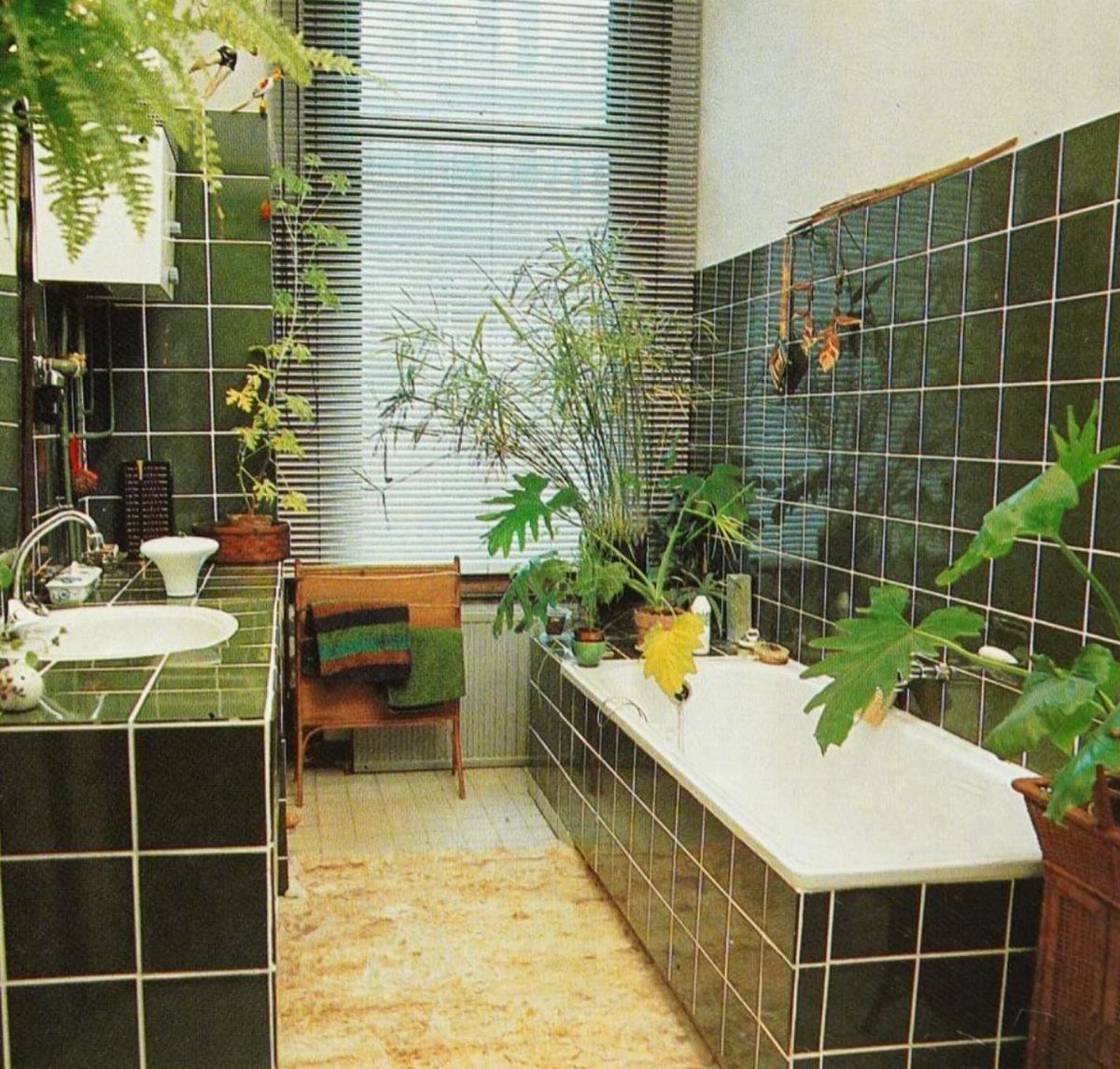
Dark green square tile wrapped around the walls, tub surround, and vanity counter makes a bathroom feel like one deep, enclosed color.
Plants, a wooden chair, and a light rug stop green tile from turning heavy, so add at least two of the three.
A rug in a pale shade matters here, because it breaks up all that dark green at floor level. Wood and plants add warmth, so I’d choose those over more tile colors.
Dark tile also costs a lot to cover in one go, so if the budget is tight, do the tub surround only and paint the rest.
9. Starburst Wallpaper
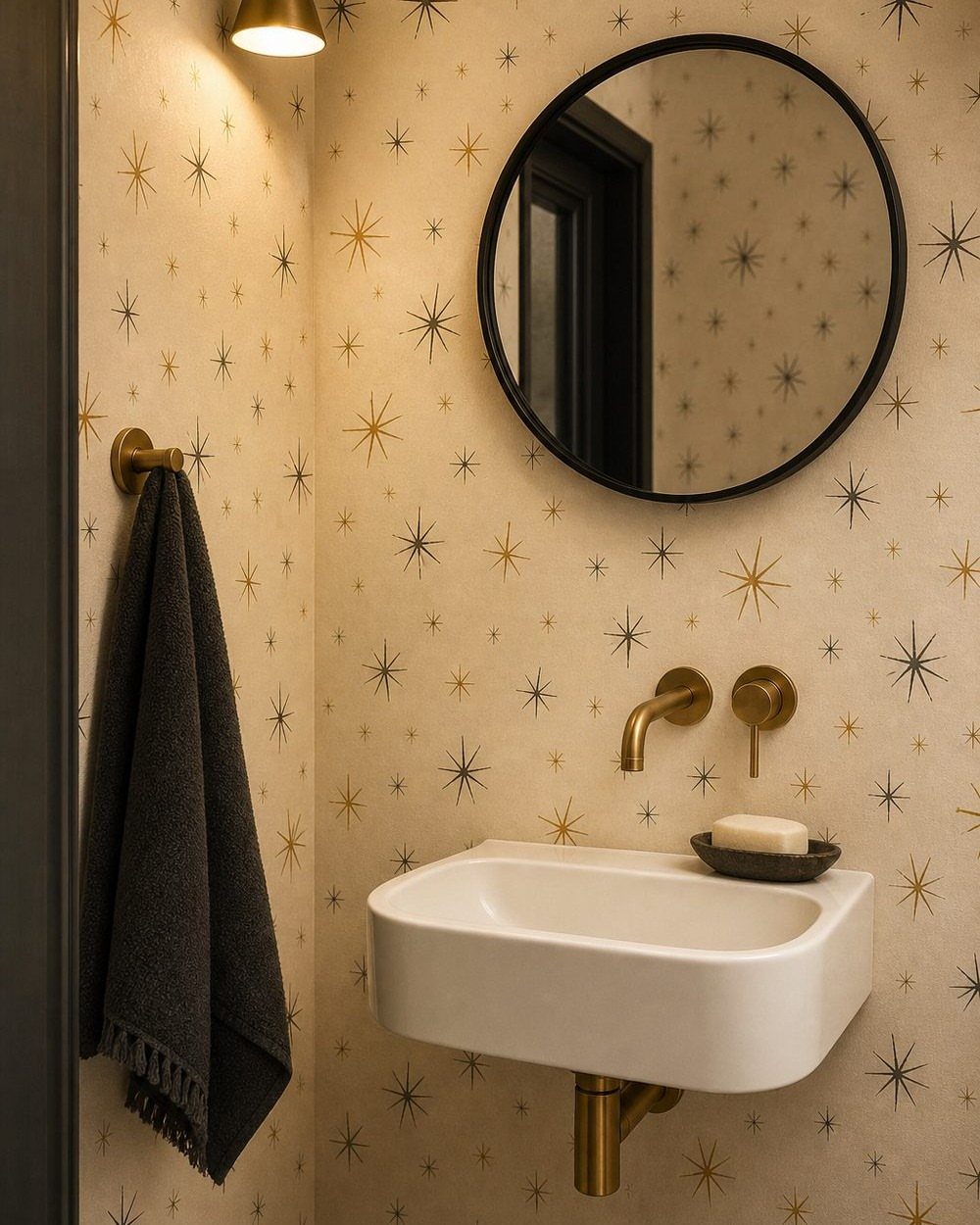
Starburst wallpaper suits a powder room better than almost any other space, since a tiny footprint needs only a few rolls and nobody spends long enough there to tire of the pattern.
Gold fixtures and a round black-framed mirror pick up the retro mood, while a white wall-mounted sink and a dark grey towel keep the color count low. I’d let the paper be the only loud element.
Renters can choose peel-and-stick, but keep it away from the sink splash zone, where damp can lift the edges.
10. Wood Paneling Accents
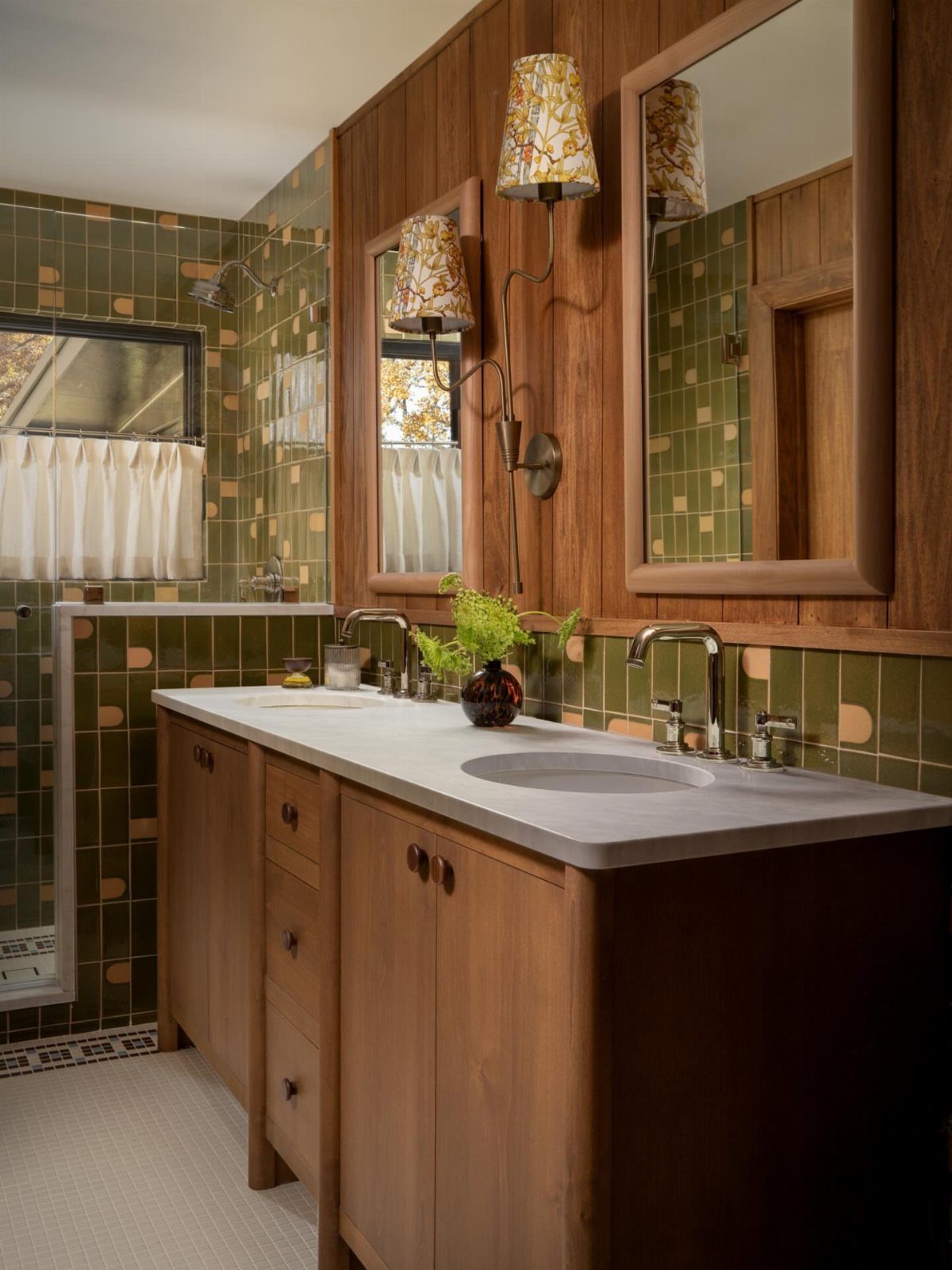
Wood paneling on the walls gives a bathroom a rich, den-like warmth that tile alone can’t match. Pairing it with green square tile stops the space from feeling like a cabin.
Period-style patterned sconces on either side of the mirrors add the right glow, and a white countertop on a wood double vanity gives the eye a place to rest.
I’d panel the upper walls and keep tile where water splashes, since wood and wet spots don’t mix well.
11. Pastel Blue Tile
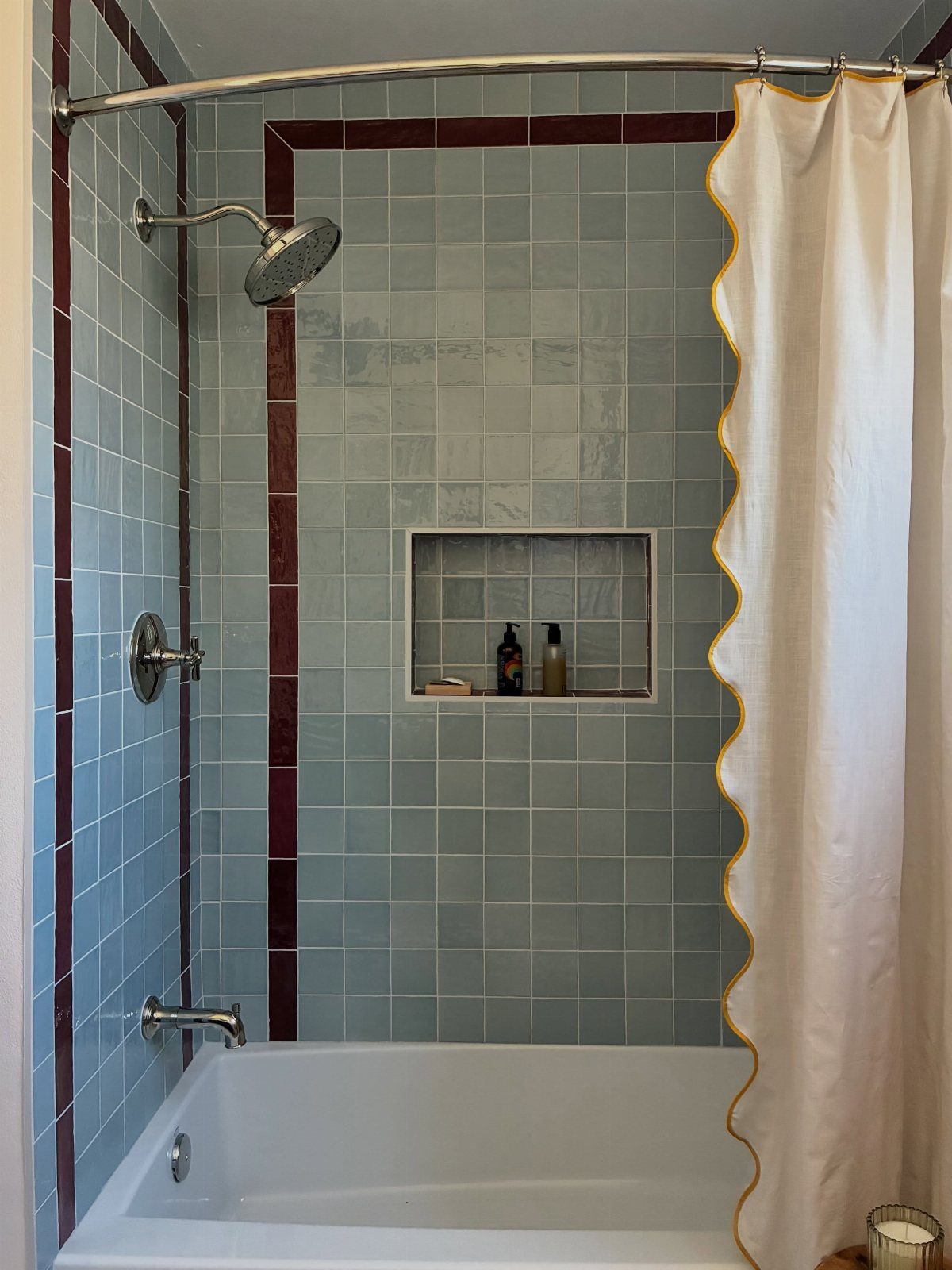
Soft light blue square tile in a tub and shower alcove gets its edge from the dark red border running through it. That contrast stops the pastel from looking sugary.
A recessed niche keeps bottles off the tub ledge, and a white curtain with yellow trim fits the palette without adding another color.
If you’re re-tiling, I’d copy the border idea: one thin dark line does more than a whole second tile color.
For a rental, a matching curtain and one dark red towel hint at the look without touching the tile.
Mid-century Modern Design Principles
Restraint is what holds a mid-century bathroom together. Smooth cabinet fronts, flush-mounted hardware, and a nearly empty counter keep every surface doing a job.
For a mid-century look, pick walnut, teak, or oak, and use it on the vanity, a floating shelf, or just the mirror frame. Their warmth balances sleek tile and porcelain.
Geometry should repeat rather than pile up. Rectangular tile, a round mirror, or a hexagonal floor all fit, but pick one or two shapes and stay with them.
For color, start with soft white, cream, or gray. Then add teal, mustard, or sage in small doses.
As one of the most utilitarian spaces in a home, the bathroom is an ideal spot to flaunt the form and function, clean lines, and hard-working materials of midcentury modern design.
— Hunker
Budget-friendly Upgrades
Lighting is the cheapest way to change the whole feel of a bathroom without a remodel. Swapping in brass wall sconces or a small brass pendant brings a warm glow to the room, and it’s an easy weekend job.
Match the metal elsewhere. Matching brass on the faucet and shower fixtures ties the light fixtures in, so the whole room looks planned rather than pieced together.
Do the lights first, then the faucet, and spread the cost over a few paychecks. Renters can check the lease before swapping anything wired, and keep the original parts to put back.
Incorporating Plants
A few plants cost little and add color, texture, and a bit of the outdoors, which helps even in a tiny bathroom. Choose ones that thrive in humidity: pothos, ferns, and snake plants all do.
Placement matters as much as the plant. Set a pot on the vanity, tuck one into a bare corner, or put it on a wall shelf; when counters and floor are full, a hanging planter takes over the ceiling space.
Where there’s a window, use it, and frosted glass lets in daylight while keeping privacy. A bathroom with no window at all is a harder place for plants, so pick the toughest one there, the snake plant.
Frequently Asked Questions
What is mid-century modern bathroom style?
It’s a look built on clean lines, simple shapes, and a link to nature, drawn from the 1945–1980 era of open, window-filled houses.
Think flat-front cabinet doors, hardware set flush or hidden, a counter with almost nothing on it, and the soft grain of real wood playing against glossy tile and white porcelain.
Restraint is what holds it together, since every surface should have a job.
What are the new bathroom trends in 2026?
The trends point back to warm, nature-inspired materials and fixtures shaped with purpose, which is why mid-century modern keeps showing up in remodels.
Wood vanities, plants, and intentional color palettes all fit that direction. Surfaces that keep a room feeling open round it out.
What wood is best for a mid-century modern bathroom vanity?
I’d pick walnut, teak, or white oak. A wall-hung vanity in one of them also shows the floor underneath, which makes a tight bathroom feel bigger.





