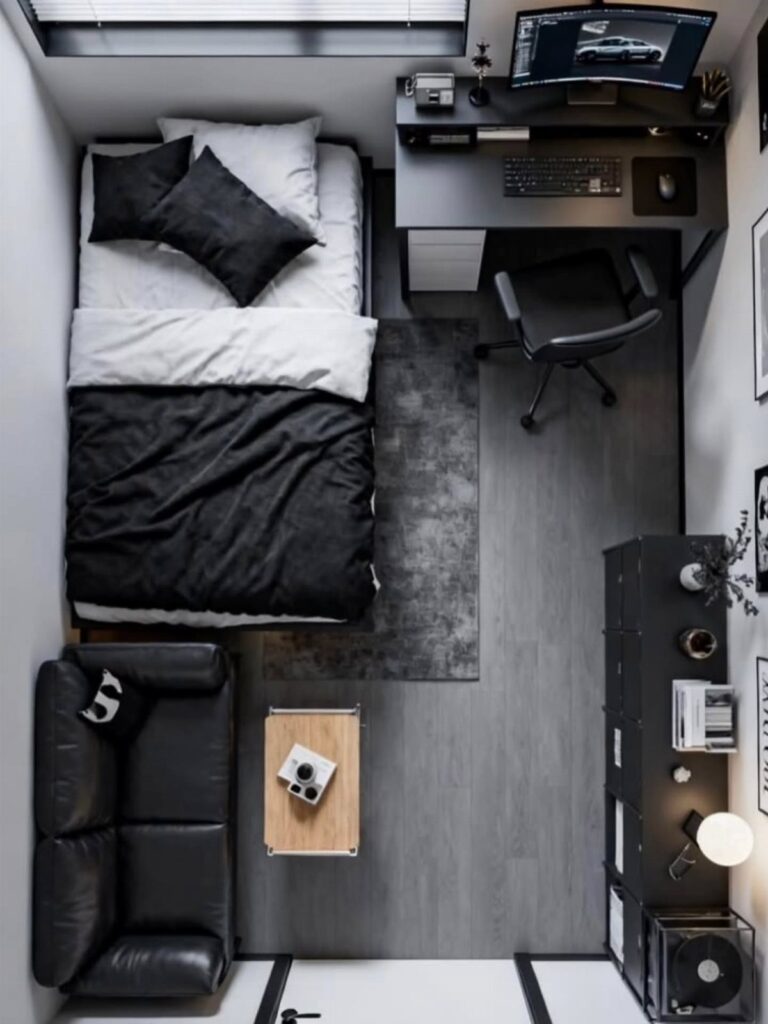
Whether you rent decides which of these ideas is yours.
Renters can lean a large mirror against a wall or paint an accent wall in a shade that’s easy to cover later, while owners can anchor black metal wall shelving into studs or put up industrial glass dividers between the bed and the kitchen.
The list runs from under-bed accent lighting to a full brown leather Chesterfield sofa, and the pieces that earn their floor space are the ones that do 2 jobs at once, like a tall dresser that also anchors a corner or an open bookshelf that splits the room.
1. Cohesive Color Palette
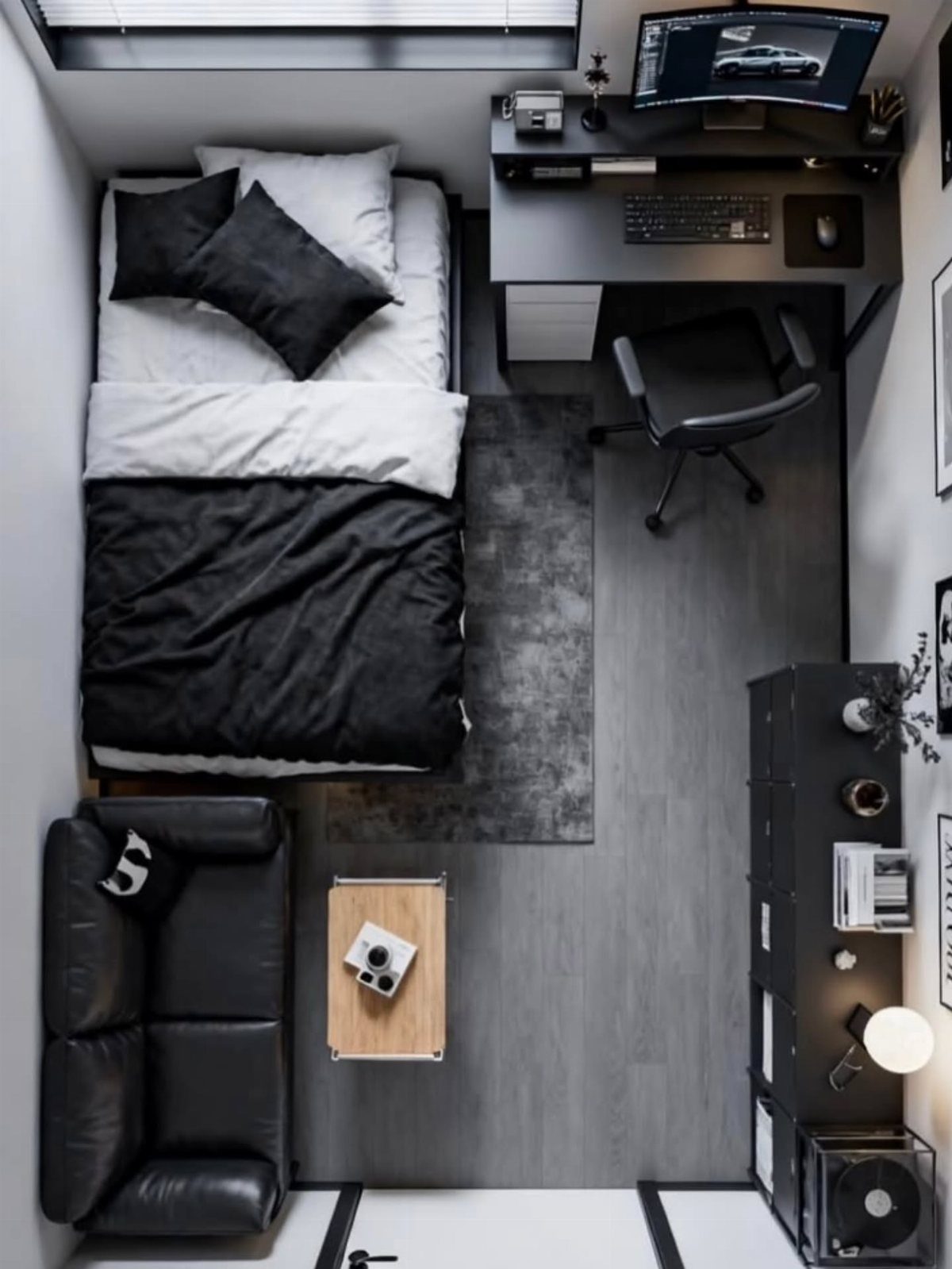
Black, white and grey is a hard palette to get wrong, which is why it suits a studio.
When the sofa, desk and storage unit all sit in the same narrow range of tones, one room reads as one space instead of a pile of separate pieces.
Pick the 3 shades first, then shop for them. Black does the heavy lifting on big pieces, white keeps the walls open, and grey bridges the two in bedding and rugs.
A single warm accent, like wood or leather, keeps it from feeling cold.
2. Tall Dressers
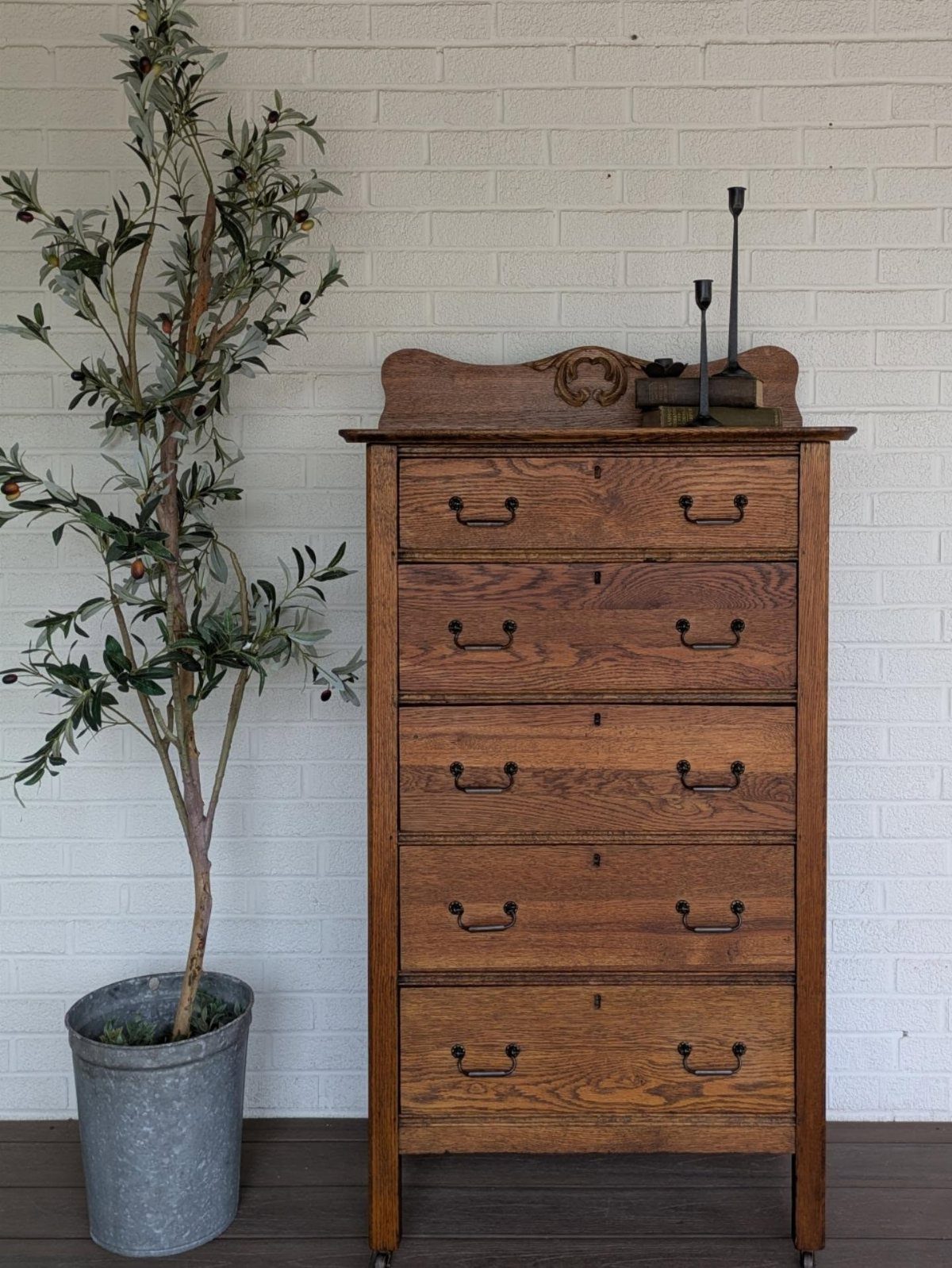
A five-drawer dresser takes up the floor space of a small one but stores far more, because it grows up the wall instead of across the room. In a studio, that trade is the whole argument.
Wood is my pick here. Against a white brick wall, it adds warmth that a painted box can’t, and the top becomes a landing spot for keys, a lamp or a plant.
Measure ceiling height and the swing of any nearby door before you buy. Tall drawers also need clearance to pull fully open.
3. Accent Wall
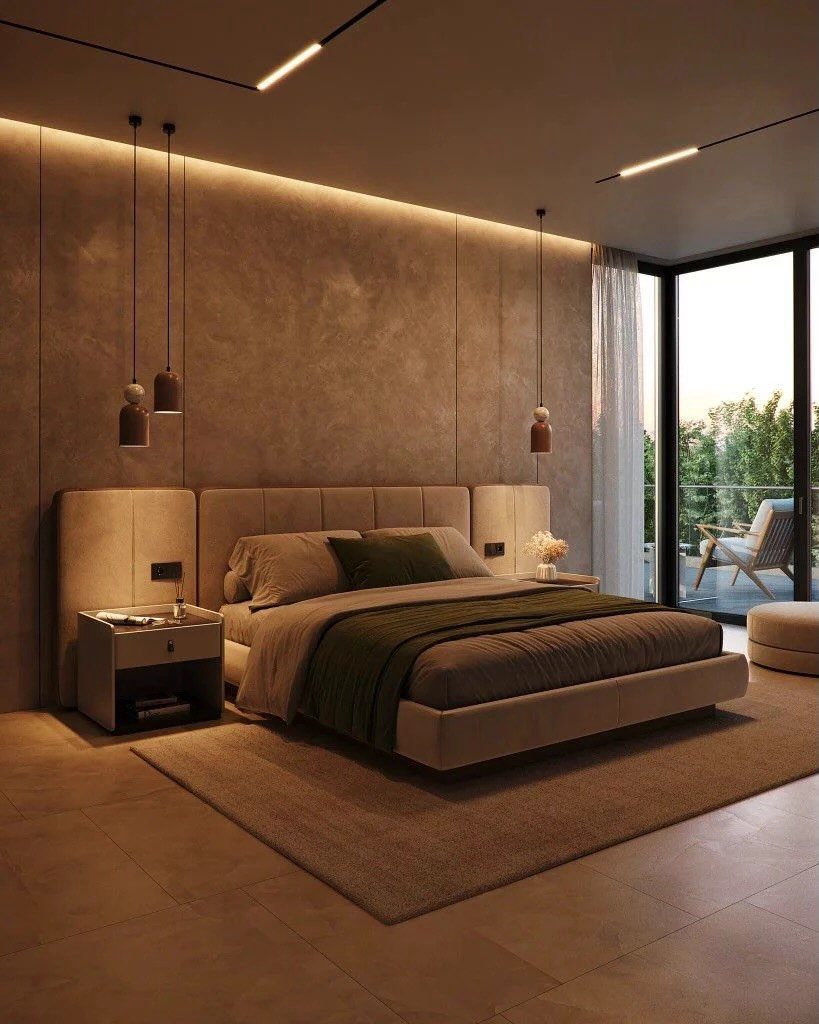
Texture does more than paint on an accent wall. A brown, textured surface behind the bed gives a studio sleeping area a backdrop, and it quietly marks where the bedroom ends.
Keep it to one wall, the one behind the headboard, and let everything else stay quiet. Beige bedding and olive green accents pair well because both sit comfortably next to brown.
Paint is the budget route for a rental, and it’s easy to cover later. Go a few shades deeper than you think you want, since a sample chip always looks lighter next to a full wall of paint.
4. Minimalist Furniture
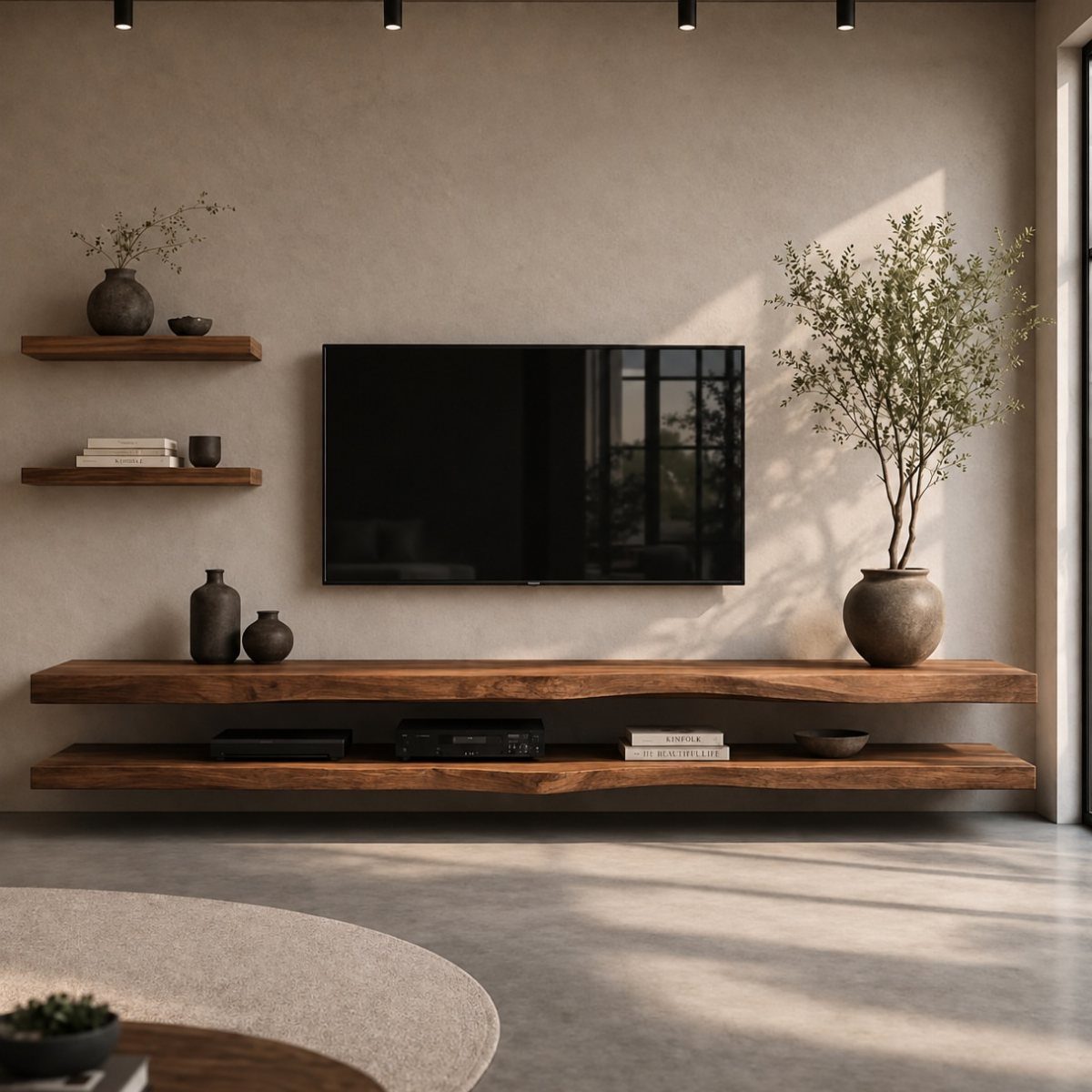
Floating shelves beat a bookcase in a studio, since the floor underneath stays visible and the whole space reads larger. Live-edge wood gives them character without adding clutter.
Mounting the TV to the wall frees another surface, so the whole media setup takes up almost no floor. Keep the shelves sparse: a few books, one plant, maybe a single object.
Anchor the brackets into studs or use proper wall anchors, because shelves with books on them carry real weight. Check your lease before drilling.
5. Accent Chairs
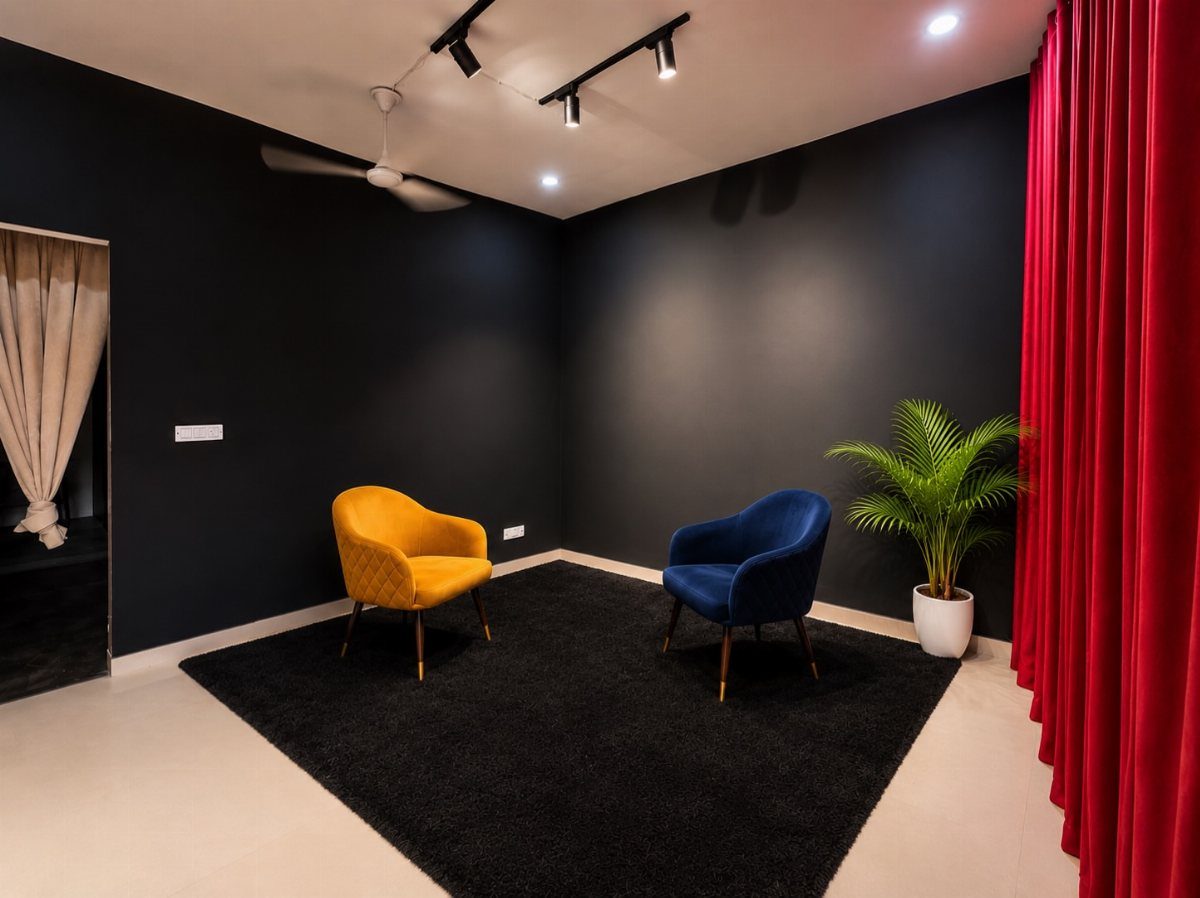
2 velvet chairs in bold, different colors can carry a room that’s otherwise dark. Against black walls and a black rug, yellow and blue stand out immediately, and the velvet catches light in a way flat fabric doesn’t.
I like this approach for studios where the sofa is the only seating. A pair of chairs turns a corner into a spot for guests.
Choose 2 colors with similar intensity so neither fights for attention, and keep everything else around them muted.
6. Open Bookshelf Room Divider
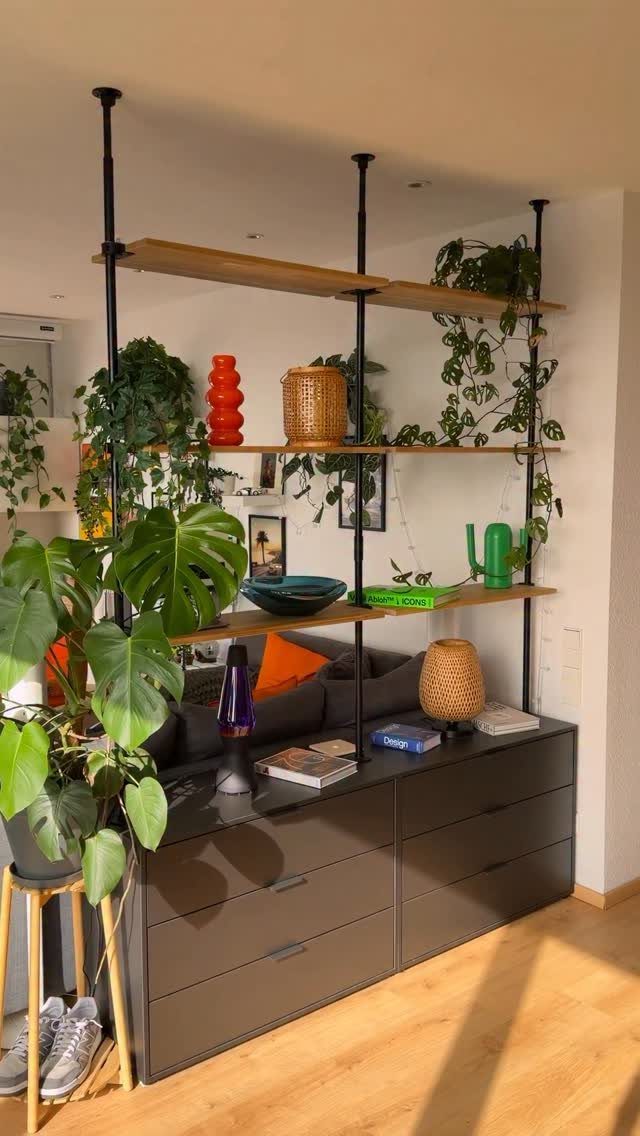
A shelving unit with black metal poles, wood shelves and a few drawers can split a studio into sleeping and living zones without a single wall. Because it’s open, light still passes through, and the room doesn’t shrink.
The maker of this one built it as a DIY project, which is worth considering if you’re handy and the budget is tight.
Put plants and books on the shelves, then keep the side facing the bed tidy. Place the drawers low so they hold things you’d otherwise leave out.
7. Large Mirror
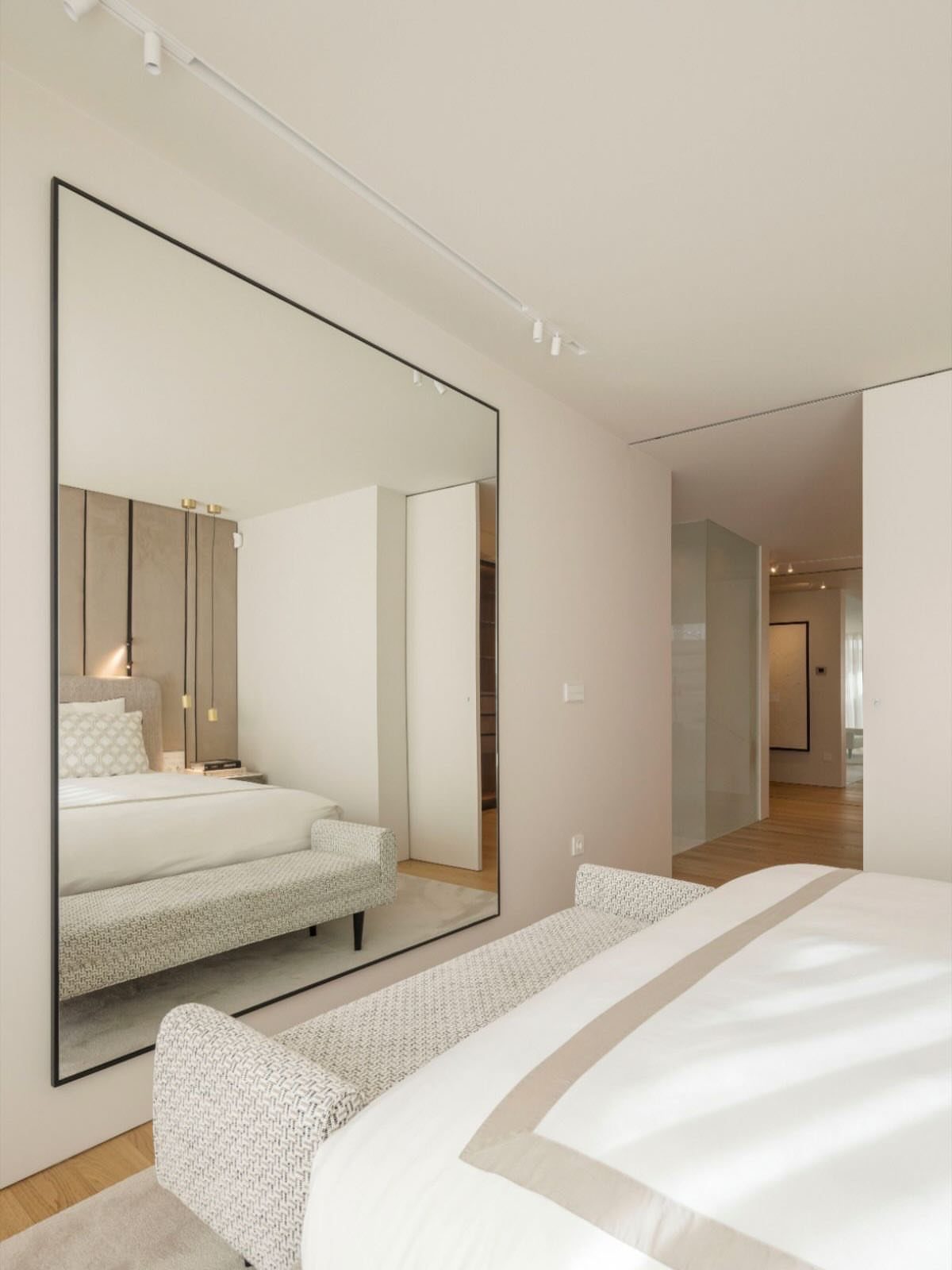
A mirror as tall as the wall allows is the cheapest square footage a studio can get. Leaned against the wall instead of hung, it needs no drilling, which suits a rental.
Place it across from the light source or the doorway, so it reflects the brightest part of the room. A black frame keeps the look sharp against white walls and ties in with other black pieces.
Reflect something worth seeing. A mirror facing a pile of laundry just doubles the pile.
8. Large Artwork
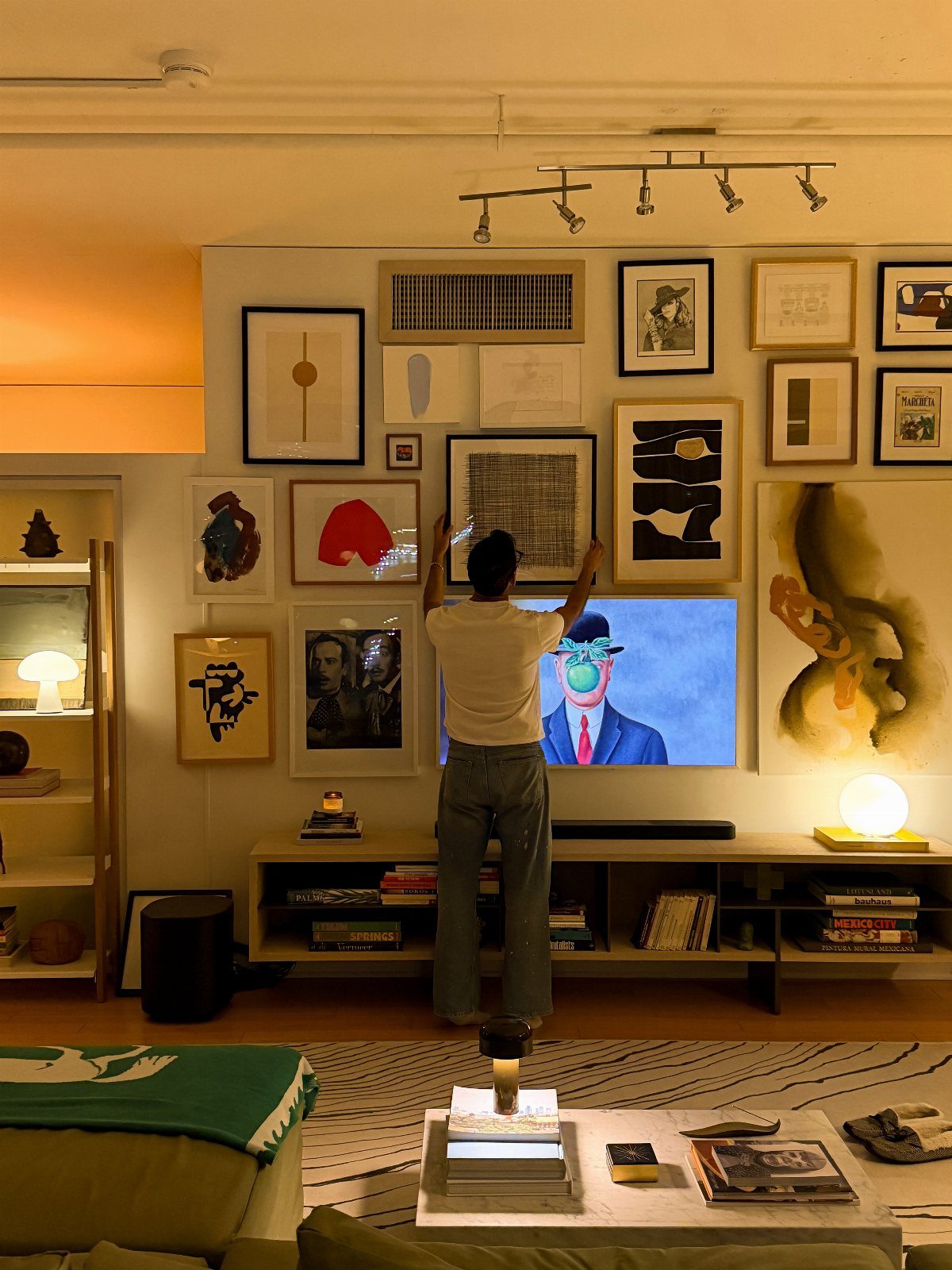
One oversized piece or a tight grid of frames gives a studio wall a focal point, and the price comes in well under what a new sofa or media console would run.
Lay the frames on the floor first and arrange them until the spacing looks even. Keep the frames in one or two finishes so the wall reads as a single composition.
Adhesive strips handle lighter frames.
9. Large Rugs
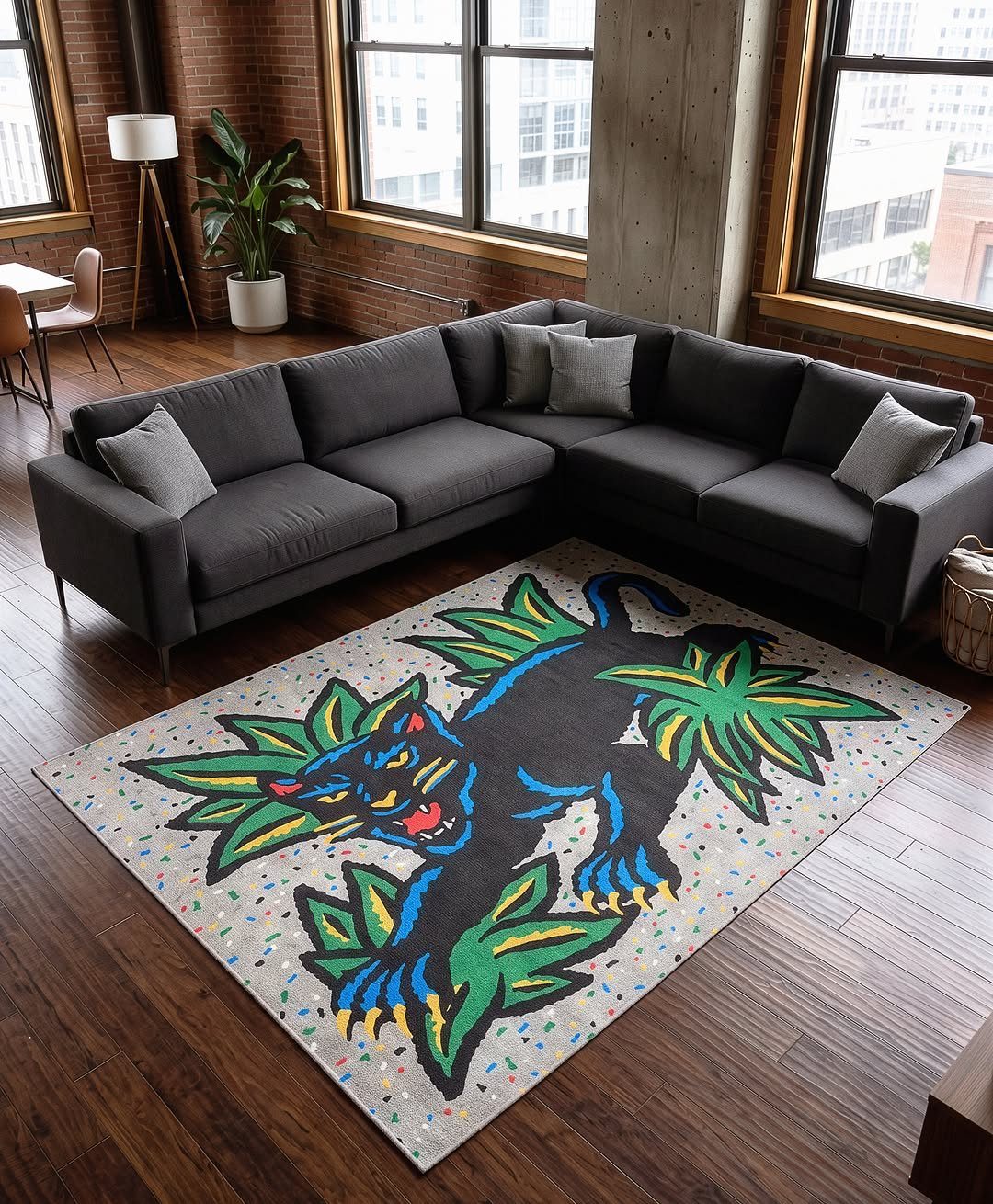
In an open studio, a rug big enough to sit under the front legs of the sofa and the coffee table marks off the lounge zone without a single wall.
In a loft like this, with brick and big windows, a bold pattern adds personality that the hard surfaces can’t.
I’d go larger than feels necessary. A small rug floats and makes the room look chopped up.
Keep the rest of the palette quiet, as a dark grey sofa does, and let the rug carry the color.
10. Industrial Glass Dividers
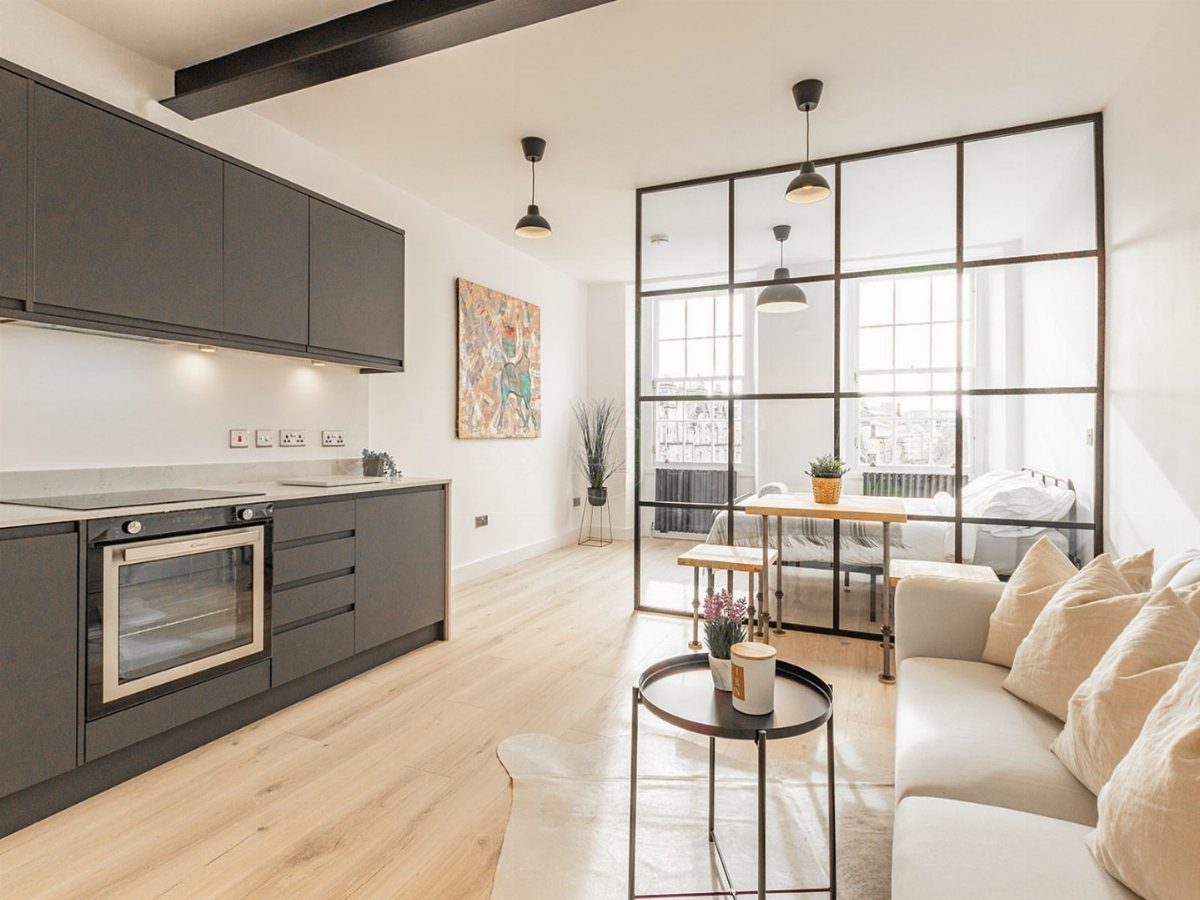
Black-framed glass between the bed and the kitchen draws a clear line, yet daylight keeps moving through the room. That’s the advantage over a solid wall: the studio keeps its open feel and still gets 2 distinct zones.
The thin black grid also echoes a dark kitchen, so the divider looks planned rather than added on.
Real partitions are a bigger project and a landlord question. Renters can get a similar effect with a freestanding framed screen.
11. Cozy Reading Corner
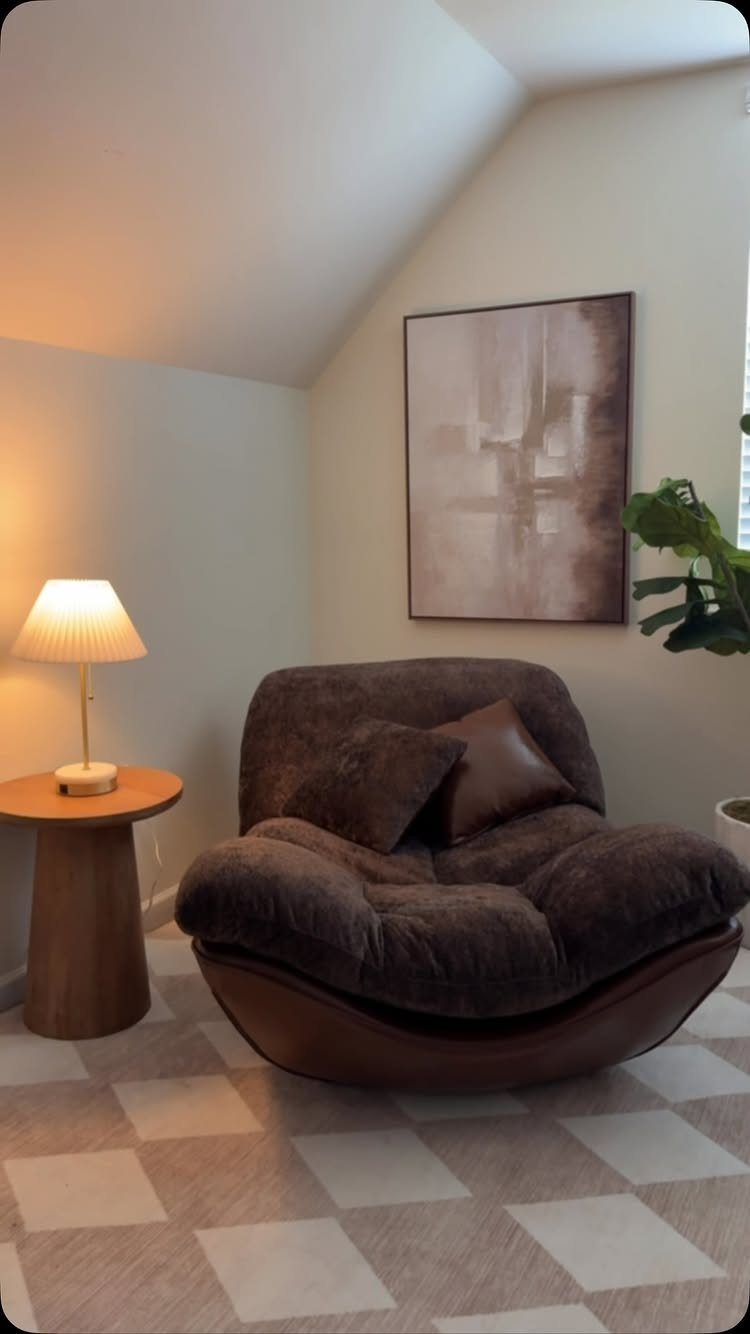
A plush swivel chair, a small side table and a lamp are enough to make a reading corner. Swiveling means the chair can face the room or the wall, so it works for guests too.
Pick a lamp with warm light and put it beside the chair, not overhead. Add one plant and a piece of art to make the corner feel finished rather than leftover.
A checkered rug under the chair sets the corner apart from the rest of the floor.
12. Leafy Plants
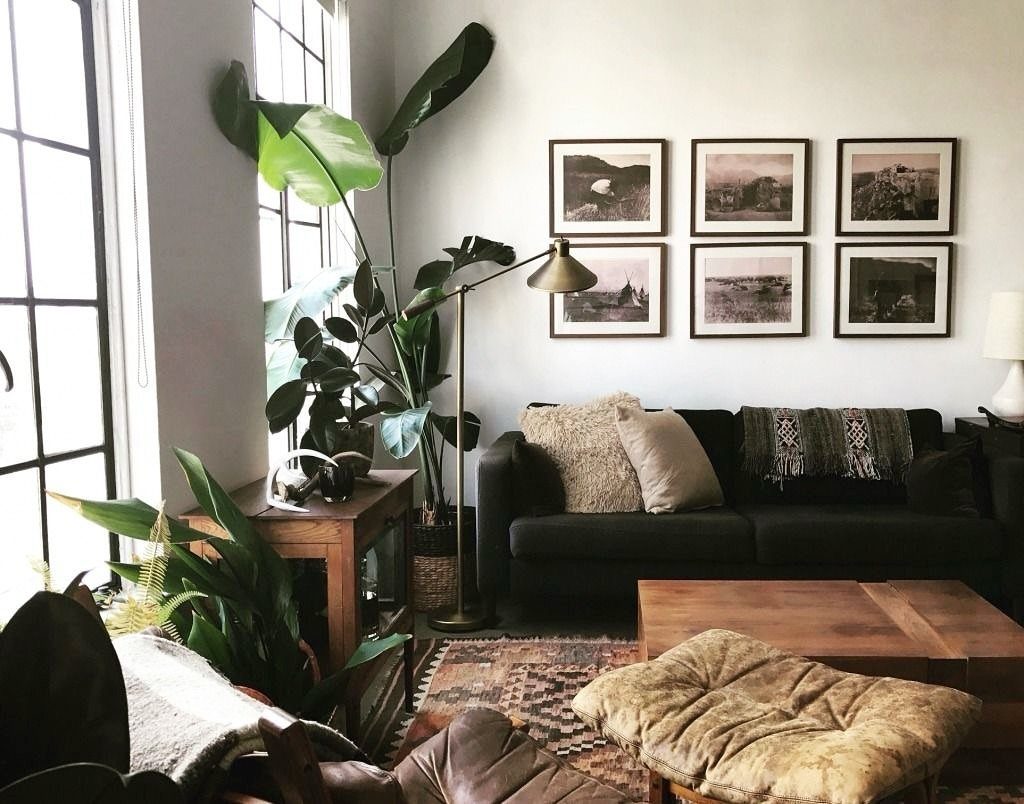
Several large leafy plants grouped by a window do more for a dark sofa and leather chair than any decor object. The green softens the heavy, dark furniture and gives the room life.
I prefer a few big plants over many small ones, since a crowd of little pots reads as clutter in a studio. Set them near the window, where they get the most light.
A gold floor lamp nearby adds warmth to the green.
13. Stainless Steel Kitchen Island
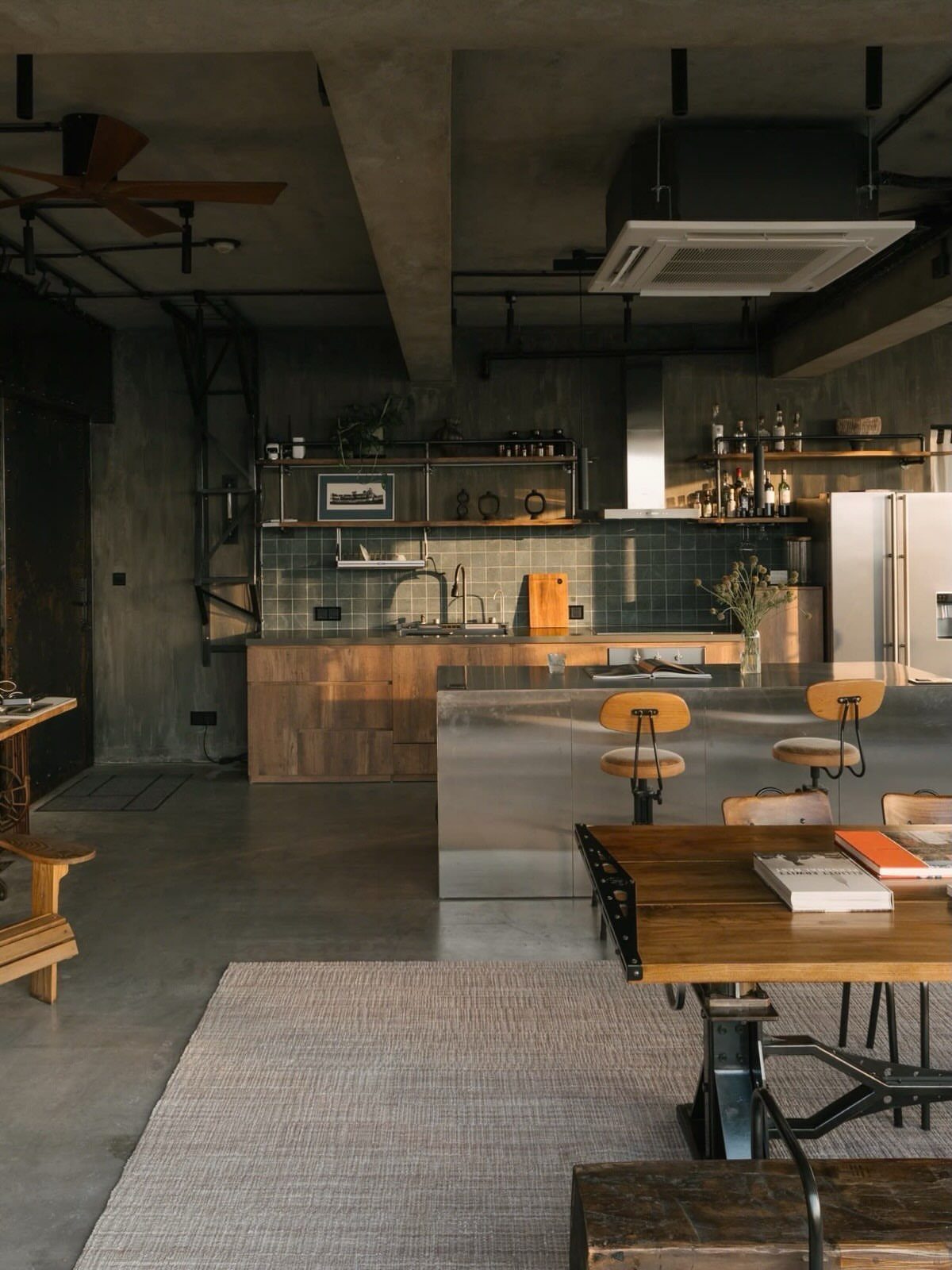
Stainless steel stands up to a concrete wall better than wood or paint would, since both surfaces are cool and hard and the island reads as part of the room.
A stainless island does double duty in a studio, serving as a prep counter while you cook and a place to pull up a stool and eat.
Bar stools tuck underneath, so the floor opens up when nobody is sitting. Keep the stools simple and dark so they don’t compete with the metal.
Wipe fingerprints off with a soft cloth, because steel shows every touch. Measure the walkway around the island before you buy.
14. Industrial Open Wardrobe System
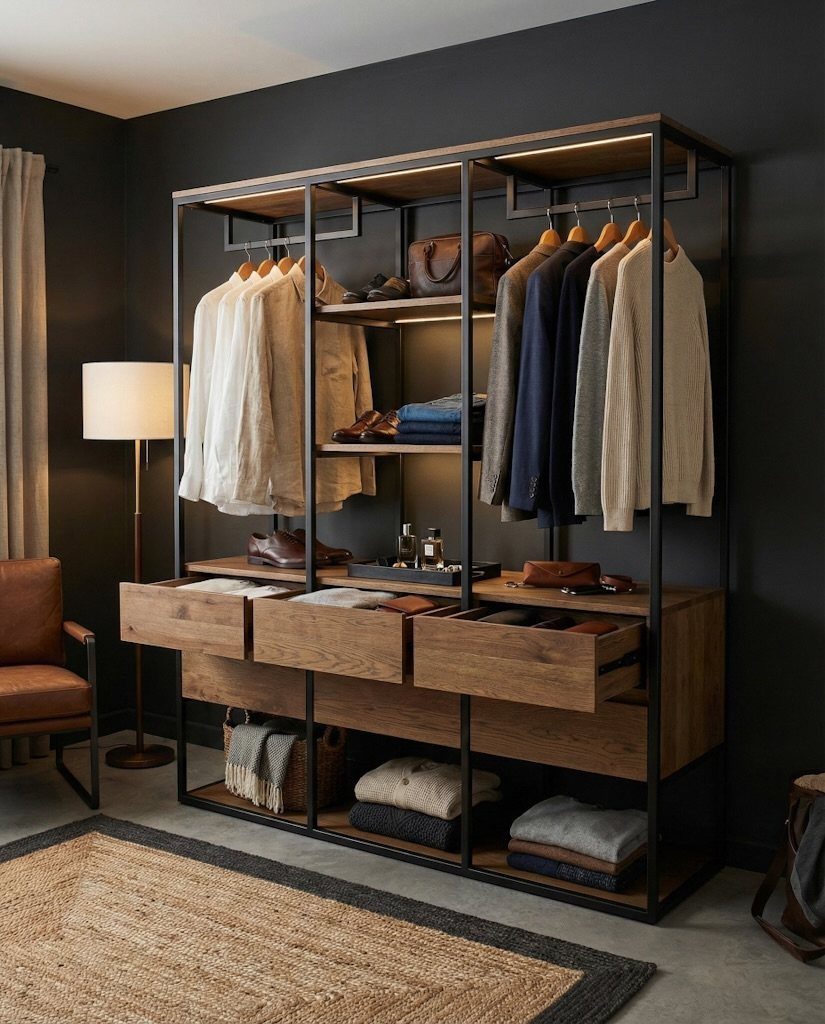
An open wardrobe with a black metal frame and wood drawers turns your clothes into the decor, which works only if you keep them folded and sorted.
Shoes and bags fit on the lower shelves, and the drawers hide whatever you’d rather not display.
I like this better than a closet door that eats floor space when it swings. Against a dark wall, the black frame nearly disappears and the wood stays warm.
Edit the contents first. An open rack punishes a messy stack of clothes, so group by color.
15. Black Metal Wall Shelving
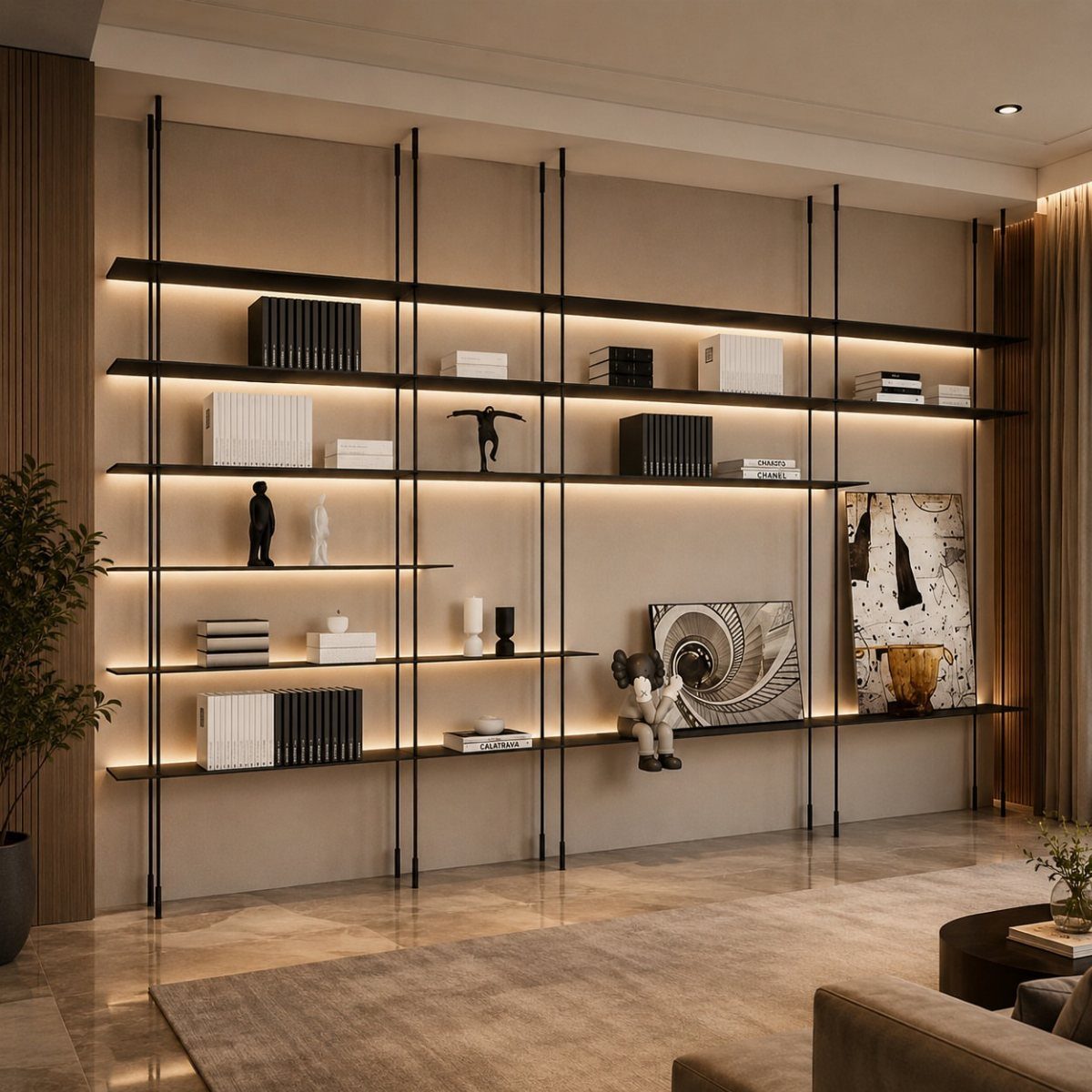
Warm backlighting is what makes black metal shelves worth the wall space. The glow turns books and a few art pieces into a lit display, and it doubles as ambient light in the evening.
Against a beige wall, the black frame gives clean lines without feeling heavy. Leave gaps between objects, because crowded shelves lose the effect of the light.
Mount into studs, since a full unit of books is heavy. Check your lease first, and consider a leaning metal shelf if drilling is off limits.
16. Brown Leather Chesterfield Sofa
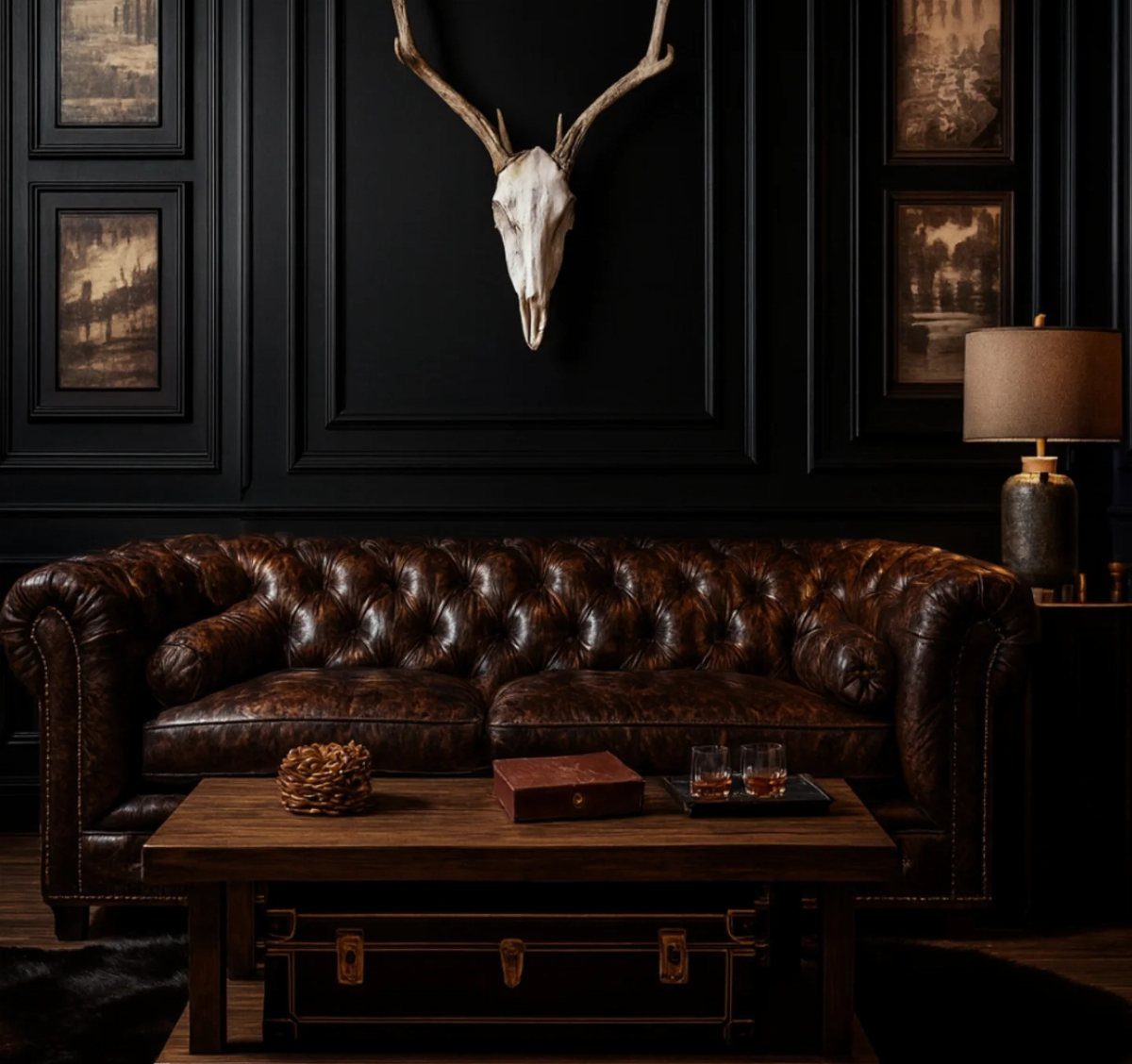
Brown leather and black paneled walls are a pairing I’d pick over almost any other for a dark, moody room. The tufted back and rolled arms give the sofa a shape that the plain walls need.
A Chesterfield is a big piece for a studio, so make it the one large seat and choose lighter, smaller things for everything else.
Leather warms up and softens with use, which suits a sofa you plan to keep. Measure your doorway before ordering.
17. Under-Bed Accent Lighting
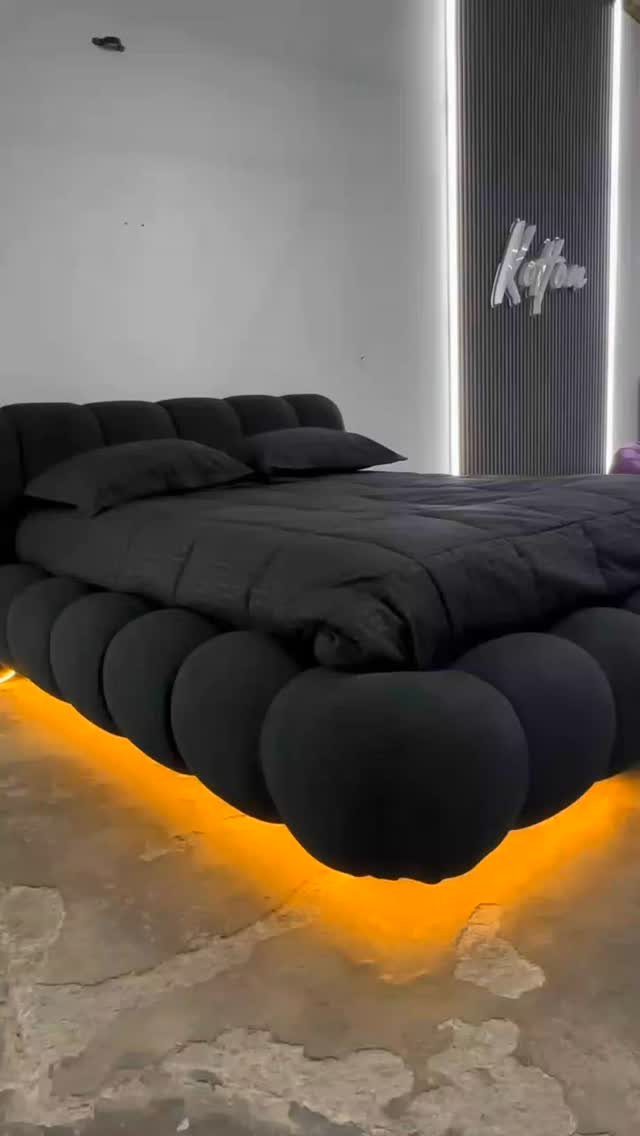
Orange glow under a black tufted platform bed makes the bed look like it floats, and it gives you a soft night light at floor level. That is a lot of atmosphere for the cost of an LED strip.
Warm tones suit this bed best. On a gray wall, cool white light turns the glow clinical, so pick a warm white around 2700K instead.
A dimmer or remote lets you turn it down for sleeping.
Maximize Natural Light
Window treatments decide how much daylight a studio keeps. Sheer curtains or blinds let the sun in, while heavy drapes and bulky furniture parked in front of the glass cut it off.
A sheer panel hung in front of a roller shade handles privacy: the shade stays up for daylight, and the sheer blurs the view in from outside.
Pull the shade down at night or when you need cover, and leave the sheer alone the rest of the time.
White walls spread light the furthest.
A dark gray wall soaks up sunlight, and repainting it white, paired with light wood floors like white oak, makes the room feel larger and more open because the light bounces around instead of disappearing.
If you rent and can’t repaint, stick to light tones in whatever you can change: bedding, curtains and rugs.
Create Multifunctional Areas
Studio furniture has to earn its floor space, so I look for pieces that handle two jobs, and three is better. Pick items that store something and also serve as a surface or a seat.
A leather storage ottoman is a good example. Cognac leather in a solid color brings warmth and texture, and it does it without crowding a small room.
A vintage cabinet can do the same trick. Mine would be a storage bench that holds a row of sneakers and doubles as a bar top when friends come over, which makes the footprint pay off twice.
Before you buy, ask what the piece will store and what else it can be. If it only does one thing, it probably doesn’t belong in a studio.
However, designer and 2021 Next Waver Nicholas Obeid explains, “In a small space, too little can be as dangerous as too much.” He says to combat the cramped feeling, he had to pay attention to the scale of the furniture he put in his Chelsea studio.
Frequently Asked Questions
How do you make a men’s studio apartment feel masculine without going black leather and neon?
Pick a tight palette of black, white and grey, then add one warm material like wood or leather.
Texture does the rest: a brown textured wall behind the bed or velvet chairs in 2 bold colors adds character without any neon.
What is the best way to zone a studio apartment without building walls?
Use an open shelving unit, a large rug or a glass divider to split sleeping from living.
In a rental where nothing can be built or drilled, a freestanding framed screen does the job of a partition and moves with you when the lease ends.
Is industrial style too cliché for a studio apartment?
No, it works when you keep the palette restrained and add something soft to balance the hard surfaces.
Black metal, brick and concrete look planned when the rest is quiet, so a cognac leather chair, a plush swivel chair, a rug or a few large plants can supply the warmth.
Wood drawers and warm backlighting on black metal shelves do the same job.





