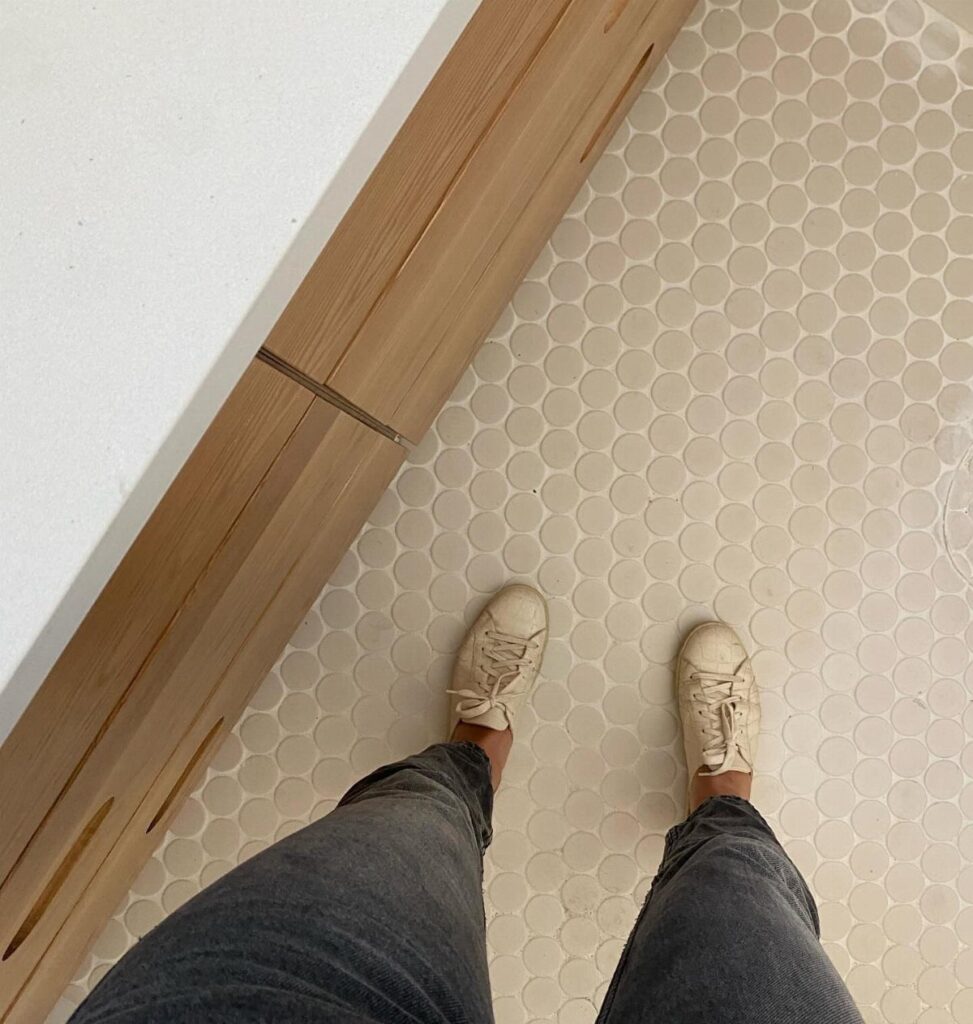
Which tile suits a small bathroom depends first on how wet the floor gets, because the ideas here run from matte wood-look porcelain and honed marble to grippy penny rounds, and a polished surface turns slick the moment water hits it.
Past that, the choices are mostly about look and effort: penny rounds and basketweave usually come on mounted mosaic sheets that go down fast, while herringbone means more cuts and a slower install.
1. Wood-Look Tiles
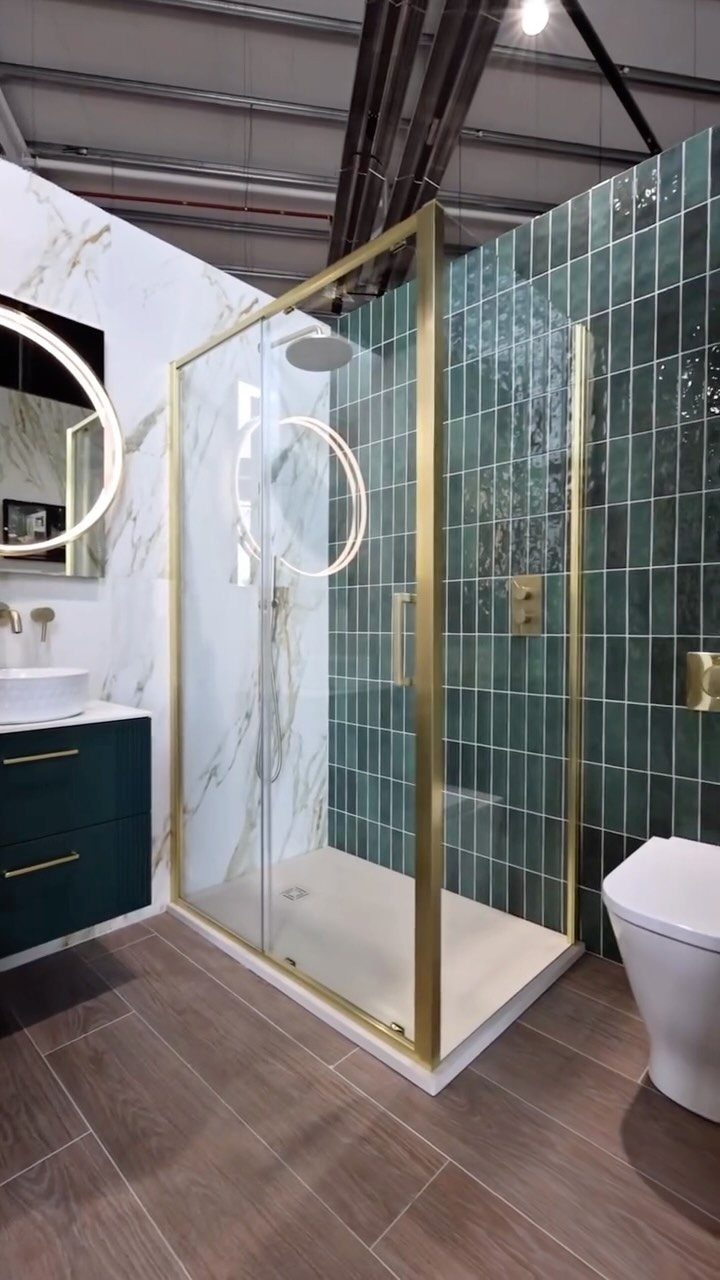
Wood-look porcelain gives a bathroom floor the warmth of planks without real wood’s fear of water. That matters when the floor sits a few feet from the tub and sink.
Choose a matte finish over a glossy one, and keep the plank color close to the other warm tones in the room.
2. Penny Round Tiles
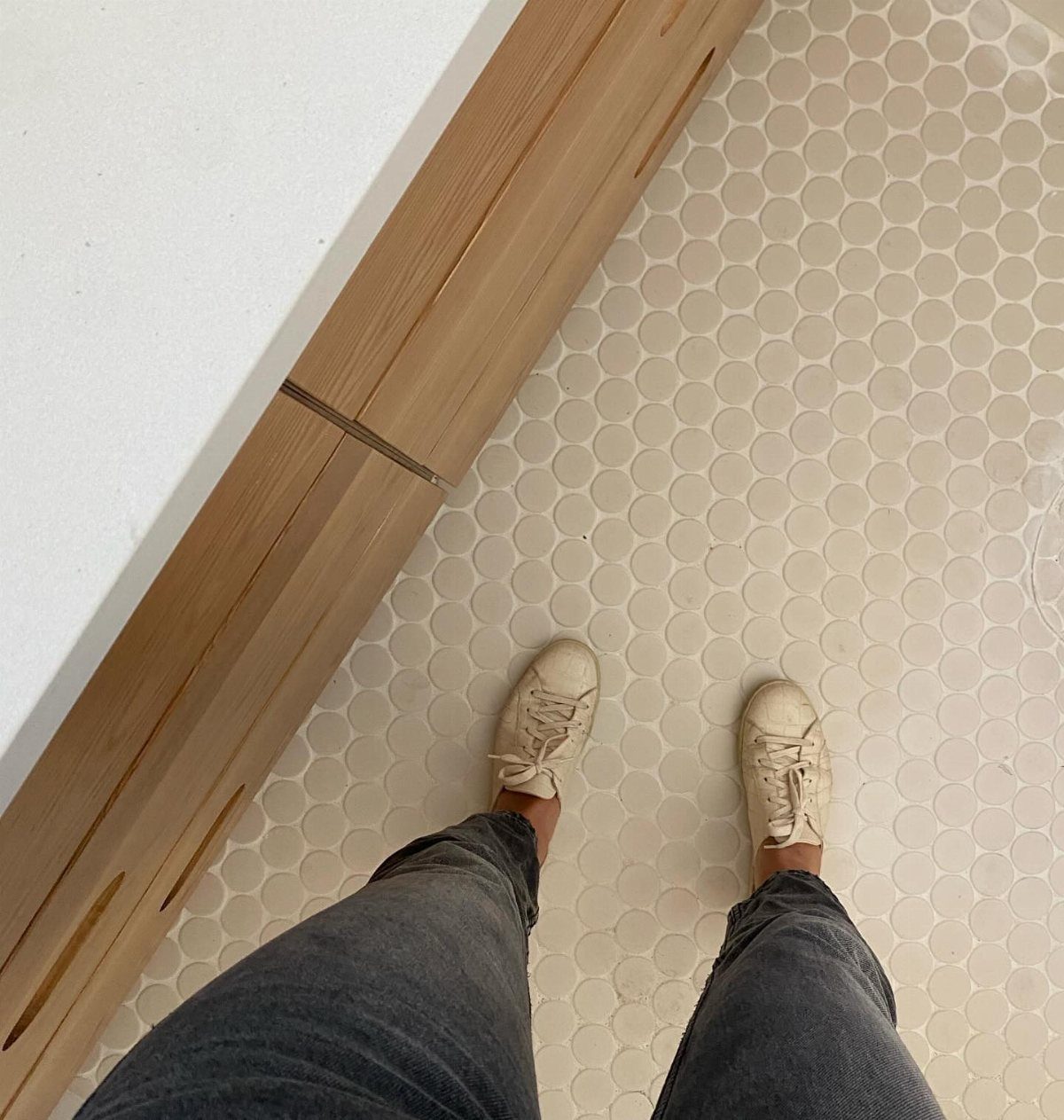
Small off-white penny rounds slip-proof a floor better than almost any other shape, since the grout lines give bare feet and socks something to grip.
I would pick them for a bathroom that gets wet daily.
Expect more grout to clean than with big tiles. Sheets of mounted rounds go down faster than single tiles, which suits a weekend job.
3. Patterned Tiles
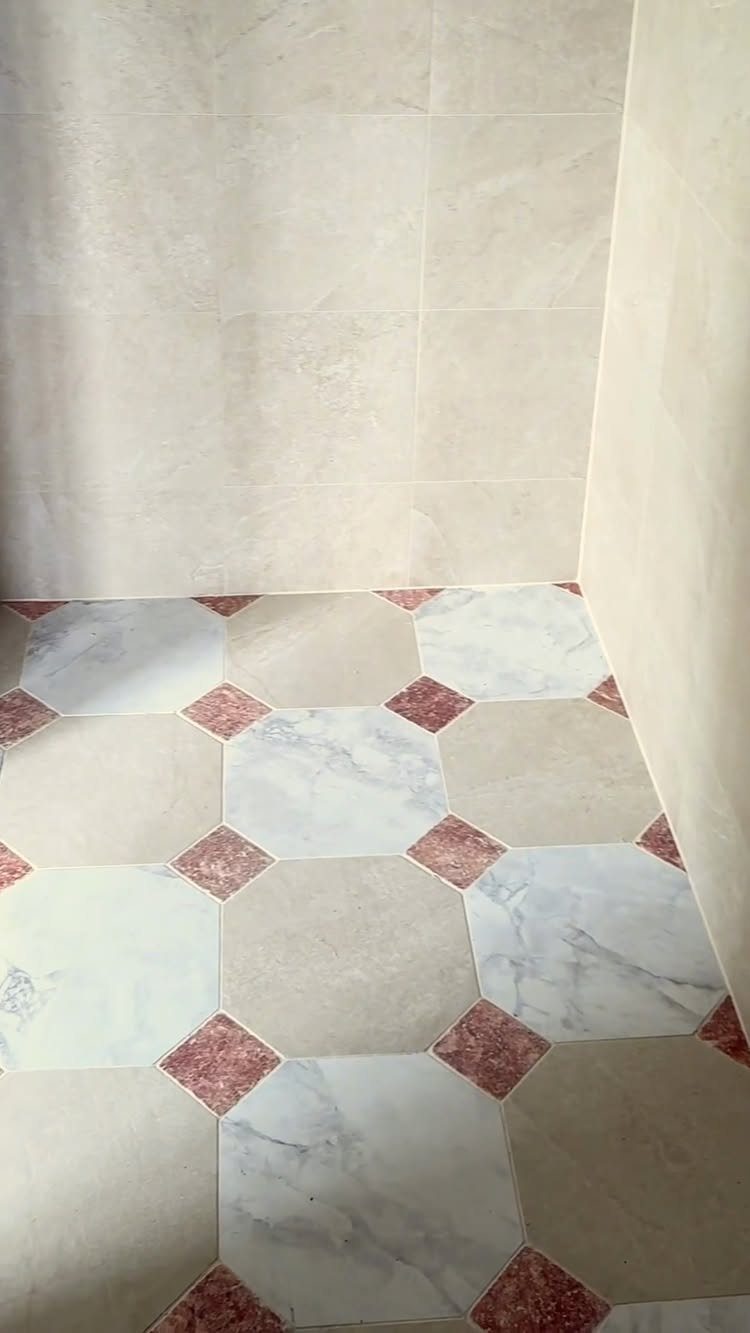
Octagons with small accent squares between them give a floor a pattern that reads as one calm shape instead of a loud print. That restraint is why it works in a tight room.
Keep the walls plain and light so the floor does the talking. I would pick two base colors and one accent color, and no more.
4. Basketweave Pattern
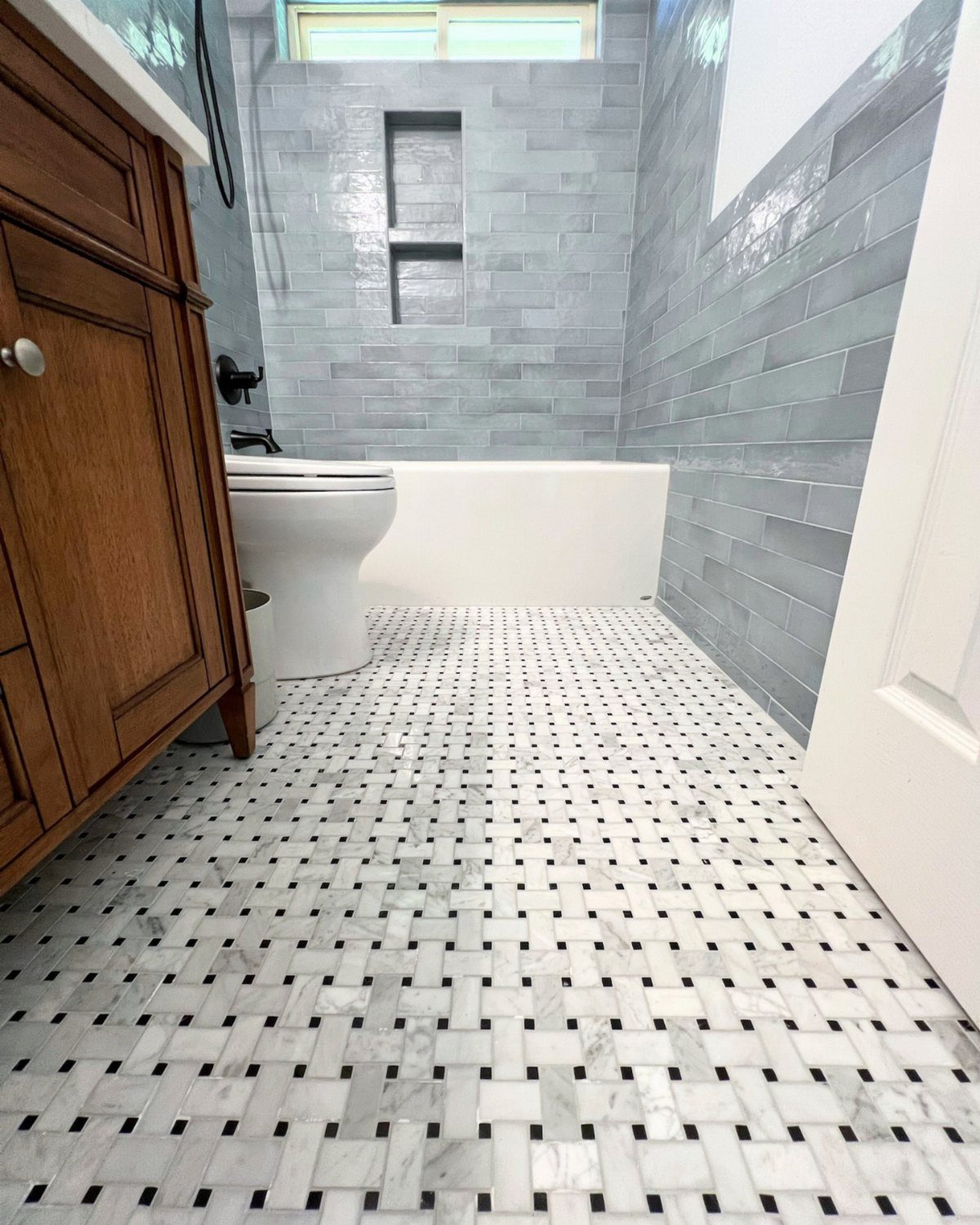
Basketweave is the old-school floor I trust most when space is tight. Black and white pieces woven in a repeat pattern fit a vintage bath just as well as a modern one with grey walls and a wooden vanity.
Marble mosaic gives the classic look. Pick a grout color near the lighter tile if you want the weave to stay soft, or a darker grout if you want it to pop.
5. Hexagon Tiles
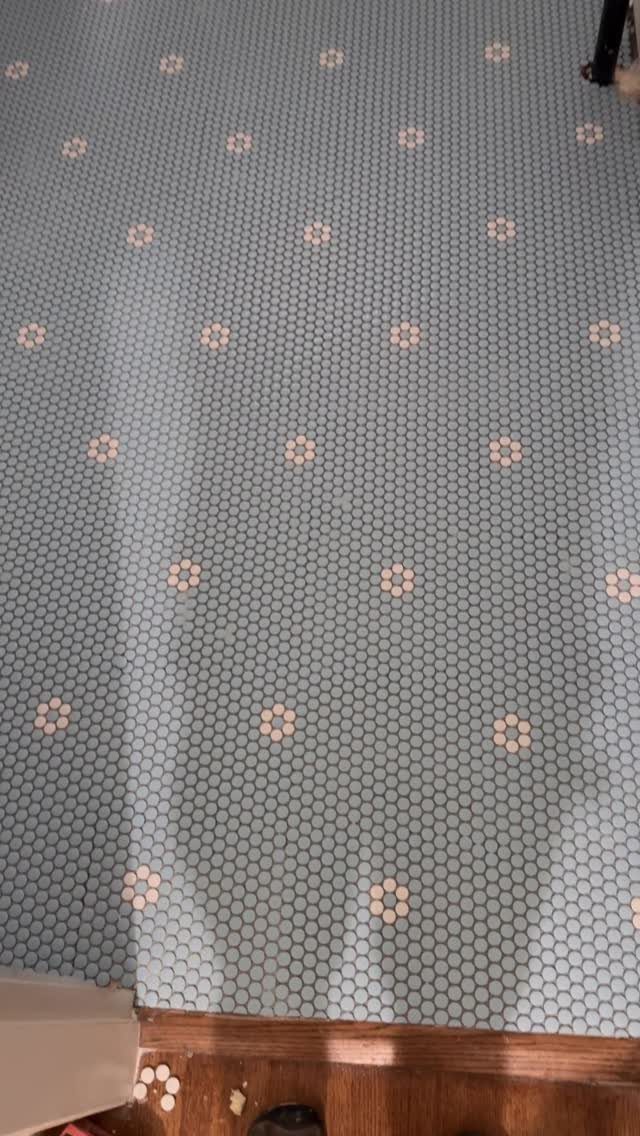
Small hexagons add a honeycomb geometry to a floor, and because the sheets are mosaic-sized they follow a small room’s corners and thresholds easily.
A pale blue or grey keeps the shape from feeling busy. Add occasional floral accent pieces, as here, only if you want a little charm; plain hexagons are the safer buy.
Where the tile meets a wooden threshold, finish the edge with a flexible color-matched caulk or sealant, since wood moves with humidity and a rigid line would crack.
6. Herringbone Pattern
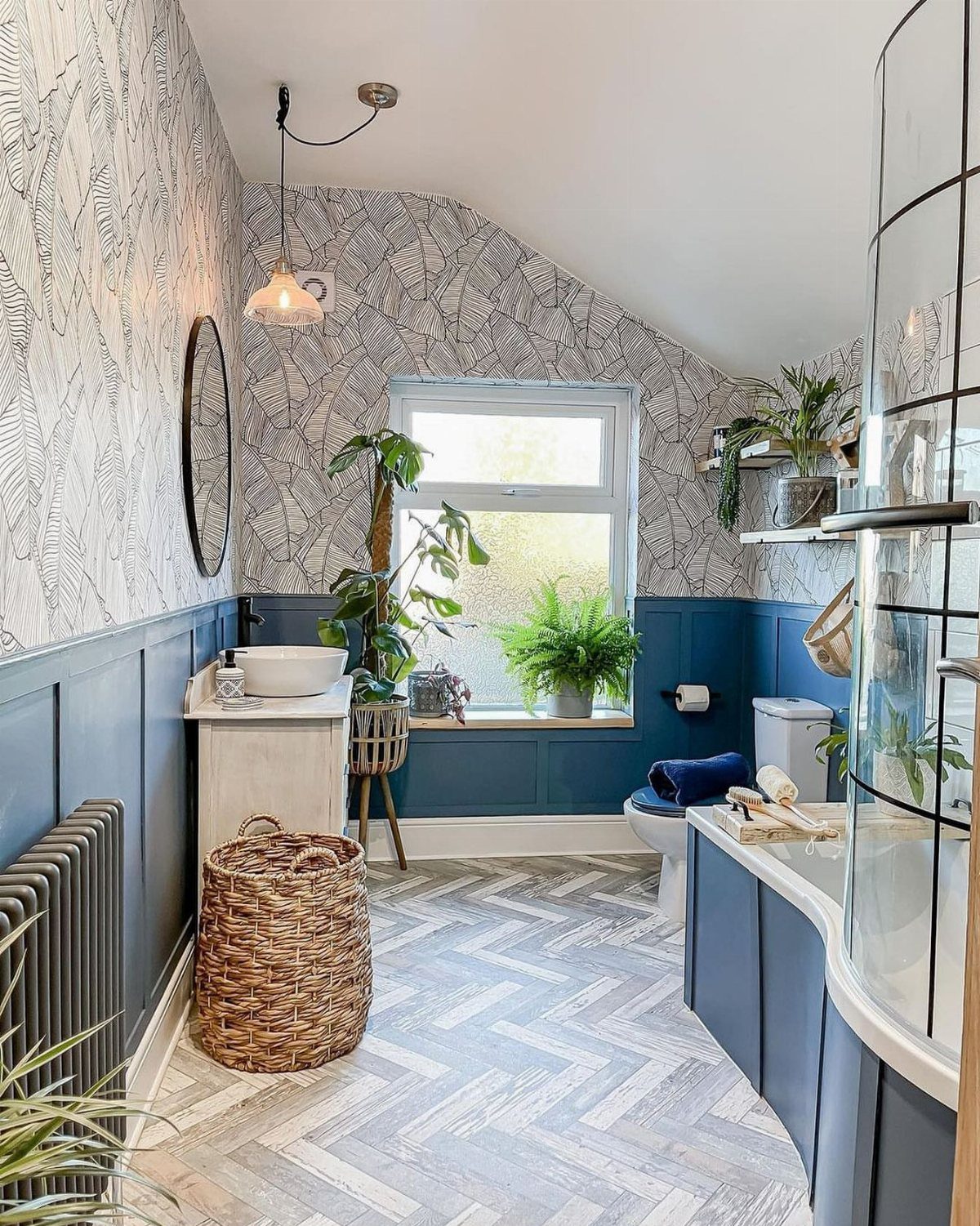
Herringbone turns plain rectangular tile into a floor with direction and rhythm, which is a clever way to add design without square footage. Lay the rectangles in a zigzag, each one meeting the next at a right angle.
I would keep the tile in a quiet color, since walls with wainscoting and wallpaper already bring plenty of pattern. Plan the layout from the center of the room so the cuts at the walls come out even.
Expect more cutting and a slower install than straight rows.
7. Marble Tiles
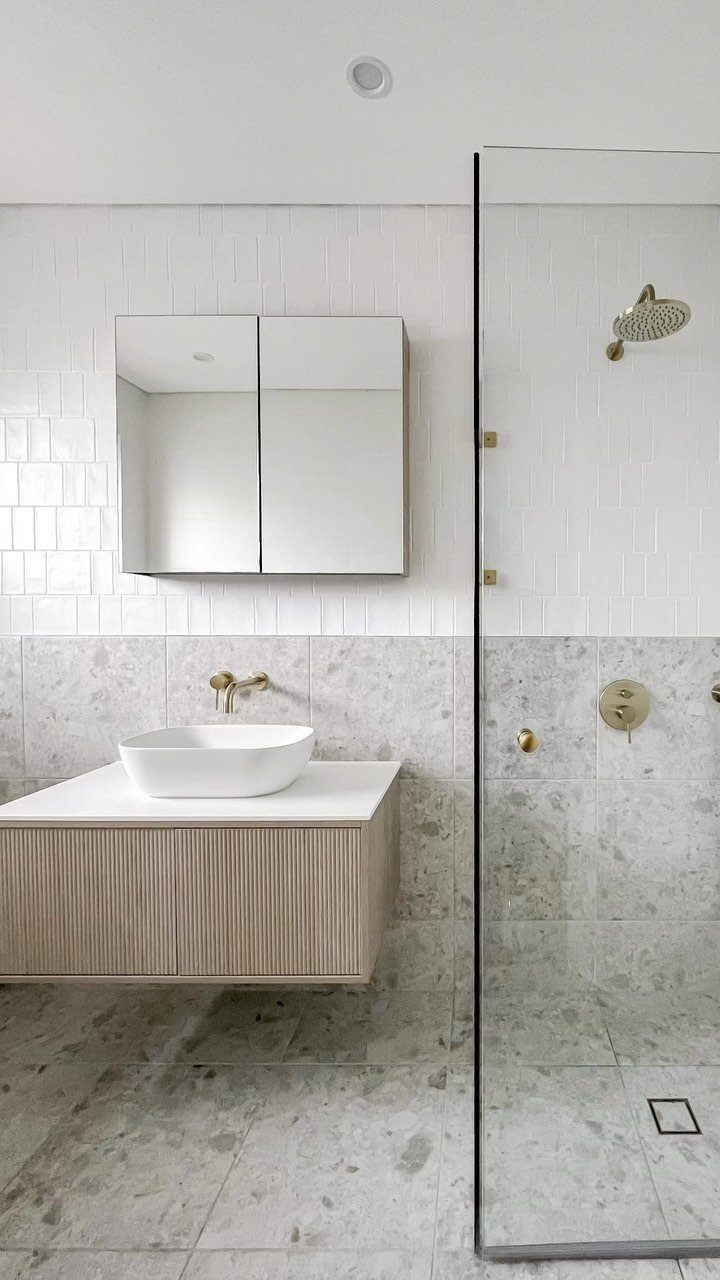
Grey marble carried across the floor and up the walls reads as one calm, continuous surface in a tiny bathroom.
I would pick a honed finish over a polished one for the floor, since polished stone gets slick when wet. Marble costs more than porcelain, so marble-look porcelain is the budget swap when the real stone won’t fit the budget.
Real marble also needs sealing, so factor that in.
8. Small Grey Rectangular Tiles
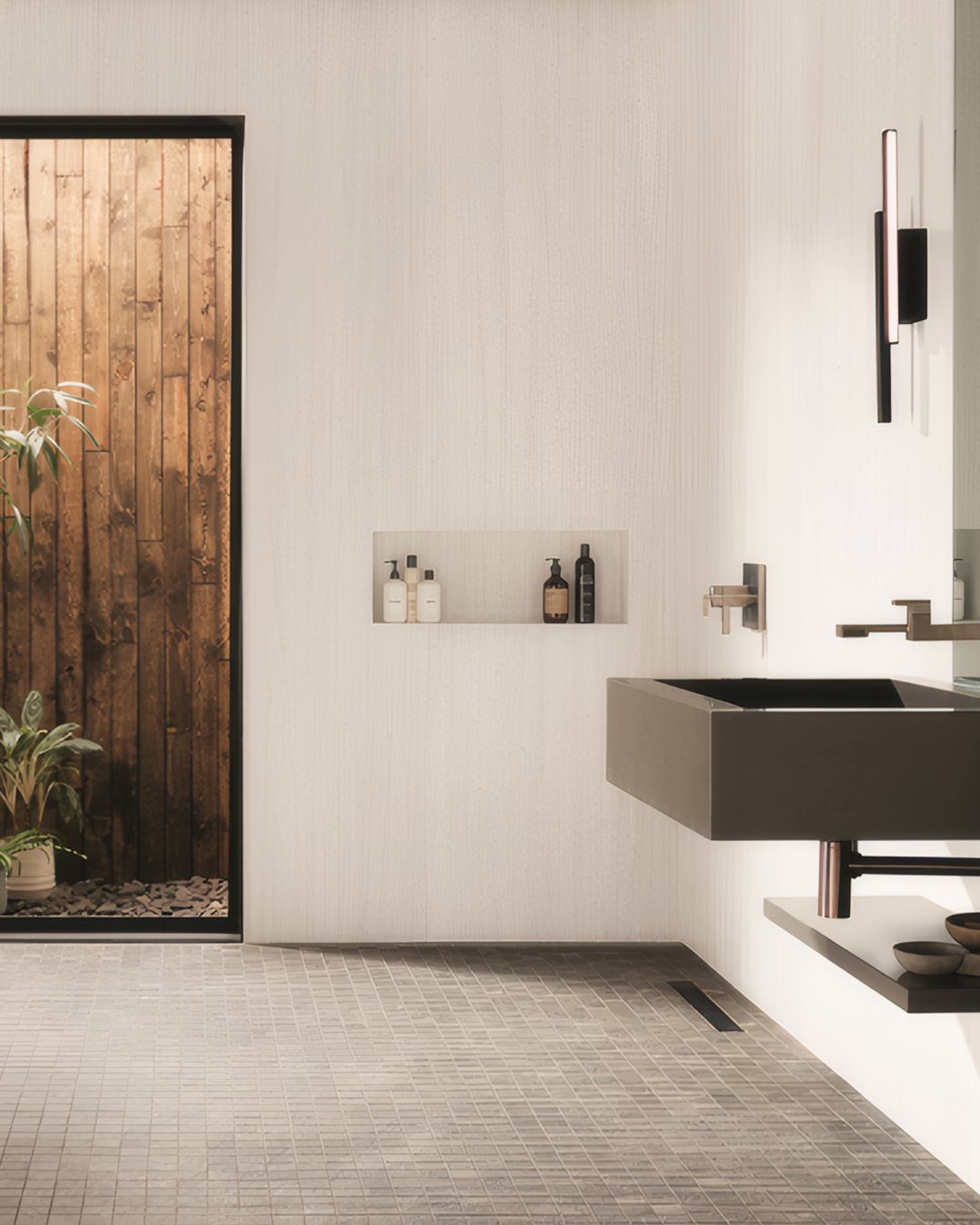
Small grey rectangles suit a floor that has to stay quiet beside a floating vanity. With the vanity lifted off the ground, more of the tile shows, so the floor does a lot of the work.
Grey hides dirt and soap film better than white, which I count as a real plus in a daily-use bath. Pick a grout one shade darker than the tile if you want an even, low-maintenance surface.
Run the rows in the same direction as the longest wall.
9. Large-Format Tiles
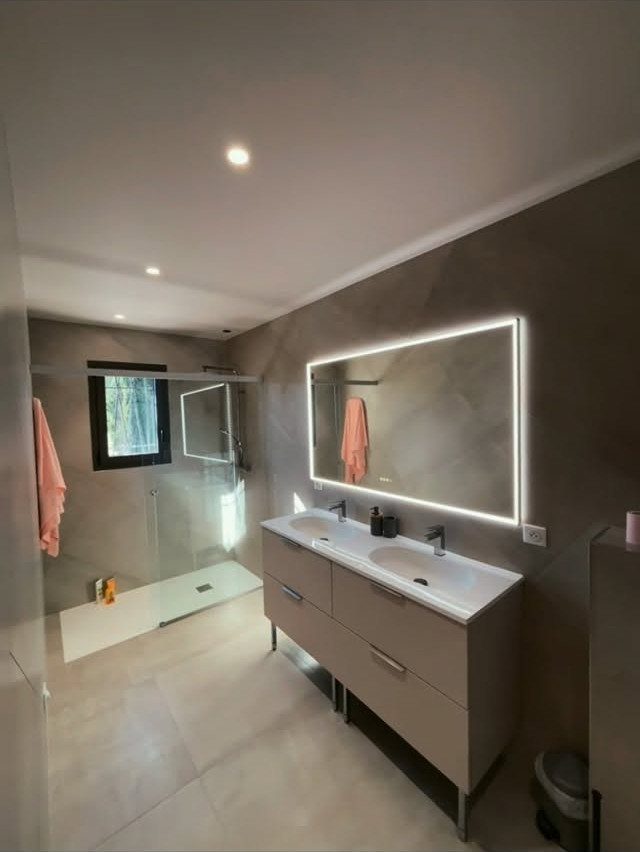
Large-format tile keeps grout lines to a minimum, which means fewer seams chopping up the floor of a compact bathroom. A warm beige, carried from floor to wall as here, makes the room feel wider.
Large tiles need a flat subfloor, so check it first, because a bumpy floor shows up as lipped edges once the tile is down. They are also harder to cut around a toilet flange and tub edge, so measure twice.
Matte is my pick for the floor, since it grips better underfoot when the surface gets wet.
Slip Resistance & Maintenance
Wet-area slip resistance is a number you can look up, so check it before you buy.
Look for the DCOF rating (Dynamic Coefficient of Friction) on the spec sheet; for a bathroom floor, 0.42 or higher is the usual target, and reputable manufacturers publish it.
Polished tile looks great in photos, but it turns slick the moment it gets wet, and a bathroom this small leaves you no space to recover from a slip. Matte or textured surfaces are the safer call.
Pick a light grout that is stain-resistant, since it is easier to keep clean. Seal wherever moisture collects, such as around the tub and in front of the sink.
Color Selection
Light neutrals make a small bathroom feel brighter and larger, so start there. Soft greys and beiges give a floor some depth without making the room feel smaller, and a matte surface hides water spots better than a glossy one.
Very dark tile shrinks a compact room visually, so I would skip it for the whole floor.
Grey can read dull.
Ribbed glass or a ribbed sink adds interest without crowding the room. If you want a bolder color, a green vanity against dark grey wall tile works, but keep the floor pattern simple.
Layout Importance
Tile size gets most of the attention, yet the layout does more of the work, and misjudged scale is the mistake I see most often.
Large tile isn’t a safe default on every floor, but a 12×24 inch rectangle laid lengthwise toward the door can make a narrow bathroom read as longer.
A small mosaic of penny rounds, hexagons, or squares also works, because it adds detail without adding visual weight.
Two options hold up: a 12×24 or 24×24 porcelain laid with its long side along the room’s length, or a 1–2 inch mosaic in marble, ceramic, or porcelain.
Small bathroom flooring ideas can be challenging due to a lack of space, but there are always interior design tricks that can be utilized to add extra interest without making the space feel crowded or too busy.
Frequently Asked Questions
What are the trends for small bathroom tile in 2026?
Large-format tile, subtle patterns, matte finishes, and wood-look porcelain are the trends I see most.
Wood-look porcelain gives you the plank pattern and warmth, minus the swelling and rot that real wood risks near a tub. Quiet geometric floors in two or three colors suit a tight room better than a loud print.
How slip-resistant should small bathroom floor tile be?
Look for a DCOF (Dynamic Coefficient of Friction) rating of 0.42 or higher on the spec sheet for a bathroom floor.
Reputable manufacturers publish the number. Matte or textured tile is the safer choice, and small mosaics like penny rounds add grip through their grout lines.





