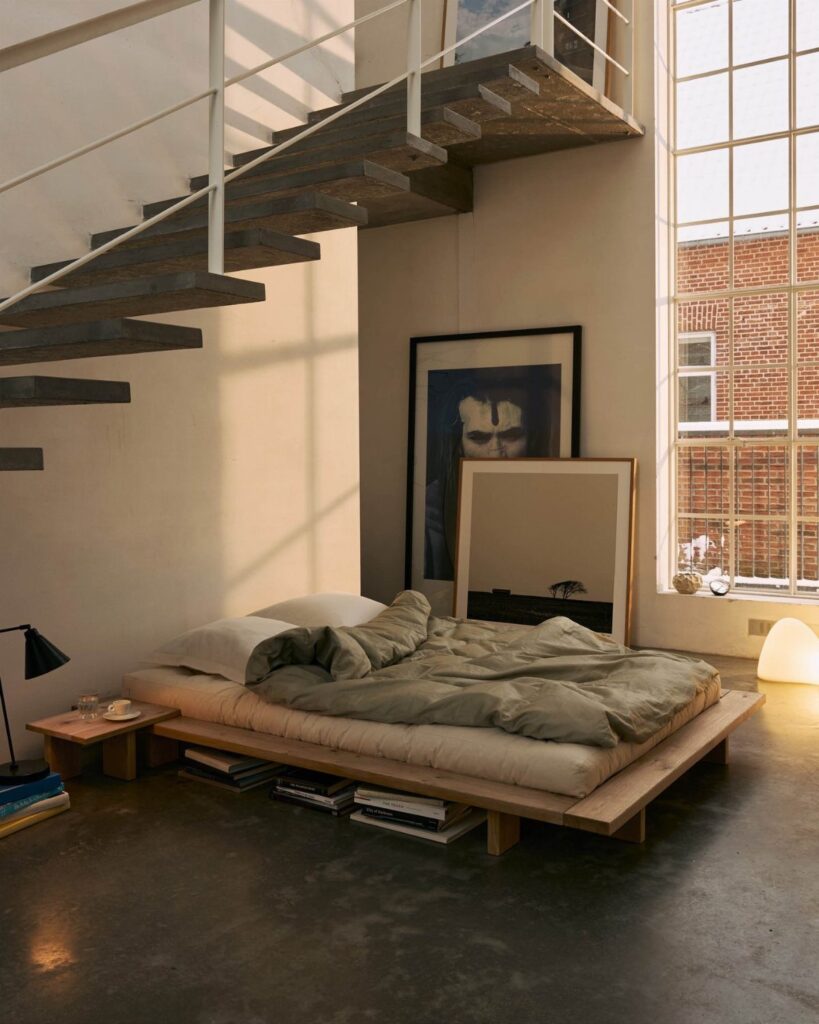
Ideas here run from a gallon or two of paint over a weekend to swapping the whole bed for an ottoman frame that lifts at the mattress to reveal a full storage cavity.
Which idea comes first depends on the room itself: if the mattress size is already fixed, start with light wall color, a big mirror and a frame with exposed legs, but if the room can’t spare the floor, check furniture size before buying anything else.
Renters can stay on the leaning-mirror and sheer-curtain end, since neither needs drilling.
1. Bed Frame with Exposed Legs
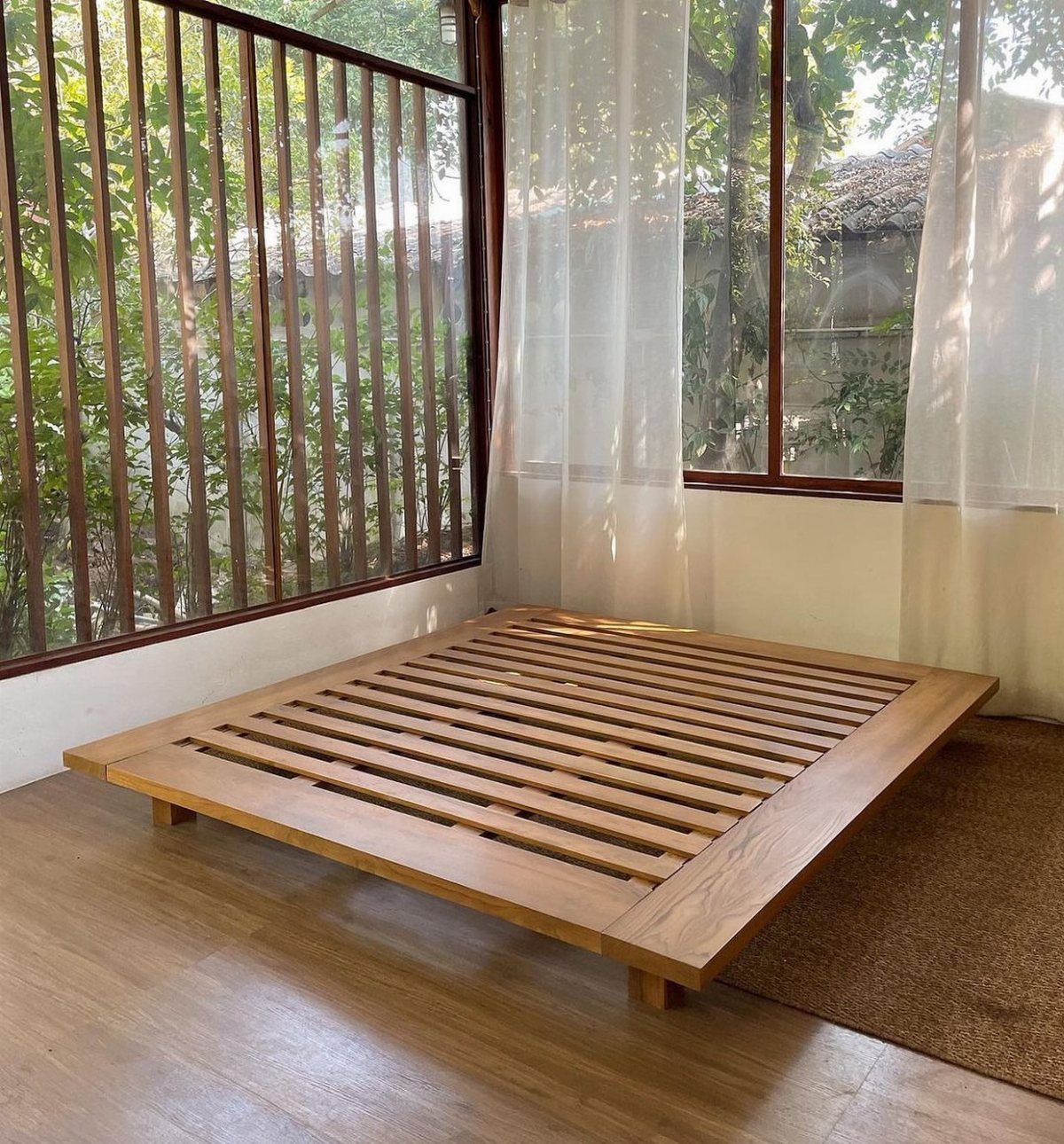
Slim legs and an open slatted base let light and floor show underneath, so a large bed reads as lighter than a solid box frame.
That visible strip of floor under the frame does a lot of work, because it lets the eye run all the way to the wall.
Pick a frame with legs tall enough to slide a storage bin under, but keep the look uncluttered.
If you can see slats, line up the bins so they sit flat and tidy rather than spilling out. Wood that matches the floor tone blends in even more.
2. Light Colors on Walls
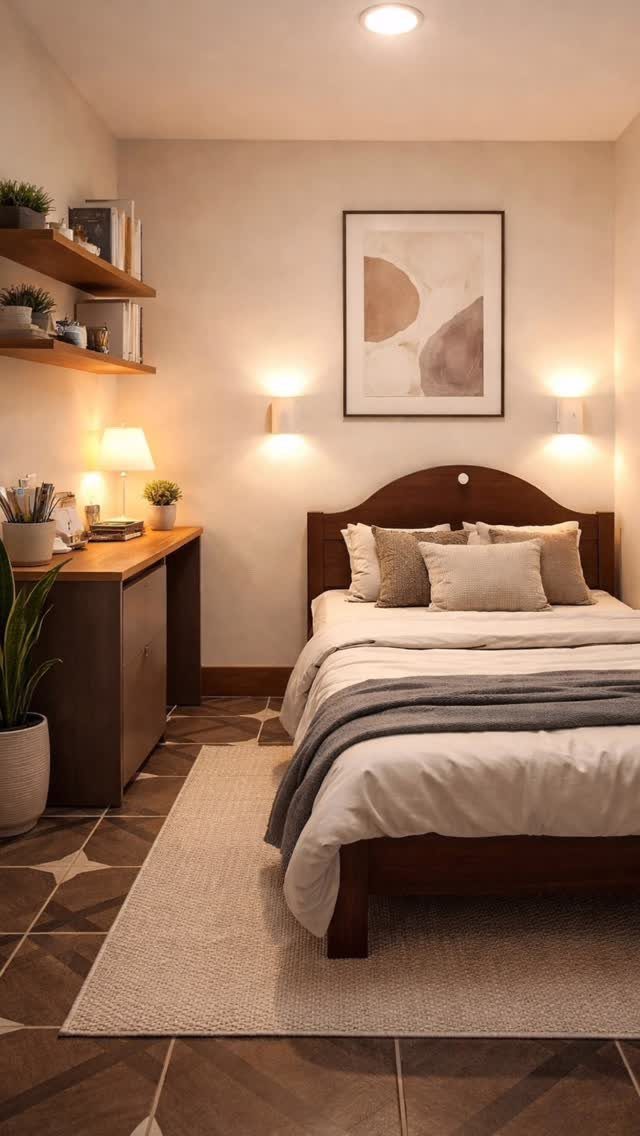
Paint is the cheapest move for a bedroom like this, and a light beige or warm white wall pushes the walls outward.
Even a dark wood bed sits more calmly against it, because the contrast gives the frame a clean edge instead of swallowing the room.
Keep the ceiling and trim in the same light family so the eye doesn’t stop at corners.
A weekend and a gallon or 2 covers most bedrooms. Choose a warm undertone if the room gets little sun; cool whites can feel flat.
3. Minimal Decor
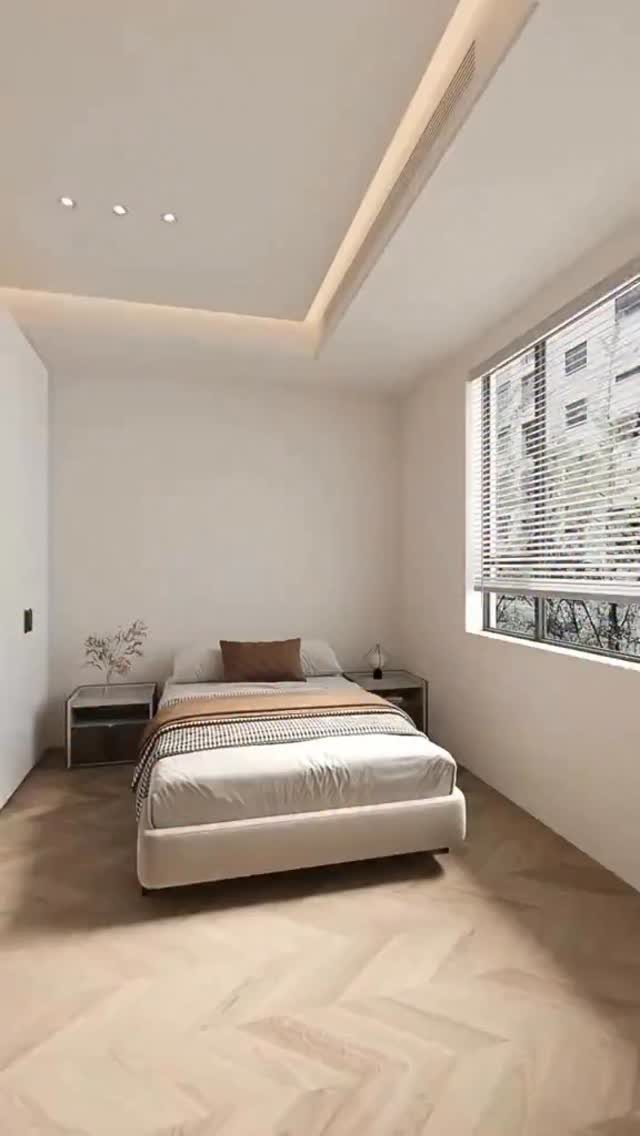
2 small nightstands, a low bed and bare walls: that’s about all a large bed needs around it. Every extra object competes for the little floor and wall you have left, so I’d cut before I’d add.
Start by clearing every surface, then return only what you use daily. Matching bedside tables keep the layout calm.
Choose one window treatment, such as simple blinds, and leave the rest alone. Whatever doesn’t fit goes out of sight, not onto the wall.
4. Large Mirror Opposite the Bed
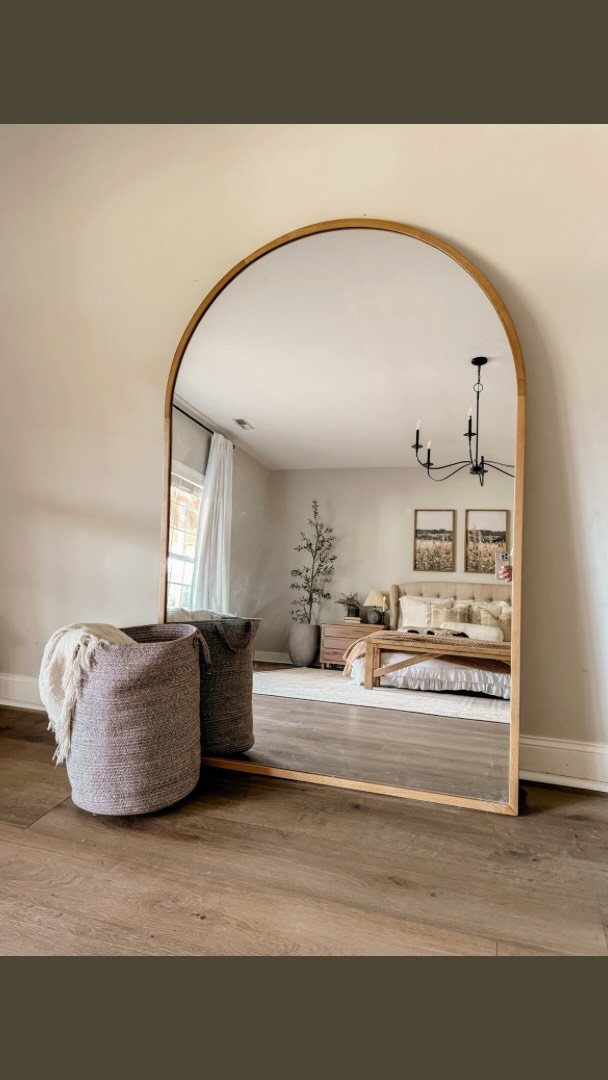
An arched, full-length mirror leaned against the wall costs far less than a mounted one and needs no drilling, which suits renters. Set it where it catches window light and bounces it across the room, and the space gains depth.
Place it opposite the bed or at an angle to the window, and check what it reflects first.
A plant, a lamp or a tidy corner looks good doubled; a pile of laundry doesn’t. Wide baskets beside it keep the base looking finished.
5. Revamp Your Storage Solutions
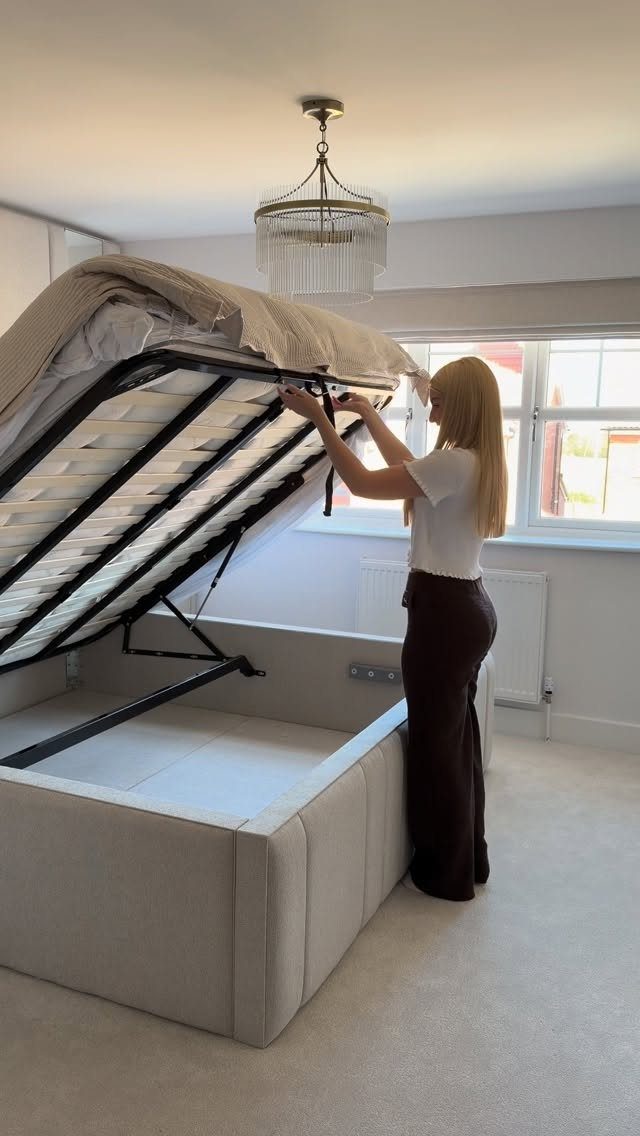
An ottoman bed lifts at the mattress to reveal a full storage cavity, so the biggest object in the room also holds your bulky items. Under-bed storage can replace a dresser and free the floor.
Store off-season bedding and extra blankets there, things you reach for rarely.
Leave clearance on at least one side so the lift can open fully. Built-in shelves above the headboard add more room without touching the floor.
6. Lightweight Curtains
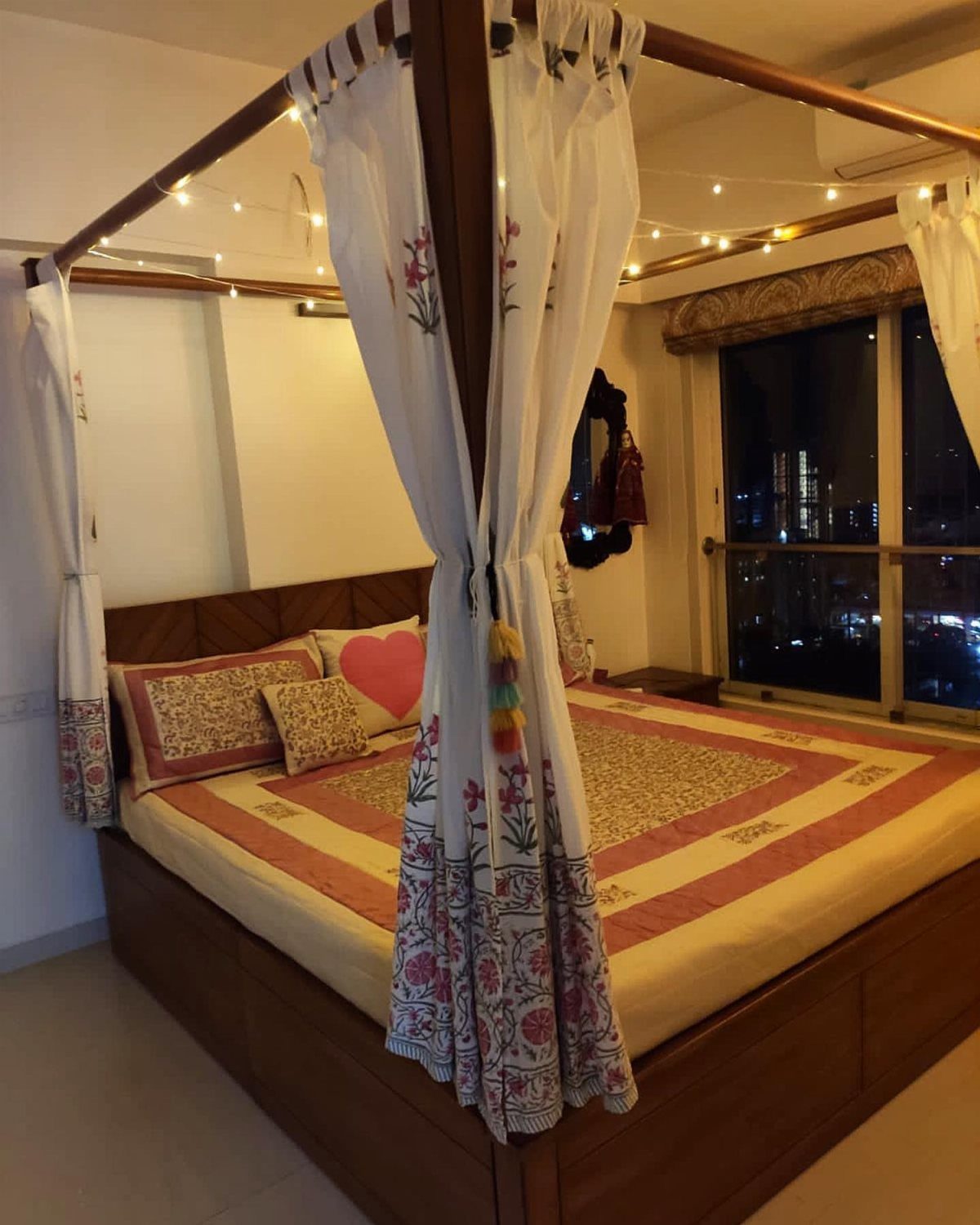
Sheer, floaty fabric around a bed softens its bulk and lets daylight pass through instead of closing the room in.
Choose a thin cotton or voile in white or a light print, and avoid heavy lined panels, which leave the room feeling boxed in.
String lights draped along the frame add a gentle glow at night and cost very little to set up.
7. The Corner Tuck Layout
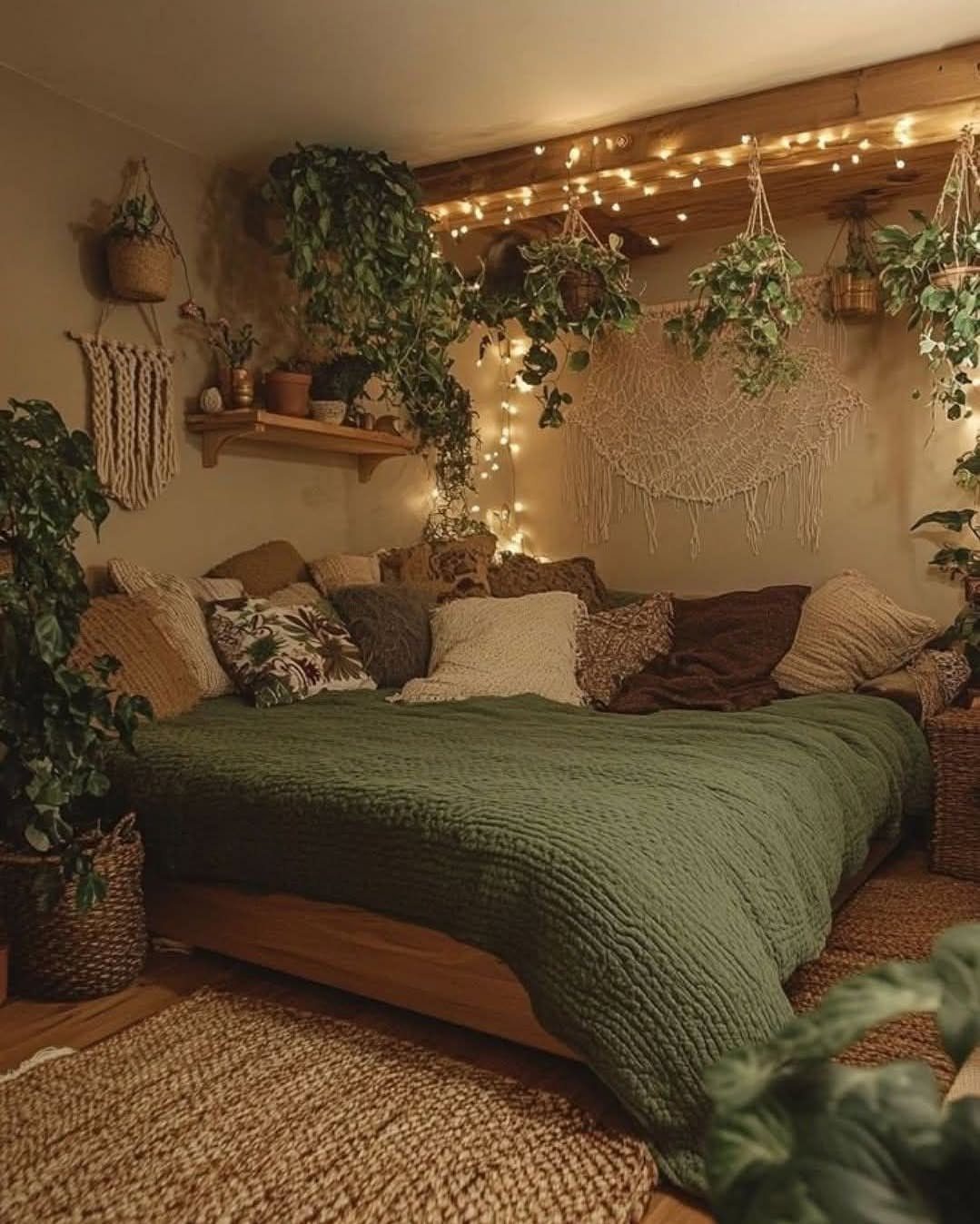
Sliding a large bed into a corner gives you 2 walls as a headboard and side support, and it frees the remaining floor for walking or a small chair.
The open side becomes the only edge you have to plan around.
Measure the gap on that side first, since you’ll be getting in and out from one direction.
Plants and a hanging piece on the wall above the pillows keep the corner from feeling like a dead end. String lights cost little and add glow without taking up any floor.
One trade-off: making the bed on the wall side is awkward, so choose fitted sheets and a quilt that’s easy to pull straight.
8. The Window Anchor Layout
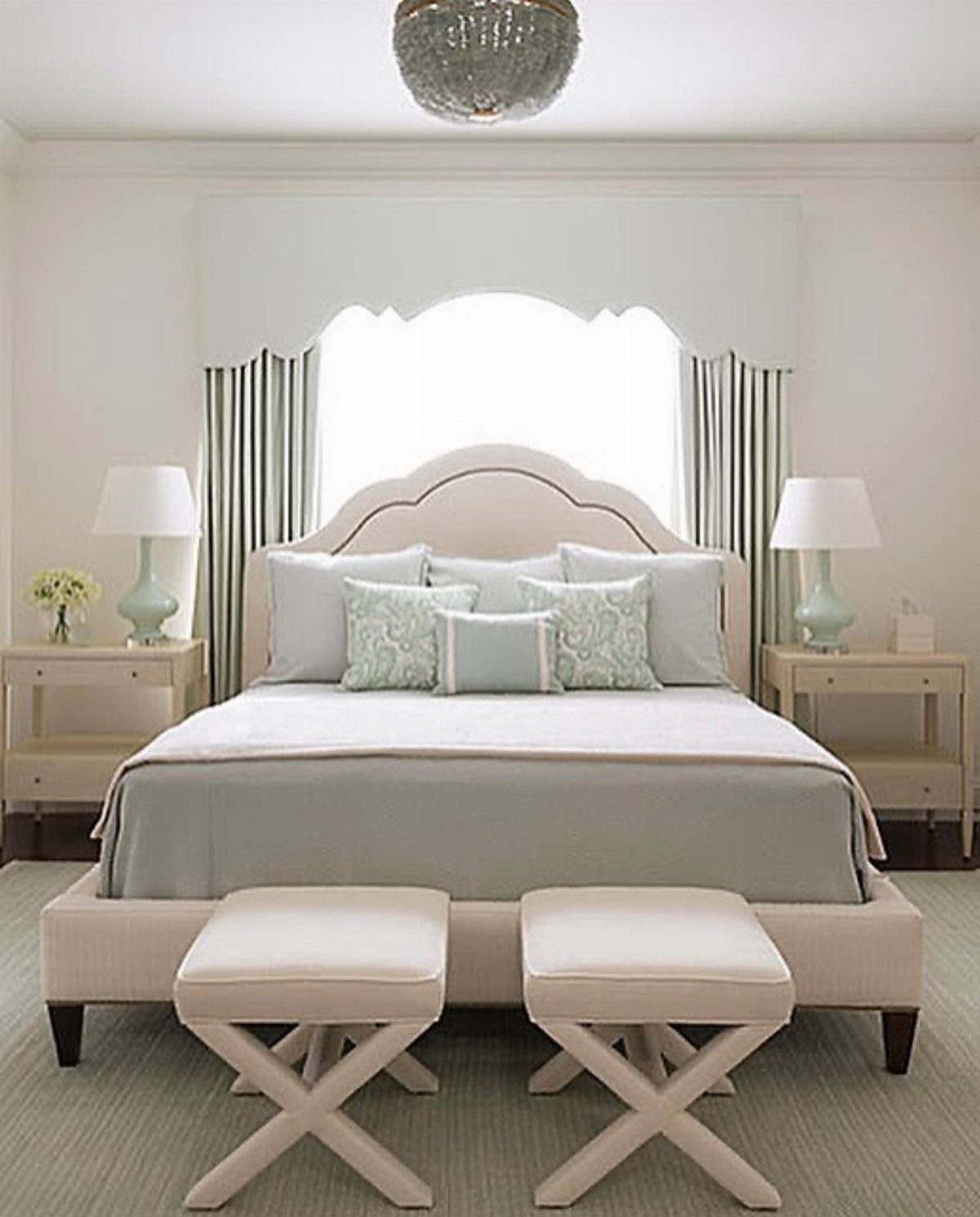
A bed centered under the window turns the glass into the headboard wall, and the view or daylight behind it adds depth the room wouldn’t otherwise have. 2 matching nightstands on either side keep it balanced.
Keep the curtains simple and hung high enough to clear the top of the headboard, so the window still reads as tall. A curved headboard softens the corners when the room is small.
Benches at the foot are a nice touch, but when space is tight I’d choose one slim bench over two. Expect some drafts near the glass, so a thicker quilt helps in winter.
Creating Visual Space with Decor
Flooring is the cheapest visual trick left once the layout is set. Let the floorboards run visibly under the bed and furniture, because seeing that continuous surface helps the eye read the room’s full footprint.
If you want a rug, keep it modest so wood still shows around the edges.
Going dark behind the bed is a legitimate move, even though pale colors are the usual advice for making a small room look bigger.
Deep charcoal or navy on that wall pulls it back visually and gives the room some depth. I’d paint only the wall behind the headboard and leave the other 3 walls light.
Mirror panels on a closet door will bounce light around and make the room read wider. It doubles the visual depth and pushes light into dark corners, and it doesn’t take up any floor.
Effective Storage Ideas
When you can’t spread out, go up. Short dressers and low nightstands leave the top half of the walls empty, so tall, thin storage units make better use of the room and draw the eye upward.
One nightstand can give way to a slim shelving tower.
Mounted shelves are the other good option.
They attach straight to the wall, keep the floor clear and leave more space to walk. Books, frames and folded clothes all fit.
Furniture Size Considerations
Before you buy anything, match the bed to who sleeps in it. Guest rooms, kids’ rooms and single sleepers seldom call for the biggest mattress on the market.
Dropping to a twin from a full or queen frees real floor space. That can mean a desk, a nightstand, a clearer path to the door, or a dresser that didn’t fit before.
If the room is tight, a king is the first thing to reconsider. Start with the mattress size the room can handle, then buy the rest of the furniture to match its scale.
If you’re set on a bigger bed, the trade is simple: you give up some of that extra furniture, so keep everything else small.
Frequently Asked Questions
What are some effective storage ideas for bedrooms?
Go up. Tall, thin units and a slim shelving tower in place of one nightstand use the empty top half of the wall, and mounted shelves keep the floor clear for walking.
Hidden storage can sit under the bed in an ottoman frame or on tall legs with bins, while shelves built in above the headboard use wall space and leave the floor alone.
How do I arrange a bedroom that is 10×10 or smaller?
Place the bed first; where it sits decides where everything else can go. Centering it on the wall opposite the door gives symmetry, while sliding it into a corner uses 2 walls as support and frees the remaining floor.
Use tall, thin storage or wall-mounted shelves, and skip bulky furniture that blocks walking paths.
Is it better to have a smaller bed in a small room?
Generally, yes. A twin in place of a full or queen opens room for a desk, a dresser, a nightstand or a wider path to the door.
If you’re set on a big bed anyway, keep everything else in the room small to make up for it.





