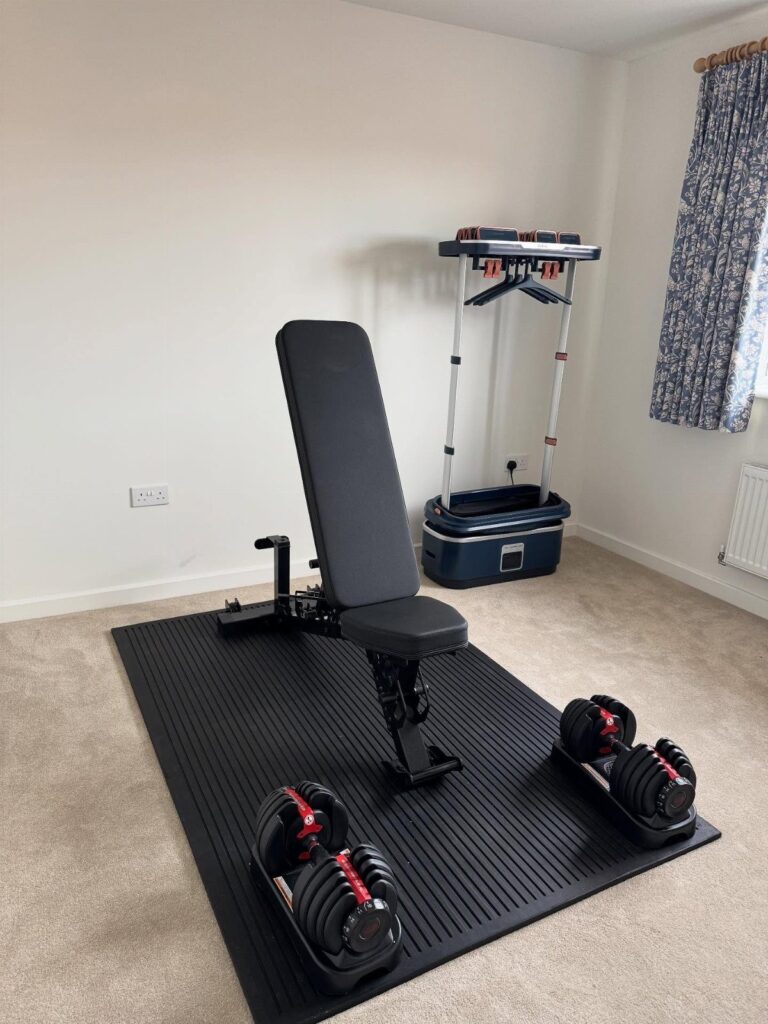
The ideas here run from a jump rope that rolls into a drawer to a cable machine that claims its own corner and takes more floor space than anything else on the list.
2 things sort these ideas for a renter: how much clear floor you can spare, and whether your lease allows screws in the wall, since stall bars and a power rack both need them.
1. Adjustable Dumbbells
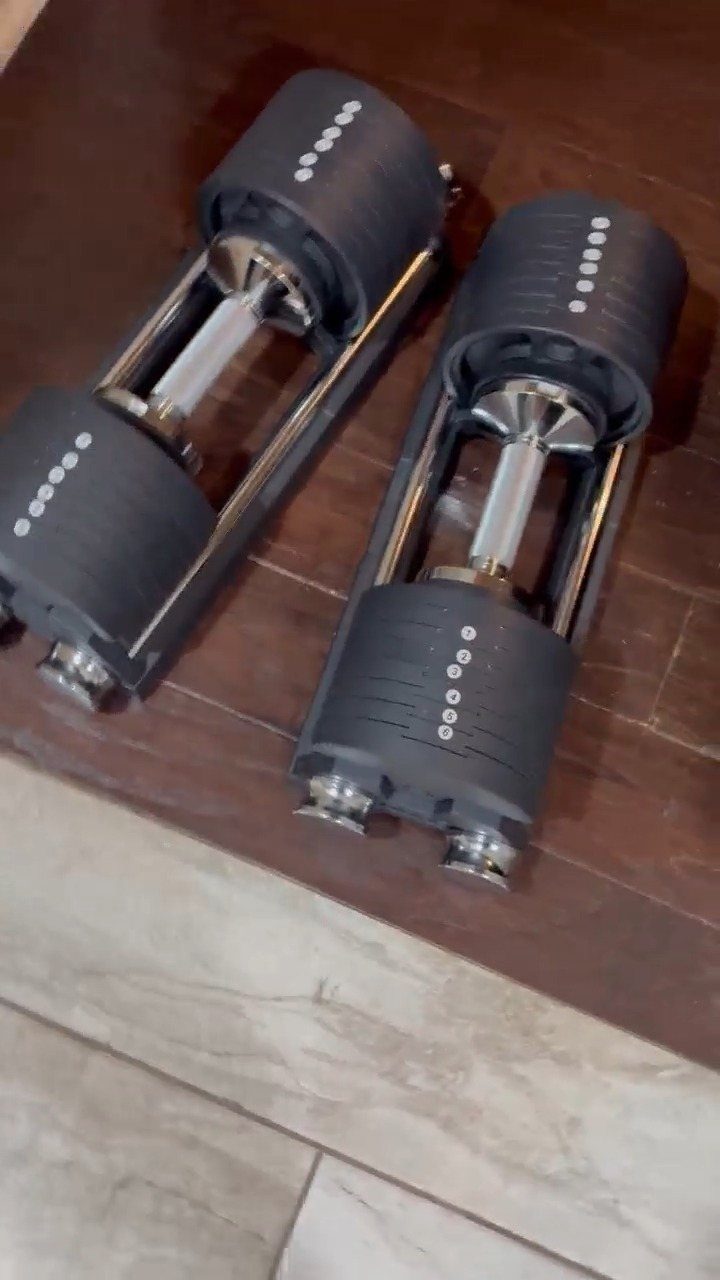
One pair of adjustable dumbbells can stand in for a whole rack, and that matters when your floor space is a few square feet.
Dial or slide the weight up for squats and rows, down for shoulder work, and you skip buying multiple pairs.
I’d pick the style that changes weight fastest, because a clunky swap is the reason people stop mid-workout and quit.
Store them on the floor against a wall, not on a shelf, so a dropped one never has far to fall.
2. Thick Rubber Flooring
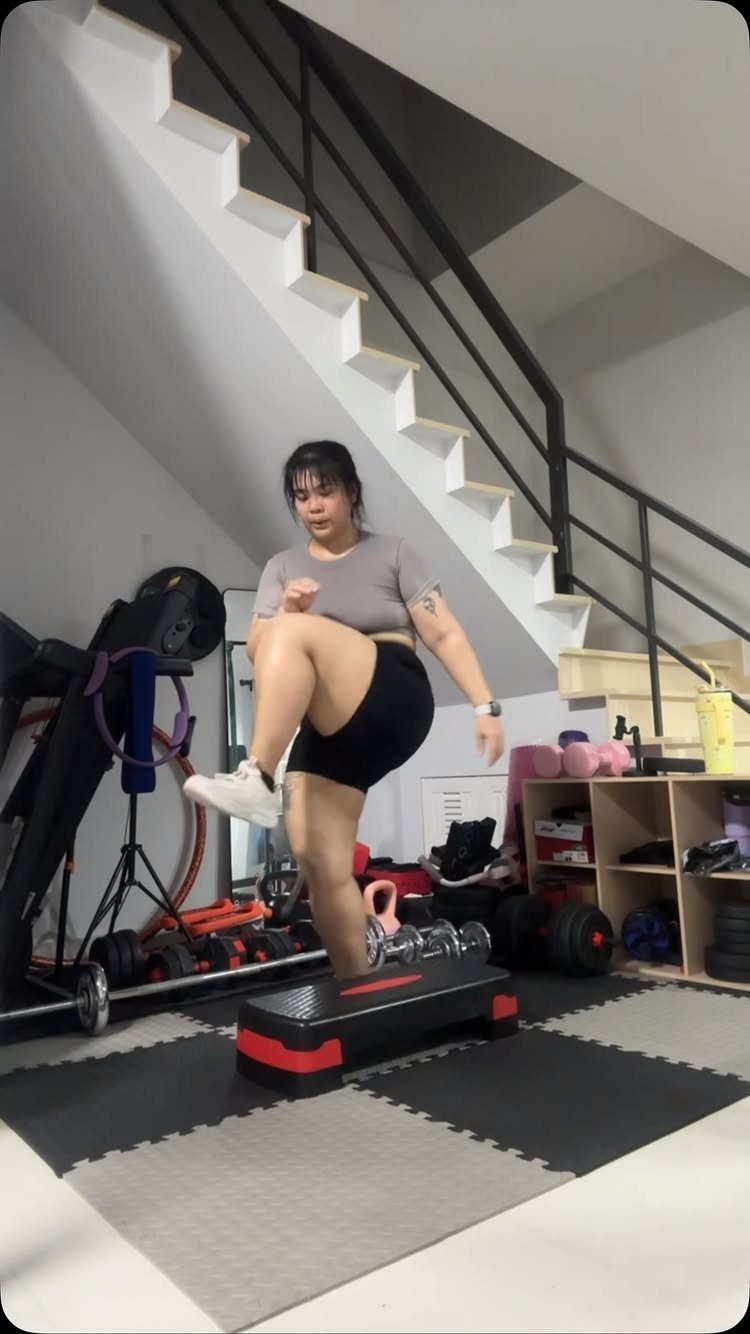
Interlocking rubber mats do 2 jobs in an apartment: they protect the floor and they soak up the thud of a stepper, a dropped weight or a landing from a jump. Downstairs neighbors notice that difference quickly.
Thicker is better for noise, and interlocking tiles snap together so you can fit them around an odd spot like the space under a staircase. Measure the area first and buy a few extra tiles.
Rubber can smell strongly when new, so air it out for a day before laying it down.
3. Gym Equipment Storage
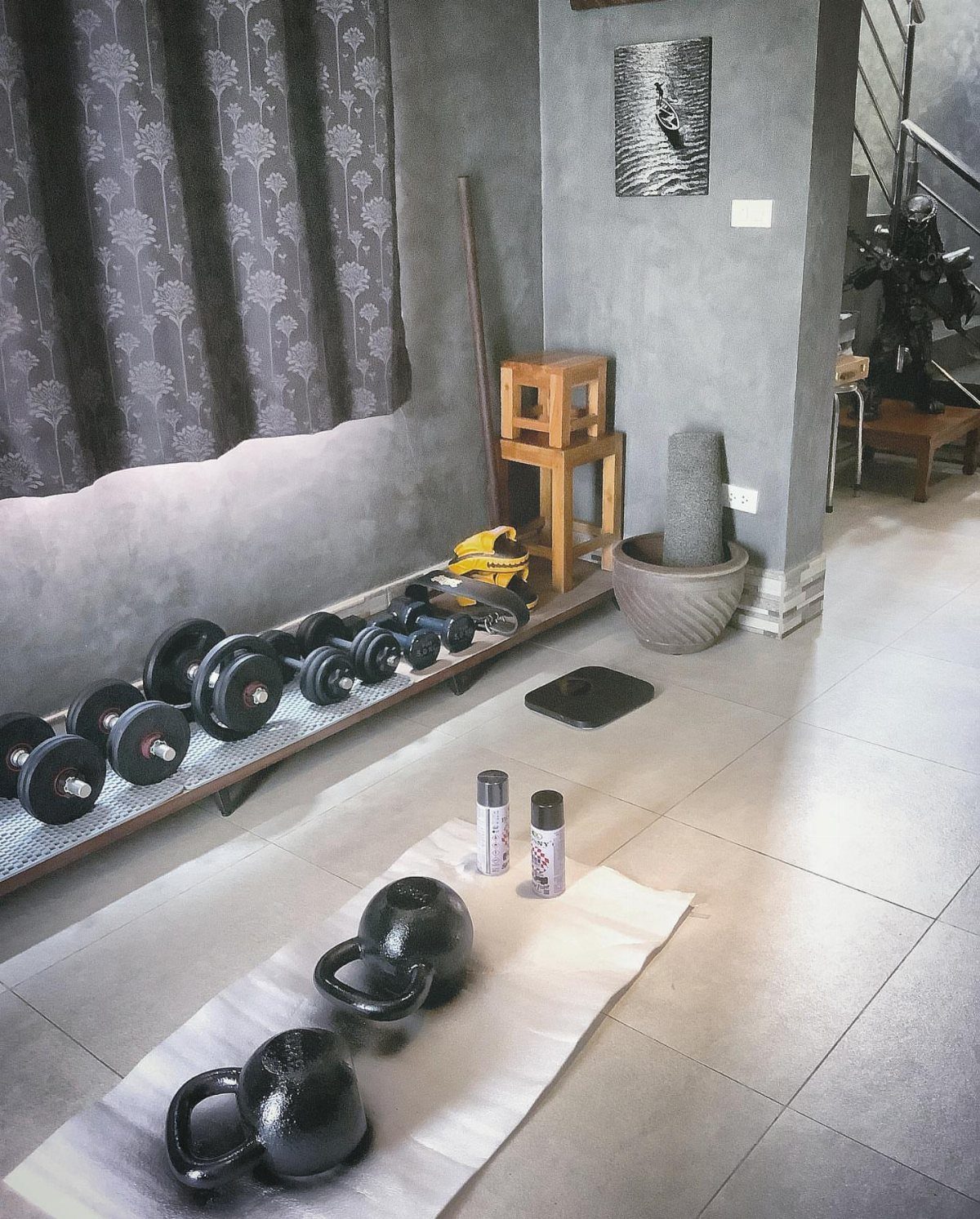
A dumbbell rack with kettlebells parked on a mat beside it keeps a workout zone looking tidy instead of like a pile of iron in the corner. Everything has one home, so you can put it away in seconds.
Pick a rack sized to the weights you actually own, and keep the heaviest on the lowest level. A mat under the kettlebells protects the floor and stops them from rolling.
Rentals reward gear you can tuck against a wall and ignore.
4. Compact Adjustable Bench
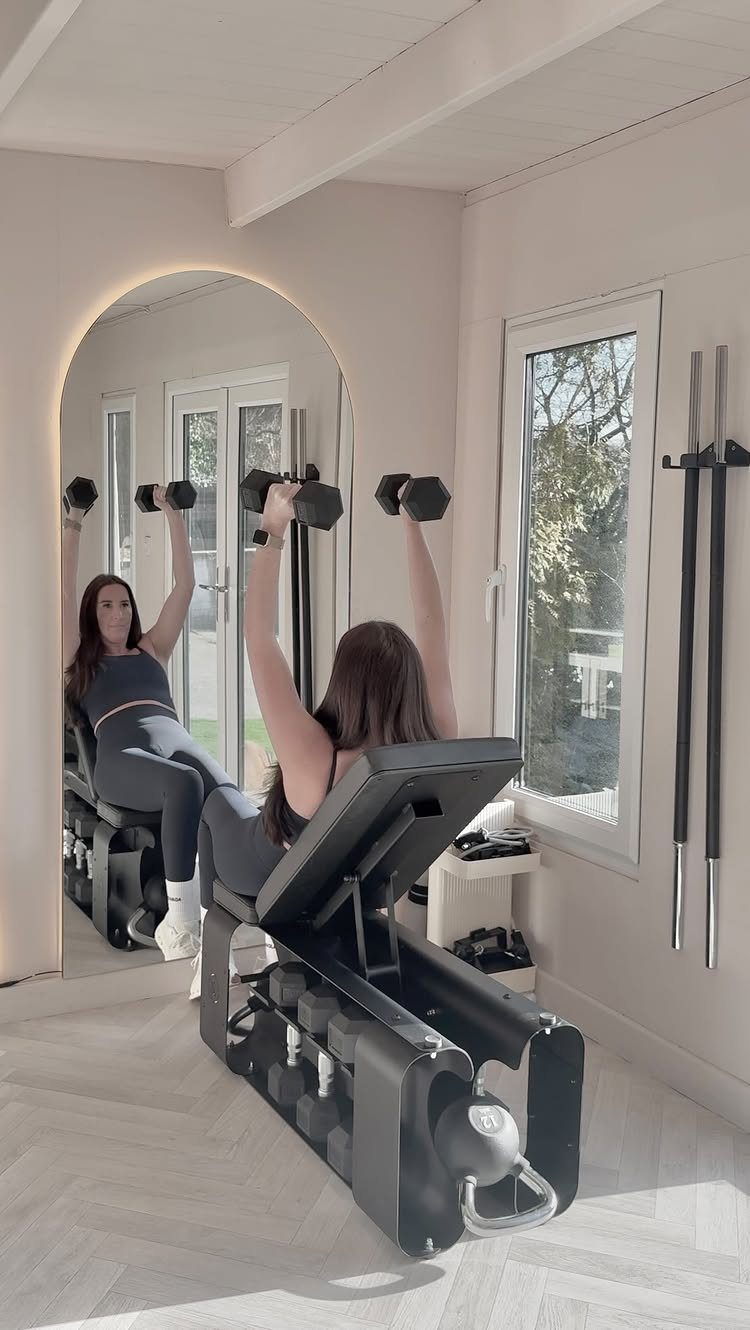
A bench with an adjustable back turns one pair of dumbbells into a full routine: flat for presses, inclined for shoulders, upright for seated curls. That range is why I’d buy this before most other equipment.
Choose a compact model with a sturdy frame and several back positions, then test it for wobble before trusting it with heavy weight. Placing it near a mirror helps you check your form.
Look for one that stores upright or folds, since an apartment bench has to disappear between sessions.
5. Walking Pads
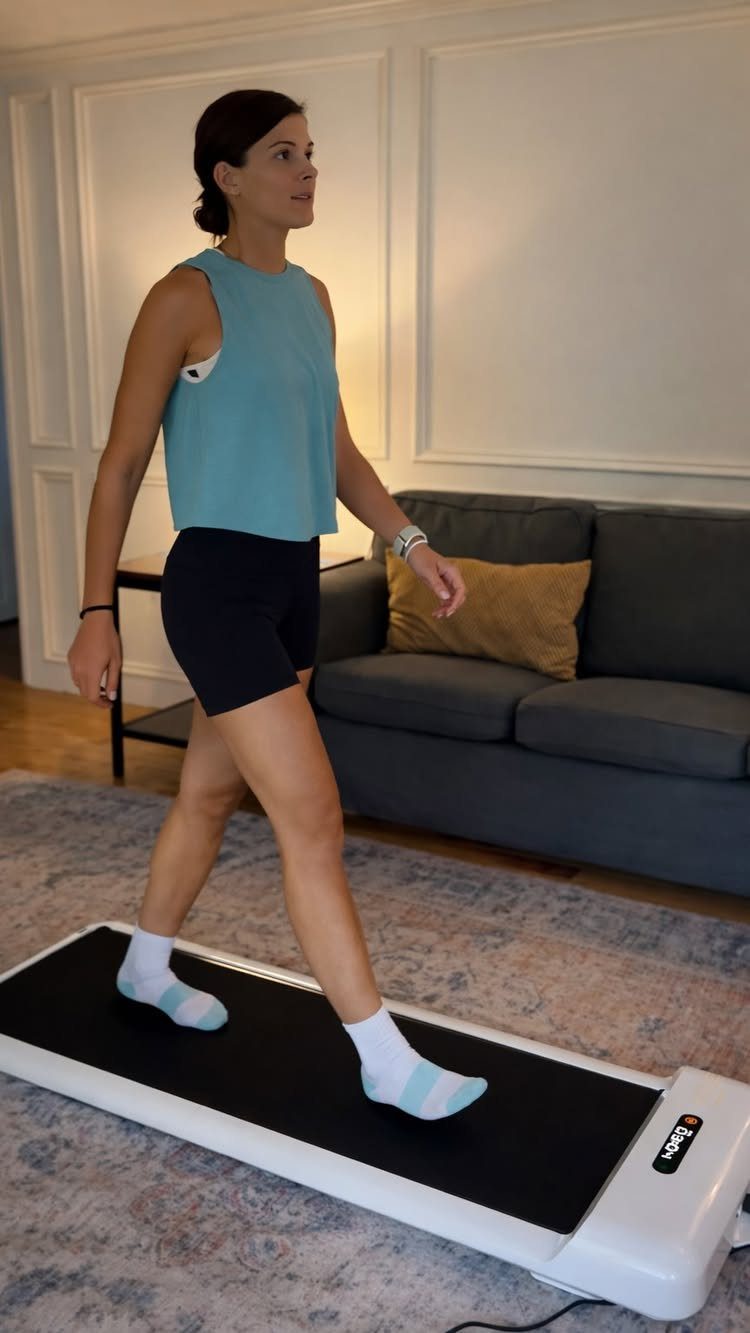
A slim walking pad slides under a sofa or against a wall, which makes daily steps possible in a living room without a bulky treadmill. For anyone who works from home, walking during calls is the easiest habit to keep.
Keep the pace gentle enough to talk, and put the pad on a rug-free patch of floor so the belt runs steady. A white model like this one blends in with a light room.
Check how loud it runs before you buy; thin walls make that the deciding spec.
6. Jump Rope
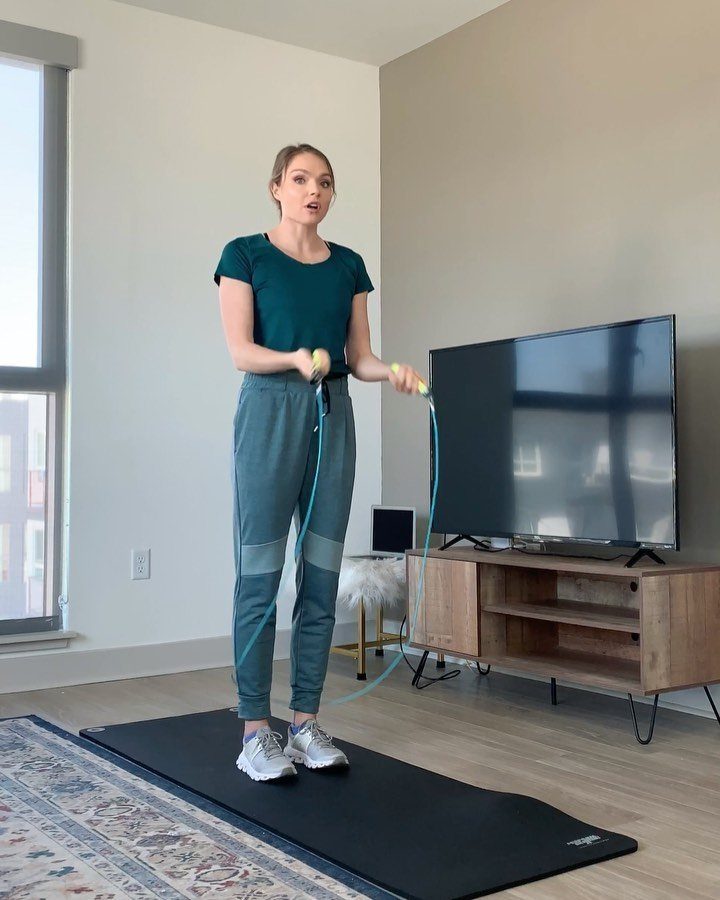
A jump rope costs little, rolls up into a drawer, and works your whole body in a few minutes. That’s hard to beat in a small apartment.
Stand on a mat to cushion your landings and quiet them for the neighbors below. Check the ceiling height before your first jump, and clear the area of anything the rope could snag.
Start with short rounds and rest between them. Your calves will complain first, so build up slowly.
7. Mirror
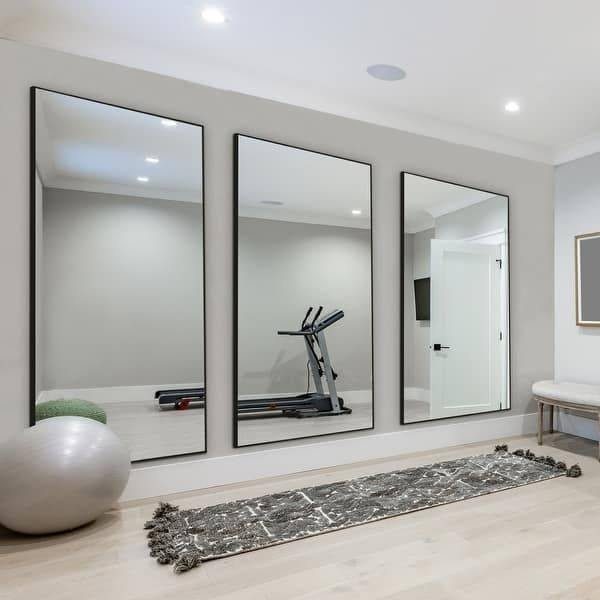
Mirrors let you check your squat depth, back angle and shoulder position without filming yourself. In a small room, a large one also makes the space feel wider.
Lean tall mirrors against the wall instead of drilling, which suits a rental. Set them near where you lift, and put a rug or mat at the base so the glass doesn’t slide on a hard floor.
8. Wall Mounted Stall Bars
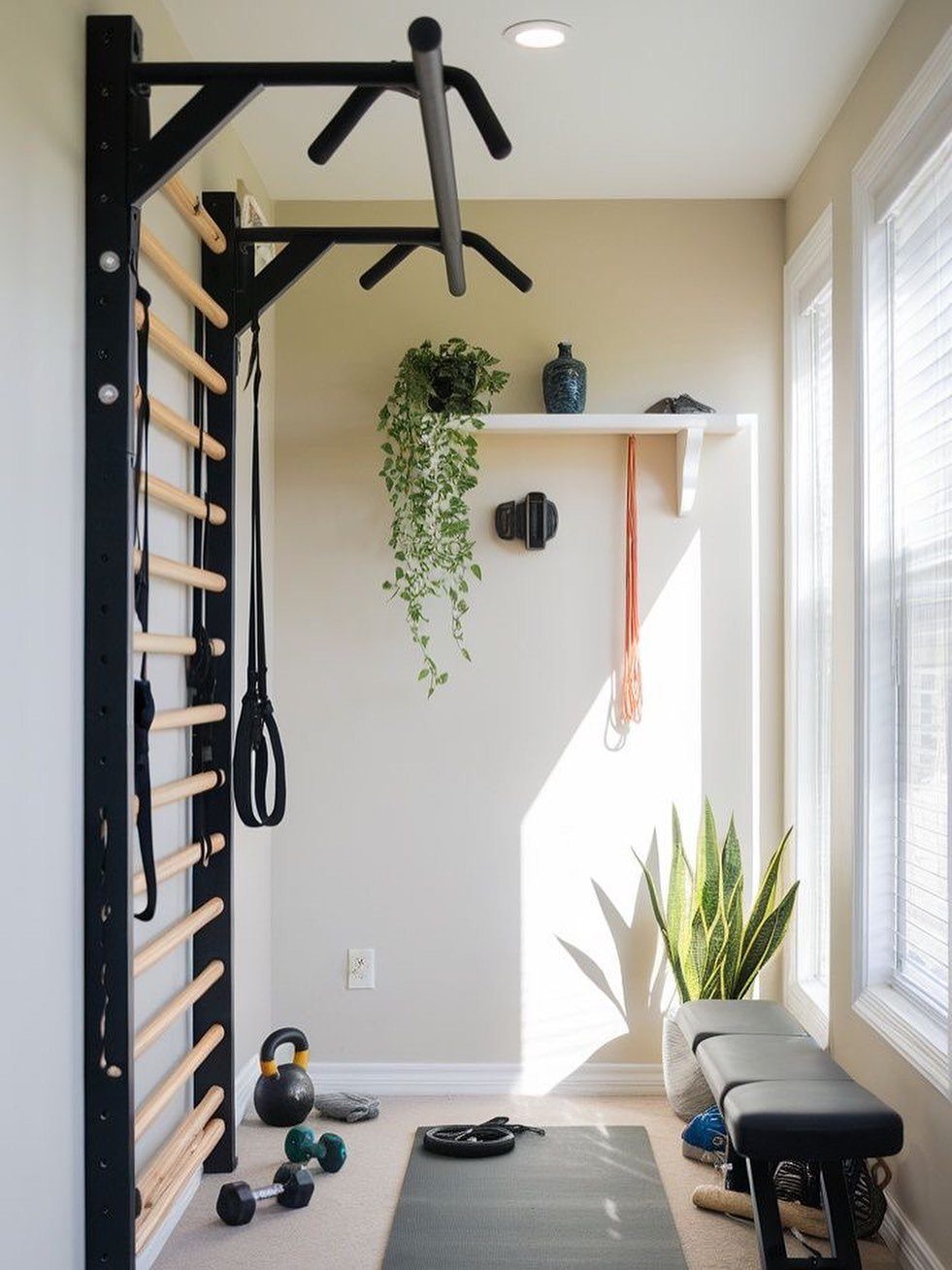
Stall bars give a wall a second job: one vertical ladder of rungs holds stretches, hanging work and leg raises, and it sits right beside a bench and weights without eating floor space.
Mounting one means screwing into the wall, so a renter should ask the landlord first. Anchor into studs, not drywall alone, since hanging puts your full body weight on the fasteners.
A black finish reads as furniture rather than equipment and sits well in a small room with natural light.
9. Wall Mounted Power Rack
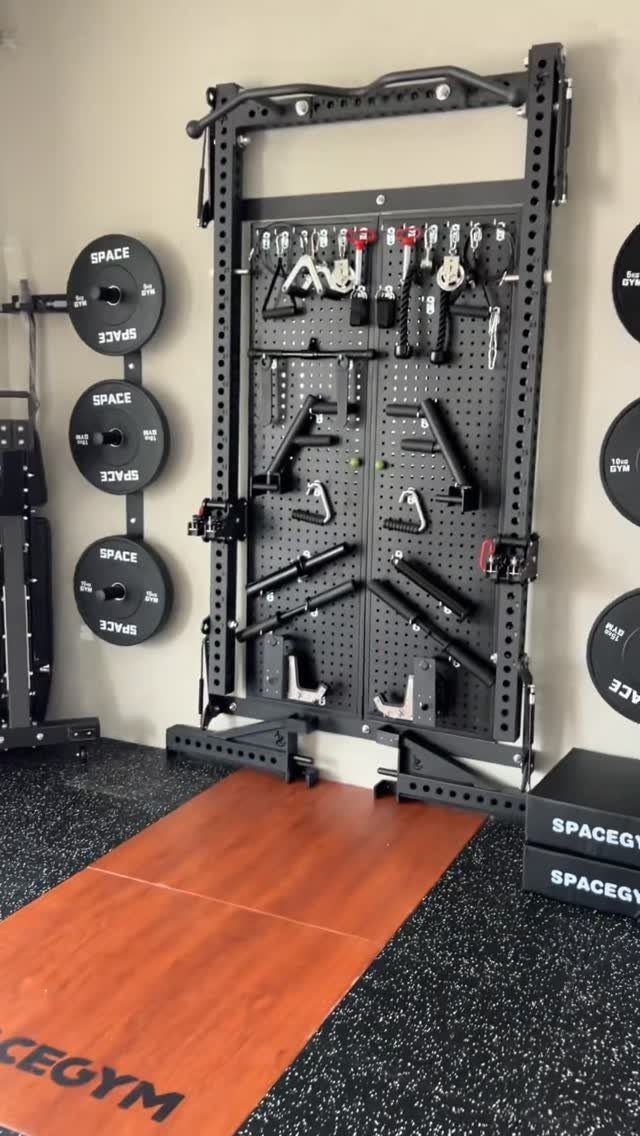
A wall-mounted power rack folds the squat station into a few inches of depth, and a pegboard beside it keeps small gear off the floor. Weight plates stored on the rack mean nothing is stacked in a corner.
This is a commitment, because it bolts to the wall. Check with your landlord, find the studs, and expect to patch holes when you move.
Pair it with thick rubber flooring to protect the subfloor and cut the noise of dropped weight.
10. Doorway Pull Up Bar
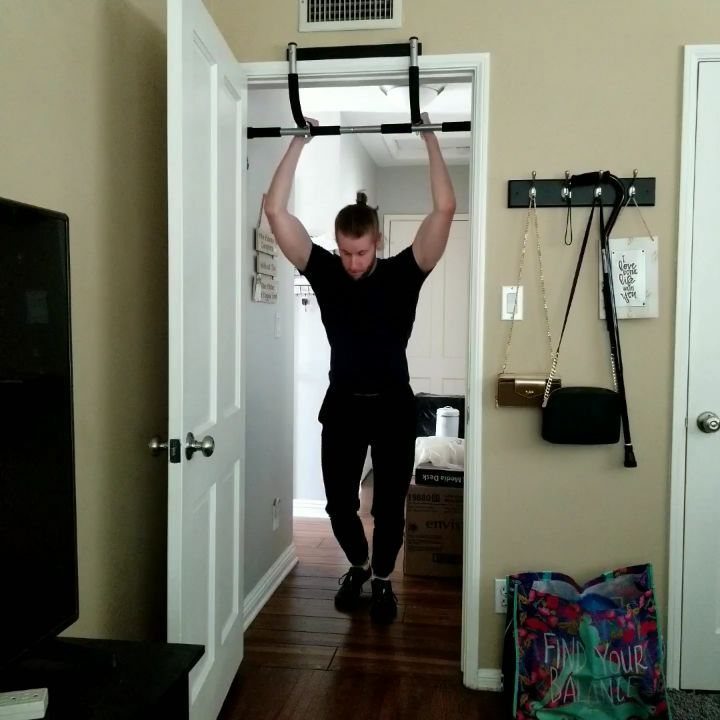
Pull-ups are one of the few moves that need almost no space, and a bar in a doorway frame handles them in a hallway. Rows and hanging leg raises work on it too.
Pick a model that mounts without screws if you rent, then test it with a slow hang before you commit your whole weight. Take it down after your session so the door stays usable.
Start with a few reps, since pulling your body weight is harder than it looks.
11. Living Room Workout Corner
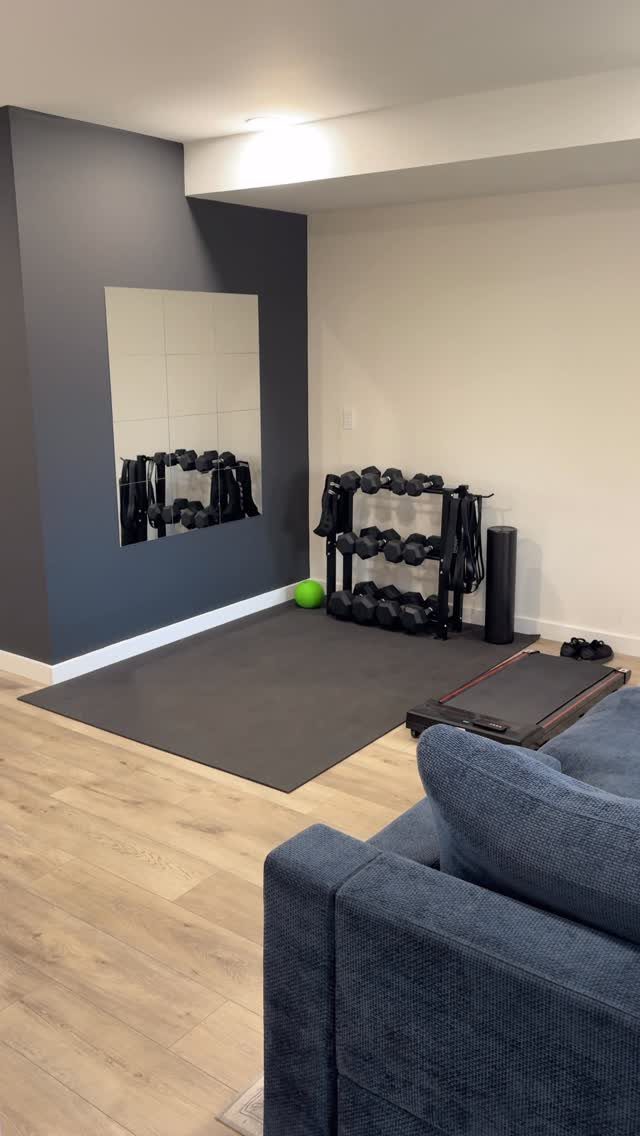
A workout corner beside the sofa works because the gear is small: a dumbbell rack, a mat, a mirror and an exercise ball cover most routines. A mat marks the zone, so the rest of the living room stays yours.
I’d keep everything within arm’s reach of the mat and leave the sofa side clear for stretching. Choose a rack that fits the wall, not one that juts into the walkway.
A mirror here doubles as decor, which helps the corner look planned.
12. Multi-Functional Weight Machine
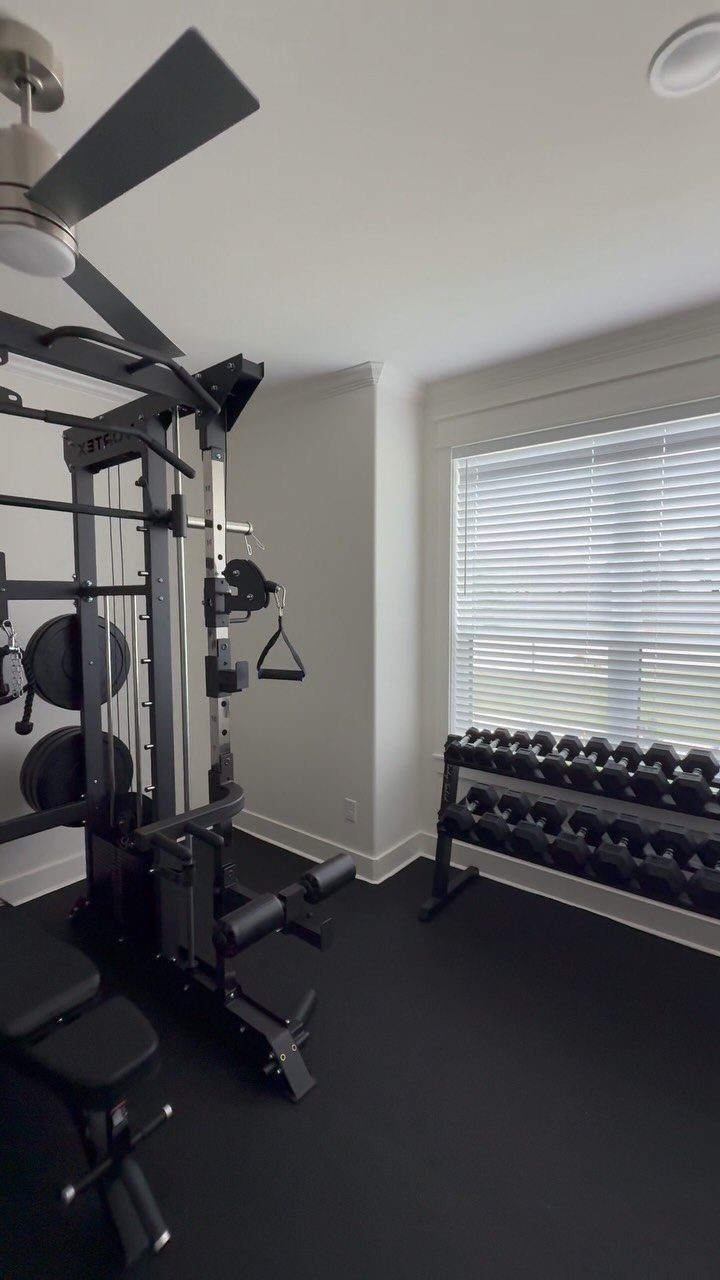
An all-in-one cable machine replaces a row of equipment with one frame: pulldowns, rows, presses and curls all come from the same stack. Next to a rack of dumbbells, it covers most of a strength routine.
Measure the room and the doorway before ordering, because this takes more floor space than anything else here. It makes the most sense when you can give it a dedicated spot and won’t move it often.
Natural light from a window makes a fixed corner like this pleasant to use.
Space Considerations
A usable floor of 50–70 square feet is what I’d plan for, which works out to about 7 by 10 or 8 by 10 feet of clear space.
Think walk-in closet or small home office; most apartments have a corner that fits, even if it takes a minute to spot.
You need a dedicated corner, not a dedicated room. A spare bedroom, den, wide hallway landing or unused corner of the living room all work, and a balcony can too when the weather cooperates.
Measure the workout area before you buy anything, and write down door widths and ceiling height too. Gear that doesn’t fit through the door is a costly mistake.
Go vertical wherever you can. Hooks and wall-mounted racks free up floor, and dual-purpose furniture like an ottoman can hide small accessories while still working as a seat.
Every few months, sell or donate gear you’ve stopped using so the corner doesn’t creep outward.
Versatile Equipment
Judge every piece of gear by how many exercises it covers per square foot and per dollar. Adjustable and multi-use items win that test, and one all-in-one system can stand in for 5–10 single-purpose pieces.
Adjustable gear also grows with you. Adjustable gear grows with you as you get stronger, which matters when every dollar counts.
All-in-one systems cost more upfront, and I think that’s fair when you do the math against floor space and a gym membership you’d no longer pay for.
If the price is too steep, start with one adjustable item and add accessories later.
Quieter gear keeps neighbors, and your lease, on your side.
Frequently Asked Questions
What is the best home gym for an apartment?
A pair of adjustable dumbbells plus a compact adjustable bench covers the most ground in the least space. The bench lets one pair of weights handle flat presses, inclined shoulder work and seated curls.
Plan on a clear floor of about 50–70 square feet, roughly 7 by 10 or 8 by 10 feet, and add thick rubber flooring to protect the floor and quiet things down.
Am I allowed to have a treadmill in my apartment?
Often yes, but check your lease and ask the landlord if you’re unsure. For a treadmill-style option, a walking pad wins in most rentals: it stores flat under a sofa or upright behind a door.
Noise ratings matter more than motor size here, since a loud belt carries through thin walls and can bring a complaint from the neighbors.
Can I lift heavy in an apartment?
Moderate heavy lifting is fine in most apartments as long as you set the bar down under control and never let plates crash.
Put thick interlocking rubber mats under the training area, since they protect the floor and soak up thuds that downstairs neighbors would otherwise hear. Lowering the weight slowly is the habit that matters most.
What’s the best apartment-friendly squat rack?
Of the squat rack options, a wall-mounted fold-down rack wins for tight spaces, taking up only 4–6 inches of depth when closed.
Because the mounting hardware goes into studs, get written approval from your landlord and plan to fill the holes before you move out.
How do I stop my workouts from annoying my neighbors?
Put thick rubber flooring under your gear and lower every weight with control instead of dropping it.
A mat under your feet also quiets jump rope landings and steppers. Choose quieter equipment too, such as a walking pad you’ve checked for noise, and train at reasonable hours.





