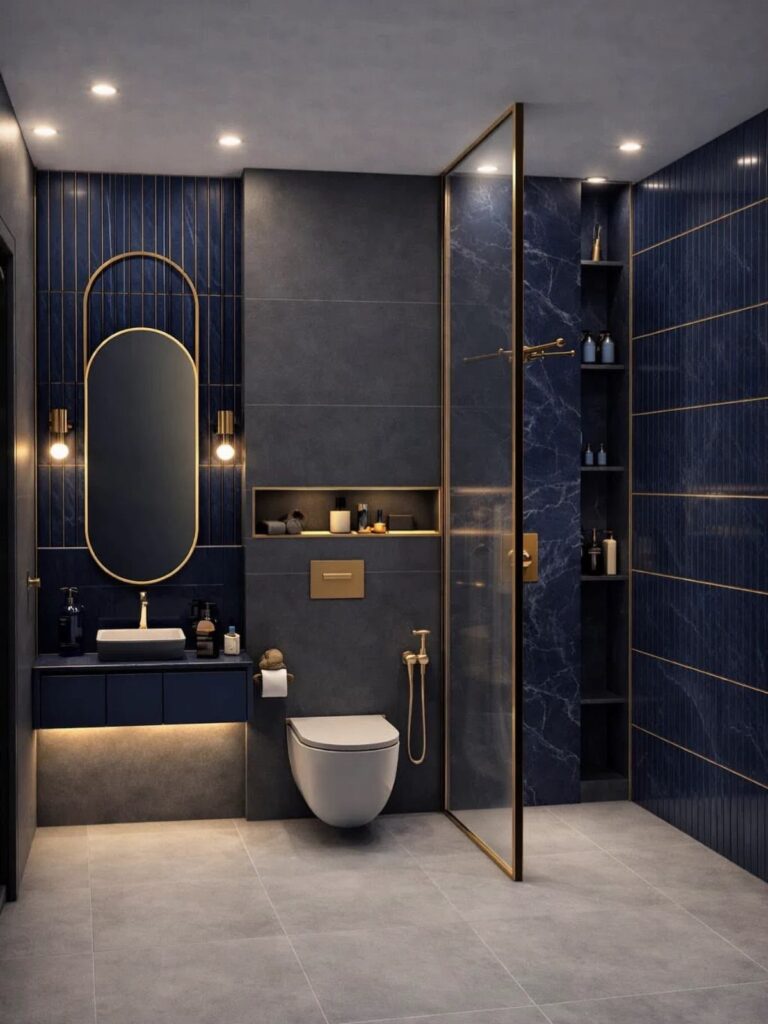
Whether you rent or own decides most of this list: paint, a navy accent wall and patterned wallpaper can be done in a weekend and undone later, while a blue glass shower, gray marble surfaces and a blue marble shower and sink are commitments to tile, grout and budget.
Pick the idea that fits how long you’ll live there.
The range is wide, from creative painting techniques to a full room of gray marble, and the lighting section applies to every one, since warm bulbs keep gray from going flat and blue from turning cold.
1. Blue Terrazzo with Soft Grey Walls
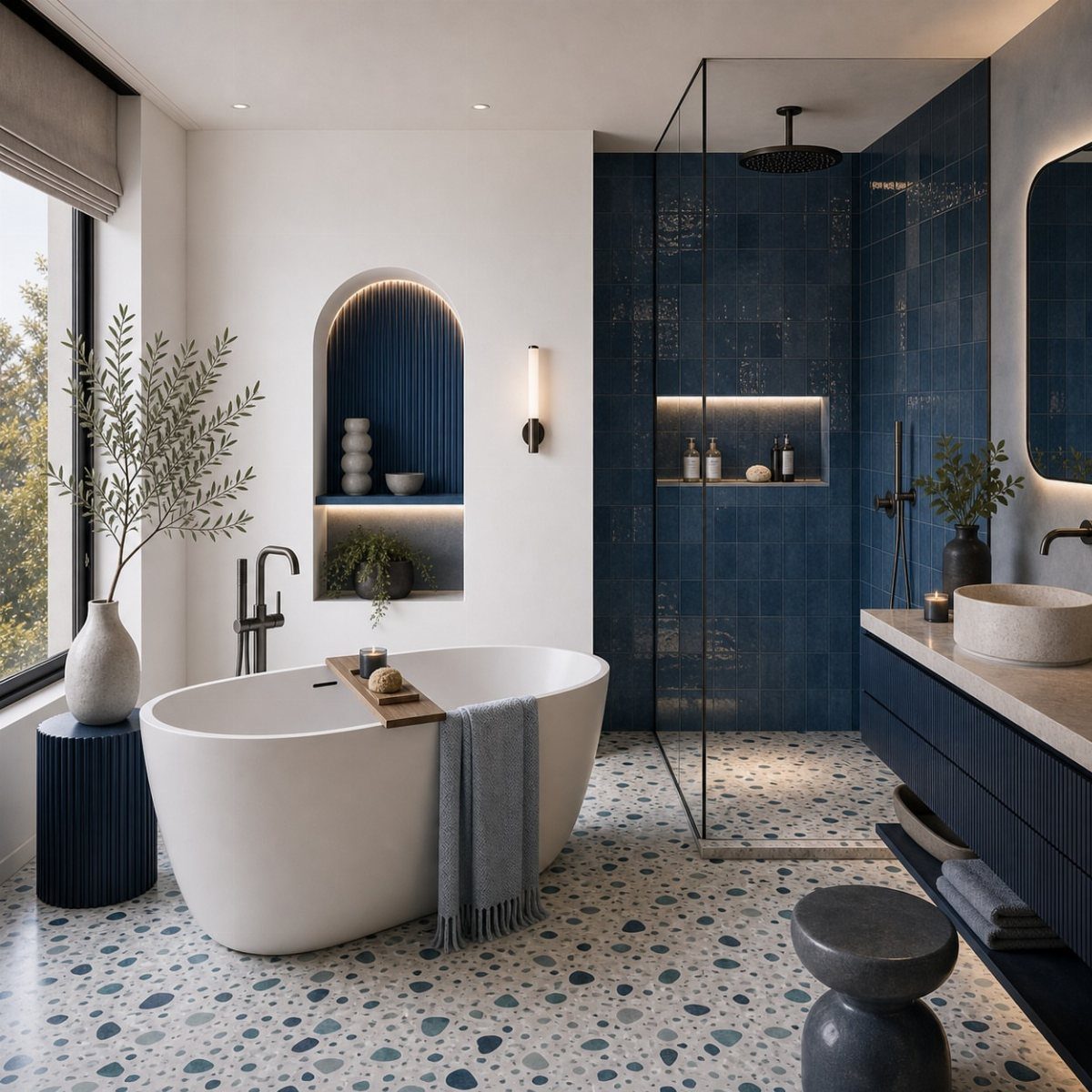
Terrazzo is a good way to bring blue into a bathroom without painting everything blue, because the flecks act like a pattern and the chips do the color work.
Keeping the walls a soft grey lets the floor take the attention.
The blue shower tile, vanity and arched niche in this room already repeat the floor’s color, so the grey has a lot to hold together. If you copy this, pick one blue, repeat it, and stick with a white tub.
2. Clever Wall Paneling
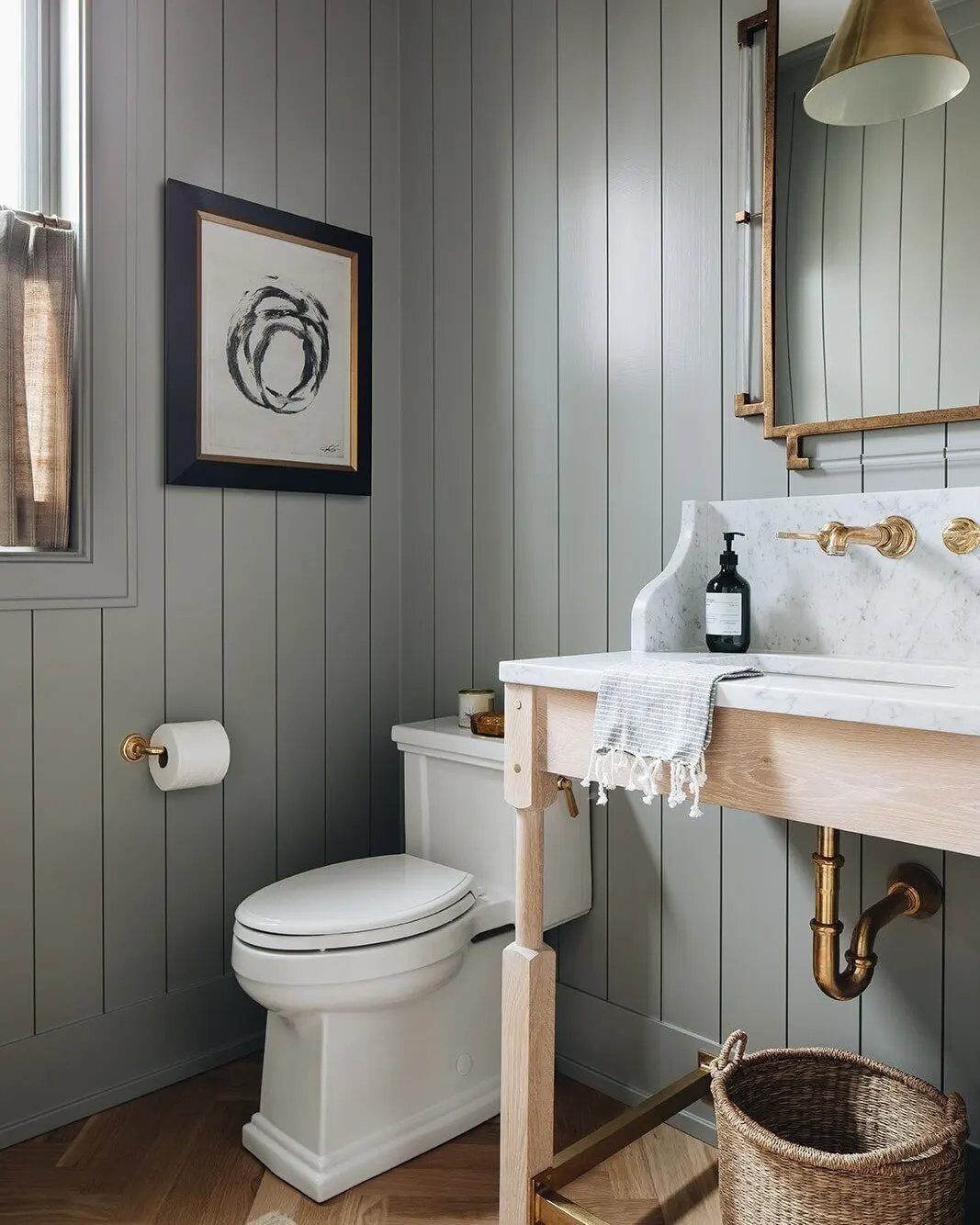
Light grey shiplap makes a plain bathroom look finished, and the vertical boards add the kind of detail a flat painted wall can’t.
Gold fixtures and a marble-top vanity suit it well, since the warm metal stands out against the cool grey.
For a rental or a weekend job, I’d pick paneling you can paint, then hold everything else to a wood floor, one framed piece, one basket. The boards are the feature, so don’t compete with them.
3. Rich Navy Vanity with Matte Grey Walls
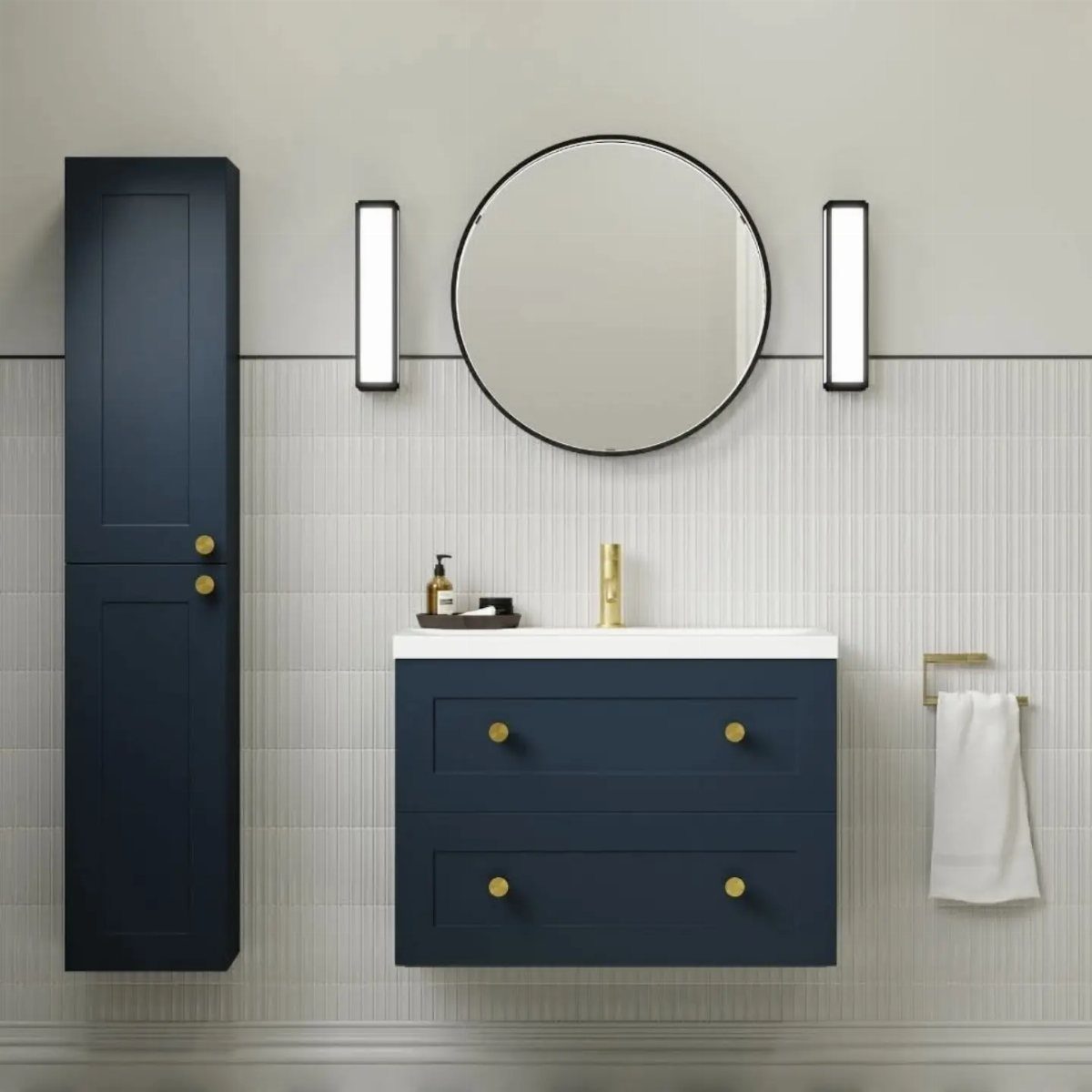
Navy against matte grey is a pairing I’d choose over white and navy, because the grey softens the vanity’s weight so the space never feels stark.
A floating vanity with a tall matching cabinet gives you storage while the floor stays visible, which helps a smaller room feel larger.
Gold hardware and a round mirror add warmth and a gentler shape beside all the straight lines. Keep the grey light and matte so the navy reads as the focal point.
4. Blue Glass Shower
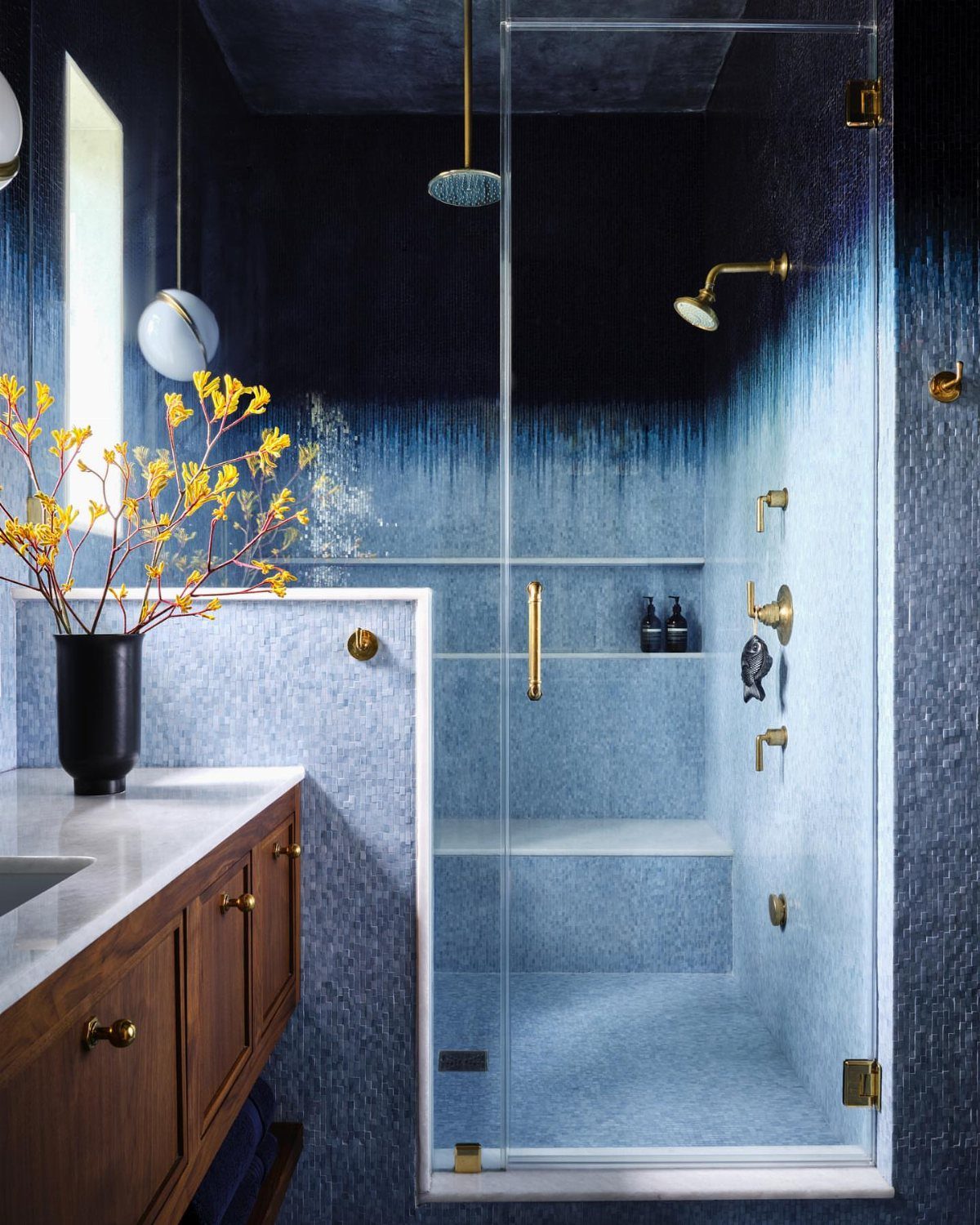
Blue glass mosaic in the shower brings a watery, glowing look, and a gradient makes it feel like depth rather than a flat color.
Gold fixtures and a clear glass door let the tile show instead of hiding it behind a curtain.
Mosaic means more grout lines, so expect more scrubbing than with large tile. Everything else can stay plain, like the wood vanity and white countertop here, so the shower is the one bold spot.
5. Navy Accent Wall
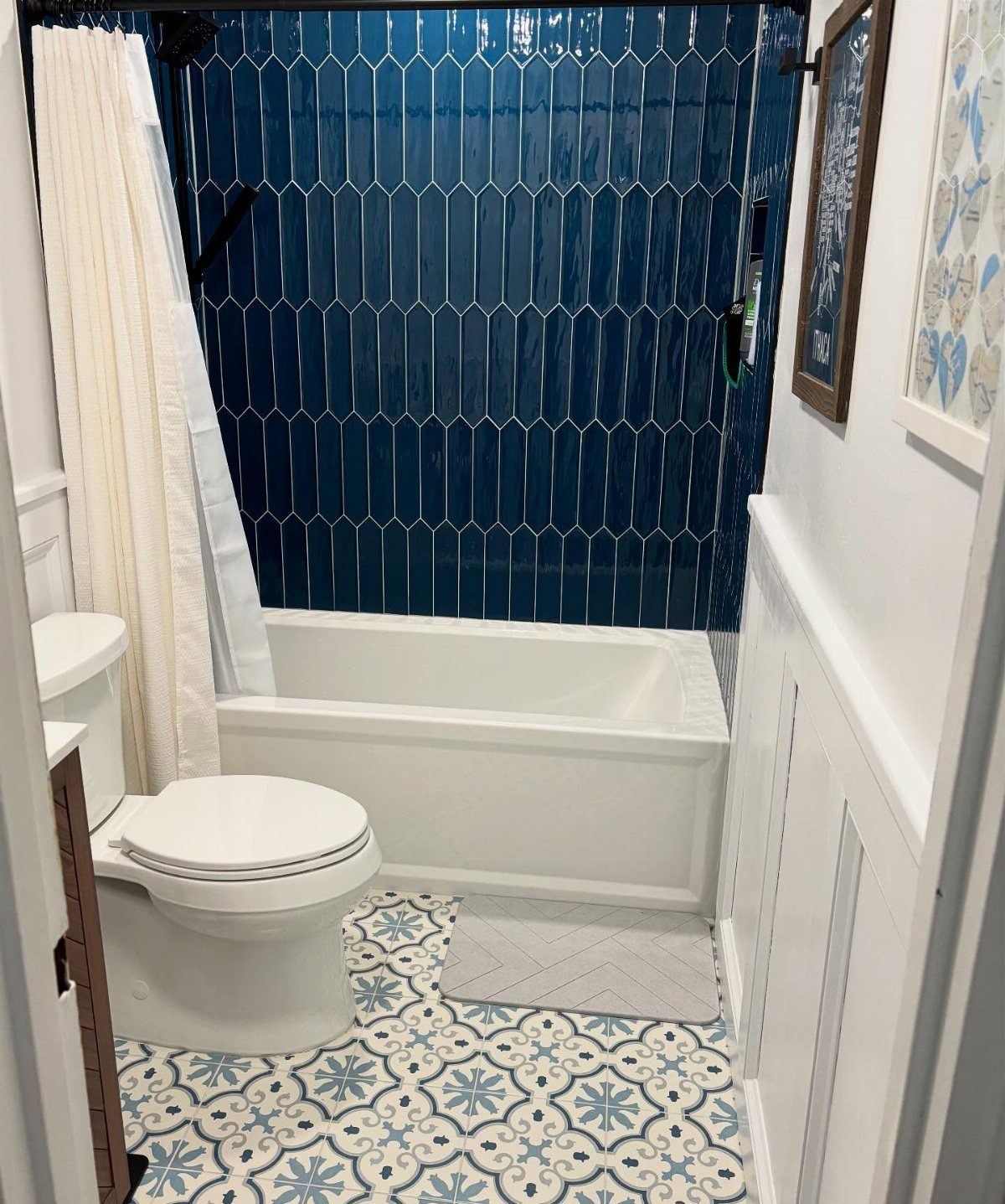
A single navy wall behind the tub adds depth, and the other 3 walls stay light enough that the bathroom doesn’t turn dark.
Picket tiles add shape as well as color, so the wall looks designed even when everything else is white.
I’d keep the other surfaces light and let the patterned blue and white floor do the supporting work. Use the same blue family in the floor and the wall, or the two will argue with each other.
6. Blue Patterned Wallpaper
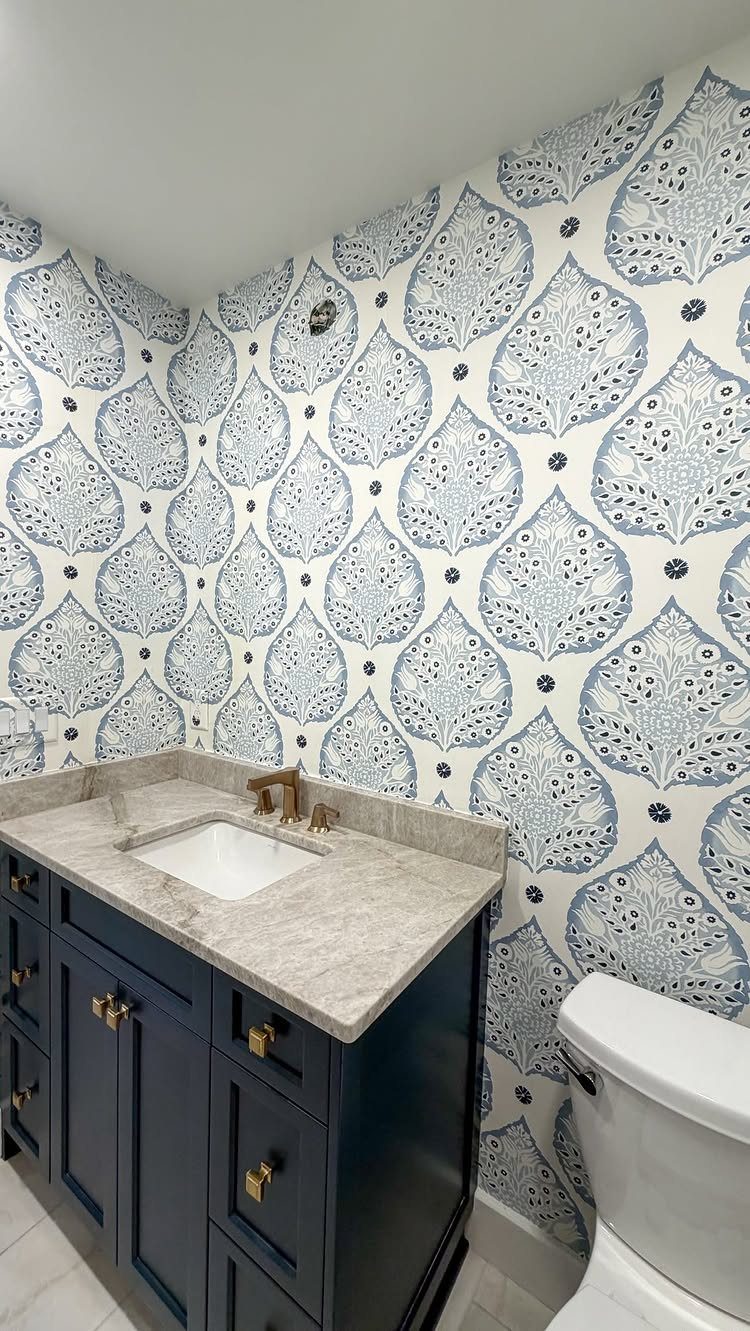
Wallpaper is the cheapest way I know to give a bathroom personality, since you change the walls and leave the fixtures alone. Blue and white pattern above a navy vanity feels deliberate because the colors are close relatives.
Choose a paper made for bathrooms, and for a rental, a removable type makes more sense.
7. Gray Marble Surfaces
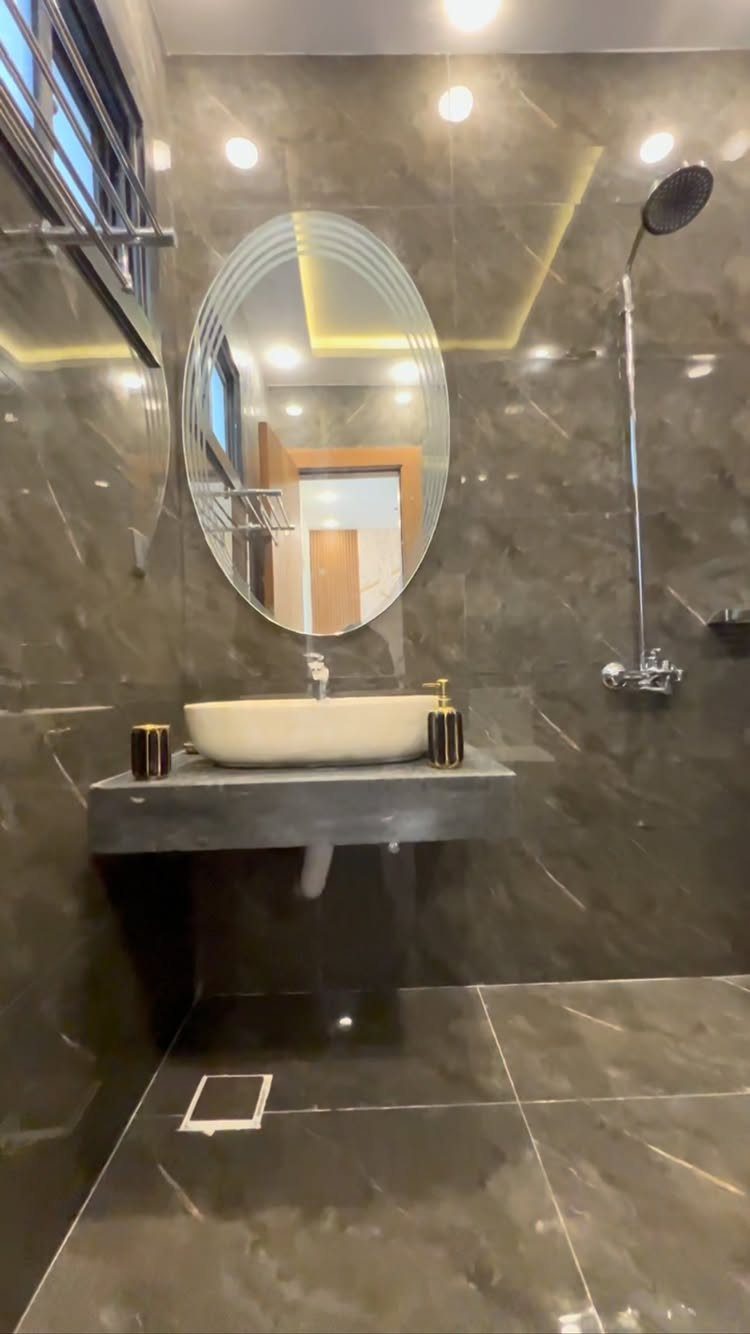
Dark grey marble on both walls and floor gives a bathroom veining that paint can’t copy, and it works because every surface shares one pattern.
Because the marble is already busy and dark, pick plain fixtures and skip patterned towels or a loud rug. If a full marble room is out of budget, one wall or the counter alone still carries the look.
8. Gray Stone Shower
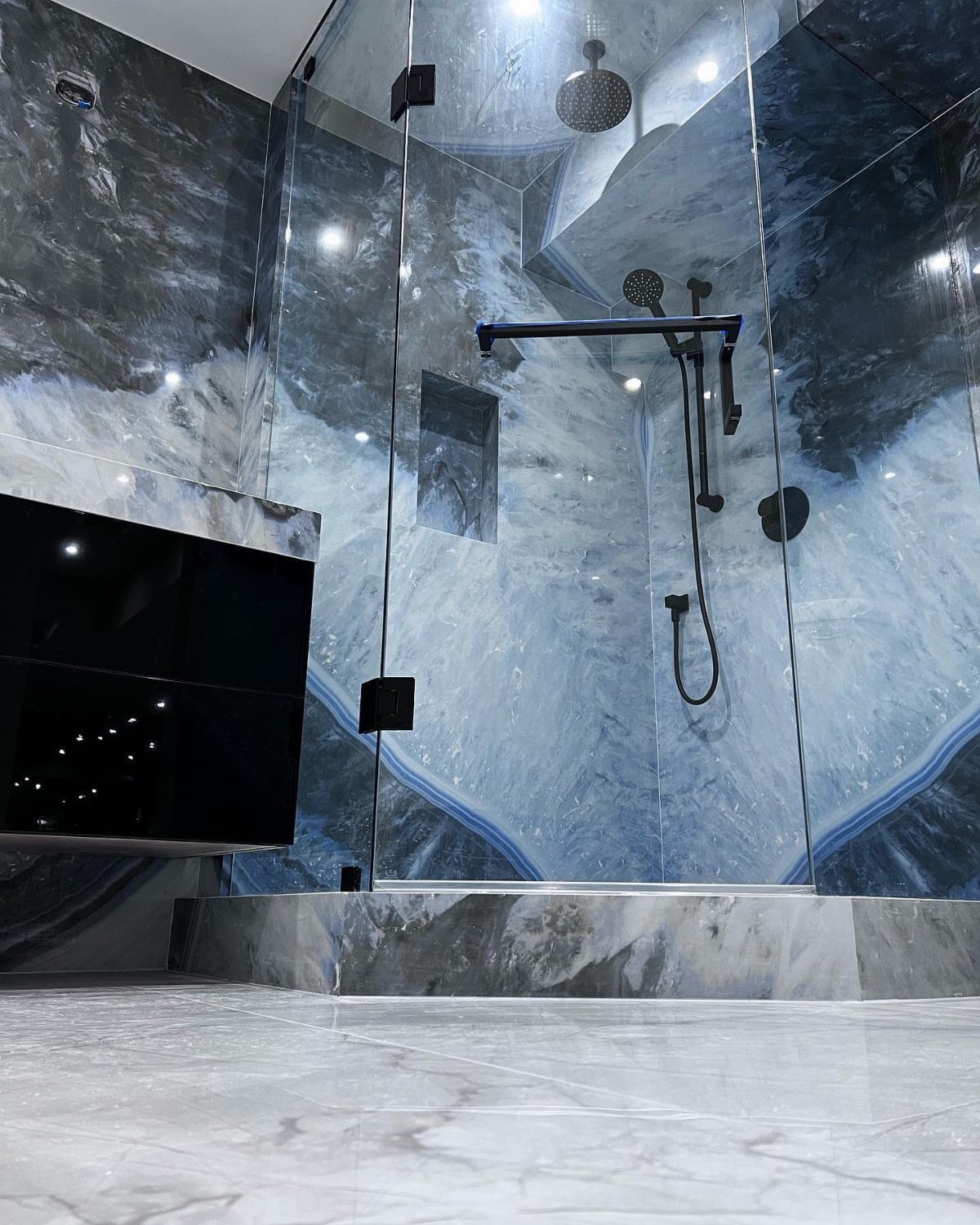
Stone with blue and grey marbling in a walk-in shower reads calmer than a solid color, since the texture does the work a pattern would.
A black shower fixture sharpens it, and white marble underfoot keeps the enclosure from feeling heavy.
I’d choose this over mosaic if you hate scrubbing grout, because larger stone-look tiles mean fewer lines. Clear glass lets the walls show, so skip the curtain.
9. Blue Herringbone Wall with Grey
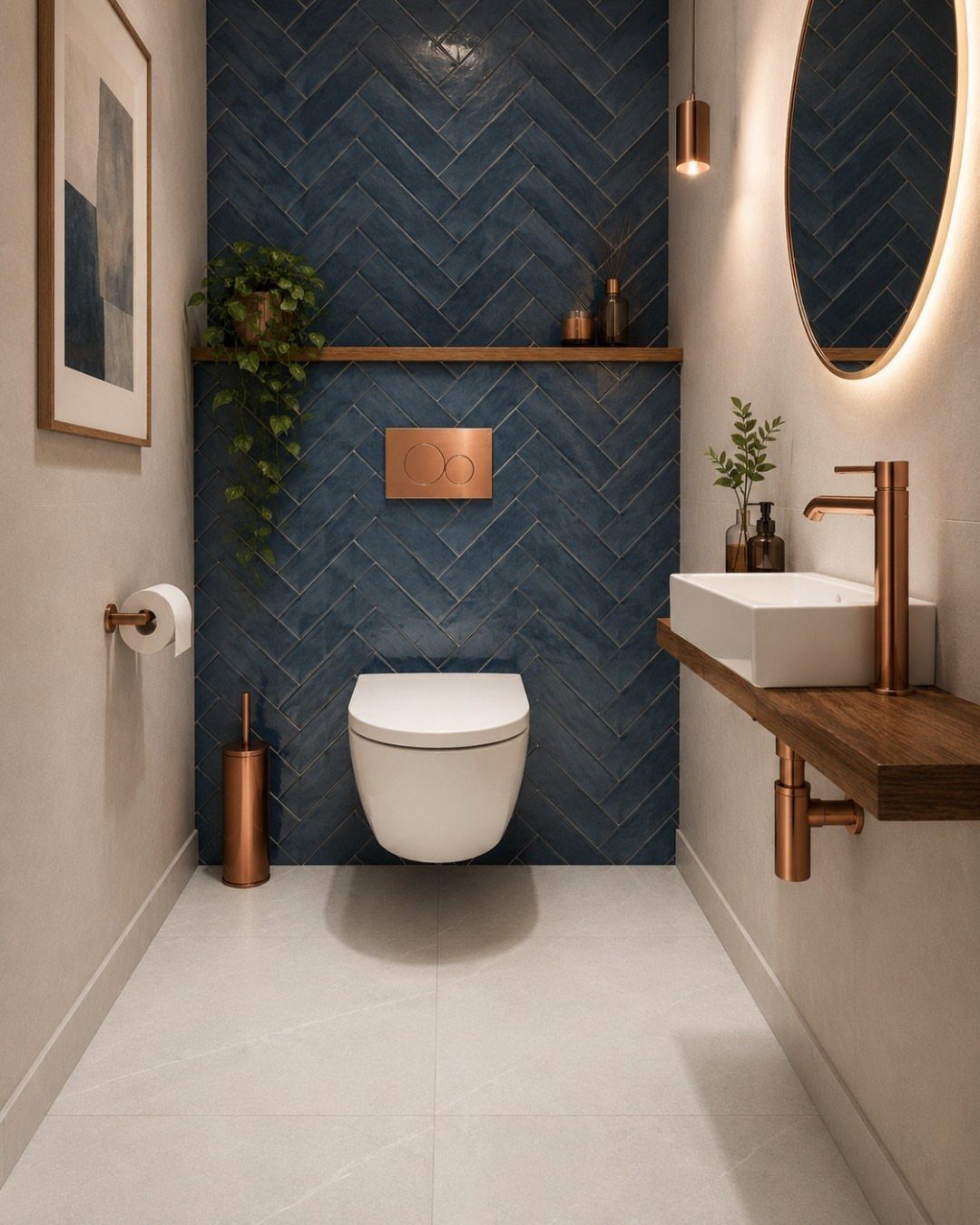
Herringbone turns a small bathroom’s one blue wall into the whole show, and I’d put it behind the toilet and sink where the eye lands first.
Light grey side walls give the deep blue room to stand out without closing the space in.
Keep the shelf simple, since the tile pattern already supplies the movement.
10. Blue Marble Shower and Sink
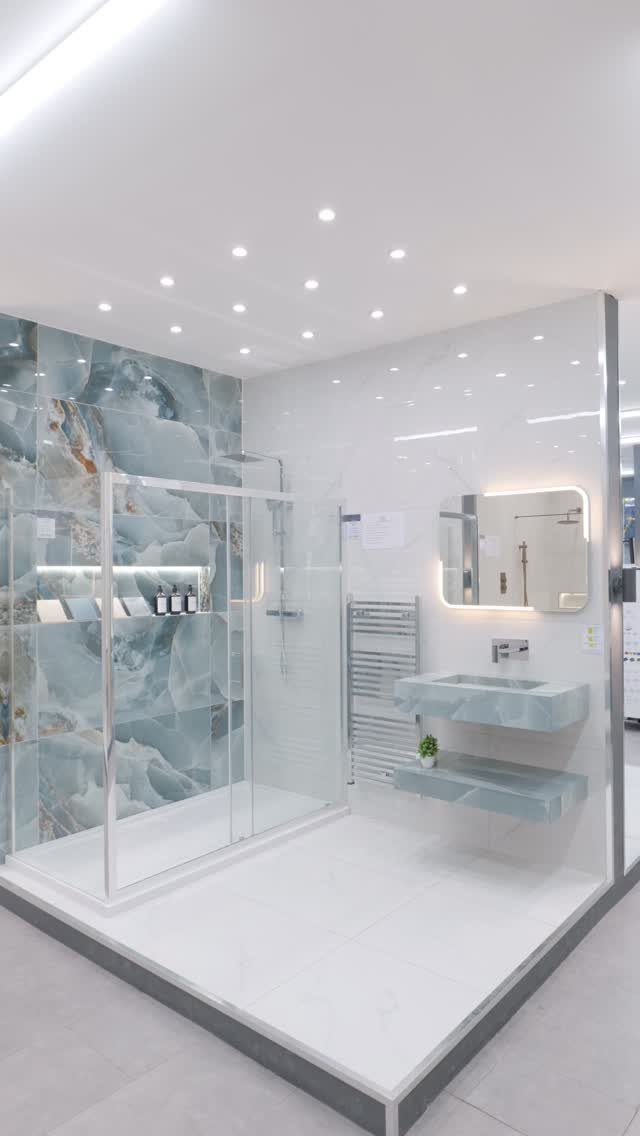
Blue marble in the shower paired with a matching stone floating sink ties the room together better than blue tile alone, because the veining repeats from one surface to the other. White walls and floor let the blue carry everything.
The maker of this sink offers handmade options, so you can match the stone to your tile rather than hunting for a near miss. Order samples first and hold them against the shower wall.
11. Light Blue Vanity and Grey Rug
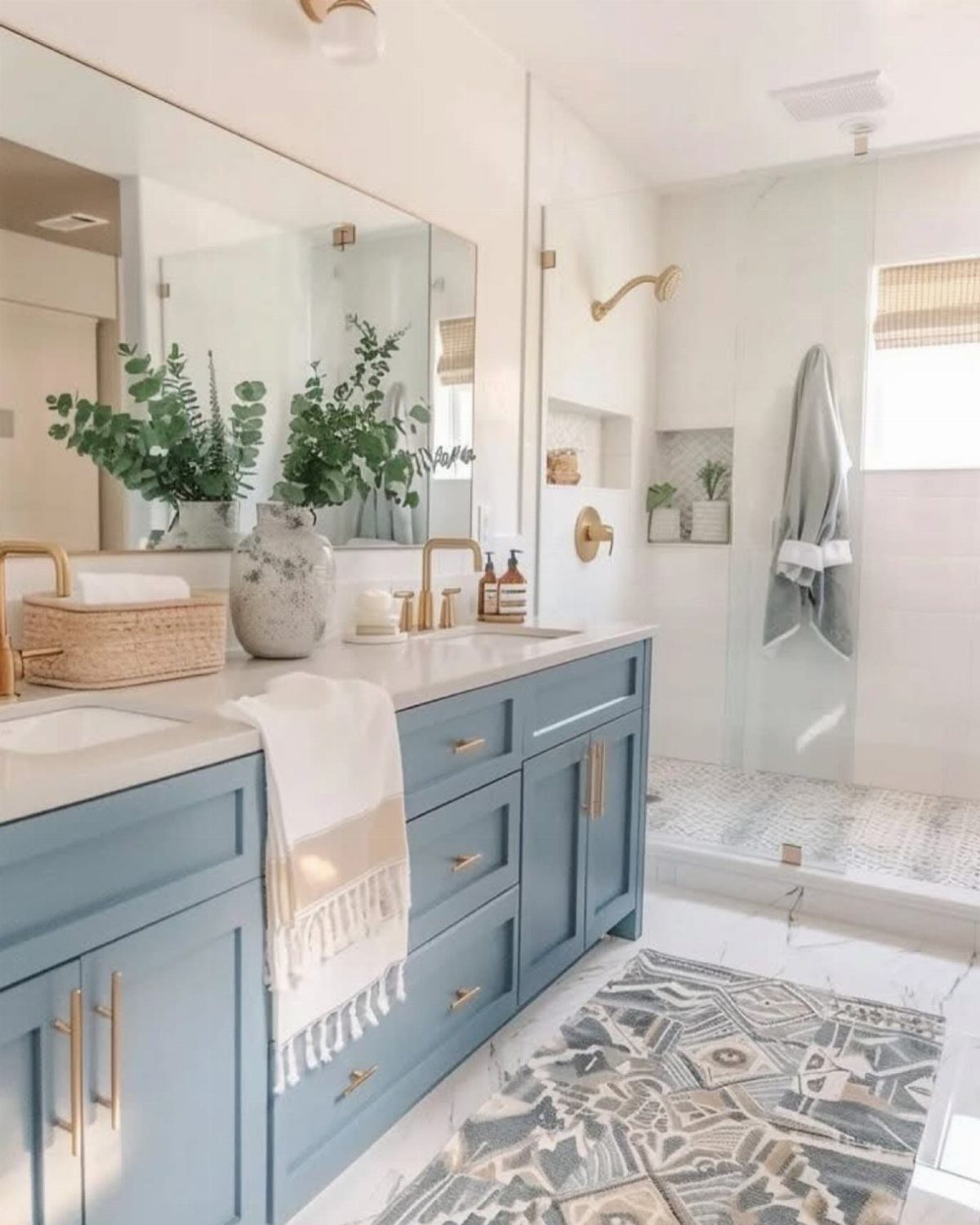
Light blue is the easiest way I know to add color to a white and grey bathroom without it feeling heavy. Gold hardware warms the vanity, and a white countertop keeps it crisp.
Pick a grey with a pattern you like, and let the vanity stay the one clear blue.
Lighting for Blue and Gray Bathrooms
Warm LED strips or bulbs around the mirror do more for a blue and gray bathroom than any new paint color.
Harsh white bulbs turn gray flat and make blue look cold and clinical, so pick a warmer bulb and judge it against your actual tile.
Plan for layers instead of one ceiling light. A ceiling fixture gives general light, mirror lights handle grooming, and a small accent light near the shower or vanity adds softness.
Put dimmable fixtures on at least the main circuit so you can run the room bright in the morning and low at night.
Place mirror lights so they don’t throw shadows across your face. Light from both sides of the mirror, or a bar above it, works better than a single fixture overhead.
Look at the window, too.
Natural light changes how both colors read through the day, so test bulbs at the hours you use the room most. Choose fixture finishes that sit well with your gray and blue tones.
Creative Painting Techniques
Paint can break up one color from floor to ceiling, and a weekend is enough time to finish it. Stenciling and color blending are the 2 techniques worth trying first, because both add pattern or depth without new materials.
Try blending on one wall before committing to the room. Layer 2 shades of blue, or a blue and a gray, while the paint is still workable, and you get soft movement a flat coat can’t give.
Chalk paint on a vanity is another option.
It suits a cabinet that otherwise gets ignored, and distressed or painterly finishes add depth beyond a flat color. Seal it well in a damp room.
Pick shades from the same family, and the whole bathroom will still feel pulled together.
Moving from bold to subtle works best when the colors share an undertone. Test a small patch first and live with it for a day before you paint the rest.
Frequently Asked Questions
Is dark blue a good color for a bathroom?
Yes, navy works well as long as it stays in one place, like a vanity or a single wall behind the tub.
Keep the other surfaces light so the room doesn’t turn dark. Pairing navy with a pale, matte grey beats navy with white in my book, since the grey takes the edge off a heavy vanity.
Are gray bathrooms still in style?
Yes, gray still works, and it holds up best when it plays a supporting role next to blue. Dark grey marble run across both walls and floor still feels current, because one veining pattern ties every surface together.
What color goes with grey blue walls?
Warm accents suit grey blue walls best.
Warm gold faucets and pulls pop against cool blue and grey, and a white countertop adds a clean, crisp line. Warm bulbs around the mirror help too, since harsh white light makes blue look cold and flattens gray.
How do you decorate a navy blue bathroom?
Use navy on one focal point, such as an accent wall behind the tub or the vanity, and keep the other walls light so the room doesn’t feel dark.
Skip busy accessories so the navy can carry the room, and set it against paler grey tile, towels, and walls. If you add a patterned floor, keep it in the same blue family or the two will clash.





